How we make this list: we compare pricing pages, product documentation and public user reviews. Rankite is independent; if a vendor ever pays for a featured spot, that listing is clearly labeled Partner.
Key takeaways
- For pure accounting, QuickBooks Online ($38/month Simple Start) remains the trade standard, with job costing and project profitability on Plus ($140/month).
- Trade-built tools Knowify ($99/month Core) and Jobber ($49/month Core) combine job costing, dispatch and QuickBooks sync for contractors who bill by the job.
- Free options exist: Wave ($0 Starter) and Zoho Books ($0 free plan) cover invoicing and basic books for one-truck operations.
- ServiceTitan does not publish prices (quote-only, roughly $245-$500 per technician per month per third-party estimates), so budget buyers should start elsewhere.
The best accounting software for electrical contractors
Electrical work bills by the job, not the hour on a timesheet. Materials, labor, permits, change orders and service calls have to land on the right job, or you never learn which work actually makes money. That is why generic accounting software often disappoints contractors: the books balance, but job profitability stays a mystery. These ten tools split into two camps: accounting platforms with job-costing features, and trade platforms that handle dispatch, billing and books together. Real starting prices are below.
Starting price$38/month (Simple Start plan)
Free planYes ($0 free plan with limited invoices)
QuickBooks Online is the default answer in the trades for a practical reason: your accountant already knows it. Simple Start at $38 per month handles invoicing, expenses and bank feeds for a small shop. The features electrical contractors actually need, job costing, project profitability, inventory for materials, live on Plus at $140 per month with 5 users. The integration catalog is unmatched: ServiceTitan, Jobber, Housecall Pro and Knowify all sync to it.
The honest catch is the tier jump. A contractor paying $38 for Simple Start gets no job costing at all, and the jump to Plus nearly quadruples the bill. Payroll costs extra on top. QuickBooks Online fits contractors who want standard double-entry books their CPA can open, and who will use the Plus tier for real job profitability tracking.
What we like- The largest accountant and bookkeeper ecosystem in the US
- Project profitability, job costing and inventory on Plus ($140/month)
- 800-plus integrations including field service apps
Watch out for- Job costing requires the $140/month Plus tier, not the entry plan
- Payroll is a separate paid add-on
- Per-user pricing climbs as the office team grows
#2
Xero
Best for: Contractors wanting unlimited users and clean bank reconciliation
Visit xero.com
Starting price$25/month (Early plan)
Free planNo (30-day free trial)
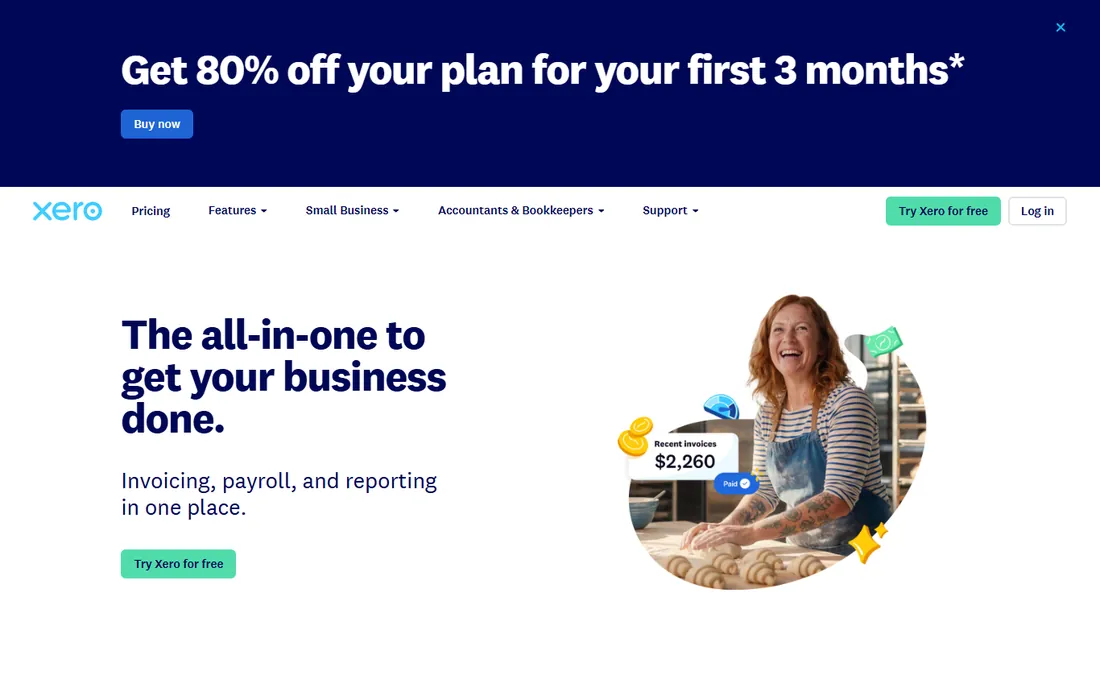
Xero's pitch to contractors is the unlimited-user model: the office manager, the bookkeeper and the owner all log in on the $25 Early plan without per-seat fees. Bank reconciliation is widely considered the best in the category, and invoicing with online payments is straightforward. The app marketplace connects scheduling, time tracking and job management tools that fill the trade-specific gaps.
The honest catch is the ecosystem gap in the US. Fewer American accountants work in Xero, which creates friction at tax time, and payroll goes through partners like Gusto rather than natively. Job costing arrives on Established at $90 per month or via add-ons. Xero fits contractors with several office users who want clean books cheaply and will pair it with a trade app for the field side.
What we like- Unlimited users on every plan, a real advantage over per-seat pricing
- Excellent bank reconciliation and invoicing
- Large app marketplace with construction and field service add-ons
Watch out for- US payroll runs through third-party partners, not natively
- Job costing needs the Established tier ($90) or add-ons
- Fewer US trade accountants know Xero than QuickBooks

#3
FreshBooks
Best for: Solo electricians and small shops that bill by invoice and time
Visit freshbooks.com
Starting price$23/month (Lite plan)
Free planNo (30-day free trial)

FreshBooks is built for service businesses that live on invoices. Time tracked in the field flows straight onto the client invoice, estimates convert to invoices in a couple of clicks, and the interface is simple enough that the owner does the books without a bookkeeper. Lite at $23 per month suits a solo electrician; Plus at $43 adds real accounting reports and 50 billable clients.
The honest catch is the ceiling. There is no meaningful job costing, no materials inventory, and the 5-client cap on Lite forces an upgrade fast. A two-person shop on Plus pays $43 plus $11 per extra team member. FreshBooks fits one-to-three-person electrical businesses whose accounting needs are invoicing, expenses and tax-ready reports, not project accounting.
What we like- Best-in-class invoicing with time tracking that flows onto invoices
- Simple interface a non-accountant can run
- Proposals and estimates included
Watch out for- Lite caps at 5 billable clients and 1 user
- Real accounting reports start on Plus ($43)
- No native job costing or inventory depth for materials

#4
Wave
Best for: One-truck electricians who need free invoicing and bookkeeping
Visit waveapps.com
Starting price$0/month (Starter plan, free)
Free planYes ($0 Starter plan)
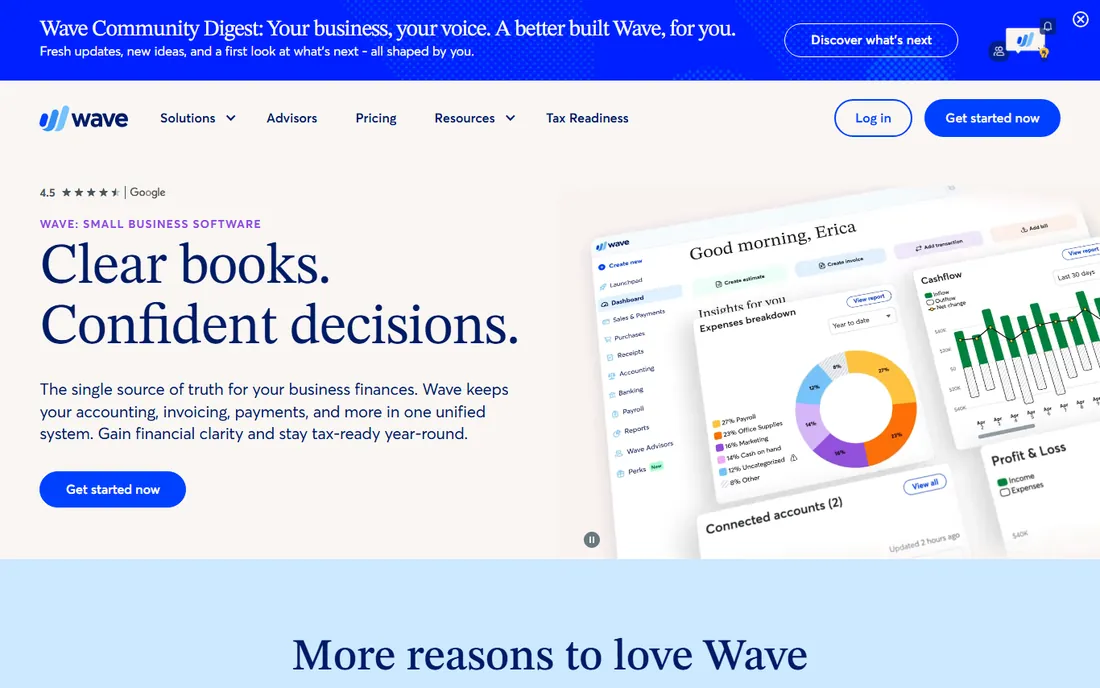
Wave is the only genuinely free accounting tool worth recommending to a solo electrician. The $0 Starter plan includes unlimited invoices, estimates, bills and double-entry books, which covers a one-person shop's tax needs. Pro at $19 per month adds automatic bank transaction imports, receipt scanning and multi-user access for a bookkeeper.
The honest catch is what free leaves out: no job costing, no time tracking, no inventory, and manual transaction entry on the free tier gets old fast past 50 transactions a month. Wave fits brand-new or part-time electrical businesses that need clean invoices and basic books at zero cost, with a plan to graduate to QuickBooks or Xero as the business grows.
What we like- Free unlimited invoicing and double-entry bookkeeping
- Simple enough for owners with no accounting background
- Pro ($19/month) adds bank feeds, receipt scanning and multi-user access
Watch out for- No job costing, no time tracking, no inventory
- The free tier lacks automatic bank imports (manual entry only)
- Payment processing fees apply on paid invoices

#5
Zoho Books
Best for: Small contractors wanting a free plan with room to grow cheaply
Visit zoho.com
Starting price$15/month (Standard plan, annual)
Free planYes ($0 free plan for micro businesses)
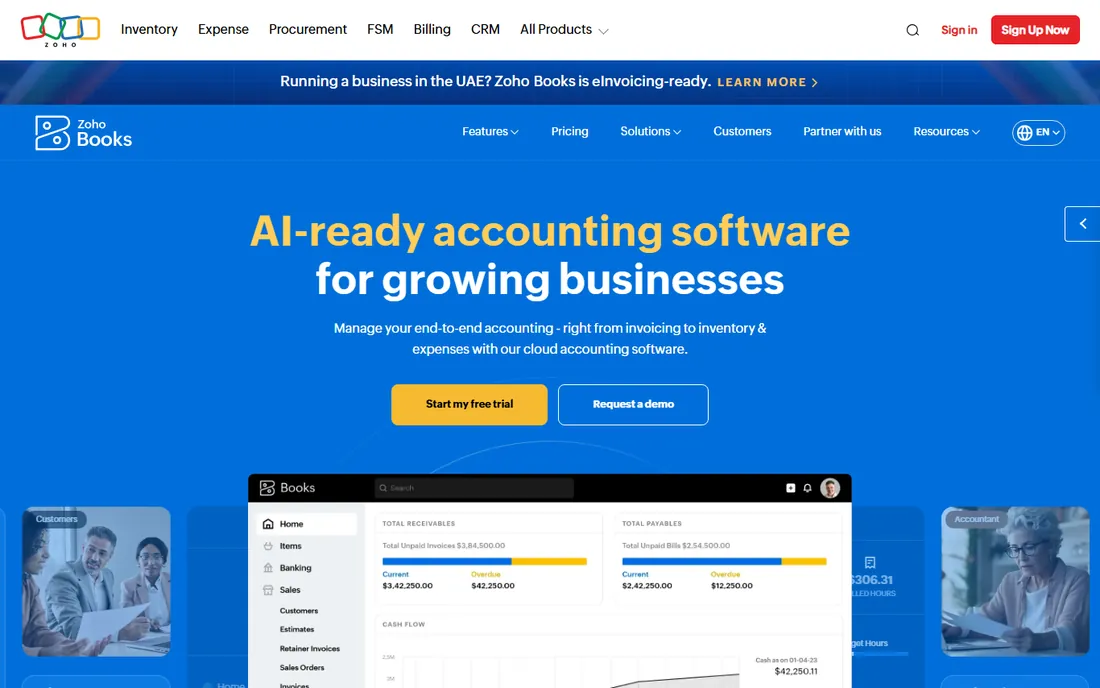
Zoho Books is the value alternative to QuickBooks for contractors watching every dollar. The free plan covers a micro business, and Standard at $15 per month annual adds bank feeds, recurring invoices and 3 users. Because pricing is per organization rather than per seat, a small office team costs far less than on QuickBooks. Projects and timesheets arrive on Professional at $40 per month annual.
The honest catch is the American trade ecosystem. Your CPA probably does not work in Zoho Books, integrations with US field service tools are thinner, and support is less trade-aware. Zoho Books fits cost-conscious contractors comfortable running their own books who want project tracking and multi-user access without QuickBooks pricing.
What we like- A functional free plan plus the cheapest paid tiers in this set
- Per-organization pricing (not per user) favors small teams
- Projects, timesheets and inventory on higher tiers
Watch out for- Fewer US electricians and accountants use it, so support and CPA familiarity lag QuickBooks
- The free plan has revenue and invoice limits
- US payroll needs a separate Zoho product

#6
Knowify
Best for: Electrical contractors doing project work who need job costing with QuickBooks sync
Visit knowify.com
Starting price$99/month (Core plan, annual)
Free planNo (14-day free trial)
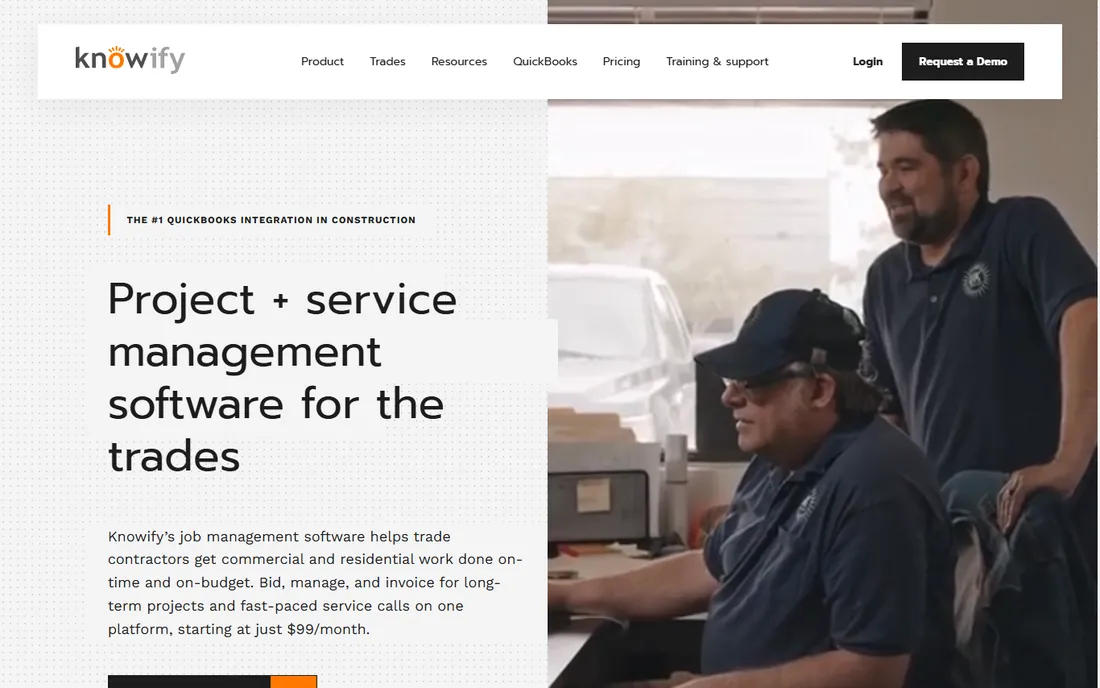
Knowify is the contractor's job-costing platform that happens to keep books. It handles the full project arc: bids, contracts, change orders, progress billing, purchase orders and real-time job costing, all syncing to QuickBooks Online or Desktop. The Service Pro add-on ($99/month) covers dispatch and equipment history for the service side. Pricing is published: Core $99 per month annual, Advanced $329 with 10 users.
The honest catch is the jump between tiers. Core handles fixed-price contracts and AIA billing, but job costing, budgets and WIP reporting need Advanced at $329, which is serious money for a small shop. Knowify fits electrical contractors doing commercial or large residential project work who need to know each job's margin in real time.
What we like- Built for trade contractors: bidding, contracts, change orders, AIA billing and job costing
- The deepest QuickBooks integration in construction software
- Service dispatch available as an add-on
Watch out for- Core at $99 covers one user with extras at $29 each
- Real job costing and budgets need Advanced ($329/month)
- Overkill for pure service-call shops with no project work

#7
Jobber
Best for: Residential electrical shops wanting scheduling, dispatch and invoicing in one
Visit getjobber.com
Starting price$49/month (Core plan, monthly; $29 annual)
Free planNo (14-day free trial)
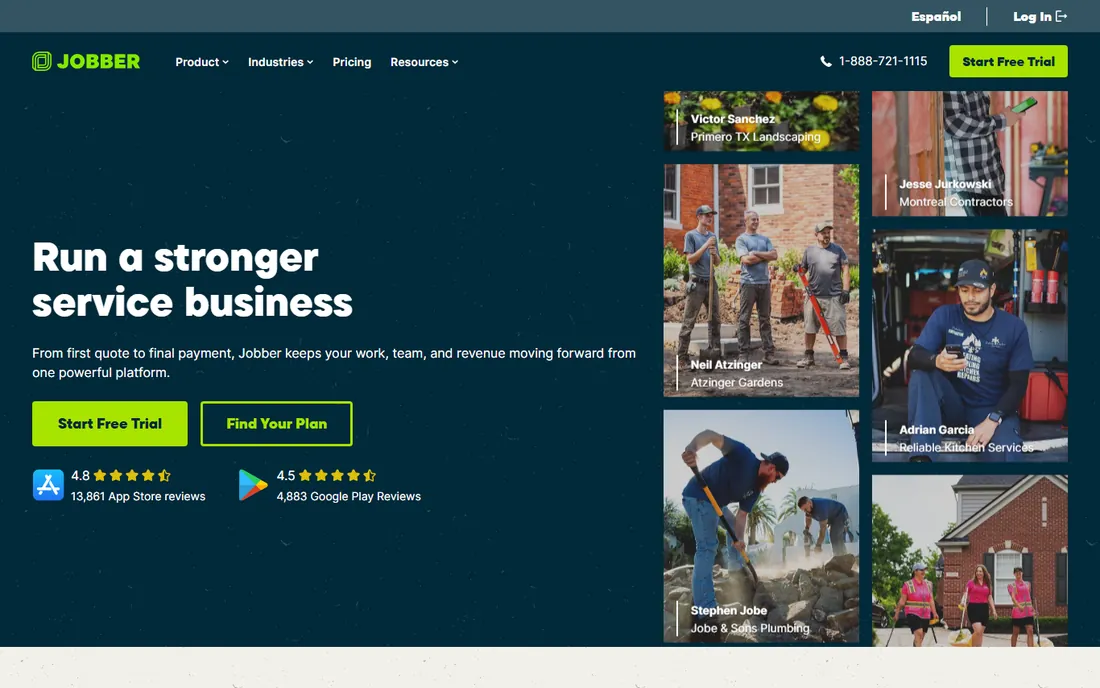
Jobber is the field-service platform most small electrical shops actually buy. Core at $49 per month monthly ($29 annual) covers quoting, scheduling, invoicing, online payments and a client hub for one user. Connect adds QuickBooks sync and automated reminders; Grow adds job costing and two-way texting. The mobile app is strong, which matters for techs in the field.
The honest catch is that Jobber is not accounting software: it handles the money in and out, but the real books still live in QuickBooks or Xero. Job costing waits until Grow at $199 per month. Jobber fits residential electrical contractors who need dispatch, quoting and invoicing handled well and will pair it with QuickBooks for the ledger.
What we like- Quoting, scheduling, dispatch, invoicing and payments built for home services
- QuickBooks Online sync
- Transparent published pricing with a cheap solo tier
Watch out for- Job costing only arrives on Grow ($199/month and up)
- Accounting depth is invoicing-level, not full books
- Per-user costs add up as the crew grows

#8
Housecall Pro
Best for: Service-focused electrical businesses wanting automated customer follow-up
Visit housecallpro.com
Starting price$79/month (Basic plan, monthly; $59 annual)
Free planNo (14-day free trial)
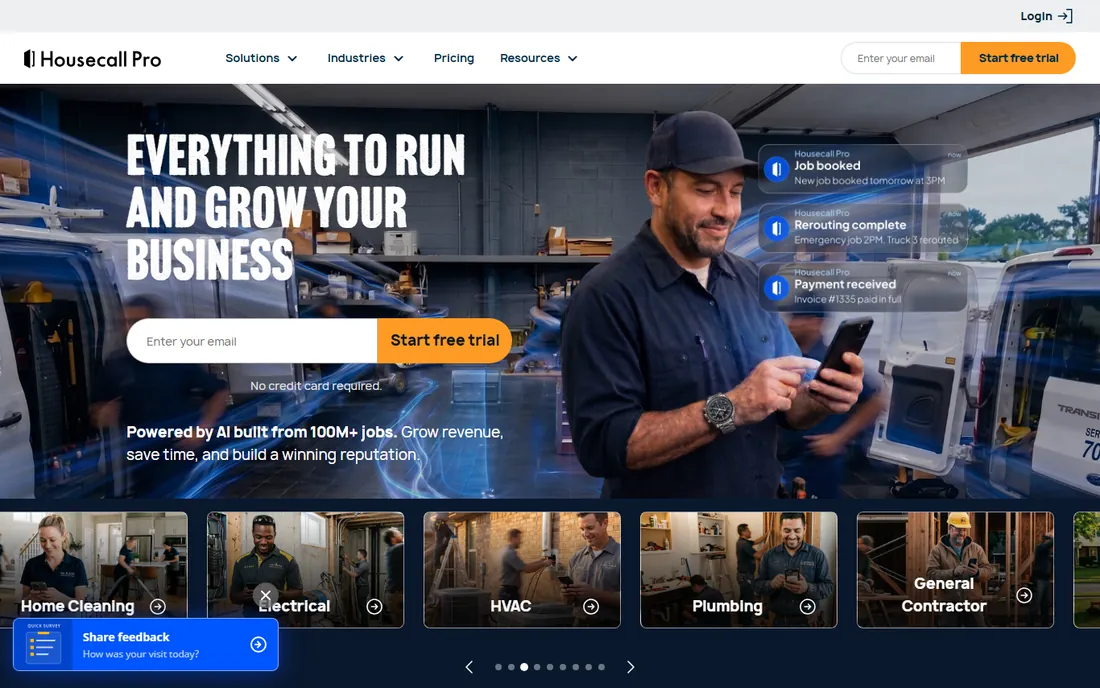
Housecall Pro targets the service side of electrical work: dispatching techs, sending on-my-way texts, collecting payment on site and automatically requesting reviews after the job. The price book feature fits electrical service pricing, and the mobile app is well rated. Basic starts at $79 per month monthly ($59 annual) for one user, with Essentials at $189 and Max at $329.
The honest catch is the per-user climb. A five-person team lands on Essentials at $189 per month annual, and reporting depth disappoints owners who want real job profitability. Like Jobber, it is a field-service tool that syncs to QuickBooks rather than replacing it. Housecall Pro fits electrical service businesses that live on service calls and want the customer communication automated.
What we like- Strong dispatch board, on-my-way texts and automated review requests
- Price book features suit electrical service work
- QuickBooks sync and in-app payments
Watch out for- Basic at $79 covers one user
- Essentials ($189) and Max ($329) climb fast with team size
- Job costing and reporting are lighter than Knowify or ServiceTitan

#9
ServiceTitan
Best for: Large electrical contractors needing an all-in-one operations platform
Visit servicetitan.com
Starting priceSee website (quote-only; not published)
Free planNo (demo-based sales)

ServiceTitan is the enterprise platform of the trades. Dispatch, CRM, call booking, price book management, marketing automation, payroll-adjacent HR and accounting integrations run in one system built for companies with many techs and office staff. For a large electrical contractor, it replaces half a dozen tools and gives ownership real reporting across crews and branches.
The honest catch is everything commercial. Pricing is quote-only, third-party estimates run $245 to $500 per technician per month, implementation fees run into the thousands, and contracts run a year or more. A five-tech shop could pay more for ServiceTitan than for every other tool on this list combined. It fits established electrical contractors with 15-plus techs and the revenue to justify enterprise software.
What we like- Deep dispatch, call handling, price book, marketing and accounting features in one platform
- Built for multi-crew operations with real reporting
- Extensive integrations including Sage and Viewpoint
Watch out for- No published pricing and a mandatory sales process
- Third-party estimates put it at $245-$500 per technician per month with large implementation fees
- Long contracts and heavy onboarding

#10
Sage 50
Best for: Established contractors wanting desktop accounting with real job costing
Visit sage.com
Starting price$128.67/month (Pro Accounting, Sage 50 Cloud, per Sage's pricing page)
Free planNo (trial terms on Sage's site)
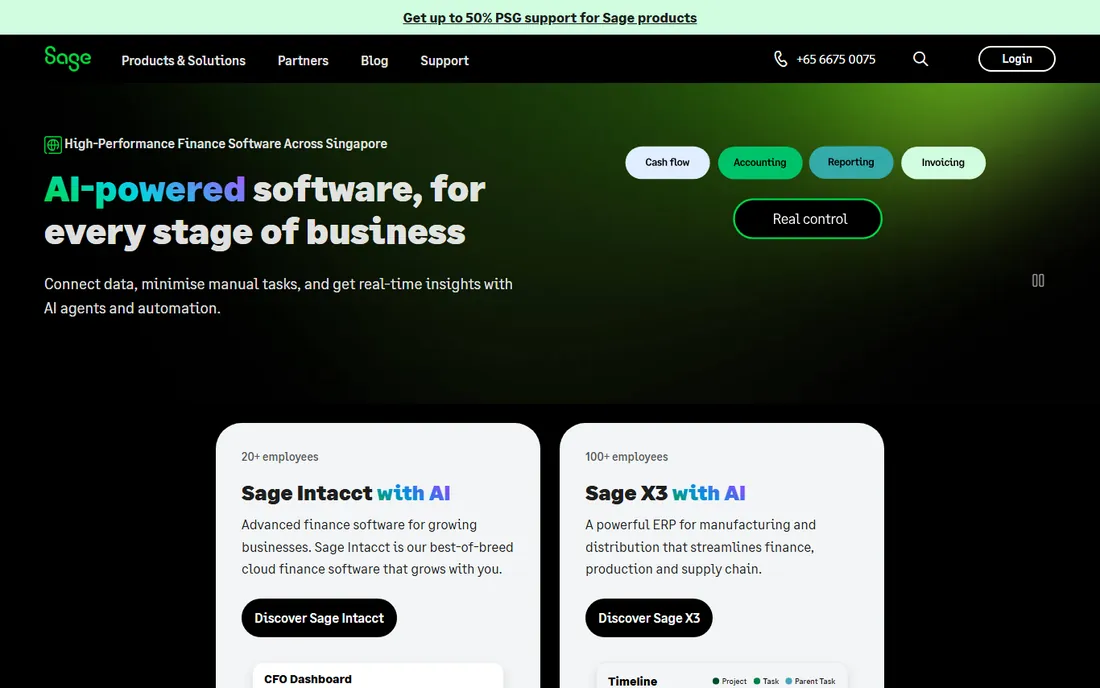
Sage 50 (formerly Peachtree) is the old hand of contractor accounting. It does real job costing, tracks materials inventory, handles change orders on Premium and Quantum, and scales to 40 users, which covers most electrical contractors' entire growth arc. Sage's own pricing page lists Pro Cloud from $128.67 per month, with Premium and Quantum above it.
The honest catch is the era it comes from. The desktop heritage means a dated interface, and true anywhere-access needs the cloud tier or hosting. At $128.67 and up it costs more than QuickBooks Plus while offering a smaller integration ecosystem. Sage 50 fits established electrical contractors with an office bookkeeper who want deep job costing in one desktop-grade product and do not mind the learning curve.
What we like- True job costing, inventory and multi-company accounting in a mature product
- Premium and Quantum tiers scale to 40 users
- Construction-friendly features like change-order tracking on higher tiers
Watch out for- Desktop roots show: the interface feels dated and remote access needs the cloud tier
- The most expensive pure-accounting pick here
- Payroll is a separate paid module
Quick comparison
| Tool | Best for | Starting price | Free plan |
|---|
 QuickBooks Online QuickBooks Online | Electrical contractors wanting the industry-standard accounting platform | $38/month (Simple Start plan) | Yes ($0 free plan with limited invoices) |
| Xero | Contractors wanting unlimited users and clean bank reconciliation | $25/month (Early plan) | No (30-day free trial) |
| FreshBooks | Solo electricians and small shops that bill by invoice and time | $23/month (Lite plan) | No (30-day free trial) |
| Wave | One-truck electricians who need free invoicing and bookkeeping | $0/month (Starter plan, free) | Yes ($0 Starter plan) |
| Zoho Books | Small contractors wanting a free plan with room to grow cheaply | $15/month (Standard plan, annual) | Yes ($0 free plan for micro businesses) |
| Knowify | Electrical contractors doing project work who need job costing with QuickBooks sync | $99/month (Core plan, annual) | No (14-day free trial) |
| Jobber | Residential electrical shops wanting scheduling, dispatch and invoicing in one | $49/month (Core plan, monthly; $29 annual) | No (14-day free trial) |
| Housecall Pro | Service-focused electrical businesses wanting automated customer follow-up | $79/month (Basic plan, monthly; $59 annual) | No (14-day free trial) |
| ServiceTitan | Large electrical contractors needing an all-in-one operations platform | See website (quote-only; not published) | No (demo-based sales) |
| Sage 50 | Established contractors wanting desktop accounting with real job costing | $128.67/month (Pro Accounting, Sage 50 Cloud, per Sage's pricing page) | No (trial terms on Sage's site) |
Is your product missing or out of date?
We review this list regularly. Vendors can request a listing, send updated pricing or ask about featured placement.
How to match the software to your electrical business
Start with your work mix. If most revenue comes from service calls, a field-service tool like Jobber or Housecall Pro plus QuickBooks for the books covers you. If most revenue comes from projects, Knowify or Sage 50 give you the job costing that decides whether a bid was smart. If you are solo with a van, Wave or FreshBooks handle invoicing until the business justifies more.
Then check the QuickBooks question. Most trade accountants work in QuickBooks, and most field-service tools sync to it. If your CPA insists on QuickBooks, that settles the ledger side and you only choose the field tool. If you do your own books, Xero or Zoho Books save money, but confirm your tax preparer can work with your choice before committing.
Count the real users. Per-seat pricing punishes growing crews: five office users on QuickBooks Plus cost far more than on Xero's unlimited-user plans. Field tools charge per tech or per tier, so model the crew size you expect in a year, not today. And check payroll: none of these include it at the base price, so budget the payroll add-on separately wherever your techs get paid.
Job costing: the feature that separates contractor software from generic accounting
Job costing answers one question: did this job make money? It assigns labor hours, materials, permits, subcontractors and overhead to each job, then compares actual cost to the bid. Generic accounting software tracks the business; job-costing software tracks each job inside the business. For electrical contractors, that difference is the whole game.
On this list, Knowify and Sage 50 do job costing natively and deeply. QuickBooks Online does it on Plus ($140/month) through project profitability. Jobber adds it on Grow ($199/month). Xero needs Established ($90) or add-ons. FreshBooks, Wave and Zoho Books on lower tiers do not do it at all, which is fine for service-call shops and fatal for project bidders.
If you bid fixed-price work, treat job costing as a requirement, not a nice-to-have. Without it, you repeat losing bids because you never measured the last one. With it, every completed job teaches you how to price the next. That feedback loop is worth more than any other feature on this list.
How we chose
We started with the categories buyers search: accounting software for electrical contractors, contractor accounting software, electrician invoicing software and job costing software. We kept ten tools covering both pure accounting platforms and trade field-service platforms, since electrical contractors buy from both. For each one we opened the vendor's official homepage, checked the vendor's own pricing page for plans and free tiers, and compared job costing, dispatch, QuickBooks integration and company-size fit against public reviews on G2, Capterra and practitioner discussion on Reddit. Where a price could not be verified on the vendor's page we wrote "See website" rather than guessing.
Frequently asked questions
What is the best accounting software for a small electrical business?
QuickBooks Online is the safest default because accountants know it and it syncs with every major field-service tool. Solo electricians can start free on Wave, and small shops wanting cheap multi-user books can look at Xero ($25/month) or Zoho Books ($15/month annual).
Do electricians need job costing software?
If you bid fixed-price project work, yes. Job costing tracks labor, materials and overhead per job against the bid, which is how you learn which work is profitable. Knowify, Sage 50 and QuickBooks Online Plus do it well. Pure service-call shops can manage without it.
How much does accounting software cost for electrical contractors?
Pure accounting runs $0 to $38 per month at entry (Wave free, Zoho Books $15 annual, FreshBooks $23, Xero $25, QuickBooks $38). Trade platforms cost more: Jobber from $49, Housecall Pro from $79, Knowify from $99, Sage 50 from $128.67. ServiceTitan is quote-only and estimated far higher.
Should I use Jobber or QuickBooks for my electrical business?
They do different jobs. Jobber handles quoting, dispatch and invoicing in the field; QuickBooks keeps the official books your accountant files from. Most residential electrical shops run both, with Jobber syncing to QuickBooks. Jobber alone is not a complete accounting system.
Is QuickBooks good for electrical contractors?
Yes, with the right tier. Simple Start ($38/month) handles basic books, but job costing and project profitability need Plus ($140/month). Pair it with a field-service tool for dispatch, and it remains the most accountant-friendly choice in the trades.
What is the cheapest accounting software for electricians?
Wave at $0 and Zoho Books with its free plan are the cheapest legitimate options. FreshBooks Lite ($23) and Xero Early ($25) are the cheapest paid entries with real support. Free tiers work for invoicing and basic books but lack job costing.
Sources we checked (12)
- https://quickbooks.intuit.com/pricing/
- https://www.xero.com/us/pricing/
- https://www.freshbooks.com/pricing
- https://www.waveapps.com/pricing/
- https://www.zoho.com/books/pricing/
- https://knowify.com/pricing/
- https://www.getjobber.com/pricing/
- https://www.housecallpro.com/pricing/
- https://www.servicetitan.com/pricing/
- https://www.sage.com/en-us/accounting/
- https://www.g2.com/categories/accounting
- https://www.capterra.com/accounting-software/
Is your product missing or out of date?
We review this list regularly. Vendors can request a listing, send updated pricing or ask about featured placement.

Shihab Mia · Founder, Rankite
Shihab has spent more than a decade helping SaaS and e-commerce brands grow through search. He writes Rankite's software buying guides from pricing pages, documentation and public user reviews. More about Shihab.