How we make this list: we compare pricing pages, product documentation and public user reviews. Rankite is independent; if a vendor ever pays for a featured spot, that listing is clearly labeled Partner.
How we chose
We covered both sides of studio finances: class management platforms with tuition billing built in, and general accounting tools for the books. For each candidate we confirmed the product is current, checked how it handles tuition, costumes, recital fees and instructor pay, and weighed small-business reviewer sentiment. Only live products made the list.
Quick comparison
| Tool | Best for | Starting price | Free plan |
|---|
 Jackrabbit Dance Jackrabbit Dance | Studios that want class management with tuition billing built in | See website | See website |
 DanceStudio-Pro DanceStudio-Pro | Studios wanting all-in-one operations and billing | See website | See website |
 The Studio Director The Studio Director | Studios that need dependable tuition and fee management | See website | See website |
 QuickBooks QuickBooks | Studios that want standard accounting the CPA understands | See website | No (trial available) |
 FreshBooks FreshBooks | Studio owners who want the simplest invoicing and bookkeeping | See website | See website |
 Wave Wave | Studios that want free accounting for the basics | Free | Free plan available |
 Xero Xero | Studios working with a bookkeeper who prefers Xero | See website | See website |
Is your product missing or out of date?
We review this list regularly. Vendors can request a listing, send updated pricing or ask about featured placement.
The best accounting software for dance studio
A dance studio's finances are wonderfully specific: monthly tuition by class, costume fees in spring, recital ticket revenue, instructors paid per class, and a summer intensive that breaks every normal billing pattern. Generic accounting handles the books; studio software handles the tuition. These seven tools cover both halves.
Starting priceSee website
Free planSee website
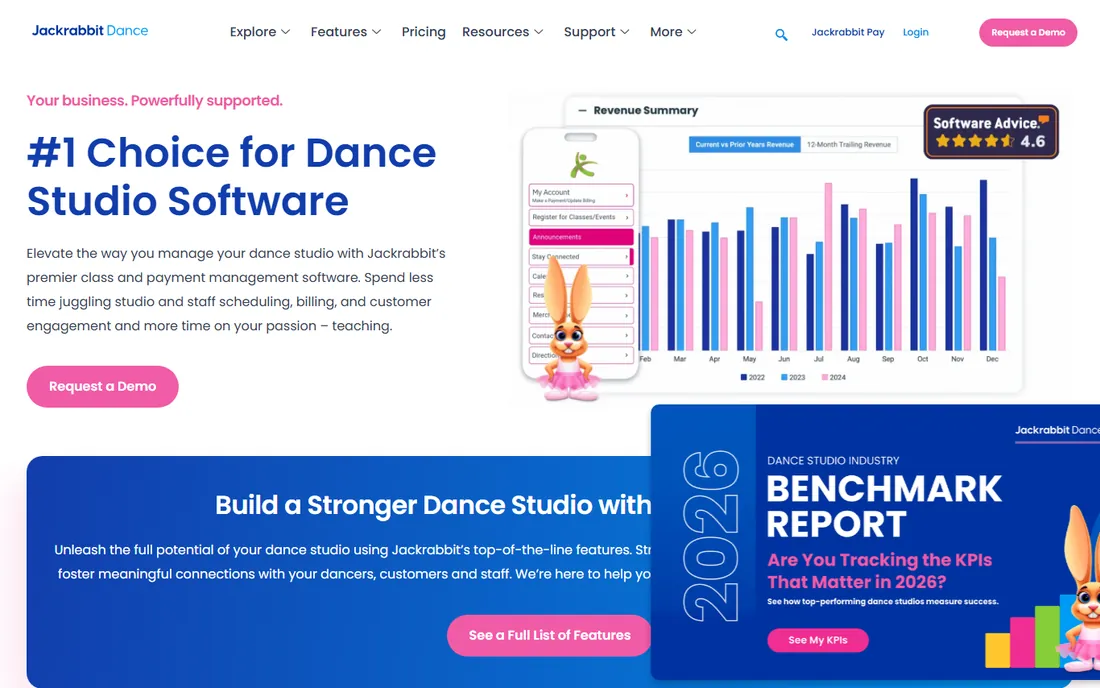
Jackrabbit Dance is the studio industry's default: class scheduling, enrollment, attendance, costume management and automated tuition billing with a parent portal for payments. The billing handles dance-studio realities (monthly tuition, discounts, prorating, costume fees) that generic invoicing fumbles. Staff management covers instructor scheduling and payroll inputs.
It is operations software with billing, not accounting: the books still need QuickBooks or Xero for taxes and financials. But for the studio owner drowning in tuition admin, Jackrabbit's automation is the highest-ROI purchase available.
What we like- Purpose-built for dance and class-based businesses
- Automated tuition billing
- Parent portal
Watch out for- Accounting depth is lighter than QuickBooks
- Pricing scales with enrollment
Starting priceSee website
Free planSee website
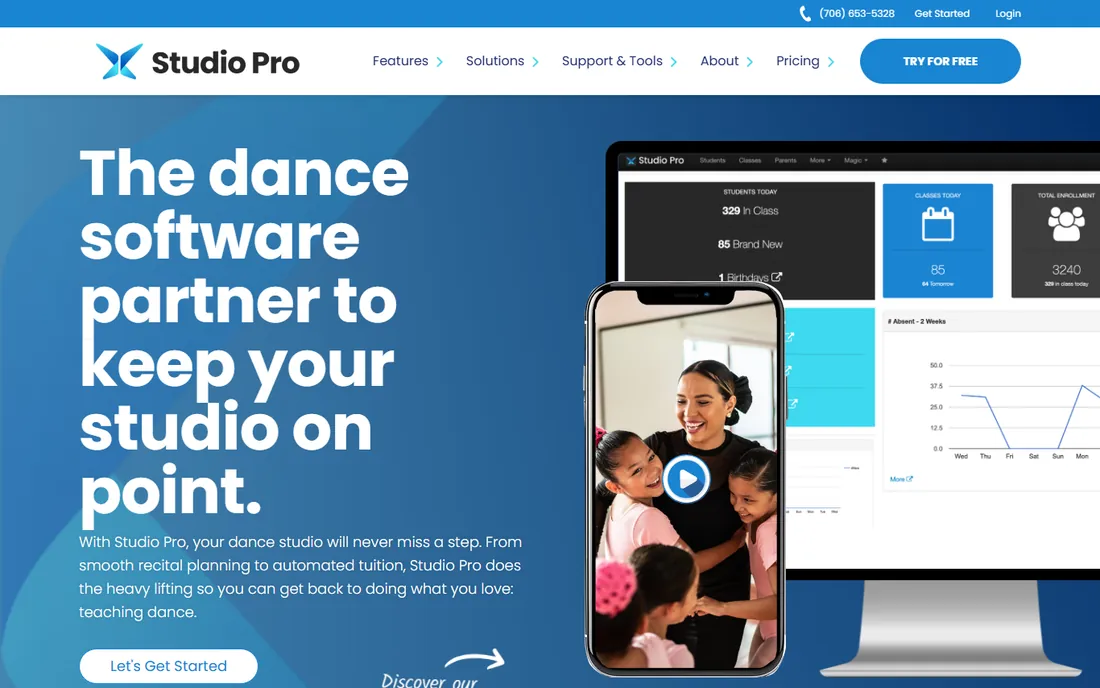
DanceStudio-Pro covers the studio lifecycle: online registration, class management, attendance, billing, costume tracking and reporting, with integrated payment processing. Studios run enrollment season through recital on one platform. The feature set is broad and the pricing is accessible.
Market presence trails Jackrabbit, which means fewer peer references and integrations. But as the all-in-one alternative, it gives studios a genuine choice in the category rather than a default.
What we like- Comprehensive studio management
- Online registration
- Integrated payments
Watch out for- Interface less modern than Jackrabbit
- Smaller market share
Starting priceSee website
Free planSee website
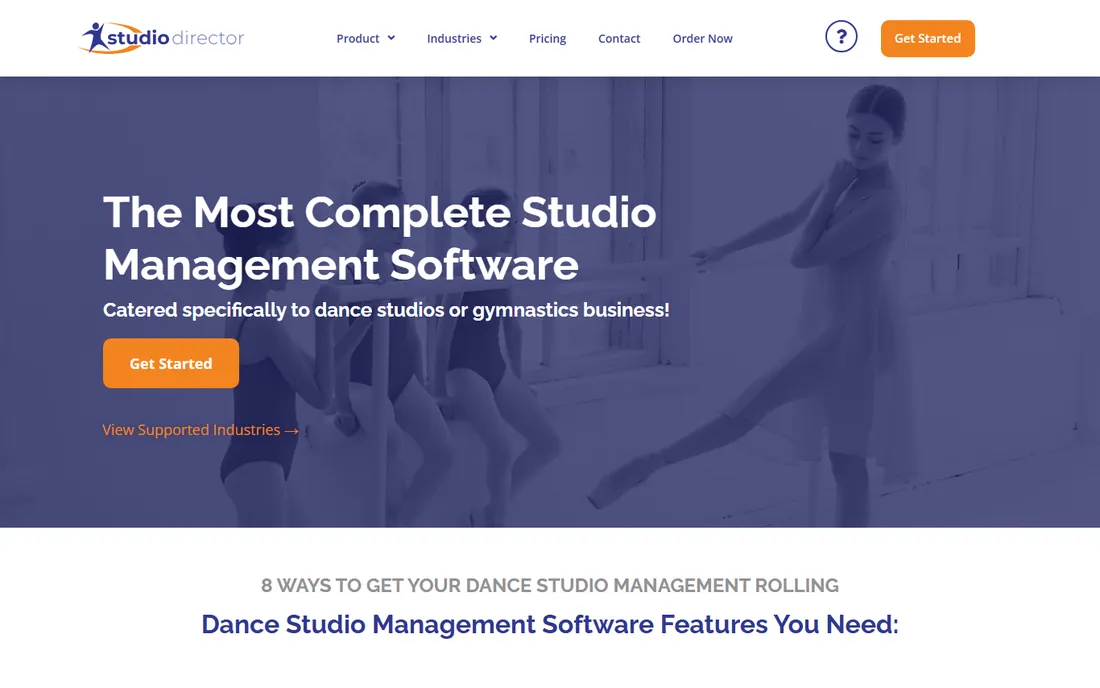
The Studio Director handles the money side thoroughly: tuition billing with complex fee structures, costume and recital fees, discounts, autopay and detailed financial reporting. It serves dance plus music, theater and gymnastics studios, which broadens the peer community. Owners who live in the financial reports appreciate the depth.
The interface reflects its longevity rather than modern design trends. But for the studio where tuition complexity (sibling discounts, multi-class pricing, seasonal intensives) is the core problem, the billing engine's flexibility matters more than polish.
What we like- Strong tuition billing with flexible fee structures
- Good reporting
- Serves dance, music and theater
Watch out for- Learning curve for the full feature set
- Design feels dated
Starting priceSee website
Free planNo (trial available)
QuickBooks is the small-business accounting standard: invoicing, expenses, bank reconciliation, financial reports and payroll, in the software the studio's CPA already uses. For the business side (taxes, profitability, paying instructors), it is the safe choice.
It knows nothing about dance: tuition billing, class enrollment and costume fees need the studio platforms above, synced or exported to QuickBooks. The standard studio stack is Jackrabbit (or equivalent) for tuition plus QuickBooks for the books. Buy both, connect them.
What we like- Every accountant knows it
- Strong invoicing and expense tracking
- Payroll available
Watch out for- No studio-specific features
- Tuition billing needs workarounds or a studio platform
#5
FreshBooks
Best for: Studio owners who want the simplest invoicing and bookkeeping
Visit freshbooks.com
Starting priceSee website
Free planSee website

FreshBooks suits the simpler studio operation: invoicing for private lessons, workshops and small programs, expense tracking and clean profit-and-loss reports, all in an interface non-accountants tolerate. Independent instructors and tiny studios find it friendlier than QuickBooks.
Growing studios with complex tuition will outgrow it and need the studio platforms. But for the boutique studio or the instructor building a teaching business, FreshBooks' simplicity is the right starting weight.
What we like- Very easy invoicing
- Good for private lessons and freelancers
- Clean reports
Watch out for- Less accounting depth than QuickBooks
- No studio-specific features
Starting priceFree
Free planFree plan available

Wave's accounting and invoicing are genuinely free, which makes it the zero-cost bookkeeping option for a new studio. Send invoices, track expenses, run basic reports, and add paid payroll where available. For the studio testing whether the business works, free books remove one worry.
Limits appear with growth: payroll availability, advanced reporting and integrations trail the paid tools. And tuition billing still needs a studio platform. But as the free accounting layer under Jackrabbit or DanceStudio-Pro, Wave is a legitimate stack.
What we like- Free accounting, invoicing and receipts
- Easy to start
- Fine for tiny studios
Watch out for- No payroll in some states
- Limited advanced features
- No studio-specific billing
#7
Xero
Best for: Studios working with a bookkeeper who prefers Xero
Visit xero.com
Starting priceSee website
Free planSee website

Xero is the modern accounting alternative: clean interface, excellent bank feeds and reconciliation, invoicing and reporting, with a strong ecosystem. Studios whose bookkeeper prefers Xero (common outside the US) get capable books without QuickBooks' bulk.
Like QuickBooks, it handles the business accounting while studio platforms handle tuition. Choose between Xero and QuickBooks on bookkeeper preference and ecosystem, not on dance features, which neither has.
What we like- Clean accounting with strong bank reconciliation
- Good multi-currency
- Bookkeeper-friendly
Watch out for- No studio features
- Smaller US accountant network than QuickBooks
Key takeaways
- Jackrabbit Dance, DanceStudio-Pro and The Studio Director handle tuition billing and studio operations; pick one as the operational core.
- QuickBooks, Xero, FreshBooks and Wave handle the actual accounting; every studio needs one for taxes and financials.
- The standard stack is studio software for tuition plus accounting software for books, connected or reconciled monthly.
- Wave is the free accounting start; QuickBooks is the CPA-safe standard.
The two-system reality
New studio owners hunt for one tool that does everything. It does not exist, because tuition billing and accounting are different jobs. Studio platforms (Jackrabbit, DanceStudio-Pro, The Studio Director) excel at enrollment, class-based billing, costume fees and parent payments. Accounting platforms (QuickBooks, Xero, Wave, FreshBooks) excel at the chart of accounts, tax reports, bank reconciliation and paying instructors.
Run both. Let tuition flow through the studio platform with autopay, export or sync the revenue into accounting monthly, and reconcile. The studios with clean finances all do some version of this. The ones with shoebox finances tried to make one tool do both jobs.
Set a monthly reconciliation cadence and keep it sacred. On the same day each month, export tuition collected from the studio platform, match it against bank deposits, and record the revenue in accounting. Investigate discrepancies immediately: failed autopays, refunds processed in one system but not the other, and manual adjustments are the usual culprits. This one habit prevents the year-end scramble where the CPA finds tuition revenue that never made it into the books. Fifteen minutes monthly beats fifteen hours in April.
Pricing tuition for profit
Software cannot fix underpriced tuition, and most studios underprice. The math: total monthly costs (rent, instructors, insurance, software, your salary) divided by enrolled students equals break-even tuition per student. Add the margin for recital costs, costume float and slow summer months. Then compare against local competitors, not to match them but to position deliberately.
The billing features in these tools (discounts, autopay, late fees) protect the margin you set. But the price itself is a business decision the software only executes. Set it with the break-even math in front of you, review it annually, and raise it before resentment sets in.
Handle discounts deliberately. Sibling discounts, multi-class discounts and staff discounts are marketing tools with real costs; track what each costs annually in the studio platform's reporting. Cap them explicitly (second child 10 percent, not "a deal"), review them yearly, and never discount from an unprofitable base price. Scholarships deserve the same discipline: budget a fixed scholarship fund rather than comping tuition ad hoc. Generosity with a budget sustains; generosity without one just erodes margin quietly.
Plan for seasonality explicitly. Most studios earn heavily September through May and bleed in summer, which is why the summer intensive, camps and workshops matter as much for cash flow as for artistry. Build a cash reserve target (three months of fixed costs is the classic benchmark) and let the accounting software's cash-flow reports tell you whether the plan is working. The studio that survives its fifth summer is the one that budgeted for the first four. Cash flow, not talent, is what closes most studios; the accounting software just makes the cash flow visible in time to act. Run the reports monthly, trust what they tell you, and adjust before the slow season rather than during it. The numbers are only useful if someone acts on them while there is still time. Visibility without action is just expensive awareness.
Frequently asked questions
Do we need both studio software and accounting software?
Yes, for any studio past the hobby stage. Studio software manages enrollment and tuition collection; accounting software manages taxes, financials and payroll. They serve different people: the studio platform serves parents and staff, the accounting serves the CPA and the IRS.
How much does dance studio software cost?
Studio platforms typically run $50 to $200+ monthly by enrollment size. Accounting: Wave is free, FreshBooks and Xero run $15 to $40 monthly, QuickBooks $30 to $80+. Budget both from the start.
Can parents pay tuition online?
Yes, and they should: all three studio platforms offer parent portals with card and ACH autopay. Autopay adoption is the single biggest lever on on-time tuition collection. Enable it, promote it, and charge for the exceptions.
How do we handle costume and recital fees?
Studio platforms track costume fees per class and recital-related charges separately from tuition. Bill them as distinct line items with clear deadlines, and collect before ordering costumes. The reporting shows who owes what at a glance.
What about paying instructors?
Instructor pay (per class, hourly, or salary) runs through payroll: QuickBooks Payroll, Gusto, or the studio platform's payroll inputs plus a payroll service. Track it in accounting as labor cost per program to see which classes actually profit.
When should we hire a bookkeeper?
When the monthly reconciliation takes more than two hours, when payroll covers more than a handful of instructors, or when tax time produces panic. A bookkeeper for a few hours monthly costs less than the errors they prevent, and they will bless the two-system stack because it gives them clean inputs. Bring one in before growth, not after the mess.
Sources we checked (7)
- https://jackrabbitdance.com
- https://dancestudio-pro.com
- https://thestudiodirector.com
- https://quickbooks.intuit.com
- https://freshbooks.com
- https://waveapps.com
- https://xero.com
Is your product missing or out of date?
We review this list regularly. Vendors can request a listing, send updated pricing or ask about featured placement.

Shihab Mia · Founder, Rankite
Shihab has spent more than a decade helping SaaS and e-commerce brands grow through search. He writes Rankite's software buying guides from pricing pages, documentation and public user reviews. More about Shihab.