How we make this list: we compare pricing pages, product documentation and public user reviews. Rankite is independent; if a vendor ever pays for a featured spot, that listing is clearly labeled Partner.
Key takeaways
- Sage Intacct and NetSuite lead analytics depth for mid-market and enterprise; QuickBooks and Xero cover SMB analytics well.
- Fathom and Float are the specialist analytics layer: Fathom for reporting and KPIs, Float for cash flow forecasting.
- FreshBooks suits service businesses with simpler analytics needs; Zoho Books offers strong value in the Zoho ecosystem.
- The best analytics come from clean data: chart of accounts design matters more than the reporting tool.
Quick comparison
| Tool | Best for | Starting price | Free plan |
|---|
 Sage Intacct Sage Intacct | Mid-market companies needing real financial analytics | See website | No |
 NetSuite NetSuite | Enterprises wanting ERP-wide analytics | See website | No |
 QuickBooks QuickBooks | SMBs wanting solid built-in reporting | See website | Free trial |
 Xero Xero | Modern SMBs wanting clean analytics and integrations | See website | Free trial |
 Fathom Fathom | Beautiful financial reporting and KPI tracking | See website | Free trial |
 Float Float | Cash flow forecasting and scenario planning | See website | Free trial |
 FreshBooks FreshBooks | Service businesses needing simple financial insight | See website | Free trial |
 Zoho Books Zoho Books | Value accounting inside the Zoho ecosystem | See website | Yes |
Is your product missing or out of date?
We review this list regularly. Vendors can request a listing, send updated pricing or ask about featured placement.
The best accounting software for analytics
Accounting analytics turns bookkeeping into decisions: profitability by customer, cash forecasts, budget variance, KPI dashboards. Some platforms build analytics in; others pair with specialist tools. Eight options, from ERP depth to focused forecasting.
Starting priceSee website
Free planNo
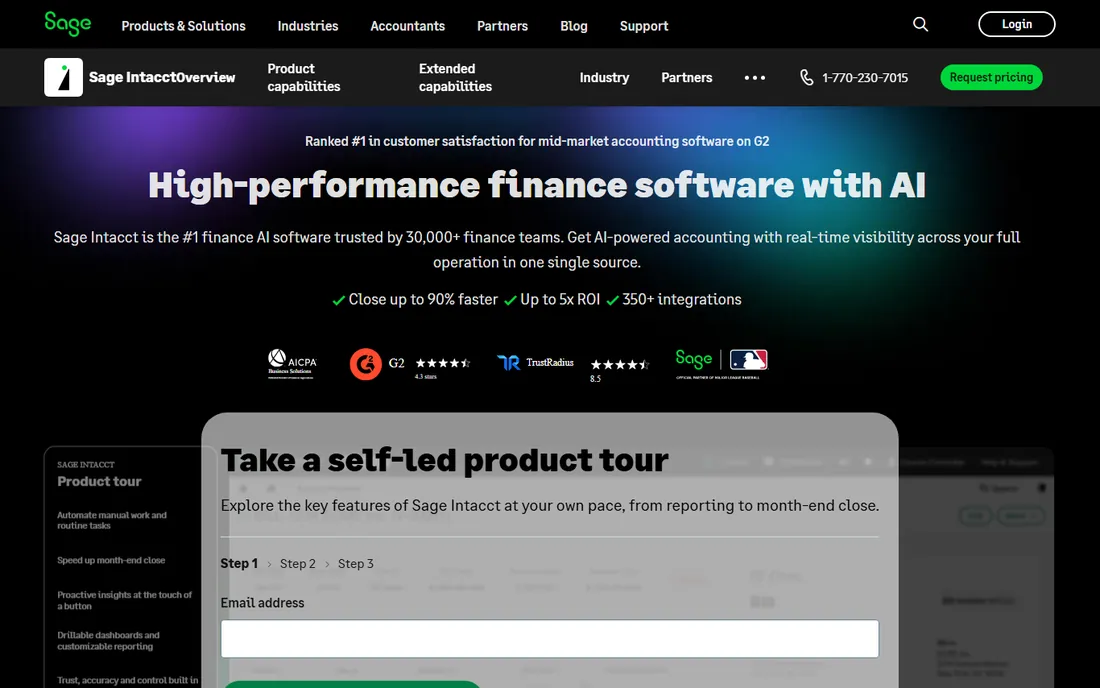
Sage Intacct's analytics are its selling point: dimensional chart of accounts, customizable dashboards and reports that slice financials by department, project, location or any dimension, with multi-entity consolidation for growing companies. Finance teams outgrow QuickBooks' reporting and land here.
The honest costs are price and implementation. This is mid-market software with mid-market process; small businesses find it heavy and expensive. But for companies where financial analytics drive decisions, Intacct's reporting depth justifies the step up.
What we like- Powerful dimensional reporting and dashboards
- Multi-entity consolidation
- Strong for SaaS and nonprofit metrics
Watch out for- Expensive for small businesses
- Implementation needs professional help
Starting priceSee website
Free planNo
NetSuite (Oracle) puts analytics across the whole business: financials, inventory, orders and CRM in one data model, so reports span departments without integration projects. SuiteAnalytics and saved searches let finance teams build persistent operational dashboards.
The honest reality is enterprise software: significant cost, lengthy implementation, and analytics that reward skilled admins. But organizations outgrowing separate accounting and operations systems get analytics impossible in disconnected tools.
What we like- Unified ERP data (financials, inventory, CRM) in one analytics surface
- Saved searches and SuiteAnalytics
- Scales globally
Watch out for- Expensive and complex
- Analytics power needs skilled administrators
Starting priceSee website
Free planFree trial
QuickBooks Online's reporting covers most SMB analytics needs: profit and loss, cash flow, sales and expense reports with reasonable customization, and the Advanced tier adds KPI dashboards, batch operations and deeper insights. The accountant ecosystem means help is everywhere.
The honest ceiling is complexity. Multi-entity, dimensional analysis and heavy customization push toward Intacct. But for the vast SMB middle, QuickBooks' built-in analytics plus its ubiquity make it the default.
What we like- The SMB standard with good standard reports
- Huge accountant ecosystem
- Advanced tier adds deeper analytics and KPIs
Watch out for- Reporting customization limits versus Intacct
- Advanced tier pricing jumps
#4
Xero
Best for: Modern SMBs wanting clean analytics and integrations
Visit xero.com
Starting priceSee website
Free planFree trial

Xero's analytics appeal is clarity: a clean dashboard, tracking categories for dimensional reporting, and an enormous app ecosystem (including Fathom and Float) for specialized analysis. International SMBs appreciate its multi-currency strength.
The honest comparison is depth. Power users eventually want Intacct-level reporting; Xero's answer is its ecosystem rather than native depth. But for modern SMBs valuing usability and integrations, Xero's analytics story is compelling.
What we like- Clean interface with good dashboard analytics
- 1,000-plus app ecosystem for specialized reporting
- Strong bank reconciliation
Watch out for- Payroll limited outside key markets
- Advanced reporting less deep than Intacct
Starting priceSee website
Free planFree trial
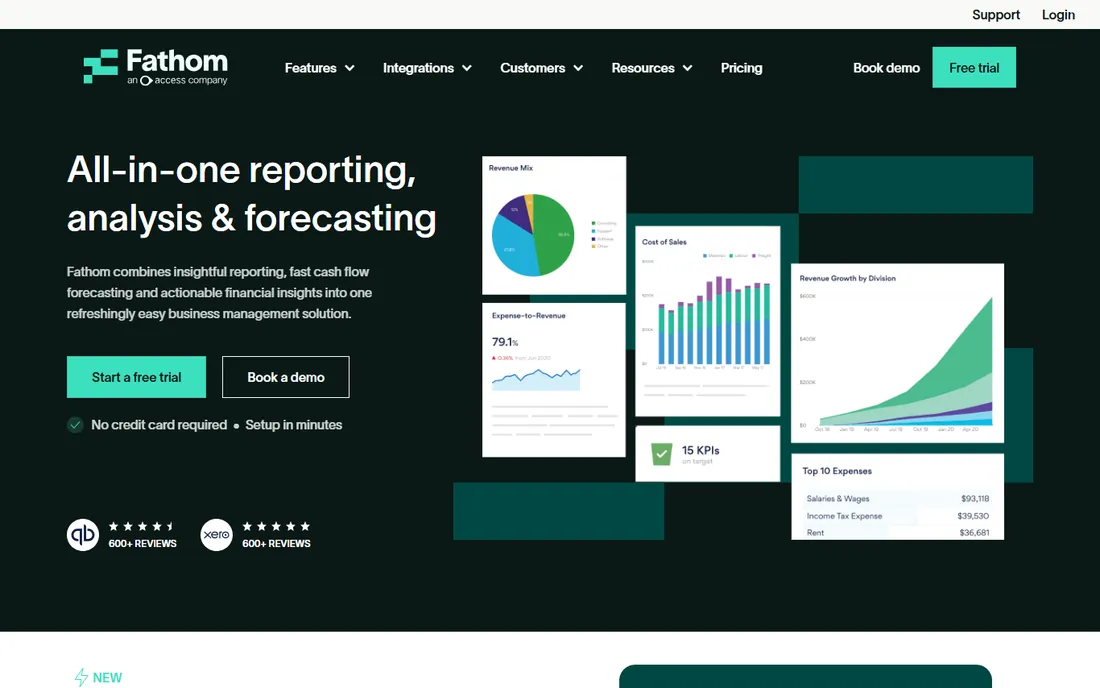
Fathom turns accounting data into management intelligence: KPI dashboards, trend analysis, benchmarking and board-ready reports generated from Xero or QuickBooks data. Accountants use it to deliver advisory services; businesses use it to understand performance.
The honest dependency is data quality. Fathom visualizes your accounting; messy books produce messy insights. But paired with clean data, its reporting elegance makes financial analytics accessible to non-accountants.
What we like- Gorgeous management reports, KPIs and benchmarking from Xero/QuickBooks data
- Consolidations
- Trusted by accountants worldwide
Watch out for- Reporting layer, not accounting
- Needs clean source data to shine
Starting priceSee website
Free planFree trial
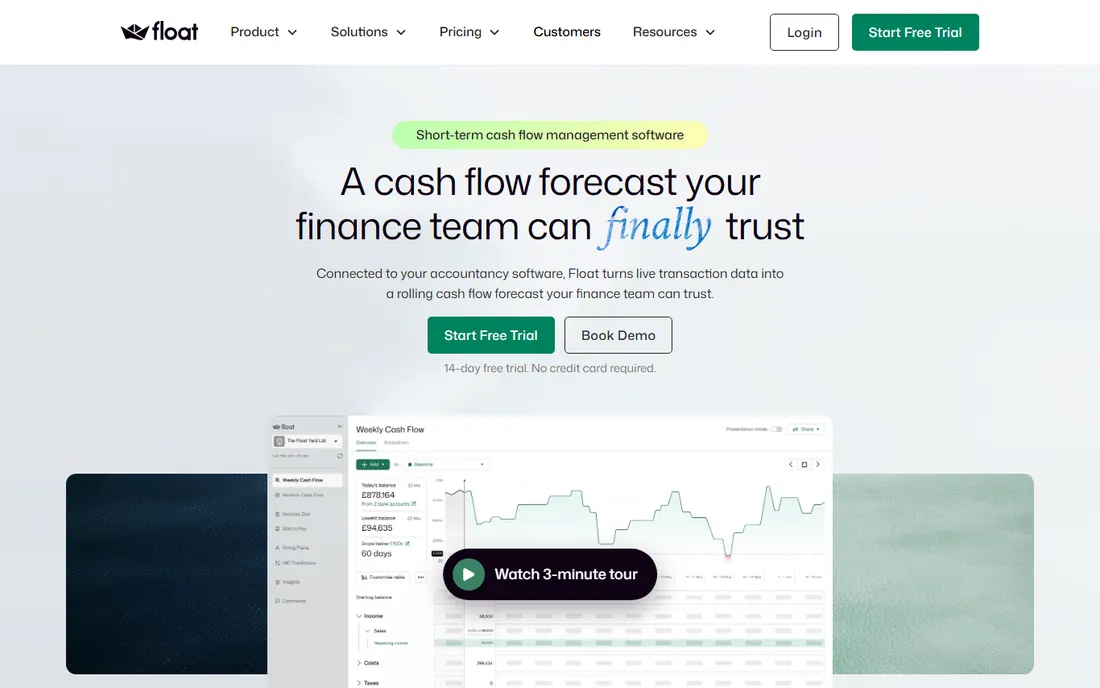
Float answers the most important financial question: what will our cash look like? Syncing with QuickBooks or Xero, it produces visual forecasts, scenario models and budget tracking that show whether you can hire, invest or will struggle with bills.
The honest scope is cash. Profitability analysis and KPI reporting belong to Fathom; Float does cash flow deeply. But for businesses where cash timing is survival, Float's focused forecasting is the most valuable analytics in this list.
What we like- Accurate, visual cash flow forecasts synced to accounting data
- Scenario modeling
- Answers "can we afford this" instantly
Watch out for- Forecasting focus
- Not a general reporting tool
Starting priceSee website
Free planFree trial
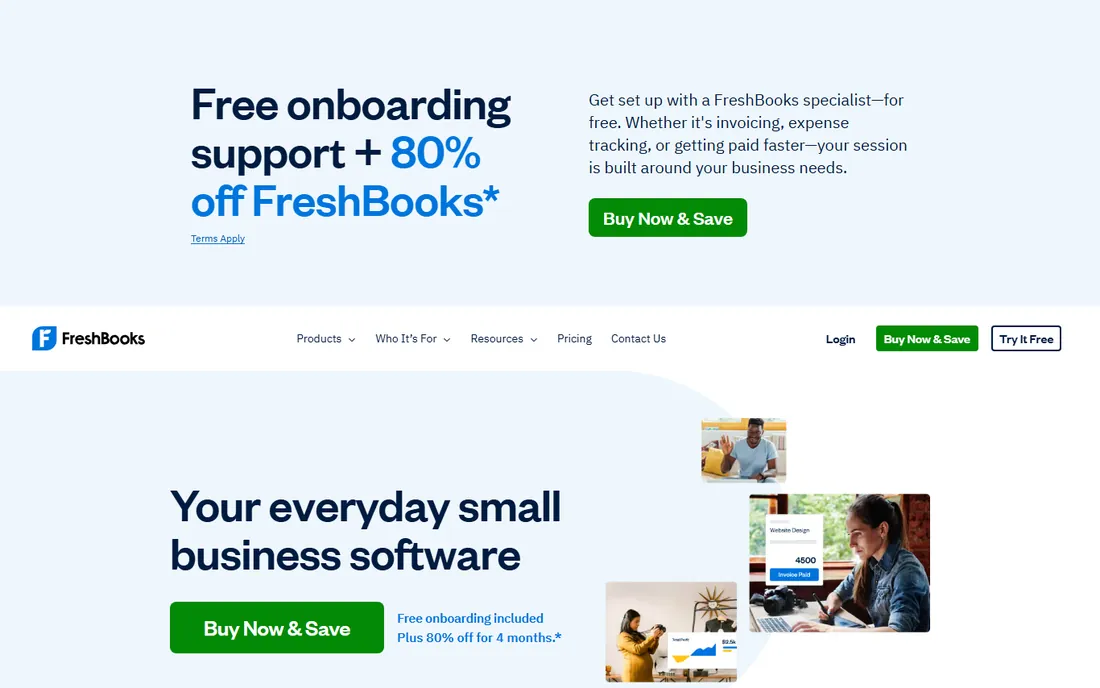
FreshBooks keeps accounting analytics simple: profit and loss, expense reports, time-tracking profitability and tax summaries in an interface non-accountants enjoy. Freelancers and service businesses get the financial picture without accounting training.
The honest limits are depth and rigor. Complex businesses need real double-entry platforms; FreshBooks trades depth for simplicity deliberately. But for service businesses whose analytics needs are "are we profitable and getting paid," it delivers exactly that.
What we like- Intuitive invoicing-centric accounting
- Good profit reports and expense tracking
- Excellent for freelancers and agencies
Watch out for- Analytics depth less than Xero/QuickBooks
- Double-entry purists find it light
#8
Zoho Books
Best for: Value accounting inside the Zoho ecosystem
Visit zoho.com
Starting priceSee website
Free planYes
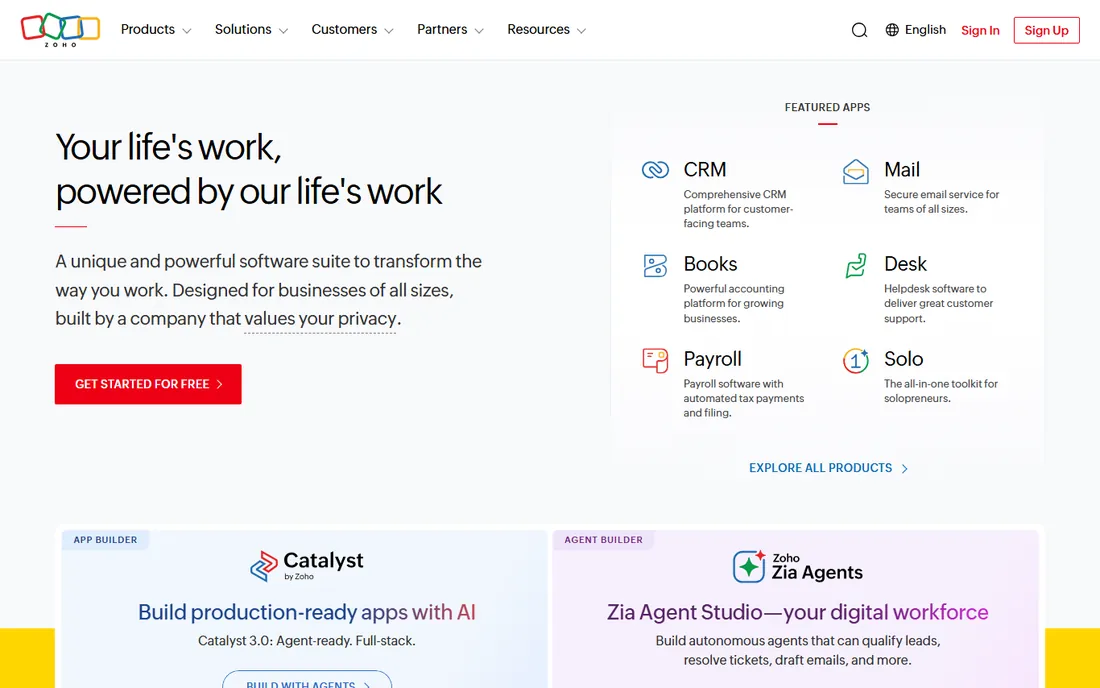
Zoho Books offers remarkable value: full-featured accounting with reporting, automation and a real free tier, deeply integrated with the Zoho suite (CRM, Inventory, Projects). Businesses running on Zoho get financials connected to operations natively.
The honest trade-offs are ecosystem and depth. Fewer accountants know Zoho Books than QuickBooks, and analytics trail the mid-market leaders. But for Zoho-centric businesses, the integrated value is unmatched at the price.
What we like- Genuine free tier
- Solid reporting and automation
- Deep integration with Zoho CRM, Inventory and apps
Watch out for- Smaller accountant ecosystem
- Advanced analytics less than Intacct
How we chose
We covered the analytics spectrum (ERP depth, SMB platforms, specialist reporting and forecasting layers), selecting established tools with real finance-team adoption. We weighed reporting depth, forecasting capability, data integration, pricing fairness and honest segment fit. Pricing comes from each vendor's own pricing page; unverifiable plans are marked "See website." No hands-on testing was performed.
What to look for before you buy
Design the chart of accounts for analytics. Dimensional tracking (departments, projects, locations) must be set up before transactions flow; retrofitting analytics onto flat books is painful.
Distinguish native versus ecosystem analytics. Some platforms report deeply natively (Intacct, NetSuite); others rely on apps (Xero with Fathom/Float). Both work; price and evaluate the complete stack.
Test with your real financials. Import actual data during trials and build the reports you need monthly. Demo data flatters every reporting tool.
Finally, involve your accountant early. The platform your accountant knows well beats the theoretically superior one they cannot support; ecosystem familiarity is a legitimate selection factor.
Building a finance analytics stack that lasts
The tools in this guide are only half the analytics equation. The other half is how your financial data is structured before it ever reaches a dashboard. A clean, consistent chart of accounts with departments, projects or locations tracked as dimensions turns basic reports into real analysis. A flat chart of accounts with everything in "general expenses" defeats even the best reporting tool. Before buying analytics software, spend a week fixing how transactions are categorized; it pays back more than any feature.
Decide where analysis happens. There are three patterns that work. First, native analytics: Sage Intacct or NetSuite report directly on live financial data, which suits finance teams that live in the ERP. Second, the specialist layer: QuickBooks or Xero for bookkeeping plus Fathom for management reporting and Float for cash forecasting, which suits SMBs that want best-of-breed without ERP complexity. Third, the warehouse pattern: accounting data flows into a data warehouse and BI tool (Power BI, Looker) for company-wide analysis, which suits data-mature organizations. Pick one pattern deliberately; mixing all three creates conflicting numbers.
Close the books on a schedule or analytics will always lag reality. Monthly close discipline (reconciled accounts, reviewed accruals, locked periods) is what makes dashboards trustworthy. Many small businesses run "continuous close" informally and wonder why reports shift; a defined close calendar with an owner fixes it. The analytics tool cannot compensate for books that are never finished.
Standardize KPI definitions in writing. "Gross margin", "CAC payback", "burn multiple" and even "revenue" mean different things to different people, and every analytics tool will happily compute each version. A one-page KPI dictionary (definition, formula, data source, owner) prevents the monthly argument about whose dashboard is right. Revisit it quarterly as the business changes.
Treat the accounting integration as the foundation, not an afterthought. Fathom and Float are only as good as the QuickBooks or Xero data feeding them; broken bank feeds, uncategorized transactions and duplicate accounts produce confident-looking wrong answers. Assign someone to review the bookkeeping quality monthly. The most common failure mode of finance analytics is not the tool, it is neglected source data.
Plan for auditability from the start. As the business grows, investors, lenders and auditors will ask how numbers were computed. Tools that preserve drill-down (from dashboard to transaction) and keep version history of reports save painful reconstruction later. NetSuite and Intacct do this natively; with the specialist-layer pattern, keep the underlying accounting files organized and reconciled.
Finally, budget for the human side. Someone has to build the reports, maintain the KPI definitions and explain variances each month. That is usually 10 to 20 percent of a finance hire's time at the SMB level, or a dedicated FP&A role as you scale. Software without an owner becomes shelfware; the stack works when a person is accountable for the numbers it produces.
Frequently asked questions
What is the best accounting software for financial analysis?
Sage Intacct for mid-market depth; NetSuite for enterprise; Fathom as the reporting layer on QuickBooks/Xero for beautiful KPI analysis. The best follows company size and complexity.
Do I need a separate analytics tool with QuickBooks?
For basic needs, no: QuickBooks' built-in reports suffice. For management reporting, KPIs and forecasting, Fathom and Float add significant value on top.
What is the difference between Fathom and Float?
Fathom focuses on financial reporting, KPIs and performance analysis; Float focuses on cash flow forecasting and scenario planning. Many businesses use both on the same accounting data.
Can small businesses do meaningful financial analytics?
Yes: clean books plus Xero or QuickBooks plus Fathom produce board-quality reporting affordably. The constraint is data discipline, not software cost.
How much does accounting analytics software cost?
SMB platforms run $15-50 monthly; specialist layers (Fathom, Float) add $40-60 monthly; mid-market (Intacct) and enterprise (NetSuite) are quote-based and significantly higher.
What are dimensional analytics in accounting?
Tagging transactions with dimensions (department, project, location, customer) so reports slice financials any way needed. Intacct's dimensional chart of accounts is the classic implementation.
Sources we checked (8)
- https://www.quickbooks.intuit.com
- https://www.xero.com
- https://www.freshbooks.com
- https://www.sageintacct.com
- https://www.netsuite.com
- https://www.zoho.com
- https://www.floatapp.com
- https://www.fathomhq.com
Is your product missing or out of date?
We review this list regularly. Vendors can request a listing, send updated pricing or ask about featured placement.

Shihab Mia · Founder, Rankite
Shihab has spent more than a decade helping SaaS and e-commerce brands grow through search. He writes Rankite's software buying guides from pricing pages, documentation and public user reviews. More about Shihab.