How we make this list: we compare pricing pages, product documentation and public user reviews. Rankite is independent; if a vendor ever pays for a featured spot, that listing is clearly labeled Partner.

Key takeaways
- Datarails and Vena are the Excel-first FP&A picks: keep your spreadsheets, gain automation and control.
- Cube is the modern FP&A platform for mid-market teams that want governed planning without Excel chaos.
- Anaplan and Workday Adaptive Planning serve large enterprises with complex, multi-entity modeling needs.
- Planful suits finance teams that want continuous planning with strong reporting.
- Jirav, LiveFlow and Fathom are the right weight for startups and SMBs running on QuickBooks or Xero.
Quick comparison
| Tool | Best for | Starting price | Free plan |
|---|
 Datarails Datarails | Excel-native FP&A | See website | No |
 Cube Cube | modern mid-market FP&A | See website | Free trial |
 Vena Vena | Excel-first planning at scale | See website | No |
 Anaplan Anaplan | enterprise connected planning | See website | No |
 Workday Adaptive Planning Workday Adaptive Planning | Workday-ecosystem planning | See website | No |
 Planful Planful | continuous planning and reporting | See website | No |
 Jirav Jirav | startup budgeting and forecasting | See website | Free trial |
 LiveFlow LiveFlow | QuickBooks and Xero FP&A | See website | Free trial |
 Fathom Fathom | financial analysis and reporting | See website | Free trial |
Is your product missing or out of date?
We review this list regularly. Vendors can request a listing, send updated pricing or ask about featured placement.
The best financial analysis software
Starting priceSee website
Free planNo
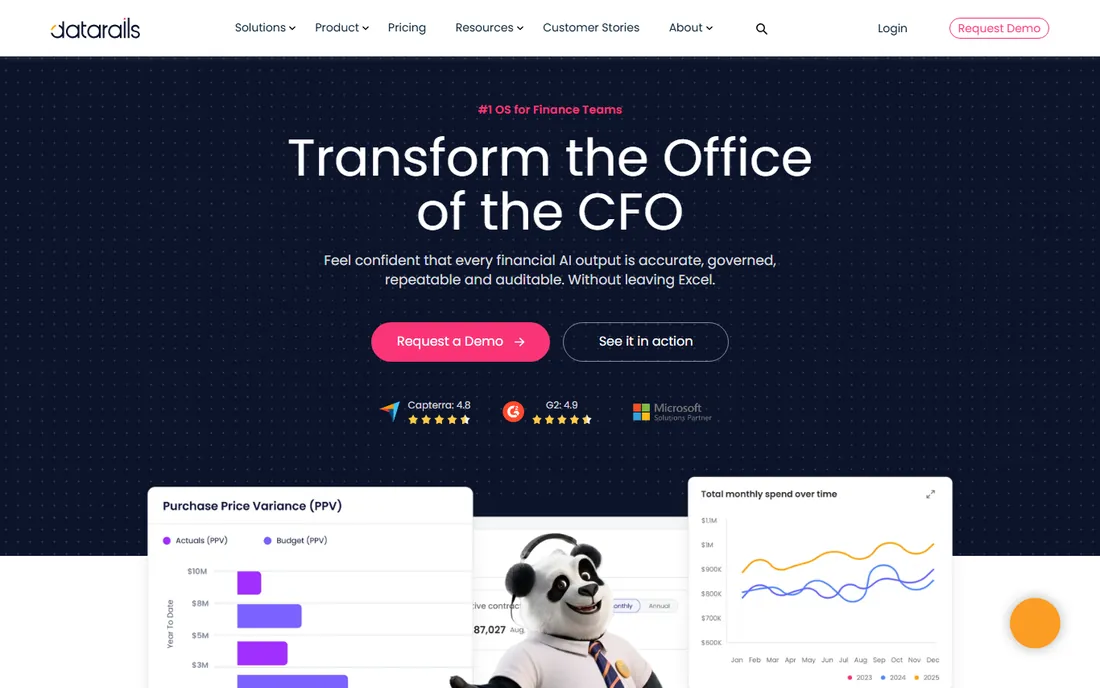
Datarails is built on a simple insight: finance teams will not give up Excel, so improve it instead. Your spreadsheets become the front end while Datarails handles data consolidation, version control and automated reporting underneath. Actuals flow in from your ERP and the reports build themselves.
It fits mid-market finance teams drowning in manual consolidation. The tradeoff is philosophical: you keep Excel's flexibility and some of its chaos. Teams ready to leave spreadsheets behind should look at Cube or Anaplan.
Datarails proves itself fastest in a pilot: connect your actual ERP, run one month-end close, and measure the hours saved against your current spreadsheet process. Finance teams usually know within a single cycle whether the automation justifies the price.
What we like- Finance teams keep working in Excel
- Automated consolidation and drill-down
- Strong investor and board reporting
Watch out for- Excel dependency means spreadsheet habits persist
- Enterprise pricing
Starting priceSee website
Free planFree trial

Cube gives finance teams a familiar spreadsheet interface backed by a controlled planning database. No more version confusion: everyone plans against the same numbers, with audit trails and permissions. Integrations pull actuals from ERPs and HR systems automatically.
It has become the default recommendation for mid-market FP&A: lighter than Anaplan, more governed than raw Excel. Very large enterprises with multi-dimensional complexity may still need Anaplan or Workday.
Cube buyers should test the spreadsheet interface with their real planning models during the trial. The governed database underneath only pays off if planners actually adopt it, so involve the budget owners early, not just the finance team.
What we like- Spreadsheet-like interface with governed data underneath
- Fast implementation for mid-market
- Strong integrations
Watch out for- Less suited to the most complex enterprise models
- Newer vendor than the incumbents
Starting priceSee website
Free planNo
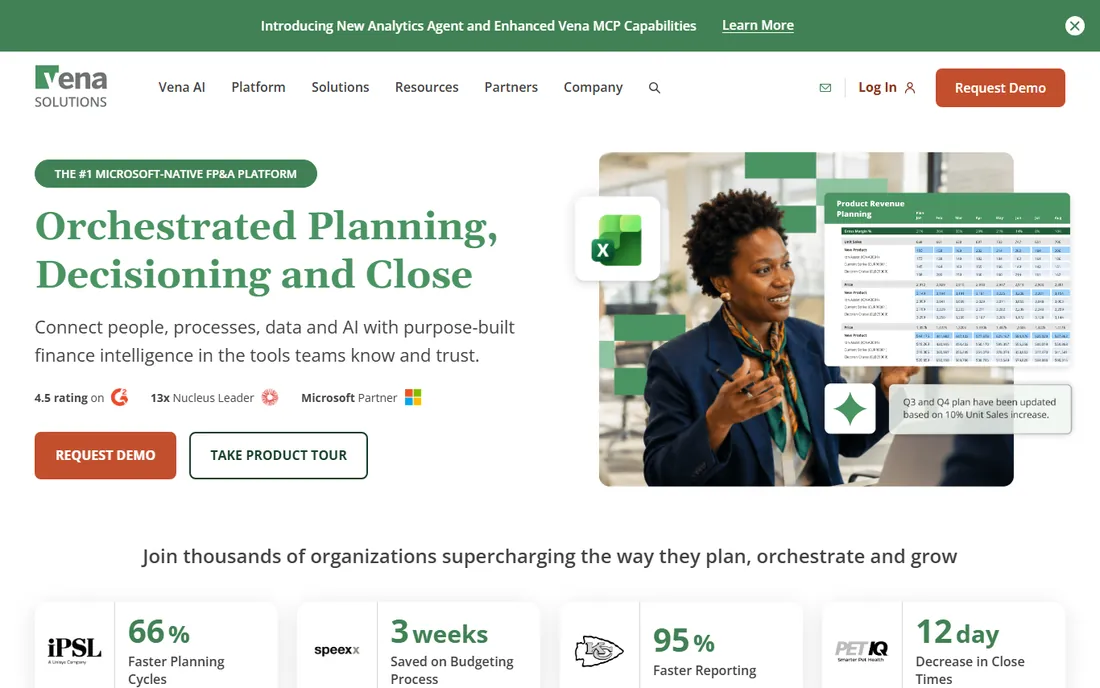
Vena takes the Excel-native approach upmarket: full budgeting, forecasting, close management and reporting workflows inside the Excel interface finance already knows. Workflow approvals, audit trails and data validation add the governance that raw spreadsheets lack.
It suits larger finance teams that want Excel familiarity with enterprise control. Implementation takes effort and the pricing reflects the enterprise positioning. Smaller teams get faster value from Jirav or LiveFlow.
Vena implementations succeed when the Excel models are cleaned up first: messy inherited spreadsheets become messy governed workflows. Budget time for model rationalization alongside the software rollout.
What we like- Deep Excel integration with enterprise workflow
- Strong for budgeting, close and reporting
- Large customer base
Watch out for- Implementation is a real project
- Pricing is enterprise
Starting priceSee website
Free planNo
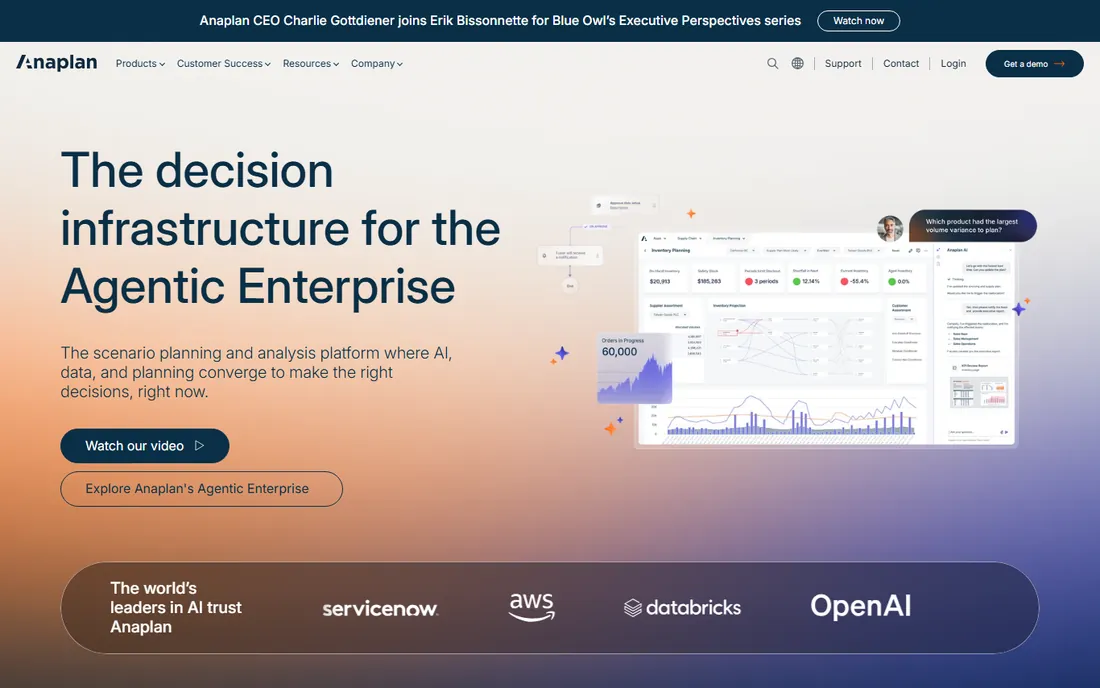
Anaplan is the heavyweight: a planning platform where finance, sales, supply chain and HR model against connected data in real time. Change a sales assumption and the financial forecast updates. The largest enterprises run their planning on it.
The power comes with cost and complexity. Implementations are projects, not purchases, and you will want trained administrators. For genuinely complex, multi-entity planning, nothing else matches it. For simpler needs, it is overkill.
Anaplan selections deserve a formal process: run a proof of concept on your hardest planning problem, not the easiest. The platform's value shows in multi-dimensional complexity, and the POC should prove it on your data.
What we like- Powerful multi-dimensional modeling
- Connected planning across finance, sales and operations
- Proven at the largest enterprises
Watch out for- Significant implementation investment
- Requires dedicated administrators
Starting priceSee website
Free planNo

Workday Adaptive Planning, formerly Adaptive Insights, is the planning layer for the Workday world. Budgeting, forecasting and reporting connect natively to Workday financials and HCM, making workforce planning especially strong.
Organizations already on Workday get the most from it. Buyers outside the ecosystem should compare Cube and Planful, which integrate more broadly. Enterprise pricing and sales-led buying are the norm.
Workday customers should evaluate Adaptive Planning as part of their broader Workday roadmap, since the integration value compounds. Standalone buyers need to weigh that integration premium against more flexible alternatives.
What we like- Native integration with Workday HCM and Financials
- Strong workforce planning
- Trusted enterprise vendor
Watch out for- Best value inside the Workday ecosystem
- Standalone buyers have more flexible options
Starting priceSee website
Free planNo

Planful centers on continuous planning: rolling forecasts and agile budgeting instead of the annual budget ritual. Consolidation handles multi-entity structures, and reporting serves both finance and operational users.
It fits mid-market to enterprise finance teams that want disciplined planning without Anaplan's complexity. Teams evaluating it usually shortlist Cube and Vena alongside.
Planful trials work best when you run a real rolling forecast cycle in parallel with your current process. The continuous planning methodology is a change in habit as much as software, so test the discipline too.
What we like- Continuous planning methodology
- Strong financial reporting and dashboards
- Good consolidation for multi-entity companies
Watch out for- Interface shows its age in places
- Implementation effort for complex models
Starting priceSee website
Free planFree trial
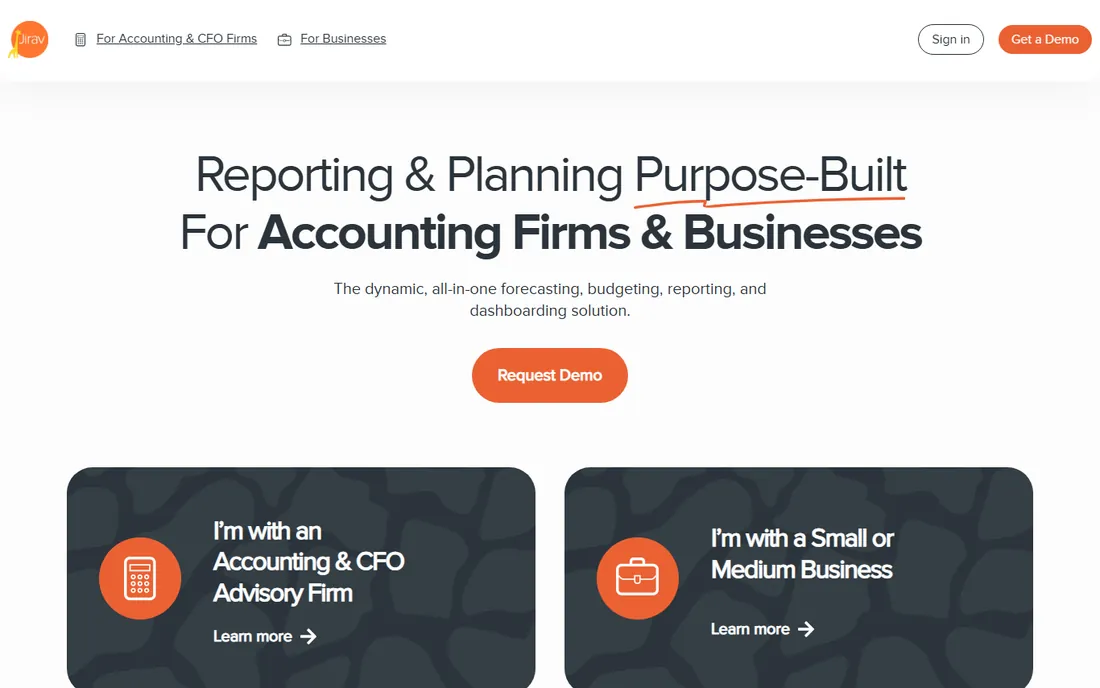
Jirav is FP&A for companies without a finance team: connect your accounting and payroll, and get budgets, forecasts, dashboards and headcount planning in days. It speaks startup: runway, burn, hiring plans.
The simplicity is the point and the limit. Growing companies eventually graduate to Cube or Datarails. For seed to Series B finance, Jirav is the right weight.
Jirav's speed is its selling point: connect QuickBooks and build your first forecast in the trial's first week. If the value is not obvious within days, the tool is probably not the constraint; your process might be.
What we like- Built for startups and small finance teams
- Connects to QuickBooks, Xero and payroll
- Fast time to value
Watch out for- Not built for enterprise complexity
- Lighter on advanced modeling
Starting priceSee website
Free planFree trial

LiveFlow keeps your financial dashboards live: connect QuickBooks or Xero and get real-time P&L, cash flow and KPI views without exporting spreadsheets. Multi-entity consolidation serves businesses with several companies.
It is more dashboard and reporting than deep planning. Founders and small finance teams that live in QuickBooks get immediate value. Teams needing driver-based forecasting should look at Jirav or Cube.
LiveFlow shows its worth the moment your dashboards go live: check whether the real-time P&L actually changes any weekly decisions. Founders who check it every Monday morning get the value; others may not need it.
What we like- Live financial dashboards synced to QuickBooks and Xero
- Consolidates multiple entities
- Simple enough for founders
Watch out for- Tied to the accounting platforms it integrates with
- Lighter planning features than FP&A suites
Starting priceSee website
Free planFree trial
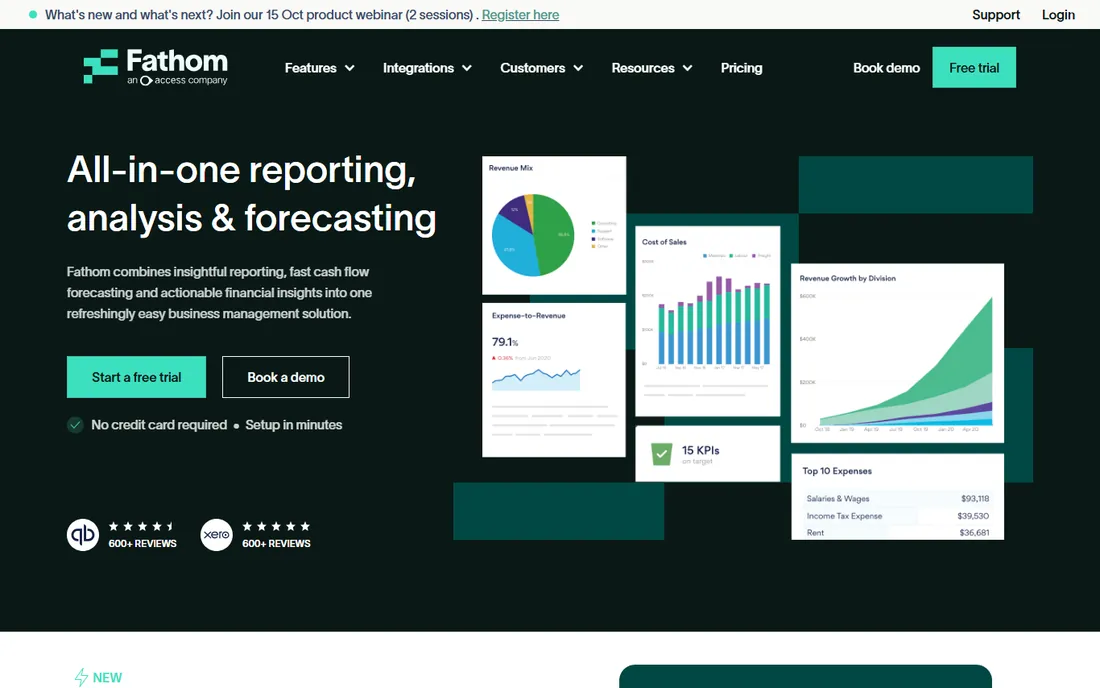
Fathom turns accounting data into analysis: profitability, cash flow, growth and KPI trends in reports that non-finance people actually understand. Accountants and advisors use it for client reporting; businesses use it for management packs.
It analyzes rather than plans: forecasting exists but the strength is reporting and insight. Pair it with clean books and it earns its keep every month-end.
Fathom works best when your books are already clean: the analysis is only as good as the accounting underneath. Trial it at month-end with your real management pack and see whether the insights beat your current reports.
What we like- Beautiful management reports and KPI tracking
- Benchmarking against industry data
- Popular with accountants and advisors
Watch out for- Analysis and reporting focus rather than full planning
- Needs your accounting data to be clean
Stay Excel-native with Datarails or Vena when your finance team is productive in spreadsheets and the problem is consolidation, version control and manual reporting. You keep the interface and gain the infrastructure.
Move to a dedicated platform with Cube, Anaplan, Workday or Planful when spreadsheet chaos is the problem: broken links, version confusion, no audit trail. The learning curve pays back in reliability. Small companies can skip both and start with Jirav, LiveFlow or Fathom on top of their accounting software.
What to check before you buy
Integration with your ERP or accounting system decides everything. Confirm the connector for your specific system, how often actuals sync, and how historical data migrates. Test with your real chart of accounts during the trial, not the demo data.
Then check the planning model fit: driver-based forecasting, headcount planning, multi-entity consolidation, whatever your process needs. Ask who implements: vendor, partner or self-serve, and what that costs. And confirm the reporting output: if the board pack still needs manual work in PowerPoint, the automation promise is hollow.
How we chose
We selected FP&A and financial analysis tools covering Excel-native, dedicated platform and SMB approaches, all live products in 2026. Vendor URLs were corroborated through sibling research files during a browser service outage; Workday's entry uses the corporate homepage since the product page was not individually verified. No vendor pricing pages were individually verified, so all prices list see website.
Frequently asked questions
What is the best software for financial analysis?
For mid-market FP&A, Cube and Datarails lead. Enterprises choose Anaplan or Workday Adaptive Planning. Startups on QuickBooks or Xero do well with Jirav, LiveFlow or Fathom.
What is FP&A software?
Financial planning and analysis software: budgeting, forecasting, consolidation and management reporting. It sits between your accounting system and your decisions.
Can I do financial analysis in Excel?
Yes, and Datarails and Vena are built for exactly that. But growing companies hit Excel's limits on version control, consolidation and audit trails, which is when dedicated platforms pay off.
What is the difference between Cube and Anaplan?
Both are planning platforms. Cube targets mid-market teams with faster implementation and a spreadsheet-like interface. Anaplan serves large enterprises with complex multi-dimensional models and connected planning across departments.
How much does FP&A software cost?
SMB tools start at tens of dollars a month. Mid-market platforms are typically quoted annually. Enterprise tools like Anaplan and Workday are significant investments with implementation costs on top.
Do I need FP&A software if I have QuickBooks?
QuickBooks records what happened. FP&A tools forecast what will happen and analyze why. Businesses that plan headcount, manage cash tightly, or report to investors benefit once spreadsheets start breaking.
Sources we checked (9)
- https://datarails.com
- https://cube.software
- https://venasolutions.com
- https://anaplan.com/
- https://workday.com
- https://planful.com
- https://jirav.com
- https://liveflow.com/
- https://fathomhq.com
Is your product missing or out of date?
We review this list regularly. Vendors can request a listing, send updated pricing or ask about featured placement.

Shihab Mia · Founder, Rankite
Shihab has spent more than a decade helping SaaS and e-commerce brands grow through search. He writes Rankite's software buying guides from pricing pages, documentation and public user reviews. More about Shihab.