How we make this list: we compare pricing pages, product documentation and public user reviews. Rankite is independent; if a vendor ever pays for a featured spot, that listing is clearly labeled Partner.
Key takeaways
- Plaid is the default for US fintechs, with the widest app and institution coverage.
- MX competes on data cleansing and categorization quality for banks and credit unions.
- Envestnet Yodlee brings the longest track record and deep wealth management data.
- Akoya offers API-based connections through bank partnerships instead of credential scraping.
- Finicity (now Mastercard Open Finance) and Tink (now Visa) give you the card networks' own rails.
- Salt Edge, Bud and Inverite cover Europe, open banking use cases and Canada respectively.
Quick comparison
| Tool | Best for | Starting price | Free plan |
|---|
 Plaid Plaid | US fintechs needing broad bank coverage | See website | Free tier |
 MX MX | Banks wanting clean, categorized data | See website | No |
 Envestnet Yodlee Envestnet Yodlee | Wealth and long-history aggregation | See website | No |
 Finicity Finicity | US open finance via Mastercard | See website | No |
 Akoya Akoya | API-based bank connections | See website | No |
 Tink Tink | European open banking via Visa | See website | No |
 Salt Edge Salt Edge | Open banking APIs for EU and UK | See website | Free trial |
 Bud Bud | Open banking intelligence and lending | See website | No |
 Inverite Inverite | Canadian bank aggregation | See website | No |
Is your product missing or out of date?
We review this list regularly. Vendors can request a listing, send updated pricing or ask about featured placement.
The best account aggregation software
Starting priceSee website
Free planFree tier
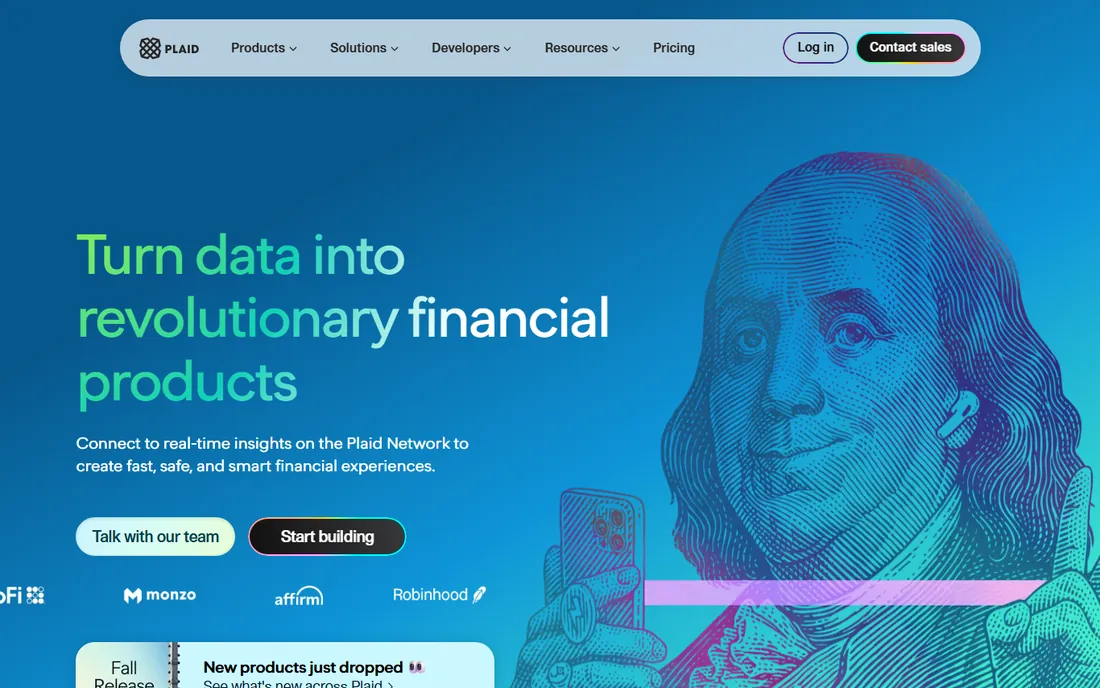
Plaid is the name most fintech founders reach for first, and the reason is coverage: thousands of US institutions, a developer experience people actually praise, and an ecosystem of apps your users already recognize from the Plaid link flow. Products for lending, payments, personal finance and identity verification all build on the same connections. The free tier lets developers prototype before any commercial conversation.
The costs scale with success, which is worth modeling early. Heavy-volume apps negotiate enterprise contracts, and the per-connection economics deserve a spreadsheet before you commit your unit economics to them. Data quality is good but not perfect; categorization and enrichment sometimes need your own layer on top. For a US consumer fintech launching in 2026, Plaid remains the path of least resistance, with MX and Akoya as the serious alternatives to evaluate.
What we like- Largest US institution network and developer ecosystem
- Well-documented APIs
- Usage-based pricing with a free tier for testing
Watch out for- Enterprise pricing scales with volume
- Credential-based connections still exist alongside APIs
- Support is self-serve on lower tiers
#2
MX
Best for: Banks wanting clean, categorized data
Visit mx.com
Starting priceSee website
Free planNo
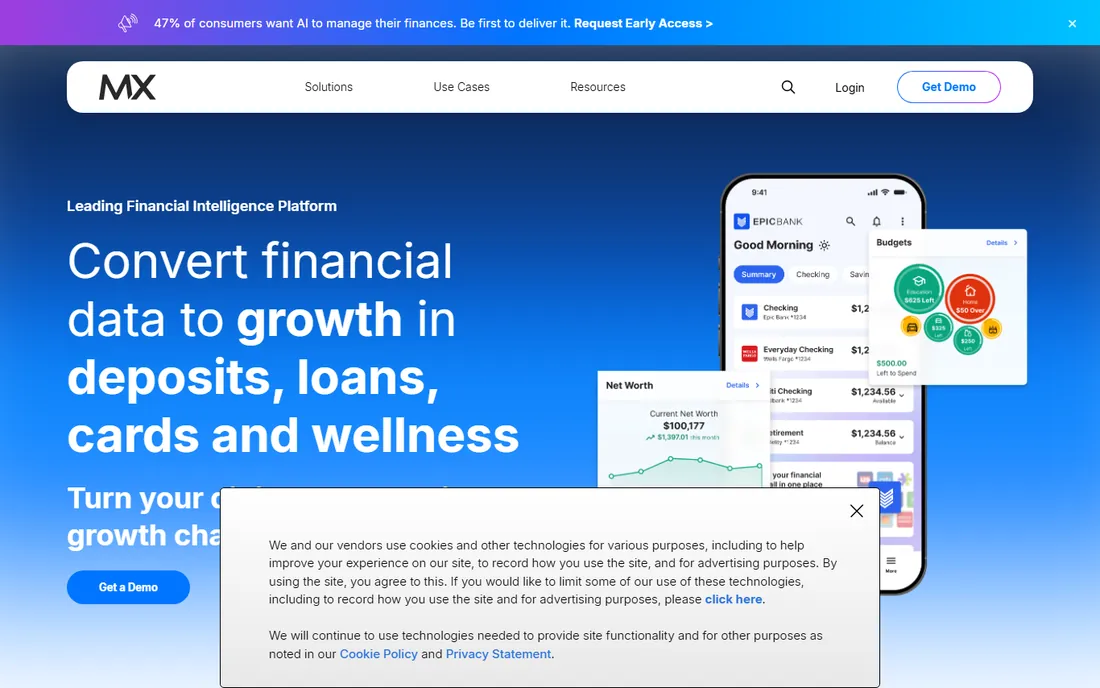
MX positions itself on data quality rather than connection count. Its cleansing and categorization engine turns messy transaction strings into usable merchant and category data, which matters enormously for banks building personal finance features or credit models. Where Plaid grew up serving fintech startups, MX grew up serving banks and credit unions, and the product reflects that heritage.
The tradeoff is ecosystem momentum. Fewer startups build on MX, so community resources and third-party tooling are thinner. Pricing is sales-led and aimed at institutions. If you are a bank or credit union that needs reliable categorized data inside your own digital banking experience, MX deserves the first demo. If you are a consumer fintech optimizing for speed to market, Plaid's developer gravity usually wins.
What we like- Strong data cleansing and categorization engine
- Built for financial institutions, not just fintechs
- Good money-management widgets for banks
Watch out for- Smaller developer community than Plaid
- Pricing is sales-led
- Fintech-first startups may find it bank-centric
#3
Envestnet Yodlee
Best for: Wealth and long-history aggregation
Visit yodlee.com
Starting priceSee website
Free planNo
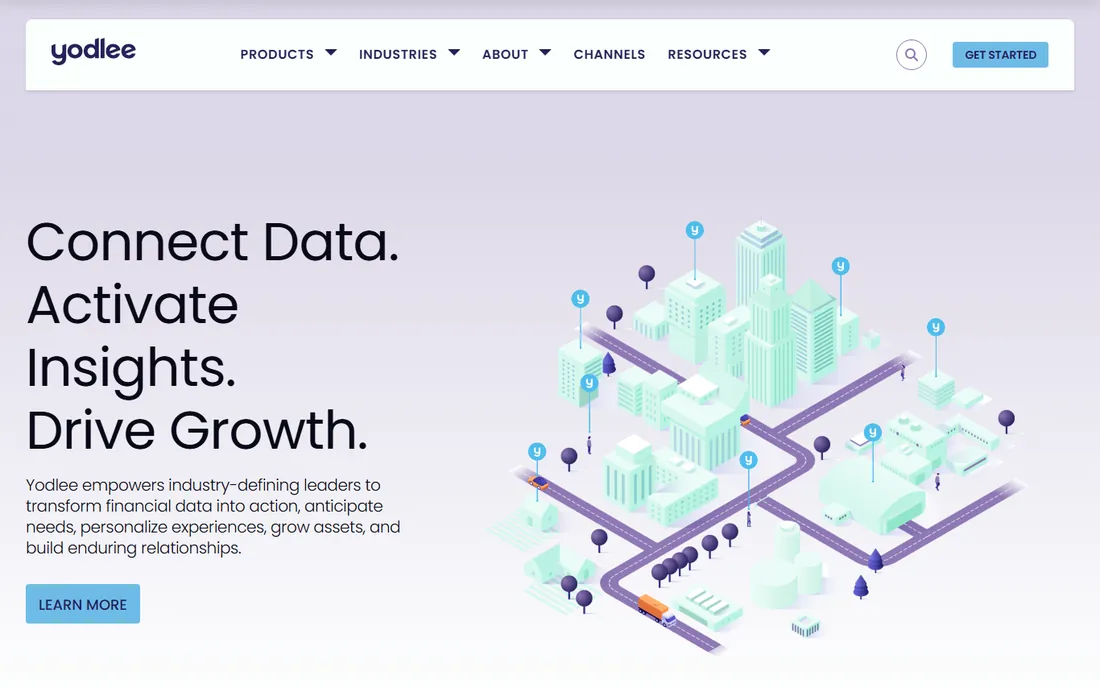
Yodlee has been aggregating financial accounts since before most of its competitors existed, and that history shows in coverage depth, especially for investment accounts, 401(k)s and wealth data that newer platforms handle thinly. Large enterprises and wealth managers with complex data needs still choose Yodlee for the breadth of account types and the institutional track record.
The platform carries its age. The developer experience and documentation feel legacy next to Plaid, and buying is an enterprise sales process. It is not the tool for a two-person startup shipping an MVP. It is the tool for an institution that needs every account type, long transaction histories and proven scale, and is willing to pay enterprise prices for it.
What we like- Decades of aggregation history and institution coverage
- Deep investment and wealth data
- Proven at enterprise scale
Watch out for- Legacy platform feel in places
- Sales-led enterprise process
- Innovation pace trails newer rivals
Starting priceSee website
Free planNo
Finicity built its reputation on account verification for lending, especially mortgage, where its verification of assets and income reports became industry standard. Mastercard's acquisition folded it into the Mastercard Open Finance offering, which brings bank partnership muscle but has muddied the branding: buyers now navigate Mastercard's site to find the Finicity product.
For lenders, the verification products remain the reason to buy. For general aggregation, evaluate it against Plaid and MX on your specific institutions and data fields. The Mastercard ownership is a genuine advantage for API-based connections as banks move away from credential sharing. Just be prepared for an enterprise buying process and confirm exactly which product you are being sold.
What we like- Backed by Mastercard's bank relationships
- Strong in lending and mortgage verification use cases
- Direct API connections growing
Watch out for- Brand now folds into Mastercard Open Finance, which confuses buyers
- Pricing is enterprise
- Smaller developer community
Starting priceSee website
Free planNo
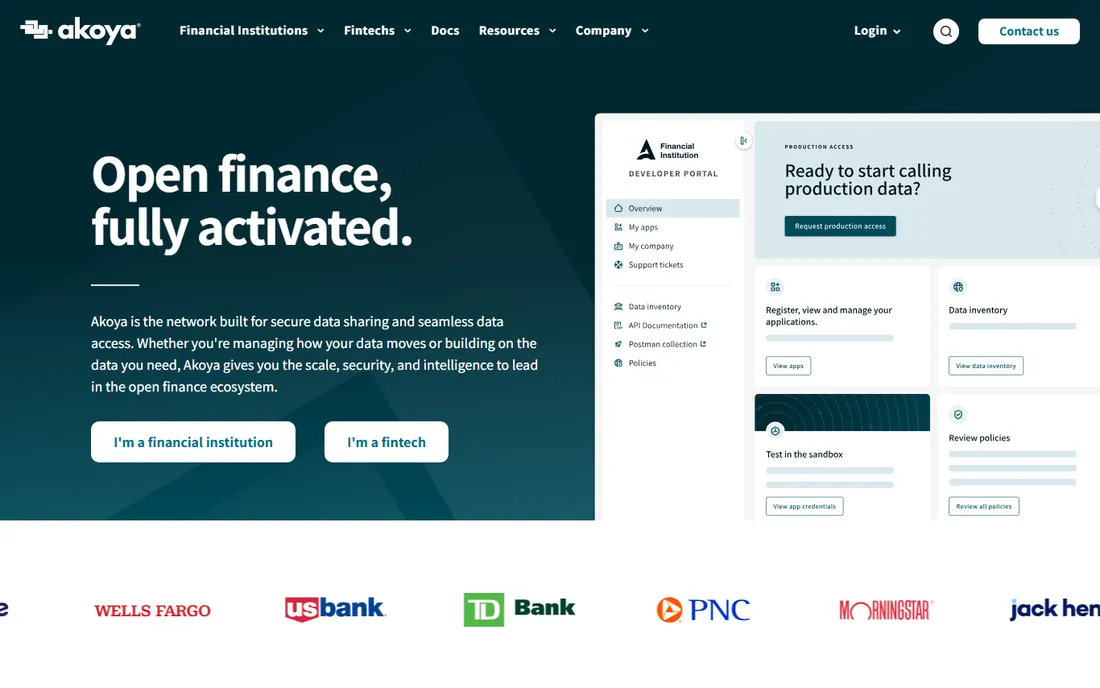
Akoya was created to do aggregation the way banks prefer: direct API agreements with financial institutions instead of screen scraping or credential storage. That consent-based model appeals to compliance teams and to banks themselves, several of which are investors or partners. As open banking regulation pushes the US toward API-based access, Akoya's architecture looks increasingly like the future.
The network is still growing, so check your must-have institutions before committing. It is a younger company than the incumbents, and pricing is negotiated rather than published. For fintechs and banks that want aggregation without the reputational and security baggage of credential-based methods, Akoya is the principled choice, and its coverage improves every quarter.
What we like- Bank-partnered API connections, no credential sharing
- Strong security and consent model
- Growing US bank network
Watch out for- Coverage is smaller than Plaid's
- Newer company with a shorter track record
- Pricing is negotiated
Starting priceSee website
Free planNo

Tink is Europe's answer to Plaid: open banking aggregation across thousands of European banks, built on PSD2 APIs, now owned by Visa. Its coverage of European institutions is the reason to choose it, along with products for account-to-account payments, income verification and risk signals that go beyond raw aggregation. Visa's ownership brings stability and bank relationships.
US buyers should look elsewhere; Tink's American coverage is thin. The buying process is enterprise, and post-acquisition corporate complexity is real. For European fintechs, lenders and banks, though, Tink's combination of regulatory-native coverage and Visa backing makes it a default shortlist entry alongside Salt Edge and Bud.
What we like- Deep European bank coverage under PSD2
- Visa ownership brings resources
- Products span aggregation, payments and risk
Watch out for- US coverage is limited
- Enterprise sales process
- Visa integration adds corporate complexity
Starting priceSee website
Free planFree trial
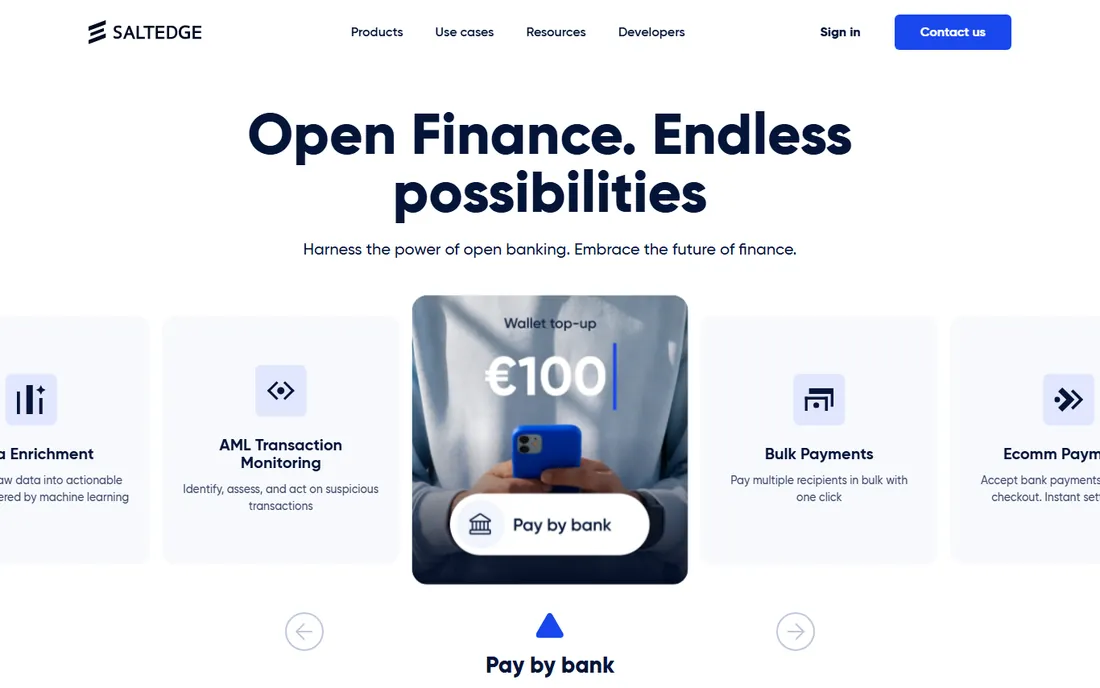
Salt Edge is a practical choice for European open banking projects that do not need Visa-scale contracts. It connects to thousands of banks across Europe and the UK, publishes clearer pricing than most competitors, and offers a free trial so developers can test real connections. Use cases span personal finance apps, lending, accounting automation and treasury.
It is a smaller vendor than the giants, so the ecosystem and support resources are proportionally smaller. US coverage is not the point. For a European startup or mid-size company that wants working bank connections this month with understandable pricing, Salt Edge is often the fastest path.
What we like- Broad EU and UK bank coverage
- Transparent pricing tiers published
- Good for mid-size open banking projects
Watch out for- US coverage is limited
- Smaller brand than Tink or Plaid
- Enterprise features need higher tiers
#8
Bud
Best for: Open banking intelligence and lending
Visit bud.com
Starting priceSee website
Free planNo
Bud focuses on turning open banking data into decisions, particularly for lenders. Its transaction categorization and affordability models help underwriters assess income, spending patterns and credit risk from bank data. UK coverage is deep, and the product is built for regulated financial institutions rather than consumer app developers.
The geographic focus is the limitation: outside the UK and parts of Europe, look elsewhere. Pricing and buying are enterprise. If you are a lender or bank using open banking data for credit decisions, Bud's intelligence layer is the differentiator. If you need raw aggregation across many markets, the broader platforms fit better.
What we like- Strong transaction intelligence and categorization
- Good fit for lenders and credit risk
- UK open banking depth
Watch out for- Narrower geographic focus
- Enterprise-oriented
- Less known outside UK fintech circles
Starting priceSee website
Free planNo
Inverite does one market well: Canada. Canadian banking has its own data formats, institution mix and regulatory context, and a domestic specialist handles them better than a global platform's Canada coverage. Lenders, fintechs and financial institutions operating in Canada use Inverite for account verification, income assessment and aggregation.
There is no pretense of global coverage, which is fine because that is not the job. It is a smaller vendor, so diligence on stability and support is warranted. For anyone building financial products for Canadians, start here and compare against the global platforms' Canadian coverage before deciding.
What we like- Purpose-built for Canadian institutions
- Understands Canadian banking data quirks
- Serves lenders and fintechs domestically
Watch out for- Canada-only focus
- Smaller company
- Limited use cases beyond the domestic market
Open banking is changing the plumbing
The aggregation industry is moving from credential-based connections to direct bank APIs, driven by regulation in Europe and market pressure in the US. That shift favors vendors with bank partnerships, Akoya, Tink, Finicity under Mastercard, over pure scraping approaches. When evaluating, ask each vendor what share of your target institutions connects via direct APIs versus credentials, because reliability, data freshness and compliance all follow from that answer.
Consumer expectations are shifting too. Users increasingly expect to connect accounts inside your app in seconds, and a clunky or failing connection flow kills conversion. Trial the actual end-user linking experience on your top ten institutions before you sign. The API docs can be beautiful while the bank connection your users need fails half the time.
How we chose
We selected platforms that provide account aggregation as a core product for businesses, not consumer budgeting apps. We reviewed vendor documentation, developer resources, coverage claims and public reviews, and we checked each company's current status, noting acquisitions like Finicity by Mastercard and Tink by Visa. We favored vendors with real bank connectivity in production and excluded consumer-only apps, which belong in a personal finance roundup.
What to check before you sign
Coverage first: list your twenty most important institutions and verify each one connects, via API or credentials, with what refresh frequency. Data quality second: pull real transactions and check categorization accuracy on your use case, because demo data always looks clean. Then the commercial terms: how pricing scales with connections, refreshes and users, and what happens to your unit economics at ten times volume.
Security review is non-negotiable. Ask about SOC 2 reports, penetration testing, data retention policies and exactly what credential data touches their servers. Your bank partners and your regulators will ask you these questions, so get the answers during evaluation, not after signing. Finally, confirm the migration path: if you switch vendors later, who owns the user consent and how do tokens transfer, because re-authenticating your whole user base is the hidden cost of switching.
Frequently asked questions
What is account aggregation software?
It is software that connects to banks and financial institutions to pull account balances, transactions and holdings into one place. Fintechs, lenders and banks use it to power personal finance apps, loan underwriting, payments and financial dashboards. Most products are APIs you build on rather than apps you log into.
How is this different from Mint or Monarch?
Consumer apps like Monarch Money aggregate your accounts for personal budgeting. The tools in this list are the infrastructure those apps build on: APIs and platforms that businesses use to connect their own users' accounts. If you are an individual wanting to see all your accounts together, you want a consumer app; if you are building one, you want these vendors.
How much does account aggregation cost?
Pricing is typically usage-based: per connected account, per API call or per active user, with enterprise contracts for volume. Most vendors do not publish prices, so expect a sales process. Model your costs at scale before committing, because aggregation fees compound with growth.
Is screen scraping still used?
Less than it was. The industry is moving toward direct API connections with banks, driven by open banking rules and bank partnerships. Ask vendors what proportion of connections are API-based, since API connections are more reliable and more compliant.
Plaid vs MX: which should I choose?
Plaid for fintech speed: broader coverage, bigger developer ecosystem, faster to launch. MX for institutional data quality: stronger cleansing and categorization, built for banks. Many companies trial both on their actual institutions and pick based on data quality for their specific use case.
What happened to Finicity and Tink?
Finicity was acquired by Mastercard and now sits inside Mastercard Open Finance; its site redirects to Mastercard. Tink was acquired by Visa but continues to operate under the Tink brand at tink.com. Both acquisitions reflect the card networks investing in open banking rails.
Sources we checked (9)
- https://plaid.com/
- https://www.mx.com/
- https://www.yodlee.com/
- https://finicity.com/
- https://akoya.com/
- https://tink.com/
- https://www.saltedge.com/
- https://bud.com/
- https://www.inverite.com/
Is your product missing or out of date?
We review this list regularly. Vendors can request a listing, send updated pricing or ask about featured placement.

Shihab Mia · Founder, Rankite
Shihab has spent more than a decade helping SaaS and e-commerce brands grow through search. He writes Rankite's software buying guides from pricing pages, documentation and public user reviews. More about Shihab.