How we make this list: we compare pricing pages, product documentation and public user reviews. Ratings come from G2, Capterra or Trustpilot, with the date we checked them.
Key takeaways
- EAB Navigate360 is the benchmark for large universities, with a client base over 800 institutions and published retention data, but it is an enterprise commitment, not a quick install.
- Ellucian Degree Works is the natural pick for schools already running Ellucian Banner or Colleague, since native SIS integration removes the hardest part of the project.
- Stellic gives students a modern degree-planning interface they will actually open, which matters when adoption decides the ROI.
- Every platform here is quote-priced and implementation-heavy: budget as much for services, training and integration as for the license itself.
Quick comparison
Is your product missing or out of date?
We review this list regularly. Vendors can request a listing, send updated pricing or ask about featured placement.
The best academic advising software
Advisors drown in caseloads while at-risk students slip through the cracks between systems. Academic advising software centralizes the student record, schedules appointments, flags risk early and maps degree paths, so advisors spend time advising instead of hunting spreadsheets. Market analysts put the segment's growth near 10 percent annually through the next decade, which explains the crowded field. Eight platforms that serve different institution types.

#1
EAB Navigate360
Best for: Large universities needing a full student success CRM
Visit eab.com
Starting priceSee website
Free planNo
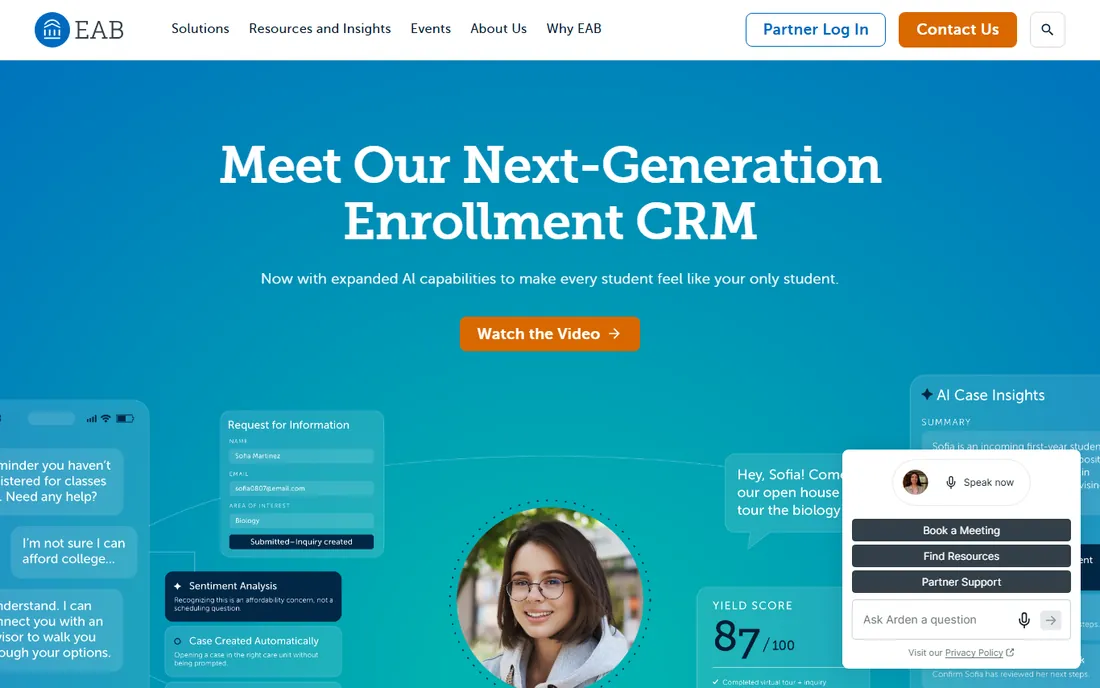
EAB Navigate360 is the product most large public universities compare everything else against. It combines advising workflows, appointment scheduling, early alerts, communication campaigns and a student-facing app in one CRM, backed by EAB's research library of student success practices. The company reports more than 800 institutional clients and publishes retention outcome data, which is rare transparency in this market.
The honest cost is commitment. Navigate360 is sold as a partnership with implementation services, training and ongoing consulting, and the total cost over five years often doubles the first-year license. Smaller colleges may find it more platform than they need. Choose it when retention is an institutional priority with executive backing, not when one department wants a scheduling tool.
What we like- Deepest installed base among enterprise student success platforms
- Research-backed playbooks come with the software
- Student mobile app drives adoption
Watch out for- Enterprise pricing and long implementations
- The platform rewards institutions that commit fully, not dabblers
Starting priceSee website
Free planNo
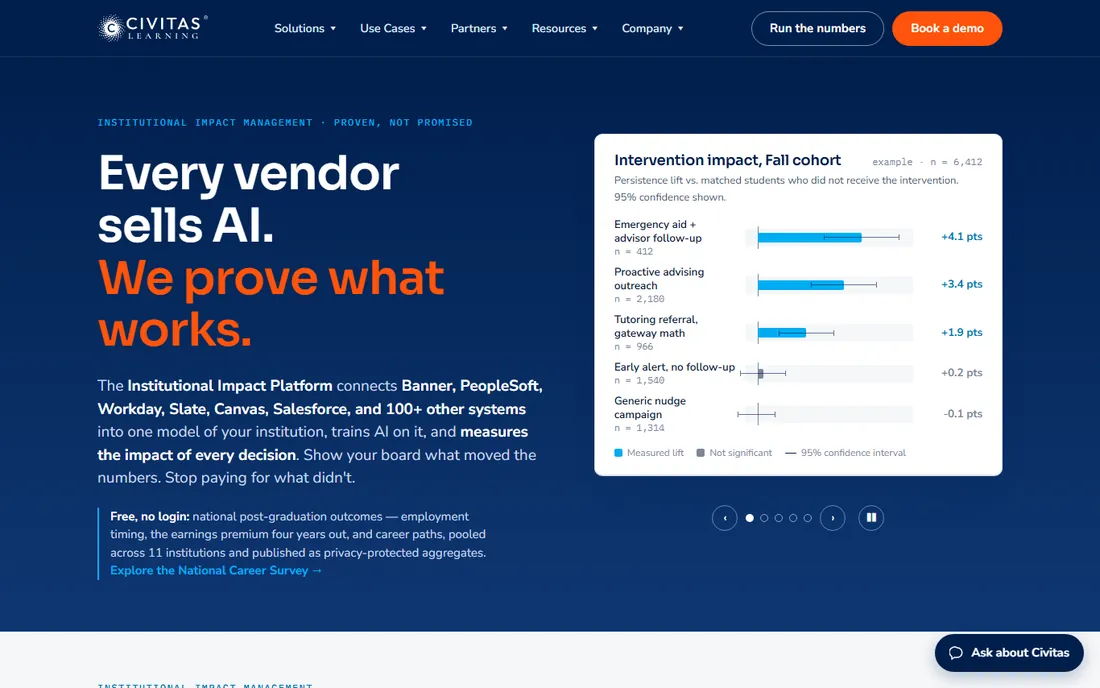
Civitas Learning sells insight more than workflow. Its platform ingests SIS, LMS and engagement data to predict which students are at risk, then benchmarks your outcomes against a network of peer institutions. For provosts and institutional research teams, that combination of prediction and comparison is the draw.
The limitation is actionability. Predictions only matter if advisors have capacity to intervene, and Civitas assumes a mature student success operation around it. Implementation is a data project as much as a software rollout. Pick Civitas when the institution already believes in analytics-led retention and has staff to work the signals.
What we like- Strong predictive models for persistence and course completion
- Consortium benchmarking across hundreds of institutions
- Purpose-built for data teams
Watch out for- Analytics depth exceeds what small advising offices can act on
- Pricing reflects the enterprise positioning
Starting priceSee website
Free planNo
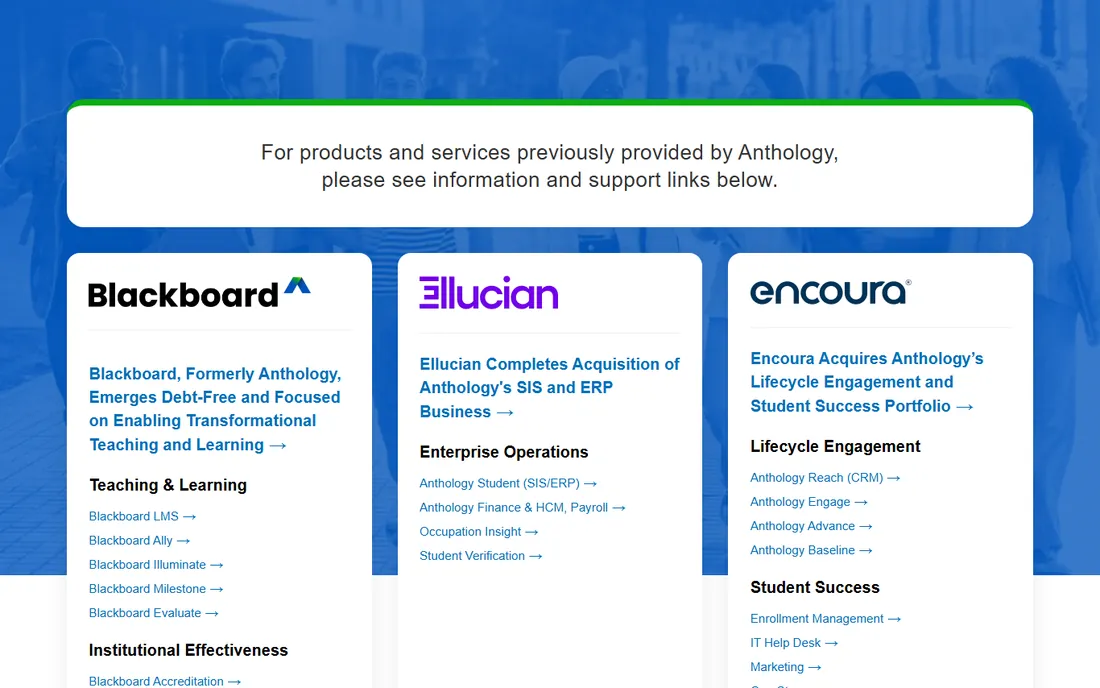
Anthology, formed from the Blackboard and Campus Management combination, offers student success and retention tooling (including the Starfish lineage) alongside its LMS and SIS products. For institutions already running Anthology systems, the integration story is the pitch: one vendor, one data model, one support contract from admissions through alumni.
The trade-off is focus. A vendor that sells everything from the LMS to finance software will not out-innovate a pure-play advising platform on advising workflows. Evaluate the advising module on its own merits during demos, not as a line item in a bundle. Anthology fits schools standardizing on its ecosystem, not schools shopping best-of-breed.
What we like- Tight integration with Blackboard LMS and Anthology SIS products
- Broad portfolio from advising to finance
- Single vendor for the full student lifecycle
Watch out for- Portfolio breadth can mean uneven depth in advising specifically
- Large-vendor implementation timelines
Starting priceSee website
Free planNo
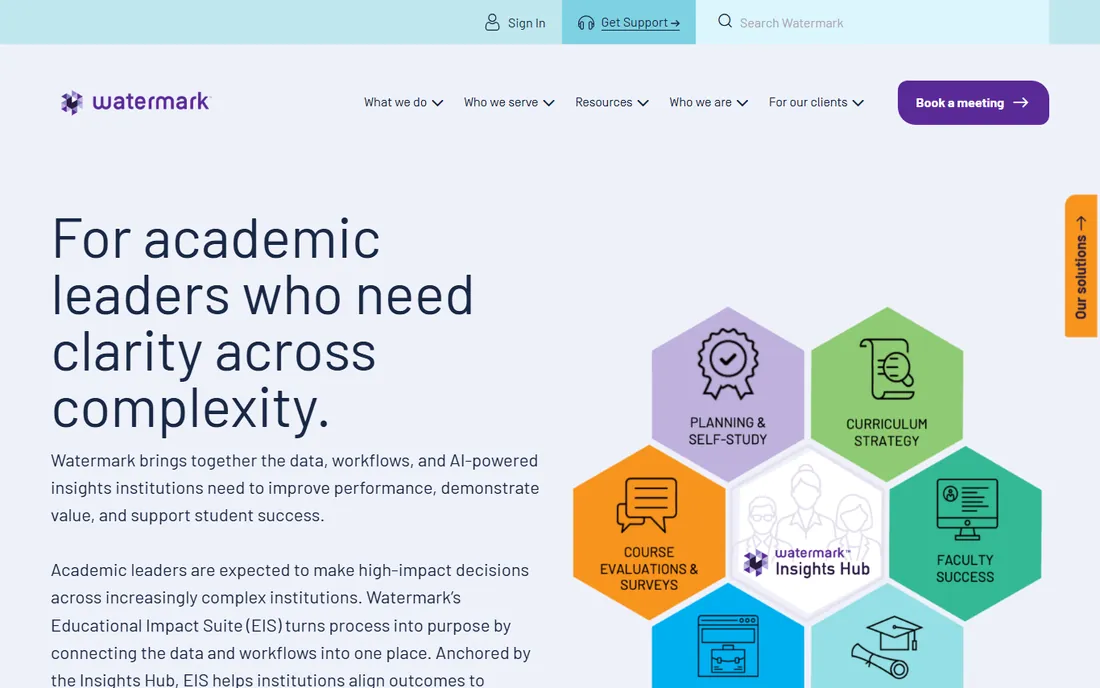
Watermark's Student Success & Engagement platform covers the advising essentials: predictive risk flags, early alerts, appointment scheduling with calendar sync, guided degree pathways and attendance tracking. Because it sits inside Watermark's Educational Impact Suite, retention data connects to assessment and accreditation reporting, which assessment offices appreciate.
That suite positioning cuts both ways. Institutions that want Watermark for accreditation get advising as a natural extension; institutions shopping only for advising should compare pure-plays before accepting the bundle. Pricing is quote-based and implementation-heavy, typical of the category. Watermark suits schools that value the assessment-to-retention data thread.
What we like- Early alerts, guided pathways and attendance tracking in one product
- Part of a broader assessment and accreditation suite
- Native mobile app for students
Watch out for- The suite model means advising is one module among many
- Smaller schools may pay for breadth they never use

#5
Ellucian Degree Works
Best for: Degree audit for Ellucian SIS schools
Visit ellucian.com
Starting priceSee website
Free planNo
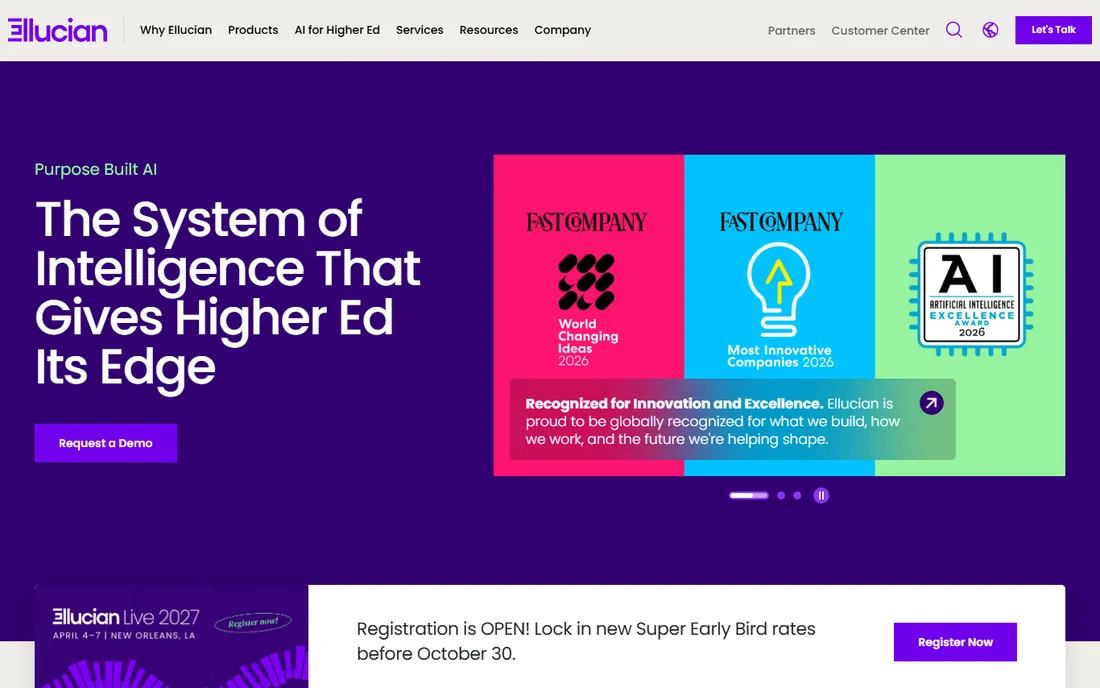
Degree Works is less a choice than a consequence: if your SIS is Ellucian Banner or Colleague, it is the degree audit and academic planning tool built for your data. It maps requirements, tracks progress and powers "what-if" scenario planning for students considering a major change. Advisors and students see the same record, which ends the version-control arguments.
Outside the Ellucian world it is irrelevant, and even inside, students often find the interface dated compared with newer planners like Stellic. Some Ellucian schools now pair Degree Works for the official audit with a modern front end for students. Buy it for the system of record; supplement it for the experience.
What we like- Native integration with Banner and Colleague removes data sync pain
- The standard for degree audit at Ellucian institutions
- Advisor and student views stay consistent
Watch out for- Only makes sense inside the Ellucian ecosystem
- The interface lags newer student-facing tools
Starting priceSee website
Free planNo
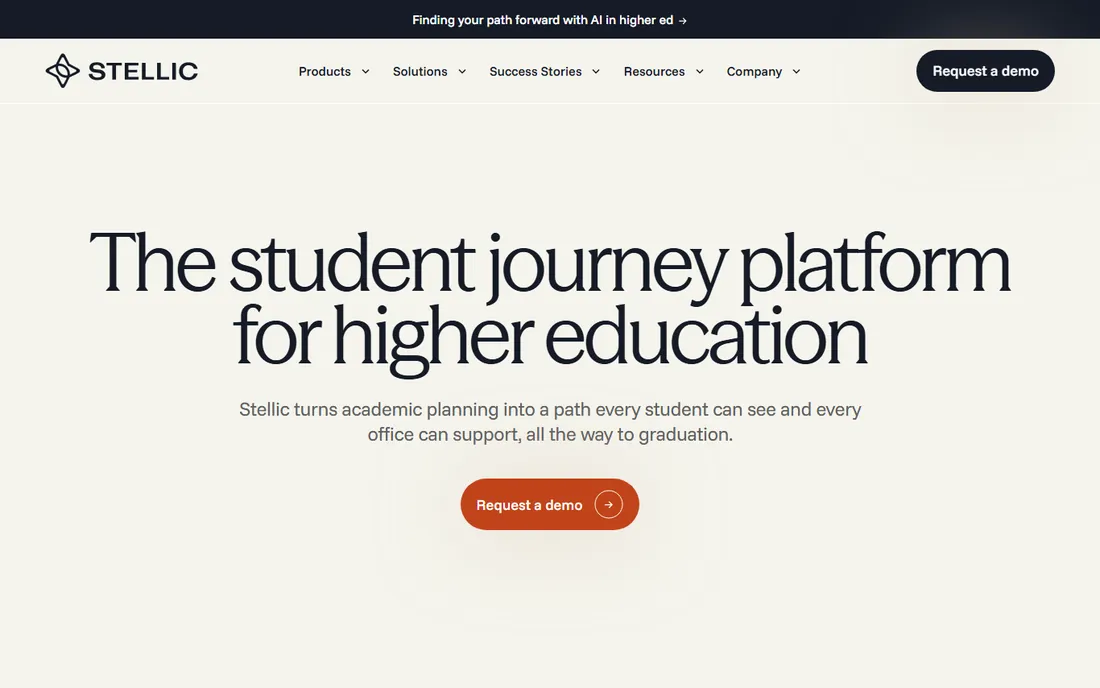
Stellic rethinks degree planning from the student's side. Instead of a compliance checklist, students get an interactive planner for courses, terms and graduation timelines, while advisors see the same plan and can intervene when it goes off track. Institutions report meaningfully higher student engagement than with legacy audit tools.
The youth of the company is the caveat: fewer reference clients, less battle-tested at very large scale, and the official audit still typically lives in the SIS. Stellic works best as the engagement layer on top of a solid system of record. Choose it when student adoption, not just advisor workflow, is the success metric.
What we like- Modern interface students actually use
- Degree planning with drag-and-drop scheduling
- Strong adoption metrics compared with legacy planners
Watch out for- Newer vendor with a smaller client base than EAB or Ellucian
- Degree audit depth depends on SIS integration quality
Starting priceSee website
Free planNo
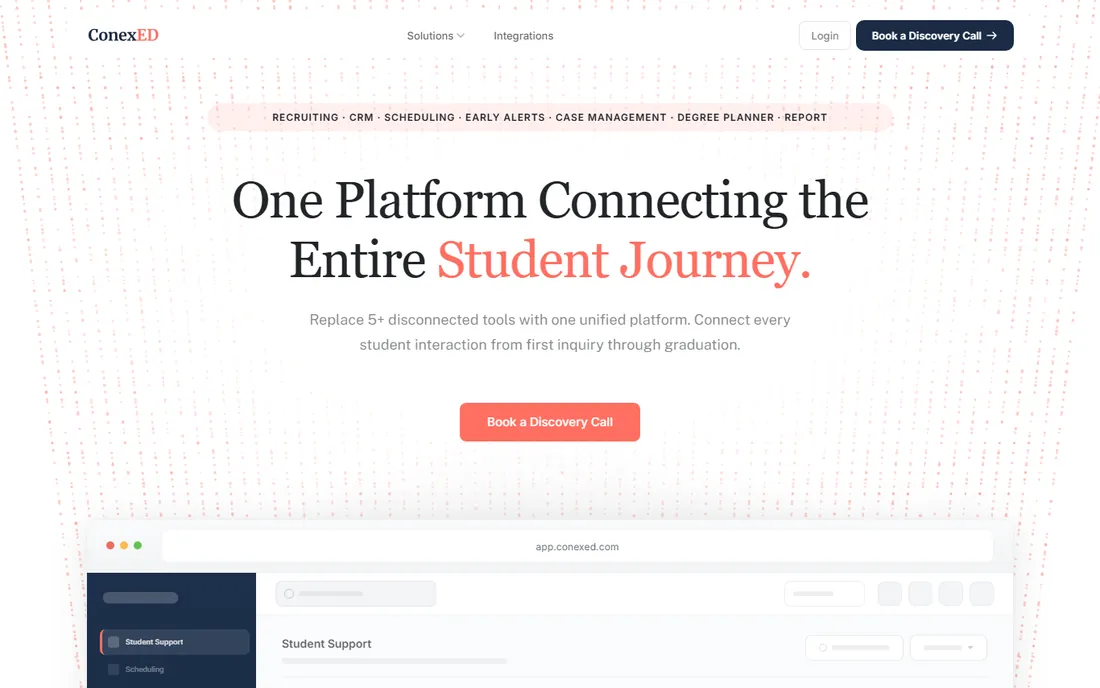
ConexED focuses on the front door: virtual advising appointments, lobby and kiosk check-in, video meetings and online student service delivery. For community colleges and institutions with large online populations, the accessible virtual experience matters more than predictive models. Deployment is lighter than the enterprise CRM platforms.
The narrow scope is the trade. ConexED will not replace a student success CRM's early-alert engine or degree audit. It complements those systems or serves institutions whose primary gap is virtual service delivery. Pick it when the problem is "students cannot reach us," not "we cannot predict risk."
What we like- Purpose-built for virtual appointments, kiosks and online student services
- Accessible design for remote learners
- Quick to deploy compared with enterprise CRMs
Watch out for- Narrower scope than full student success platforms
- Analytics and predictive features are lighter
Starting priceSee website
Free planNo

Mainstay (formerly AdmitHub) pioneered the nudge: timely, research-informed text messages that keep students on track with deadlines, financial aid and registration. Its chatbot answers routine questions around the clock, and the platform targets the "summer melt" and stop-out problems that cost institutions enrolled students.
It is a communication layer, not an advising system of record. Without someone owning the messaging strategy and connecting it to advising workflows, it becomes another broadcast tool. Mainstay fits institutions with a clear retention communication problem and staff to run the playbook; it pairs well with, rather than replaces, an advising CRM.
What we like- Behavioral-science-driven messaging improves response rates
- Proactive nudges about deadlines, aid and registration
- Chatbot handles routine questions at scale
Watch out for- Messaging-centric, not a full advising workflow
- Effectiveness depends on message strategy, which needs ongoing attention
How we chose
We selected platforms with live higher-education deployments, documented advising or student success functionality, and verifiable vendor presence, using vendor documentation, analyst coverage and public reviews. This category is entirely quote-priced, so every starting price is listed as See website rather than repeating unverified figures. We did not conduct test implementations; the write-ups reflect each platform's stated capabilities and honest fit for different institution types.
What to evaluate before you sign
Start with your SIS, because integration decides everything. A platform that syncs natively with Banner, Colleague, PeopleSoft or Workday will go live months faster than one needing custom middleware. Ask vendors for reference clients on your exact SIS and version, and talk to those schools about data quality, not just features.
Then scope the real project. License cost is often the smaller half; implementation services, training, change management and integration frequently equal or exceed first-year licensing over a five-year horizon. Pilot with one college or department before campus-wide rollout, and define success metrics, like appointment show rates or early-alert response times, in the contract. Finally, check who owns the data and how you export it, since switching platforms later is painful.
Frequently asked questions
How much does academic advising software cost?
Pricing is quote-based and scales with enrollment and modules. Expect enterprise platforms to run into six figures annually for mid-size institutions, with implementation services adding substantially in year one. Always request a five-year total cost estimate.
What is the difference between advising software and an SIS?
The SIS is the system of record for enrollment, grades and transcripts. Advising software sits on top, adding appointment scheduling, early alerts, degree planning and communication workflows, syncing data back and forth with the SIS.
How long does implementation take?
Enterprise platforms typically take six to twelve months from contract to go-live, including data integration, configuration and training. Lighter tools like virtual advising platforms can deploy in weeks. Ask for a phased plan with milestones.
Do students actually use these platforms?
Adoption varies widely. Student-facing apps with mobile access and modern interfaces see far higher engagement than advisor-only tools. During demos, ask vendors for verified adoption metrics from peer institutions, not just feature lists.
What are early alerts?
Early alerts notify advisors when a student shows risk signals, such as missed classes, low midterm grades or LMS inactivity, so staff can intervene before the student fails or withdraws. Effectiveness depends on advisors having capacity to act on the alerts.
Can small colleges afford this?
Yes, but choose scope carefully. Full enterprise CRMs may overwhelm a small advising office; lighter tools for scheduling, virtual advising or messaging often deliver faster value. Some vendors offer scaled-down packages for smaller institutions.
Sources we checked (10)
- https://eab.com
- https://www.civitaslearning.com
- https://www.anthology.com
- https://www.watermarkinsights.com
- https://www.ellucian.com
- https://www.stellic.com
- https://www.conexed.com
- https://www.mainstay.com
- https://nerdisa.com/best-academic-advising-software/
- https://dataintelo.com/report/academic-advising-software-market
Is your product missing or out of date?
We review this list regularly. Vendors can request a listing, send updated pricing or ask about featured placement.

Shihab Mia · Founder, Rankite
Shihab has 5+ years in B2B and SaaS SEO. He writes Rankite's software buying guides from pricing pages, documentation and public user reviews. More about Shihab.
 Civitas Learning
 Anthology
 Watermark Student Success & Engagement
 Stellic
 ConexED
 Mainstay