How we make this list: we compare pricing pages, product documentation and public user reviews. Ratings come from G2, Capterra or Trustpilot, with the date we checked them.
Key takeaways
- This list covers real wastewater systems that replace or supplement a conventional septic system, not software tools.
- The right alternative depends on soil, water table, lot size, and local codes, so no single system fits every property.
- Aerobic treatment units and sand filters treat wastewater to a higher standard than a conventional septic tank and drainfield.
- Mound systems suit properties with high water tables or shallow soil where a standard drainfield will not work.
- Composting and incinerating toilets suit off grid cabins and tiny homes, but they handle only toilet waste, not full household water.
- Local codes and permits govern every option here, so check with your health department before buying anything.
Quick comparison
Is your product missing or out of date?
We review this list regularly. Vendors can request a listing, send updated pricing or ask about featured placement.
The best alternatives to septic systems
Starting priceSee website
Free planNo
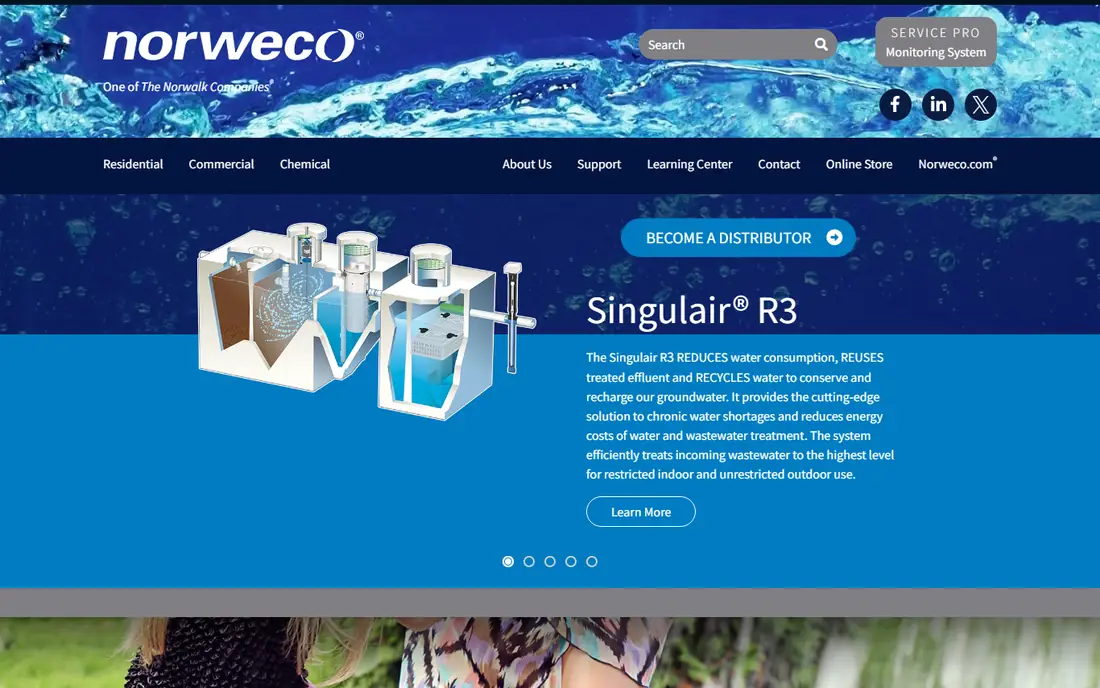
An aerobic treatment unit, or ATU, adds oxygen and bacteria to break down wastewater more thoroughly than a conventional septic tank, producing cleaner effluent that can go to a smaller drainfield or, where allowed, surface disposal. That higher treatment suits small lots, sensitive water areas, and properties where a standard drainfield would be too large. Vendors like Norweco make residential ATUs used across the United States.
ATUs need electricity, regular maintenance, and often a service contract, and they cost more than a conventional system. Power loss stops treatment, so alarms and backup plans matter. For a small lot or a site near water where higher treatment is required, an ATU is the most common advanced alternative.
What we like- Treats wastewater to a higher standard
- Smaller drainfield often allowed
- Good for small lots
Watch out for- Needs electricity and regular maintenance
- Higher cost than conventional septic
- Service contracts often required
Starting priceSee website
Free planNo
A mound system places a sand filled drainfield in a raised mound above the natural soil, so effluent filters through sand and soil before reaching groundwater. That design works where the water table is high, soil is shallow, or bedrock sits close to the surface, all conditions that rule out a standard drainfield. Pumps dose effluent to the mound evenly, and the sand layer treats it before it enters native soil.
The mound is visible in the yard, which some owners dislike, installed cost runs higher than a conventional system, and pumps need maintenance. For a property that cannot pass a standard perc test, a mound system is often the approved alternative that keeps the home on its own wastewater system.
What we like- Works where standard drainfields fail
- Raised bed keeps effluent above water table
- Proven design
Watch out for- Visible mound in the yard
- Higher installed cost
- Needs pumps and maintenance
Starting priceSee website
Free planNo
A sand filter system passes septic tank effluent through a bed of sand, which filters solids and lets bacteria break down pollutants before the liquid goes to a drainfield or other disposal. Treatment quality is high, which suits sensitive sites and properties where local rules demand more than a conventional drainfield. Filters can be buried or above ground, and disposal options vary by local code.
Space for the filter bed, pumps, and controls add cost and maintenance compared with a conventional system. For a site that needs strong treatment but has room for a filter bed, a sand filter is a reliable, well understood alternative.
What we like- Strong treatment through sand media
- Flexible disposal options
- Reliable design
Watch out for- Needs space for filter bed
- Pumps and controls need maintenance
- Higher cost than conventional

#4
Constructed Wetland
Best for: Natural treatment on larger lots
Visit epa.gov
Starting priceSee website
Free planNo
A constructed wetland treats wastewater by flowing it through gravel beds planted with wetland plants, where roots, bacteria, and gravel filter and break down pollutants. Energy use is low, since gravity and plants do most of the work, and a well built wetland can look like a garden bed rather than infrastructure. The US Environmental Protection Agency publishes guidance on constructed wetlands for wastewater treatment.
Wetlands need a larger lot than an ATU, cold climates slow treatment, and design plus permits take time. For a rural property with space and an owner who values low energy natural treatment, a constructed wetland is an appealing alternative.
What we like- Natural treatment with plants and gravel
- Low energy use
- Attractive garden feature
Watch out for- Needs a larger lot
- Climate affects performance
- Design and permits take time
Starting priceSee website
Free planNo
A composting toilet breaks down human waste with air, heat, and microbes into compost, using little or no water and needing no drainfield for toilet waste. That makes it ideal for off grid cabins, tiny homes, and remote sites where a septic system is impractical or banned. Units like those from Nature Head are self contained and popular in boats, RVs, and cabins.
Composting toilets handle toilet waste only, so sinks, showers, and laundry greywater still need a separate system, and units need regular emptying, venting, and care to avoid odor. For an off grid toilet solution paired with a greywater plan, composting toilets are the most practical alternative.
What we like- No water and no drainfield for toilet waste
- Good for off grid sites
- Low running cost
Watch out for- Handles toilet waste only
- Needs regular emptying and care
- Greywater still needs handling
Starting priceSee website
Free planNo
An incinerating toilet burns human waste at high temperature into a small amount of sterile ash, using electricity or gas and no water. That eliminates waste handling and works in cold climates where composting slows, which suits remote cabins, work sites, and homes without water service. Vendors like Separett make waterless and incinerating toilet options for off grid use.
Running costs are higher than composting, since each use consumes energy, and like composting toilets, incinerating models handle toilet waste only, leaving greywater to a separate system. For a site where waste handling must be zero and power is available, an incinerating toilet is a clean, if costly, alternative.
What we like- No water and no waste to handle
- Sterile ash residue
- Works in cold climates
Watch out for- Needs electricity or gas
- Higher running cost
- Handles toilet waste only

#7
Sewer Connection
Best for: Homes near a public sewer
Visit epa.gov
Starting priceSee website
Free planNo
Connecting to a public sewer removes onsite treatment entirely: household wastewater flows to a municipal plant, and the owner pays connection fees plus monthly sewer bills instead of maintaining a tank and drainfield. Where a sewer line runs past the property, local codes often require connection, and it is usually the most reliable long term option.
Connection fees can run into thousands of dollars, monthly bills add ongoing cost, and connection is only possible where a sewer line exists nearby. For a home near a public sewer, especially one with a failing septic system, connection is the simplest and most permanent alternative.
What we like- No onsite treatment to maintain
- Reliable
- Often required where available
Watch out for- Connection fees can be high
- Monthly sewer bills
- Only possible near a sewer line
Starting priceSee website
Free planNo
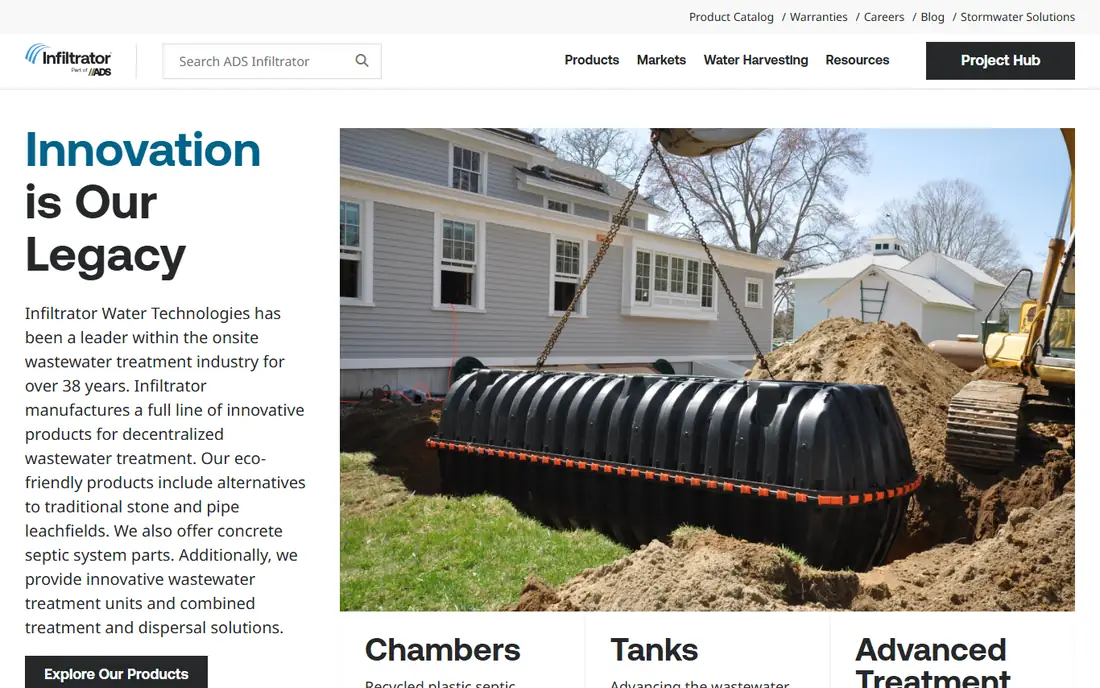
A holding tank is a sealed tank that stores all household wastewater with no drainfield and no treatment, requiring regular pumping by a licensed hauler. Installation is simple, which suits temporary sites, very constrained lots, or properties awaiting a sewer connection. Some advanced treatment vendors also supply tanks as part of larger systems.
Pumping costs add up fast for a full time home, since every gallon used must be hauled away, and many codes restrict holding tanks to temporary or special cases. For a short term or truly constrained site, a holding tank is a workable stopgap, but it is rarely a good permanent alternative.
What we like- No drainfield needed
- Simple installation
- Works where no other system fits
Watch out for- Frequent pumping costs
- No treatment, only storage
- Usually temporary or restricted by code
How we chose
We ranked systems by treatment quality, site fit, reliability, and upkeep, favoring proven designs approved by health departments over experimental options. We gave extra weight to systems that solve a specific site problem, such as high water tables or small lots, since that is why owners seek alternatives in the first place. We also flagged limits honestly, including greywater handling for waterless toilets and pumping costs for holding tanks. Installed costs vary hugely by site, soil, and local labor, so starting prices are listed as See website.
Buying guide
Start with your site and your health department. Get a soil evaluation and perc test, check the water table and lot size, and ask your local health department which systems are approved for your property. Local codes govern every option here, and a system that works in one county may be banned in the next, so permits come before purchase.
Next, match the system to your household. A full time family home needs a system that handles all wastewater, including laundry and showers, which rules out toilet only options alone. An off grid cabin with low use can pair a composting or incinerating toilet with a simple greywater system. Compare total cost, including installation, electricity, service contracts, and pumping, not just equipment price.
Finally, plan maintenance before you buy. Advanced systems need service contracts, pumps need replacement, and holding tanks need frequent pumping. Choose a system with local service available, since a system no local technician can maintain will fail sooner. The best alternative to a septic system is the one your site allows, your budget supports, and a local professional can maintain.
Frequently asked questions
Can I replace a septic system without a drainfield?
Yes, in some cases. Waterless toilets need no drainfield for toilet waste, holding tanks need no drainfield at all, and sewer connections remove onsite disposal. Most full household systems still need some form of drainfield or disposal, though advanced units may allow smaller ones.
What is the cheapest alternative to a septic system?
A composting toilet is cheapest for toilet waste alone, but a full household still needs greywater handling. For full wastewater, a conventional septic system is usually cheapest where site conditions allow it, with advanced systems costing more.
Do I need a permit for an alternative septic system?
Yes, in nearly all cases. Local health departments permit onsite wastewater systems, require soil evaluations, and inspect installation. Always check with your health department before buying or installing any system.
How long do alternative septic systems last?
Lifespans vary by system and maintenance: tanks and drainfields can last decades with care, while pumps, controls, and treatment units need service and replacement parts over time. Regular maintenance is the main factor in system life.
Can an alternative system be used for a full time home?
Yes, when sized and permitted for full time use. Aerobic units, mound systems, sand filters, and sewer connections all serve full time homes. Toilet only options like composting and incinerating toilets need a separate greywater system for a full time household.
Sources we checked (0)
Is your product missing or out of date?
We review this list regularly. Vendors can request a listing, send updated pricing or ask about featured placement.

Shihab Mia · Founder, Rankite
Shihab has 5+ years in B2B and SaaS SEO. He writes Rankite's software buying guides from pricing pages, documentation and public user reviews. More about Shihab.
 Aerobic Treatment Unit
 Mound System
 Sand Filter System
 Composting Toilet
 Incinerating Toilet
 Holding Tank