How we make this list: we compare pricing pages, product documentation and public user reviews. Ratings come from G2, Capterra or Trustpilot, with the date we checked them.
Key takeaways
- Zerto, now part of HPE, is known for continuous data protection with very low recovery point objectives for virtual machines.
- Veeam and Commvault are the broadest replacements, covering virtual, physical, and cloud workloads with mature recovery tooling.
- Azure Site Recovery suits teams already on Azure, while VMware Live Site Recovery suits VMware estates.
- Recovery point and recovery time targets matter more than feature lists: agree on them first, then pick the tool that meets them.
Quick comparison
Is your product missing or out of date?
We review this list regularly. Vendors can request a listing, send updated pricing or ask about featured placement.
The best Zerto alternatives

#1Veeam Data Platform
Best for: Broad virtual and cloud recovery4.6/5 on
G2 (752 reviews, checked Oct 2026)
Visit veeam.com
Starting priceFree
Free planYes
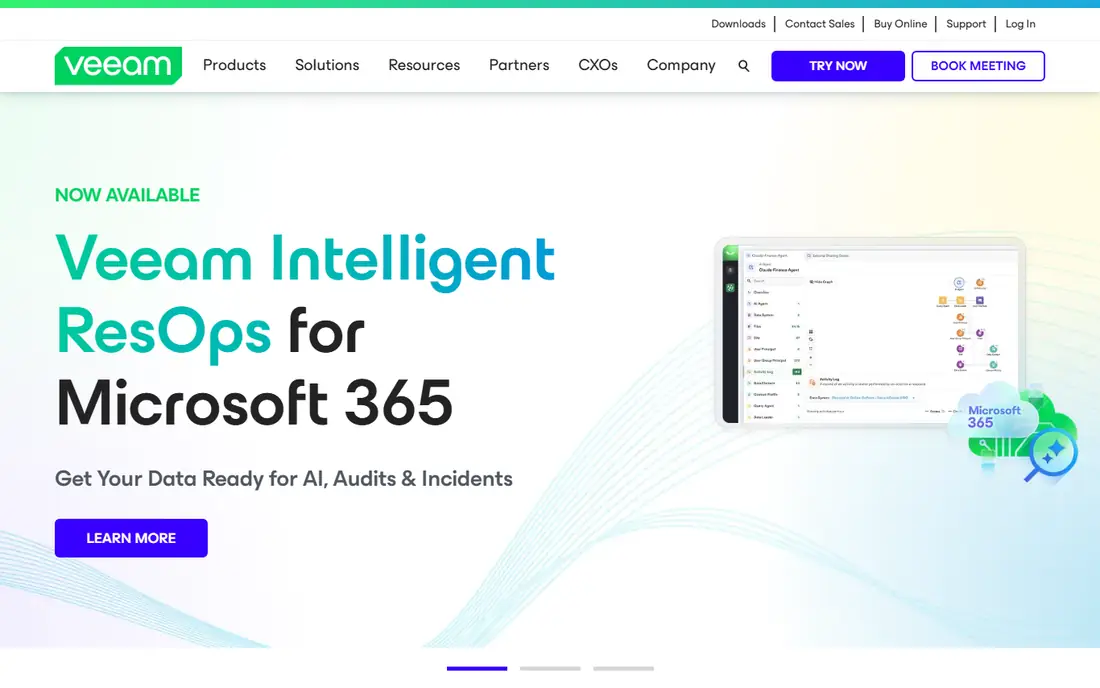
Veeam covers the same ground as Zerto for most virtual estates: backup plus replication, with instant VM recovery that boots a failed machine from backup or replica in minutes. It supports VMware, Hyper-V, and major clouds, so hybrid estates get one recovery platform. The free Community Edition covers up to 10 workloads without support, which is a real pilot path.
Veeam's licensing is the familiar headache: editions and pricing are quote-based, and hitting very low recovery point targets needs careful replication design. For teams that want broad coverage and control, Veeam is the most capable Zerto replacement.
What we like- Instant VM recovery
- Replication for disaster recovery
- Free Community Edition for up to 10 workloads
Watch out for- Licensing is complex and quote-based
- Recovery point targets depend on setup
- Microsoft 365 backup is separate
#2Commvault Cloud
Best for: Enterprise backup and recovery4.4/5 on
G2 (195 reviews, checked Oct 2026)
Visit commvault.com
Starting priceSee website
Free planNo
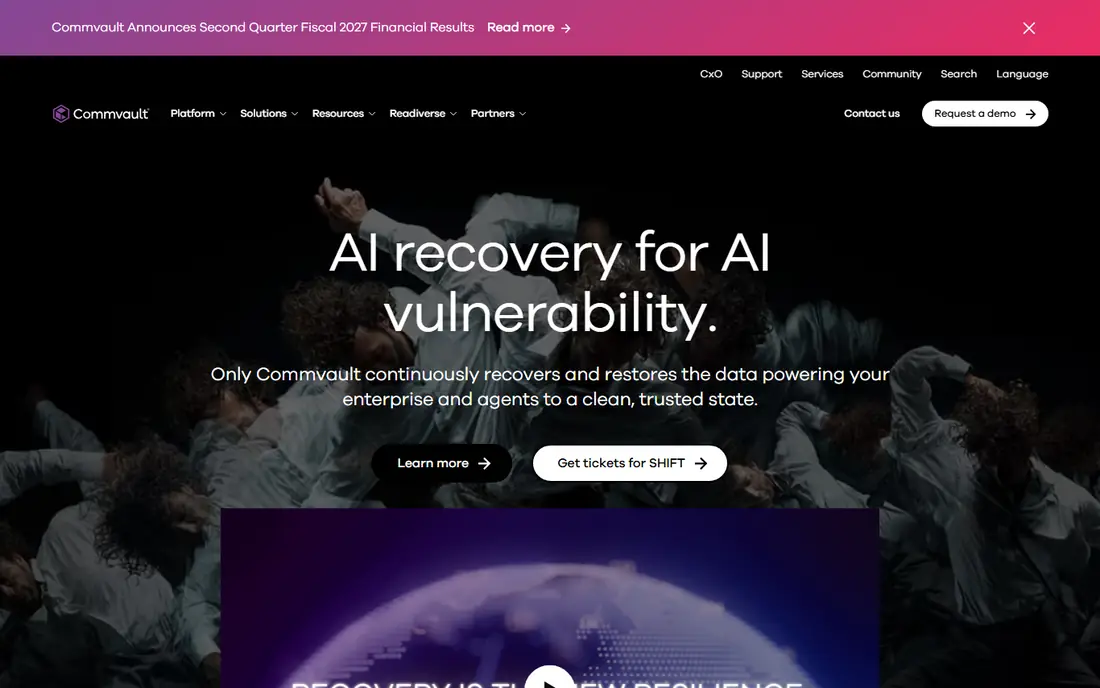
Commvault Cloud covers virtual machines, databases, endpoints, SaaS apps, and cloud workloads from one platform, with recovery tooling built for enterprises that must prove compliance. Its breadth suits organizations with many workload types and strict retention rules.
Breadth brings implementation time. Commvault is not a weekend install, and pricing is quote-based. For enterprises that need one recovery platform across everything, Commvault is the most complete alternative to Zerto.
What we like- Very broad workload coverage
- Mature recovery and compliance tooling
- Strong enterprise install base
Watch out for- Quote-based pricing
- Platform breadth means longer implementation
- Needs skilled staff
Starting price$3,000 per year
Free planNo
Rubrik approaches recovery from security: backups are immutable, so ransomware cannot alter or delete them, and Live Mount brings critical systems back instantly. Third-party guides put entry pricing near $3,000 per year. For organizations where a clean recovery after an attack is the top requirement, Rubrik is the strongest pick.
Rubrik's model differs from Zerto's continuous replication, so recovery point targets and failover workflows need fresh design. Small estates will find it heavy and pricey. For enterprises that rank clean recovery above all else, Rubrik earns its place.
What we like- Immutable backups resist ransomware
- Live Mount instant recovery
- SLA-driven design
Watch out for- Enterprise pricing
- Overkill for small estates
- Replication features differ from Zerto's continuous model
Starting priceSee website
Free planFree trial
Azure Site Recovery replicates on-prem servers and VMs to Azure, then orchestrates failover and failback through runbooks. Teams already on Azure get native integration, and costs follow Azure consumption: replication, storage, and compute during failover. A free trial covers initial testing.
The catch is Azure lock-in and skill. Recovery design, networking, and failover testing all need Azure knowledge, and non-Azure targets are not the focus. For Azure-first organizations, Site Recovery is the natural Zerto replacement.
What we like- Native Azure disaster recovery
- Replicates VMware, Hyper-V, and physical servers to Azure
- Pay for what you use
Watch out for- Best inside Azure estates
- Recovery design needs Azure skill
- Costs include Azure compute and storage
Starting priceSee website
Free planNo
VMware Live Site Recovery, formerly Site Recovery Manager, automates replication, failover, and failback for vSphere estates, with runbooks that sequence application recovery in order. VMware shops get a tool that understands their stack deeply, including storage replication adapters from major vendors.
It is VMware-only in practice, so mixed hypervisor estates need another tool. Licensing is quote-based and the platform expects vSphere skill. For pure VMware estates, it is the most native disaster recovery option here.
What we like- Built for VMware vSphere replication and failover
- Automated runbooks
- Mature enterprise tooling
Watch out for- VMware-only focus
- Licensing is quote-based
- Needs vSphere expertise
Starting priceSee website
Free planNo
Cohesity unifies backup, recovery, and data management on one platform, with instant mass recovery for many machines at once and anomaly detection that flags ransomware in backup data. Third-party guides put its Core edition from about $1,961 per terabyte, which gives a sense of enterprise pricing scale.
Breadth means planning: policy design and capacity work take time, and small teams may find it heavy. For enterprises that want backup, recovery, and data management consolidated, Cohesity is a strong Zerto alternative.
What we like- Unified backup, recovery, and data management
- Instant mass recovery
- AI-driven anomaly detection
Watch out for- Quote-based pricing
- Platform breadth needs planning
- Enterprise focus

#7
Druva Data Resiliency Cloud
Best for: SaaS-native recovery
Visit druva.com
Starting priceSee website
Free planNo
Druva runs recovery entirely as a service, so there are no replication servers to maintain. It covers endpoints, Microsoft 365, Google Workspace, Salesforce, and cloud workloads, with ransomware response that helps teams find clean recovery points. Distributed companies with no central data center benefit most.
Control over replication targets is thinner than Veeam or Zerto, and pricing is quote-based. For SaaS-first companies that want recovery to disappear as infrastructure, Druva is the cleanest fit.
What we like- Fully SaaS with no servers to run
- Covers endpoints, SaaS apps, and cloud workloads
- Ransomware response built in
Watch out for- Quote-based pricing
- Less control over replication targets
- Enterprise focus
Starting priceSee website
Free planFree trial
HYCU is built for multi-cloud estates, with policy-based backup and recovery for Nutanix, Azure, Google Cloud, and SaaS apps like Microsoft 365. Setup is simpler than the enterprise giants, and a free trial lets teams test it on real workloads before committing.
Brand recognition trails Veeam and Commvault, and traditional on-prem virtual coverage is narrower. For teams whose estate is already multi-cloud, HYCU's focused design is an advantage rather than a limit.
What we like- Purpose-built for multi-cloud and SaaS workloads
- Simple policy-based protection
- Covers Nutanix and major clouds
Watch out for- Quote-based pricing
- Smaller brand than Veeam or Commvault
- On-prem virtual coverage is narrower
How we chose
We compared disaster recovery and replication platforms that replace Zerto's core job: keeping copies of critical systems current and failing over fast when the primary site fails. We checked recovery point and recovery time capabilities, workload coverage, and deployment models from vendor pages and 2026 recovery comparisons, and we left out pure backup tools without replication or failover orchestration. Unpublished prices are listed as See website. Where a price comes from a third-party guide, such as Rubrik's entry figure or Cohesity's per-terabyte figure, we flag it as a guide figure so readers can confirm it on the vendor site before budgeting.
How to pick a Zerto replacement
Start with recovery targets. Write down the recovery point objective (how much data you can lose) and recovery time objective (how long you can be down) for each critical application, then ask vendors to prove those numbers in a test. A tool that cannot meet a 15-minute recovery point for your order system is not a replacement, no matter how good its feature list looks.
Test failover, not just replication
Replication that has never failed over is unproven. Run a planned failover test for at least one critical application each quarter, including network, DNS, and application startup order. Time the full recovery, not just the VM boot, and document what broke. Zerto users value its continuous model because failover feels routine; any replacement must earn that same confidence through testing.
Price the standby, not just the license
Disaster recovery costs include standby compute, storage, replication traffic, and test time, not just the license. Azure and cloud targets charge for resources during failover, while on-prem targets need standby hardware. Model a full failover month, not a quiet month, before signing.
Keep runbooks current
Failover runbooks go stale fast as applications change, and a stale runbook fails at the worst moment. Review runbooks after every major application change, and store them where the recovery team can reach them during an outage, not only inside the tool that is down. Assign one owner per application runbook, and test the runbook, not just the replication, in every quarterly exercise.
Frequently asked questions
What is Zerto known for?
Zerto, now part of HPE, is known for continuous data protection for virtual machines, with very low recovery point objectives and orchestrated failover and failback. It replicates changes continuously rather than on a backup schedule, which suits applications that cannot afford to lose more than seconds or minutes of data.
How do recovery point and recovery time objectives work?
Recovery point objective is the maximum data loss you accept, measured in time: a 15-minute objective means losing at most 15 minutes of work. Recovery time objective is the maximum downtime you accept. Both shape tool choice, replication design, and cost, so agree on them with application owners before buying.
Can I use Veeam instead of Zerto?
Yes, for most virtual estates. Veeam offers replication plus instant recovery, and its free Community Edition covers up to 10 workloads for testing. Hitting Zerto-level recovery points needs careful replication design and testing, so run a failover pilot on your most demanding application before committing. Pay attention to network bandwidth between sites, since replication frequency depends on it, and confirm that your storage can sustain the write rate during peak hours and maintenance windows without slowing production workloads or delaying backup jobs for other systems on shared arrays and clusters.
Is cloud disaster recovery cheaper than on-prem?
It depends on how often you fail over. Cloud targets avoid standby hardware costs but charge for storage, replication traffic, and compute during failover and testing. On-prem targets need hardware but have predictable costs. Model a failover month for both before deciding, and include the staff time needed to run tests in each model every single quarter without any exception.
How often should I test disaster recovery?
Test at least one critical application each quarter, and run a full disaster recovery exercise at least yearly. Include network and DNS changes, application startup order, and data validation, not just VM boots. Document recovery times against your objectives and fix gaps before a real outage. After each test, hold a short review with application owners and update the runbook with anything that surprised you, since the test is only useful if it changes the plan.
Sources we checked (8)
- https://www.veeam.com
- https://www.commvault.com
- https://www.rubrik.com
- https://azure.microsoft.com
- https://www.vmware.com
- https://www.cohesity.com
- https://www.druva.com
- https://www.hycu.com
Is your product missing or out of date?
We review this list regularly. Vendors can request a listing, send updated pricing or ask about featured placement.

Shihab Mia · Founder, Rankite
Shihab has 5+ years in B2B and SaaS SEO. He writes Rankite's software buying guides from pricing pages, documentation and public user reviews. More about Shihab.
 Rubrik Security Cloud
 Azure Site Recovery
 VMware Live Site Recovery
 Cohesity Data Cloud
 HYCU