How we make this list: we compare pricing pages, product documentation and public user reviews. Ratings come from G2, Capterra or Trustpilot, with the date we checked them.
Key takeaways
- The three national bureaus, Experian, Equifax, and TransUnion, each hold a separate report, so checking only one can miss errors.
- You can get free weekly reports from all three bureaus through AnnualCreditReport.com, which is the official site for that purpose.
- FICO scores drive most lending decisions in the US, while VantageScore appears on many free monitoring sites, so the two scores often differ.
- Paid monitoring adds alerts and identity tools, but free reports plus a credit freeze cover most people well.
- This article is general information, not financial advice, and it does not recommend any single score product for your situation.
Quick comparison
| Tool | Best for | Starting price | Free plan |
|---|
 Experian | Direct bureau reports and FICO | See website | Free basic account |
 Equifax | Bureau reports and lock tools | See website | Free basic account |
 TransUnion | Bureau reports and monitoring | See website | Free basic account |
 AnnualCreditReport.com | Free official reports | Free | Free |
 myFICO | True FICO scores | See website | No |
 Credit Karma | Free VantageScore monitoring | Free | Free |
 WalletHub | Free reports and score tracking | Free | Free |
 Aura | Identity and credit monitoring | See website | Free trial |
Is your product missing or out of date?
We review this list regularly. Vendors can request a listing, send updated pricing or ask about featured placement.
The best credit report company
Starting priceSee website
Free planFree basic account
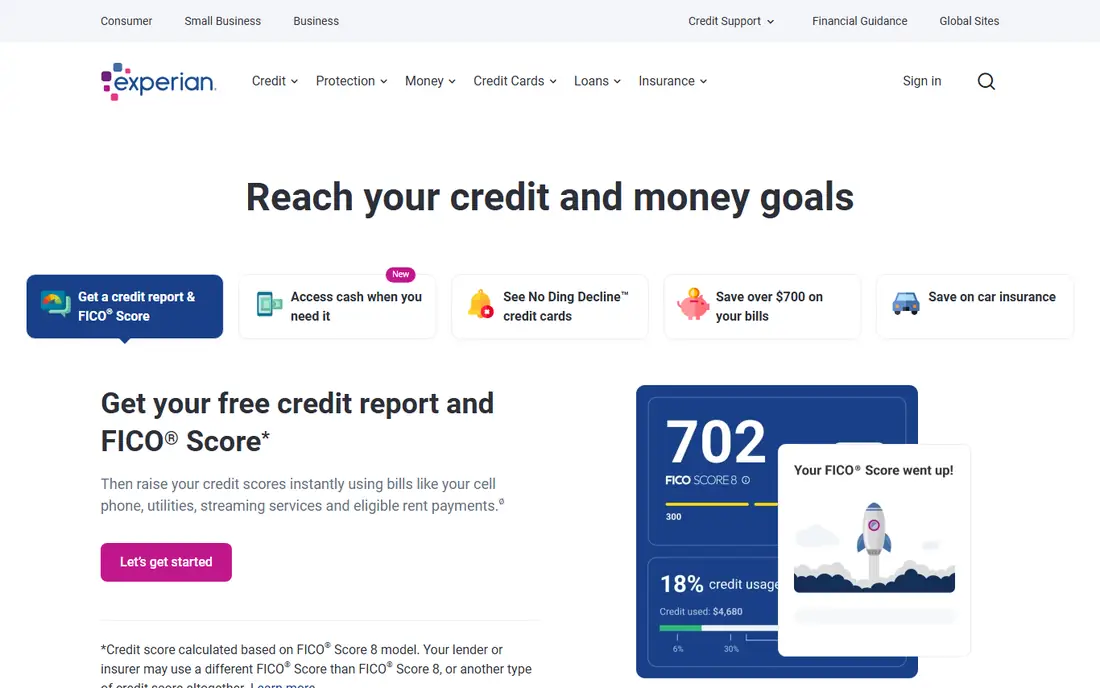
Experian is one of the three national credit bureaus, so its report reflects the accounts lenders report to Experian, which may differ from the other two bureaus. A free account shows your Experian report and a FICO score, with alerts when new accounts or inquiries appear. Experian Boost lets you add utility, phone, and streaming payments to your file, which can help thin files, though lenders vary in how they weigh Boost data.
The free tier covers the basics, but identity monitoring, three bureau reports, and score tracking sit on paid plans, and upsell prompts appear often. Disputes can be filed online, and corrections flow from Experian once verified. For a direct look at one bureau file plus a FICO score, Experian is a natural first stop, and the Boost feature gives thin file borrowers a path to build history.
What we like- Direct bureau data
- FICO score access
- Boost for bills
Watch out for- Paid tiers push upsells
- Some features need a subscription
Starting priceSee website
Free planFree basic account
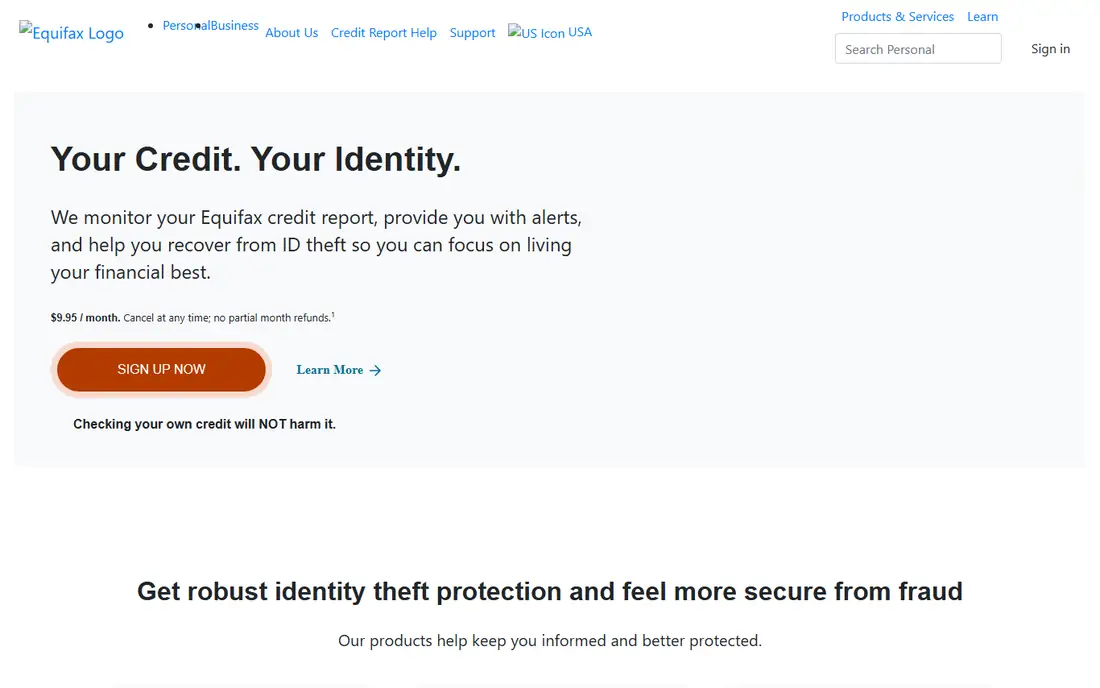
Equifax holds the second of the three national bureau files, and its free account shows your Equifax report and a VantageScore, with a credit lock that blocks new inquiries until you lift it. A lock differs from a freeze in detail, but both reduce the risk of new accounts opened in your name, and Equifax lets you manage the lock from its app. Disputes and fraud alerts can be placed online without a paid plan.
Trust remains a sensitive point, since the 2017 Equifax breach exposed data for a large share of US adults, and the company has since invested heavily in security. Paid plans add three bureau monitoring and identity tools, but the free report and lock cover the core need. For direct access to your Equifax file, the free account is enough for most people.
What we like- Credit lock in the app
- Direct bureau disputes
- Clear report layout
Watch out for- Past data breach still colors trust
- Paid plans add most extras
Starting priceSee website
Free planFree basic account
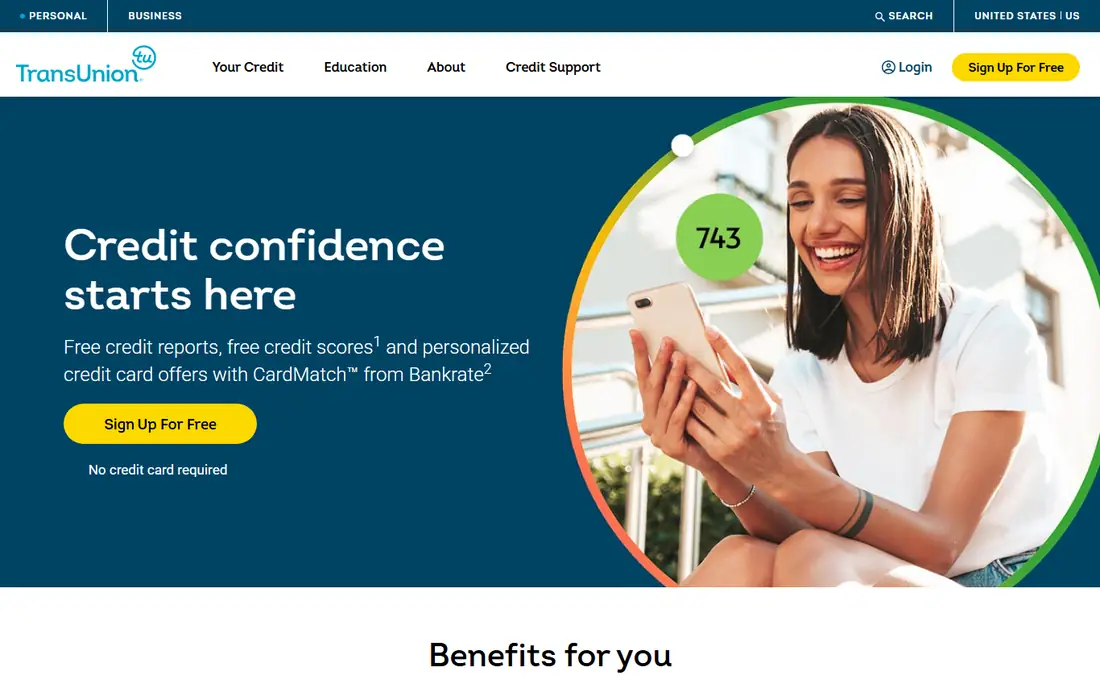
TransUnion completes the trio of national bureaus, and its report may show accounts or balances that differ from Experian or Equifax, since not every lender reports to all three. A free account shows your TransUnion report and a VantageScore with the factors behind it, such as payment history and credit use. Alerts warn you when a new account, inquiry, or address change appears.
The free VantageScore helps you track direction, but most mortgage and auto lenders use FICO scores, so the number you see here may differ from the number a lender sees. Paid plans add FICO access, three bureau monitoring, and identity protection. For a full picture, check TransUnion alongside the other two bureaus, especially before a major application.
What we like- Direct bureau data
- Clear score factors
- Monitoring alerts
Watch out for- Free score is VantageScore, not FICO
- Paid tiers hold deeper tools
Starting priceFree
Free planFree
AnnualCreditReport.com is the official site created under federal law for free credit reports, and it is the only place that offers reports from all three bureaus without a sales pitch. You can pull reports weekly, which lets you stagger checks across the year or pull all three at once before a loan application. No credit card is required, and the site does not sell scores.
The limits are clear. You get reports, not scores, and there are no alerts when something changes, so you must check on your own schedule. Beware of lookalike sites that charge for reports or bundle scores with subscriptions. For the raw, official record, this site is the safest starting point for every US adult.
What we like- Official site for all three bureaus
- Free weekly reports
- No card required
Watch out for- No scores included
- No monitoring alerts
- Reports only, no advice
Starting priceSee website
Free planNo
myFICO sells the scores that matter most for lending, since most US lenders use FICO scores for mortgages, auto loans, and cards. Plans show FICO scores from all three bureaus, track changes over time, and include simulators that estimate how paying down a balance or opening a card might move your score. That detail helps before a mortgage application, when a few points can change the rate.
The service is paid, and the many FICO versions, such as FICO 8, FICO 9, and FICO 10, confuse newcomers, since lenders may use an older version than the one shown. Free monitoring sites give direction, but myFICO gives the lender grade view. For a major loan in the next few months, a short myFICO subscription can be worth the cost.
What we like- Real FICO scores lenders use
- Three bureau versions
- Score simulators
Watch out for- Paid only
- Score versions confuse newcomers
- Upsells for monitoring
#6Credit Karma
Best for: Free VantageScore monitoring4.3/5 on
G2 (35 reviews, checked Oct 2026)
Visit creditkarma.com
Starting priceFree
Free planFree
Credit Karma gives free monitoring of your TransUnion and Equifax reports with VantageScore tracking and alerts for new accounts, inquiries, and balance changes. The app explains score factors in plain language, which helps newcomers learn what drives their score. Extra tools cover tax filing and card recommendations, funded by partner offers rather than user fees.
The trade off is advertising. Card and loan offers fill the app, and the VantageScore shown may differ from the FICO score a lender pulls. For free, ongoing monitoring with alerts, Credit Karma remains popular and useful, as long as you treat the score as a guide rather than a lender grade figure. Pair it with free bureau reports for the full record.
What we like- Free TransUnion and Equifax monitoring
- Alerts
- Tax and card tools
Watch out for- Scores are VantageScore, not FICO
- Ads for cards and loans
Starting priceFree
Free planFree
WalletHub offers free daily updates to your TransUnion report and VantageScore, with a credit analysis that breaks down payment history, use, and account age. The site also publishes card and banking comparisons, which suit users who want to pair monitoring with product research. Alerts cover new accounts and score changes.
As with Credit Karma, the score is VantageScore, not the FICO score most lenders use, and partner offers fund the free service. Daily updates are more frequent than most free rivals, which helps when you are cleaning up a report. For free, frequent TransUnion tracking, WalletHub is a strong choice.
What we like- Free TransUnion report daily updates
- Credit analysis
- Card tools
Watch out for- VantageScore only
- Ads and partner offers
Starting priceSee website
Free planFree trial
Aura bundles credit monitoring with identity theft protection, including three bureau reports, dark web monitoring, and fraud alerts in one dashboard. Family plans cover children and adults, which suits households that want one place for protection. Restoration help and insurance cover identity theft cases, subject to plan terms.
The credit tools alone may not justify the price if you only want reports, since free options cover that need. Aura suits people who also want VPN, antivirus, and identity tools in one subscription. For combined credit and identity monitoring with family coverage, Aura is a solid paid pick.
What we like- Three bureau monitoring
- Identity theft tools
- Family plans
Watch out for- Paid after trial
- Credit tools are part of a wider bundle
How we chose
We compared bureau coverage, score type, report access, alert speed, dispute tools, freeze and lock options, price transparency, and public user feedback. We favored services that show real bureau data, explain score factors clearly, and avoid charging for reports that federal law already makes free. No hands on testing is claimed, and prices are shown as See website where a vendor prices by plan. This article is general information, not financial advice.
How to check and fix your reports
Pull all three reports from AnnualCreditReport.com, then compare accounts, balances, and personal details line by line. An account that appears on one bureau but not another is normal, since lenders report selectively, but an account you do not recognize is a red flag. Dispute errors with the bureau that shows them, in writing through its online portal, and keep copies of everything you send.
Place a credit freeze at all three bureaus if you are not applying for credit soon, since a freeze blocks new accounts better than monitoring alone. You can lift a freeze temporarily when you apply, and the process is free under federal law. Check reports again after a dispute, since corrections can take a month to appear, and track your score direction with a free tool between full checks.
Frequently asked questions
Which bureau matters most for a mortgage?
All three matter, since mortgage lenders usually pull all three reports and use the middle FICO score. An error on any bureau can affect that middle score, so check all three before you apply. Fix errors early, since disputes take time.
Why do my scores differ across sites?
Different sites use different models, mainly FICO versus VantageScore, and different bureau data, since lenders report selectively. A VantageScore from a free app and a FICO score from a lender can differ by dozens of points. Track direction on one site, and check FICO before a major loan.
Is AnnualCreditReport.com really free?
Yes, it is the official site under federal law, and weekly reports from each bureau are free with no card required. Lookalike sites may charge or bundle subscriptions, so type the address directly. If a site asks for payment for a basic report, leave it.
Should I pay for credit monitoring?
Most people do not need paid monitoring if they use free reports, free alerts, and a credit freeze. Paid plans suit people recovering from identity theft, parents monitoring family accounts, or buyers preparing for a mortgage. Start free, and upgrade only if the extra tools solve a real problem.
What is the difference between a freeze and a lock?
A freeze is a legal protection under federal law that blocks new credit inquiries until you lift it, and it is free. A lock is a vendor tool that works similarly but is governed by the vendor terms, and it may sit behind a paid plan. Both help, but a freeze at all three bureaus is the stronger default.
Sources we checked (8)
- https://www.experian.com
- https://www.equifax.com
- https://www.transunion.com
- https://www.annualcreditreport.com
- https://www.myfico.com
- https://www.creditkarma.com
- https://www.wallethub.com
- https://www.aura.com
Is your product missing or out of date?
We review this list regularly. Vendors can request a listing, send updated pricing or ask about featured placement.

Shihab Mia · Founder, Rankite
Shihab has 5+ years in B2B and SaaS SEO. He writes Rankite's software buying guides from pricing pages, documentation and public user reviews. More about Shihab.