How we make this list: we compare pricing pages, product documentation and public user reviews. Ratings come from G2, Capterra or Trustpilot, with the date we checked them.
Key takeaways
- The strongest all-around picks are mutual insurers with top financial strength ratings, since a policy may need to pay out decades from now.
- Term life is the cheapest way to get a large death benefit, while whole life costs far more but lasts for life and builds cash value.
- Online providers such as Ethos and Ladder can approve healthy applicants in minutes with no medical exam, but their coverage caps and state availability are narrower.
- Your final premium depends on age, health, smoking status, coverage amount, and term length, so quotes from at least three companies are worth getting.
- This is not financial advice. Life insurance is a long commitment, so read the policy terms and exclusions before you sign.
Quick comparison
| Tool | Best for | Starting price | Free plan |
|---|
 Northwestern Mutual | Financial strength and advisor guidance | See website | No |
 New York Life | Large policies and long-term coverage | See website | No |
 MassMutual | Whole life and dividend-paying policies | See website | No |
 Guardian Life | Whole life with strong service | See website | No |
 Prudential | Applicants with health conditions | See website | No |
 State Farm | Bundling with home and auto insurance | See website | No |
 Mutual of Omaha | Seniors and simple term coverage | See website | No |
 Ethos | Fast online term life with no exam | From $30/month | No |
 Ladder | Flexible term coverage you can adjust | See website | No |
Is your product missing or out of date?
We review this list regularly. Vendors can request a listing, send updated pricing or ask about featured placement.
The best life insurance companies
Starting priceSee website
Free planNo

Northwestern Mutual is the pick for buyers who want the strongest possible promise behind a policy. It holds the highest available financial strength ratings from all four major rating agencies, and it expects to pay $9.2 billion in dividends in 2026. That matters because a life insurance policy is a promise that may not be called on for 30 or 40 years, and the company's ability to pay then is the whole point.
The trade-off is the buying experience. You work with a financial advisor rather than getting an instant quote online, and the advisor relationship shapes the whole process. For some buyers that is a genuine benefit, since the advisor can tie the policy into retirement and estate planning. For buyers who want a quick online purchase, it feels slow. Term policies are available alongside whole and universal life, and policies can be adjusted over time as needs change.
What we like- Highest available financial strength ratings
- Dividend-paying whole life
- Dedicated advisor for planning
Watch out for- No instant online quotes
- You must work with an advisor to buy
Starting priceSee website
Free planNo
New York Life has been in business since 1845 and describes itself as the largest mutual insurer in the US. It announced a record $2.78 billion dividend for payout in 2026, which goes to owners of participating policies. Mutual ownership means the company is owned by policyholders rather than shareholders, and that structure tends to favor long-term stability over quarterly results.
Buyers looking for high face amounts, often $1 million or more, will find New York Life a natural fit, since it is frequently cited for large policies. The company also holds the highest financial strength ratings from all four major agencies. The catch is the same as with other traditional mutuals: expect to talk to an agent, and expect the process to take longer than a fully online application. If you already have a financial advisor relationship, or you want one, that is not a drawback at all.
What we like- Largest mutual insurer in the US
- More than 12,000 agents and advisors
- Record dividend announced for 2026
Watch out for- Agent-led sales model
- Limited self-service online quoting
Starting priceSee website
Free planNo
MassMutual pairs 175 years of history with a dividend record that stretches back to 1869, and its whole life policies are a standard choice for buyers who want permanent coverage plus cash value they can borrow against. Term policies are also available, and a useful feature is convertibility: you can start with affordable term coverage and convert to permanent insurance later without a new medical exam. That option protects you if your health changes.
For buyers who prefer to buy online, MassMutual owns Haven Life, a fully digital subsidiary that offers fast online term quotes and same-day coverage decisions for qualified applicants. The main MassMutual site also offers calculators that estimate how much coverage you may need. Pricing is quote-based and varies by age, health, and term length, so the site will not hand you a firm number without an application.
What we like- Long dividend history
- Term policies that convert to permanent coverage
- Digital subsidiary Haven Life for online buyers
Watch out for- Advisor-led process for most products
- Online tools give estimates, not binding quotes
Starting priceSee website
Free planNo
Guardian has served policyholders for 165 years and reports paying $7 billion in benefits to policyholders in the past year. Its whole life policies are well regarded, and it offers term, universal, and variable life alongside disability and dental coverage, which makes it a convenient single carrier for families who want several types of protection in one place.
The buying experience is traditional: you work with a financial professional, and the site is stronger on education than on instant quotes. Guardian's term rates are generally not the cheapest on the market, so budget-focused term buyers may find better prices elsewhere. Where Guardian earns its place is the combination of financial strength, policy flexibility, and a long record of paying claims, which is exactly what a permanent policy buyer should weigh most heavily.
What we like- 165 years in business
- A++ financial strength rating
- Wide range of riders and policy types
Watch out for- Agent-led buying
- Term pricing tends to run higher than budget online providers
Starting priceSee website
Free planNo
Prudential stands out for buyers who expect underwriting to be a problem. People with diabetes, high blood pressure, or other health conditions often find more competitive rates here than at carriers with stricter health screens, and Prudential is also known for competitive rates for smokers. Coverage amounts run high, which suits estate planning and business needs as well as family protection.
The company sells through more than 3,000 financial professionals and advisors, in person, virtually, or by phone. That human guidance helps when your situation is complicated, but it means there is no quick online checkout. Policy terms, exclusions, and availability vary by state, so the details in your quote deserve a careful read. For straightforward, healthy applicants, Prudential is competitive but rarely the cheapest; its real edge is flexibility.
What we like- Flexible underwriting for complex health profiles
- High coverage amounts up to $10 million
- More than 3,000 financial professionals
Watch out for- No instant online quotes
- Product details vary by state
Starting priceSee website
Free planNo
State Farm is best known for auto and home insurance, and that is precisely why it belongs on this list. If you already insure your car and house with State Farm, adding life coverage keeps everything with one agent and one account, and bundling can produce savings across your policies. The company serves more than 96 million policies and accounts and has around 19,000 agents, so local help is easy to find.
Life insurance here is straightforward term and permanent coverage rather than a specialty product line, and the buying process runs through an agent. That is a plus if you like face-to-face service and a minus if you want an instant online decision. State Farm's term pricing is often competitive for healthy applicants, though exact rates depend on your state and rating plan. Existing State Farm customers should get a quote here before looking elsewhere, since the convenience of a single carrier has real value.
What we like- Local agent in most communities
- Easy bundling with auto and home policies
- Strong app and online account tools
Watch out for- Life insurance is one line among many
- Term rates vary by state and agent
Starting priceSee website
Free planNo
Mutual of Omaha is a familiar name that many buyers already trust, and it is a sensible choice for straightforward term coverage and for older applicants who want a simple buying process. The company also offers a broad senior-focused lineup, including Medicare supplement plans, which makes it convenient for buyers sorting out several kinds of coverage at once.
The honest weakness is the digital experience. Managing a policy online is workable but less polished than at newer providers, and term rates for older applicants are not the most competitive in the market. What you get in return is a stable, well-known carrier with a long claims-paying history and a phone-based service model that suits buyers who would rather talk to a person than navigate a portal. If you value simplicity and a recognizable brand over the lowest possible premium, it fits.
What we like- Long-established brand
- Simple application paths
- Strong Medicare and senior-focused product range
Watch out for- Online account tools are basic
- Term rates are less competitive for older applicants
Starting priceFrom $30/month
Free planNo
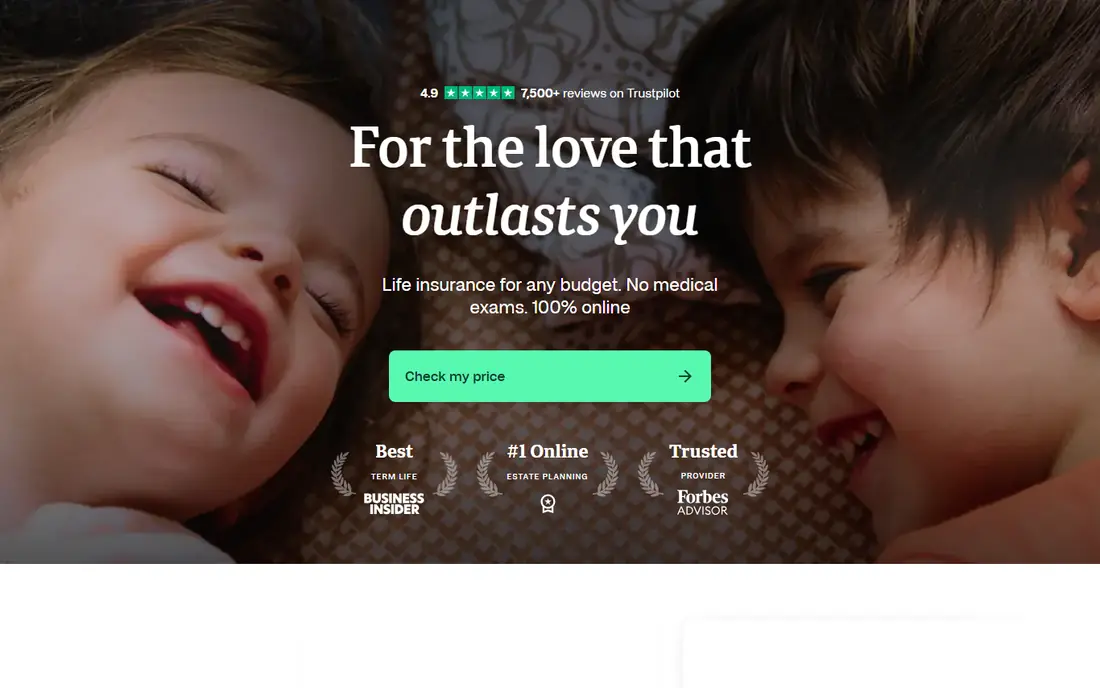
Ethos is the fastest route to coverage on this list. You answer a few health questions online, get an instant decision with no medical exam, and many applicants are covered the same day in as little as 10 minutes. Term lengths run from 10 to 40 years with up to $3 million in coverage, and plans start from $30 per month according to the company's homepage. Every policy includes a 30-day free look period, so you can cancel for a full refund within that window.
There are limits worth knowing. Ethos is a broker and technology platform rather than the insurer itself: policies are issued by partner carriers, and Ethos is licensed in 49 states plus Washington, DC, with New York the exception. Applicants must be US citizens or permanent residents aged 20 to 85, and term coverage is generally limited to age 69 and under. For healthy buyers who want term coverage without exams, paperwork, or agent meetings, Ethos is hard to beat on speed.
What we like- No medical exam for most applicants
- Coverage decisions in as little as 10 minutes
- Up to $3 million in term coverage
Watch out for- Not available in New York
- Policies are issued by partner carriers, not Ethos itself
Starting priceSee website
Free planNo
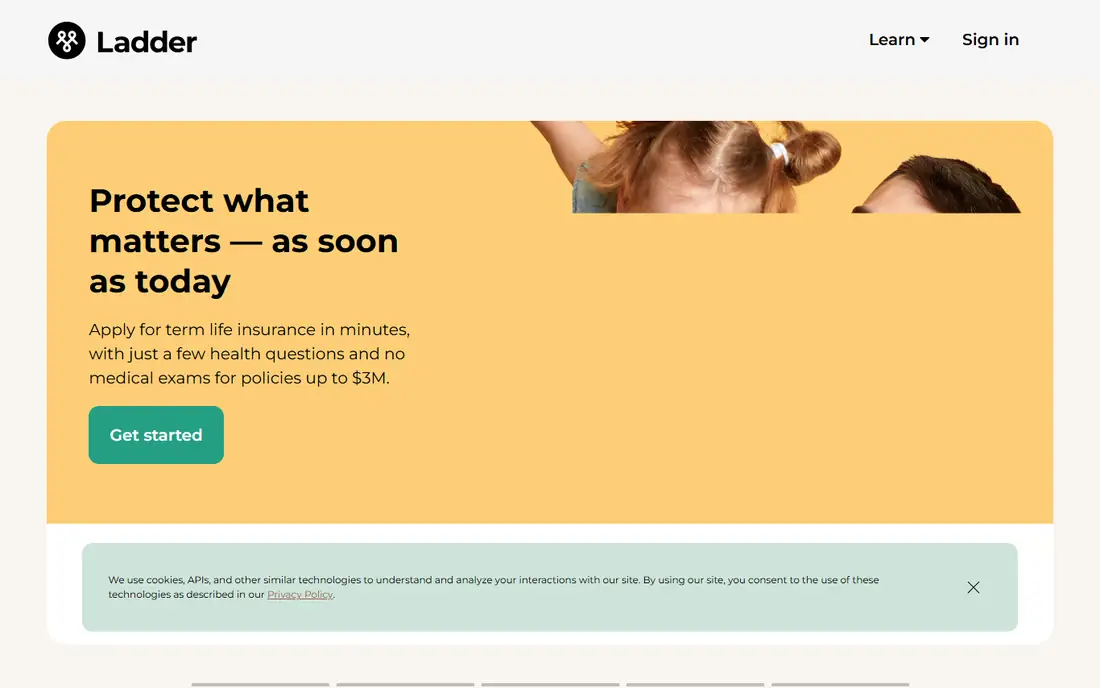
Ladder takes a different angle on term life: flexibility. After you buy, you can adjust your coverage amount up or down as life changes, for example after a mortgage is paid off or a child leaves home, rather than being locked into the amount you chose on day one. The application is fully digital with no doctors, no needles, and no paperwork for coverage of $3 million or less, and you can cancel within the first 30 days for a full refund.
The limitation is scope. Ladder sells term life only, so buyers who want permanent coverage or cash value need to look elsewhere. Coverage above $3 million may require a quick, free at-home health check. Policies are issued by highly rated partner insurers rather than by Ladder itself. For young families and homeowners whose coverage needs will change over the next 10 to 30 years, that adjustability is a practical advantage most traditional carriers do not offer.
What we like- Fully digital application
- Raise or lower coverage as needs change
- 30-day money-back guarantee
Watch out for- Term only, no permanent policies
- Coverage above $3 million may require an at-home health check
How we chose
We started with financial strength, since a life insurer's job is to pay a claim that may come due decades after the policy is signed. We checked AM Best and other agency ratings, product range across term, whole, and universal life, the buying experience from agent-led to fully online, and public review data on complaints and service. Pricing in life insurance is personal: it depends on age, health, smoking, coverage amount, and term length, so we avoided ranking companies on a single sample premium and instead noted where each carrier is genuinely competitive.
Every company homepage listed here was opened and confirmed to load and belong to that carrier. Where a price could not be verified on the vendor's own site, we wrote "See website" rather than repeating a third-party estimate as fact. This is not financial advice, and a quote from any carrier on this list is free, so comparing three or more before deciding is the sensible move.
What to decide before you get quotes
A little preparation makes quotes far more useful, and it keeps you from buying the wrong amount or the wrong type of policy.
How much coverage do you actually need
A common shortcut is 10 times your annual income, and it is a reasonable starting point. A fuller method adds up what your family would need: mortgage balance, other debts, future college costs, and several years of income replacement, then subtracts savings and existing coverage. Online calculators from the carriers on this list can run that math in a few minutes, and the result often surprises people in either direction.
Term or permanent
Term life covers a set number of years, typically 10 to 30, and it is the cheapest way to get a large death benefit while kids are young or a mortgage is outstanding. Permanent life, including whole and universal policies, lasts for life as long as premiums are paid and builds cash value, but it costs several times more for the same death benefit. Most families with a temporary need, such as income replacement until retirement, are well served by term. Permanent coverage fits needs that never expire, such as estate planning or supporting a dependent for life.
What affects your premium
Age and health dominate pricing, followed by smoking status, coverage amount, term length, and sometimes hobbies or occupation. Buying younger locks in lower rates, and non-smokers pay far less than smokers. Some carriers are more forgiving of specific conditions, which is why a declined or expensive quote from one company is not the final word. A second or third quote from a carrier with different underwriting can change the price substantially.
Check the details before you sign
Read the exclusions, the contestability period, and any rider terms, and confirm whether the policy converts from term to permanent without a new exam. Ask what happens if you miss a payment, and whether premiums are guaranteed level for the full term. A 30-day free look period is standard at several carriers on this list, which gives you time to review the actual policy documents after approval.
Frequently asked questions
How much life insurance do I need?
A common starting point is 10 times your annual income, then adjust for debts, mortgage balance, college costs, and how many years your family would need income replacement. Subtract savings and any existing coverage, including employer-provided policies. A carrier's online calculator can refine the number in a few minutes.
Is term or whole life better?
Term is better for most families because it delivers a large death benefit at the lowest cost during the years dependents rely on your income. Whole life costs far more for the same benefit but lasts for life and builds cash value. Choose permanent coverage when the need itself is permanent, such as estate liquidity or lifelong dependent support.
Can I get life insurance without a medical exam?
Yes. Ethos and Ladder approve many healthy applicants with only health questions and no exam, and several traditional carriers offer no-exam options up to certain coverage limits. No-exam policies can cost more than fully underwritten ones, and very large face amounts usually still require an exam.
How long does approval take?
Online providers can approve qualified applicants in minutes to a day. Traditional agent-sold policies that require a medical exam and full underwriting typically take two to six weeks. If you need coverage urgently, an online term policy can bridge the gap while a larger traditional application is processed.
What happens if I miss a premium payment?
Most policies include a grace period, commonly 30 days, during which coverage stays in force. If the grace period passes without payment, the policy can lapse, and reinstating it may require new health evidence. Permanent policies with cash value may stay in force longer by drawing on that value, depending on the contract.
Does life insurance pay out for any cause of death?
Nearly all policies pay for death from illness or accident, but standard exclusions apply, including death by suicide within the first two years in most states and death connected to fraud or material misrepresentation on the application. Read the exclusions section of your policy before you rely on it.
Sources we checked (11)
- https://www.northwesternmutual.com
- https://www.newyorklife.com
- https://www.massmutual.com
- https://www.guardianlife.com
- https://www.prudential.com
- https://www.statefarm.com
- https://www.mutualofomaha.com
- https://www.ethos.com
- https://www.ladderlife.com
- https://www.valuepenguin.com/best-life-insurance-companies
- https://www.insure.com/life-insurance/best-term-life-insurance-companies/
Is your product missing or out of date?
We review this list regularly. Vendors can request a listing, send updated pricing or ask about featured placement.

Shihab Mia · Founder, Rankite
Shihab has 5+ years in B2B and SaaS SEO. He writes Rankite's software buying guides from pricing pages, documentation and public user reviews. More about Shihab.