How we make this list: we compare pricing pages, product documentation and public user reviews. Ratings come from G2, Capterra or Trustpilot, with the date we checked them.
Key takeaways
- Azure Virtual Desktop is the natural pick for Microsoft-centric IT teams already running Microsoft 365 and Azure.
- Amazon WorkSpaces suits AWS-centric teams, starting near $21 per user per month.
- Citrix DaaS fits large enterprises that need scale, with pricing near $10 to $25 per user per month.
- Omnissa Horizon, formerly VMware Horizon, suits existing VMware shops but faces pricing pressure after the Broadcom changes.
- Inuvika OVD Enterprise claims up to 60 percent cost savings over Citrix or Horizon, with pricing from $8.55 per concurrent user per month.
- Managed DaaS usually beats self-managed VDI on total cost for teams under about 100 users once staffing is counted.
Quick comparison
Is your product missing or out of date?
We review this list regularly. Vendors can request a listing, send updated pricing or ask about featured placement.
The best VDI alternatives
Starting priceSee website
Free planNo
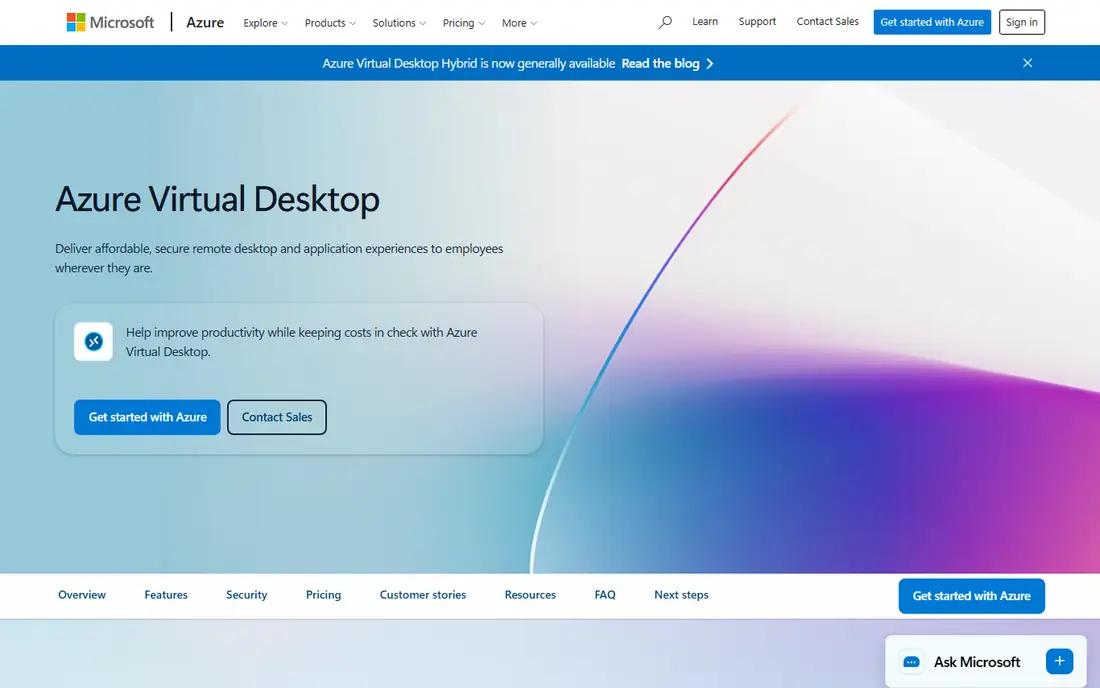
Azure Virtual Desktop, often called AVD, is the natural pick for organizations already running Microsoft 365. It delivers Windows desktops and apps from Azure, with Windows 11 multi-session support that lets several users share one VM. Integration with Microsoft Entra ID, Intune, and Defender gives Microsoft-centric IT teams one identity and security story across desktops and cloud services.
Pricing is pay-as-you-go based on VM size, storage, and usage, so there is no single list price to quote. That flexibility helps teams that scale up and down, but it also means costs vary month to month and need monitoring. AVD only deploys on Azure, so teams committed to AWS or on-premises infrastructure should look elsewhere. For Windows-heavy Microsoft shops, though, AVD is the most integrated VDI option available.
What we like- Native Microsoft 365 and Azure integration
- Flexible pay-as-you-go pricing
- Windows 11 multi-session
- Strong security controls
Watch out for- Azure-only deployment
- Management complexity for small teams
- Costs vary with VM size and usage

#2Amazon WorkSpaces
Best for: AWS-centric teams4.2/5 on
G2 (110 reviews, checked Oct 2026)
Visit aws.amazon.com
Starting price$21/month
Free planNo
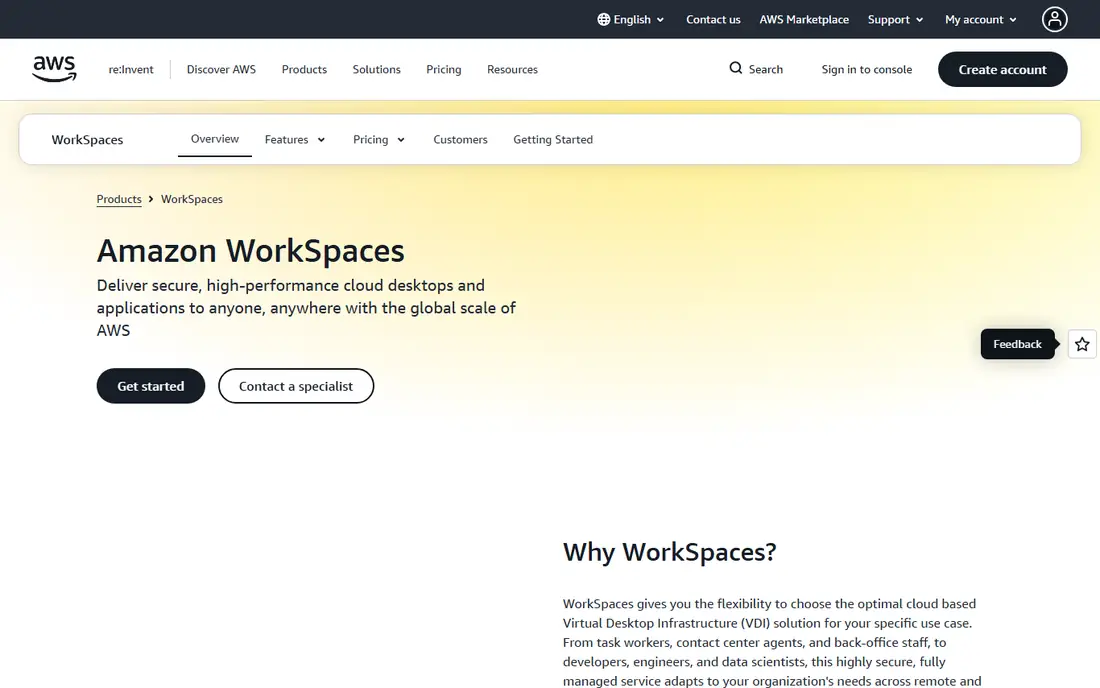
Amazon WorkSpaces is the managed desktop service for AWS-centric teams. It delivers Windows or Linux desktops from AWS regions worldwide, with per-user monthly pricing that is easy to budget. IT teams avoid managing brokers, gateways, and connection servers, since AWS runs the control plane, which suits small IT teams and fast-growing remote workforces.
Pricing starts from about $21 per user per month for basic bundles, with higher bundles for power users and graphics workloads. DaaS solutions typically range from $20 to $50 per user per month for basic configurations in published guides, and WorkSpaces sits at the low end of that range. The trade-offs are AWS-only deployment and less customization than Citrix, but teams already on AWS get a fast, predictable desktop service.
What we like- Simple per-user pricing
- AWS integration
- Managed service with low admin overhead
- Good for remote teams
Watch out for- AWS-only deployment
- Fewer customization options than Citrix
- Graphics-heavy workloads cost more

#3Citrix DaaS
Best for: Large enterprises4.1/5 on
G2 (546 reviews, checked Oct 2026)
Visit citrix.com
Starting price$10/user/month
Free planNo
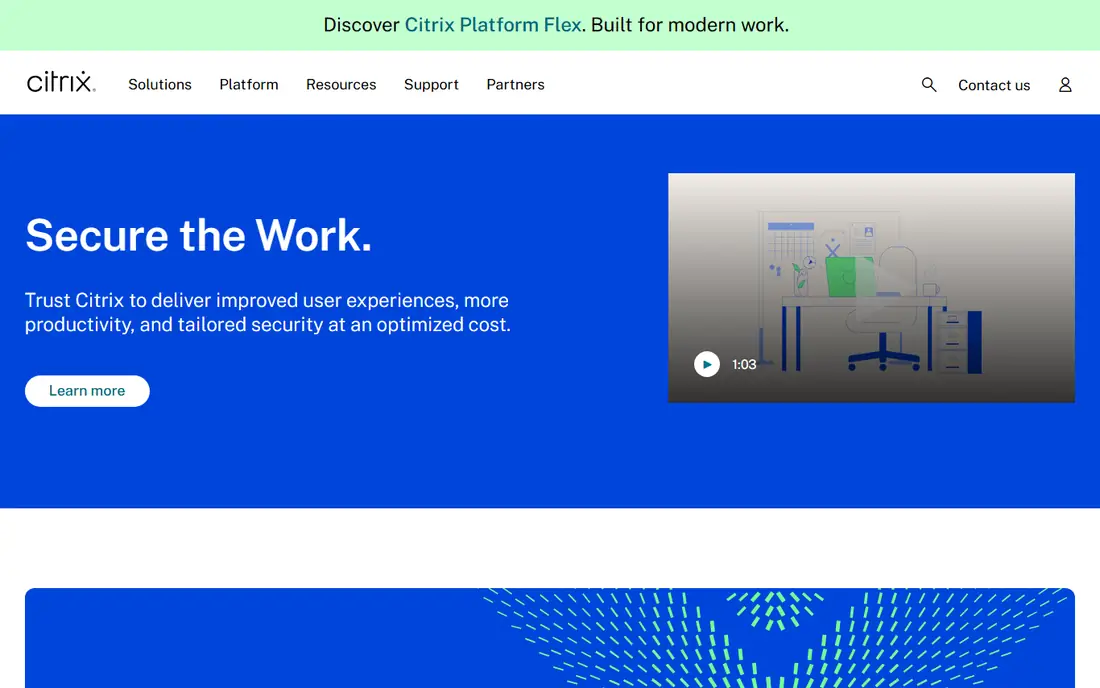
Citrix DaaS is the enterprise standard for virtual apps and desktops, used by large organizations that need scale, performance, and broad device support. The HDX protocol handles graphics and multimedia well over varied networks, and the platform bundles NetScaler and a secure enterprise browser into its platform license. Management can run in Citrix cloud while desktops run on-premises or in a public cloud.
Published guides put Citrix DaaS near $10 to $25 per user per month, though enterprise pricing is quote-based and varies with scale and term. Reviewers rate Citrix higher than Horizon on price satisfaction, noting that value is justified by scalability and management features, while still calling it expensive. Small teams often find the licensing complexity and management overhead too much, but large enterprises with thousands of users get the most proven platform here.
What we like- Proven at enterprise scale
- HDX protocol performance
- Broad device support
- NetScaler and secure browser bundled
Watch out for- Quote-based enterprise pricing
- Complex licensing
- Management overhead for small teams
- Premium cost
Starting price$150/user/year
Free planNo
Omnissa Horizon, formerly VMware Horizon, is one of the most established VDI platforms. It delivers virtual desktops and published applications across devices, with deep integration into vSphere and vSAN, the Blast Extreme display protocol, and advanced features such as instant clones and application layering. Existing VMware customers get a familiar platform with strong centralized management.
The ownership story matters for buyers. Broadcom acquired VMware in late 2023 and sold the end-user computing division to KKR, which relaunched it as Omnissa in 2024. Broadcom sharply raised vSphere renewal pricing for some users, and Horizon users have few hypervisor options beyond a new relationship with Nutanix AHV. Published guides list Horizon near $150 per user per year, with 16 to 21 percent price increases reported in May 2026 for new or expanding customers not using vSphere. Existing VMware shops should price the full stack, not just Horizon seats.
What we like- Deep VMware integration
- Blast Extreme performance
- Instant clones and app layering
- Strong management features
Watch out for- Broadcom pricing pressure on vSphere
- Limited hypervisor options
- Price increases of 16 to 21 percent reported for 2026

#5Parallels RAS
Best for: SMBs and education4.2/5 on
G2 (68 reviews, checked Oct 2026)
Visit parallels.com
Starting priceSee website
Free planNo
Parallels RAS suits small and mid-size businesses and education teams that want virtual apps and desktops without enterprise complexity. Deployment is faster than Citrix or Horizon, the management console is simpler, and device support covers Windows, Mac, mobile, and Chromebooks. Schools and clinics with limited IT staff often pick Parallels for that simplicity.
Parallels is less customizable than Citrix or Horizon, and the ecosystem of third-party tools is smaller. Buyers should also note that KKR owns Omnissa and indirectly owns Parallels, so the restructuring affecting Horizon could eventually touch Parallels too. Pricing is quote-based, so request a written quote for your user count and compare it with V2 Cloud and Inuvika before deciding.
What we like- Simpler than Citrix or Horizon
- Good for SMBs and schools
- Fast deployment
- Broad device support
Watch out for- Less customizable than enterprise platforms
- Smaller ecosystem
- Owned indirectly by the same group as Omnissa

#6V2 Cloud
Best for: Small business DaaS4.7/5 on
G2 (252 reviews, checked Oct 2026)
Visit v2cloud.com
Starting priceSee website
Free planNo
V2 Cloud is a managed DaaS provider popular with small businesses that want virtual desktops without running infrastructure. It handles the servers, brokers, and updates, so a small IT team or MSP can offer desktops to clients without VDI expertise. Reviewer ratings sit near 4.7 out of 5 in published comparisons, with small business as the largest segment.
Pricing is quote-based, so teams must request a quote for their user count and workload. V2 Cloud offers less enterprise depth than Citrix, with fewer advanced management features for very large deployments. For teams under about 100 users, managed DaaS from V2 Cloud usually costs less than self-managed VDI once staffing is counted, which is why it ranks among the top Citrix and Horizon alternatives in G2 comparisons.
What we like- Managed DaaS with low admin overhead
- Popular with small businesses
- Fast setup
- Strong reviewer ratings
Watch out for- Less enterprise depth than Citrix
- Pricing not public
- Smaller global footprint
Starting price$8.55/user/month
Free planNo
Inuvika OVD Enterprise delivers Windows and Linux applications and desktops from a Linux-based platform, which cuts Windows licensing requirements and infrastructure needs. It deploys on-premises or through any cloud provider, supports any device including Raspberry Pi and HTML5 browsers, and offers multi-tenancy for MSPs. The vendor claims cost reductions of up to 60 percent compared with Citrix or VMware Horizon.
Pricing starts at $8.55 per concurrent user per month, the lowest list price on this list, with concurrent licensing that suits shift-based teams. Migration from Citrix or Horizon is supported, with integration for directory services, storage, and hypervisors. The ecosystem is smaller than Citrix, and third-party support is thinner, but cost-focused teams that run mixed Linux and Windows apps should test Inuvika first.
What we like- Lowest list price here
- Linux-based, cutting Windows licensing needs
- Up to 60 percent savings claimed
- Hybrid and multi-cloud
Watch out for- Smaller ecosystem than Citrix
- Community support is thinner
- Migration effort for large Citrix estates
Starting priceSee website
Free planNo
Workspot suits companies that need desktops deployed fast across many regions. Its cloud-native control plane provisions desktops in global cloud regions without the infrastructure project that self-managed VDI requires, which helps distributed teams and companies opening new offices. Management overhead stays low, since Workspot runs the control plane.
Workspot is less customizable than Citrix, and pricing is not public, so teams must request a quote. Market presence is smaller than Citrix or Microsoft, which means fewer third-party integrations and community resources. For companies that prioritize rapid global deployment over deep customization, Workspot fills a niche that larger platforms serve slowly.
What we like- Fast global deployment
- Cloud-native control plane
- Good for distributed teams
- Low management overhead
Watch out for- Less customizable than Citrix
- Pricing not public
- Smaller market presence
How we chose
We compared VDI alternatives on deployment model, protocol performance, management overhead, ecosystem size, and pricing transparency. Traditional VDI requires constant connectivity, since the operating system lives on a remote server, and total cost of ownership for enterprise VDI often lands between $80 and $150 per user per year once infrastructure, licensing, and management are counted in published guides. Prices come from vendor pages and published comparisons from 2026, and they change often, so confirm the current price before purchase.
How to choose the right VDI alternative
Start with your existing cloud. Microsoft shops should default to Azure Virtual Desktop, AWS shops to Amazon WorkSpaces, and VMware shops to Omnissa Horizon, while pricing the full stack in each case. Teams under about 100 users should compare managed DaaS from V2 Cloud, Workspot, or Inuvika against self-managed VDI, since staffing costs usually tip the balance toward managed services.
Next, test performance with real workloads. Graphics-heavy design work, video, and multimedia need protocol testing on your actual networks, not just vendor demos. Check hypervisor lock-in too: Horizon users face limited options after the Broadcom changes, while Inuvika and V2 Cloud offer more deployment freedom. Finally, price concurrent versus named users honestly, since shift-based teams can save a lot on concurrent licensing.
Frequently asked questions
What is VDI?
VDI, or virtual desktop infrastructure, runs desktop operating systems on remote servers and streams them to user devices. Users get a full desktop on any device, while IT manages apps, data, and security centrally.
Is VDI the same as DaaS?
No. VDI is the technology, while DaaS, or Desktop as a Service, is a managed cloud offering of virtual desktops. With DaaS the vendor runs the control plane, while with self-managed VDI your team runs it.
Which VDI alternative is cheapest?
Inuvika OVD Enterprise has the lowest list price here at $8.55 per concurrent user per month. Amazon WorkSpaces starts near $21 per user per month, and Citrix DaaS lists near $10 to $25 per user per month depending on tier.
Is VMware Horizon still a VMware product?
No. Broadcom acquired VMware in late 2023 and sold the end-user computing division to KKR, which relaunched it as Omnissa in 2024. Horizon is now developed and sold by Omnissa.
Can virtual desktops work offline?
Traditional VDI needs constant connectivity, since the operating system lives on a remote server. Limited offline caching exists on some platforms, but workers who need regular offline access are usually better served by a laptop with strong endpoint security.
How much does a virtual desktop cost?
Basic DaaS configurations typically range from $20 to $50 per user per month in published guides. Enterprise VDI total cost often lands between $80 and $150 per user per year once infrastructure, licensing, and management overhead are counted.
Sources we checked (0)
Is your product missing or out of date?
We review this list regularly. Vendors can request a listing, send updated pricing or ask about featured placement.

Shihab Mia · Founder, Rankite
Shihab has 5+ years in B2B and SaaS SEO. He writes Rankite's software buying guides from pricing pages, documentation and public user reviews. More about Shihab.
 Azure Virtual Desktop
 Omnissa Horizon
 Inuvika OVD Enterprise
 Workspot