How we make this list: we compare pricing pages, product documentation and public user reviews. Ratings come from G2, Capterra or Trustpilot, with the date we checked them.
Key takeaways
- UpGuard Vendor Risk Standard starts near $1,750 a month billed annually for 50 vendors, with $79 a month per extra vendor, plus a free Trust Exchange plan.
- BitSight and SecurityScorecard are the direct ratings rivals, but their scores are not directly comparable: BitSight uses 250 to 900, SecurityScorecard uses 0 to 100 with A to F grades, and UpGuard uses 0 to 950 with A to F bands.
- SecurityScorecard offers a free company scorecard for self-monitoring, with vendor monitoring quoted by organization count and a 14-day trial.
- OneTrust, LogicGate, ServiceNow TPRM, and Archer are enterprise GRC suites that cover vendor risk inside a broader governance program.
- Prevalent and Panorays are third-party specialists covering onboarding questionnaires through offboarding and multi-tier risk mapping.
Quick comparison
| Tool | Best for | Starting price | Free plan |
|---|
 BitSight | Security ratings and board reporting | See website | No |
 SecurityScorecard | Ratings with free self-monitoring | See website | Yes |
 OneTrust | Privacy plus vendor risk platform | See website | No |
 Prevalent | Full vendor lifecycle management | See website | No |
 Panorays | Automated vendor assessments | See website | No |
 LogicGate Risk Cloud | Configurable GRC workflows | See website | No |
 ServiceNow TPRM | ServiceNow ecosystem users | See website | No |
 Archer | Enterprise GRC breadth | See website | No |
Is your product missing or out of date?
We review this list regularly. Vendors can request a listing, send updated pricing or ask about featured placement.
The best UpGuard alternatives
#1BitSight
Best for: Security ratings and board reporting4.5/5 on
G2 (76 reviews, checked Oct 2026)
Visit bitsight.com
Starting priceSee website
Free planNo
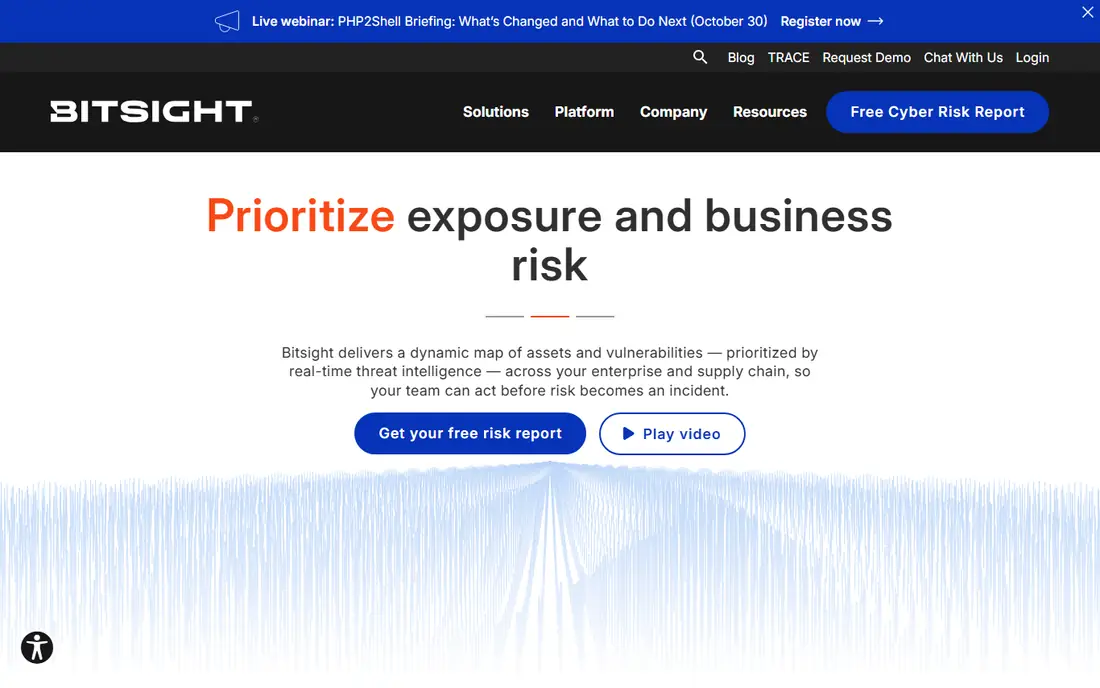
BitSight is the ratings leader for board reporting. Its outside-in security ratings on a 250 to 900 scale give executives a benchmark-style number for each vendor, with continuous monitoring and rescans triggered by remediation events such as an asset going offline or a vulnerability being patched. Analyst recognition in 2026 is the strongest in this group, with a Forrester Wave Leader placement in Cybersecurity Risk Ratings Platforms in April 2026 and a Visionary placement in Gartner's inaugural Magic Quadrant for Cyber Threat Intelligence Technologies in May 2026.
Pricing is quote-only, based on vendor coverage and package, and generally sits above SecurityScorecard for comparable vendor counts. BitSight is ratings-only, not a full vendor lifecycle program, so questionnaires, onboarding, and offboarding need another tool. For a board-facing ratings program, BitSight is the benchmark choice.
What we like- Outside-in security ratings on a 250 to 900 scale
- Continuous monitoring with rescans on remediation events
- Strongest analyst recognition in 2026, with a Forrester Wave Leader placement in April 2026
Watch out for- Quote-only, generally pricing above SecurityScorecard for comparable vendor counts
- Ratings-only, not a full vendor lifecycle program
- Scores are not comparable with rivals
Starting priceSee website
Free planYes
SecurityScorecard is the accessible ratings rival. Its free company scorecard lets any organization see its own rating, and its platform continuously rates 12 million plus companies across ten risk factors with A to F letter grades. Paying customers get daily external scanning, and the 14-day trial covers vendor monitoring evaluation.
Vendor monitoring is quoted by organization count, with implementation fees reportedly $5,000 to $25,000 plus, which can surprise smaller buyers. Scores use a 0 to 100 scale with A to F grades, which does not map directly onto BitSight's 250 to 900 or UpGuard's 0 to 950 scales. For a team that wants a free starting point and broad company coverage, SecurityScorecard is the easiest ratings tool to try.
What we like- Free company scorecard for self-monitoring
- 12 million plus companies continuously rated
- A to F letter grades across ten risk factors
- Daily external scanning for paying customers
Watch out for- Vendor monitoring is quote-only by organization count
- Implementation fees reportedly $5,000 to $25,000 plus
- Scores are not comparable with BitSight or UpGuard
#3OneTrust
Best for: Privacy plus vendor risk platform4.3/5 on
G2 (155 reviews, checked Oct 2026)
Visit onetrust.com
Starting priceSee website
Free planNo
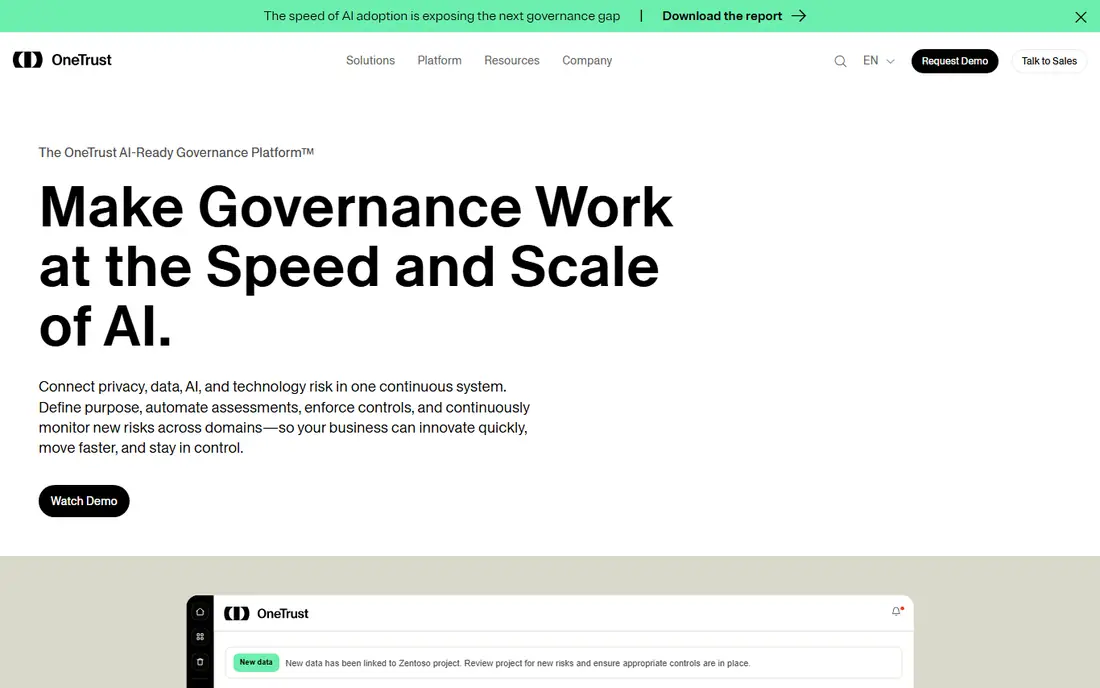
OneTrust suits organizations that need privacy and vendor risk in one platform. Its GRC suite includes a third-party risk management module spanning onboarding to offboarding, with privacy management, consent, and data governance alongside vendor assessments. Pricing is metered on admin users and third-party inventory, which scales with program size.
The platform is quote-only and needs dedicated risk staff to run well, so a team that only wants security ratings will find it heavy. For an enterprise that already manages privacy in OneTrust and wants vendor risk in the same system, OneTrust is the consolidation pick.
What we like- GRC suite with a third-party risk module spanning onboarding to offboarding
- Privacy management alongside vendor risk
- Metered on admin users and third-party inventory
Watch out for- Quote-only with no published pricing
- Needs dedicated risk staff
- Breadth can overwhelm a ratings-only buyer
#4Prevalent
Best for: Full vendor lifecycle management4.5/5 on
G2 (21 reviews, checked Oct 2026)
Visit prevalent.net
Starting priceSee website
Free planNo
Prevalent is the vendor lifecycle specialist. It covers onboarding questionnaires, evidence collection, risk scoring, continuous monitoring, and offboarding in one workflow, which suits a team running a formal third-party risk program with many vendors at different lifecycle stages. Assessment automation reduces the manual chasing that dominates most vendor programs.
Ratings depth is thinner than at BitSight or SecurityScorecard, so a team that needs benchmark-style ratings may pair Prevalent with a ratings service. Pricing is quote-only. For a team whose main problem is lifecycle management rather than ratings, Prevalent is the specialist choice.
What we like- Full vendor lifecycle from onboarding questionnaires through offboarding
- Third-party specialist depth
- Assessment automation and evidence collection
Watch out for- Quote-only with no published pricing
- Ratings depth is thinner than BitSight or SecurityScorecard
- Implementation needs planning
#5Panorays
Best for: Automated vendor assessments4.3/5 on
G2 (52 reviews, checked Oct 2026)
Visit panorays.com
Starting priceSee website
Free planNo
Panorays automates vendor assessments and maps risk through third, fourth, and Nth parties, which matters for supply chains where a vendor's own vendors create exposure. Its third-party cyber risk platform combines questionnaires with outside-in scanning, and a free trial lets teams evaluate the assessment workflow before buying.
Pricing is quote-only, based on the assessment types needed, and GRC breadth is narrower than at OneTrust or Archer. Multi-tier mapping also adds complexity that small programs may not need. For a team worried about Nth-party exposure and wanting automated assessments, Panorays is the focused pick.
What we like- Automated vendor assessments
- Risk mapping through third, fourth, and Nth parties
- Free trial available
- Third-party cyber risk focus
Watch out for- Quote-only, priced on assessment types needed
- Narrower GRC breadth than OneTrust or Archer
- Multi-tier mapping adds complexity
#6LogicGate Risk Cloud
Best for: Configurable GRC workflows4.6/5 on
G2 (191 reviews, checked Oct 2026)
Visit logicgate.com
Starting priceSee website
Free planNo
LogicGate Risk Cloud suits teams that want to design their own risk processes. Its drag-and-drop process builder lets risk teams build onboarding, assessment, and remediation workflows without code, and its GRC breadth covers enterprise risk, compliance, and third-party risk in one platform. That configurability appeals to teams whose processes do not fit a vendor's default workflow.
Configuration effort is real, and ratings features are thinner than at BitSight or SecurityScorecard, so a ratings-heavy program will need a companion tool. Pricing is quote-only. For a team that values workflow control over out-of-the-box ratings, LogicGate is the flexible GRC choice.
What we like- Highly configurable GRC workflows
- Drag-and-drop process builder
- Suits teams that want to design their own risk processes
Watch out for- Quote-only with no published pricing
- Configuration effort is real
- Ratings features are thinner than dedicated ratings platforms
Starting priceSee website
Free planNo
ServiceNow TPRM suits organizations already running ServiceNow. Its third-party risk management module integrates natively with ITSM, ITOM, and SecOps workflows, so vendor risk data flows into incident, change, and service processes without integration projects. That single-platform story is powerful for a ServiceNow shop.
Pricing is quote-only, and value is concentrated in the ServiceNow ecosystem: a team without ServiceNow gets less from the module and faces a larger platform purchase. ServiceNow expertise and licensing are also required. For a ServiceNow customer that wants vendor risk inside its existing platform, ServiceNow TPRM is the natural extension.
What we like- Native ServiceNow integration with ITSM, ITOM, and SecOps workflows
- Single platform for service and risk management
- Strong for ServiceNow shops
Watch out for- Quote-only
- Value is concentrated in the ServiceNow ecosystem
- Needs ServiceNow expertise and licensing
Starting priceSee website
Free planNo
Archer is the enterprise GRC heavyweight. Its platform covers enterprise risk, compliance, audit, and third-party risk with mature workflows that suit large, complex programs spanning many business units and regulators. Depth of reporting and control mapping exceeds most rivals.
That breadth comes with weight: quote-only pricing, dedicated risk staff, and implementation effort that smaller teams will find excessive. For a large enterprise running a full GRC program where vendor risk is one module among many, Archer is the breadth leader. For a focused vendor risk program, UpGuard, Prevalent, or Panorays fits better.
What we like- Broadest enterprise GRC coverage in this group
- Mature risk, compliance, and audit workflows
- Suits large, complex risk programs
Watch out for- Quote-only
- Needs dedicated risk staff and implementation
- Heavyweight for a ratings-only or lifecycle-only buyer
How we chose
We compared each tool against what UpGuard actually sells: a third-party risk platform with security ratings, questionnaires, and attack surface management, at published pricing from $1,750 a month billed annually for 50 vendors. These tools solve three different problems: GRC suites, vendor lifecycle programs, and security ratings. Buying one while expecting another is the classic failure, so we flagged each tool's camp clearly. Pricing figures come from vendor pages and published comparisons, and anything we could not confirm is written as "See website".
What to check before you pick
Start with the problem camp. If ratings and board reporting are the need, shortlist BitSight and SecurityScorecard. If lifecycle management is the need, shortlist Prevalent and Panorays. If a full GRC program is the need, shortlist OneTrust, LogicGate, ServiceNow TPRM, and Archer. Then check four things before buying: whether scores are comparable across vendors (they are not, so budget analyst time to reconcile scales during any migration); whether implementation fees apply on top of licensing; whether questionnaires, evidence collection, and remediation workflows are included or require another tool; and whether the platform covers your vendor count at a published price or only by quote. Run a pilot on your top 20 vendors and compare ratings, questionnaire effort, and remediation workflow before committing, since those three experiences decide whether the program actually gets used.
Frequently asked questions
Are BitSight, SecurityScorecard, and UpGuard scores directly comparable?
No. Each uses a different scale: BitSight 250 to 900, SecurityScorecard 0 to 100 with A to F grades, and UpGuard 0 to 950 with A to F bands, with different weighting methods. A vendor can look meaningfully different on the same day depending on which platform you check.
Which UpGuard alternative is cheapest?
UpGuard itself is the only one with a publicly benchmarked entry price, near $1,750 a month. SecurityScorecard's free self-monitoring scorecard is the cheapest way to start, though vendor monitoring is quoted.
Do security ratings replace vulnerability management?
No. Ratings platforms rate externally visible hygiene signals about vendors and, in some cases, your own organization, but they do not replace internal scanning, patching, or a structured vulnerability management program for your own environment.
Can I use more than one rating platform at once?
Yes, and many large enterprises do, particularly during a migration window or when different business units standardized on different tools. Budget analyst time to reconcile differing scales rather than assuming numbers will align.
What is Nth-party risk?
Nth-party risk is exposure through your vendors' vendors: your third party's fourth party, and so on down the supply chain. Panorays maps risk through third, fourth, and Nth parties, which matters for supply chains with deep dependencies.
Does UpGuard offer a free plan?
Yes. UpGuard offers a free Trust Exchange plan, alongside its paid Vendor Risk Standard plan from $1,750 a month billed annually for 50 vendors.
Sources we checked (8)
- https://www.bitsight.com/
- https://securityscorecard.com/
- https://www.onetrust.com/
- https://www.prevalent.net/
- https://panorays.com/
- https://www.logicgate.com/
- https://www.servicenow.com/
- https://www.archerirm.com/
Is your product missing or out of date?
We review this list regularly. Vendors can request a listing, send updated pricing or ask about featured placement.

Shihab Mia · Founder, Rankite
Shihab has 5+ years in B2B and SaaS SEO. He writes Rankite's software buying guides from pricing pages, documentation and public user reviews. More about Shihab.