How we make this list: we compare pricing pages, product documentation and public user reviews. Rankite is independent; if a vendor ever pays for a featured spot, that listing is clearly labeled Partner.
Key takeaways
- PLM is no longer reserved for aerospace giants. Cloud options from Arena, Duro and Aligni now serve small and mid-size manufacturers with fast setup.
- If your team already runs SAP, Autodesk or Dassault CAD, the PLM that connects to that stack usually beats a better-known standalone product.
- Almost every enterprise PLM vendor prices by quote. Treat any article that prints exact per-user prices for Windchill or Teamcenter with suspicion.
- Fashion and consumer-goods brands should look at Centric first. Electronics and hardware teams should shortlist Duro and Aligni.
- The honest catch across the category: PLM pays off only if your BOM data is clean. Budget time for data cleanup, not just licenses.
Quick comparison
| Tool | Best for | Starting price | Free plan |
|---|
 Arena PLM Arena PLM | electronics and medtech teams wanting cloud PLM plus QMS | See website | No |
 ENOVIA ENOVIA | CATIA and SOLIDWORKS shops standardizing on 3DEXPERIENCE | See website | No |
 Autodesk Fusion Manage Autodesk Fusion Manage | teams already designing in Autodesk CAD | See website | No |
 Centric PLM Centric PLM | fashion, apparel and consumer-goods brands | See website | No |
 Duro Duro | hardware startups that want API-first PLM | See website | Free trial |
 Aligni Aligni | small electronics makers needing PLM and MRP together | See website | Free trial (30 days) |
 SAP PLM SAP PLM | companies already running SAP ERP or S/4HANA | See website | No |
Is your product missing or out of date?
We review this list regularly. Vendors can request a listing, send updated pricing or ask about featured placement.
The best top plm software
Starting priceSee website
Free planNo
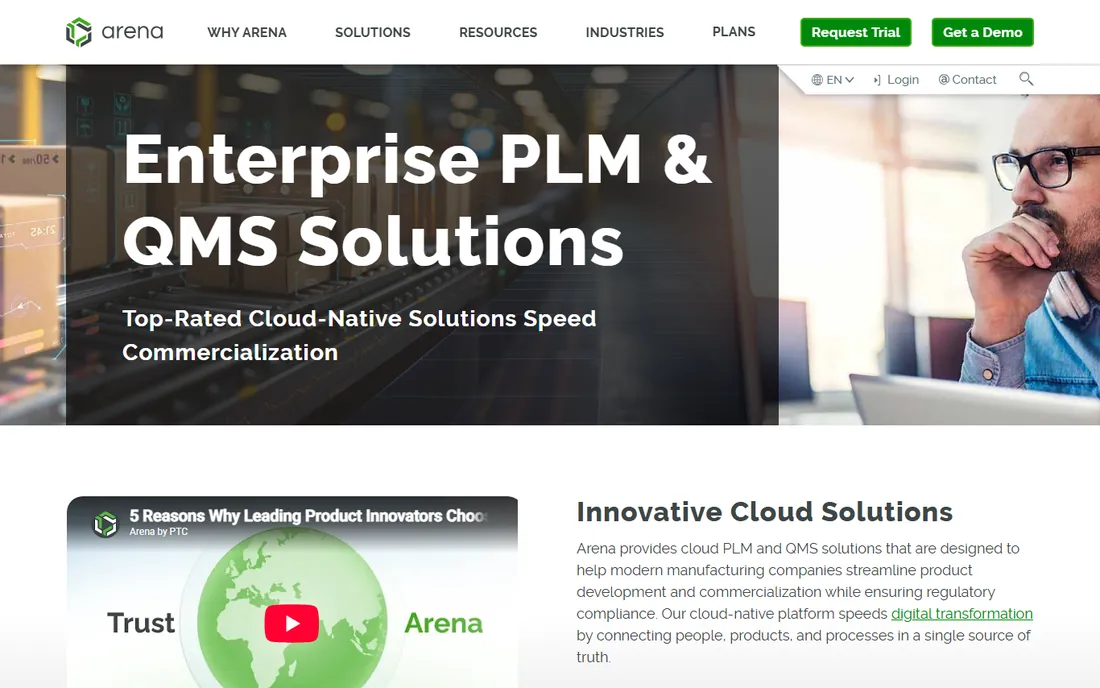
Arena was early to cloud PLM, and it shows in how little IT work the system asks of you. There is no on-premise install to babysit, and suppliers can be pulled into change reviews through a browser. For electronics, medical device and other regulated teams, the built-in QMS side matters as much as the PLM side, because audits and CAPAs live in the same system as the BOM.
The fit is narrowest for pure mechanical shops with no electronics content. Those teams can still use Arena, but they pay for compliance depth they may never touch. Pricing is not published, so expect a sales-led quote based on user count and modules. Arena is now a PTC business, which gives it stability but also means the roadmap follows PTC's priorities.
What we like- Cloud-native with no servers to manage
- PLM and QMS in one system
- Strong supplier collaboration and change workflows
Watch out for- Pricing is quote-only
- Depth aimed at regulated industries can be more than a simple shop needs
- Data migration still takes real planning
#2
ENOVIA
Best for: CATIA and SOLIDWORKS shops standardizing on 3DEXPERIENCE
Visit 3ds.com
Starting priceSee website
Free planNo
Dassault Systemes built ENOVIA as the collaboration backbone of its 3DEXPERIENCE platform, and that is exactly where it shines. If your engineers already design in CATIA or SOLIDWORKS, ENOVIA keeps CAD data, BOMs, change orders and quality records in one managed environment instead of scattered across file shares. The portfolio covers product data management, change and configuration management, IP protection and compliance in one stack.
The tradeoff is scope. ENOVIA is a platform, not a point tool, so smaller teams can find the options overwhelming and the implementation longer than expected. Pricing is quote-based and scales with the roles you license. If your shop does not use Dassault CAD, most of the native advantage disappears, and a CAD-neutral PLM is usually the better buy.
What we like- Native connection to CATIA and SOLIDWORKS
- Wide application portfolio from change to compliance
- Cloud and on-premise deployment options
Watch out for- Quote-only pricing
- Broad portfolio means a steeper learning curve
- Overkill for teams without Dassault CAD
#3
Autodesk Fusion Manage
Best for: teams already designing in Autodesk CAD
Visit autodesk.com
Starting priceSee website
Free planNo
Teams that already live in Inventor, AutoCAD or Fusion 360 get the shortest path to PLM here. Fusion Manage handles the process side, meaning NPI workflows, change management, BOM control and supplier collaboration, while the included Upchain entitlement covers CAD file and revision management. The open API connects to ERP and CRM systems without a separate integration project.
The pairing is also the complication. You are effectively running two connected products, so understand which side owns CAD files and which owns processes before you sign. Autodesk does not publish list pricing on the product overview page, so budget conversations go through sales or a reseller. Shops standardized on SolidWorks or CATIA will get more value from a CAD-neutral option.
What we like- Entitlement to Upchain for CAD data management included
- Configurable out-of-the-box workflows
- Open API for ERP and CRM integration
Watch out for- Pricing not published on the overview page
- File-level CAD management depends on the paired Upchain or Vault setup
- Less natural for non-Autodesk shops
Starting priceSee website
Free planNo
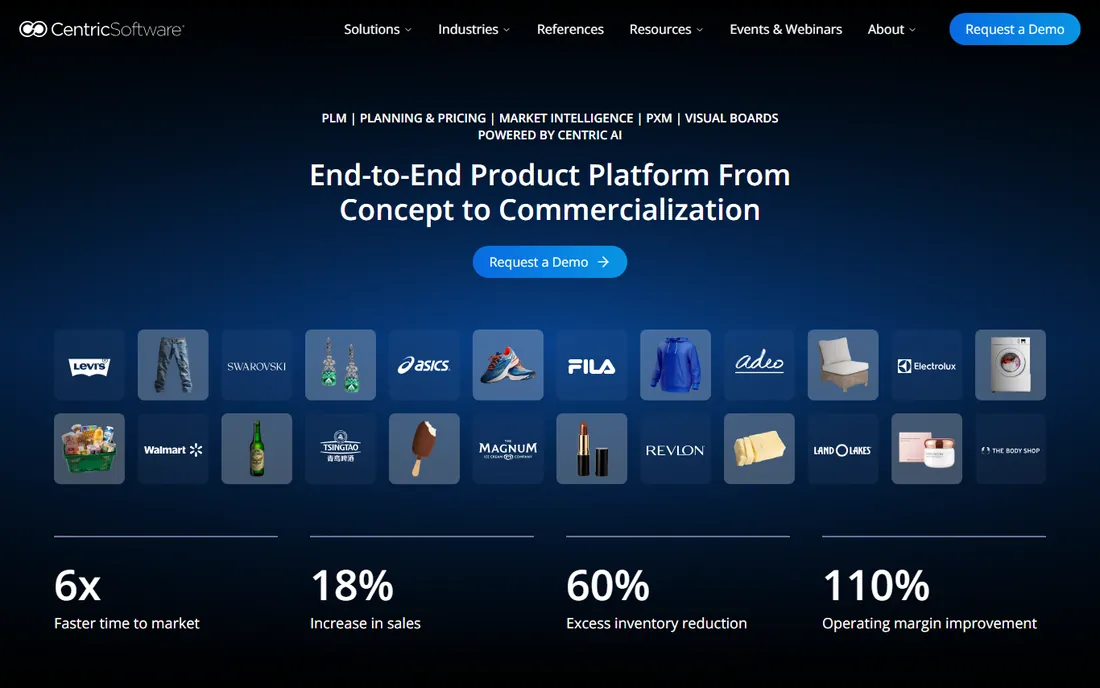
Fashion brands were an afterthought in traditional PLM, and Centric exists because of that gap. Its data model understands styles, colors, sizes, tech packs and seasonal calendars the way industrial PLM understands parts and revisions. Visual boards, material libraries and sourcing workflows match how apparel teams actually work, which is why adoption tends to be higher than with generic platforms.
Centric is now a Dassault Systemes subsidiary, which answers the viability question smaller vendors sometimes face. The limitation is industry scope: if you make machines, electronics or industrial equipment, this is the wrong product. Pricing is quote-based, and the broader planning and pricing modules can expand the project beyond the PLM budget you planned.
What we like- Built for fashion and retail workflows, not adapted from industrial PLM
- Visual boards and planning tools included
- Backed by Dassault Systemes
Watch out for- Poor fit for discrete manufacturing and hardware
- Quote-only pricing
- The wider platform can turn a PLM project into a bigger transformation
Starting priceSee website
Free planFree trial
Duro takes the opposite approach from the enterprise incumbents. Instead of a platform you configure with consultants, it offers a cloud PLM that engineers can shape with clicks or code, with an API-first foundation and AI features woven into part selection, sourcing and change analysis. Hardware startups like it because onboarding is measured in days and the interface feels like modern software, not a 1990s client.
The security posture is stronger than the startup label suggests, with SOC 2 Type 2 auditing and ITAR-compliant hosting for aerospace and defense work. The honest limits are ecosystem size and focus: integrations lean toward hardware tools, and teams outside electronics may find fewer templates. Pricing is not published, so confirm the per-user cost early if budget is tight.
What we like- API-first design with low-code and YAML configuration
- Built-in AI features for sourcing and change analysis
- SOC 2 Type 2 audited with ITAR-compliant hosting options
Watch out for- Younger vendor with a smaller partner ecosystem
- Focused on hardware and electronics
- Public pricing not listed
#6
Aligni
Best for: small electronics makers needing PLM and MRP together
Visit aligni.com
Starting priceSee website
Free planFree trial (30 days)
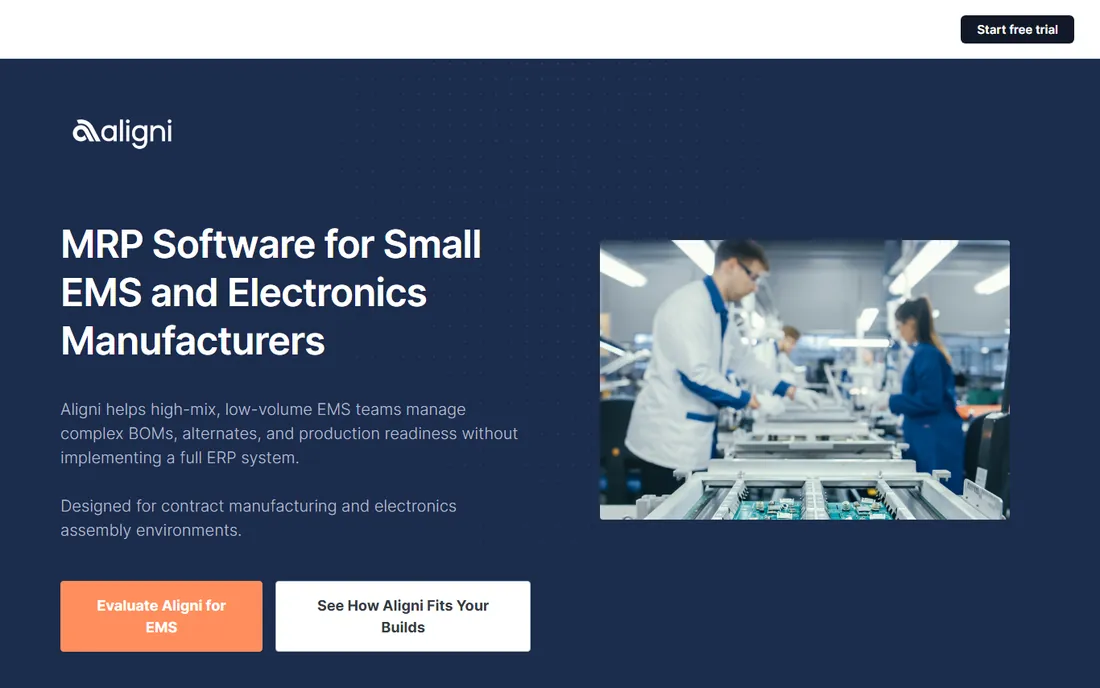
Aligni answers a narrower question than the rest of this list: what if PLM and material planning were one system. For small electronics manufacturers and EMS providers, that combination removes the usual handoff where a BOM leaves engineering and gets retyped into planning software. Revisions, alternates, where-used data and shortage reports all draw from the same item master.
The company offers a 30-day free trial with onboarding support, which is rare in this category and makes evaluation genuinely low-risk. The scope is deliberate: this is not a full ERP, and accounting stays wherever it already lives. Teams outside electronics manufacturing will find the templates and language less relevant, but for the target audience the focus is the point.
What we like- PLM and MRP share one data model, so engineering changes flow straight into production
- 30-day free trial with onboarding help
- Works without a full ERP
Watch out for- Built around electronics and EMS workflows
- Financials stay in your accounting system
- Can feel light for complex enterprise requirements
#7
SAP PLM
Best for: companies already running SAP ERP or S/4HANA
Visit sap.com
Starting priceSee website
Free planNo
For companies already running SAP, the PLM decision is often made by the ERP contract. SAP PLM keeps engineering data, BOMs, recipes and change processes inside the same system as finance, procurement and manufacturing, which removes an entire integration layer. Process manufacturers in food, chemicals and pharma get recipe management and compliance features that discrete-focused PLM tools handle weakly.
Nobody buys SAP PLM for its simplicity. Implementations are large, consultant-led projects, and licensing follows the enterprise SAP model with no public pricing. If your company does not run SAP, there is little reason to start here. But for the SAP-installed base, the integration advantage is real and hard for standalone PLM vendors to match.
What we like- Deep integration with SAP ERP and S/4HANA
- Strong recipe, variant and compliance management
- Global support and partner network
Watch out for- Quote-only pricing
- Implementations are heavy and consultant-led
- Poor value outside the SAP ecosystem
How we chose
We started from analyst and buyer coverage, including G2's PLM grid reports, SelectHub's PLM scoring and software roundups, then filtered for tools that are actively sold and supported in 2026. We read each vendor's own product and pricing pages, checked documentation and public review sources including G2, Capterra and Reddit threads, and weighed integration depth, CAD compatibility and fit for small and mid-size companies against pure enterprise scale. We did not claim hands-on testing of any product. Where a vendor does not publish pricing, we say so instead of repeating third-party price guesses.
What to check before you sign a PLM contract
Most PLM regret comes from buying the wrong shape of product, not the wrong brand. These are the checks that prevent it.
Match the PLM to your CAD, not the other way around
A PLM that natively manages your CAD files saves more time than any feature list. CATIA and SOLIDWORKS shops should weight ENOVIA heavily. Autodesk shops should look at Fusion Manage with Upchain. Multi-CAD or CAD-light teams do better with neutral options like Arena, Duro or Aligni.
Decide how much process you actually need
Some teams need document control and revision discipline. Others need full change workflows, supplier collaboration, quality management and compliance. Buying the full platform when you need the small one is the most common overspend in PLM. Map your must-have processes before the demo, and ask the vendor to demo only those.
Ask who owns implementation
Cloud PLM from Arena, Duro or Aligni can go live with light-touch onboarding. Enterprise platforms from Dassault, SAP or PTC-family products usually need consultants and a data migration plan. Get the services estimate in writing alongside the license quote, because services often exceed the first year of licenses.
Confirm the pricing model in writing
User-based, role-based and platform pricing behave very differently as you grow. Ask what happens to your bill when you add ten suppliers as occasional users, and whether read-only access is free or metered. If the vendor will not answer, that is your answer about transparency.
When you actually need PLM, and when you do not
You need PLM when product data lives in more than three places, when nobody can say which BOM revision is current, or when an audit or customer asks for change history you cannot produce. Those are the pain points PLM removes, and they appear in companies far smaller than the enterprise stereotype.
You do not need PLM when a shared drive plus a disciplined engineer still works, which is true for many teams under ten people with one product line. In that case a PDM tool or even a well-run file system costs less and asks less of everyone. The middle ground, a team outgrowing files but not ready for enterprise PLM, is exactly where Duro, Aligni and Arena earn their place.
Frequently asked questions
What is PLM software?
PLM, or product lifecycle management software, manages a product and its data from concept through design, manufacturing, service and retirement. It centralizes BOMs, documents, change orders and compliance records so every team works from the same current information. PDM, by contrast, usually covers only the engineering data side.
How much does PLM software cost?
It ranges widely. Cloud PLM for small teams can start in the low hundreds per month, while enterprise platforms from Siemens, PTC, Dassault or SAP are quote-based and often reach six figures annually once licenses and implementation are included. Always get the services estimate alongside the license quote.
What is the difference between PLM and PDM?
PDM, product data management, focuses on engineering files: CAD models, drawings and their revisions. PLM covers the full lifecycle, adding change management, supplier collaboration, quality, compliance and ties into ERP. Many companies start with PDM and add PLM processes as they grow.
How long does PLM implementation take?
Cloud PLM for a small team can go live in weeks. Enterprise PLM with data migration, integrations and custom workflows typically takes several months to over a year. The biggest variable is rarely the software; it is cleaning and migrating your existing product data.
Is cloud PLM secure enough for our designs?
The established cloud PLM vendors run SOC 2 audited infrastructure with encryption, role-based access and IP protection features. Duro, for example, publishes SOC 2 Type 2 status and offers ITAR-compliant hosting. Your own access discipline matters more than where the servers sit.
Can a small manufacturer use PLM without an IT department?
Yes. That is the main change of the last decade. Cloud-native tools like Arena, Duro and Aligni are designed to run without on-premise servers or dedicated admins. You still need someone to own the data model and user training, but not a server room.
Sources we checked (10)
- https://www.arenasolutions.com/solutions/
- https://www.3ds.com/products/enovia/3dexperience
- https://www.autodesk.com/nz/products/fusion-manage/overview
- https://centricsoftware.com/
- https://durolabs.co/product-lifecycle-management/
- https://www.aligni.com/mrp-for-ems-contracting-gppc/
- https://www.sap.com/mena/products/scm/plm-r-d-engineering/what-is-product-lifecycle-management.html
- https://learn.g2.com/best-plm-software
- https://softwareconnect.com/roundups/best-product-lifecycle-management-software/
- https://www.selecthub.com/plm-software/arbortext-vs-epicor-plm/
Is your product missing or out of date?
We review this list regularly. Vendors can request a listing, send updated pricing or ask about featured placement.

Shihab Mia · Founder, Rankite
Shihab has spent more than a decade helping SaaS and e-commerce brands grow through search. He writes Rankite's software buying guides from pricing pages, documentation and public user reviews. More about Shihab.