How we make this list: we compare pricing pages, product documentation and public user reviews. Ratings come from G2, Capterra or Trustpilot, with the date we checked them.
Key takeaways
- Only two of the eight vendors publish prices: ContractWorks (from $5,000 per year, unlimited users) and Concord (from $499 per month for five users). The rest quote after a demo.
- Large banks with heavy vendor and regulatory workloads tend to land on Icertis, Sirion or Agiloft. Community banks and credit unions usually fit better with ContractWorks, Concord or CobbleStone.
- Bank buyers should weigh audit trails, obligation tracking, security attestations and data export ahead of AI drafting features.
- Contract Logix and CobbleStone both publish dedicated banking pages, and Icertis and Sirion do the same for financial services and bank procurement.
- Expect implementation to take days on the lightweight tools and months on the enterprise platforms.
Quick comparison
| Tool | Best for | Starting price | Free plan |
|---|
 Icertis | Large banks with global contract volume | See website | No |
 Agiloft | Banks that want configurable workflows without code | See website | No |
 Sirion | Vendor and SLA oversight in bank procurement | See website | No |
 DocuSign CLM | Banks already standardized on DocuSign signing | See website | No |
 CobbleStone Contract Insight | Mid-size banks and credit unions | See website | No |
 Contract Logix | Banks with compliance-heavy contract types | See website | No |
 Concord | Small banks and single teams needing a quick start | $499 per month for 5 users (billed annually) | No |
 ContractWorks | Community banks that need a repository with alerts | $5,000 per year (1,000 documents, unlimited users) | Free trial |
Is your product missing or out of date?
We review this list regularly. Vendors can request a listing, send updated pricing or ask about featured placement.
The best contract management software for banks
#1Icertis
Best for: Large banks with global contract volume4.2/5 on
G2 (81 reviews, checked Oct 2026)
Visit icertis.com
Starting priceSee website
Free planNo
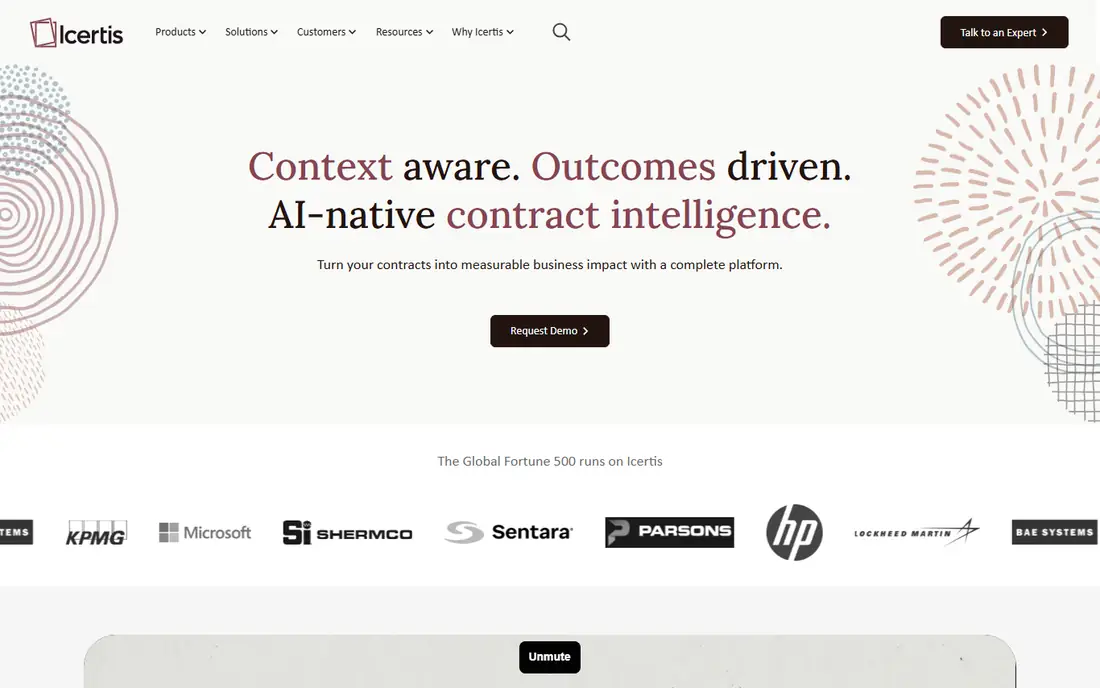
Icertis is the name that comes up first when a bank has thousands of vendor, client and partner agreements spread across business lines and countries. The company launched a contract intelligence package aimed at banking and financial services in 2022, and its financial services page describes ready-made templates, attributes and clauses for MSAs, NDAs, SaaS agreements and terminations.
What stands out is the way contract data feeds other systems. Icertis positions the platform as a layer that pushes obligations and terms into the systems of record a bank already runs, which matters when finance, procurement and risk all need the same numbers. Its page also mentions mass amendments to meet changing regulations, a feature that saves a lot of manual work when a rule change touches hundreds of agreements.
The catch is size. A community bank with a three-person legal team will likely find this far more platform than it needs, and you should plan for a multi-month rollout with a systems integrator or vendor services. Ask for reference customers of similar asset size before you sign.
What we like- Dedicated banking and financial services package
- Preconfigured templates and clauses for common contract types
- Integrates contract data with other systems of record
Watch out for- Pricing is not public and enterprise-scale
- Implementation is a real project, not a weekend setup
#2Agiloft
Best for: Banks that want configurable workflows without code4.5/5 on
G2 (110 reviews, checked Oct 2026)
Visit agiloft.com
Starting priceSee website
Free planNo
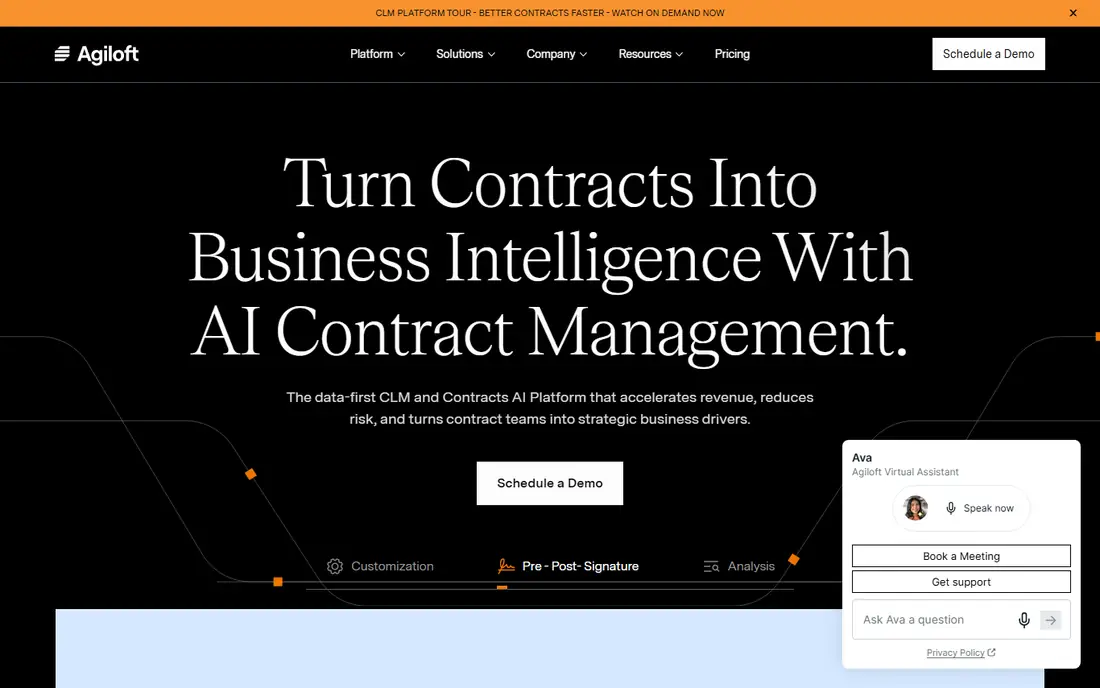
Agiloft suits banks whose contract processes do not look like anyone else's. Its no-code environment lets administrators change workflows, data models and approval chains without developers, which helps when a credit union has an odd approval ladder or a bank has separate paths for vendor, lending-partner and real estate agreements.
The platform covers intake, authoring, negotiation, signature and post-signature tracking. In late 2025 Agiloft also announced an AI-powered obligation management system, which is relevant to banks that need to prove they monitored service levels and renewal dates rather than just stored the paper.
The honest downside is that configurability cuts both ways. Without a dedicated admin or an implementation partner, you can end up with a half-built system that nobody trusts. Agiloft is aimed at mid-to-large enterprises, so smaller institutions should price it carefully against lighter options.
What we like- No-code configuration of workflows, data models and approval chains
- Covers request through post-signature obligations
- Used in financial services among other industries
Watch out for- Flexibility means someone has to own the configuration
- Pricing is quote-based
#3
Sirion
Best for: Vendor and SLA oversight in bank procurement
Visit sirion.ai
Starting priceSee website
Free planNo
Sirion is the stronger pick when your biggest contract problem sits on the vendor side. Its banking page focuses on technology procurement and financial services vendor contracts, with onboarding, SLA enforcement, invoice validation and audit readiness as the main themes.
That focus fits the way regulators look at third-party relationships. If an examiner asks how you monitor a core processor or a cloud provider against agreed service levels, a system that ties the contract to performance and invoices gives you a cleaner answer than a folder of PDFs.
It is less natural for a bank whose contract load is mostly small, repeatable agreements. The platform is aimed at organizations with sizeable procurement teams, so a smaller bank may pay for capability it never switches on. Request a demo with your own vendor list, not a generic one.
What we like- Banking procurement use cases for vendor onboarding and SLA enforcement
- Invoice validation against contract terms
- AI-focused contract analysis
Watch out for- Built for large procurement operations
- No public pricing
#4DocuSign CLM
Best for: Banks already standardized on DocuSign signing4.5/5 on
Capterra (128 reviews, checked Oct 2026)
Visit docusign.com
Starting priceSee website
Free planNo
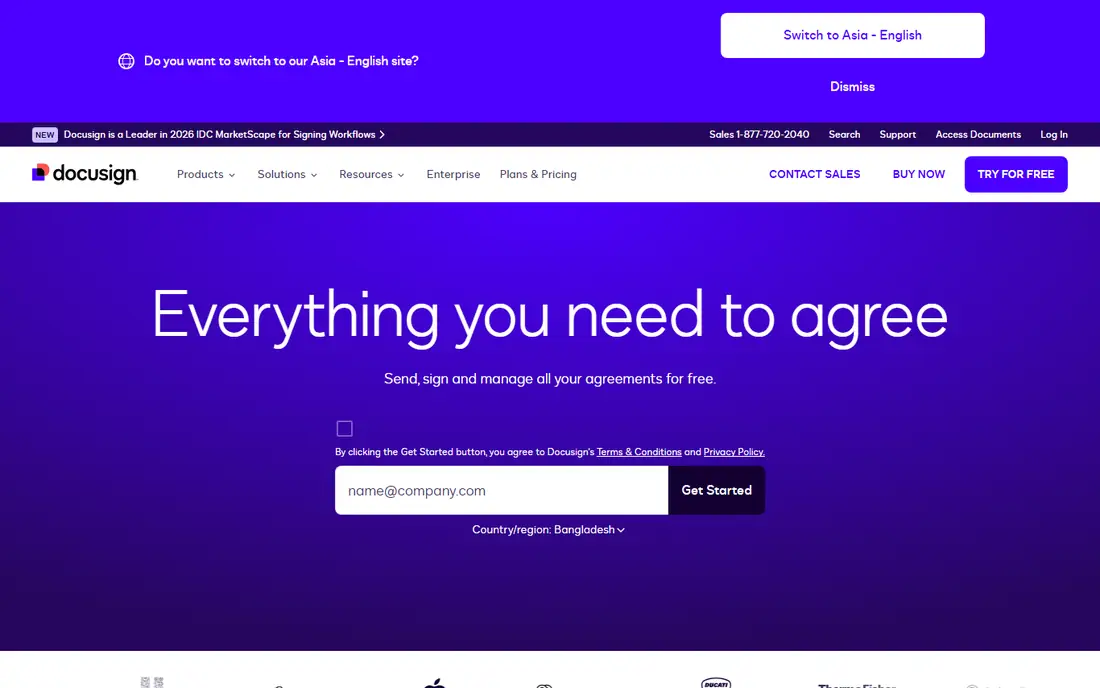
DocuSign CLM makes the most sense when your institution already runs signatures through DocuSign and your IT and security teams have approved the vendor. That cuts procurement friction. Staff and counterparties already know how signing works, so adoption tends to be less of a fight than with an unfamiliar brand.
Buyers sometimes assume CLM is an upgrade to an eSignature plan. It is a distinct product, sold as its own contract, and reviewers describe quotes as annual and organization-wide rather than per seat. Get the quote in writing, including implementation, and compare it over three years.
Where it is weaker is on bank-specific content. DocuSign sells a general-purpose CLM platform, so you will build or buy your own regulatory clause libraries and obligation workflows. That is fine for a team with legal operations support, and harder for a lean compliance department.
What we like- Familiar signing experience for customers and staff
- Covers creation, redlining, approvals, repository and renewals
- Salesforce integration reported by reviewers
Watch out for- Separate subscription from DocuSign eSignature
- Costs beyond the license (implementation, services) are common
Starting priceSee website
Free planNo
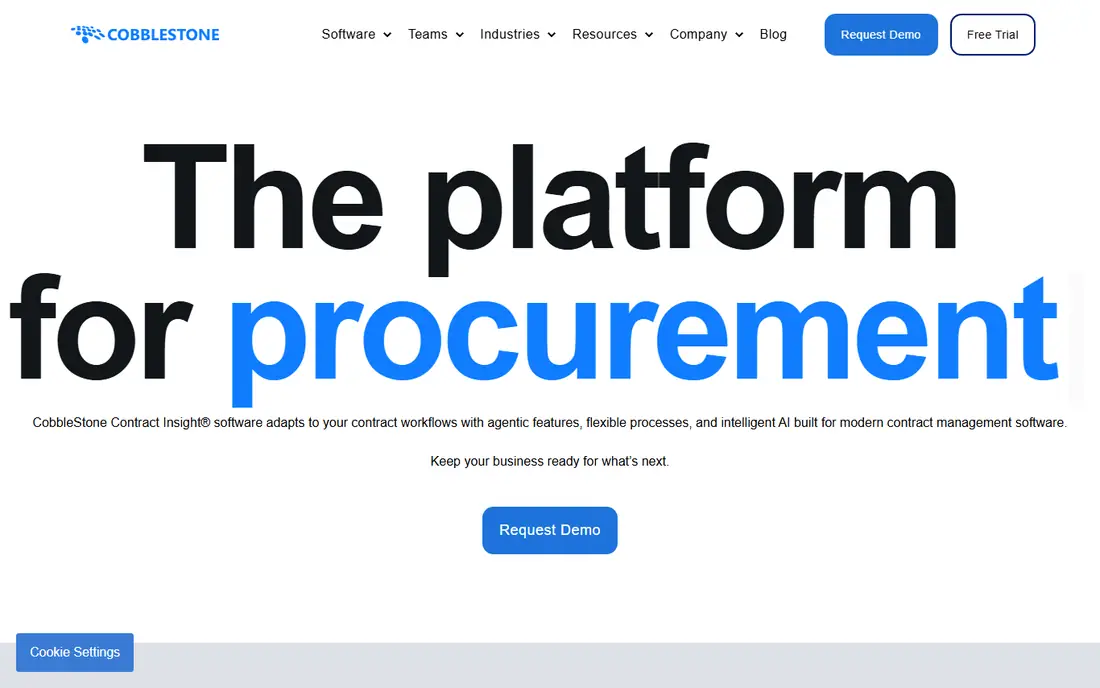
CobbleStone has been selling contract management software for a long time, and its Contract Insight product is pitched directly at financial institutions. The company says banks, credit unions, insurance providers and capital management firms use it, and it publishes guidance written for BFSI organizations.
For a mid-size bank, the appeal is a full lifecycle tool without the overhead of the largest enterprise suites. You get request intake, authoring, repository, alerts and reporting from a vendor that treats contracts as its core business rather than a side module.
Check the user experience carefully during the demo. Contract software lives or dies on whether loan officers and branch managers will use it, and a clunky request form sends people back to email. Ask to see the exact screens a non-lawyer would touch.
What we like- Dedicated financial and banking contract management page
- States it serves banks, credit unions and insurers
- Long-established vendor focused only on contract software
Watch out for- Interface looks dated to some reviewers
- Pricing needs a demo request
Starting priceSee website
Free planNo
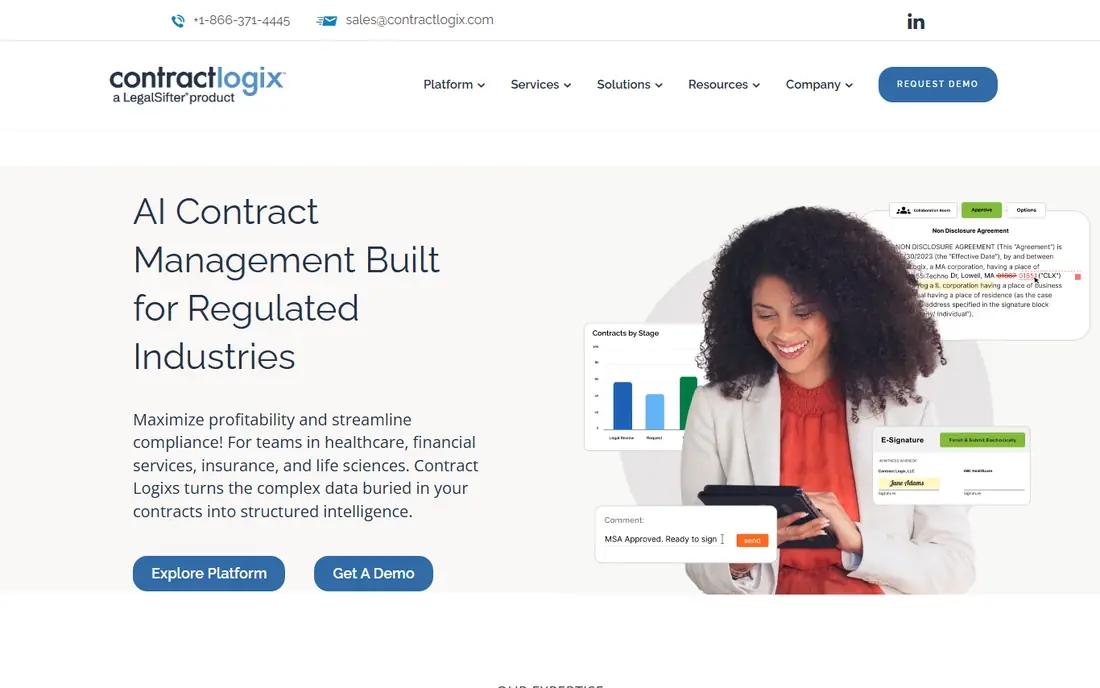
Contract Logix speaks the language of regulated finance. Its banking page lists SOX, ISDA, ESMA and FINRA among the requirements it helps organizations address, and it describes assigning risk scores to contracts so teams can see which agreements carry the most exposure.
The revenue angle is also worth a look. The vendor says the platform can surface unpaid revenue, savings opportunities and underperforming services inside contracts, which gives the CFO a reason to back the purchase beyond compliance. Banks with many fee-bearing client agreements may find that useful.
Treat the regulatory list as a starting point for questions, not a guarantee. No contract tool makes you compliant on its own, so ask exactly which workflows, reports and alerts map to the rules that apply to you, and which are configuration you must build.
What we like- Banking page cites SOX, ISDA, ESMA and FINRA requirements
- Risk scoring on contracts
- Looks for unpaid revenue and underperforming services
Watch out for- Pricing is quote-only
- You must verify which regulatory features come as standard
#7Concord
Best for: Small banks and single teams needing a quick start4.2/5 on
G2 (133 reviews, checked Oct 2026)
Visit concord.app
Starting price$499 per month for 5 users (billed annually)
Free planNo
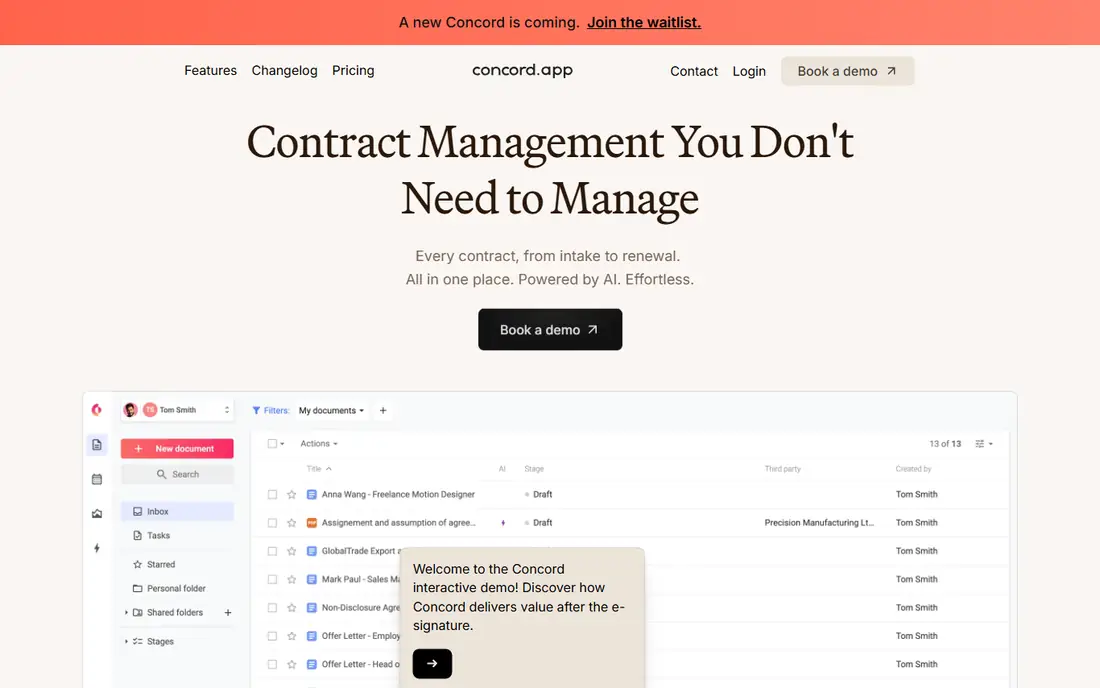
Concord is the easiest tool here to price. The Essentials plan is $499 per month billed annually and includes five users, with extra users at $49 per month. Business is $899 per month with five users and extra users at $69. Both include unlimited e-signatures and unlimited documents, and free viewers and guests can review agreements without a paid seat.
That structure suits a single department, such as a bank's operations or facilities team, that wants contracts out of shared drives quickly. Negotiation tools, amendment management and deadline reminders cover the basics, and you can start without a long procurement cycle.
Be realistic about scale. A bank-wide rollout with dozens of paid users adds up quickly, and Concord is not marketed with the vendor-risk and regulatory depth of Sirion or Icertis. It is a good first system for a smaller institution and a weaker fit for a large lender.
What we like- Public pricing with unlimited documents and e-signatures
- AI extraction and deadline reminders included
- Free viewers and guests
Watch out for- Per-user charges climb as teams grow
- Thinner on bank-specific compliance content
#8ContractWorks
Best for: Community banks that need a repository with alerts4.8/5 on
G2 (81 reviews, checked Oct 2026)
Visit contractworks.com
Starting price$5,000 per year (1,000 documents, unlimited users)
Free planFree trial
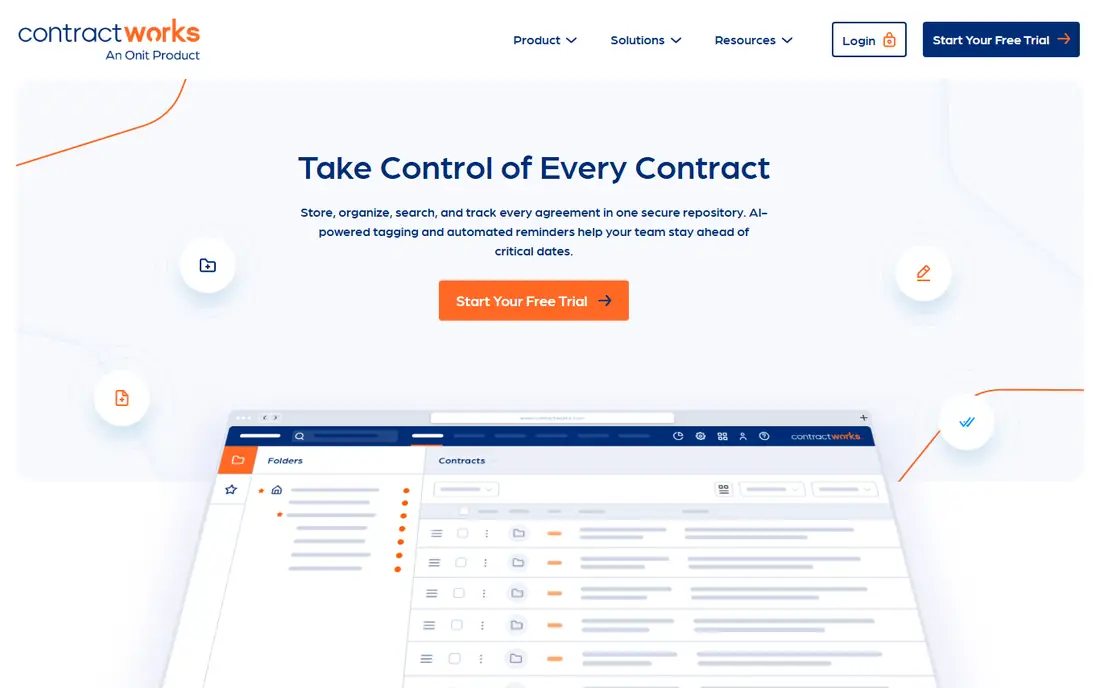
ContractWorks is the simplest route for a community bank whose main goal is to know what it signed and when it expires. Pricing is published and tiered by document count: $5,000 per year for 1,000 documents, $8,000 for 10,000 and $12,000 for 50,000, all billed annually with unlimited users.
Every paid plan includes onboarding and migration help, with the vendor saying most customers are running within days. It also lists AI-powered contract tagging, SOC 2 Type II security and ten eSignature licenses. Security attestations like SOC 2 are the kind of item your vendor management team will ask for anyway.
The trade-off is depth. ContractWorks is a repository with reminders and reporting, not an enterprise workflow engine. If you need multi-step legal review, complex clause libraries or obligation-to-invoice matching, you will outgrow it. The document caps also mean a large archive can push you into a higher tier fast.
What we like- Unlimited users on every plan
- SOC 2 Type II security listed
- Onboarding and migration help included
Watch out for- Tiers are capped by document count
- Lighter on workflow and negotiation than full CLM suites
How we chose
We built this list from vendor pricing pages, product and industry documentation, and public review sources such as G2, Capterra and Reddit threads. We did not run hands-on tests. We looked at whether each vendor publishes banking or financial services content, how it handles obligations and renewals, what security attestations it lists, how it prices (flat, per seat or by document), and which institution size it appears to fit.
Where a vendor does not publish a price, we say See website rather than repeating third-party estimates. Features and claims come from the vendors' own pages unless noted, so confirm details in a demo before you rely on them.
How to pick a contract system for a bank
Start with the contracts that create regulatory exposure
List the agreement types an examiner is most likely to ask about: core processor and technology vendors, cloud providers, lending partnerships, leases and critical third parties. In the US, interagency third-party risk guidance expects banks to manage these relationships across their life, so you need contract terms, renewal dates and performance obligations in one place. Everything else, such as routine NDAs, can come later.
Match the tool to your size
A community bank or credit union usually needs a secure repository, renewal alerts, search and reporting. ContractWorks, Concord and CobbleStone are built for that level of need. A regional or national bank with many business lines needs intake, approvals, clause libraries and integration with procurement or ERP, which points to Icertis, Agiloft, Sirion or DocuSign CLM.
Ask the questions banks tend to forget
- Can you export all contracts and metadata in a usable format if you leave?
- Does the audit trail record who viewed, edited and approved each document?
- Which security reports (for example SOC 2) can the vendor share with your vendor management team?
- What are the contract length, renewal uplift and implementation fees?
- Who configures workflows after go-live, your staff or the vendor?
Budget beyond the license
Enterprise platforms often add implementation, training and integration costs on top of the subscription, so request a three-year total cost in writing. Lightweight tools cost less to deploy but may require a second system later. Pilot with one department and a defined set of contracts before committing the whole bank.
Frequently asked questions
What is contract management software for banks?
It is software that stores, tracks and manages agreements such as vendor contracts, leases, client agreements and lending partnerships. Bank-focused use adds audit trails, obligation tracking, renewal alerts and risk visibility to support exams and internal reviews.
Which tool is best for a small community bank?
ContractWorks and Concord are the easiest to buy and set up, and both publish prices. ContractWorks starts at $5,000 per year with unlimited users, while Concord starts at $499 per month for five users. CobbleStone is another option if you want a vendor with a dedicated banking page.
Do these tools make a bank compliant?
No. Software helps you organize contracts, track obligations and produce evidence, but compliance depends on your policies and how you use the tool. Ask each vendor which features map to the rules you face and which require your own configuration.
How long does implementation take?
Lightweight tools like ContractWorks say customers can be running within days. Enterprise platforms such as Icertis, Sirion and Agiloft usually need a planned project with migration, integration and configuration, which commonly runs for months.
Why do most vendors hide their pricing?
Enterprise contract platforms price by contract volume, modules and company size, so they quote after a demo. Request itemized quotes that include implementation, support and renewal terms so you can compare vendors fairly.
Sources we checked (11)
- https://www.concord.app/pricing/
- https://www.contractworks.com/plan-pricing
- https://www.icertis.com/contract-management/solutions/industry/financial-services/
- https://www.icertis.com/company/news/icertis-launches-contract-intelligence-solution-for-banking-and-financial-services/
- https://www.sirion.ai/solutions/procurement-in-banking-industry/
- https://www.cobblestonesoftware.com/industries/financial-contract-management-software
- https://www.contractlogix.com/contract-management-solutions/industry-solutions/banking-contract-management/
- https://www.legaltechnologyhub.com/vendors/agiloft-contract-lifecycle-management-by-agiloft/
- https://www.lawnext.com/2025/12/agiloft-launches-ai-powered-obligation-management-system-for-contract-lifecycle.html
- https://www.hyperstart.com/blog/docusign-clm-pricing/
- https://www.capterra.com/p/119589/DocusignCLM/
Is your product missing or out of date?
We review this list regularly. Vendors can request a listing, send updated pricing or ask about featured placement.

Shihab Mia · Founder, Rankite
Shihab has 5+ years in B2B and SaaS SEO. He writes Rankite's software buying guides from pricing pages, documentation and public user reviews. More about Shihab.