How we make this list: we compare pricing pages, product documentation and public user reviews. Ratings come from G2, Capterra or Trustpilot, with the date we checked them.
Key takeaways
- ContractSafe is the price-transparency pick: flat published pricing from $450 per month with unlimited users and migration included.
- Ironclad and Agiloft suit large legal teams running complex, conditional approval workflows across departments; budget for implementation on both.
- If the immediate pain is a pile of untracked PDFs, ContractWorks or SpotDraft get a searchable repository running fastest.
- Teams that negotiate inside the document itself will feel at home in Juro; DocuSign shops get the smoothest adoption from DocuSign CLM.
- Concord fits business teams that want to self-serve routine contracts without routing everything through legal.
Quick comparison
| Tool | Best for | Starting price | Free plan |
|---|
 Ironclad Ironclad | large legal teams that need deep workflow automation | See website | No |
 ContractSafe ContractSafe | mid-market teams that want transparent pricing and unlimited users | $450/mo | See website |
 ContractWorks ContractWorks | teams that need a searchable repository up and running fast | See website | Yes |
 Agiloft Agiloft | organizations with complex, multi-jurisdiction contract workflows | See website | No |
 Concord Concord | business teams that want to self-serve routine contracts | $499/mo | No |
 Juro Juro | legal teams that negotiate inside the document itself | See website | No |
 DocuSign CLM DocuSign CLM | enterprises already standardized on DocuSign eSignature | See website | No |
 SpotDraft SpotDraft | mid-market legal teams that want AI-native CLM without enterprise complexity | See website | No |
Is your product missing or out of date?
We review this list regularly. Vendors can request a listing, send updated pricing or ask about featured placement.
The best contract repository management software
Starting priceSee website
Free planNo
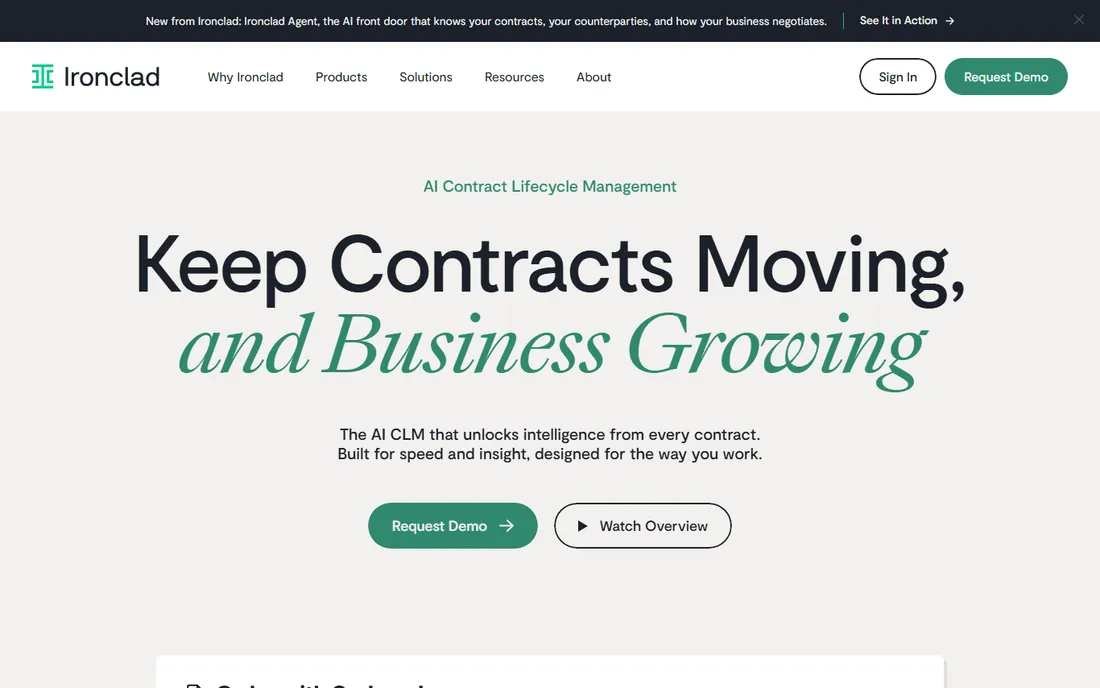
Ironclad is the name that comes up in nearly every enterprise CLM conversation, and it earned that position by treating contracting as a workflow problem rather than a filing problem. Beyond the searchable repository, it offers a workflow designer for approvals, collaborative redlining that keeps negotiations in one place, and AI features that extract data and flag issues across the contract portfolio. It integrates with the tools contracts actually touch, including Salesforce, Slack, HubSpot and DocuSign. The trade-off is the enterprise sales model: pricing is quote-based, and implementations can run into consulting territory.
What we like- Powerful workflow designer for complex approval chains, strong AI extraction and contract analytics, wide integration ecosystem with major CRMs and collaboration tools
Watch out for- Quote-only pricing with enterprise-level budgets, implementation can take months, overkill for teams that mainly need storage and search
#2
ContractSafe
Best for: mid-market teams that want transparent pricing and unlimited users
Visit contractsafe.com
Starting price$450/mo
Free planSee website
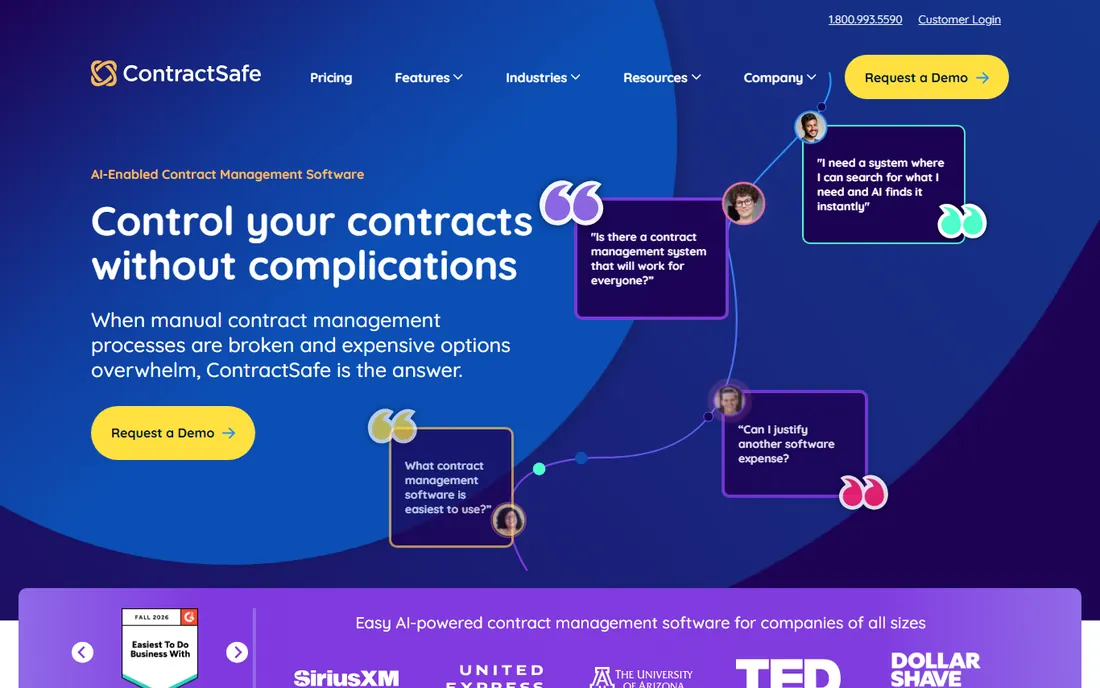
ContractSafe takes the opposite approach from the enterprise giants: flat, published pricing with unlimited users on every plan. Plans start at $450 per month and scale by contract volume rather than seats, so finance and operations can log in without anyone doing seat math. AI extraction pulls parties, dates, values and renewal terms from uploaded contracts for human review, and the platform covers approvals, e-signature and renewal alerts. Implementation and migration help are included rather than sold as a separate project, which keeps the total cost predictable.
What we like- Published flat pricing with unlimited users, AI extraction included on every plan, onboarding and migration included at no extra charge
Watch out for- Not built for deep enterprise workflow customization, advanced AI review features sit in higher tiers, contract volume bands can push growing teams up a tier
Starting priceSee website
Free planYes
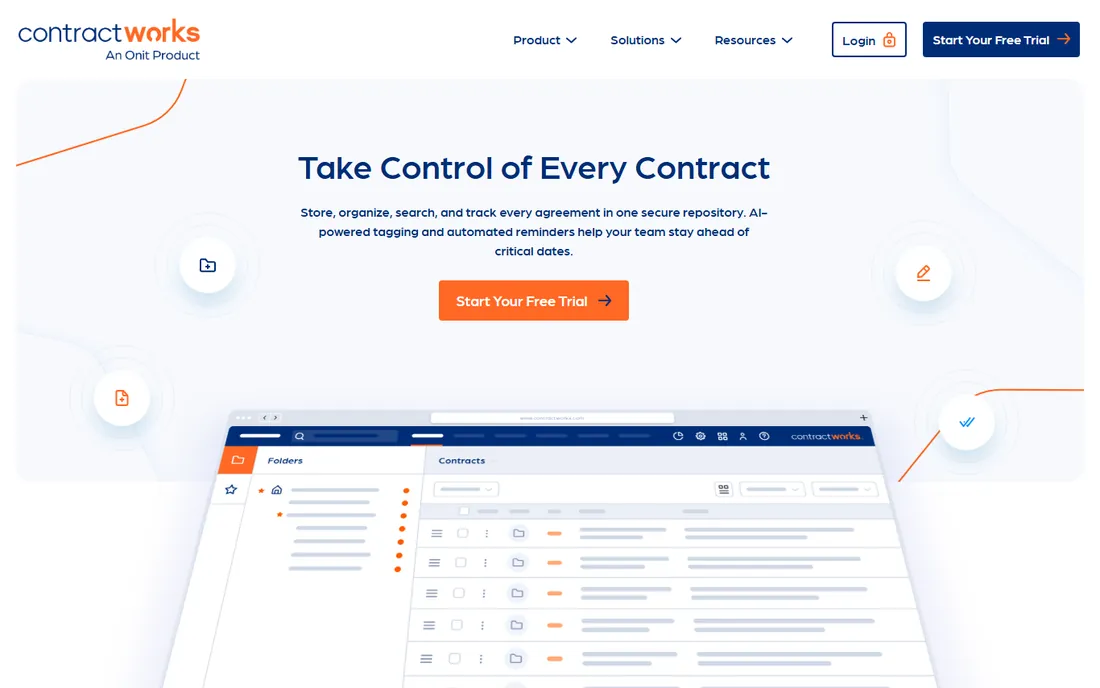
If your main problem is a shared drive full of signed PDFs, ContractWorks is built for exactly that. Now part of Onit, it is a repository-first tool: drag and drop your documents, and AI tagging identifies agreement types, parties, dates and renewal terms so the collection becomes searchable from day one. Built-in e-signature, permission-based roles, OCR and date alerts cover the day-to-day needs, and every plan includes unlimited users. A 14-day free trial lets you test it against your own contracts before committing.
What we like- Genuinely fast setup with drag-and-drop uploads, 14-day free trial to test with real contracts, unlimited users and free implementation on every plan
Watch out for- Public pricing figures vary across third-party sources, drafting and workflow automation are limited on lower tiers, e-signature licenses are capped per plan
#4
Agiloft
Best for: organizations with complex, multi-jurisdiction contract workflows
Visit agiloft.com
Starting priceSee website
Free planNo
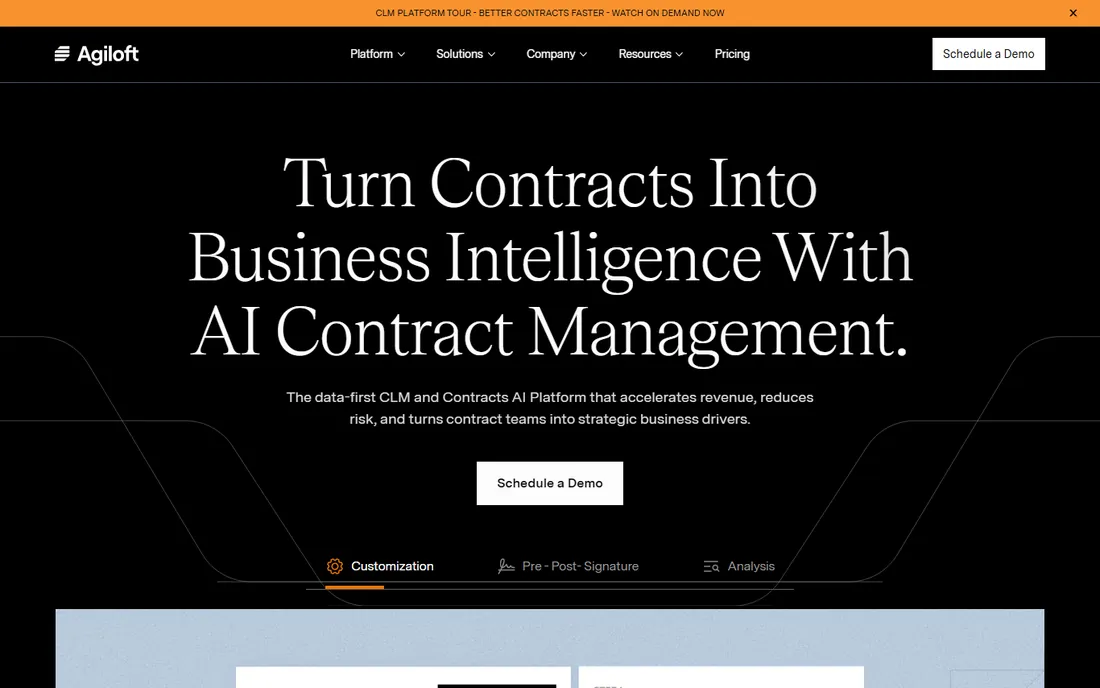
Agiloft has been doing contract management longer than most of this list has existed, and the platform shows that maturity in its configurability. It is a no-code CLM that covers the full lifecycle from request and negotiation to execution and obligation tracking, with AI features for extraction, risk analysis and contract interrogation baked in rather than bolted on. It connects to more than a thousand business systems and publishes a strong customer retention record. The flip side of that flexibility is cost: pricing is quote-based, and configured rollouts can run well into five figures a year before implementation.
What we like- Deep no-code configurability for unusual workflows, strong obligation tracking and analytics, broad integration catalog with major ERPs
Watch out for- Quote-based pricing with no public tiers, configuration and implementation add significant cost, smaller teams may find it more platform than they need
#5
Concord
Best for: business teams that want to self-serve routine contracts
Visit concord.app
Starting price$499/mo
Free planNo
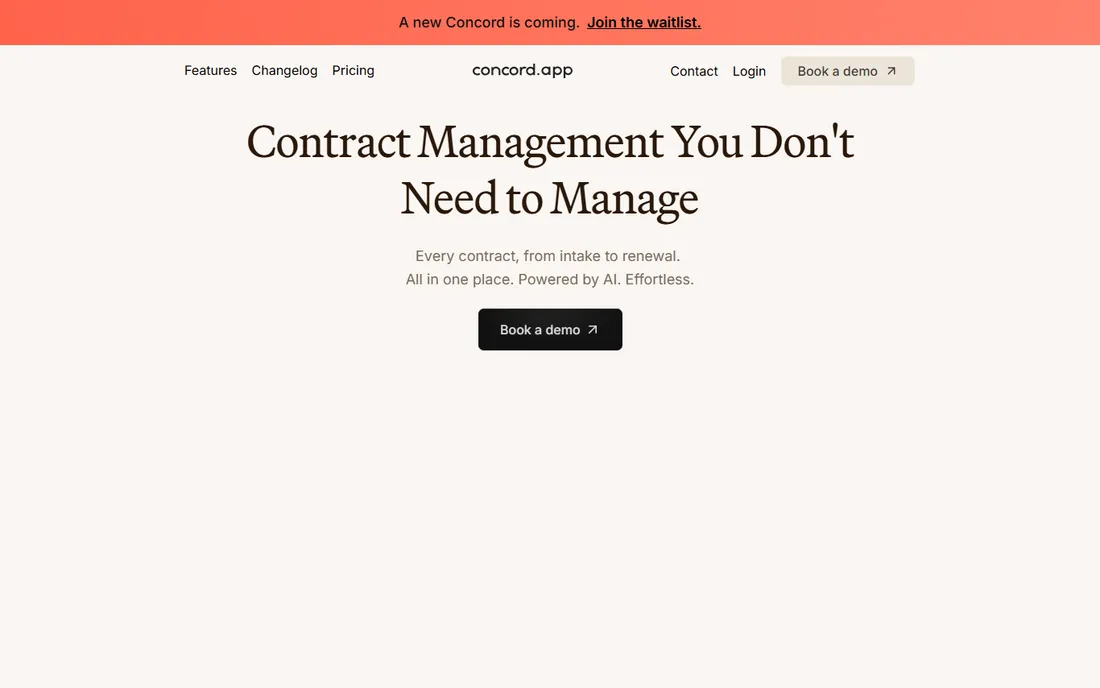
Concord wants business users to manage contracts without ever bothering legal, and its whole design follows from that. The platform covers intake to renewal in one place: self-serve templates, in-browser negotiation with redlining and comments, built-in e-signature, AI-assisted review, and proactive deadline alerts with reporting. Pricing starts at $499 per month on the Essential plan, with higher tiers quoted. Concord positions itself for the large share of agreements that never need legal complexity, which describes most companies' day-to-day contracting.
What we like- End-to-end lifecycle from templates to renewal in one tool, built-in e-signature with unlimited signatures, AI review and alerts that reduce legal bottlenecks
Watch out for- No free trial available as of 2026, per-month pricing can exceed flat-rate competitors for small teams, advanced enterprise features require custom quotes
#6
Juro
Best for: legal teams that negotiate inside the document itself
Visit juro.com
Starting priceSee website
Free planNo
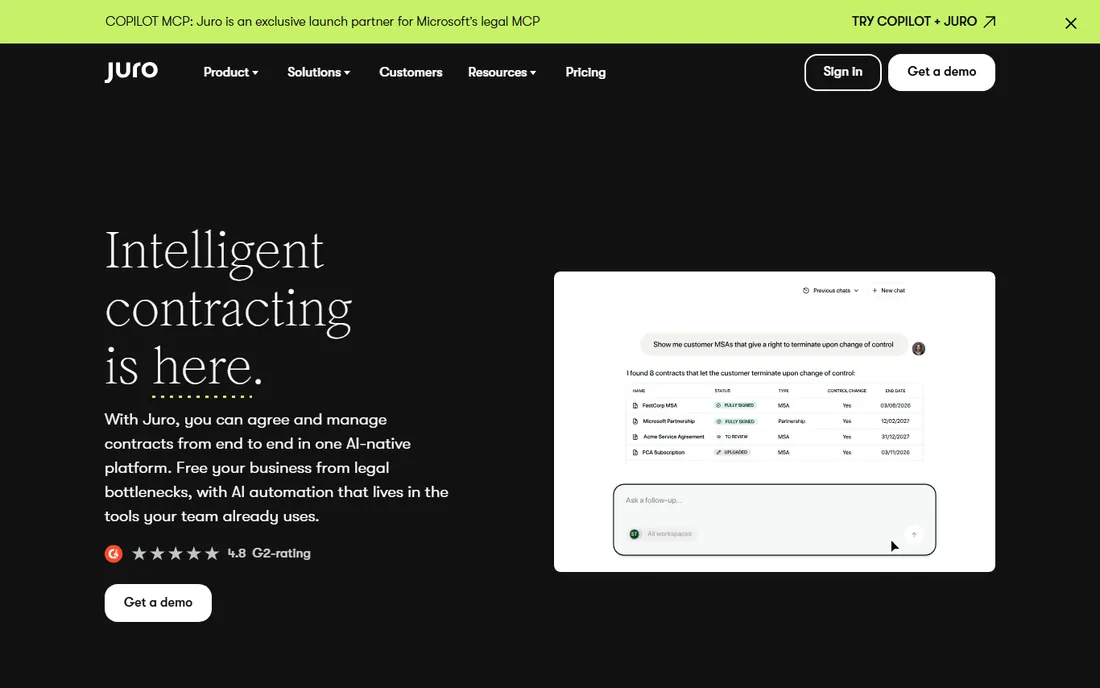
Juro treats the contract itself as the workspace. Its collaborative editor keeps drafting, commenting, tracked changes and approvals inside the document, with templates controlled by legal and integrations that let business teams initiate contracts from the CRM or ATS they already use. An AI assistant drafts, reviews against internal policy and answers questions about the repository in plain language. Juro claims millions of contracts processed on the platform and strong ease-of-use scores. Pricing is not public; the vendor quotes based on contract volume and integration needs, with unlimited users included.
What we like- Best-in-class collaborative in-document negotiation, unlimited users, templates and workflows on every plan, mature AI assistant for drafting and review
Watch out for- No published pricing, contract volume drives the quote so heavy users pay more, native e-signature is advanced rather than qualified under EU rules
#7
DocuSign CLM
Best for: enterprises already standardized on DocuSign eSignature
Visit docusign.com
Starting priceSee website
Free planNo
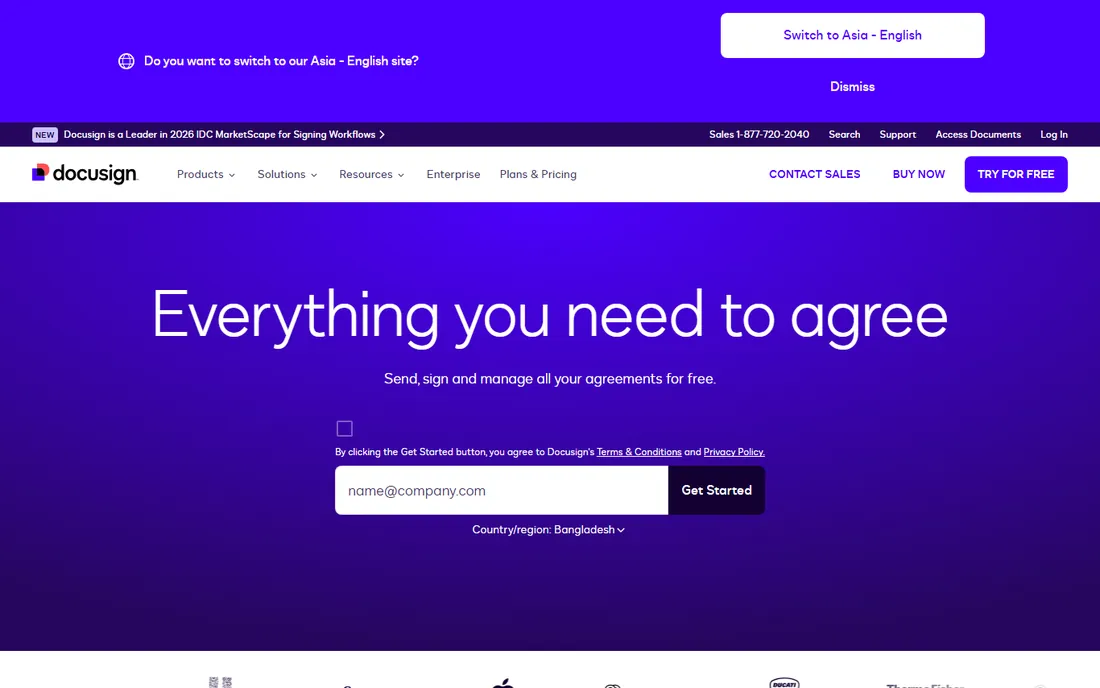
If your company already signs everything with DocuSign, DocuSign CLM is the path of least resistance into full contract lifecycle management. Born from the SpringCM acquisition and now sitting alongside the Intelligent Agreement Management family, it offers the central repository, clause library, redlining and workflow automation you would expect, with native e-signature instead of an integration. AI-powered search and analytics arrive on the higher tiers. CLM pricing is quote-based and sold separately from the well-known eSignature plans, and enterprise deployments typically involve professional services.
What we like- Native e-signature with no integration needed, deep Salesforce and Microsoft integrations, trusted brand with broad compliance certifications
Watch out for- CLM pricing is quote-only and separate from eSignature plans, AI features concentrated in higher tiers, implementation often requires professional services
#8
SpotDraft
Best for: mid-market legal teams that want AI-native CLM without enterprise complexity
Visit spotdraft.com
Starting priceSee website
Free planNo
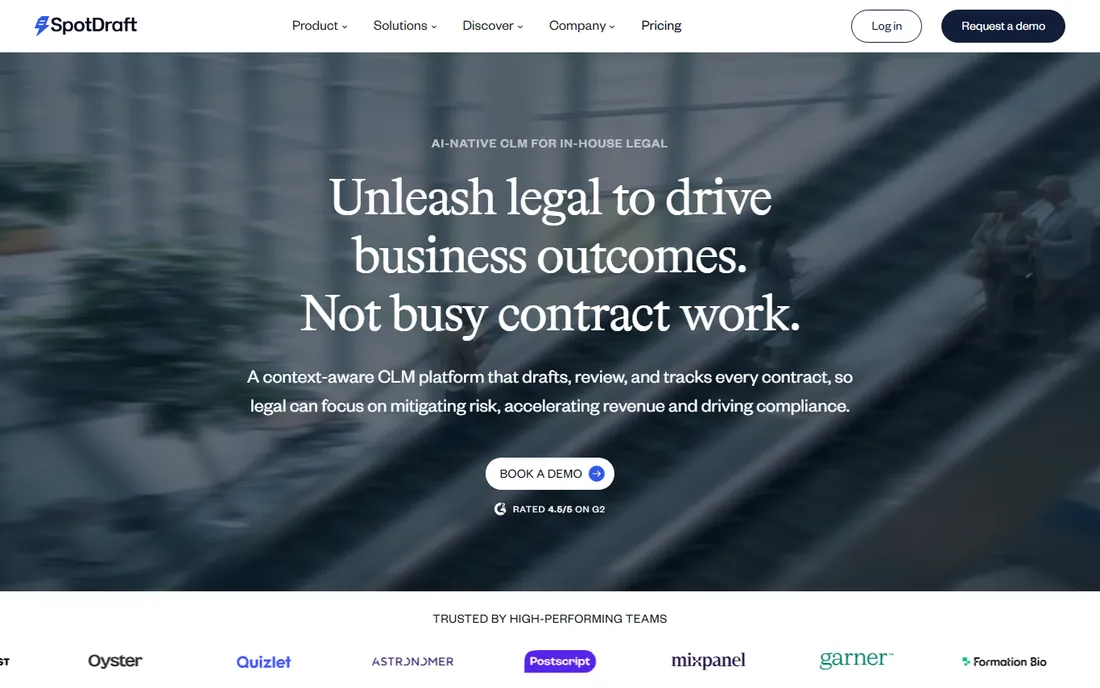
SpotDraft aims squarely at mid-market legal teams that want structure without enterprise weight. The AI-native platform covers drafting with conditional templates, collaborative negotiation in Word or Slack, a searchable repository with access controls, analytics on renewals and bottlenecks, and compliant e-signatures. Implementation runs about six weeks with a dedicated team, which is quick for this category. Pricing is quote-based and not published; the vendor positions itself as the practical middle ground between simple repositories and heavyweight enterprise CLM.
What we like- Quick six-week implementation with dedicated support, strong Word and Slack integration for negotiation, solid compliance posture with ISO 27001 and SOC 2
Watch out for- No published pricing, not designed for the most complex enterprise approval orchestration, AI review packaging varies by quote
How we chose
We started with the vendors that appear most often in enterprise CLM shortlists, review sites and buyer discussions, then kept the eight that are real, current and purchasable in 2026. Every homepage above was opened and verified directly. Pricing comes only from each vendor's own published pages; where the vendor publishes nothing we write See website instead of repeating third-party estimates. We did not invent ratings, customer names or deployment claims, and we did not claim hands-on testing. The ranking favors practical repository strength, transparent pricing and realistic deployability for the teams each tool targets.
What to check before you buy
First, count your real contract volume and users. Repository tools price on documents, seats or flat rates, and the model that looks cheapest on the website may not be cheapest for your shape. Ask each vendor to quote your actual numbers, not a generic tier.
Second, test search and AI extraction on your own contracts. Upload a messy sample, including scanned PDFs and old agreements with odd formatting, and see what the system actually finds. This is the feature you will use daily, and demos always use clean data.
Third, pin down the e-signature story. Some tools include unlimited signing, some cap licenses per plan, and some integrate with an external provider. If your team sends hundreds of envelopes a month, the difference matters.
Fourth, ask about migration. Moving thousands of existing contracts into a new system is where projects stall. Vendors that include migration help, like ContractSafe and ContractWorks, remove a major risk.
Finally, get renewal terms in writing. Quote-based contracts in this category commonly include annual price escalators, so confirm the cap before you sign, and confirm which AI features are included versus paid add-ons.
Contract repository vs full CLM: which do you need
Not every team needs the full lifecycle. A contract repository stores, organizes and searches executed agreements, tracks renewals and controls who sees what. That is the whole job for many finance and operations teams, and tools like ContractWorks and the lower tiers of ContractSafe do it well at a modest price. Full CLM adds everything before the signature: template-driven drafting, intake forms, conditional approvals, redlining workflows and AI review against your playbooks. If legal is a bottleneck on routine agreements, the workflow side pays for itself. If the bottleneck is finding anything after signature, start with a repository and add workflow later. Buying the full suite for a storage problem is the most common way teams overspend in this category.
Frequently asked questions
What is the difference between a contract repository and CLM software?
A contract repository stores, organizes and searches executed agreements, tracks renewals and controls access. CLM (contract lifecycle management) adds everything before the signature: drafting, intake, approvals, redlining and AI review. Many teams only need the repository; buy the full suite when legal is a bottleneck on routine agreements.
How much does contract repository software cost?
Published pricing on this list runs from $450 per month (ContractSafe) to $499 per month (Concord), both with unlimited users. The enterprise platforms (Ironclad, Agiloft, DocuSign CLM, Juro, SpotDraft) sell quote-based, and configured rollouts can run well into five figures a year before implementation. Always ask vendors to quote your actual contract volume and user count.
Can we migrate our existing contracts into a new system?
Yes, and this is where projects most often stall. Vendors that include migration help (ContractSafe and ContractWorks include it on every plan) remove a major risk. Ask each vendor what the migration covers: OCR of scanned PDFs, metadata extraction, folder structure mapping and how long it takes for your volume.
Do these tools include e-signature?
Most do, but the packaging varies. ContractSafe, Concord and SpotDraft include signing; ContractWorks caps e-signature licenses per plan; Juro and DocuSign CLM have different tiers of signature capability. If your team sends hundreds of envelopes a month, confirm the limits before you commit.
How does AI extraction actually work?
You upload contracts, and the system identifies agreement types, parties, dates, values and renewal terms for human review. Test it on your own messy documents, including scanned PDFs and old agreements with odd formatting, because demos always use clean data. This is the feature you will use daily, so the proof of concept matters more than the feature list.
Sources we checked (9)
- https://ironcladhq.com
- https://contractsafe.com/
- https://www.contractsafe.com/blog/ironclad-vs-juro
- https://www.contractworks.com
- https://www.agiloft.com
- https://concord.app/
- https://juro.com/
- https://www.docusign.com
- https://spotdraft.com/
Is your product missing or out of date?
We review this list regularly. Vendors can request a listing, send updated pricing or ask about featured placement.

Shihab Mia · Founder, Rankite
Shihab has 5+ years in B2B and SaaS SEO. He writes Rankite's software buying guides from pricing pages, documentation and public user reviews. More about Shihab.