How we make this list: we compare pricing pages, product documentation and public user reviews. Rankite is independent; if a vendor ever pays for a featured spot, that listing is clearly labeled Partner.
Key takeaways
- Most "facility management" lists mix three different products: CMMS for maintenance teams, CAFM for space and real estate, and contractor platforms for multi-site brands. Buy the right category first.
- You can start free: MaintainX Basic is free forever and Fiix offers a free CMMS tier, which is enough to move a team off paper work orders.
- Published prices cluster at $20 to $65 per user per month (MaintainX, UpKeep); FMX, Limble, Fiix, eMaint, Fracttal One, ServiceChannel, Accruent and MRI Software all price by quote.
- Schools and public facilities get the best fit from FMX, industrial plants from Fiix or eMaint, and multi-location retail or restaurant brands from ServiceChannel.
- Per-user pricing is the hidden trap: price every quote by technician, since requester accounts are usually free.
Quick comparison
| Tool | Best for | Starting price | Free plan |
|---|
 MaintainX MaintainX | Teams that want to start free and upgrade as maintenance matures | $0 (Basic, free forever); paid from $20/user/month billed annually (Essential) | Yes (Basic: unlimited work orders, real-time messaging) |
 UpKeep UpKeep | Mobile-first maintenance teams that want AI baked in | $24/user/month (Essential plan) | No (free trial, no credit card required) |
 Limble Limble | Maintenance teams that value ease of use above all | See website (per-user Standard, Premium+ and Enterprise plans) | No (free trial available) |
 Fiix Fiix | Teams that want a free CMMS with room to grow into AI features | See website (per-user subscriptions, month-to-month or annual) | Yes (free CMMS tier) |
 FMX FMX | K-12 schools, universities and public-sector facilities | See website (custom quote) | No (demo available) |
 eMaint eMaint | Regulated industries that need a configurable, audit-ready CMMS | See website (configurable per-user pricing) | No (free demo available) |
 Fracttal One Fracttal One | Teams that want IoT and predictive maintenance without enterprise complexity | See website (custom quote) | No (demo available) |
 ServiceChannel ServiceChannel | Multi-location brands managing contractors across hundreds of sites | See website (custom quote) | No (demo available) |
 Accruent Accruent | Enterprises managing the full asset lifecycle, from capital planning to disposal | See website (custom quote) | No (demo available) |
 MRI Software MRI Software | Real estate owners and managers running large property portfolios | See website (custom quote) | No (demo available) |
Is your product missing or out of date?
We review this list regularly. Vendors can request a listing, send updated pricing or ask about featured placement.
Here is the blunt version: most top-10 lists of facility management software are useless because they mix three different products and call them all the same thing. A CMMS manages maintenance teams and work orders. A CAFM platform manages space, leases and real estate. A contractor platform like ServiceChannel manages outside vendors across hundreds of locations. Buy the wrong category and you spend a year implementing software that never fits. The ten tools below cover all three categories, each one labeled honestly, with real prices where vendors publish them and "see website" where they hide them.
Starting price$0 (Basic, free forever); paid from $20/user/month billed annually (Essential)
Free planYes (Basic: unlimited work orders, real-time messaging)
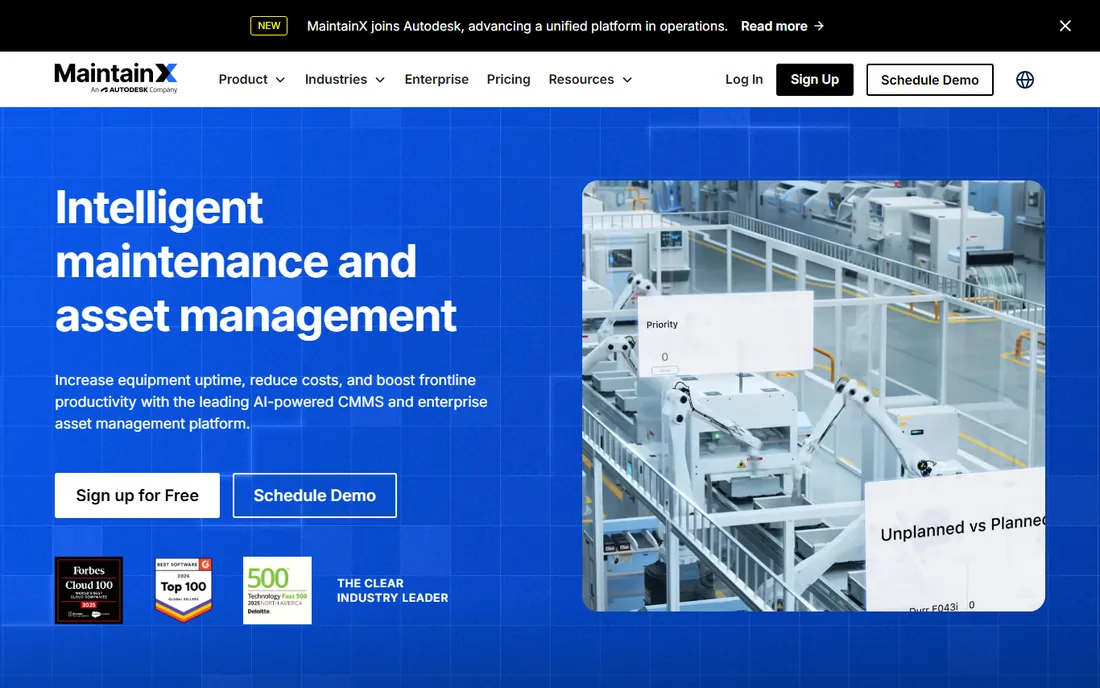
MaintainX is the easiest yes on this list because the Basic plan is free forever: unlimited work orders, procedures and requester users with real-time messaging. For a team moving off paper or spreadsheets, that is enough to digitize the whole reactive workflow at zero cost. Paid tiers add preventive maintenance, parts inventory, purchase orders and an open API, with Essential at $20 per user per month billed annually.
The free tier has edges: only a couple of work orders with attached procedures per month and a month of advanced analytics. Premium at $65 per user per month is where the serious reliability features live, and Enterprise is custom. Price it per technician, not per employee, since requester accounts are free. For small and mid-size maintenance teams, this is the default starting point.
What we like- Genuinely free Basic tier with unlimited work orders
- Mobile-first design technicians adopt fast
- AI procedure generation and anomaly detection on paid tiers
Watch out for- Free tier caps procedures and analytics history
- Per-user pricing climbs fast on Premium at $65 a user
#2
UpKeep
Best for: Mobile-first maintenance teams that want AI baked in
Visit onupkeep.com
Starting price$24/user/month (Essential plan)
Free planNo (free trial, no credit card required)
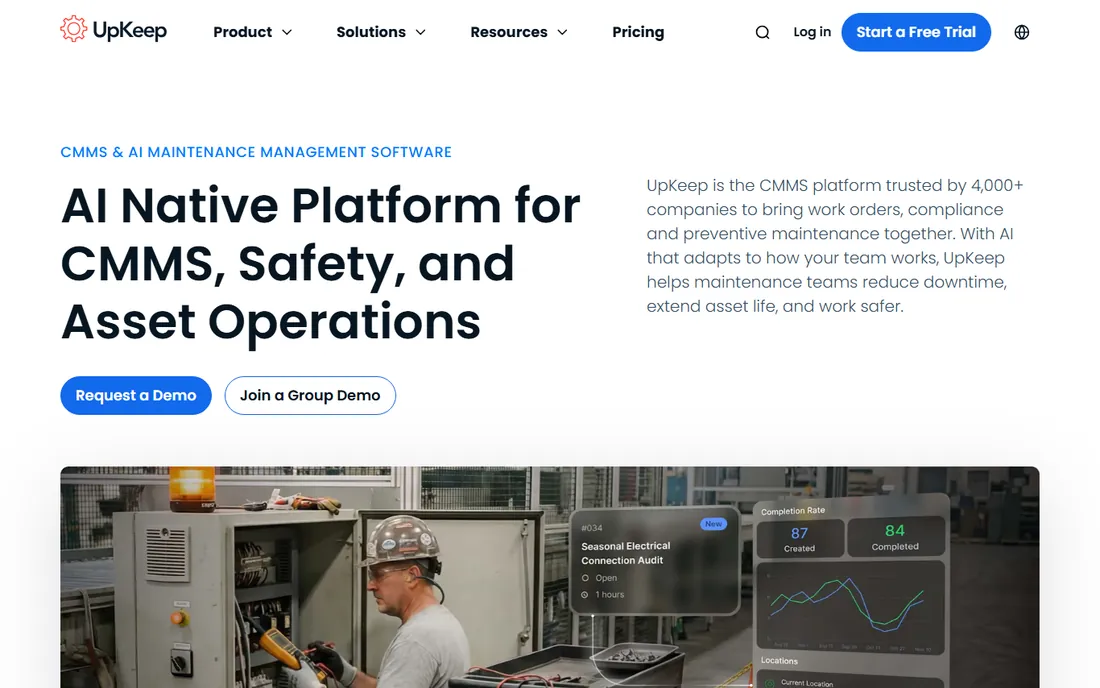
UpKeep rebuilt itself around AI: the Nova assistant generates work orders from voice notes, builds custom apps and flags data problems, and every plan includes AI credits. Underneath is a solid mobile-first CMMS with work orders, preventive maintenance, parts and asset history. The platform stretches further than most, with add-on products for safety reporting, fleet maintenance, frontline training and IoT condition monitoring on one data model.
Essential at $24 per user per month covers small teams leaving spreadsheets; Premium at $55 adds PM scheduling, parts costing and inventory. There is no free tier, only a trial, and the top two tiers require a quote. UpKeep fits operations teams that want one vendor for maintenance plus safety and fleet, not just a work order tool.
What we like- AI assistant (Nova) that builds work orders and apps from your data
- Platform extends to safety, fleet, training and IoT sensors
- Strong mobile experience for technicians
Watch out for- No free plan
- Per-user cost adds up across large tech teams
- Professional and Enterprise tiers are quote-only
#3
Limble
Best for: Maintenance teams that value ease of use above all
Visit limble.com
Starting priceSee website (per-user Standard, Premium+ and Enterprise plans)
Free planNo (free trial available)
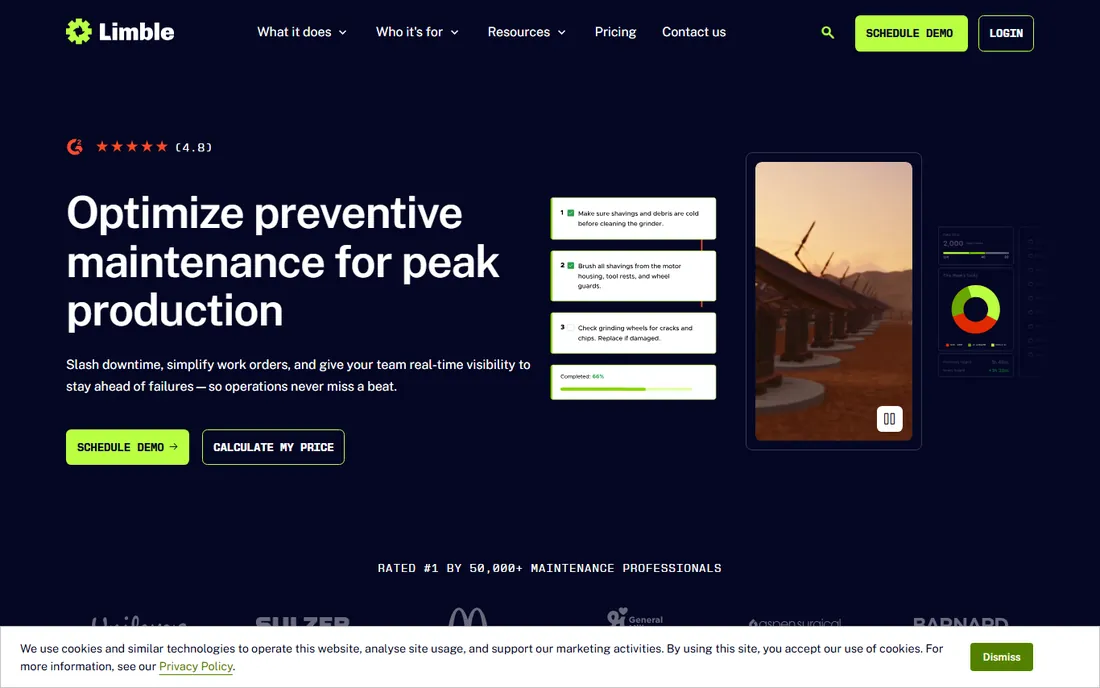
Limble wins deals on usability. Technicians submit and complete work from a phone, requesters file tickets by scanning a QR code on the asset, and preventive schedules run themselves with meter-based triggers. Paid plans include unlimited work orders and assets, spare parts tracking, purchase orders and downtime reporting, which covers the full CMMS job for most plants and facilities.
The friction is commercial: Limble publishes no prices, so every evaluation goes through sales. Budget for the tier jump if you need API access or multi-site analytics. For teams burned by clunky legacy CMMS tools, the ease of adoption is the whole pitch.
What we like- Work orders submittable by QR code with almost no training
- Unlimited work orders, assets and requesters on paid plans
- Consistently praised support and implementation help
Watch out for- No published pricing, expect a sales process
- Per-user model gets expensive past 30 to 40 technicians
- Advanced reporting and API need higher tiers
Starting priceSee website (per-user subscriptions, month-to-month or annual)
Free planYes (free CMMS tier)
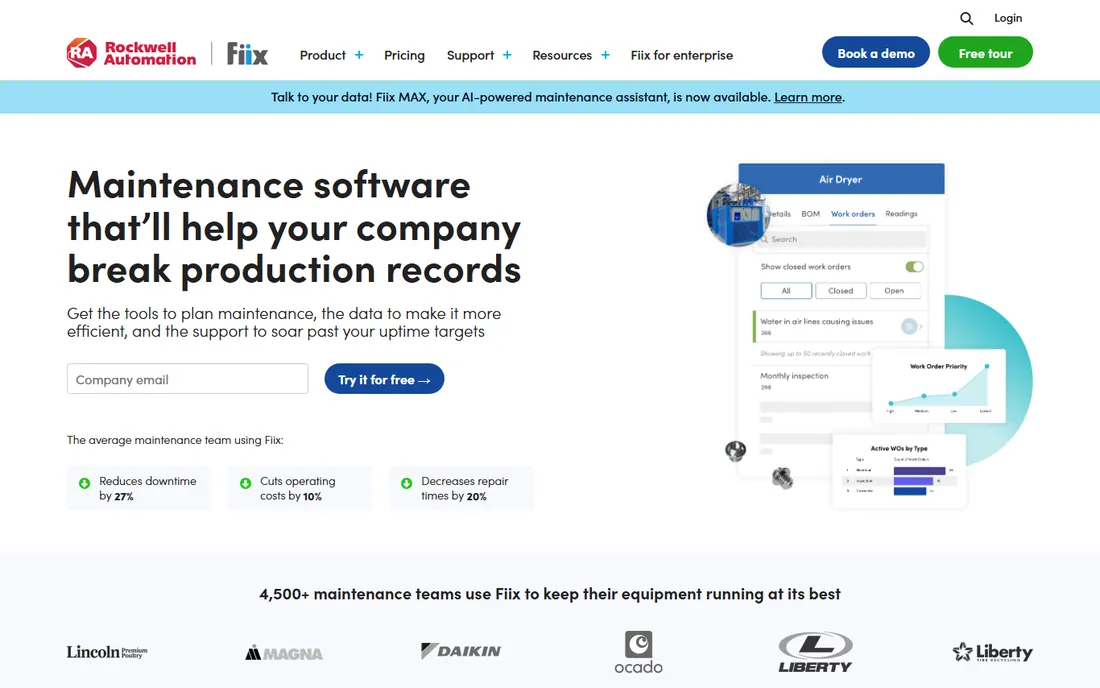
Fiix, part of Rockwell Automation, offers something rare: a genuinely free CMMS tier for teams getting off paper. Paid plans are per-user subscriptions with month-to-month flexibility, and the platform scales into Fiix Foresight, an AI engine that spots failure patterns and forecasts parts needs. The open API and integration hub connect to ERPs and industrial systems without custom development projects.
Like several enterprise CMMS vendors, Fiix keeps paid pricing behind a conversation, so budget planning takes a sales call. The free tier covers core work orders and asset tracking; preventive maintenance depth, integrations and AI arrive as you climb. For industrial teams already in the Rockwell ecosystem, the fit is obvious.
What we like- Free tier to start with no credit card
- Open API and integration hub with pre-built connectors
- AI engine (Foresight) for failure prediction and parts forecasting
- No setup fees
Watch out for- Paid plan prices not published
- Advanced AI and multi-site features sit on higher tiers
#5
FMX
Best for: K-12 schools, universities and public-sector facilities
Visit gofmx.com
Starting priceSee website (custom quote)
Free planNo (demo available)
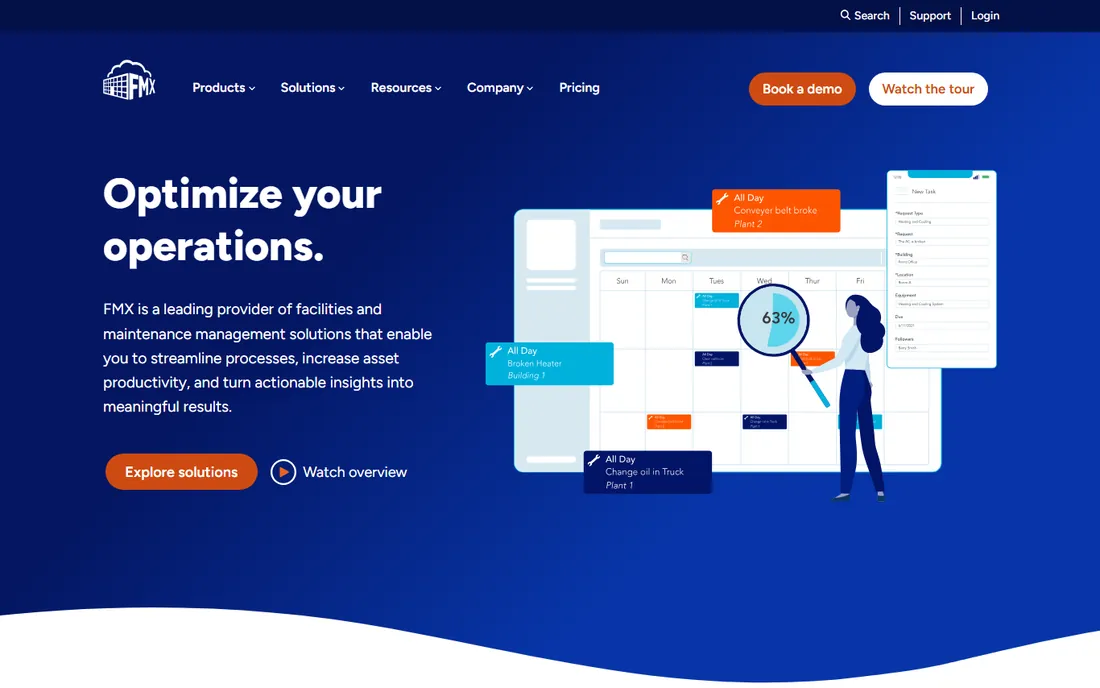
FMX dominates the education niche for a reason: it handles maintenance work orders, facility scheduling, transportation and technology requests in one system, and anyone in the organization can submit requests free since only the staff closing tickets count as billable users. Partnerships with purchasing cooperatives like TIPS-USA let public buyers skip the RFP grind.
Pricing is fully custom with a one-time implementation fee and annual contracts, so small private facilities should get the quote early. FMX is less about machine reliability and more about running buildings full of people, which is exactly what schools, churches, municipalities and restaurant groups need. Industrial plants should look at Fiix or eMaint instead.
What we like- Unlimited requesting users at no extra charge
- Purpose-built for education and government workflows
- Purchasing co-op partnerships simplify public procurement
Watch out for- Quote-only pricing with a one-time implementation fee
- Annual contracts
- Less manufacturing depth than industrial CMMS tools
#6
eMaint
Best for: Regulated industries that need a configurable, audit-ready CMMS
Visit emaint.com
Starting priceSee website (configurable per-user pricing)
Free planNo (free demo available)
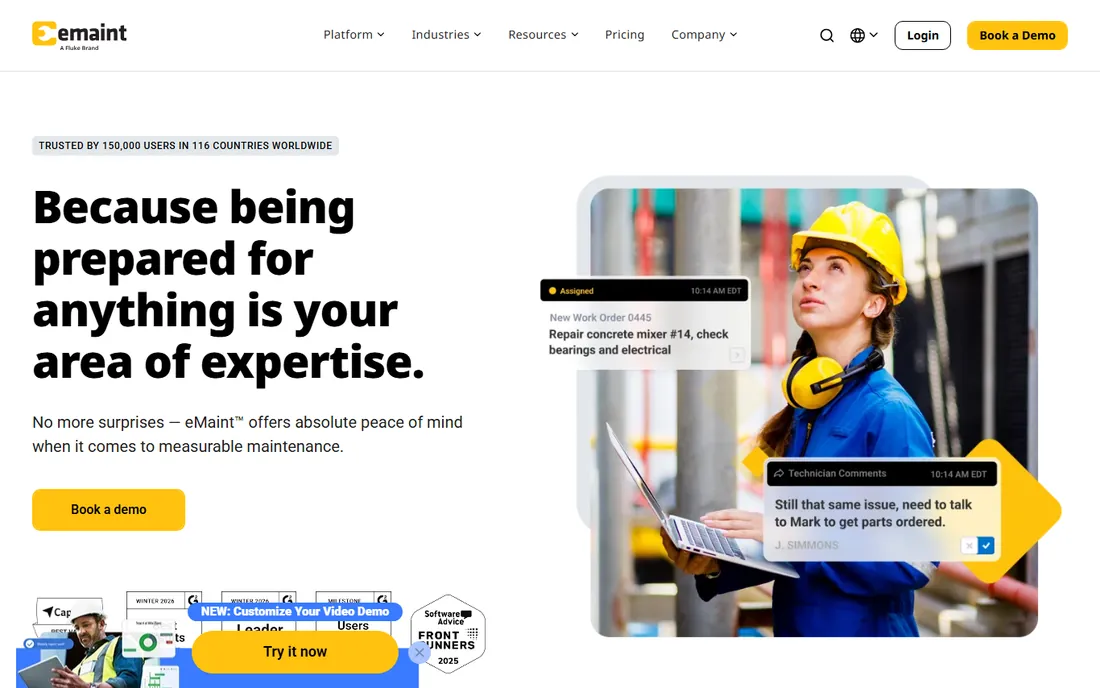
eMaint, a Fluke company, is the configurability pick: nearly every field, workflow and report bends to how your operation actually runs, which matters in pharmaceuticals, food and beverage and other audited industries. Decades in the business show in the depth: calibration management, multi-site governance, condition monitoring triggers and an AI suite for maintenance analytics.
That depth comes with enterprise buying friction. Pricing is configurable per user with paid implementation, and the main tiers are prepaid annual. There is no free tier and no trial short of a demo. If your operation is complex enough to need eMaint, the sales process will not surprise you; if it is not, MaintainX or Limble gets you live in weeks.
What we like- Deep configurability for complex, multi-site operations
- Fluke backing with reliability expertise and global support
- Strong compliance and audit trail features
Watch out for- Pricing not published and implementation is a paid add-on
- Professional and Enterprise plans bill as prepaid annual commitments
#7
Fracttal One
Best for: Teams that want IoT and predictive maintenance without enterprise complexity
Visit fracttal.com
Starting priceSee website (custom quote)
Free planNo (demo available)
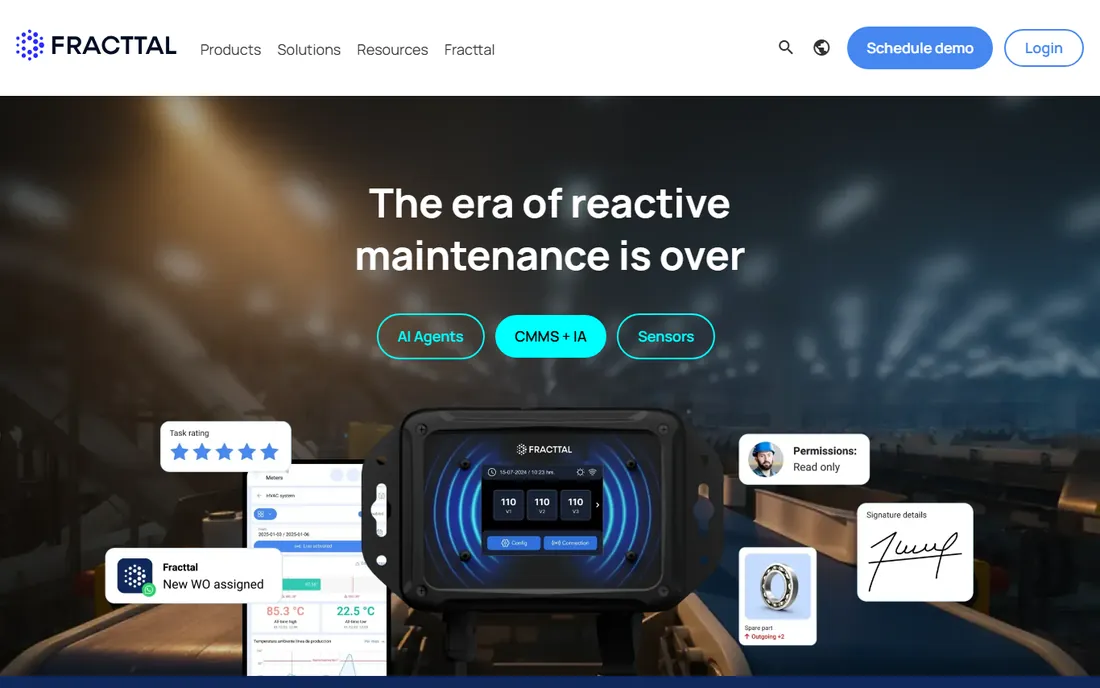
Fracttal One brings predictive maintenance downmarket: connect IoT sensors to assets and the platform monitors condition, triggers work orders before failures and tracks the KPIs that prove it. The mobile-first design covers work orders, asset hierarchies, spare parts and vendor management, and the interface runs in multiple languages, which distributed teams appreciate.
Pricing is quote-only, so cost comparisons require a conversation, and US buyers should check integration and support coverage for their stack. For manufacturing, mining, energy and facilities teams that want condition-based maintenance without an enterprise EAM project, Fracttal is the most accessible path.
What we like- IoT sensor integration with predictive maintenance built in
- Fully mobile and cloud-based
- Multilingual platform used by teams in many countries
Watch out for- No public pricing
- Quote-based sales process
- Smaller US partner ecosystem than domestic rivals
Starting priceSee website (custom quote)
Free planNo (demo available)
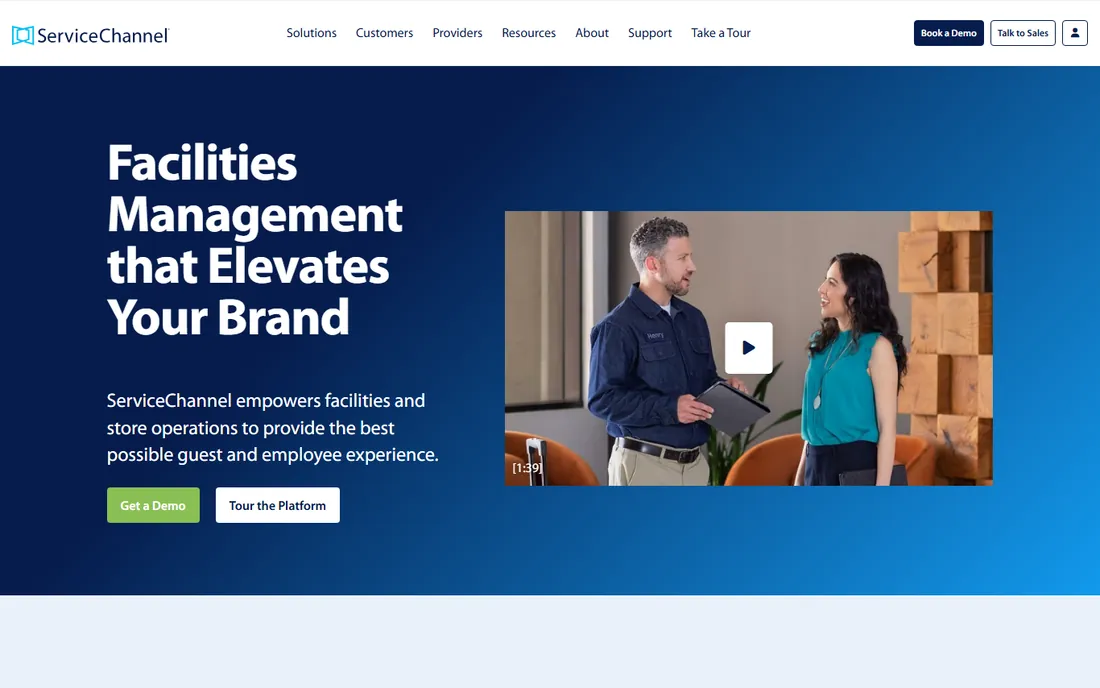
ServiceChannel is not really a CMMS; it is the operating system for brands with hundreds of locations. Store managers submit work orders, the platform dispatches from a marketplace of vetted contractors, and AI handles invoice matching, proposal evaluation and work order summaries. Analytics show exactly what each location, trade and contractor costs.
Everything is custom-quoted and aimed at retail, restaurant, grocery and convenience chains. A single facility gets nothing from the contractor marketplace that justifies the enterprise price. If you run your own techs at a handful of sites, buy a CMMS. If you manage facilities across a brand footprint, this is the category leader.
What we like- Marketplace of vetted service providers across every trade
- AI automation for work orders, proposals and invoices
- Purpose-built analytics for multi-site spend
Watch out for- Enterprise pricing with no public numbers
- Overkill for single-site or small teams
#9
Accruent
Best for: Enterprises managing the full asset lifecycle, from capital planning to disposal
Visit accruent.com
Starting priceSee website (custom quote)
Free planNo (demo available)
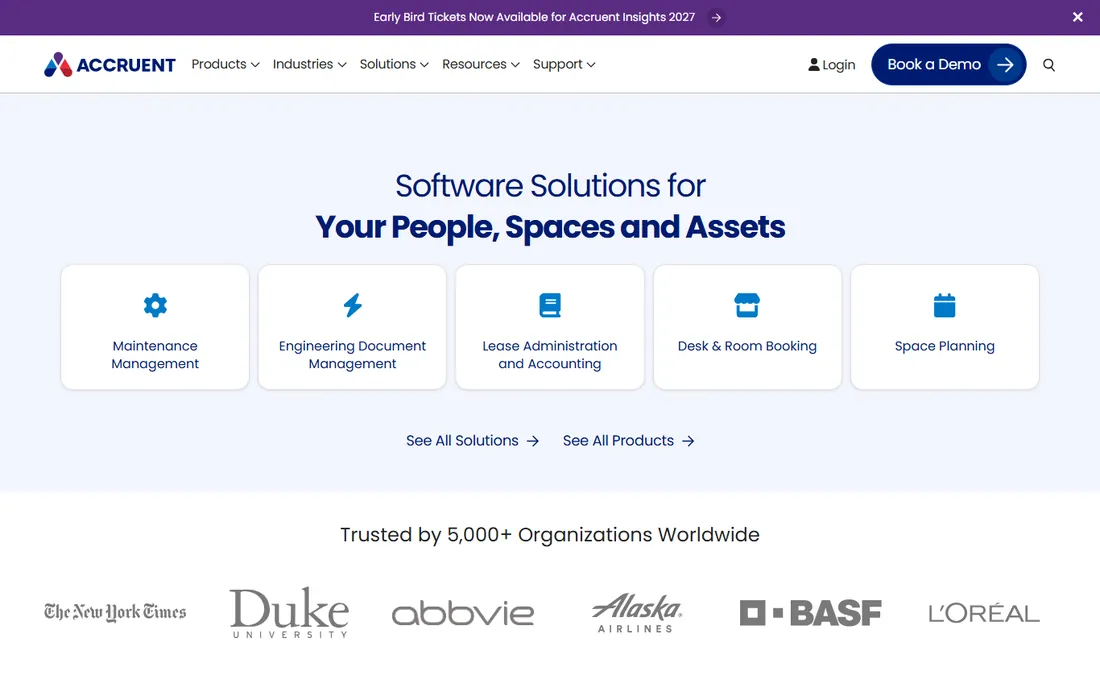
Accruent sells the whole built environment: capital planning, lease management, space management, maintenance and IoT-based monitoring in one portfolio. Its Maintenance Connection CMMS brings work orders, preventive maintenance and compliance documentation, and it integrates with the rest of the suite so a work order can tie to a capital project and a lease.
This is enterprise software bought by committee, with custom pricing and implementation projects to match. Mid-size teams will find it heavy; the value appears at portfolio scale, where one platform for real estate and facilities beats five disconnected tools. Healthcare and higher education are its happiest hunting grounds.
What we like- Full lifecycle coverage: real estate, capital projects, maintenance and IoT monitoring
- Maintenance Connection CMMS with deep compliance features
- Strong in healthcare, education and retail
Watch out for- Enterprise sales cycle with no public pricing
- Implementation effort matches the breadth
#10
MRI Software
Best for: Real estate owners and managers running large property portfolios
Visit mrisoftware.com
Starting priceSee website (custom quote)
Free planNo (demo available)
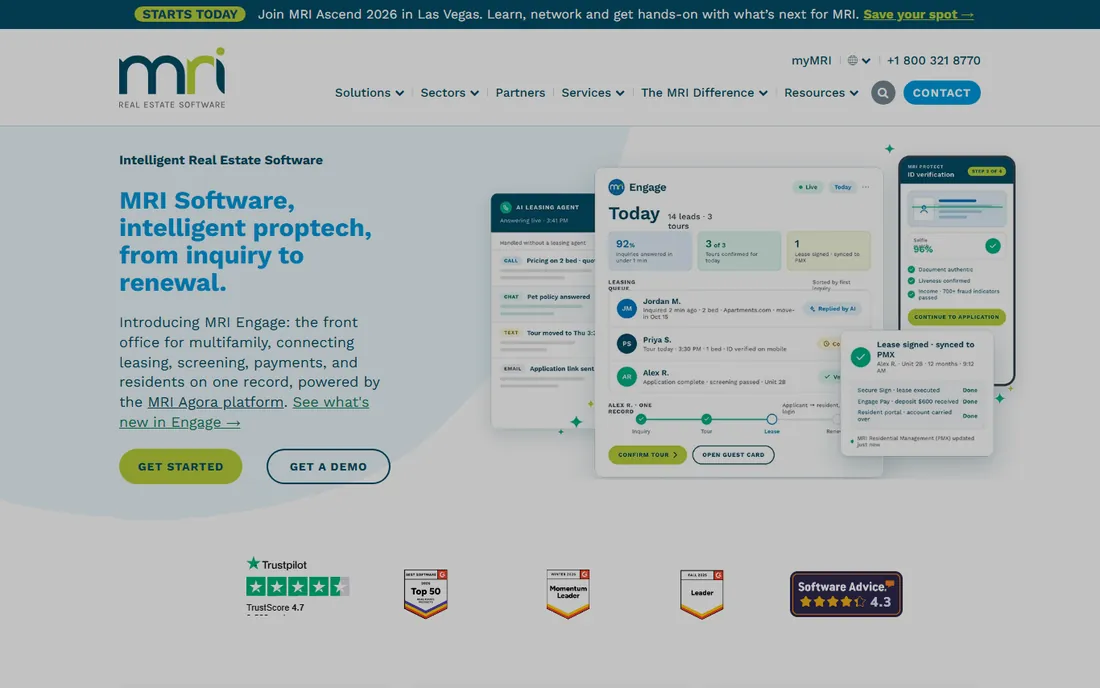
MRI Software comes at facilities from the real estate side: property management, lease administration and accounting first, with facilities management modules for work orders and maintenance across a portfolio. For owners and managers whose core job is the portfolio itself, keeping facilities in the same system as leases and financials beats bolting on a separate CMMS.
Maintenance purists will find it less deep than the CMMS tools above; this is portfolio software with maintenance attached, not the other way around. Pricing is custom and scoping a broad suite takes work. If your world is buildings as assets, MRI fits. If your world is machines as assets, pick Fiix or eMaint.
What we like- Deep property management roots with facilities modules for portfolios
- Open partner ecosystem with many integrations
- Global footprint serving clients in many countries
Watch out for- Property-centric rather than maintenance-centric
- Quote-based pricing
- Broad suite can be complex to scope
How to choose facility management software
Start with the category, not the vendor. If your own technicians fix things, you need a CMMS (MaintainX, UpKeep, Limble, Fiix, FMX, eMaint, Fracttal One). If you manage outside contractors across many locations, you need a contractor platform (ServiceChannel). If you manage a property portfolio with leases and capital plans, you need the real estate side (Accruent, MRI Software). Mixing these up is the most expensive mistake buyers make.
Then count billable users honestly. Most vendors charge per technician while requesters stay free, so a 200-person company might only need 12 licenses. Get the quote on that math, not on headcount. Finally, run a real trial with your actual work orders. Every vendor here offers a demo or free tier; the one your technicians use without being forced is the one to buy.
CMMS vs CAFM vs EAM: buy the right category
CMMS (computerized maintenance management) is the workhorse: work orders, preventive schedules, assets and parts. It answers "what broke, who fixes it, what did it cost." Most small and mid-size teams should start here.
CAFM (computer-aided facility management) adds space and real estate: floor plans, seat assignments, leases, move management. It answers "who sits where and what does the space cost." Offices, campuses and portfolios need this layer on top of maintenance.
EAM (enterprise asset management) goes deeper on the assets themselves: lifecycle costing, reliability engineering, capital planning for plants and infrastructure. It answers "when do we replace this million-dollar machine." Only industrial and infrastructure operators need full EAM; everyone else should not pay for it.
How we chose
We searched for facility management software, CMMS software and CAFM software as a buyer would. For each candidate we opened the vendor's homepage and pricing page, verified the company still sells the product under its current name, and compared category fit, published pricing and company-size fit. Where pricing was not published on the vendor's own site we wrote "See website" rather than guessing. We replaced Hippo CMMS, which is being absorbed into Eptura Asset, with MRI Software so every tool on the list exists under its own name today.
Frequently asked questions
What is the difference between CMMS and facility management software?
CMMS is one type of facility management software: it manages maintenance work orders, assets and technicians. Facility management software is the umbrella term, which also covers CAFM (space and real estate), contractor management platforms and energy management. If you run maintenance teams, start with a CMMS.
Is there really free facility management software?
Yes, with limits. MaintainX Basic is free forever with unlimited work orders, and Fiix offers a free CMMS tier. Both cover core work orders and asset tracking. You pay when you need preventive maintenance depth, parts inventory, integrations or analytics. For a team moving off paper, the free tiers are genuinely usable.
How much does facility management software cost?
Published plans run $20 to $65 per user per month (MaintainX Essential at $20, UpKeep Essential at $24, MaintainX Premium at $65). Most enterprise vendors (FMX, Limble, Fiix, eMaint, ServiceChannel, Accruent) price by custom quote, so get your quote on per-technician math, not headcount, since requester accounts are usually free.
Do I need facility management software for a single building?
Probably a CMMS, not a full platform. One building with a small team gets everything it needs from MaintainX free or Fiix free tier. Contractor platforms like ServiceChannel and portfolio suites like Accruent only pay off across many sites.
What should multi-location brands look for?
Three things: a contractor or vendor marketplace (ServiceChannel), multi-site work order rollups, and spend analytics by location and trade. A plain CMMS tracks your own techs fine, but once outside contractors do most of the work, you need the platform built for that model.
Sources we checked (10)
- https://gofmx.com/pricing
- https://getmaintainx.com/pricing
- https://onupkeep.com/
- https://limble.com/pricing
- https://fiixsoftware.com/pricing
- https://emaint.com/pricing
- https://fracttal.com/
- https://servicechannel.com/
- https://accruent.com/
- https://www.mrisoftware.com
Is your product missing or out of date?
We review this list regularly. Vendors can request a listing, send updated pricing or ask about featured placement.

Shihab Mia · Founder, Rankite
Shihab has spent more than a decade helping SaaS and e-commerce brands grow through search. He writes Rankite's software buying guides from pricing pages, documentation and public user reviews. More about Shihab.