How we make this list: we compare pricing pages, product documentation and public user reviews. Ratings come from G2, Capterra or Trustpilot, with the date we checked them.
Key takeaways
- Lawsuit funding is non-recourse, so you owe nothing if you lose, but it is one of the most expensive forms of money there is and should be a last resort.
- Typical charges run around 2 to 4 percent per month, often compounding, so a two year case can owe more than double the advance.
- Oasis Financial and US Claims are the longest established names here; none of the reputable companies publish a rate card, so the contract is the price.
- Never pay an up front fee to a funding company, and have your own attorney read the full agreement, including payoff figures at several dates, before you sign.
Quick comparison
Is your product missing or out of date?
We review this list regularly. Vendors can request a listing, send updated pricing or ask about featured placement.
The best lawsuit funding companies
Starting priceSee website
Free planNo
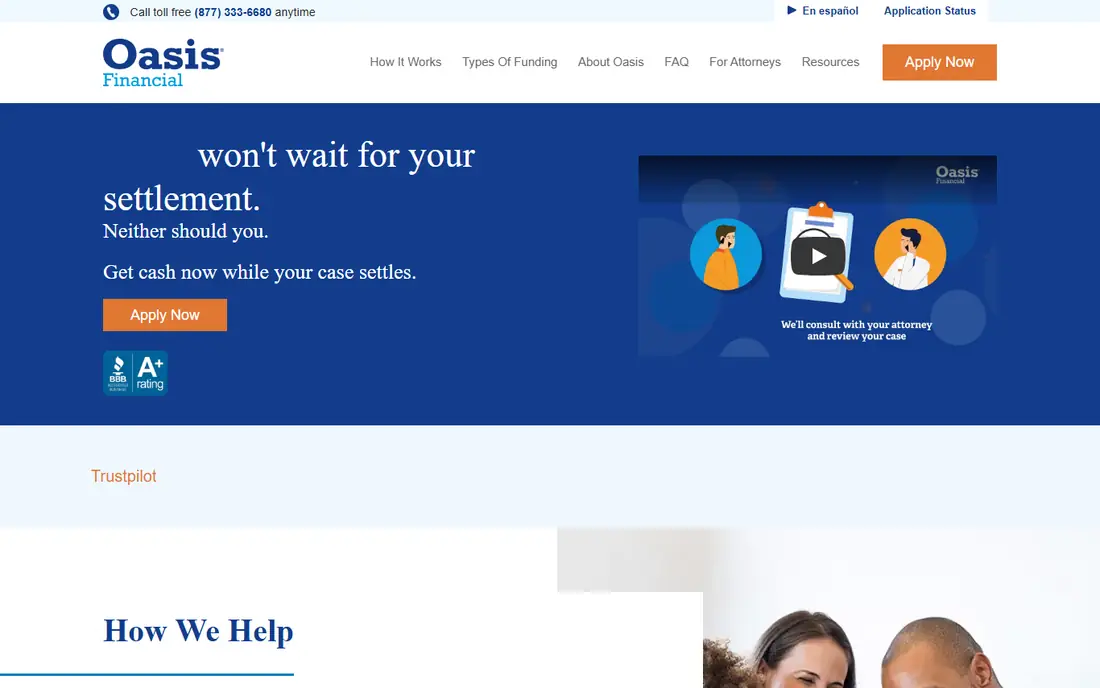
What we like- Oasis is one of the oldest and largest funders, operating since 2003 and reporting more than a billion dollars advanced to hundreds of thousands of plaintiffs. Advances run from 500 to 100,000 dollars, decisions often land within about 24 hours of your attorney supplying documents, and funding carries no application fee and no credit check. The company caps funding at roughly 10 percent of its estimate of case value, a limit that protects part of your settlement from being consumed.
Watch out for- Oasis does not publish rates, so your price appears only inside the contract after approval, and charges accrue for as long as the case runs. It does not fund in several states, including Arkansas, Kansas, Kentucky, Maryland, Montana, North Carolina, and West Virginia, and workers compensation funding covers only a few states. Personal injury is the core business, so commercial plaintiffs get less from it.
Starting priceSee website
Free planNo
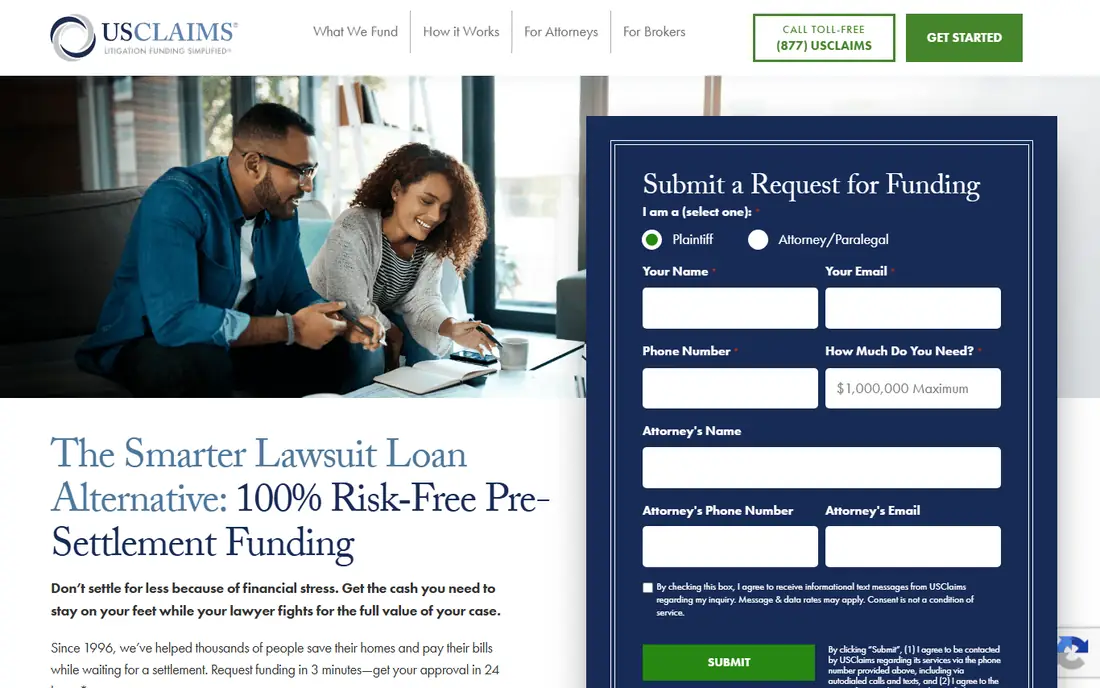
What we like- US Claims has funded plaintiffs since the 1990s and covers personal injury plus a wider set of civil claims than many rivals, including some employment and civil rights matters. It works directly with your attorney, charges no up front fees, and its long trading history matters in an industry full of short lived brands. Funding is non-recourse, so a lost case means you owe nothing.
Watch out for- Rates and fees are quoted per case rather than published, and longer cases mean larger payoffs under any funder's formula. Approval depends on your attorney cooperating with document requests, which can slow things down. Like every funder here, it advances only a fraction of expected value, so it cannot replace a full settlement.
Starting priceSee website
Free planNo
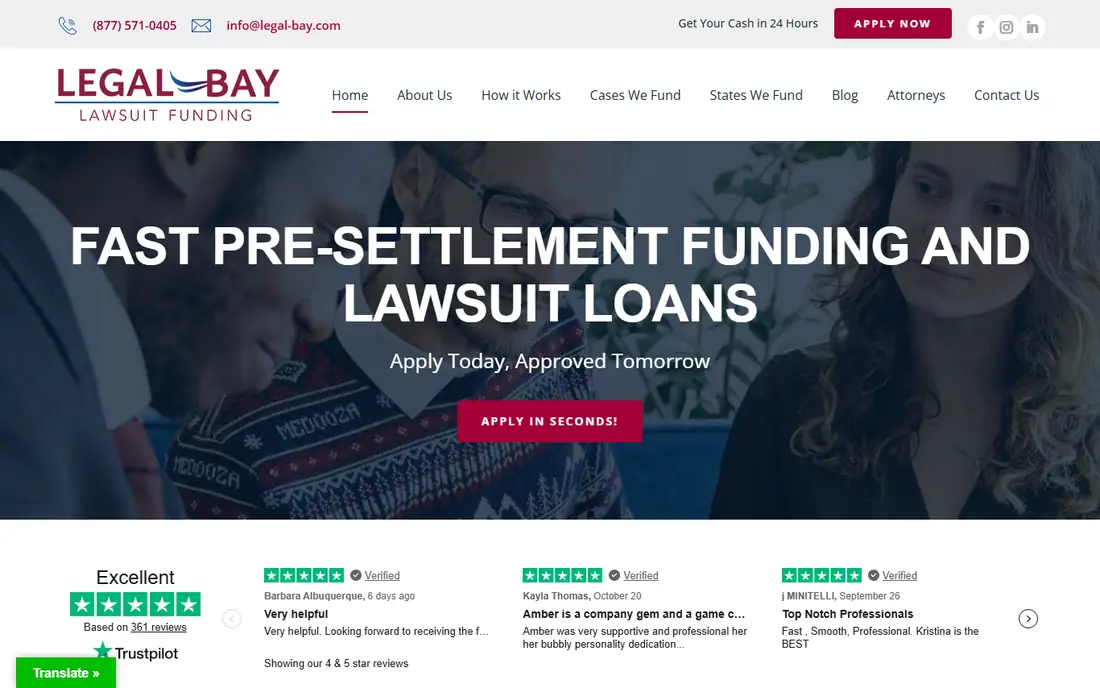
What we like- Legal Bay reviews a broad range of cases, including personal injury, employment, and some commercial and mass tort matters that injury only funders decline. It promotes a simple application, no credit checks, and decisions aimed at days rather than weeks. Plaintiffs whose case does not fit the standard car accident pattern often start here because other funders will not even review the file.
Watch out for- Broad coverage does not mean low cost, and pricing is still contract specific with nothing published to compare before you apply. Mass tort and complex case funding can carry especially heavy charges because timelines run long. You need an attorney on contingency for most case types, so unrepresented plaintiffs are screened out early.
Starting priceSee website
Free planNo
What we like- High Rise Financial markets larger advances than most funders on this list and a fast review process built around attorney cooperation. It covers personal injury and related claims nationally, with funding aimed at plaintiffs facing surgery, lost income, or long treatment. The company states there are no up front costs and no monthly payments, with repayment taken from settlement proceeds only.
Watch out for- Larger advances mean larger payoffs when charges accrue over a long case, so the ceiling is a risk as much as a benefit. Pricing is not published and is set case by case. Newer than Oasis or US Claims, it has a shorter public track record to judge.
Starting priceSee website
Free planNo
What we like- Ally explains its process plainly: apply, your attorney sends case documents, the company underwrites the claim rather than your credit, and funding follows approval. It covers common personal injury categories and emphasises no hidden application charges and no obligation to accept an offer. For plaintiffs comparing funders for the first time, the step by step framing makes the paperwork easier to follow.
Watch out for- Ally is a smaller operation than the national leaders, so advance sizes and state coverage are narrower. As everywhere in this market, rates appear in the contract rather than on the website. Its brand name is similar to a major online bank, so confirm you are dealing with the funding company and not confusing the two.
Starting priceSee website
Free planNo
What we like- Tribeca focuses on plaintiffs in New York and nearby states and covers personal injury plus some commercial litigation. Regional focus can help where state rules shape funding contracts, since New York has its own disclosure requirements for consumer litigation funding. The firm works with plaintiffs' attorneys directly and reviews cases without credit checks.
Watch out for- The regional focus limits who can use it, and plaintiffs in most states will be declined on geography alone. Pricing is case specific and unpublished, as with every funder here. Its commercial litigation side serves a different need from household plaintiffs, so consumer applicants should confirm their case type fits before spending time on forms.
Starting priceSee website
Free planNo
What we like- Nova Legal Funding is a California based funder focused on personal injury plaintiffs, and it publishes more plain language explanation of costs and timelines than many rivals. It reviews cases with your attorney, charges no up front fees, and positions its offers around keeping total repayment proportionate to the advance. California plaintiffs get a funder that works in their state's rules every day.
Watch out for- The California focus narrows its reach, though it does review some out of state cases. Funding sizes skew toward typical injury claims rather than very large advances. Charges still compound with time, so a proportionate offer at month three can grow heavy by year two.
Starting priceSee website
Free planNo
What we like- Mustang Litigation Funding covers pre settlement advances and also funds surgical procedures for injured plaintiffs whose treatment is tied to the claim, a niche most funders leave alone. It works with attorneys nationwide on personal injury matters and keeps its process simple for smaller advances used to cover rent, bills, and treatment gaps. Non-recourse terms apply, so a lost case leaves you owing nothing.
Watch out for- Surgery funding raises the stakes, since treatment decisions should be medical, not financial, and the payoff grows with the funded amount. Pricing is contract specific and unpublished. As a smaller funder, case type and state coverage are narrower than the biggest names here.
How we chose
We compared funders on trading history, case types covered, advance ranges, state availability, fee behaviour described in contracts and regulator guidance, and honesty about cost. We favoured established companies that charge no up front fees and that cap advances relative to case value. We excluded brokers and lead generators that sell your details to funders rather than funding cases themselves, and we excluded crowdfunding platforms, since donations are a different product. Because no reputable funder publishes a rate card, every starting price here reads see website, and the real comparison is the payoff table inside your contract.
How to choose the right lawsuit funding company
Treat funding as the last door, not the first. Before you apply anywhere, ask your attorney about cheaper routes: a payment plan with medical providers, a lien arrangement, a credit union loan, hardship help from your union or community, or simply whether the case is close enough to settlement to bridge the gap another way. If you still need funding, borrow the smallest amount that covers the emergency, because every dollar advanced grows under the contract's charges.
Then compare contracts, not websites. Ask each funder, in writing, whether charges are simple or compounding and how often they accrue, what the total payoff would be at 6, 12, and 24 months, what fees exist beyond the rate, and whether the contract is truly non-recourse if the case is lost or settles low. Have your own attorney, the one handling your case, read the full agreement before you sign, and check your state's rules, since some states cap charges or require specific disclosures for consumer litigation funding. Never pay an up front fee to apply or to release funds; reputable funders here charge nothing up front, and an advance fee demand is a scam pattern. This article is general information only, not legal or financial advice for your case.
Frequently asked questions
Is lawsuit funding a loan?
Legally, usually not. Most pre settlement funding is structured as a non-recourse purchase of a slice of your future settlement, which is why there are no monthly payments and nothing to repay if you lose. That structure also means lending rules such as interest rate caps often do not apply, which is one reason the charges can be far higher than a bank loan. Some states now regulate consumer litigation funding directly, so check your state's position.
How much does lawsuit funding really cost?
Most providers use a monthly charge of roughly 2 to 4 percent, simple or compounding, plus fees, and the total depends heavily on how long your case runs. A case settled in six months might cost a manageable share of the advance; the same advance on a three year case can cost more than the amount you received. Always ask for the payoff figure at several future dates before you sign.
How much can I get, and how fast?
Funders advance a fraction of expected case value, often around 10 percent at Oasis, with typical advances from 500 dollars into six figures for strong cases. Decisions often come within a day or two once your attorney supplies documents, and money can follow within days. You must have an attorney, usually on contingency, and approval rests on the case, not your credit score.
What happens if I lose my case or it settles for less?
Under a genuine non-recourse contract, you owe nothing if you lose, and repayment is limited to the settlement proceeds if the case settles. Read the contract for the exact wording, including what happens if the settlement is smaller than the payoff, and walk away from any agreement that reaches your wages, home, or other assets.
Can a funding company charge me up front fees?
Reputable funders do not charge application or release fees; their money comes from the settlement at the end. Anyone demanding payment up front, by wire or gift card, before funding you is showing the classic pattern of an advance fee scam. Apply only through the funder's own website and confirm details with your attorney's office independently.
Sources we checked (0)
Is your product missing or out of date?
We review this list regularly. Vendors can request a listing, send updated pricing or ask about featured placement.

Shihab Mia · Founder, Rankite
Shihab has 5+ years in B2B and SaaS SEO. He writes Rankite's software buying guides from pricing pages, documentation and public user reviews. More about Shihab.
 Oasis Financial
 US Claims
 Legal Bay
 High Rise Financial
 Ally Lawsuit Loans
 Tribeca Lawsuit Loans
 Nova Legal Funding
 Mustang Litigation Funding