How we make this list: we compare pricing pages, product documentation and public user reviews. Ratings come from G2, Capterra or Trustpilot, with the date we checked them.
Key takeaways
- StumbleUpon shut down on 30 June 2018 after 16 years, and its co-founder directed users to Mix as the official successor.
- Mix is the closest replacement, built by the same team, with interest-based collections and curated recommendations.
- Reddit and Pinterest offer the largest discovery communities, though both are more social and less random than StumbleUpon was.
- Flipboard turns discovery into a magazine experience, with personalized magazines built from chosen topics.
- Pocket, Digg, Pearltrees, and Discuvver each cover a different corner: saving, curated news, visual collections, and pure randomness.
Quick comparison
| Tool | Best for | Starting price | Free plan |
|---|
 Mix | Official StumbleUpon successor | Free | Yes |
 Reddit | Community-driven discovery | Free | Yes |
 Pinterest | Visual discovery and boards | Free | Yes |
 Flipboard | Magazine-style news curation | Free | Yes |
 Pocket | Saving articles for later | Free | Yes |
 Digg | Curated news and long reads | Free | Yes |
 Pearltrees | Visual link collections | Free | Yes |
 Discuvver | Pure random useful websites | Free | Yes |
Is your product missing or out of date?
We review this list regularly. Vendors can request a listing, send updated pricing or ask about featured placement.
The best StumbleUpon alternatives
Starting priceFree
Free planYes
Mix is the true successor to StumbleUpon. Co-founder Garrett Camp directed users to Mix when StumbleUpon closed, and Mix even lets users import their StumbleUpon favorites, interests, and tags. Sign in with a Google account and you get curated links matched to your interests, recommended by friends and community experts, organized into collections you can save and share.
The difference is temperament. Mix is an organized version of StumbleUpon: curated and collection-based rather than driven by a single random button. Users who miss the pure serendipity of the Stumble button will find Mix tamer, though its interest customization is deeper, drilling from broad topics such as Food down to Cheese or Healthy Eating. For a former StumbleUpon user, Mix is the first place to start. Collections also make Mix useful for research: save links by topic over weeks, then return to a focused set when a project needs sources.
What we like- Built by the StumbleUpon team
- Import of StumbleUpon favorites, interests, and tags
- Interest-based collections
Watch out for- Feels more organized and less random than StumbleUpon
- Mobile apps have been inconsistent
Starting priceFree
Free planYes
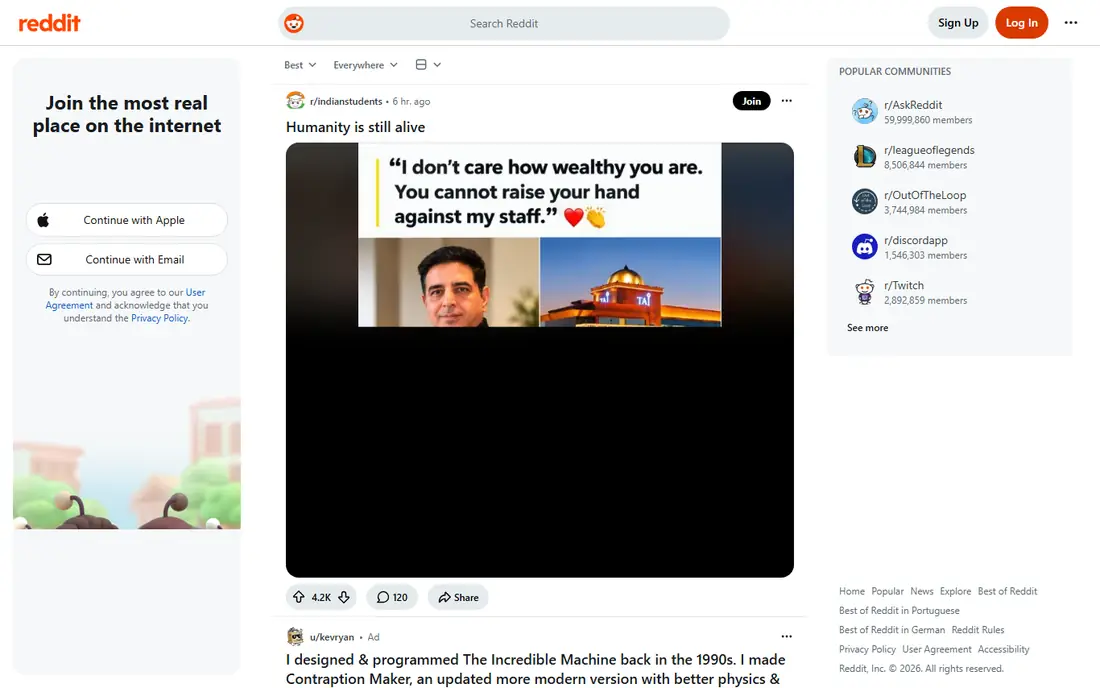
Reddit is the largest community discovery platform on the web. Thousands of subreddits cover every interest, from science and technology to niche hobbies, and voting pushes the best links to the top. Every link carries discussion, so discovery comes with context, debate, and recommendations for further reading.
The trade is noise and control. Quality varies by community, popular posts favor what is already trending, and moderation decisions shape visibility. Reddit is less about random wandering and more about community curation. For a user who wants endless interesting links with conversation attached, no alternative matches its scale. New users should start with a handful of well-moderated communities in their interests rather than the front page, which mixes everything at once.
What we like- Massive communities for every interest
- Voting surfaces the best content
- Discussion attached to every link
Watch out for- Quality varies wildly by community
- Algorithm and moderation shape what you see
#3Pinterest
Best for: Visual discovery and boards4.6/5 on
G2 (250 reviews, checked Oct 2026)
Visit pinterest.com
Starting priceFree
Free planYes
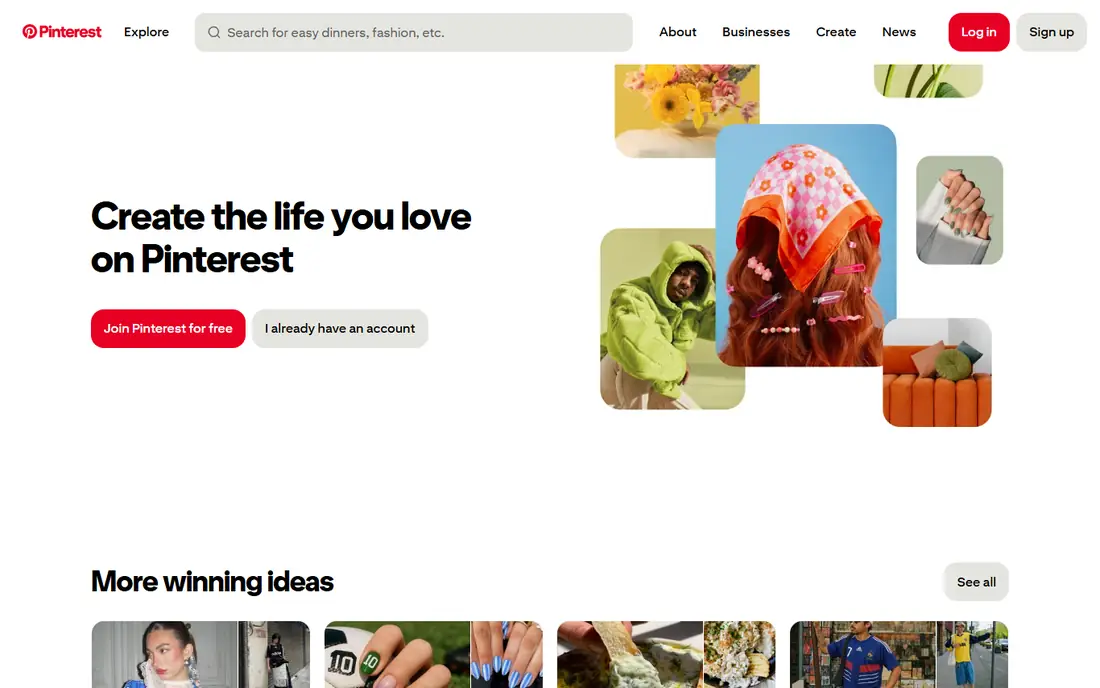
Pinterest is the visual cousin of StumbleUpon. Its feed recommends images, videos, and infographics matched to your interests, and boards let you organize finds into collections for projects, recipes, travel, or design ideas. Search tools are more advanced than StumbleUpon's were, and following boards from other users extends discovery further.
The constraint is format: every pin needs a photo, video, or animation, so text-heavy articles without strong visuals fare poorly. Pinterest suits visual thinkers planning projects or gathering inspiration. For article discovery, Mix or Reddit serves better, but for visual browsing, Pinterest is unmatched.
What we like- Strong visual search and recommendations
- Boards organize finds by project or interest
- Huge image and video catalog
Watch out for- Every bookmark needs an image or video
- Less suited to text-heavy articles
Starting priceFree
Free planYes
Flipboard turns discovery into a magazine. Users pick topics of interest, and Flipboard aggregates articles, images, and videos into a swipeable magazine layout that feels closer to reading a publication than scrolling a feed. Users can create their own magazines, follow other people's magazines, and share articles easily.
The focus is news and publishing rather than random web wandering, so the serendipity is narrower than StumbleUpon's. Mainstream publishers also dominate recommendations. For a reader who wants a polished daily magazine of topics they care about, Flipboard is the most pleasant discovery experience on this list.
What we like- Beautiful magazine layout
- Personalized magazines from chosen topics
- Social sharing and following built in
Watch out for- News-focused, so niche web wandering is thinner
- Recommendations lean toward mainstream publishers
Starting priceFree
Free planYes
Pocket, now part of Mozilla, solves the other half of discovery: keeping what you find. A browser button or app saves articles, videos, and pages into a personal library with tags and a clean reading view. That makes it the companion to a discovery tool rather than a replacement: find on Mix or Reddit, save to Pocket, read later without ads and clutter.
Pocket's own recommendations exist but are thinner than dedicated discovery feeds. Its premium tier adds permanent library features and advanced search, but the free tier covers the core save-and-read workflow. For a reader drowning in tabs, Pocket is the essential second tool.
What we like- Save articles from anywhere for later reading
- Tagging and organization
- Clean reading view without clutter
Watch out for- Discovery is secondary to saving
- Recommendations are thinner than Mix or Flipboard
Starting priceFree
Free planYes
Digg shares StumbleUpon's era but not its mechanism. The modern Digg is a curated front page: editors highlight stories, long reads, originals, and videos across sections from science to culture. Community votes still exist as diggs, but editorial curation drives what is featured.
That makes Digg calmer and more reliable than the old vote-driven chaos, but also less surprising. Users who want a daily digest of interesting stories will like it; users chasing pure randomness will not. For a quick daily browse of well-chosen stories, Digg remains a solid habit.
What we like- Human-curated front page with long reads and originals
- Video section
- Sections across science, tech, and culture
Watch out for- Far less random than old Digg or StumbleUpon
- Curation favors editorial picks over community votes
Starting priceFree
Free planYes
Pearltrees organizes the web into visual trees. Users collect links, videos, images, documents, and notes into branching collections called pearls, and can attach other people's finds to their own trees. That structure suits research, education, and long-term projects where a flat bookmark list loses context.
The interface takes some learning, and the community is smaller than Reddit's or Pinterest's, so discovery through other users is thinner. For a student, teacher, or researcher building a visual knowledge base, Pearltrees offers organization that no other tool here matches.
What we like- Visual tree of links, images, videos, and documents
- Easy to collect others' finds
- Good for research and education
Watch out for- Interface takes learning
- Smaller community than Reddit or Pinterest
Starting priceFree
Free planYes
Discuvver is the purest StumbleUpon heir in spirit. No account is needed: click the button and it sends you to a random useful website, from a tool that finds songs in movies to a live flight tracker or an HTML email signature generator. It is about websites rather than articles, so some exploring is needed after landing.
There is no personalization, no saving, and quality varies by luck. That is also the point: Discuvver restores the randomness that Mix organized away. For a user who misses the Stumble button itself, Discuvver is the closest thing still running.
What we like- No account needed
- One button sends you to a random useful website
- Closest to StumbleUpon's randomness
Watch out for- Sends you to websites, not specific articles
- Quality varies
- No personalization or saving
How we chose
We compared each tool against what StumbleUpon actually offered: interest-based discovery, serendipity, saving, and sharing. All eight tools are free to use, so pricing is not a differentiator; the real choice is mechanism, from curated collections to community votes to pure randomness. We favored actively maintained tools that serve US users, and we flagged where a tool is a saver, a magazine, or a community rather than a like-for-like random discovery engine.
What to check before you pick
Decide which feeling you miss. If it is organized discovery matched to interests, start with Mix. If it is community discussion, start with Reddit. If it is visual inspiration, start with Pinterest. If it is a polished daily read, start with Flipboard. If it is pure randomness, start with Discuvver. Most former StumbleUpon users end up with two tools: one for discovery and Pocket for saving. Try that pairing for a week before judging, since recommendation quality improves as each tool learns your interests.
Also consider how much time you want discovery to take. A feed that never ends can eat an afternoon, so set a simple rule for yourself: browse for twenty minutes, save what is worth a second look to Pocket, and move on. The best discovery habit is a short daily browse plus a weekly review of saved items, which turns random finds into actual reading instead of another pile of open tabs. If a tool's recommendations feel stale after a week, refresh your interests or follow different people, since stale feeds usually reflect narrow inputs rather than a weak algorithm. Over time, a small set of trusted sources beats a large feed of everything. That is why many long-time discovery fans keep two or three tools rather than one: Mix for interests, Reddit for discussion, and Pocket for saving. The combination covers curation, conversation, and reading in a way no single feed manages on its own, and it keeps discovery enjoyable rather than overwhelming for daily use over time online every single day.
Frequently asked questions
Is StumbleUpon still running?
No. StumbleUpon ceased operations on 30 June 2018 after 16 years. Its co-founder directed users to Mix, built by the same team.
Which alternative is closest to StumbleUpon?
Mix is the official successor with the same team and importable interests. Discuvver is closest in randomness, though it sends you to websites rather than articles.
Are these alternatives really free?
Yes. All eight tools offer free tiers that cover core discovery and saving. Some offer premium tiers for extra features, but none requires payment for basic use.
Can I import my old StumbleUpon favorites?
Mix offered import of StumbleUpon favorites, interests, and tags at launch. That migration window has long passed, so old StumbleUpon data is no longer recoverable through Mix.
What is the best StumbleUpon alternative for articles?
Mix and Flipboard suit article discovery best, with Reddit close behind for discussion-rich links. Pair any of them with Pocket to save articles for later reading.
Why did StumbleUpon shut down?
StumbleUpon's team shifted focus to Mix, a curated content platform, as social feeds and algorithmic recommendations changed how people discover content. The Stumble button era gave way to interest-based collections.
Sources we checked (8)
- https://mix.com/
- https://www.reddit.com/
- https://www.pinterest.com/
- https://flipboard.com/
- https://getpocket.com/
- https://digg.com/
- https://www.pearltrees.com/
- https://www.discuvver.com/
Is your product missing or out of date?
We review this list regularly. Vendors can request a listing, send updated pricing or ask about featured placement.

Shihab Mia · Founder, Rankite
Shihab has 5+ years in B2B and SaaS SEO. He writes Rankite's software buying guides from pricing pages, documentation and public user reviews. More about Shihab.