How we make this list: we compare pricing pages, product documentation and public user reviews. Ratings come from G2, Capterra or Trustpilot, with the date we checked them.
Key takeaways
- Bolt and v0 are the closest Lovable shape: describe the app, get a working full stack result in the browser, with free tiers and 20 dollar Pro plans.
- Base44 is the all in one answer, hosting, database, and auth bundled, for non technical founders who never want to see a deployment setting.
- Replit and Bubble serve the two directions builders grow: toward real code on Replit, toward visual control without AI dependence on Bubble.
- Every tool here burns credits on generation; budget for iteration, and confirm code export before building anything you cannot afford to rebuild.
Quick comparison
| Tool | Best for | Starting price | Free plan |
|---|
 Bolt | Browser based full stack building | Free | Yes |
 v0 | Interface quality from Vercel | Free | Yes |
 Base44 | All in one, no infrastructure choices | Free | Yes |
 Replit | Growing from prompts into real code | Free | Yes |
 Cursor | AI coding in a real editor | Free | Yes |
 Softr | Apps on your existing data | Free | Yes |
 Glide | Mobile style business apps fast | Free | Yes |
 Bubble | Visual no code with deep logic | Free | Yes |
Is your product missing or out of date?
We review this list regularly. Vendors can request a listing, send updated pricing or ask about featured placement.
The best Lovable alternatives
#1Bolt
Best for: Browser based full stack building4.3/5 on
G2 (94 reviews, checked Oct 2026)
Visit bolt.new
Starting priceFree
Free planYes
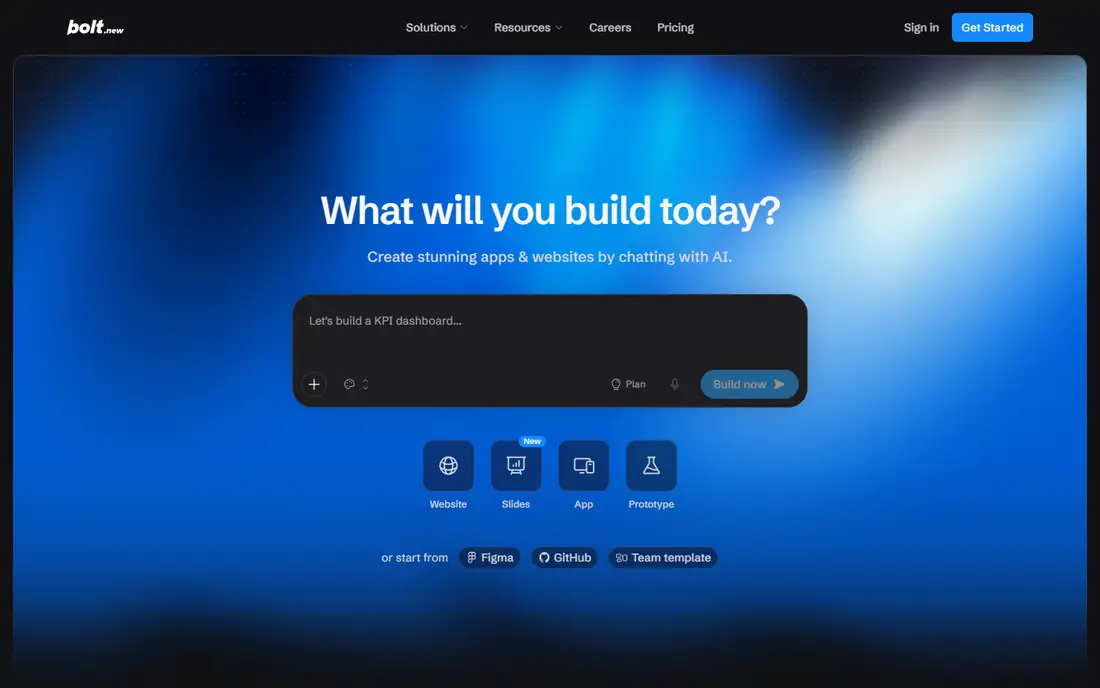
What we like- Bolt, from StackBlitz, generates and runs full stack apps entirely in the browser: describe the app, watch it build front end, back end, and database, then edit, preview, and deploy without a local setup. Its free tier includes a daily and monthly token allowance, and Pro at 20 dollars a month raises limits for serious building. Because the whole environment lives in the tab, Bolt is the fastest tool here from idea to a link you can send someone.
Watch out for- Token economics govern everything: complex apps and long debugging loops consume the allowance in ways new users underestimate, and costs scale with ambition. Apps needing unusual back end control push against the browser model's edges. As with all AI builders, the code it writes at speed needs review before it holds real user data.
#2v0
Best for: Interface quality from Vercel4.5/5 on
G2 (28 reviews, checked Oct 2026)
Visit v0.dev
Starting priceFree
Free planYes
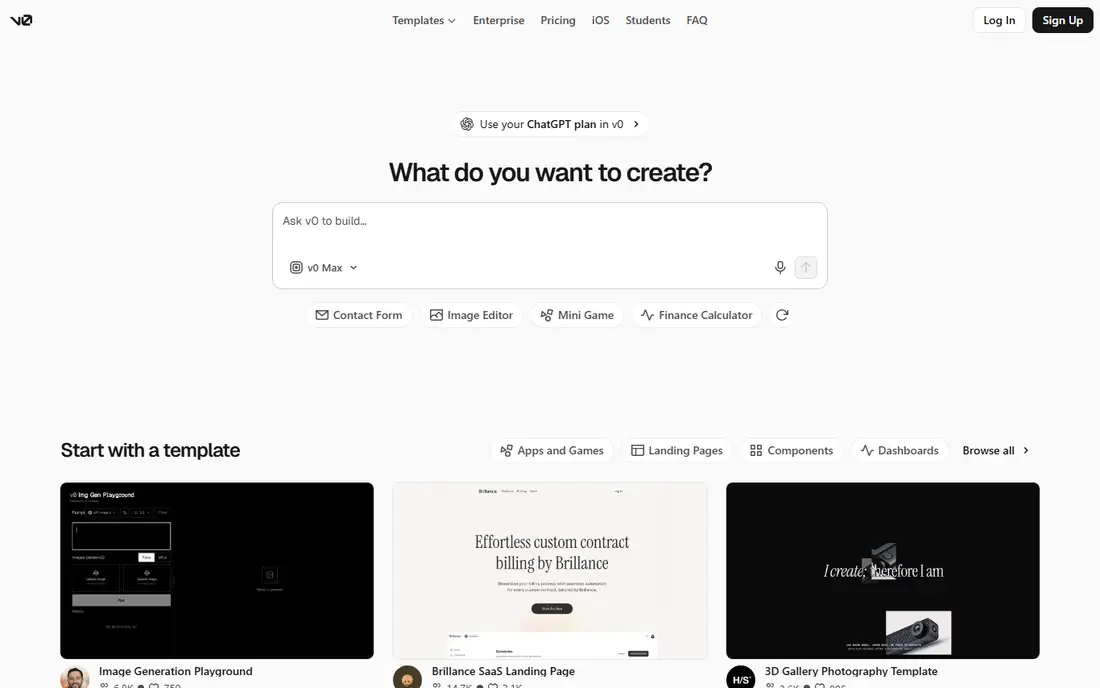
What we like- V0 is Vercel's builder, and its interfaces are the category's design benchmark: prompts produce polished React and Tailwind front ends that look designed rather than generated, and it has grown full stack features, databases, and deployment on Vercel's infrastructure. A free tier covers exploration, with Premium at 20 dollars a month for individuals. Designers and front end developers use it even when the rest of the stack lives elsewhere, because the components export into real projects.
Watch out for- V0's centre of gravity remains the interface
- Back end heavy products need more assembly than Lovable's integrated database story. Credit tiers and model choices have been restructured and need a current read before budgeting. Teams outside the React and Vercel world gain less from its polish.
#3Base44
Best for: All in one, no infrastructure choices3.8/5 on
G2 (4 reviews, checked Oct 2026)
Visit base44.com
Starting priceFree
Free planYes
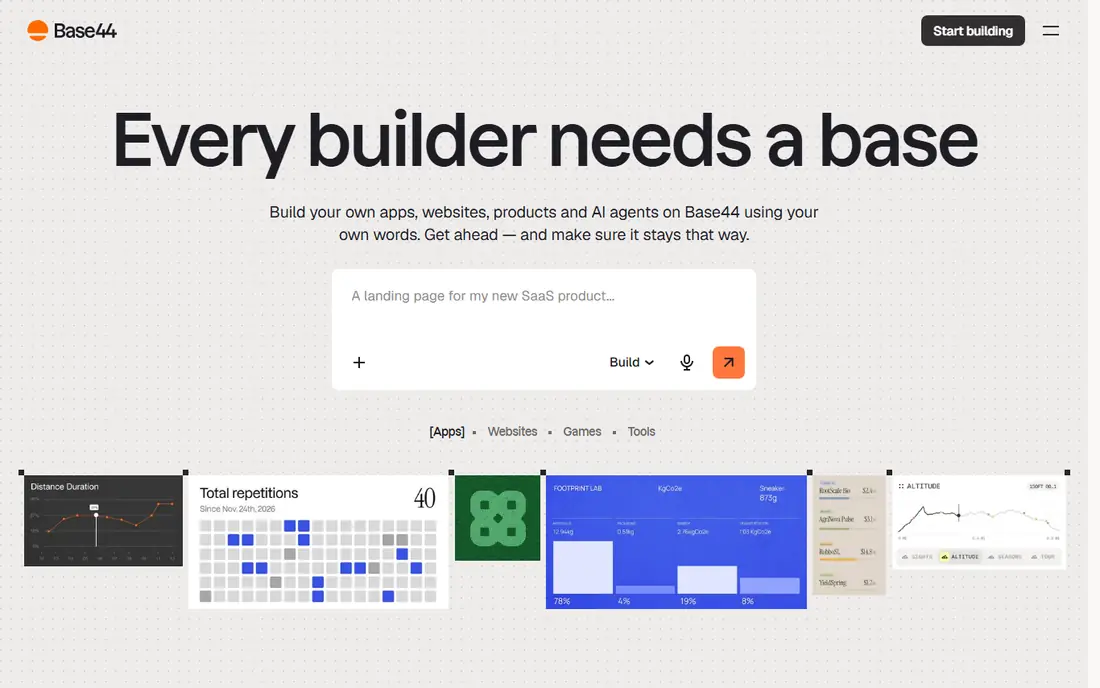
What we like- Base44, acquired by Wix in 2025 in a deal widely reported at about 80 million dollars, removes every infrastructure decision: describe the app and hosting, database, authentication, and analytics arrive bundled inside one subscription, with a free tier and paid plans from about 16 dollars a month billed annually. Non technical founders pick it precisely because there is nothing to configure and nothing to break between services. It is the closest experience here to Lovable's promise with even fewer knobs.
Watch out for- The bundle is the boundary: your app lives in Base44's world, and code export and migration options are limited compared with the code generating rivals, so the platform decision is close to permanent. Credit based generation applies here too. Young platform, new owner: the Wix backing reassures and the roadmap questions remain, both fairly.
#4Replit
Best for: Growing from prompts into real code4.4/5 on
G2 (417 reviews, checked Oct 2026)
Visit replit.com
Starting priceFree
Free planYes
What we like- Replit pairs an AI agent that builds from prompts with a complete development environment: when the agent's output needs real debugging, the code, console, database, and deployment are all there to work in, which makes Replit the natural graduation from pure prompt builders. Its free tier starts projects, and Core membership, about 20 dollars a month billed annually, raises agent and compute limits. Students, hackers, and increasingly startups run real products on it.
Watch out for- The environment's power is also its learning curve for the non technical users Lovable courts
- Files and terminals eventually appear. Agent usage is metered, and heavy building passes the membership's included credits into usage billing. Interface polish of generated apps depends on the agent's choices more than v0's design led defaults.
#5Cursor
Best for: AI coding in a real editor4.6/5 on
G2 (326 reviews, checked Oct 2026)
Visit cursor.com
Starting priceFree
Free planYes
What we like- Cursor is the professional end of this list: an AI first code editor, forked from VS Code, where the agent writes and edits a codebase you own outright, with a free tier and Pro at 20 dollars a month. It is not a prompt to app toy
- It is how working developers now build, and a Lovable user who has caught the building bug and wants real skills and full control graduates here. Everything it makes is ordinary code in your repository, so lock in does not exist.
Watch out for- Cursor assumes you can read code, or are willing to learn while the agent writes it
- The hand holding of the app builders is gone. You supply the rest of the stack, hosting, database, auth services, and the judgement to wire them. For a non technical founder validating an idea this weekend, it is the wrong tool, however right it is for the developer they may hire.
Starting priceFree
Free planYes
What we like- Softr builds web apps, portals, directories, and internal tools on top of data you already hold in Airtable, Google Sheets, and other sources, with templates and blocks rather than prompts, plus AI features layered in. It suits the business whose app is really a window on existing data: a client portal, a member directory, a marketplace front end. A free plan covers small projects and paid plans from about 49 dollars a month scale users and features.
Watch out for- Softr is a block and template builder, not an AI generator, so the Lovable magic of describing an arbitrary app is not its model
- Unusual designs fight the blocks. Apps live on Softr's platform without code export. Data source limits and user counts drive the pricing tiers, which growing portals must watch.
#7Glide
Best for: Mobile style business apps fast4.7/5 on
G2 (796 reviews, checked Oct 2026)
Visit glideapps.com
Starting priceFree
Free planYes
What we like- Glide turns spreadsheets and data sources into polished mobile style apps: field service tools, inventory trackers, directories, and internal business apps that install from a link and feel native. Its template and component system makes non designers produce apps that look commissioned, and a free plan starts small projects, with paid plans from about 49 dollars a month. Businesses digitizing a paper process reach for Glide before any code shaped tool.
Watch out for- Glide apps are data driven business tools, not arbitrary consumer products
- Games, complex consumer logic, and heavy custom design are outside its shape. There is no code export. Pricing by users and rows means a successful internal rollout must be modelled before it scales across a company.
#8Bubble
Best for: Visual no code with deep logic4.4/5 on
G2 (166 reviews, checked Oct 2026)
Visit bubble.io
Starting priceFree
Free planYes
What we like- Bubble is the veteran visual platform: a full programming environment without syntax, database, workflows, API connections, and a plugin ecosystem, on which real startups have run for a decade, with AI generation now assisting the build. It answers the Lovable user's deepest fear, hitting a ceiling, because Bubble's ceiling is famously high for a no code tool. A free plan supports learning, with paid plans from about 29 dollars a month based on workload units.
Watch out for- The power costs learning time measured in weeks, not an afternoon
- Bubble is a skill. Apps run on Bubble's platform without code export, and its workload pricing requires understanding your app's consumption. The AI features assist a builder rather than replace one, so it does not deliver Lovable's describe and receive experience.
How we chose
We compared app building platforms on generation quality, infrastructure completeness, code ownership and export, pricing model, and the skill each assumes. We deliberately mixed the three philosophies, AI code generation, all in one AI platforms, and visual no code, because the Lovable alternative a given reader wants depends on which of Lovable's properties, speed, simplicity, or the app itself, they are keeping. Export rights are called out per entry because they decide the cost of changing your mind.
How to choose the right Lovable alternative
Build the same small app everywhere. Take one real idea with a login, a database table, and one key workflow, and build it in your two finalists over a weekend. You will learn more from the second hour, when the AI misunderstands you and the debugging begins, than from any landing page. Note how each platform handles that moment: Bolt and Replit put code in front of you, Base44 hides it, Bubble makes you the programmer, and your comfort in that hour is the actual product you are choosing.
Then decide the ownership question before the app matters. If this product could become a business, exportable code, Bolt, v0, Replit, Cursor, or a platform with a credible migration story protects you; a rented app is fine for internal tools and experiments. Price the credits honestly by finishing the test app and reading what it consumed, because generation pricing makes prototypes cheap and iteration, where products are actually made, the real cost. Finally, whoever builds it, run a security pass before real users: check how authentication is stored, whether API keys sit in client code, and what the app does with user data. AI builders write plausible code quickly, and plausible is not the same as safe.
Frequently asked questions
Which alternative is most like Lovable?
Bolt for the browser based, describe and build full stack experience, and Base44 for the all in one, no decisions version of the same promise. v0 matches on generation quality with a design led tilt. All three share the credit metered model, so the resemblance includes the pricing shape; compare allowances at your expected building volume.
Can I export my app and host it myself?
From the code generating tools, yes: Bolt, v0, Replit, and Cursor produce real code you can take to your own infrastructure. Base44, Softr, Glide, and Bubble run your app on their platforms without full code export, which is the trade for their simplicity. Read the export terms before building anything strategic; this single clause decides your future switching costs.
Are AI built apps safe to put real users on?
They can be, after review. The recurring issues are exposed API keys, weak access rules on database rows, and unvalidated inputs, all checkable by a competent reviewer in hours. Treat the AI output as a fast first draft by a tireless junior developer: impressive, productive, and not to be shipped unreviewed where money, personal data, or safety are involved.
How do credits and tokens actually affect cost?
Every generation, edit, and fix consumes them, and debugging loops consume the most. A simple app may fit inside free tiers; a serious product will live on a paid plan and may pass into usage charges on heavy weeks. Platforms display consumption differently, tokens, credits, messages, which makes cross comparison hard by design; the weekend test build, measured on your own usage, is the reliable comparison.
Should a non technical founder learn one of these or hire a developer?
Learn enough to prototype: the AI builders here let a founder validate an idea for the price of a subscription, which changes every later conversation with investors and developers. Hire or contract review before launch, and development help when the product earns it. The founders who struggle are those who mistake a generated prototype for a finished product, or a finished product for a business.
Sources we checked (0)
Is your product missing or out of date?
We review this list regularly. Vendors can request a listing, send updated pricing or ask about featured placement.

Shihab Mia · Founder, Rankite
Shihab has 5+ years in B2B and SaaS SEO. He writes Rankite's software buying guides from pricing pages, documentation and public user reviews. More about Shihab.