How we make this list: we compare pricing pages, product documentation and public user reviews. Ratings come from G2, Capterra or Trustpilot, with the date we checked them.

Key takeaways
- Syndigo and Akeneo are the strongest all-round replacements, with deep product data and syndication.
- Plytix and Catsy suit small and mid-size brands that want affordable, easy product data management.
- inriver and Sales Layer lead for complex catalogs with many channels and variants.
- Pimcore offers open source flexibility for technical teams that want control.
- Jasper covers AI-assisted product content creation alongside traditional product data tools.
Quick comparison
| Tool | Best for | Starting price | Free plan |
|---|
 Syndigo | product data management plus retail syndication | See website | Free trial |
 Akeneo | product data management with strong enrichment | See website | Free trial |
 Plytix | affordable product data management for brands | See website | Yes |
 inriver | complex catalogs across many channels | See website | Free trial |
 Catsy | simple catalog management for growing brands | See website | Free trial |
 Sales Layer | flexible catalogs with many output channels | See website | Free trial |
 Pimcore | open source data management for technical teams | See website | Yes |
 Jasper | AI-assisted product descriptions and content | See website | Free trial |
Is your product missing or out of date?
We review this list regularly. Vendors can request a listing, send updated pricing or ask about featured placement.
The best salsify alternatives
#1Syndigo
Best for: product data management plus retail syndication4.3/5 on
G2 (218 reviews, checked Oct 2026)
Visit syndigo.com
Starting priceSee website
Free planFree trial
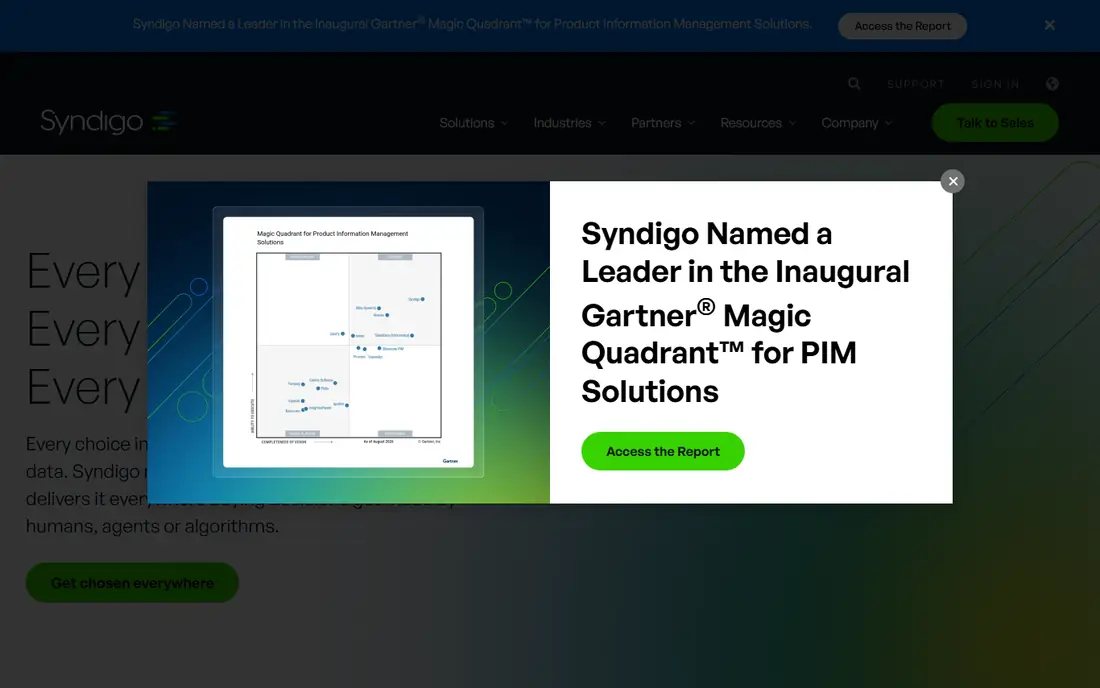
Syndigo combines product information management with a large syndication network, sending product data to retailers, marketplaces, and distributors from one source. That combination suits brands that sell through many retailers, since one update flows everywhere instead of needing manual uploads per channel. Data quality tools flag missing attributes and images before syndication.
Pricing is enterprise-level, and setup needs planning for large catalogs. For a brand whose main Salsify need is syndication to retailers, Syndigo is the most complete pick here. Its retailer network is the feature that saves the most manual work.
What we like- Strong syndication network
- Good data quality tools
- Broad retailer coverage
Watch out for- Enterprise pricing
- Setup needs planning
#2Akeneo
Best for: product data management with strong enrichment4.4/5 on
G2 (248 reviews, checked Oct 2026)
Visit akeneo.com
Starting priceSee website
Free planFree trial
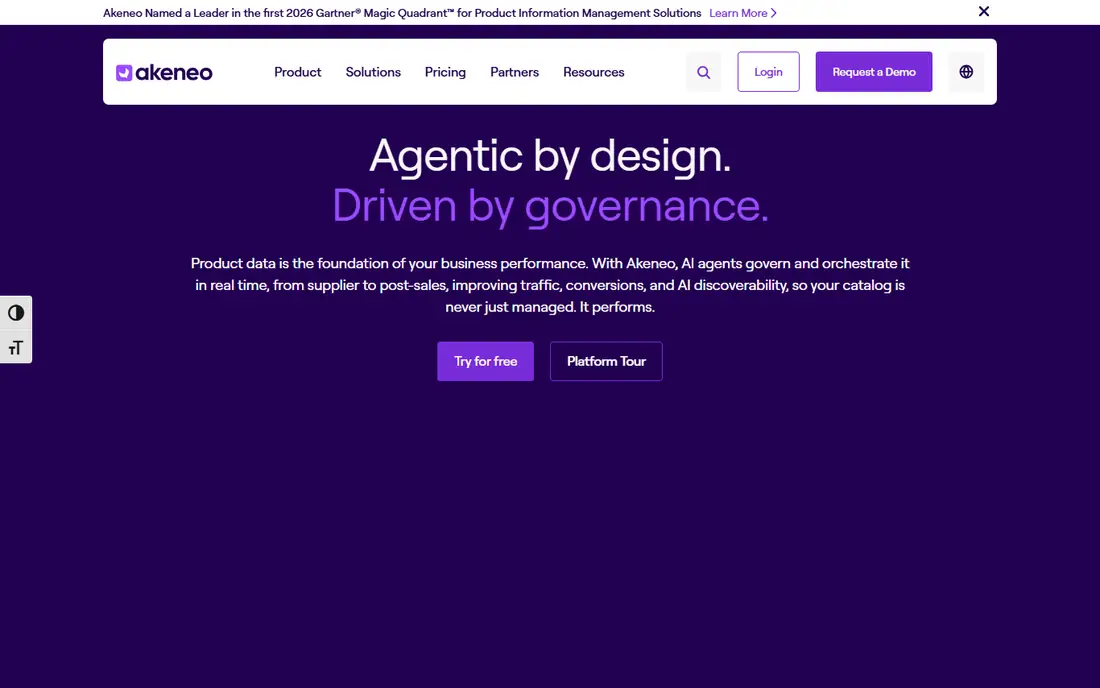
Akeneo is a product information management platform with strong enrichment tools, letting teams improve product data with attributes, images, and translations before publishing to channels. The data model is flexible, covering variants, families, and localizations, which suits catalogs with many product types. A community edition offers open source access for technical teams.
Enterprise features sit on paid plans, and setup takes effort for complex catalogs. For a brand that wants strong product data enrichment with a flexible model, Akeneo is an excellent pick. Its enrichment workflow is the feature merchandisers use most.
What we like- Good enrichment tools
- Flexible data model
- Strong community
Watch out for- Enterprise features need paid plans
- Setup takes effort
#3Plytix
Best for: affordable product data management for brands4.7/5 on
G2 (445 reviews, checked Oct 2026)
Visit plytix.com
Starting priceSee website
Free planYes
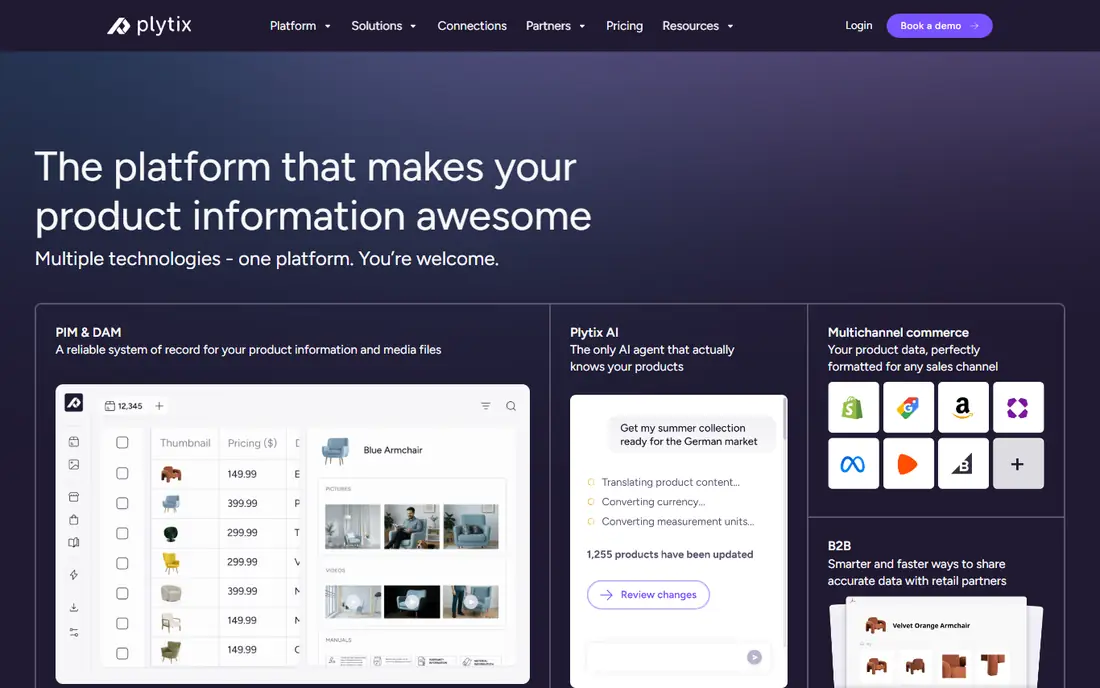
Plytix offers product information management at a lower price than enterprise tools, with an easy interface for organizing products, attributes, and digital assets. It suits small and mid-size brands that need a single source for product data without enterprise cost or complexity. The free plan covers basic use, while paid plans add more products and features.
Enterprise depth for very large catalogs and syndication is less than Syndigo or inriver, and channel coverage is narrower. For a smaller brand that wants affordable, easy product data management, Plytix is the best value pick here. Its simplicity is the reason small teams adopt it fast.
What we like- Low price
- Easy to use
- Good for small catalogs
Watch out for- Enterprise depth is less than Syndigo
- Fewer channels than larger tools
#4inriver
Best for: complex catalogs across many channels4.2/5 on
G2 (166 reviews, checked Oct 2026)
Visit inriver.com
Starting priceSee website
Free planFree trial
inriver handles complex product catalogs across many sales channels, with strong support for variants, bundles, and channel-specific data. Workflow tools route product data through review and approval before publishing, which suits teams with strict quality control. The platform also covers digital asset management for product images and videos.
Pricing is enterprise-level, and the learning curve is real for new users. For a brand with a complex catalog sold through many channels, inriver is a strong enterprise pick. Its variant handling is the feature that sets it apart for configurable products.
What we like- Strong multi-channel support
- Good for variants
- Solid workflow
Watch out for- Enterprise pricing
- Learning curve for new users
#5Catsy
Best for: simple catalog management for growing brands4.8/5 on
G2 (151 reviews, checked Oct 2026)
Visit catsy.com
Starting priceSee website
Free planFree trial
Catsy offers simple product catalog management for growing brands, with tools for organizing products, attributes, and images, plus publishing to common channels. The interface is straightforward, and plans are affordable, which suits small teams that need product data organized without enterprise complexity. Support is known for helpfulness.
The feature set is smaller than Akeneo or inriver, and integrations are fewer. For a growing brand that wants simple, affordable catalog management, Catsy is a strong pick. Its ease of use is the reason small teams choose it over heavier tools.
What we like- Simple to use
- Good for small teams
- Affordable plans
Watch out for- Smaller feature set than Akeneo
- Fewer integrations
#6Sales Layer
Best for: flexible catalogs with many output channels4.6/5 on
G2 (331 reviews, checked Oct 2026)
Visit saleslayer.com
Starting priceSee website
Free planFree trial
Sales Layer offers product information management with a flexible data model and many channel connectors, covering e-commerce, marketplaces, print catalogs, and B2B portals. That flexibility suits companies with varied output needs, including print, which many PIM tools handle poorly. The platform also supports B2B pricing and customer-specific catalogs.
Pricing is quote-based, and the interface feels dated next to Plytix or Akeneo. For a company that needs flexible outputs, including print and B2B, Sales Layer is a distinctive pick. Its channel range is the feature that covers the most publishing needs.
What we like- Flexible data model
- Many channel connectors
- Good for B2B
Watch out for- Pricing is quote-based
- Interface feels dated
#7Pimcore
Best for: open source data management for technical teams4.5/5 on
G2 (50 reviews, checked Oct 2026)
Visit pimcore.com
Starting priceSee website
Free planYes
Pimcore is an open source platform covering product information, digital assets, and content management in one system, with deep customization for technical teams. Developers can model any data type, build custom workflows, and integrate with any system, which suits companies with unusual requirements that off-the-shelf tools cannot meet. The community edition is free.
Pimcore needs developers for setup and maintenance, so non-technical teams will struggle without help. For a technical team that wants full control over product data, Pimcore is the most flexible option here. Its open source nature also avoids vendor lock-in.
What we like- Open source
- Very flexible
- Covers PIM, DAM, and CMS
Watch out for- Needs developers
- Setup and maintenance take effort
#8Jasper
Best for: AI-assisted product descriptions and content4.8/5 on
Capterra (1,855 reviews, checked Oct 2026)
Visit jasper.ai
Starting priceSee website
Free planFree trial
Jasper is an AI content platform that writes product descriptions, titles, and marketing copy at scale, which suits brands with large catalogs that need descriptions fast. Templates cover common product types, and brand voice settings keep copy consistent. The tool pairs with a PIM, since it creates content rather than managing structured product data.
Jasper is not a full PIM: it does not replace Akeneo or Syndigo for data management, syndication, or workflow. For a brand whose main gap is product copy volume, Jasper is the best AI pick here. Pair it with a PIM for complete product data management.
What we like- Fast AI content
- Good templates
- Useful for large catalogs
Watch out for- Not a full PIM
- Needs a PIM for data management
How we chose
We compared these tools on data modeling, enrichment, syndication, workflow, pricing, and fit for different catalog sizes. We checked vendor pages and public comparison guides, and where pricing was not published we wrote See website instead of guessing. We kept the list to tools a real brand can sign up for today, and we left out tools that only cover one narrow product data task. We also weighed channel coverage, since a PIM that cannot reach your retailers is a database, not a sales tool.
How to pick a Salsify replacement for your catalog
Start with catalog size and channel count. Small catalogs with few channels suit Plytix or Catsy. Large catalogs with many retailers suit Syndigo or inriver. Complex variants suit inriver or Akeneo. Technical teams with unusual needs suit Pimcore. Picking by catalog reality avoids paying for enterprise scale you do not need, or buying a small tool that breaks under your catalog.
Next, test syndication and data quality with real products during trials. Import a sample of your hardest products, including variants, bundles, and localized attributes, and publish to a test channel. Check that images, attributes, and translations arrive correctly, since syndication errors show up as lost sales, not just messy data.
Finally, compare total cost including implementation, connectors, and data cleansing, since dirty product data costs more to fix than any subscription. Also check workflow and approval features, because product data that publishes without review will embarrass a brand fast. A tool with good review workflows protects quality as catalogs grow.
Also check digital asset handling before you commit. Product images and videos drive sales as much as text, so confirm that your chosen tool stores, versions, and transforms assets for each channel, including image sizes and formats that retailers require. A PIM that manages text well but fumbles images will leave listings with broken or low-quality visuals, which hurts conversion more than a missing attribute.
Frequently asked questions
What is Salsify used for?
Salsify is a product information management and syndication platform, helping brands organize product data and send it to retailers, marketplaces, and distributors. Brands replacing it usually need the same product data organization and channel publishing capability from another vendor.
Which alternative is closest to Salsify?
Syndigo is closest on combined product data plus syndication, while Akeneo is closest on product data management alone. Plytix and Catsy are closer for smaller brands, and inriver is closer for complex multi-channel catalogs.
How do I migrate product data from Salsify?
Export products, attributes, and assets where possible, or use vendor migration help, and test with a sample batch before moving everything. Check that variants, images, and translations survive the move, and clean data during migration rather than carrying old errors into the new system. Map attributes carefully between systems, since a mismatched field can silently drop data that looks fine until a listing goes live incomplete.
What is product data syndication?
Syndication means sending product data from one source to many sales channels, such as retailers and marketplaces, automatically. It keeps listings consistent across channels and saves manual uploads, which is why brands with many retailers value it highly. Check that syndication covers your exact retailers and their required attributes, since a channel that needs manual work anyway defeats the purpose.
Do I need a PIM, or can spreadsheets work?
Spreadsheets work for very small catalogs, but they break as products, channels, and team members grow, with version chaos and errors. A PIM pays for itself once a catalog passes a few hundred products or several channels, since it centralizes data and automates publishing. If your team already argues over which spreadsheet is current, you have outgrown spreadsheets.
How does AI help with product data?
AI writes descriptions, suggests attributes, and translates content at scale, which speeds catalog work. Jasper leads on AI copy, while Akeneo and Syndigo add AI enrichment features. AI still needs human review, since it can invent attributes or mistranslate terms that affect sales. Review AI output for regulated claims especially, since an invented safety or compliance claim creates legal risk. Check regulated claims carefully before publishing anything.
Sources we checked (8)
- https://www.syndigo.com
- https://www.akeneo.com
- https://www.plytix.com
- https://www.inriver.com
- https://www.catsy.com
- https://www.saleslayer.com
- https://pimcore.com
- https://www.jasper.ai
Is your product missing or out of date?
We review this list regularly. Vendors can request a listing, send updated pricing or ask about featured placement.

Shihab Mia · Founder, Rankite
Shihab has 5+ years in B2B and SaaS SEO. He writes Rankite's software buying guides from pricing pages, documentation and public user reviews. More about Shihab.