How we make this list: we compare pricing pages, product documentation and public user reviews. Ratings come from G2, Capterra or Trustpilot, with the date we checked them.
Key takeaways
- S3 alternatives are object storage providers compatible with the Amazon S3 API, so existing S3 tools and code keep working.
- Cloudflare R2 leads for zero egress fees, while Backblaze B2 leads for low-cost storage overall.
- Wasabi suits predictable pricing with no egress fees, and DigitalOcean Spaces suits developers on DigitalOcean.
- MinIO suits self-hosted S3-compatible storage, while Storj suits decentralized storage.
- Egress fees matter more than storage prices for many workloads, so compare total monthly cost, not just per-gigabyte storage.
Quick comparison
Is your product missing or out of date?
We review this list regularly. Vendors can request a listing, send updated pricing or ask about featured placement.
The best S3 alternatives
Starting priceFree
Free planYes
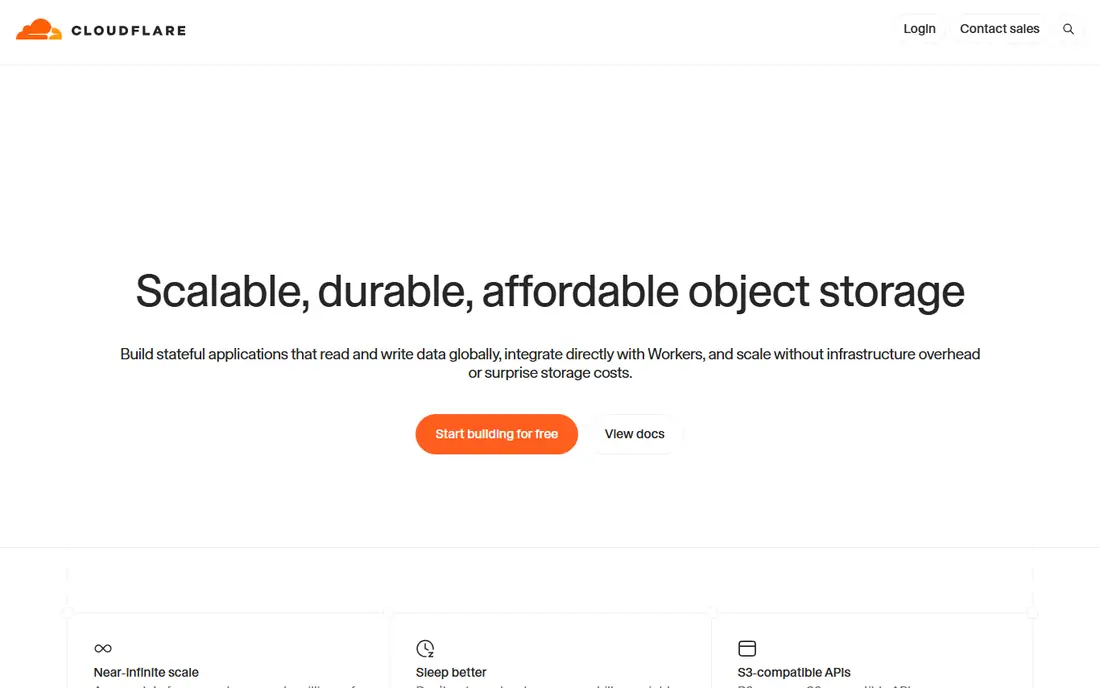
Cloudflare R2 is S3-compatible object storage with no egress fees, which removes the biggest surprise cost in cloud storage. Data stored in R2 can be served through Cloudflare's global network, and the S3-compatible API means existing tools and SDKs work with an endpoint change. A free tier covers small projects, and paid plans scale with storage and requests.
The trade-offs are feature gaps and complexity. Some S3 features differ from Amazon's implementation, the pricing model needs study for large workloads, and R2 is newer than Backblaze B2 and Wasabi. Even so, R2 suits workloads with heavy downloads, such as media, software distribution, and public content, where egress fees would dominate costs.
What we like- No egress fees
- Cloudflare network performance
- S3-compatible API
Watch out for- Some S3 features differ
- Pricing model needs study
- Newer than B2 and Wasabi
Starting priceSee website
Free planNo
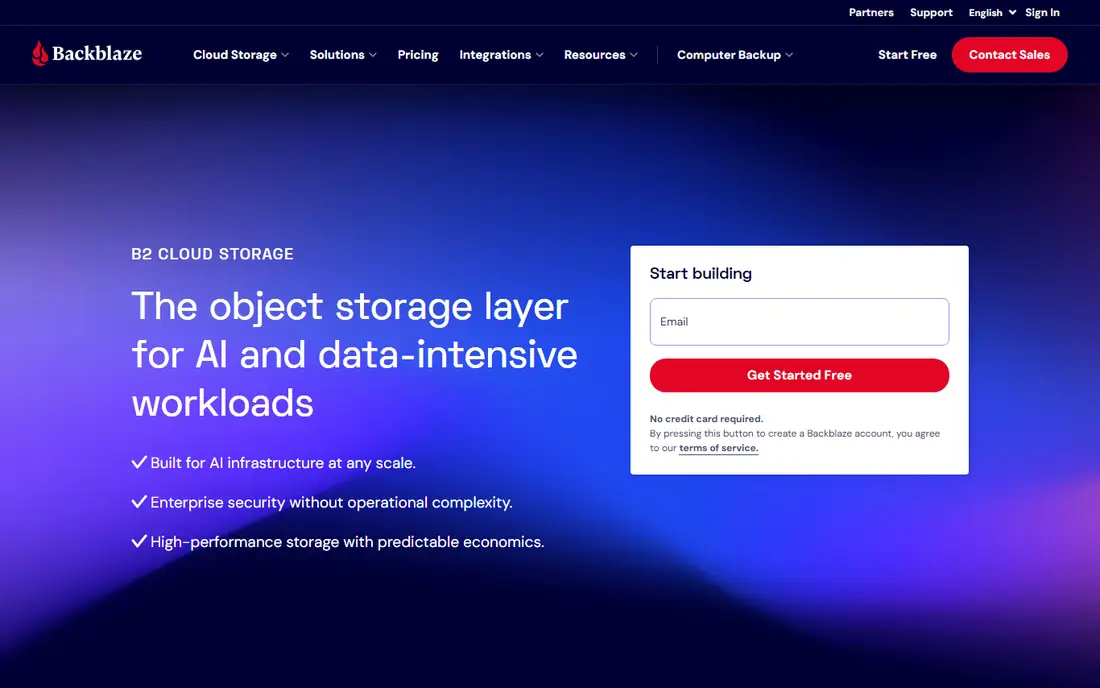
Backblaze B2 is low-cost S3-compatible cloud storage from the backup company Backblaze, with storage prices far below Amazon S3 and a proven track record for backups, archives, and media. The S3-compatible API works with many backup and media tools, and B2 suits teams that want cheap, reliable storage without hyperscaler complexity. Pricing is transparent per gigabyte for storage and downloads.
The limits are egress and regions. Download fees apply, so heavy-download workloads cost more, and regions are fewer than Amazon, Google, or Microsoft. Even so, B2 suits backups, archives, and media storage where low storage cost matters most.
What we like- Very low storage prices
- S3-compatible API
- Proven reliability
Watch out for- Egress fees apply
- Download costs add up
- Fewer regions than hyperscalers

#3Wasabi
Best for: Predictable pricing4.4/5 on
G2 (65 reviews, checked Oct 2026)
Visit wasabi.com
Starting priceSee website
Free planNo
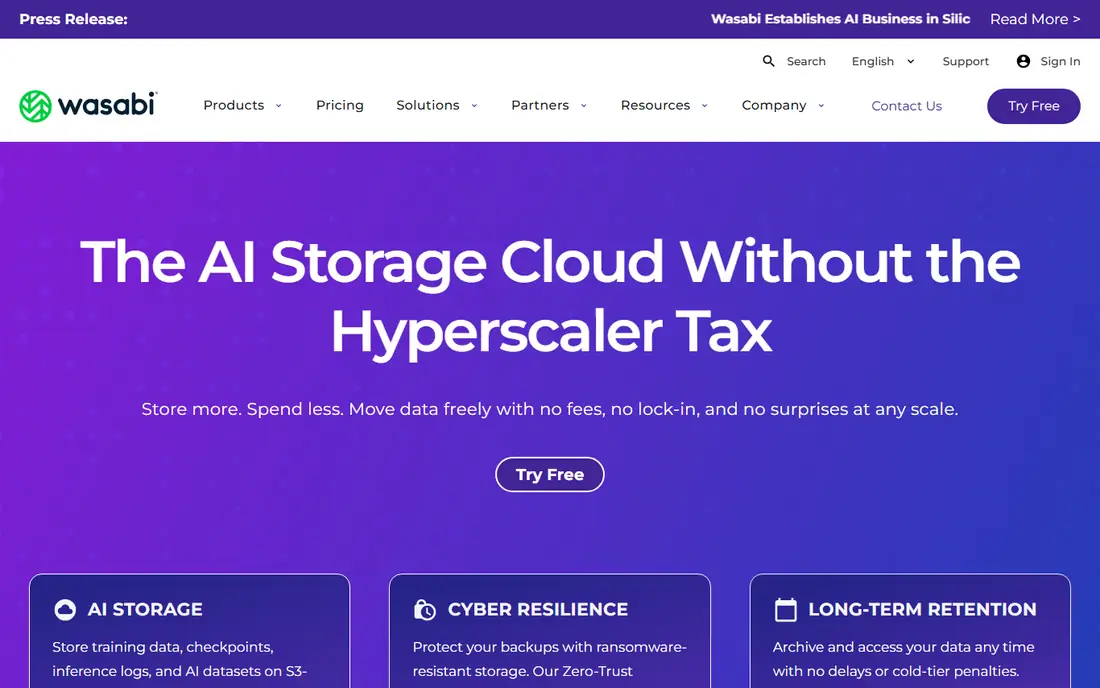
Wasabi is S3-compatible hot cloud storage with flat pricing and no egress or API request fees, which makes monthly bills predictable. Storage is fast, since Wasabi focuses on hot storage rather than archive tiers, and the S3-compatible API works with backup, media, and surveillance tools. The service suits teams that want simple, predictable storage pricing.
The trade-offs are minimums and regions. Wasabi applies a minimum storage duration, regions are fewer than hyperscalers, and some S3 features differ. Even so, Wasabi suits teams that want predictable, egress-free hot storage with simple pricing.
What we like- No egress or API request fees
- Predictable flat pricing
- Fast storage
Watch out for- Minimum storage duration applies
- Fewer regions
- Some features differ from S3
Starting priceSee website
Free planNo
DigitalOcean Spaces is S3-compatible object storage with a built-in CDN, aimed at developers already using DigitalOcean droplets and apps. It suits web apps, static sites, and media delivery, with simple pricing that includes storage, CDN, and a request allowance. The interface is clean, and Spaces integrates with DigitalOcean's developer tools.
The limits are price and scale. Spaces costs more per gigabyte than Backblaze B2, regions are fewer than hyperscalers, and it suits app storage better than huge archives. Even so, Spaces suits DigitalOcean developers who want simple, CDN-backed object storage.
What we like- Simple S3-compatible storage
- Built-in CDN
- Easy for DigitalOcean users
Watch out for- Higher price than B2
- Fewer regions
- Less suited to huge archives

#5MinIO
Best for: Self-hosted S3 storage4.3/5 on
G2 (17 reviews, checked Oct 2026)
Visit min.io
Starting priceFree
Free planYes
MinIO is open source, self-hosted S3-compatible object storage that runs on your own servers, Kubernetes, or edge devices, giving full control over data, location, and costs. It suits teams that need on-premises storage, data sovereignty, or S3 compatibility without a cloud bill, and its S3 API works with the same tools as cloud providers. The community edition is free, and enterprise support is paid.
The trade-offs are operations and scaling. You manage servers, drives, backups, and reliability yourself, support costs extra, and scaling to large clusters needs skill. Even so, MinIO suits teams that want self-hosted, open source S3-compatible storage with full control.
What we like- Open source and self-hosted
- Full S3 compatibility
- Runs anywhere
Watch out for- You manage servers and reliability
- Support costs extra
- Scaling needs skill
Starting priceFree
Free planYes
Storj is decentralized cloud storage that splits encrypted data across a global network of storage nodes, with an S3-compatible gateway so existing tools work without changes. It suits teams that want encryption by default, geographic distribution, and pricing competitive with B2 and Wasabi. A free tier covers small projects, and paid plans scale with use.
The limits are maturity and variance. The decentralized model is newer than centralized storage, performance varies by workload, and enterprise support needs review for large deployments. Even so, Storj suits teams that want encrypted, decentralized S3-compatible storage at competitive prices.
What we like- Decentralized and encrypted
- S3-compatible gateway
- Competitive pricing
Watch out for- Newer model
- Performance varies
- Enterprise support needs review
Starting priceSee website
Free planNo
IDrive e2 is low-cost S3-compatible storage from IDrive, aimed at backups, archives, and media with pricing below hyperscalers. The S3-compatible API works with backup tools and SDKs, and the service suits small businesses and individuals who want cheap object storage without complexity. Plans cover a range of storage sizes with straightforward pricing.
The trade-offs are brand and regions. IDrive e2 is a smaller brand than Backblaze B2, regions are fewer, and egress terms need review before heavy-download use. Even so, IDrive e2 suits budget backups and archives where low storage cost matters most.
What we like- Low prices
- S3-compatible API
- Good for backups and archives
Watch out for- Smaller brand than B2
- Fewer regions
- Egress terms need review
Starting priceSee website
Free planNo
Scaleway Object Storage is S3-compatible storage from the French cloud provider Scaleway, with data centers in Europe and a focus on European compliance and sovereignty. It suits European companies that want data hosted in the EU, with S3 compatibility for existing tools and SDKs. The service covers standard storage classes and integrates with Scaleway's cloud platform.
The limits are footprint and ecosystem. The global footprint is smaller than hyperscalers, pricing varies by region, and the tool ecosystem is thinner. Even so, Scaleway suits European teams that want EU-hosted, S3-compatible object storage.
What we like- European data centers
- S3-compatible API
- Good for EU compliance
Watch out for- Smaller global footprint
- Pricing varies by region
- Less ecosystem than hyperscalers
How we chose
We compared S3 alternatives on S3 API compatibility, storage and egress pricing, reliability, regions, CDN options, support quality, and ease of migration, favoring providers with proven S3 compatibility and transparent pricing. We excluded proprietary storage without an S3 API and consumer file sync tools without true object storage. Prices change often and vary by region, so we wrote See website where a vendor does not publish a clear starting price.
Buying guide
Start by measuring your workload: storage size, download volume, request counts, and regions, since egress fees dominate costs for download-heavy workloads and storage prices dominate for archives. A provider that looks cheap on storage can cost far more overall if egress fees are high, so model total monthly cost, not just per-gigabyte storage. Include request costs too, since small-file workloads can rack up millions of requests that cost more than the storage itself. Next, test S3 compatibility with your actual tools, since small API differences break some workflows, especially around versioning, lifecycle rules, and multipart uploads. Test with a small, non-critical bucket first, since compatibility problems are cheaper to find early than after a full migration.
Then check durability, availability, and support, since object storage holds data you cannot afford to lose. Ask for durability and availability figures, backup and versioning options, and support response times, and test restores before committing critical data. A provider that stores data well but restores slowly can still fail you during an outage or ransomware recovery. Finally, consider data location and exit: choose regions that fit your compliance needs, and confirm you can export data without punitive egress fees, since a cheap provider that traps data is expensive to leave. Read the egress terms for both the source and destination providers before starting a large migration, since exit costs often surprise teams.
Frequently asked questions
What is an S3 alternative?
It is an object storage provider compatible with the Amazon S3 API, such as Cloudflare R2, Backblaze B2, or Wasabi, so S3 tools and code work with only an endpoint change. Amazon S3 itself is not listed here, since this article covers alternatives to it rather than Amazon's own service.
Which S3 alternative is cheapest?
It depends on your workload. Backblaze B2 and IDrive e2 lead on storage price, while Cloudflare R2 and Wasabi lead for download-heavy workloads because they charge no egress fees. Model total cost for your usage, including requests and downloads, not just storage price.
Is S3-compatible storage really compatible?
Mostly yes, but small differences exist. Test versioning, lifecycle rules, multipart uploads, and your specific tools before migrating, since edge cases vary by provider and can break backups or media workflows.
Can I migrate from Amazon S3 easily?
Yes, in most cases. S3-compatible tools copy data between providers with only endpoint and credential changes, though large migrations take time and may incur egress fees on the source side. Plan migrations in batches and verify checksums, since a silent copy error can corrupt archives.
Should I self-host with MinIO or use a cloud provider?
Self-hosting with MinIO suits teams that need control, data sovereignty, or on-premises storage and have operations skills. Cloud providers suit teams that want managed reliability without running servers, patching, or replacing failed drives.
Sources we checked (0)
Is your product missing or out of date?
We review this list regularly. Vendors can request a listing, send updated pricing or ask about featured placement.

Shihab Mia · Founder, Rankite
Shihab has 5+ years in B2B and SaaS SEO. He writes Rankite's software buying guides from pricing pages, documentation and public user reviews. More about Shihab.
 Cloudflare R2
 Backblaze B2
 DigitalOcean Spaces
 Storj
 IDrive e2
 Scaleway Object Storage