How we make this list: we compare pricing pages, product documentation and public user reviews. Ratings come from G2, Capterra or Trustpilot, with the date we checked them.
Key takeaways
- Bright Data and Oxylabs are the enterprise end: the largest pools, formal compliance programmes and know your customer checks, at the highest per GB prices.
- Decodo, formerly Smartproxy, is the mainstream value pick, with simple onboarding and mid range per GB pricing.
- Webshare is the only provider here with a permanent free plan, and DataImpulse and IPRoyal undercut everyone on raw per GB price.
- Use proxies only for work you have a right to do: price monitoring, ad verification, localisation testing and similar lawful tasks, and pick providers that publish how their IPs are sourced.
Quick comparison
| Tool | Best for | Starting price | Free plan |
|---|
 Bright Data | Enterprise scale and compliance | See website | No |
 Oxylabs | High volume data pipelines | See website | No |
 Decodo | Mainstream value and easy setup | See website | No |
 SOAX | Fine grained geo and carrier targeting | See website | No |
 IPRoyal | Pay as you go, traffic that rolls over | See website | No |
 Webshare | Developers prototyping on a budget | Free | Yes |
 DataImpulse | Lowest raw per GB price | See website | No |
 ProxyEmpire | Flexible billing across proxy types | See website | No |
Is your product missing or out of date?
We review this list regularly. Vendors can request a listing, send updated pricing or ask about featured placement.
The best Rayobyte alternatives
#1Bright Data
Best for: Enterprise scale and compliance4.6/5 on
G2 (272 reviews, checked Oct 2026)
Visit brightdata.com
Starting priceSee website
Free planNo
Bright Data is the default enterprise answer. If your company collects public web data at scale and your legal team asks how the IPs are sourced and how abuse is handled, Bright Data has the paperwork ready, which is half of what enterprise buyers are paying for.
For a solo developer, it is more platform and more process than the job needs, and the same traffic costs a fraction elsewhere on this list.
What we like- Bright Data runs the largest proxy operation in this group, with residential, mobile, ISP and datacenter pools across roughly 195 countries, plus scraping APIs and ready datasets for teams that want data delivered rather than collected. Its compliance programme is the most formal here: know your customer checks for residential access, a public ethics framework built on opt in sourcing through its peer network, a dedicated compliance team and published abuse reporting. Enterprise support, account management and custom contracts suit regulated buyers.
Watch out for- It is the expensive end of the market, with pay as you go residential rates that sit well above budget rivals and volume discounts locked behind large monthly commitments. The platform is big enough to be confusing, and the dashboard takes time to learn. KYC checks, while a trust signal, slow down small teams that want to start today. Published per GB figures also vary by promotion, so budget from a live quote.
#2Oxylabs
Best for: High volume data pipelines4.5/5 on
G2 (420 reviews, checked Oct 2026)
Visit oxylabs.io
Starting priceSee website
Free planNo
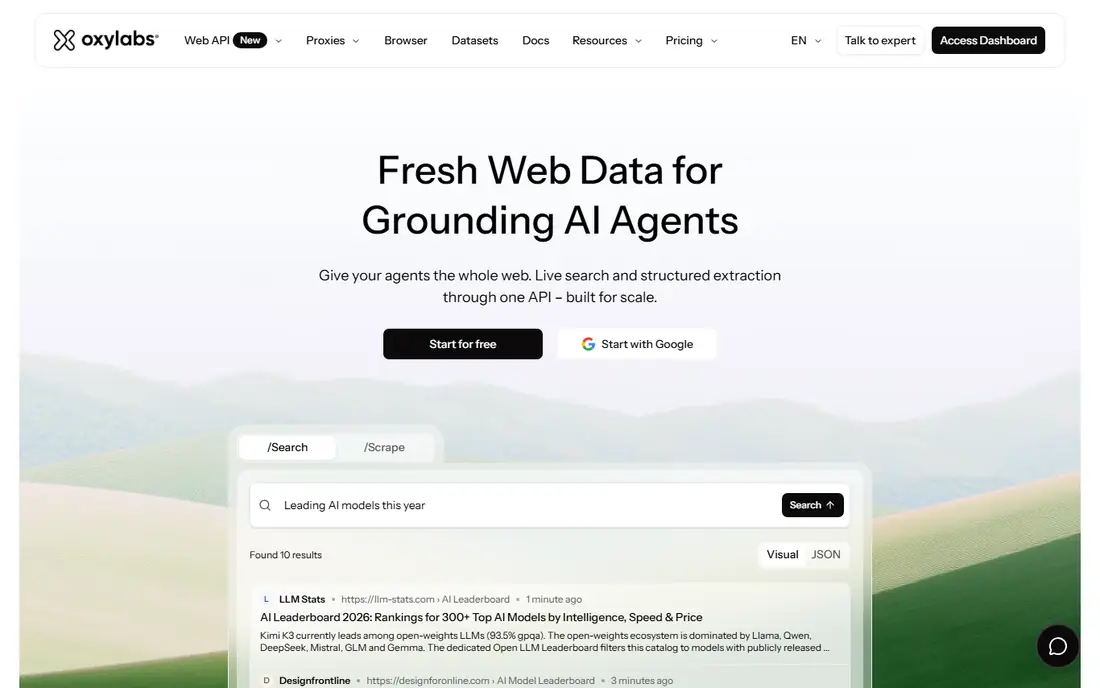
Choose Oxylabs when the workload is a pipeline, not an experiment: steady high volume collection feeding a product, with SLAs and a named support contact behind it. It competes with Bright Data on the same enterprise ground and sometimes wins on support responsiveness and European data handling.
Smaller buyers should price Decodo or Webshare first and come here when they outgrow them.
What we like- Oxylabs, based in Lithuania, is Bright Data's closest rival: residential and mobile pools across 195 plus locations, datacenter and ISP proxies, and a Web Scraper API for teams that prefer endpoints to raw proxies. Targeting reaches city and carrier level. The company publishes its sourcing standards and runs consent based acquisition through partner apps, with compliance documentation aimed at enterprise procurement. Dedicated account managers and solution engineering come with larger plans, and uptime figures are published rather than implied.
Watch out for- Pricing sits at the premium end, with entry bundles that assume serious monthly volume
- Casual users pay for capacity they will not use. Account approval and KYC apply to residential products. The product line is wide enough that choosing between proxy types and the scraper API takes guidance. Per GB list prices also move with promotions, so confirm the live figure before budgeting.
#3Decodo
Best for: Mainstream value and easy setup4.6/5 on
G2 (763 reviews, checked Oct 2026)
Visit decodo.com
Starting priceSee website
Free planNo
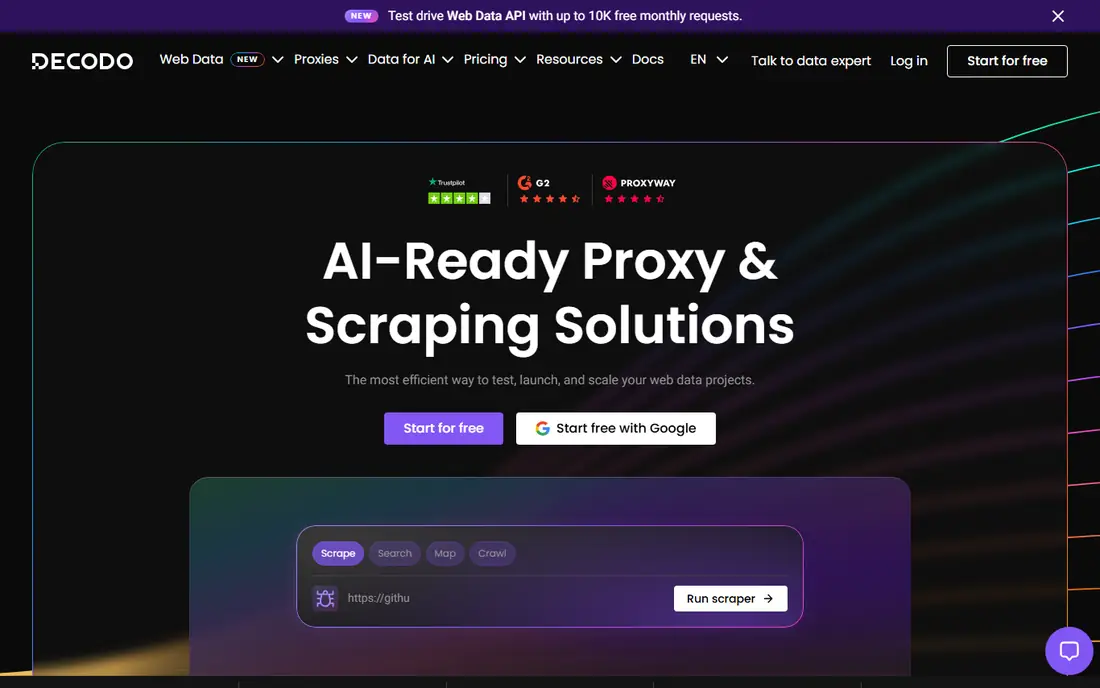
Decodo is where most small and mid size teams should start their comparison. It covers the standard jobs, price monitoring, SERP checks, marketplace research, without enterprise process or enterprise prices.
If you later need formal compliance documentation or very large volume, you will graduate to the top of this list. Until then, Decodo's ease is worth real money in staff time.
What we like- Decodo is the provider long known as Smartproxy, renamed in 2025, and it keeps that product's reputation: the simplest dashboard in this group, quick setup, and residential, mobile, ISP and datacenter pools across about 195 locations. Pricing sits in the middle of the market, with per GB rates that fall as volume rises, and a three day free trial with a small data allowance lets a team test before paying. Documentation and browser extensions suit non specialist users, and the company states its residential pool is ethically sourced.
Watch out for- There is no permanent free plan. Pool depth and targeting precision trail Bright Data and Oxylabs at the enterprise end, and per GB prices at the smallest tiers are far higher than the advertised volume rates, a pattern across this whole market. Support is good but not the dedicated account model of the top two. Buyers who knew the Smartproxy name should also confirm current plan names, since the rebrand renamed tiers.
#4SOAX
Best for: Fine grained geo and carrier targeting4.8/5 on
G2 (66 reviews, checked Oct 2026)
Visit soax.com
Starting priceSee website
Free planNo
SOAX fits the buyer whose whole job is location accuracy: verifying that a campaign renders in one city on one carrier, or pricing checks that must come from a specific region. Its filters are the product.
If your collection is broad and untargeted, cheaper per GB rivals collect the same pages for less. Targeting is what you pay SOAX for, so buy it when targeting is the requirement.
What we like- SOAX built its name on targeting: residential and mobile IPs filterable by country, region, city and internet provider, which matters for ad verification and localisation testing where a wrong ISP gives a wrong answer. One rate covers residential and mobile traffic in its current packaging, and a free sandbox tier lets developers test the API before paying. The company publishes its acceptable use and sourcing policies, and its dashboard gives session and rotation controls that data teams use heavily.
Watch out for- Paid plans carry monthly minimums that put SOAX out of reach for hobby use, and published entry figures conflict between the sandbox rate and the first paid tier, so get the current number from the pricing page. The targeting depth takes learning
- New users can burn paid traffic on badly scoped tests. It has less brand recognition with procurement teams than the top two, which can slow enterprise approval.
#5IPRoyal
Best for: Pay as you go, traffic that rolls over4.7/5 on
G2 (1,071 reviews, checked Oct 2026)
Visit iproyal.com
Starting priceSee website
Free planNo
IPRoyal suits the project pattern that monthly plans serve badly: a few heavy collection weeks per quarter, then quiet. Non expiring traffic turns proxies into a stocked shelf rather than a subscription.
Steady high volume users should still compare Decodo and DataImpulse, because at constant volume their monthly rates can beat IPRoyal's convenience.
What we like- IPRoyal's signature term is that residential traffic does not expire: buy gigabytes and use them over months, which suits irregular projects that enterprise monthly plans punish. Entry is genuinely pay as you go with no monthly minimum, and per GB prices fall steeply at bulk levels. The range covers residential, datacenter, ISP and mobile proxies, plus a sneaker and scraping tooling sideline the company is known for. The company states its residential pool is built on a consent based model where device owners are paid.
Watch out for- There is no free trial on residential proxies, so first tests cost money, if only a few dollars. Targeting and dashboard depth trail the enterprise pair, and support runs through tickets and chat rather than account managers. Pool size claims vary between sources. Per GB pricing is tiered enough that the rate you pay depends heavily on how much you prepay, so small top ups are the expensive way to buy.
#6Webshare
Best for: Developers prototyping on a budget4.0/5 on
G2 (5 reviews, checked Oct 2026)
Visit webshare.io
Starting priceFree
Free planYes
Webshare's role in a buying process is the pilot. Build the integration on the free plan, prove the use case, then decide how much residential traffic the real workload needs.
Many small teams simply stay: for light collection against ordinary sites, Webshare's paid tiers are hard to beat on price, and the upgrade path from free is painless.
What we like- Webshare is the only provider here with a permanent free plan: ten datacenter proxies with a small monthly bandwidth allowance, no card required, which makes it the standard way developers prototype proxy code before spending anything. Paid datacenter proxies are among the cheapest anywhere and are sold by the proxy with generous bandwidth, while rotating residential traffic is priced per GB at the budget end. The API and dashboard are developer friendly, with fast provisioning and clear usage figures.
Watch out for- The free plan is datacenter only, and datacenter IPs are the first to be blocked by defended sites, so free tier success on easy targets does not predict paid results elsewhere. Residential pool depth trails the leaders. Support is email based. Enterprise compliance documentation is lighter than Bright Data or Oxylabs, which matters if procurement asks hard questions.
Starting priceSee website
Free planNo
DataImpulse is the budget engine room option: high volume, price sensitive collection run by a technical team that can manage its own retries and quality checks.
If your team needs its hand held, or your targets are the most defended sites on the web, the savings can evaporate in failed requests. Match it to tolerant targets and it earns its place.
What we like- DataImpulse competes on one number: residential traffic from around a dollar per GB on pay as you go, the lowest headline rate in this group, across a pool the company sizes in the tens of millions across 195 countries. There is no monthly subscription
- You top up a balance and spend it down, which suits cost watched projects. Targeting covers country through city level, and the dashboard exposes the session controls scrapers need. For bulk public data collection where the sites are not heavily defended, the maths is compelling.
Watch out for- At this price, expect a leaner operation: support, documentation and compliance paperwork are thinner than the enterprise pair, and procurement teams may want more sourcing detail than the site provides. Success rates against the hardest targets trail premium pools. There is no free plan, only low cost entry. Pool and country figures are the company's own claims, as with every provider here.
Starting priceSee website
Free planNo
ProxyEmpire fits buyers who know the category and shop on terms: billing shape, rollover and targeting matter more to them than a famous logo. Compare its quote against Decodo and IPRoyal for the same traffic pattern before deciding.
Newcomers to proxies will find Decodo's onboarding gentler. Experienced buyers will find ProxyEmpire's flexibility worth a quote.
What we like- ProxyEmpire sells rotating and static residential and mobile proxies with an emphasis on billing flexibility, including rollover style traffic options and plans sized for mid volume buyers who find enterprise minimums steep and budget dashboards thin. Targeting by country, region, city and carrier is available on mobile and residential pools. The company publishes its sourcing and acceptable use positions and supports the standard protocols developers expect. It is a reasonable middle path between the budget pair and the enterprise pair.
Watch out for- Brand recognition is lower, which can slow procurement approval, and third party testing coverage is thinner than for the leaders, so lean on the trial before committing volume. Published prices and pool figures vary between listings, so confirm on the site. Support channels are standard rather than dedicated. Feature depth in scraping APIs is less than Bright Data or Oxylabs for teams that want data delivered.
How we chose
We picked proxy providers a business can buy from in October 2026 that publish acceptable use rules and a position on how their residential IPs are sourced, because in this category the sourcing is part of the product. We favoured providers with documented consent based networks, abuse reporting and, at the enterprise end, KYC checks. NetNut was deliberately excluded following reports of the July 2026 FBI seizure of its domains. Rayobyte itself is the subject of the search, not an entry. Per GB prices conflict between current sources for nearly every provider, so starting prices say see website rather than printing figures we could not pin down. No provider was hands on tested; judgements rest on vendor documentation and current comparison reporting.
How to pick a proxy provider without overpaying
Ignore the headline per GB rate until you know your real number: gigabytes per month, every month. The cheapest rate on every pricing page hides behind the largest prepayment. A team using 10 GB a month should compare the 10 GB cost at each provider, which can differ from the advertised rate by a factor of four.
Then match the pool to the target. Datacenter proxies are cheap and fast and fine for tolerant sites. Residential IPs cost more and pass more checks. Mobile IPs cost the most and are reserved for jobs that truly need a carrier address, such as ad verification on mobile placements.
Finally, check the terms before the tech. Confirm the provider allows your use case in writing, ask how abuse reports are handled, and ask where the IPs come from. A provider that answers plainly is worth more than a cheaper one that cannot.
Frequently asked questions
What is a residential proxy, in plain terms?
It is an internet connection routed through a real household device, so a website sees an ordinary home IP address instead of a datacenter one. Providers build these pools by paying device owners or partnering with apps whose users agree to share bandwidth. That consent question is why sourcing standards matter when you choose a provider.
Are proxies legal to use?
Proxies themselves are legal in the US and most countries, and businesses use them daily for price monitoring, ad verification, brand protection and localisation testing. What you do through them decides legality: accessing data you have no right to, evading court orders or breaking computer misuse laws stays illegal through a proxy. Site terms also matter contractually. Keep to public data and lawful purposes, and follow the provider's acceptable use rules.
Why do per GB prices vary so much?
Because the headline rate assumes the largest package. The same provider may charge several dollars per GB on a small top up and near a dollar at terabyte volume. Promotions move prices further, which is why this guide leaves the starting price as see website. Compare the total monthly cost at your real volume, including minimums, not the banner figure.
What happened to NetNut?
In July 2026, reports said the FBI had seized NetNut's domains. We do not list providers in that position, whatever the merits of the underlying case, because readers need a supplier whose service is running and whose status is clear. If the situation resolves, the category still offers the eight providers above.
How much proxy traffic does a small project need?
Less than vendors imply. A price monitoring job across a few hundred product pages a day usually fits in a few gigabytes a month. Start on a free plan or the smallest top up, measure real consumption for two weeks, then buy the tier your data justifies. Non expiring traffic removes the waste when usage is irregular.
Sources we checked (0)
Is your product missing or out of date?
We review this list regularly. Vendors can request a listing, send updated pricing or ask about featured placement.

Shihab Mia · Founder, Rankite
Shihab has 5+ years in B2B and SaaS SEO. He writes Rankite's software buying guides from pricing pages, documentation and public user reviews. More about Shihab.