How we make this list: we compare pricing pages, product documentation and public user reviews. Ratings come from G2, Capterra or Trustpilot, with the date we checked them.
Key takeaways
- Fivetran leads on managed reliability, with hundreds of maintained connectors and automated schema handling.
- Hevo Data leads on value for small teams, with simpler pricing and real-time pipelines.
- Qlik Talend Cloud leads on enterprise governance, with data quality and lineage built in.
- Matillion leads on cloud warehouse-native transformation, running inside Snowflake, BigQuery, and Databricks.
- Estuary Flow leads on real-time streaming pipelines with a free tier for small volumes.
- Pricing models differ sharply: per-row, per-connector, and consumption-based models produce very different bills, so model costs at your real volume.
Quick comparison
Is your product missing or out of date?
We review this list regularly. Vendors can request a listing, send updated pricing or ask about featured placement.
The best airbyte alternatives
Airbyte made open-source data integration popular, with a large connector library and self-hosting options. Teams look for alternatives when they want fully managed reliability, different pricing, stronger governance, or real-time streaming that Airbyte handles less well. The eight tools below cover managed, cloud-native, and streaming approaches, and the right pick depends on your warehouse, your volume, and how much pipeline maintenance your team wants to own.
How we chose
We started from the data integration tools teams actually use as Airbyte alternatives in 2026, drawing on vendor pages, data engineering guides, and pricing documentation. We favored tools with broad connector libraries, clear pricing models, and documented reliability, and we excluded Airbyte itself, since this list is about alternatives, plus narrow single-source tools. Prices in this category are mostly usage-based or quote-based, so where a figure is not confirmed on a vendor page, we use "See website" and flag the gap.
Buying guide
Start with your warehouse and sources. A team on Snowflake with Salesforce, HubSpot, and Postgres sources needs different connectors than a team streaming events into BigQuery. List your top ten sources and check each tool's connector catalog for them, including whether connectors are fully managed or community-maintained.
Next, model pricing at your real volume. Fivetran charges by monthly active rows, Hevo by events and sources, Matillion by compute credits, and cloud tools by usage, and those models diverge fast as data grows. Run a one-month trial with production-like volume before committing, since free tier limits hide true costs.
Then check transformation and governance needs. Warehouse-native tools such as Matillion run transformations inside your warehouse, while managed tools such as Fivetran focus on loading and leave transformation to dbt or similar tools. If your team needs data quality checks, lineage, or compliance controls, weigh Qlik Talend Cloud or Informatica more heavily.
Finally, test failure handling. Pipelines break on schema changes, API limits, and source outages, and the best tools alert clearly, retry sensibly, and backfill without manual work. Ask each vendor how schema changes are handled and what happens when a source API goes down for a day.
One more factor matters for growing teams: reverse ETL. If you need to send warehouse data back to tools such as Salesforce or HubSpot, check whether your integration tool covers it or whether you need a separate reverse ETL product. Buying a loader that cannot feed operational tools back can force a second purchase later.
Frequently asked questions
Is Fivetran worth its price over Airbyte?
For teams that value managed reliability and low maintenance, yes: Fivetran's maintained connectors and automated schema handling save engineering time. For teams with engineering capacity and cost sensitivity, Airbyte's open-source option or Hevo Data may fit better.
What is the difference between ETL and ELT?
ETL transforms data before loading it into a warehouse, while ELT loads raw data first and transforms it inside the warehouse. Modern tools such as Fivetran, Hevo, and Matillion mostly follow ELT, which suits cloud warehouses with cheap compute.
Can these tools stream data in real time?
Estuary Flow is built for real-time streaming, while Hevo offers near-real-time options. Fivetran and Matillion focus on batch and micro-batch loads, which suit analytics better than live operational use.
How many connectors do I really need?
Most teams use 10 to 30 connectors heavily, even if a vendor lists hundreds. Check your actual sources rather than the headline count, and confirm whether your key connectors are fully managed or community-supported.
Should a small team self-host an integration tool?
Usually no, unless data residency or cost demands it. Managed tools cost more per row but save engineering time, while self-hosting Airbyte or similar tools needs maintenance, monitoring, and upgrades that small teams often underestimate.
Sources
- Vendor pages for Fivetran, Hevo Data, Qlik Talend Cloud, Matillion, Informatica, Azure Data Factory, AWS Glue, and Estuary Flow
- Third-party 2026 comparisons of data integration tools
- Data engineering guides on ELT pricing, schema handling, and reverse ETL

#1Fivetran
Best for: Managed reliability4.3/5 on
G2 (841 reviews, checked Oct 2026)
Visit fivetran.com
Starting priceSee website
Free planFree trial
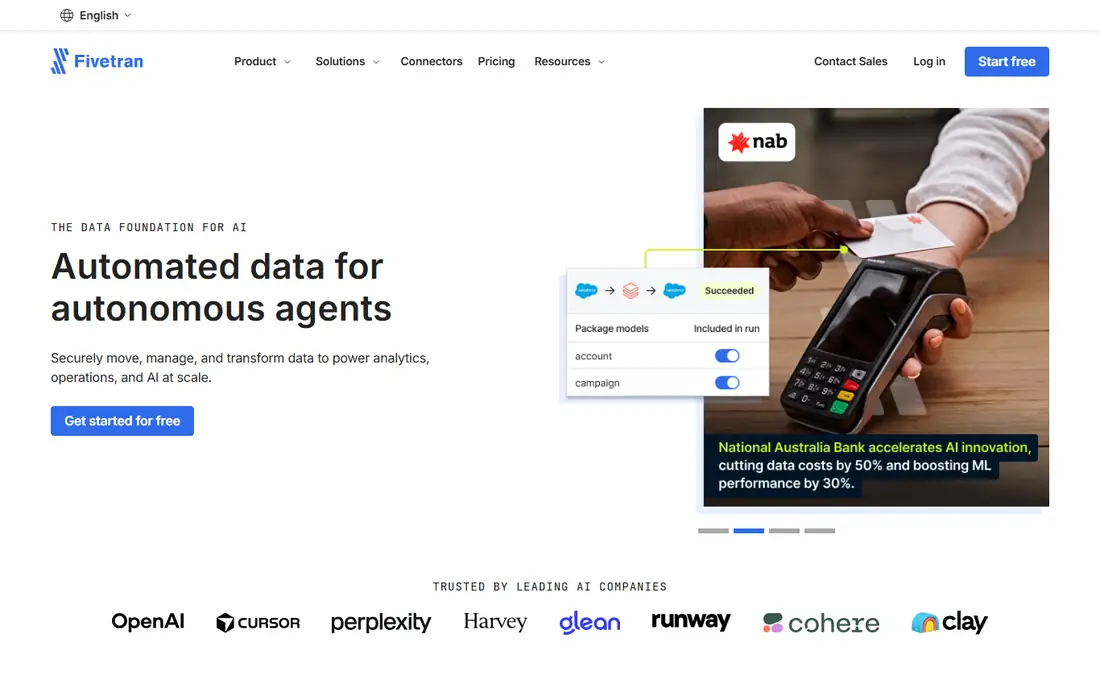
Fivetran is the managed standard for data loading, with hundreds of fully maintained connectors that handle schema changes automatically. When a source API changes a field, Fivetran adapts the pipeline without engineering work, which is the main reason teams pay its premium. Its reliability and monitoring suit analytics teams that cannot afford broken pipelines.
Pricing by monthly active rows grows with data volume, and costs can surprise teams with high-row sources, especially event tables that churn millions of rows a month. Transformation is left to dbt or similar tools rather than built in, which adds a second tool to the stack but also keeps concerns separate: Fivetran moves data reliably, dbt shapes it for analysis. Teams should also check Fivetran's free trial limits carefully, since trial row caps can hide true production costs until the first full month runs. Fivetran suits teams that value reliability and low maintenance over lowest cost, and that already use dbt for transformation.
What we like- Hundreds of maintained connectors
- Automated schema changes
- Strong reliability
Watch out for- Monthly active row pricing can grow fast
- Less control than open source
- Transformation needs dbt

#2Hevo Data
Best for: Small team value4.4/5 on
G2 (295 reviews, checked Oct 2026)
Visit hevodata.com
Starting priceSee website
Free planFree plan
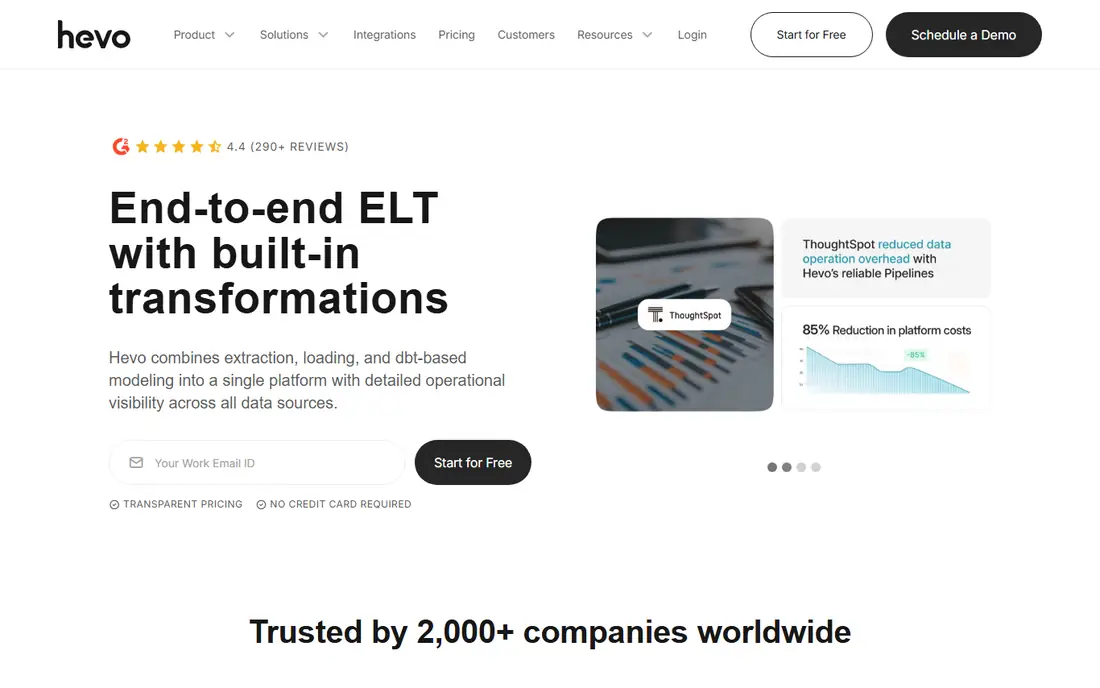
Hevo Data offers a simpler, lower-cost managed pipeline service with real-time options and an easy setup that small teams can complete without data engineering help. Its pricing is easier to predict than row-based models for many teams, and its free tier lets small projects start without cost.
Connector depth trails Fivetran, enterprise governance features are thinner, and costs still grow with events and sources. Hevo Data suits startups and small teams that want managed pipelines at a lower price and with less complexity than enterprise tools. Its free tier is a good way to validate fit before paying.
What we like- Simpler pricing
- Real-time pipelines
- Easy setup for small teams
Watch out for- Fewer connectors than Fivetran
- Enterprise governance is thinner
- Scaling costs grow

#3Qlik Talend Cloud
Best for: Enterprise governance3.7/5 on
Capterra (3 reviews, checked Oct 2026)
Visit qlik.com
Starting priceSee website
Free planFree trial
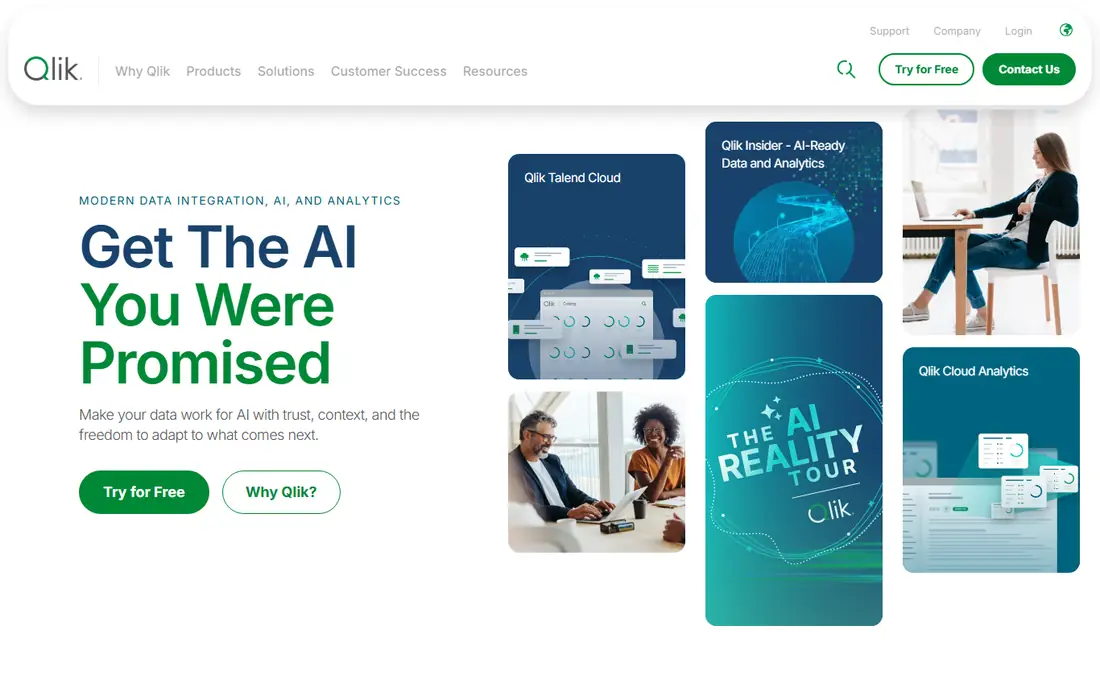
Qlik Talend Cloud, which absorbed Stitch into the Qlik portfolio, combines integration with data quality, lineage, and governance controls that regulated enterprises need. Its connector library is broad, and its data quality tools catch bad data before it reaches dashboards, which matters for finance and healthcare teams.
Pricing is complex and quote-based, setup is heavier than Fivetran or Hevo, and small teams will find it overkill. Qlik Talend Cloud suits enterprises that need governance, quality, and lineage alongside integration, and that have the team to run it.
What we like- Data quality and lineage built in
- Broad enterprise connectors
- Governance controls
Watch out for- Complex pricing
- Heavier setup
- Overkill for small teams
Starting priceSee website
Free planFree trial
Matillion takes a warehouse-native approach: it loads data and runs transformation jobs inside Snowflake, BigQuery, Databricks, or Redshift, using the warehouse's own compute. Visual job design helps data teams build pipelines without writing lots of code, and its warehouse focus keeps data movement efficient.
Credit-based pricing needs careful monitoring, Matillion is less of a pure managed loader than Fivetran, and job design takes learning. Matillion suits teams centered on one cloud warehouse who want loading plus transformation in one tool.
What we like- Runs inside your warehouse
- Visual transformation jobs
- Strong Snowflake and BigQuery support
Watch out for- Credit-based pricing needs care
- Less of a pure loader
- Learning curve for jobs
Starting priceSee website
Free planFree trial
Informatica Cloud, now sold as Informatica from Salesforce following Salesforce's acquisition, covers integration, data quality, governance, and master data management in one enterprise platform. Its breadth suits large companies with complex data estates, many systems, and strict compliance needs.
Pricing is quote-only, the platform is complex, and small teams will find it far more than they need. Informatica Cloud suits large enterprises that want one vendor for integration plus governance, and that have the budget and team to run it.
What we like- Very broad integration and governance
- Strong for complex enterprises
- Informatica from Salesforce
Watch out for- Quote-only pricing
- Complex platform
- Overkill for small teams
Starting pricePay per use
Free planFree tier
Azure Data Factory is Microsoft's cloud integration service, with pay-per-use pricing and deep ties to Azure Synapse, Data Lake, and Microsoft Fabric. Its orchestration tools handle complex multi-step pipelines, and pricing follows actual usage rather than flat tiers.
The focus is Azure-only, the interface is complex for newcomers, and connector depth varies outside Microsoft sources. Azure Data Factory suits teams already on Azure who want pay-per-use integration inside their existing cloud.
What we like- Pay-per-use pricing
- Deep Azure integration
- Strong orchestration
Watch out for- Azure-only focus
- Interface is complex
- Connector depth varies
Starting pricePay per use
Free planFree tier
AWS Glue is Amazon's serverless ETL service, running Spark-based jobs across S3, Redshift, and other AWS services with pay-per-use pricing. It scales automatically, integrates with the AWS data catalog, and suits teams building data lakes and warehouses inside AWS.
The focus is AWS-only, Spark knowledge helps for custom jobs, and usage-based pricing varies with job size and frequency. AWS Glue suits AWS-centered teams that want serverless ETL with full AWS integration. Monitor job costs weekly at first.
What we like- Pay-per-use serverless ETL
- Deep AWS integration
- Scales automatically
Watch out for- AWS-only focus
- Spark knowledge helps
- Pricing is usage-based and variable
Starting priceFree plan
Free planFree plan
Estuary Flow is built for real-time data movement, streaming changes from sources to warehouses and operational systems with exactly-once delivery guarantees. Its free tier covers small volumes, which lets teams test streaming without cost, and its architecture suits use cases such as live dashboards and operational analytics.
The vendor is newer, batch connector depth trails Fivetran, and real-time focus is overkill for teams that only need nightly analytics loads. Estuary Flow suits teams that need fresh data in seconds or minutes, not hours, and that value streaming architecture over connector breadth. Start with one high-value stream, such as orders or signups, before migrating everything.
What we like- Real-time streaming pipelines
- Free tier for small volumes
- Exactly-once delivery
Watch out for- Newer vendor
- Fewer batch connectors
- Real-time focus is overkill for analytics-only teams
Is your product missing or out of date?
We review this list regularly. Vendors can request a listing, send updated pricing or ask about featured placement.

Shihab Mia · Founder, Rankite
Shihab has 5+ years in B2B and SaaS SEO. He writes Rankite's software buying guides from pricing pages, documentation and public user reviews. More about Shihab.
 Matillion
 Informatica Cloud
 Azure Data Factory
 AWS Glue
 Estuary Flow