How we make this list: we compare pricing pages, product documentation and public user reviews. Ratings come from G2, Capterra or Trustpilot, with the date we checked them.
Key takeaways
- OneTrust is broad, so the best replacement depends on whether the main job is consent, data subject requests, data mapping, or vendor risk.
- TrustArc is the closest like-for-like enterprise swap, while Securiti and BigID approach privacy from data discovery and security.
- Osano, Transcend, Ketch, and Usercentrics suit mid-market teams that want faster setup and less configuration work.
- Cookie consent alone does not need a full privacy platform: a consent tool can be enough for a single website.
- Most enterprise pricing in this category is quote-based, so compare implementation time and module scope, not just licence cost.
Quick comparison
| Tool | Best for | Starting price | Free plan |
|---|
 TrustArc | Enterprise privacy governance | See website | No |
 Securiti | Data intelligence and privacy automation | See website | Free trial |
 Osano | Approachable privacy for growing companies | See website | Yes |
 Transcend | Developer-led privacy infrastructure | See website | Free trial |
 DataGrail | Data subject requests and data mapping | See website | No |
 BigID | Data discovery and classification | See website | Free trial |
 Ketch | Consent and preference management | See website | Free trial |
 Usercentrics | Consent management for websites and apps | See website | Yes |
 Didomi | Consent and preference across channels | See website | Free trial |
Is your product missing or out of date?
We review this list regularly. Vendors can request a listing, send updated pricing or ask about featured placement.
The best OneTrust alternatives
#1TrustArc
Best for: Enterprise privacy governance4.2/5 on
G2 (343 reviews, checked Oct 2026)
Visit trustarc.com
Starting priceSee website
Free planNo
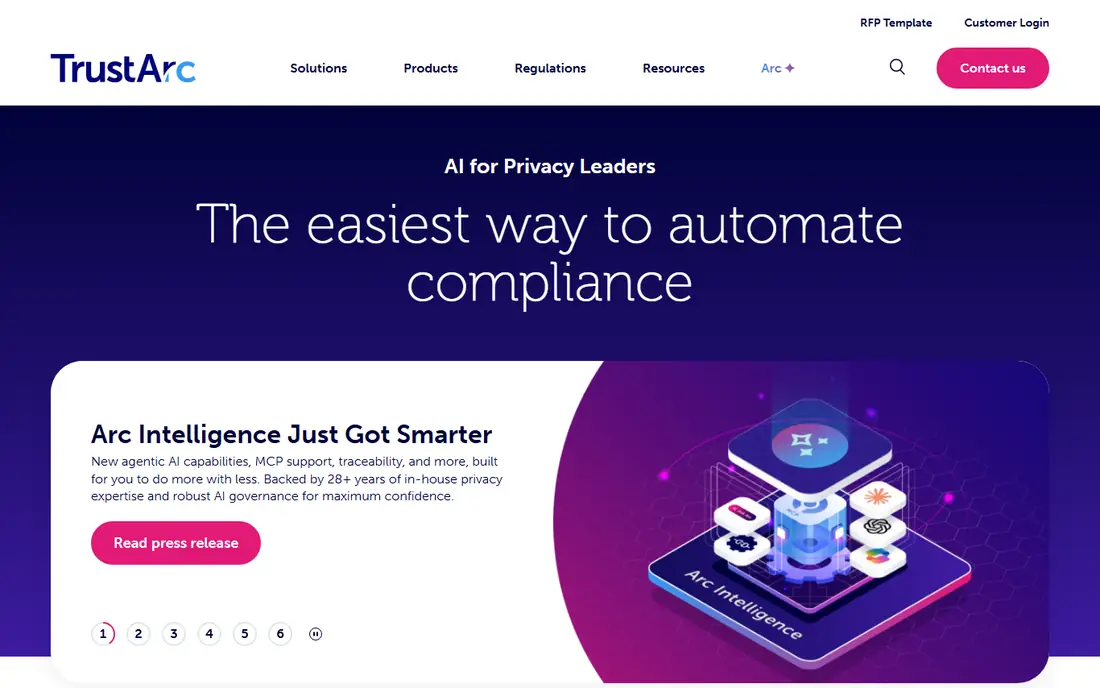
TrustArc is the most direct enterprise alternative to OneTrust for teams that want a governance suite rather than a single-purpose tool. It covers privacy assessments, data mapping, consent, data subject requests, and vendor risk in structured workflows, with regulatory research built in to help teams track changing laws. Organisations that already run a formal privacy programme will recognise the model quickly.
The trade-off is that a like-for-like swap does not remove implementation work. Data sources still need connecting, workflows still need configuring, and teams still need owners for each process. TrustArc suits organisations with a dedicated privacy team and a multi-region footprint. Smaller teams may find its breadth heavier than they need.
What we like- Long history in privacy management
- Structured assessments and workflows
- Regulatory intelligence and certifications focus
Watch out for- Enterprise setup can still take time
- Pricing is quote-based and module dependent
#2Securiti
Best for: Data intelligence and privacy automation4.6/5 on
G2 (117 reviews, checked Oct 2026)
Visit securiti.ai
Starting priceSee website
Free planFree trial
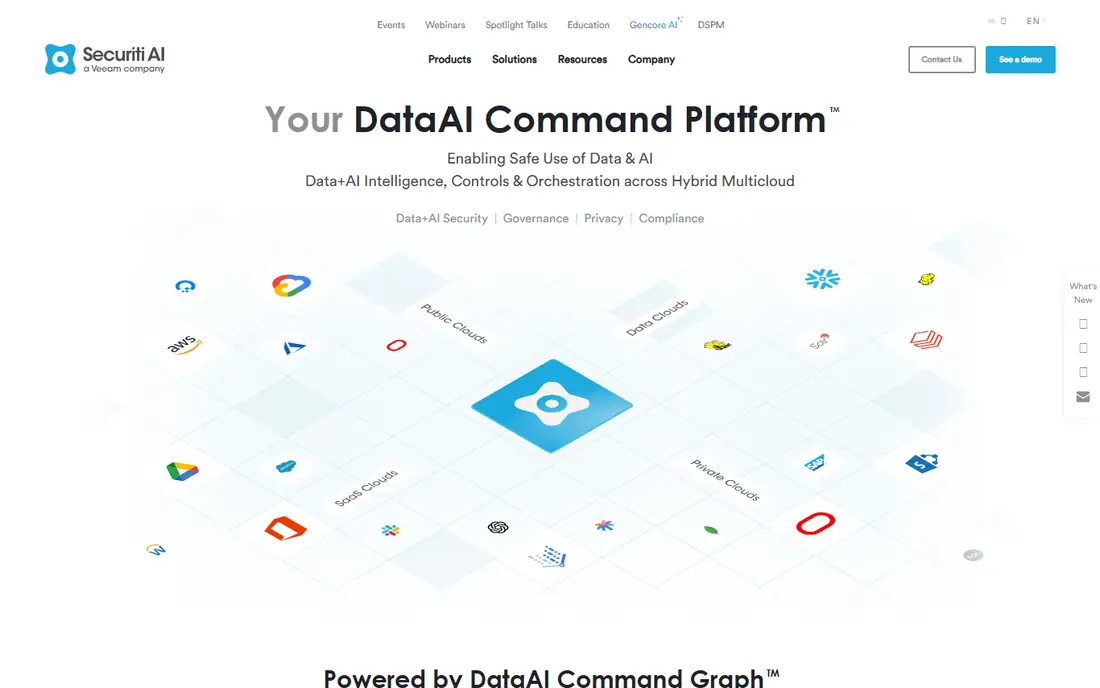
Securiti approaches privacy from the data side first. It discovers personal data across cloud stores, databases, and applications, classifies it, and builds a data map from what it finds. That map then feeds consent, data subject requests, and vendor risk work, so a request to delete or export personal data can be fulfilled from systems the team actually uses.
That data-first design helps organisations that struggle to answer a basic question: where does personal data live? It also means Securiti is often evaluated beside data governance and security tools, not only beside consent tools. Teams that only need a cookie banner will not use most of the platform, and should look at a narrower consent tool instead.
What we like- Strong data discovery and classification
- Automated data subject request handling
- AI-assisted privacy workflows
Watch out for- Breadth can mean a longer evaluation
- Pricing depends on data volume and modules
#3Osano
Best for: Approachable privacy for growing companies4.5/5 on
G2 (173 reviews, checked Oct 2026)
Visit osano.com
Starting priceSee website
Free planYes
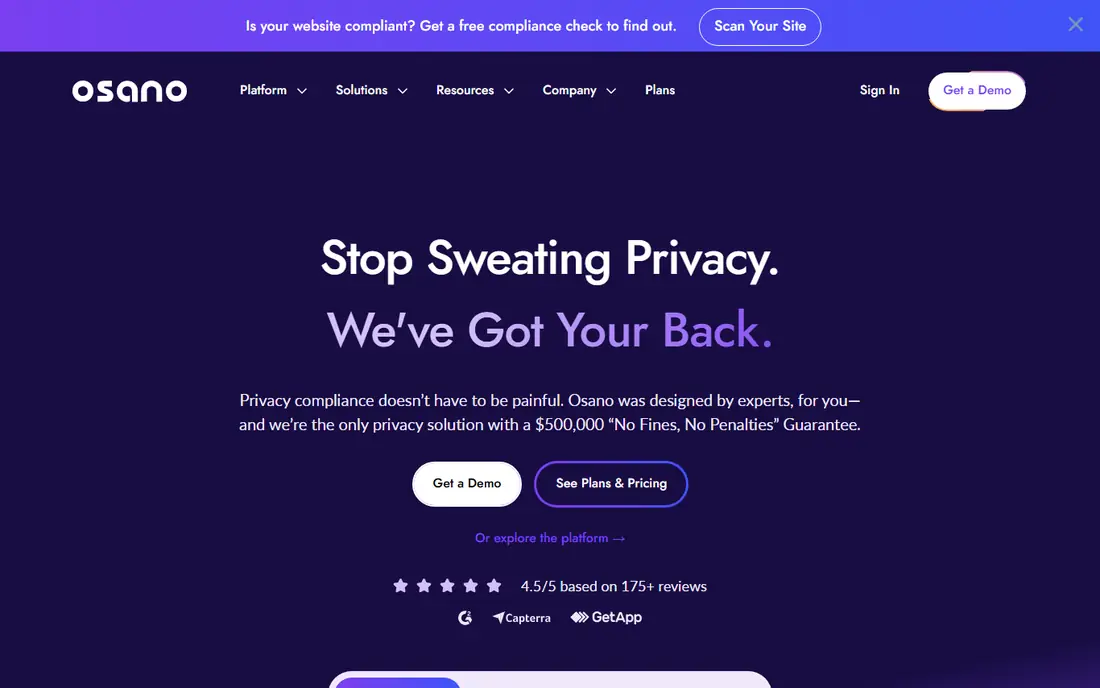
Osano is built for companies that need real privacy management without an enterprise rollout. Consent management, data subject requests, data mapping, and vendor risk are available in a product that a smaller team can configure without a long consulting engagement. Its acquisition of WireWheel also added preference management for customer data.
The result is a practical middle ground. Osano is unlikely to match OneTrust or TrustArc feature for feature in a large, complex governance programme, but many mid-market teams do not need that depth. The key question is whether the team values speed and usability over the widest possible module list. For many growing companies, that answer is yes.
What we like- Easier setup than enterprise suites
- Consent, subject requests, and vendor risk in one place
- Clear interface for smaller teams
Watch out for- May lack some deep enterprise governance features
- Advanced customisation can be limited
#4Transcend
Best for: Developer-led privacy infrastructure4.6/5 on
G2 (112 reviews, checked Oct 2026)
Visit transcend.io
Starting priceSee website
Free planFree trial
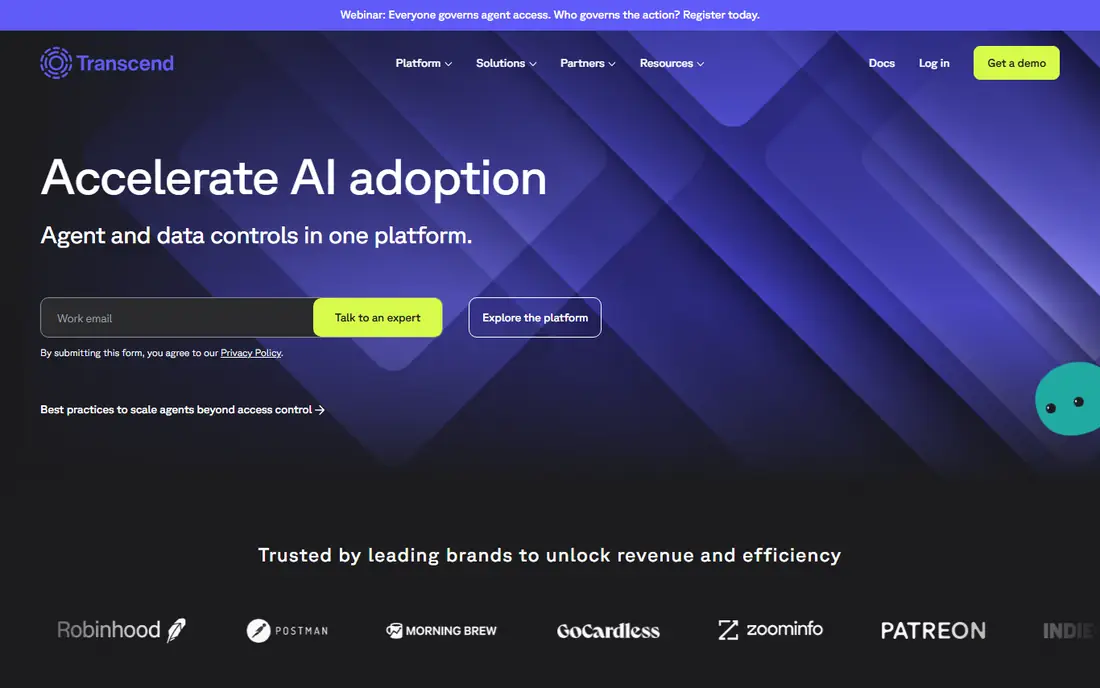
Transcend treats privacy as infrastructure. Instead of asking staff to chase data across systems by hand, it connects to databases, warehouses, CRMs, and marketing tools, then automates the steps needed to fulfil access, deletion, and correction requests. Engineers define how each system should respond, and the platform runs that logic each time a request arrives.
That model works well for product-led companies with a modern data stack and engineering time to invest. It works less well for a legal team that wants a fully managed, no-code workflow and has little developer support. Transcend also covers consent, but teams whose main problem is cookie banners and marketing preferences may prefer a consent-first tool.
What we like- API-first approach to data subject requests
- Strong integrations with modern data stacks
- Automated fulfilment across systems
Watch out for- Developer involvement needed for full value
- Consent features are narrower than a dedicated consent platform
#5DataGrail
Best for: Data subject requests and data mapping4.7/5 on
G2 (206 reviews, checked Oct 2026)
Visit datagrail.io
Starting priceSee website
Free planNo
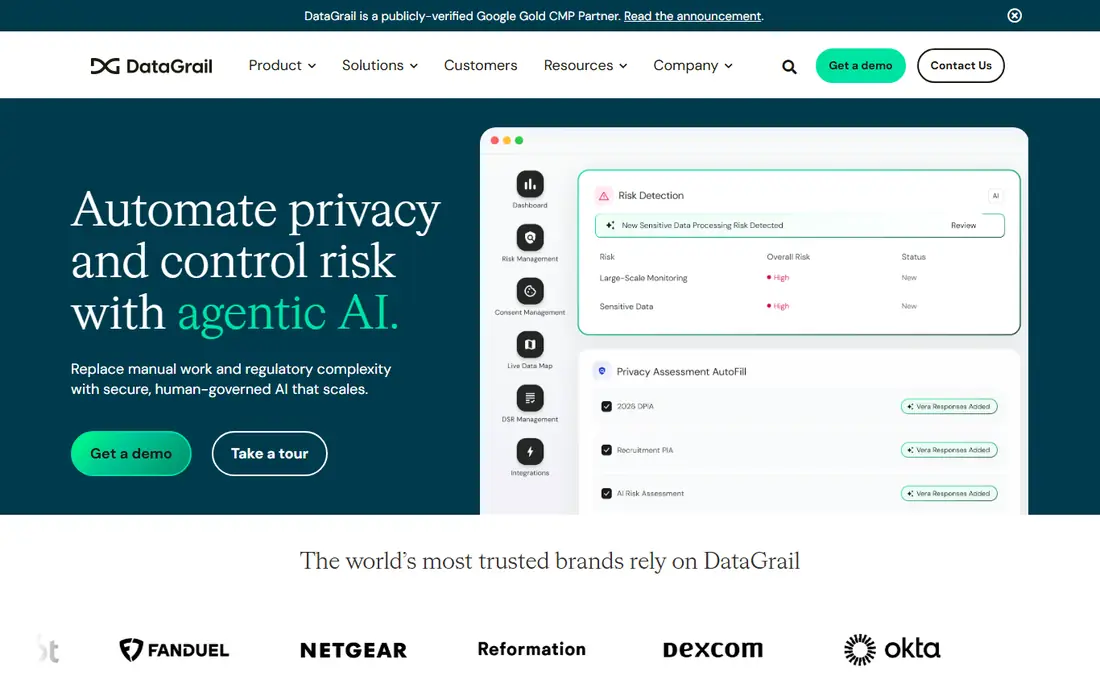
DataGrail focuses on the two tasks that consume the most privacy team time: knowing where personal data lives, and fulfilling requests about that data. It connects to a wide set of business systems, builds a data map from those connections, and automates much of the deletion and access workflow. Managers get a clear view of request status, deadlines, and completion evidence.
That focus makes DataGrail a strong mid-market to enterprise pick when data subject requests are the main pain point. It is less of a fit for a team whose only need is consent management, since a consent tool would be cheaper and simpler. Buyers should also check integration coverage for their specific systems, because custom or older systems may need extra work.
What we like- Automated request fulfilment across many integrations
- Live data map
- Useful audit trail for compliance reporting
Watch out for- Enterprise pricing is quote-based
- Setup still needs integration work for custom systems
#6BigID
Best for: Data discovery and classification4.3/5 on
G2 (16 reviews, checked Oct 2026)
Visit bigid.com
Starting priceSee website
Free planFree trial
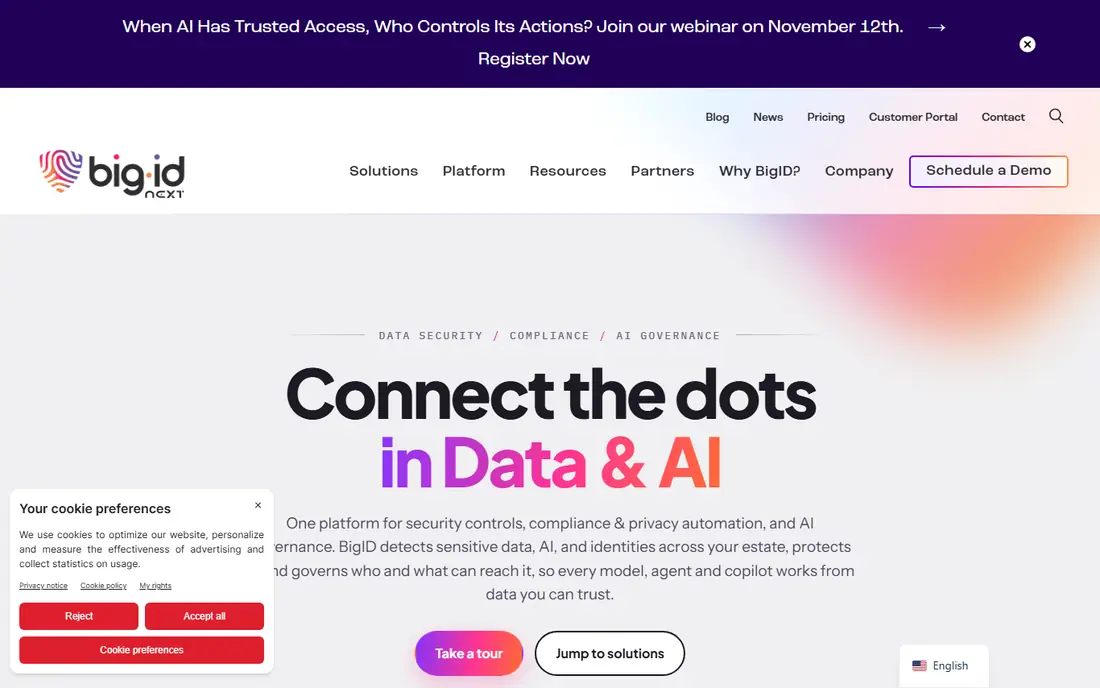
BigID starts with discovery and classification, finding personal and sensitive data across files, databases, cloud storage, and applications. That foundation supports privacy work, but it also supports data security, governance, and AI data management, which is why BigID is often bought by security and data teams as well as privacy teams.
For a OneTrust replacement, BigID makes most sense when the organisation does not trust its current data map, or when privacy, security, and governance need a shared view of the same data. A team that already knows where its data lives and only needs consent and requests handled may get faster value from a narrower tool. Scoping the first use case clearly matters, because BigID can expand into many programmes at once.
What we like- Deep discovery across structured and unstructured data
- Classification and risk scoring
- Strong security and governance overlap
Watch out for- Can be more platform than a privacy-only team needs
- Implementation scope should be agreed early
#7Ketch
Best for: Consent and preference management4.6/5 on
G2 (175 reviews, checked Oct 2026)
Visit ketch.com
Starting priceSee website
Free planFree trial
Ketch focuses on consent and preferences as a system of record, not just as a banner. It captures consent on websites and apps, stores preferences centrally, and passes them to downstream systems such as marketing platforms and data warehouses. That helps teams prove what a person agreed to, and helps marketing use only permissioned data.
Ketch also offers broader privacy programme features, but its centre of gravity remains consent and preference. Teams replacing OneTrust mainly for data subject requests or vendor risk should compare Ketch with DataGrail or Osano first. Teams replacing OneTrust mainly because consent does not reach downstream systems should put Ketch near the top of the list.
What we like- Consent and preference capture across web, mobile, and connected systems
- Developer-friendly deployment
- Programme management features
Watch out for- Full privacy governance needs other tools beside it
- Pricing is quote-based
Starting priceSee website
Free planYes
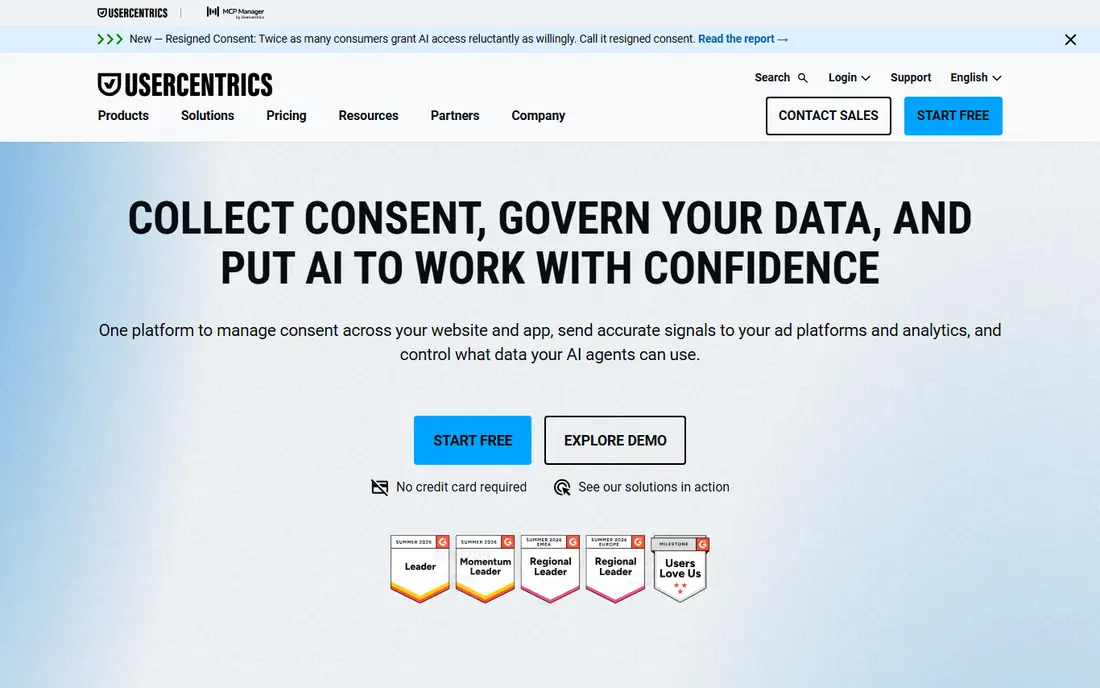
Usercentrics, which includes Cookiebot, is a consent-first choice. It scans a website for cookies and trackers, builds a consent banner that matches current regulations, and records consent for audit. App consent and server-side consent options extend the same model beyond a single website. For many small and mid-sized sites, that is the whole job.
The limit is scope. Usercentrics does not replace a full privacy programme covering assessments, vendor risk, and automated data subject requests. That is not a flaw if consent is the actual need, and paying for a full suite to run a banner is wasteful. Teams should be honest about which problem they are solving before choosing between Usercentrics and a broader platform.
What we like- Mature cookie consent and app consent tools
- Cookiebot product for smaller sites
- Good coverage of European and US state laws
Watch out for- Not a full privacy governance suite
- Data subject request features are limited beside dedicated platforms
#9Didomi
Best for: Consent and preference across channels4.5/5 on
G2 (177 reviews, checked Oct 2026)
Visit didomi.io
Starting priceSee website
Free planFree trial
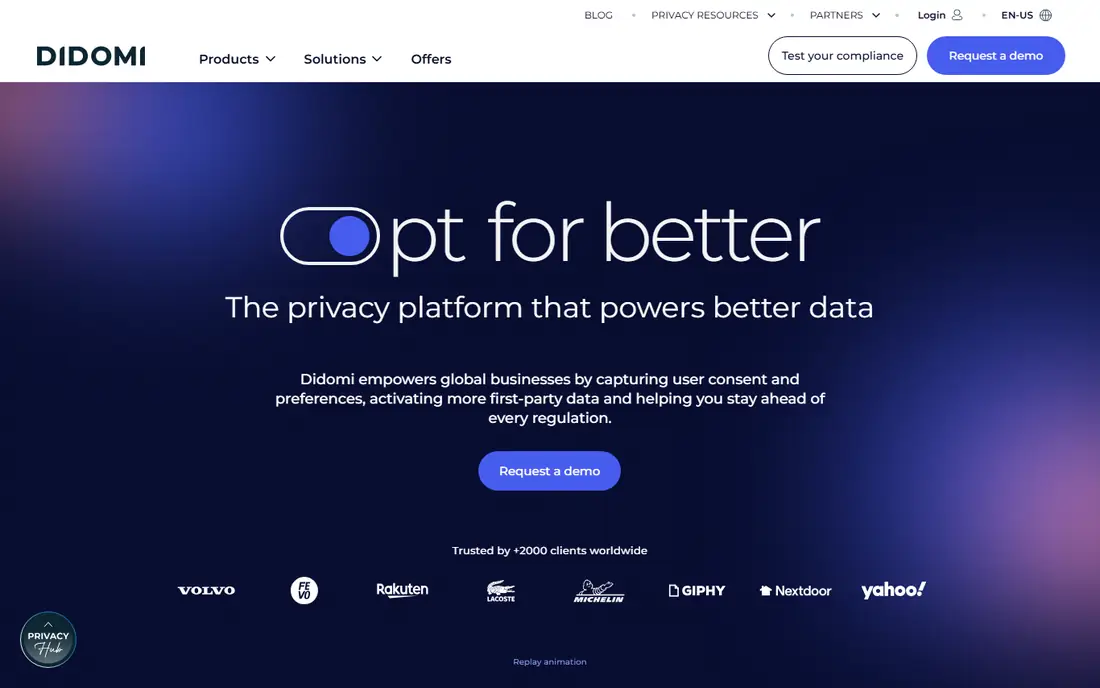
Didomi gives organisations a central place to manage consent and preferences across channels, including websites, mobile apps, and other touchpoints. A preference centre lets customers update their choices in one place, and those choices can flow to marketing and data systems. That cross-channel view is useful for brands with several customer touchpoints.
Like Ketch and Usercentrics, Didomi is strongest on consent and preference rather than on full governance. It suits companies whose OneTrust pain is mainly consent operations, especially in Europe, and who want a dedicated preference experience. Companies needing deep assessments and vendor risk in the same purchase should compare TrustArc, Securiti, or Osano instead.
What we like- Consent and preference management across web, app, and offline channels
- Preference centre features
- Strong European focus
Watch out for- Narrower than enterprise governance suites
- Pricing is quote-based
How we chose
We compared vendor documentation, pricing pages, and public reviews on G2, Capterra, and Reddit, and grouped tools by their main strength: enterprise governance, data discovery, request automation, or consent. A tool made this list only if it is actively sold today and can credibly replace at least one major OneTrust module. We left out generic governance, risk, and compliance tools that do not focus on privacy operations.
Where a vendor did not publish a clear starting price, we wrote See website instead of guessing. Enterprise privacy pricing often depends on websites, data volume, users, and modules, so a vendor quote based on a real scope is more useful than a headline figure.
How to choose a OneTrust replacement
A replacement project fails most often when the team buys for the module list instead of for the daily work. Start with the work that takes the most time today, then check whether the shortlisted tool actually reduces that work in a trial.
Name the main job first
If cookie consent is the job, shortlist Usercentrics, Ketch, and Didomi. If data subject requests are the job, shortlist DataGrail, Transcend, and Osano. If the job is knowing where personal data lives, shortlist Securiti and BigID. If the job is a full governance programme, shortlist TrustArc and Securiti. A tool that is excellent at a different job will still disappoint.
Check integration coverage early
Ask each vendor to show, not just claim, connections to the systems that hold personal data in your organisation. That includes the CRM, marketing tools, data warehouse, support system, and any custom databases. A platform with 200 integrations that misses your core system will create manual work at every request.
Test a real request end to end
Run a real access or deletion request through the trial, from intake to evidence of completion. Time each step, note where a person must intervene, and check the audit record. A demo that shows a dashboard is not the same as a workflow that completes a request under a deadline.
Compare implementation time, not just price
Enterprise privacy tools differ widely in how long they take to go live. Ask for a written implementation plan, the staff time required from your side, and what happens after go-live. A cheaper licence with a six-month implementation can cost more in staff time than a higher licence that goes live in weeks.
Frequently asked questions
What is the best overall OneTrust alternative?
There is no single best choice, because OneTrust covers several jobs. TrustArc is the closest enterprise governance swap, Securiti and BigID lead on data discovery, DataGrail and Transcend lead on request automation, and Usercentrics leads on consent alone. Match the tool to the job that matters most.
Why do companies switch from OneTrust?
Cost, setup time, and configuration weight are the reasons cited most often in public reviews. Teams also switch when consent does not flow reliably to downstream systems, or when they only use one or two OneTrust modules and want a simpler product for that job.
Is there a free OneTrust alternative?
Osano and Usercentrics offer free plans or free tiers that suit small websites and early evaluation. A free plan will not cover a full enterprise privacy programme, but it can be enough for cookie consent on a small site or for testing a product before a paid decision.
Can a consent tool replace OneTrust?
Only if consent is the main job being replaced. A consent tool handles banners, preferences, and consent records, but it does not automate data subject requests, map personal data across systems, or run vendor risk assessments. Teams with those needs should choose a broader platform.
How long does it take to switch from OneTrust?
Timelines vary widely, from weeks for a consent-only switch to several months for a full governance migration. The main factors are integration coverage, data mapping work, and how much historical consent and request data must move. Ask vendors for a phased plan with a first live use case, rather than a single big-bang date.
Should a small company buy a full privacy platform?
Usually not, unless it handles large volumes of personal data or faces strict regulatory scrutiny. A small company should start with a consent tool and add request handling only when volume or risk justifies it. That keeps cost and complexity in line with the actual privacy risk.
Sources we checked (9)
- https://www.trustarc.com/
- https://securiti.ai/
- https://www.osano.com/
- https://transcend.io/
- https://www.datagrail.io/
- https://bigid.com/
- https://ketch.com/
- https://usercentrics.com/
- https://www.didomi.io/
Is your product missing or out of date?
We review this list regularly. Vendors can request a listing, send updated pricing or ask about featured placement.

Shihab Mia · Founder, Rankite
Shihab has 5+ years in B2B and SaaS SEO. He writes Rankite's software buying guides from pricing pages, documentation and public user reviews. More about Shihab.