How we make this list: we compare pricing pages, product documentation and public user reviews. Ratings come from G2, Capterra or Trustpilot, with the date we checked them.
Key takeaways
- Netflix is the best single legal subscription for movie variety, while Tubi and Pluto TV are the best free legal options.
- No single service carries every movie, so rotating subscriptions or pairing a paid service with a free one usually covers more titles for less money.
- Unofficial streaming sites carry malware, scam, and legal risks, and they offer no reliable quality, subtitles, or account safety.
- Check whether a movie is included with a subscription, available to rent, or free with ads before paying, because availability changes by month.
Quick comparison
| Tool | Best for | Starting price | Free plan |
|---|
 Netflix | Widest movie variety in one subscription | $7.99 per month | Free trial |
 Hulu | Current films plus TV and originals | See website | Free trial |
 Max | Prestige films and Warner Bros. titles | $10.99 per month | Free trial |
 Prime Video | Movies included with Prime benefits | $8.99 per month | Free trial |
 Peacock | NBCUniversal films and affordable plans | $7.99 per month | Free trial |
 Paramount+ | Paramount films and franchise titles | $8.99 per month | Free trial |
 Apple TV+ | Original films in 4K | $12.99 per month | Free trial |
 Tubi | Free movies with ads | Free | Yes |
Is your product missing or out of date?
We review this list regularly. Vendors can request a listing, send updated pricing or ask about featured placement.
The best legal ways to watch movies online
Starting price$7.99 per month
Free planFree trial
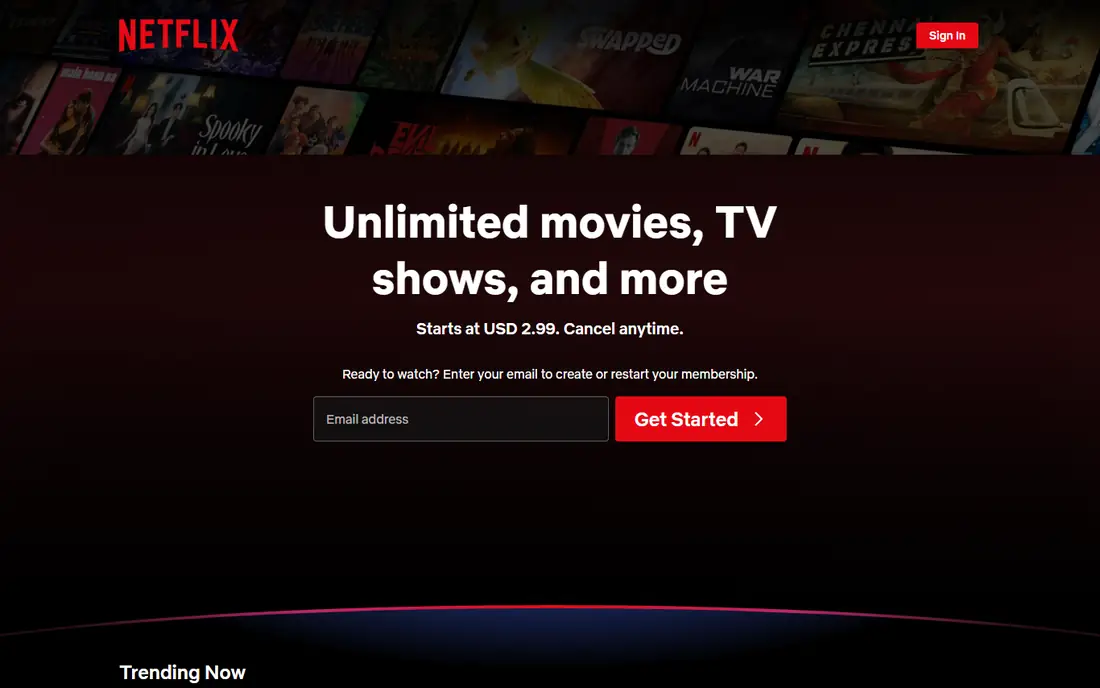
Netflix remains the best single paid option for movie watchers who want variety. Its catalog spans recent releases, originals, international films, documentaries, and classics, and the ad-supported plan keeps the entry price lower than ad-free plans. The interface, recommendations, and download options are also polished across devices.
The main limits are rotation and price. Movies leave Netflix every month, so a title you plan to watch may move to another service. Ad-free Standard and Premium plans cost notably more than the ad-supported plan. For most households, Netflix plus one free service covers a wide range of movie nights.
What we like- Large and rotating movie catalog
- Strong originals
- 4K on Premium
Watch out for- No permanent free tier
- Ad-free plans cost more
- Titles rotate off regularly
Starting priceSee website
Free planFree trial
Hulu pairs a solid movie catalog with current TV, originals, and documentaries, which suits households that watch both formats. Bundles with Disney+ can lower the combined cost, and the service supports profiles, downloads on ad-free plans, and a wide device range.
Movie availability varies, and some newer titles appear as rentals rather than included streams. The ad-supported plan is affordable, but frequent ad breaks bother some viewers. If your household already watches Hulu for TV, its movie catalog is a strong bonus rather than a reason to subscribe alone.
What we like- Strong film and TV mix
- Originals
- Bundle options with Disney+
Watch out for- Ad-free plan costs more
- Some films require add-ons or rentals
#3
Max
Best for: Prestige films and Warner Bros. titles
Visit max.com
Starting price$10.99 per month
Free planFree trial
Max is the best pick for viewers who favor prestige films, Warner Bros. releases, and a deep back catalog. It carries HBO films and series alongside studio titles, documentaries, and international cinema, with 4K available on higher plans. The curation feels more film-focused than some broader services.
The ad-supported plan is affordable, but ad-free and Ultimate plans cost more, and licensing changes can move titles. Max also leans more on film and prestige TV than on reality or family variety. For movie lovers, it is one of the strongest single subscriptions on this list.
What we like- Warner Bros. and HBO films
- Strong catalog depth
- 4K on higher plans
Watch out for- Higher ad-free price
- Catalog changes with licensing deals
Starting price$8.99 per month
Free planFree trial
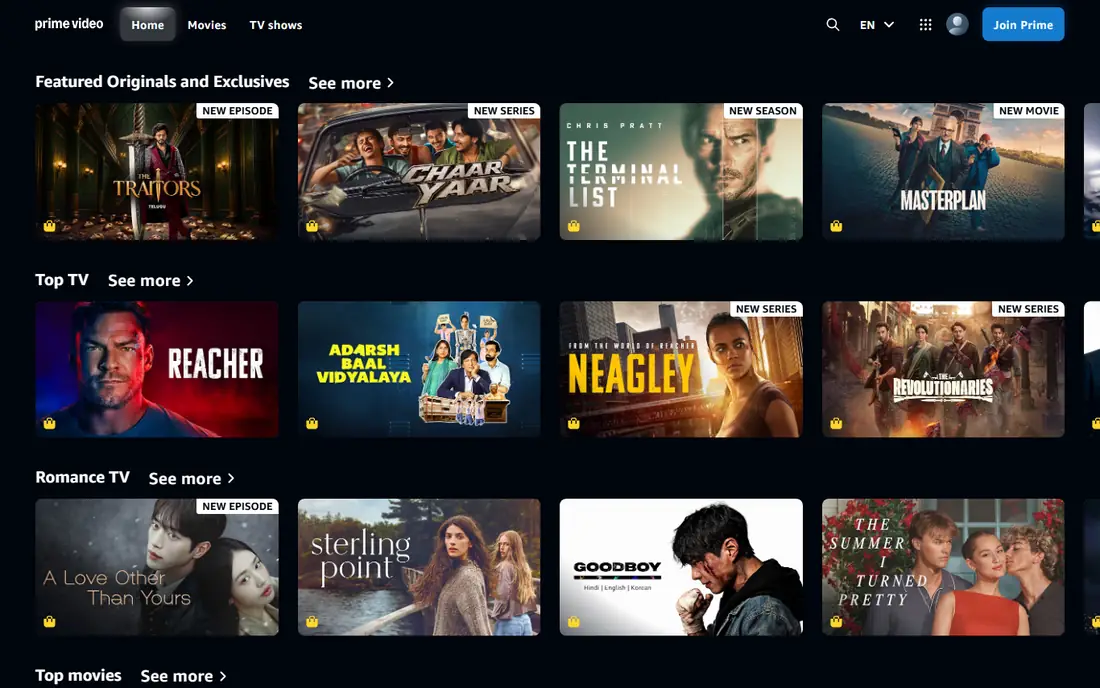
Prime Video is the best value for Amazon Prime members, since streaming is included with Prime shipping, music, and other benefits. The standalone video plan is also available for non-Prime viewers. Beyond included titles, the rental and purchase store covers new releases that no subscription carries yet.
The interface is the main complaint. Included titles, rentals, and add-on channels sit together, so it is easy to click a title that costs extra. Check the label before playing. For Prime households, though, Prime Video is effectively a free movie service on top of benefits they already pay for.
What we like- Included with Amazon Prime
- Rental and purchase store
- Wide device support
Watch out for- Included catalog mixes with rentals
- Interface can confuse
Starting price$7.99 per month
Free planFree trial
Peacock offers an affordable path to Universal films, NBCUniversal titles, and a mix of TV and live events. Its Select and Premium plans sit at the lower end of paid streaming prices, which makes it a good second service alongside Netflix or a free option. Downloads and ad-free viewing depend on plan level.
The movie catalog is smaller than Netflix or Max, and some content requires the higher Premium Plus plan. Peacock works best as a targeted subscription: subscribe when Universal films or events you follow are available, then pause when they are not.
What we like- Affordable entry plans
- Universal films
- Live sports and TV extras
Watch out for- Smaller movie catalog than Netflix
- Some titles need Premium Plus
Starting price$8.99 per month
Free planFree trial
Paramount+ carries Paramount films, franchise titles, and a mix of originals, documentaries, and live TV on some plans. The Premium plan adds Showtime content, which broadens the movie selection. The Essential plan is affordable and suits viewers who mainly want Paramount titles.
Catalog size is the limit. Paramount+ cannot match Netflix for sheer variety, and licensing moves some titles elsewhere. It is best for fans of Paramount franchises, or as a rotating subscription when a specific film series is available.
What we like- Paramount studio films
- Franchise catalogs
- Showtime option on Premium
Watch out for- Smaller overall catalog
- Some films rotate to other services
Starting price$12.99 per month
Free planFree trial
Apple TV+ focuses on original films and series rather than a large licensed back catalog. That focus shows in production quality, with 4K Dolby Vision and Dolby Atmos on supported titles at no extra charge. Family sharing covers up to six people, which helps the value for households.
The catalog is smaller, so Apple TV+ works best as a second service or a rotating subscription for original films. Viewers who want a deep library of older movies will need another service beside it. For original-film fans, it is a polished and straightforward option.
What we like- High-quality original films
- 4K Dolby Vision included
- Family sharing
Watch out for- Smaller catalog than larger rivals
- Fewer licensed back-catalog films
Starting priceFree
Free planYes
Tubi is the best free legal alternative for movie watchers. It offers thousands of films across genres, from classics and cult titles to recent catalog releases, all supported by ads. There is no subscription, no credit card, and no trial to cancel, which makes it easy to try.
Ads are the trade-off, and newer blockbuster releases are limited, since studios usually send those to paid services or rental stores first. Video quality also varies by title. Pair Tubi with one paid service and you cover a surprising number of movie nights for the price of a single subscription.
What we like- Completely free
- Large movie library
- No subscription needed
Watch out for- Ad breaks
- Newer releases are limited
- Video quality varies
How we chose
We compared pricing pages, product documentation, and public catalog information for legal streaming services available to US viewers, covering movie variety, price, free options, video quality, and device support. We only included licensed services, and we used "See website" where a current price depends on bundles or plan changes. We did not claim hands-on testing, and we did not list or link to unofficial streaming sites.
Why legal services are the safer choice
Unofficial streaming sites often look convenient, but they carry real risks. Pop-up ads, fake play buttons, and malicious downloads can infect devices or steal account details, and the streams themselves are often low quality, mislabeled, or missing subtitles. There is also no customer support, no reliable library, and no guarantee a title will still be there tomorrow.
Legal services also support the people who make films, through licensing fees and subscriptions. Free legal options such as Tubi show that cost is not the only reason to use unofficial sites. If a movie is not on a service you pay for, check a rental store, a library service, or a free legal app before turning to an unofficial source.
One more way to stretch a movie budget is to use a public library. Many US libraries offer free streaming through licensed services, with a set number of titles per month, and the selection often includes independent films, documentaries, and classics that paid services overlook. Check your local library website for streaming options, since availability varies by system. You can also check rental prices before subscribing to a new service for a single film, because a one-time rental is often cheaper than a month of a service you will not use again. Keep a short watchlist with the service that carries each title, and review it monthly. That simple habit stops subscriptions from stacking up unnoticed and keeps movie nights focused on films you actually want to see.
Before you finish, write down your top three requirements and rank the shortlist against them in plain language. That short list stops a demo or a discount from pulling the choice toward a feature you will rarely use. Share the ranking with the people who will use the tool daily, and ask them to flag any deal-breaker you missed, such as a missing integration, a device limit, or a workflow step that would take longer than it does today. Their answers often change the order. Once you have a winner, set a review date three months after launch to check cost, usage, and complaints, and be ready to switch if the tool is not earning its place. A planned review keeps the decision honest and prevents a poor fit from lingering for years.
Frequently asked questions
What is the best free legal alternative for watching movies?
Tubi is the best free option on this list, with a large ad-supported movie library and no subscription. Pluto TV and free library services are also worth checking, since they add more free titles without cost.
Why do movies leave streaming services?
Movies are licensed for set periods, so a title can move from one service to another when a deal ends. That is why no single subscription carries every film, and why rotating services or renting a specific title is often cheaper than subscribing to everything at once.
Can I watch new releases legally without a subscription?
Yes, through rental and purchase stores such as Amazon, Apple, and Google, which often carry new releases before they reach subscription services. Prices vary by title and quality, and rentals usually allow a set viewing window after you start watching.
Which service has the most movies?
Netflix generally offers the widest variety in one subscription, while Max and Prime Video are strong for studio and catalog depth. The best count depends on genre, so check a title search site before subscribing for one specific film.
Are free streaming services really legal?
Yes, services such as Tubi operate under licenses and show ads to pay for content. A service is a warning sign if it offers brand-new theatrical releases for free, hides its company details, or pushes suspicious downloads and pop-ups.
How can I lower my streaming bill?
Pair one paid service with free services such as Tubi, rotate paid subscriptions by month, and use bundles or family plans where they fit. Cancel a service when you finish the films you joined for, and resubscribe later when new titles arrive.
Sources we checked (8)
- https://www.netflix.com
- https://www.hulu.com
- https://www.max.com
- https://www.primevideo.com
- https://www.peacocktv.com
- https://www.paramountplus.com
- https://tv.apple.com
- https://tubitv.com
Is your product missing or out of date?
We review this list regularly. Vendors can request a listing, send updated pricing or ask about featured placement.

Shihab Mia · Founder, Rankite
Shihab has 5+ years in B2B and SaaS SEO. He writes Rankite's software buying guides from pricing pages, documentation and public user reviews. More about Shihab.