How we make this list: we compare pricing pages, product documentation and public user reviews. Ratings come from G2, Capterra or Trustpilot, with the date we checked them.
Key takeaways
- Fundrise and Arrived are the beginner routes into crowdfunded real estate, with minimums of 10 and 100 dollars and open access for non accredited investors.
- CrowdStreet, RealtyMogul, and EquityMultiple serve accredited investors who want to pick individual deals rather than buy a managed portfolio.
- Groundfloor is the outlier, lending backed by short term home renovation loans rather than property equity, with its own distinct risk shape.
- Read the risk box before any entry: crowdfunding investments can lose value, are hard to sell, and are not FDIC insured.
Quick comparison
| Tool | Best for | Starting price | Free plan |
|---|
 Fundrise | Hands off real estate portfolios | $10 minimum | No |
 Arrived | Buying shares of rental homes | $100 minimum | No |
 Groundfloor | Short term real estate loans | $10 minimum | No |
 RealtyMogul | Accredited deal picking plus REITs | See website | No |
 CrowdStreet | Accredited commercial real estate | See website | No |
 Yieldstreet | Alternative assets beyond property | See website | No |
 EquityMultiple | Accredited commercial deals, low minimum | $5,000 minimum | No |
 Streitwise | Non accredited commercial REIT | $1,000 minimum | No |
Is your product missing or out of date?
We review this list regularly. Vendors can request a listing, send updated pricing or ask about featured placement.
Starting price$10 minimum
Free planNo
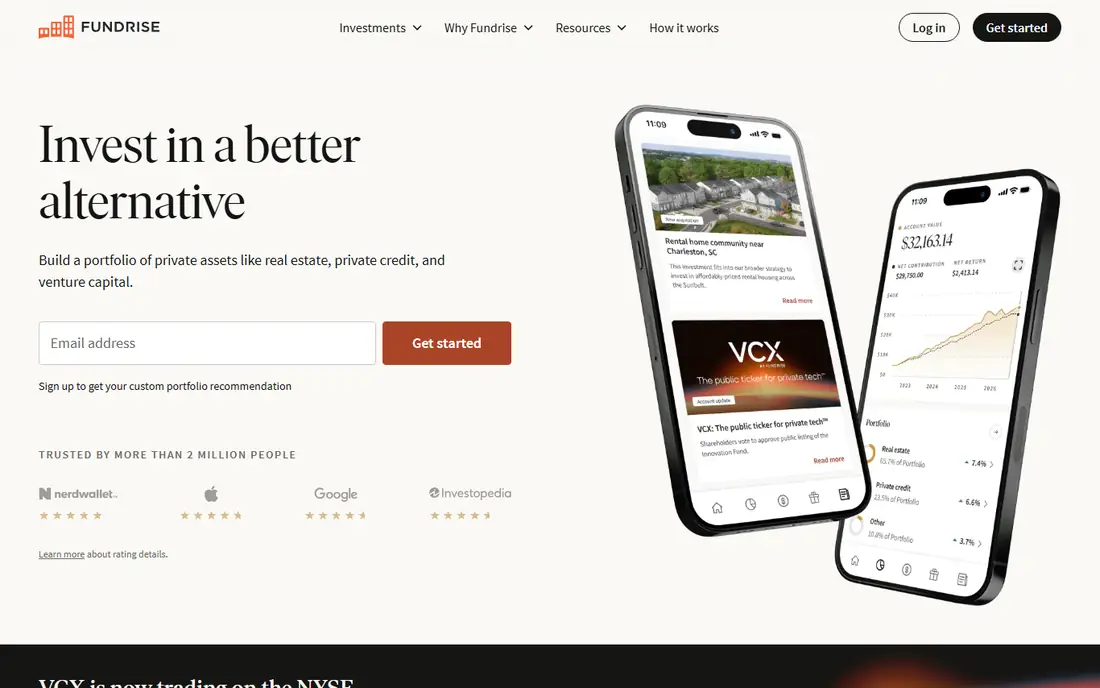
What we like- Fundrise is the largest and most beginner friendly route in: open an account with 10 dollars, choose a portfolio strategy, and the platform allocates across its funds holding apartments, industrial property, and private credit, with dividends and app based reporting. It is open to non accredited investors because its funds are registered offerings, and its decade plus operating history spans a full property cycle. For someone leaving deal marketplaces because the hunting ate their weekends, Fundrise's set and review quarterly model is the point.
Watch out for- You own fund shares, not properties, and choosing individual deals is impossible by design. Redemptions are limited, processed at the platform's discretion under its liquidity programme, and can be suspended, which the fine print states and investors should believe. Fees layer at fund and platform levels, and returns have varied by vintage and strategy like everyone else's.
Starting price$100 minimum
Free planNo
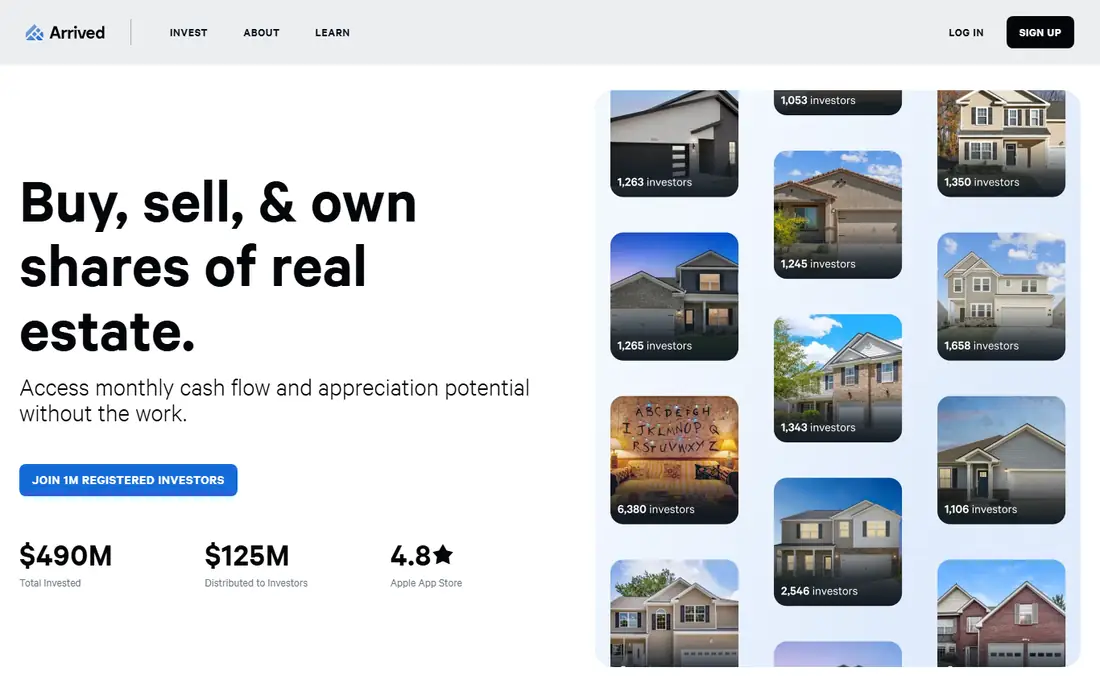
What we like- Arrived lets non accredited investors buy shares in individual single family rental homes and vacation rentals from 100 dollars, choosing properties by city, projected yield, and appreciation profile, then receiving rental income distributions quarterly. The property pages read like listings, with addresses, photos, and financials, which suits investors who liked InvestorLift's deal browsing but want a regulated, passive structure. A secondary market feature has been developing, though liquidity remains limited and should not be assumed.
Watch out for- Single property concentration is the risk the model invites: one vacancy or roof repair lands on your distribution. Offerings sell out and new supply is episodic, so deploying larger sums takes patience. The platform is younger than Fundrise and its properties have shorter operating histories, and fees sit inside the offering structure where they need reading.
Starting price$10 minimum
Free planNo
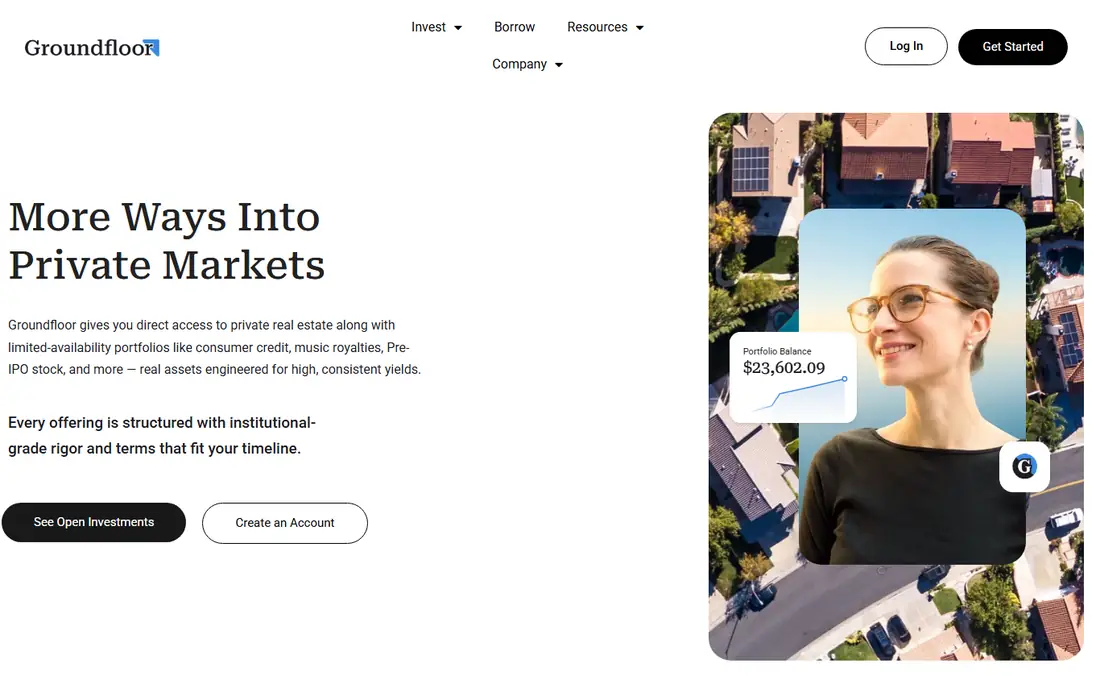
What we like- Groundfloor funds short term loans to home renovators, graded by risk, and lets non accredited investors spread as little as 10 dollars across many loans, building a diversified loan portfolio with terms typically measured in months rather than years. The loan by loan transparency, borrower, property, grade, loan to value, is the best in this list for investors who think like lenders. Shorter durations mean capital recycles faster than in equity offerings, subject to loans repaying on time.
Watch out for- Loans can and do default or extend, and returns arrive only when borrowers repay
- The platform's own data shows a spread of outcomes across grades. You hold debt, not property, so there is no appreciation upside, only interest at the grade's rate minus losses. Groundfloor's financial history includes periods of strain disclosed in its filings, which is exactly why investors should read the offering documents rather than the homepage.
Starting priceSee website
Free planNo
What we like- RealtyMogul runs both models: two non accredited REIT style funds for hands off investors, and a marketplace of individual commercial deals, apartments, industrial, self storage, for accredited investors who want to underwrite specific properties. It has operated since 2012, through the sector's shakeouts, and its deal pages carry the sponsor track records and fee disclosures serious investors read first. Minimums on individual deals have typically run from 25,000 dollars, with the REITs far lower.
Watch out for- Individual deal minimums and accreditation shut out smaller investors from the marketplace half. Sponsor quality varies deal by deal, which is the model's nature and the investor's homework. Fees exist at platform and sponsor levels, and liquidity is the standard crowdfunding story: plan on holding to the deal's term, measured in years.
Starting priceSee website
Free planNo
What we like- CrowdStreet is the largest marketplace dedicated to institutional grade commercial deals for accredited investors: sponsors present offerings with webinars and detailed documents, and investors build a portfolio deal by deal across property types and markets, with typical minimums around 25,000 dollars. Its sponsor vetting and the depth of its deal flow are the draw for investors graduating from funds to direct selection. The platform also offers managed portfolio services for those who want the asset class without the picking.
Watch out for- Accredited only, full stop, and deal quality still depends on sponsor underwriting that investors must assess themselves. Fees and promote structures sit inside each offering and differ deal to deal. CrowdStreet's history includes a well publicized escrow related failure in 2023 involving a sponsor's funds, which the company addressed publicly
- It stands as the category's reminder that platform scale is not a guarantee, and offering documents and escrow arrangements deserve real reading.
Starting priceSee website
Free planNo
What we like- Yieldstreet broadens the frame from real estate to alternative assets generally: private credit, art, structured notes, and real estate funds on one platform, mostly for accredited investors, with some offerings open wider. Its flagship alternative income fund gives non accredited investors a diversified single ticket. For an InvestorLift browser whose real interest is private market yield rather than property specifically, Yieldstreet is the widest shelf in this list.
Watch out for- Breadth brings complexity: each asset class carries risks platform summaries cannot compress, and some Yieldstreet offerings have historically underperformed their targets, a matter of public reporting. Minimums for individual deals commonly start at 10,000 dollars and up. Fees vary by product and need deal level reading, and liquidity terms differ across the catalogue in ways the app makes easy to skim past.
Starting price$5,000 minimum
Free planNo
What we like- EquityMultiple targets accredited investors with commercial real estate debt and equity from 5,000 dollars minimums, lower than most deal marketplaces, plus fund products for diversification. Its fee posture is a stated part of its pitch, with an emphasis on keeping platform fees lean relative to sponsors' economics, and its reporting tools suit investors tracking positions across deals. The lower minimum lets accredited investors diversify across more deals sooner, which is sound practice in an asset class where single deal outcomes vary widely.
Watch out for- Accredited investors only for the individual deal flow. Deal volume is smaller than CrowdStreet's, so choice at any moment is narrower. As everywhere here, investments are illiquid, sponsor dependent, and capable of loss, and the lower minimum does not lower the underwriting homework per deal.
Starting price$1,000 minimum
Free planNo
What we like- Streitwise offers a non accredited route into commercial property through its REIT structure, historically focused on a small number of office and mixed use assets, with a 1,000 dollar minimum and a long record of quarterly dividends at rates it publishes. The concentrated portfolio is fully visible, you can name the buildings your money sits in, which some investors prefer to blind pools. Its investor communications are notably plain spoken about occupancy and leasing.
Watch out for- Concentration cuts both ways: a handful of properties, with office exposure through a difficult period for that sector, means specific asset risk Fundrise style diversification avoids. Redemption is limited and at the REIT's terms, like every entry here. Past dividend rates are not a promise of future ones, a sentence that applies to the whole list and deserves repeating at the focused end of it.
How we chose
We compared established US real estate crowdfunding platforms on access, accredited versus open, minimums, model, managed funds versus individual deals, operating history, and fee transparency. We favoured platforms with registered offerings or long operating records and disclosed, in the entries themselves, the risks and the public blemishes we found, because in this category the honest cons section matters more than the pros. InvestorLift itself, a deal marketplace for active investors, is the origin point and is not listed as its own alternative.
Start with your status and your temperament, not the marketing. If you are not an accredited investor, your shelf is Fundrise, Arrived, Groundfloor, Streitwise, and parts of RealtyMogul and Yieldstreet. If you are accredited, decide whether you will genuinely underwrite sponsors and deals; if not, a managed fund at Fundrise or EquityMultiple matches your behaviour better than a marketplace you will use passively at deal picking risk.
Then diversify the way the category demands: across platforms, property types, and vintages, in position sizes where a total loss is a lesson rather than a disaster. Read one offering document end to end before your first investment, fees, redemption terms, sponsor promote, and conflicts, because that document, not the app, is the contract. Keep crowdfunding a small slice of net worth, keep emergency savings in insured accounts where they belong, and treat every projected return as a hope with paperwork. This article is education, not a recommendation; a licensed adviser who knows your finances is the right source for personal allocation decisions.
Frequently asked questions
Is crowdfunding real estate safe?
It is regulated, and it is still risky. Registered offerings and platform disclosures give investors real documents and standards, but the underlying assets are illiquid properties and loans whose values move with markets, sponsors, and tenants. Losses happen, redemptions can be limited or paused, and no entry here carries FDIC insurance. Safe is the wrong frame; sized correctly and understood is the achievable one.
What does accredited investor mean?
Under US SEC rules, generally an individual with income above 200,000 dollars, 300,000 with a spouse, or a net worth above 1 million dollars excluding a primary home, or certain professional credentials. Platforms verify status before allowing accredited only investments. The category exists because regulators treat illiquid private offerings as suitable only for investors presumed able to bear and evaluate the risk.
How much money do I need to start?
Ten dollars at Fundrise or Groundfloor, one hundred at Arrived, one thousand at Streitwise. Accredited marketplaces start higher in practice: around 5,000 dollars at EquityMultiple and commonly 25,000 per deal at CrowdStreet and RealtyMogul. Starting minimums are not a sensible portfolio size, though; diversification across deals or a fund structure matters more than the first ticket.
How do I get my money back out?
Slowly, and on the platform's terms. Funds like Fundrise run limited redemption programmes that can be restricted; individual deals return capital when the property sells or refinances at the end of its term, typically years; Groundfloor loans repay at loan maturity or workout. There is generally no real secondary market. Money you may need on a schedule does not belong in any product in this article.
How are these investments taxed?
Rental and interest income distributions are generally taxable, funds and REITs issue K 1 or 1099 forms depending on structure, and some offerings offer tax advantaged features such as depreciation pass throughs. The details differ per product and per investor, and this article is not tax advice; bring the platform's tax documents to your own adviser or accountant before investing at scale.
Sources we checked (0)
Is your product missing or out of date?
We review this list regularly. Vendors can request a listing, send updated pricing or ask about featured placement.

Shihab Mia · Founder, Rankite
Shihab has 5+ years in B2B and SaaS SEO. He writes Rankite's software buying guides from pricing pages, documentation and public user reviews. More about Shihab.