How we make this list: we compare pricing pages, product documentation and public user reviews. Ratings come from G2, Capterra or Trustpilot, with the date we checked them.
Key takeaways
- The best margin trading platforms for crypto in 2026 are led by Binance, Bybit, and OKX for liquidity, while Kraken leads for regulation.
- Margin trading lets you control a position larger than your deposit, but it also magnifies every loss, and you can lose more than you deposit.
- This article is not financial advice. Crypto is volatile, margin trading is high risk, and most margin traders lose money over time.
- Fees, liquidation rules, and price feeds decide how much of your edge survives, so compare total cost, not only headline fees.
- Isolated margin caps risk at one position, while cross margin shares collateral across all positions, so beginners should prefer isolated margin.
Quick comparison
| Tool | Best for | Starting price | Free plan |
|---|
 Binance | Deepest liquidity | See website | No |
 Bybit | Derivatives traders | See website | No |
 OKX | Advanced margin strategies | See website | No |
 Kraken | Regulated margin trading | See website | No |
 Bitget | Copy trading and low fees | See website | No |
 dYdX | Decentralized margin trading | See website | No |
 KuCoin | Altcoin margin trading | See website | No |
 Coinbase | US traders | See website | No |
Is your product missing or out of date?
We review this list regularly. Vendors can request a listing, send updated pricing or ask about featured placement.
Starting priceSee website
Free planNo
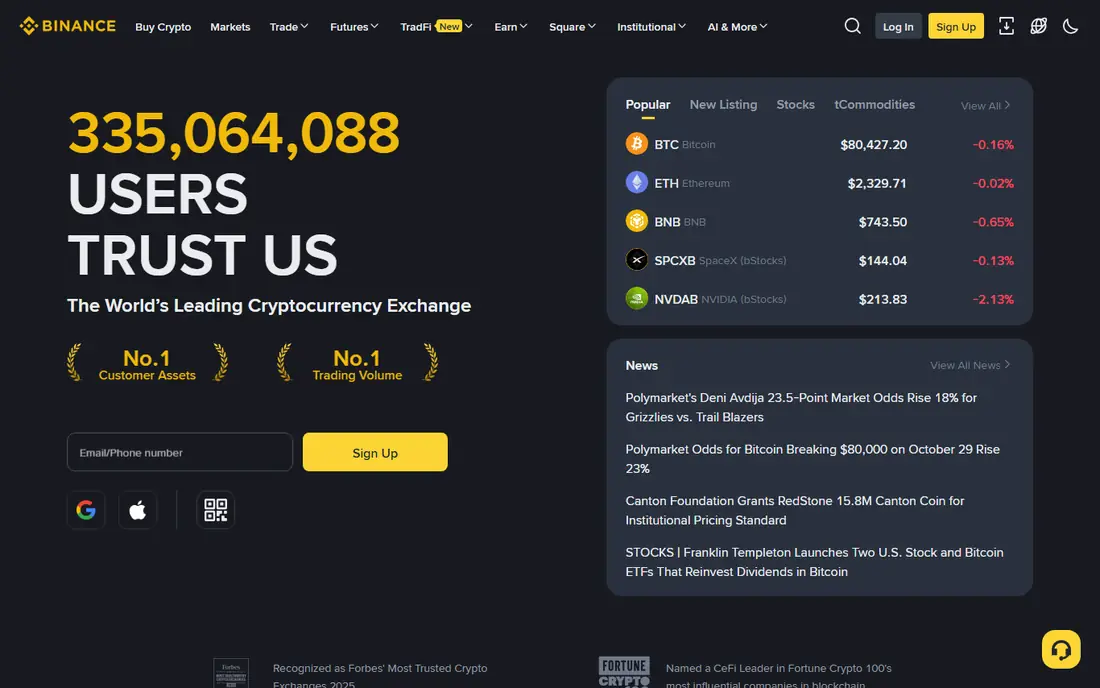
Binance is the largest crypto exchange in the world, and its margin platform offers up to 10x on spot margin and higher multiples on futures, with futures maker and taker fees around 0.02 percent and 0.05 percent. Deep liquidity means tighter spreads and fewer failed fills, which matters most when prices move fast and liquidation risk rises. Binance also runs the SAFU insurance fund and cold wallet storage for user funds.
The limits are access and complexity. Binance is not available to US traders, who must use a separate US platform, and its interface packs in so many products that beginners can feel lost. Regulatory limits also vary by country, so check availability in your region before opening an account.
What we like- Deepest liquidity in crypto
- Up to 10x spot margin
- SAFU insurance fund
Watch out for- Not available in the US
- Complex interface
- Regulatory limits vary by country
Starting priceSee website
Free planNo
Bybit is a leading derivatives exchange, offering up to 10x on spot margin and up to 100x on futures, with futures fees around 0.01 percent maker and 0.06 percent taker. Its matching engine and risk tools suit active derivatives traders, and it lists over 300 coins plus traditional finance perpetuals. Bybit also offers multi signature cold wallet custody for user funds.
The limits are access and temptation. Bybit is not available in the US, and very high multiples tempt traders to take positions far larger than their risk tolerance allows. For experienced derivatives traders outside the US, Bybit is one of the strongest platforms available.
What we like- Strong derivatives platform
- Up to 100x on futures
- Low futures maker fees
Watch out for- Not available in the US
- High multiples tempt overuse
- Derivatives focus
Starting priceSee website
Free planNo
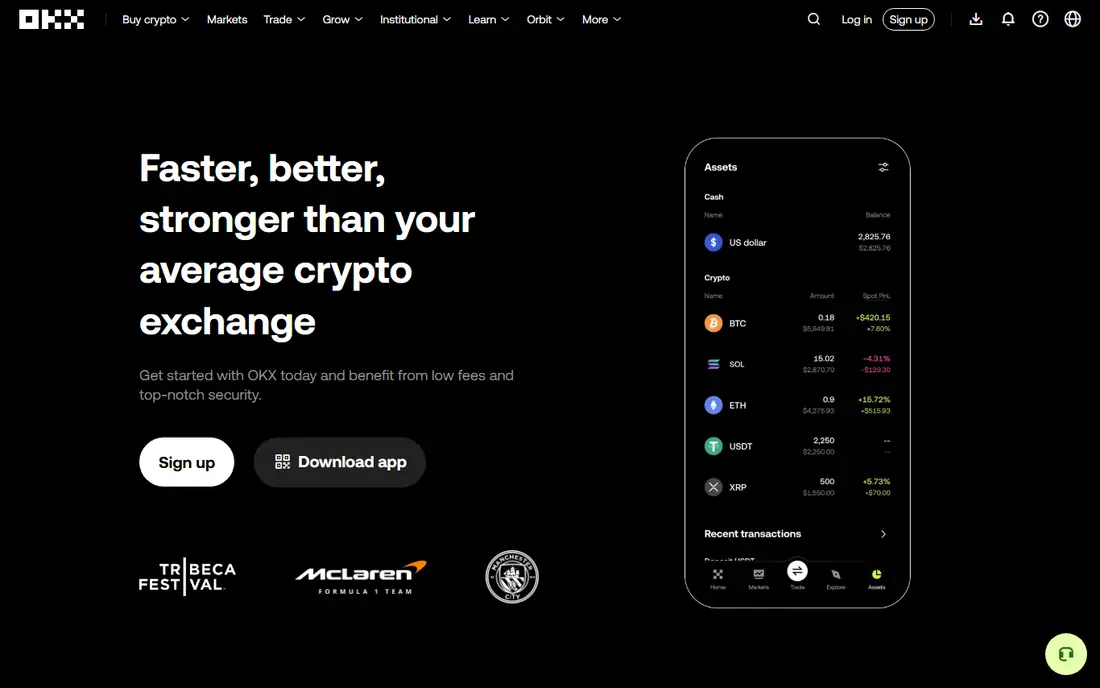
OKX offers one of the most flexible margin systems in crypto, with a unified account that lets traders use one pool of collateral across spot margin, futures, and options. Spot fees start around 0.08 percent maker and 0.10 percent taker, with futures around 0.02 percent and 0.05 percent. Cross, isolated, and multi currency margin modes suit advanced traders running complex strategies.
The limits are complexity and access. OKX's unified account is powerful but confusing for beginners, and the platform is not available in the US. For advanced traders who want flexible margin modes and deep liquidity, OKX is a top choice.
What we like- Unified account margin
- Cross, isolated, and multi currency modes
- Deep liquidity
Watch out for- Complex for beginners
- Not available in the US
- Margin rates vary by tier
Starting priceSee website
Free planNo
Kraken takes a compliance first approach, with strong US and EU regulation, proof of reserves, and a long security record. Its margin platform offers up to 20x on spot margin for selected assets and up to 50x on futures, with futures fees around 0.02 percent and 0.05 percent. Kraken is available to US traders, which sets it apart from Binance, Bybit, and OKX.
The limits are fees and range. Kraken spot fees start higher than rivals, around 0.16 percent maker and 0.26 percent taker, and its derivatives range is smaller. For traders who rank regulation and security above the lowest fees, Kraken is the safest choice.
What we like- Strong US and EU compliance
- Proof of reserves
- Up to 50x on futures
Watch out for- Higher spot fees
- Smaller derivatives range
- Fewer altcoins than rivals
Starting priceSee website
Free planNo
Bitget combines a large derivatives platform with one of the biggest copy trading pools in crypto, letting beginners follow experienced traders automatically. Futures fees start around 0.02 percent maker and 0.06 percent taker, and the platform offers up to 10x on spot margin and up to 125x on futures. Bitget also runs a protection fund and cold storage for user funds.
The limits are copy trading risk and access. Copying another trader does not remove risk, and past results do not predict future results, since a copied trader can lose money fast. US access also varies by product. For traders who want copy trading with a large pool of traders to follow, Bitget leads the field.
What we like- Large copy trading pool
- Up to 125x on futures
- Protection fund
Watch out for- Copy trading past results do not predict future results
- US access varies
Starting priceSee website
Free planNo
dYdX is a decentralized exchange for perpetual contracts, offering up to 20x on perpetuals with isolated margin per market. Because trading settles on chain, users keep control of their funds rather than trusting a central custodian, and fees are tiered by 30 day volume. dYdX lists over 180 markets.
The limits are skill and range. dYdX needs wallet skills and comfort with on chain transactions, and its market range is smaller than centralized rivals. For traders who want margin trading without a central custodian, dYdX is the leading decentralized option.
What we like- No central custodian
- Up to 20x on perpetuals
- Transparent on chain settlement
Watch out for- Needs crypto wallet skills
- Fewer markets
- Gas and network costs
Starting priceSee website
Free planNo
KuCoin lists over 750 coins, making it one of the best platforms for margin trading in smaller altcoins that larger exchanges do not list. It offers up to 10x on isolated spot margin and up to 125x on perpetual contracts, with spot fees starting around 0.10 percent maker and taker.
The limits are regulation and history. KuCoin has faced regulatory questions in some regions, and it suffered a major security incident in 2020, although it later covered user losses. For traders who want altcoin margin exposure beyond the top coins, KuCoin offers the widest range.
What we like- Over 750 coins
- Up to 10x isolated margin
- Broad altcoin range
Watch out for- Regulatory questions in some regions
- Higher fees than top rivals
- Past security incidents
Starting priceSee website
Free planNo
Coinbase is the largest US regulated crypto exchange, and its advanced platform offers up to 50x on perpetual futures for eligible traders. Its interface is the simplest on this list, and its security record and regulatory standing suit US traders who want a trusted domestic platform.
The limits are product range and fees. Coinbase offers no spot margin trading, and its fees run higher than offshore rivals. For US traders who want a regulated, easy to use platform for futures, Coinbase is the most accessible choice in the United States today.
What we like- US regulated
- Simple interface
- Strong security record
Watch out for- No spot margin
- Higher fees
- Derivatives limited to advanced platform
How we chose
We ranked platforms by liquidity, fees, margin modes, risk tools, security, and regulatory standing, favoring platforms with deep markets and fair liquidation rules over those with the highest headline multiples. We gave extra weight to liquidation fairness, since a single venue price spike can wipe out a position that was never truly underwater. We also weighed US availability, since many top platforms exclude US traders.
Buying guide
Start with isolated margin and low multiples. Isolated margin caps your risk at one position, while cross margin can drain your whole account from a single bad trade. A 2x or 3x position already doubles or triples your risk, and most beginners should stay at those levels or lower.
Next, learn the total cost before you trade. You pay a fee to open, a fee to close, funding while the position stays open, and borrowing interest on margin. On a 10,000 dollar position with 5x borrowed funds, a 0.10 percent taker fee costs 10 dollars each way, and funding can add more each day. Slippage on large orders can cost more than the visible fee.
Finally, set risk rules before you open a position. Decide your stop loss, your maximum loss per trade, and your daily loss limit, and write them down. Margin trading punishes emotion more than any other form of trading, and a written plan is the best defense against chasing losses.
Frequently asked questions
What is margin trading in crypto?
Margin trading means borrowing funds from an exchange to control a position larger than your deposit. A 5x position controls five times your deposit, so a 20 percent move against you can wipe out your deposit entirely.
Can I lose more than I deposit?
Yes, on some platforms and margin modes, especially cross margin without negative balance protection. Check whether your platform offers negative balance protection, and prefer isolated margin to cap risk at one position.
Is margin trading available in the US?
Some platforms, like Kraken and Coinbase, offer margin or futures to US traders, while Binance, Bybit, and OKX exclude US traders. Rules vary by state and product, so check availability before signing up.
What is the difference between isolated and cross margin?
Isolated margin assigns collateral to one position, so only that position is at risk. Cross margin shares collateral across all positions, so one bad trade can drain funds backing your other trades.
Is margin trading a good way to make money?
For most people, no. Margin trading is high risk, crypto is volatile, and most margin traders lose money over time. Treat it as speculation with money you can afford to lose, not as investing, and never borrow against essential funds.
Sources we checked (0)
Is your product missing or out of date?
We review this list regularly. Vendors can request a listing, send updated pricing or ask about featured placement.

Shihab Mia · Founder, Rankite
Shihab has 5+ years in B2B and SaaS SEO. He writes Rankite's software buying guides from pricing pages, documentation and public user reviews. More about Shihab.