How we make this list: we compare pricing pages, product documentation and public user reviews. Ratings come from G2, Capterra or Trustpilot, with the date we checked them.

Key takeaways
- Buildertrend is the residential standard for builders running several projects a year, with estimating, scheduling, and client portals in one system.
- JobTread gives remodelers transparent per-user pricing and all features on one plan, which simplifies budgeting.
- Contractor Foreman is the budget pick, packing estimating, scheduling, and job costing from $49 per month.
- Buildern suits growing custom builders, with free seats for field users and a path from CRM to accounting.
- DesignFiles is the designer-led alternative, built around visual proposals and client selections rather than job costing.
Quick comparison
| Tool | Best for | Starting price | Free plan |
|---|
 Buildertrend | Residential builders, several projects a year | See website | No |
 JobTread | Remodelers wanting transparent pricing | $199 per month | No |
 Buildern | Growing custom builders | $225 per month | No |
 Contractor Foreman | Budget all-in-one | $49 per month | No |
 JobNimbus | Roofing and exterior trades | See website | No |
 BuildBook | Small residential teams | $79 per month | No |
 DesignFiles | Designers and e-design services | $55 per month | No |
 Procore | Large commercial general contractors | See website | No |
Is your product missing or out of date?
We review this list regularly. Vendors can request a listing, send updated pricing or ask about featured placement.
The best Houzz Pro alternatives
#1Buildertrend
Best for: Residential builders, several projects a year4.3/5 on
G2 (229 reviews, checked Oct 2026)
Visit buildertrend.com
Starting priceSee website
Free planNo
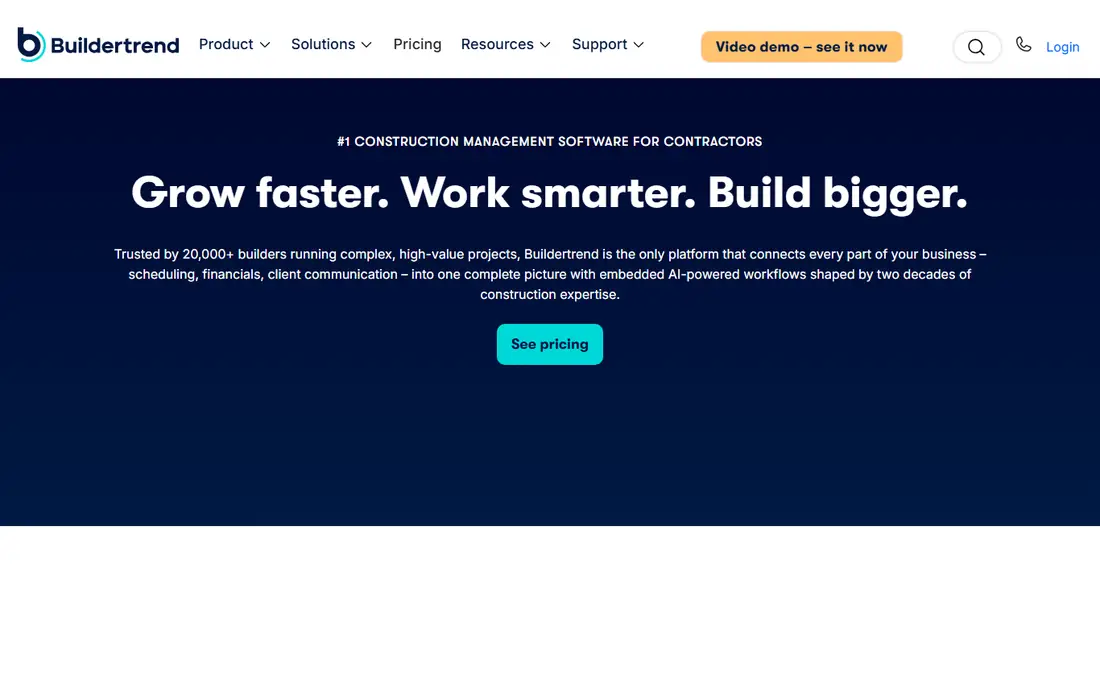
Buildertrend is the most established residential construction platform, used by home builders and remodelers who run five or more projects a year. It covers the full job arc: estimates and bids, schedules, budgets and job costing, change orders, daily logs, and a client portal where homeowners track progress and make selections. Integrations with QuickBooks Online and Xero keep accounting connected.
The main drawback is price transparency. Buildertrend prices by quote, with reported figures near $339 to $499 per month, and unlimited users on some plans. Smaller builders may find that heavy for a first system. For an established residential builder who wants one platform from first estimate to final invoice, Buildertrend remains the standard to compare against.
What we like- Estimating, scheduling, budgeting, and client portals in one platform
- QuickBooks and Xero integrations
- Strong template library
Watch out for- Quote-only pricing, reported near $339 to $499 per month
- Onboarding takes time for larger teams
#2JobTread
Best for: Remodelers wanting transparent pricing4.9/5 on
G2 (108 reviews, checked Oct 2026)
Visit jobtread.com
Starting price$199 per month
Free planNo
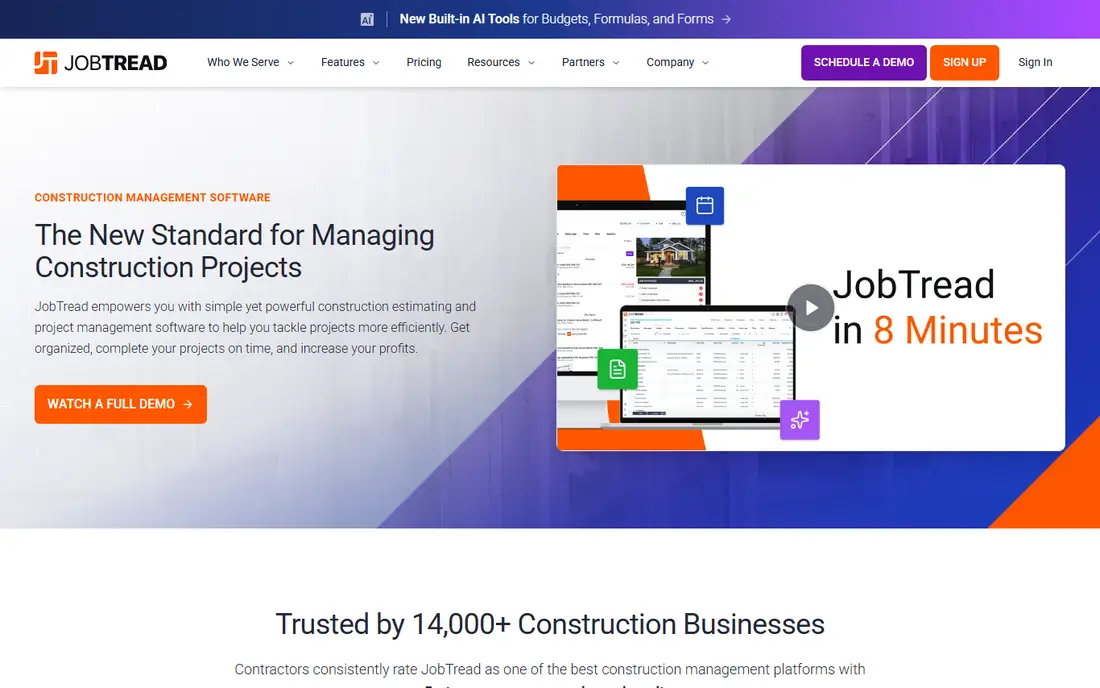
JobTread appeals to remodelers who dislike quote-only pricing. Its base plan starts near $199 per month with additional users at $20 each, and every feature, from estimating to job costing to portals, sits on that one plan. There is no tier puzzle where a needed feature hides on a higher plan.
That simplicity has a cost curve: a ten-person office pays the base plus nine user fees, so larger teams should total the bill before comparing with flat-rate rivals. JobTread also lacks the enterprise controls of Procore. For a small to mid-sized remodeler who wants predictable pricing and a complete feature set, it is one of the cleanest Houzz Pro alternatives.
What we like- All features on one plan
- Clear base price plus $20 per user
- Customer and vendor portals included
Watch out for- Base price rises with each user
- Fewer enterprise controls than Procore
#3Buildern
Best for: Growing custom builders4.9/5 on
G2 (23 reviews, checked Oct 2026)
Visit buildern.com
Starting price$225 per month
Free planNo
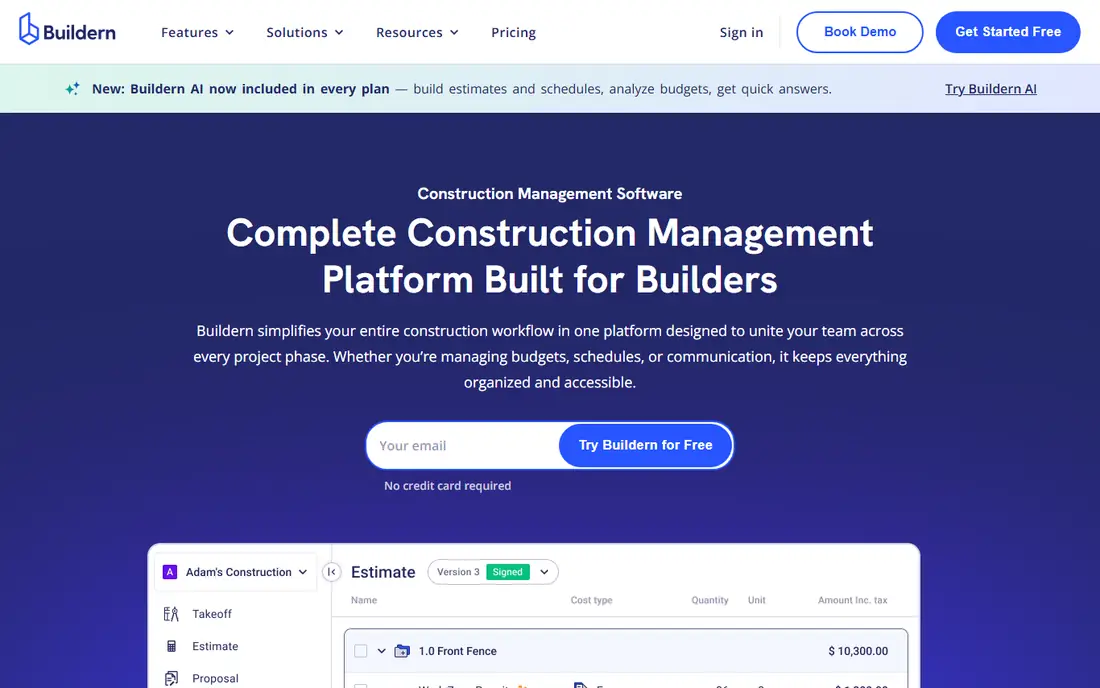
Buildern targets small custom home builders and general contractors who want CRM, estimating, project delivery, and accounting connected. The Starter plan near $225 per month covers two paid seats, while clients, subcontractors, and field users are free, which keeps field-heavy teams affordable. Budgets, purchase orders, bills, and invoices all live in the same system.
The seat math matters: only two office seats are included at Starter, so a growing office pays more as staff join. Buildern also has a smaller template and integration library than Buildertrend. For a growing builder who wants one system from lead to ledger without paying for field seats, Buildern is a strong fit.
What we like- CRM through to accounting in one system
- Clients, subcontractors, and field users free
- Estimating to job costing
Watch out for- Starter plan covers only two paid seats
- Price climbs as office staff grows
Starting price$49 per month
Free planNo
Contractor Foreman is the budget champion. From $49 per month billed annually, it covers estimating, scheduling, job costing, change orders, daily logs, and a client portal, plus QuickBooks Online integration. Few tools at this price cover so much of the job lifecycle.
The compromise is polish. The interface is workmanlike, and onboarding and support are thinner than at Buildertrend or Procore. Teams that need hand-holding or a designer-grade client experience may prefer a pricier option. For a small contractor who wants the most features for the money, Contractor Foreman is hard to beat.
What we like- Lowest entry price among full platforms
- Estimating, scheduling, job costing, and change orders included
- QuickBooks integration
Watch out for- Interface is functional rather than polished
- Support and onboarding are lighter than premium rivals
#5JobNimbus
Best for: Roofing and exterior trades4.5/5 on
G2 (144 reviews, checked Oct 2026)
Visit jobnimbus.com
Starting priceSee website
Free planNo
JobNimbus is designed around roofing and exterior contractors. It combines a trade-specific CRM with job management, organizing photos, documents, estimates, and communications by job. Crews in the field and office staff share the same job record, which reduces the lost paperwork that plagues roofing projects.
Pricing is quote-only, so budgeting takes a sales conversation, and the client portal is more limited than Buildertrend's. General contractors may also find its trade focus narrow. For roofers and exterior trades, though, JobNimbus fits daily workflows better than a general construction platform.
What we like- Built for roofing and exterior workflows
- Job boards, photos, and documents organized by job
- CRM plus job management
Watch out for- Quote-only pricing
- Client portal is limited compared with Buildertrend
Starting price$79 per month
Free planNo
BuildBook suits small residential teams that want simple setup over a deep feature catalog. It covers project scheduling, communication, documents, and a client portal, with a single-user plan near $79 per month billed annually. Teams that found Houzz Pro or Buildertrend too complex often land here.
The trade is depth. Estimating and accounting features are lighter than at JobTread or Buildern, and some pricing details sit behind a demo. BuildBook is best for a small team whose main need is keeping projects, clients, and schedules organized, rather than full job costing.
What we like- Simple setup for small teams
- Client portal included
- Covers project management and communication basics
Watch out for- Lighter estimating and accounting depth
- Pricing details require a demo for some plans
#7DesignFiles
Best for: Designers and e-design services4.6/5 on
G2 (6 reviews, checked Oct 2026)
Visit designfiles.co
Starting price$55 per month
Free planNo
DesignFiles is the designer-led alternative to Houzz Pro. It is built around visual proposals, mood boards, product selections, and client approvals, with e-design plans from $55 per month and full-service plans from $75. Interior designers and design-build firms use it to present rooms and win approvals without juggling separate proposal tools.
It is not a construction management platform: estimating depth, scheduling, and job costing are thinner than at Buildertrend or JobTread. Per-seat pricing also means a three-person studio pays roughly three times the single-seat figure. For designers whose core work is proposals and selections, DesignFiles fits better than any builder-first tool here.
What we like- Visual proposals, mood boards, and client selections built in
- E-design plan from $55 per month
- Per-seat math stays clear
Watch out for- Not a job costing platform
- Per-seat pricing overtakes Houzz Pro as teams grow past two or three
#8Procore
Best for: Large commercial general contractors4.6/5 on
G2 (4,357 reviews, checked Oct 2026)
Visit procore.com
Starting priceSee website
Free planNo
Procore dominates large commercial construction. It manages budgets, commitments, change events, drawings, RFIs, and field reporting at a scale no residential tool matches, with ERP integrations for enterprise finance teams. General contractors running complex multi-year projects rely on it as a system of record.
Everything about Procore is enterprise-grade, including price and implementation time. Pricing is quote-based on construction volume, and setup takes real planning. Small residential firms will find it far more platform than they need. For a growing general contractor moving into commercial work, Procore is the destination platform.
What we like- Most complete platform for large commercial projects
- Budgets, commitments, and change events
- Deep ERP integrations
Watch out for- Quote-based enterprise pricing
- Long implementation
- Overkill for small residential firms
How we chose
We compared each tool against what Houzz Pro actually sells: lead generation, proposals, client communication, project management, and business tools for remodelers and designers. Pricing figures come from vendor pages and recent published comparisons checked in October 2026, and anything we could not confirm is written as "See website". We favored actively maintained tools that serve US contractors, and we flagged where pricing is quote-only, per seat, or base-plus-user, since that changes the real bill.
What to check before you switch
Start with your trade and team size. Roofers should trial JobNimbus, designers should trial DesignFiles, and general remodelers should compare Buildertrend, JobTread, and Buildern on total cost at their real user count. Check four things on any trial: whether estimating and change orders match your workflow, how the client portal looks to homeowners, accounting integration depth, and what happens to your project data if you cancel. Also confirm whether lead generation matters: Houzz Pro's marketplace leads are a feature most alternatives do not replace, so a firm that relies on Houzz leads needs a separate marketing plan.
Finally, test the client portal as a homeowner would. Create a test project, send yourself the client invite, and walk through selections, messages, and invoices on a phone. A portal that confuses clients will generate support calls that erase the time the software was meant to save. Ask each vendor how long onboarding usually takes and whether training is included, since a powerful tool that nobody on your team adopts is wasted money. Check the mobile app too, because field crews live on phones and a weak app means daily logs go unwritten. A quick field test with one crew for a week reveals more than any sales demo ever will about real daily use in the field every single working day.
Frequently asked questions
Is Houzz Pro still a good tool for remodelers?
Yes. Houzz Pro combines marketplace leads with proposals, project management, and client tools, and its Essential plan is reported from $99 per month billed annually. Buyers switch mainly for deeper job costing, different pricing, or designer-specific workflows.
Which Houzz Pro alternative is cheapest?
Contractor Foreman starts near $49 per month and covers the most features at that price. DesignFiles starts near $55 per month for designers, and BuildBook near $79 for small residential teams.
Do these tools replace Houzz leads?
Mostly no. Buildertrend, JobTread, and Contractor Foreman manage projects but do not generate marketplace leads. Firms that depend on Houzz leads should keep a separate lead strategy when switching.
Can I import my Houzz Pro projects?
Migration support varies by vendor. Ask each vendor about import from Houzz Pro, spreadsheets, or CSV before committing, and export your client and project records first.
Is Buildertrend worth it for a one-person builder?
Buildertrend suits builders with several projects a year. A solo builder with one or two projects may find Contractor Foreman or BuildBook more cost-effective.
What accounting software do these tools integrate with?
Most integrate with QuickBooks Online, and several also support Xero. Confirm the direction of sync, since some integrations are one-way, before relying on them for bookkeeping.
Sources we checked (8)
- https://buildertrend.com/pricing/
- https://www.jobtread.com/pricing
- https://buildern.com/pricing/
- https://www.contractorforeman.com/pricing
- https://www.jobnimbus.com/pricing
- https://buildbook.co/pricing
- https://designfiles.co/pricing
- https://www.procore.com/
Is your product missing or out of date?
We review this list regularly. Vendors can request a listing, send updated pricing or ask about featured placement.

Shihab Mia · Founder, Rankite
Shihab has 5+ years in B2B and SaaS SEO. He writes Rankite's software buying guides from pricing pages, documentation and public user reviews. More about Shihab.