How we make this list: we compare pricing pages, product documentation and public user reviews. Ratings come from G2, Capterra or Trustpilot, with the date we checked them.
Key takeaways
- Google Tag Manager is free and widely supported, so alternatives win on governance, privacy, or ecosystem fit, not on basic tag firing.
- Adobe Tags is the natural pick for Adobe Experience Cloud teams, since it is included with an Adobe license and connects natively to Adobe tools.
- Tealium iQ suits enterprises with many sites and data destinations, with more than 1,300 pre-built connectors.
- Piwik PRO and Matomo suit privacy-focused teams that need data control, self-hosting, or EU hosting options.
- Segment is not only a tag manager: it is a customer data platform that feeds one event stream to hundreds of destinations.
Quick comparison
Is your product missing or out of date?
We review this list regularly. Vendors can request a listing, send updated pricing or ask about featured placement.
The best Google Tag Manager alternatives
Starting priceSee website
Free planNo
Adobe Experience Platform Tags, still widely called Adobe Launch, is the tag manager inside Adobe Experience Platform, and it is free to Adobe Experience Cloud customers. It uses a modular extension system: you add extensions for Adobe Analytics, Target, Audience Manager, and third-party tools, then build rules that fire tags based on events and conditions. Server-side tagging runs through Event Forwarding, the renamed Launch Server Side product, and Edge configurations now live as Datastreams in the same platform.
The catch is ecosystem fit. Tags is at its best inside an Adobe stack, where one-click extensions remove integration work, and its value drops for teams that do not use Adobe products. Pricing is bundled with Adobe Cloud licenses rather than listed as a standalone figure, which is why this article lists the price as See website. For Adobe shops, Tags is the obvious replacement for Google Tag Manager, since it is already paid for and connects natively to the analytics and personalization tools the team uses daily.
What we like- Included with Adobe Experience Cloud
- Native Adobe Analytics and Target extensions
- Modular extension system
Watch out for- Best value only inside Adobe stack
- Enterprise pricing is custom
- Learning curve for non-Adobe teams
Starting priceSee website
Free planNo
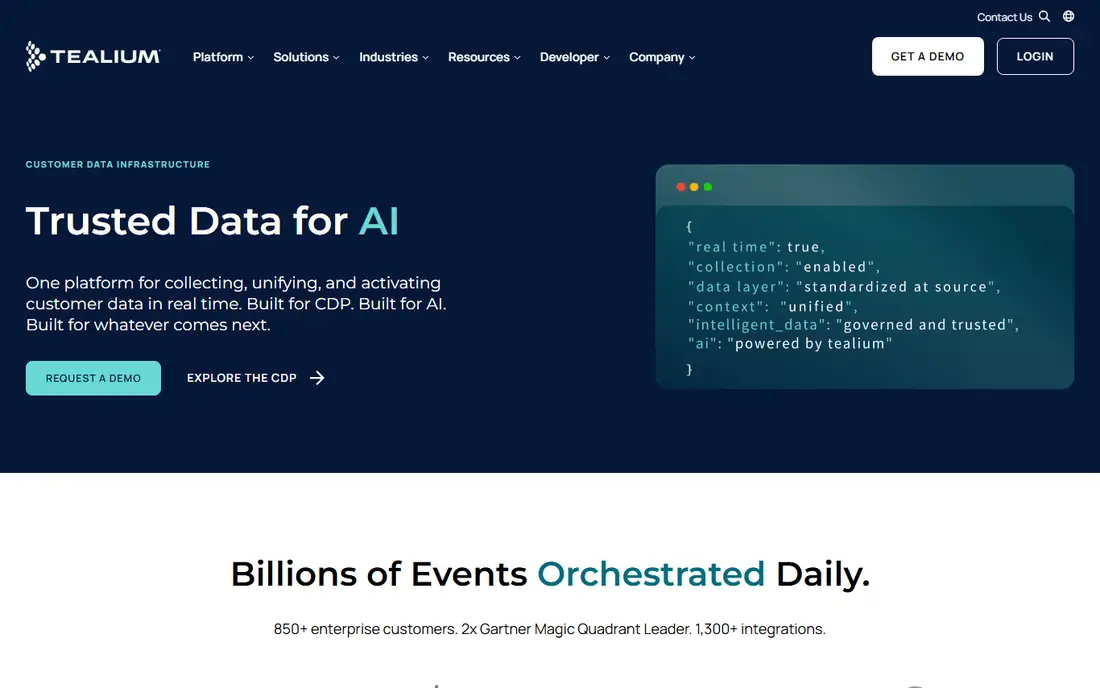
Tealium iQ is an enterprise tag manager built for companies running many sites with complex data needs. It offers more than 1,300 pre-built connectors to analytics, advertising, and marketing tools, a built-in data layer for variables and load rules, and consent management that ties tag firing to user consent choices. Real-time data delivery means tags and data flow without batch delays, which matters for personalization and advertising use cases. Note that Tealium iQ is now packaged as a module inside the broader Tealium Customer Data Hub, alongside the customer data platform and API hub.
The drawbacks are price and complexity. Tealium pricing is custom and enterprise grade, and the platform assumes a team with dedicated tag management staff. Small teams will find it heavy and expensive compared with free Google Tag Manager. For large organizations with many business units, strict access controls, and hundreds of tags across sites, Tealium governance, connectors, and consent features justify the cost, and it is the enterprise standard that other tag managers are measured against.
What we like- More than 1,300 pre-built connectors
- Built-in consent management
- Real-time data delivery
Watch out for- Enterprise pricing is custom and high
- Now packaged inside Customer Data Hub
- Complex for small teams

#3Segment
Best for: Unified customer data pipeline4.5/5 on
G2 (565 reviews, checked Oct 2026)
Visit segment.com
Starting price$120 per month
Free planYes
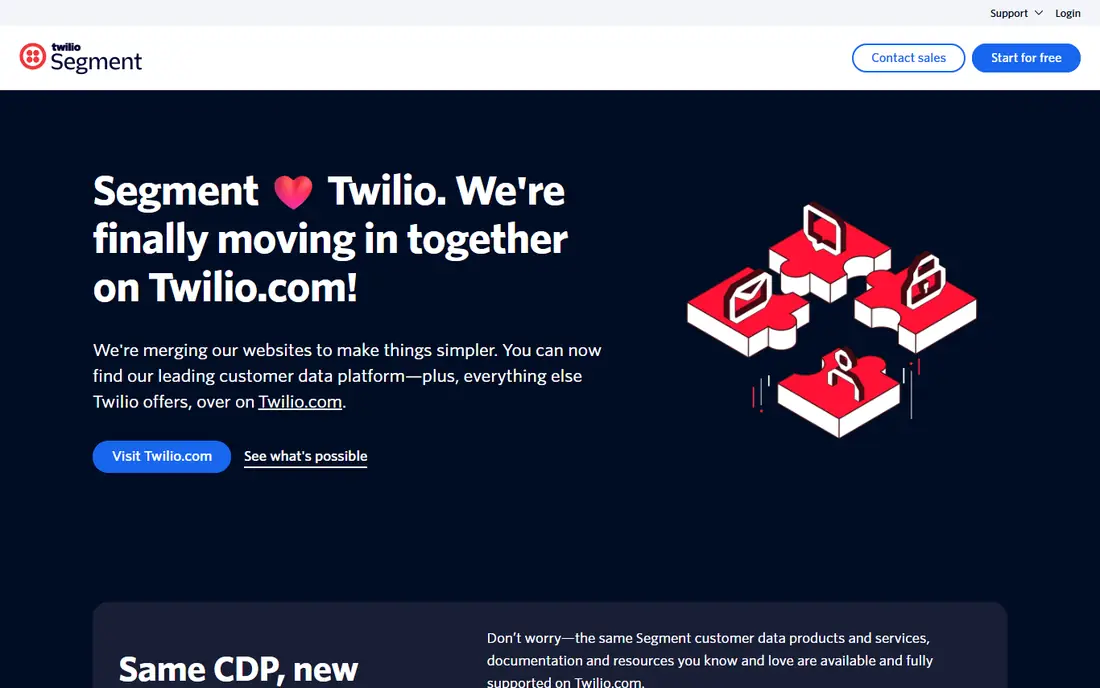
Segment, now part of Twilio, is a customer data platform that also replaces much of what teams use tag managers for. Instead of placing separate tags for each tool, you send one event stream to Segment, and Segment forwards it to analytics, advertising, email, and warehouse destinations, each with its own mapping and filtering. That single-pipeline model removes tag sprawl from the website entirely, since the site carries one Segment snippet rather than dozens of vendor tags. Developer tooling, including libraries and a visual debugger, makes implementation cleaner than hand-managed tags.
Segment pricing starts at $120 per month on paid plans, with a free tier for small volumes, though guides differ on exactly what the free tier covers, so verify current limits before budgeting. Segment is also more than a tag manager: it is a data pipeline, so teams that only need simple tag firing may find it overpowered. For data teams that want one governed pipeline feeding many tools, Segment replaces Google Tag Manager and several point integrations at once.
What we like- One event stream to hundreds of destinations
- Strong developer tooling
- Free tier for small volume
Watch out for- Paid plans from $120 per month
- More CDP than tag manager
- Costs scale with event volume
Starting price$36 per month
Free planNo
Piwik PRO pairs a tag manager with privacy-first analytics, and it is built for organizations that operate under strict data rules. It offers EU hosting, data control options, and consent management integration, so tags fire only when consent allows, and collected data stays under the control of the organization rather than a large advertising vendor. The tag manager covers web and mobile, with server-side support, and it sits alongside Piwik PRO analytics, so teams can replace both Google Tag Manager and Google Analytics in one move.
Pricing starts from about $36 per month, with a 30-day free trial rather than a permanent free tier. The connector library is smaller than Tealium, and community content is thinner than Google Tag Manager, so unusual integrations may need custom work. For privacy-focused teams, especially in Europe, Piwik PRO offers the cleanest path away from Google tooling without losing tag management or analytics depth.
What we like- Privacy-first design
- EU hosting options
- Tag manager plus analytics in one platform
Watch out for- Paid plans from about $36 per month
- Smaller connector library than Tealium
- Less community content than GTM
Starting priceFree
Free planYes
Matomo Tag Manager is the open source answer to Google Tag Manager, and it is the only tool on this list that is free to self-host with full data ownership. You install Matomo on your own servers, manage tags, triggers, and variables in a familiar interface, and keep all collected data under your control, which suits privacy-focused teams and public sector organizations. The free Community edition covers the core tag manager, while Matomo Cloud plans start from about $29 per month for teams that want hosting without server work.
Self-hosting is the trade-off: you own upgrades, backups, and scaling, just as with any open source tool. The template and tag library is also smaller than Google Tag Manager community library, so some vendor tags need manual configuration. For teams that value data ownership above all, or that need a free tag manager without vendor lock-in, Matomo is the strongest pick, and its analytics platform pairs naturally with the tag manager for a full Google Analytics replacement.
What we like- Free open source core
- Full data ownership
- Self-hosting option
- Privacy-first
Watch out for- Cloud plans from $29 per month
- Self-hosting needs maintenance
- Smaller template library than GTM
Starting priceSee website
Free planNo
Ensighten Manage, now sold as CHEQ Manage, is an enterprise tag manager built for regulated industries with strict privacy and security needs. It offers granular permissions, audit logs, and privacy controls that let large organizations govern hundreds of tags across many sites and business units. Tag management runs alongside security features that protect against tag-based data leaks, which matters for finance, healthcare, and other regulated sectors.
Pricing is custom and enterprise grade, with sales-led onboarding, so small teams will find it expensive and slow to adopt. For regulated enterprises, though, Ensighten governance and privacy tooling match the compliance needs that free tools cannot cover. If your organization faces audits, strict access controls, or data residency rules, Ensighten is worth evaluating alongside Tealium, with the choice coming down to which platform your security team prefers.
What we like- Privacy-first enterprise design
- Strong security and governance
- Now part of CHEQ
Watch out for- Enterprise pricing is custom
- Sales-led onboarding
- Overkill for small teams
Starting priceSee website
Free planNo
TagCommander, from Commanders Act, is a tag manager built around European privacy and compliance needs, with consent management integration and server-side tagging support. Tags fire based on consent status, data flows respect regional rules, and the platform suits companies that operate mainly in Europe and need GDPR-aligned tooling without building consent logic by hand. It covers web, mobile, and apps, with a data layer model similar to other enterprise tag managers.
The limits are geography and transparency. TagCommander has a smaller presence outside Europe, and pricing is custom rather than published, so budgeting needs a sales conversation. Community content and templates are thinner than Google Tag Manager. For European companies where privacy compliance is the main reason to leave Google Tag Manager, TagCommander offers a focused, compliance-first alternative that pairs tag management with consent rather than treating consent as an add-on.
What we like- European privacy and compliance focus
- Consent management integration
- Server-side support
Watch out for- Enterprise pricing is custom
- Smaller presence outside Europe
- Less community content than GTM
Starting priceSee website
Free planNo
ObservePoint is different from every other tool on this list: it does not manage tags, it audits them. It scans your sites automatically, checks that tags fire correctly, flags broken or unauthorized tags, and reports on governance gaps such as tags collecting data without consent. For teams whose problem is tag sprawl, where nobody knows how many tags run on each page or what data they collect, ObservePoint gives visibility that a tag manager alone cannot provide.
That difference is also its limit. ObservePoint adds cost on top of a tag manager rather than replacing one, and its pricing is custom and enterprise grade. It suits large organizations that already run Google Tag Manager or another TMS and need to prove tag compliance to legal, security, or privacy teams. For smaller teams, a regular tag audit by hand, or a privacy-first TMS like Piwik PRO, covers the need at lower cost.
What we like- Automated tag audits
- Governance reporting
- Catches broken and unauthorized tags
Watch out for- Auditing tool, not a tag manager
- Enterprise pricing is custom
- Adds cost on top of a TMS
How we chose
We compared tools that replace Google Tag Manager for different reasons: ecosystem fit, enterprise governance, privacy, and auditing. We favored tools with published pricing or a free tier where possible, and we marked enterprise tools as See website where pricing is custom rather than guessing a figure. Prices come from vendor pricing pages and current guides, and where guides conflict we list the vendor figure or mark the price as See website. We did not test any tool hands-on, and we did not list Google Tag Manager itself, since it is the product being replaced.
Buying guide
Start from why you are leaving. If you already pay for Adobe Experience Cloud, Adobe Tags is already included and needs no extra budget. If privacy rules drive the switch, shortlist Piwik PRO and Matomo first, and decide between hosted convenience and self-hosted control. If governance across many sites drives the switch, shortlist Tealium and Ensighten, and compare connector libraries against your actual vendor list. If your problem is tag sprawl rather than tag firing, ObservePoint auditing may help more than a new tag manager.
Before you migrate, audit your current tags and check three things: which tags actually fire on key pages, which tags depend on consent, and which tags feed reporting that stakeholders rely on. Migrate in stages, starting with low-risk pages, and keep Google Tag Manager running in parallel until the new tool has proven it fires every critical tag correctly. Tag migration errors silently break analytics and advertising measurement, so validate with real traffic before you remove the old container.
Frequently asked questions
Is there a free Google Tag Manager alternative?
Yes. Matomo Tag Manager is free to self-host, and Segment offers a free tier for small volumes. Google Tag Manager itself is free, so free alternatives win on data ownership and privacy rather than on price alone.
Which alternative is best for privacy compliance?
Piwik PRO and Matomo are the strongest privacy-first picks, with EU hosting, self-hosting, and consent integration. TagCommander suits European companies that want GDPR-aligned tagging with consent built in, while Ensighten suits regulated enterprises with strict governance needs.
Can I replace Google Tag Manager with Segment?
Segment can replace much of tag management by sending one event stream to many destinations, which removes vendor tags from your site. It is a customer data platform rather than a pure tag manager, so teams that only need simple tag firing may find it overpowered, but data teams gain a governed pipeline.
Do these tools support server-side tagging?
Most do. Adobe Tags offers Event Forwarding, Tealium and TagCommander support server-side tagging, and Piwik PRO and Matomo offer server-side options. Server-side tagging improves data control and page performance, but it adds hosting and maintenance work compared with client-side tags.
What is the difference between a tag manager and a tag auditor?
A tag manager deploys and controls tags on your site, while a tag auditor such as ObservePoint checks that tags fire correctly and comply with rules. Auditors add governance on top of a tag manager rather than replacing it, and they suit large organizations with tag sprawl.
Should Adobe teams switch from Google Tag Manager to Adobe Tags?
If your team already pays for Adobe Experience Cloud, Tags is included and connects natively to Adobe Analytics and Target, which removes integration work. If your team does not use Adobe products, Tags offers little advantage over Google Tag Manager or another alternative.
Sources we checked (0)
Is your product missing or out of date?
We review this list regularly. Vendors can request a listing, send updated pricing or ask about featured placement.

Shihab Mia · Founder, Rankite
Shihab has 5+ years in B2B and SaaS SEO. He writes Rankite's software buying guides from pricing pages, documentation and public user reviews. More about Shihab.
 Adobe Experience Platform Tags
 Tealium iQ
 Piwik PRO
 Matomo Tag Manager
 Ensighten Manage
 TagCommander
 ObservePoint