How we make this list: we compare pricing pages, product documentation and public user reviews. Ratings come from G2, Capterra or Trustpilot, with the date we checked them.
Key takeaways
- Red Points leads on high-volume marketplace takedowns, with self-serve pricing from around 1,250 dollars a month.
- Corsearch suits legal and IP teams that need trademark watching alongside enforcement, but pricing is quote-only.
- BrandVerity is the specialist pick for paid search and affiliate compliance, the job AdPolice is best known for.
- Brand Protector is the budget pick for small brands, with published pricing at 199 dollars a month.
- MarqVision and BrandShield cover the middle ground between small-store tools and enterprise suites.
- The real buying question is who files the takedown: you, the vendor, or a human team acting as your agent.
Quick comparison
Is your product missing or out of date?
We review this list regularly. Vendors can request a listing, send updated pricing or ask about featured placement.
The best adpolice alternatives
Starting priceSee website
Free planNo
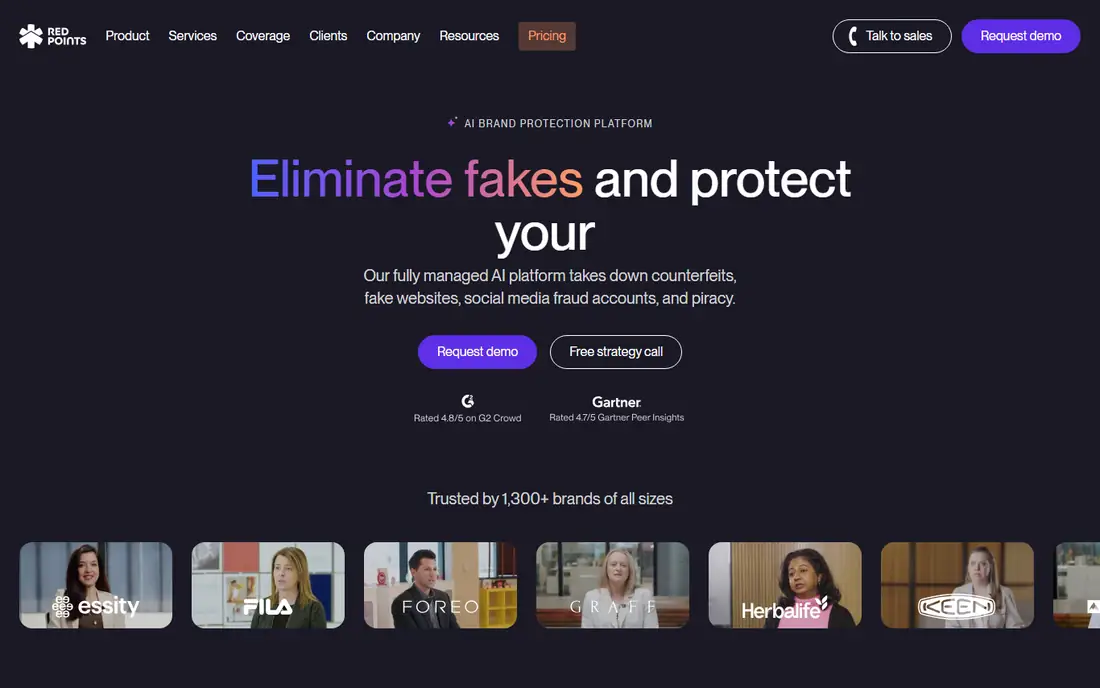
Red Points is the strongest alternative when the daily pain is fake listings. It scans marketplaces for counterfeits, impersonation, and piracy, files takedowns, and reports on removal rates, which makes the return easy to track when counterfeit sellers are stealing marketplace revenue. Sectors such as fashion, beauty, electronics, toys, and supplements get the most from it, since those categories attract the most copycat listings.
Pricing starts near 1,250 dollars a month at checkout for self-serve plans, with larger programs quoted. That is a real budget line for a small brand, so Red Points fits best once counterfeit volume justifies a monthly retainer. Smaller brands with a handful of fake listings should look at Brand Protector or MarqVision first, but once the count reaches dozens per week, Red Points is the tool built for that volume.
What we like- High-volume detection and takedowns
- Scans marketplaces you pay for
- Operational removal metrics
- Self-serve entry
Watch out for- Self-serve minimum near 1,250 dollars a month
- Enterprise plans quote-only
- Less trademark depth than Corsearch

#2Corsearch
Best for: Trademark plus enforcement4.6/5 on
G2 (24 reviews, checked Oct 2026)
Visit corsearch.com
Starting priceSee website
Free planNo
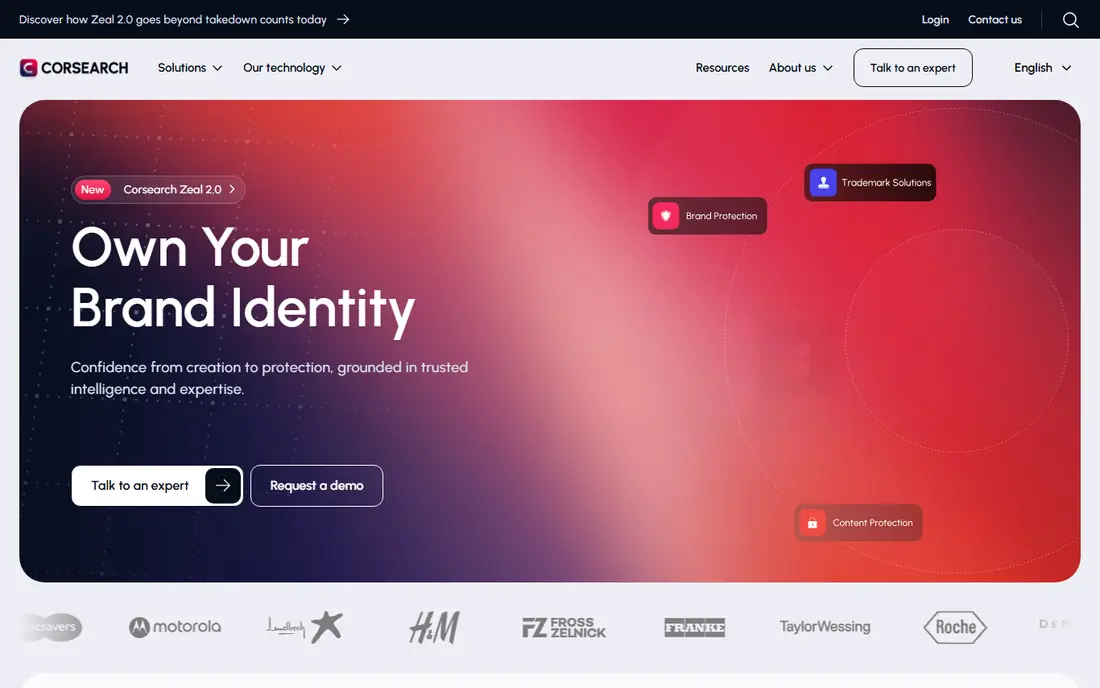
Corsearch is the enterprise suite for teams that need trademark work alongside enforcement. It covers clearance, watching, risk checks, domain monitoring, and online enforcement, and it watches more than 300 platforms, apps, and marketplaces. A legal team prefers Corsearch because enforcement connects back to the actual rights behind a brand, which matters when platforms ask for proof or disputes escalate.
The buying experience is enterprise-grade in every sense. Pricing is quote-only and contracts are typically annual and billed ahead, and third-party pricing guides cite figures in the thousands of dollars per user per month that Corsearch itself does not publish. Corsearch also runs a Revenue Recovery program where a law firm sues sellers and Corsearch keeps a share of settlements, which is a different model from a simple takedown subscription. For a global brand with a legal team, Corsearch is the strongest choice. For a small store, it is far more than the problem needs.
What we like- Full brand lifecycle coverage
- Trademark watching and clearance
- Watches 300 plus platforms
- Legal-grade reporting
Watch out for- Quote-only pricing
- Annual contracts billed ahead
- Setup can be complex for small teams
Starting priceSee website
Free planNo
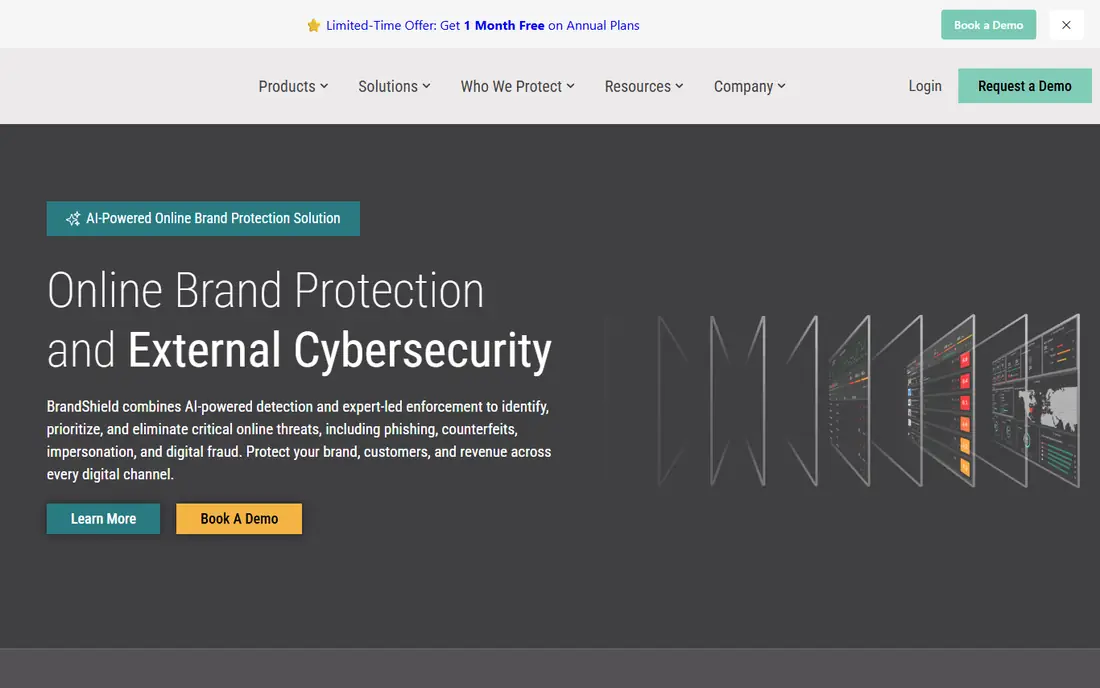
BrandShield suits cybersecurity and brand teams whose main threat is phishing and impersonation rather than counterfeit goods. It finds lookalike domains, fake social profiles, and phishing sites, suggests targets for the brand team to confirm, and files takedowns once confirmed. That human confirmation step protects against wrongful removals while keeping the workload on the vendor side.
Pricing is quote-only, and the sales process runs through demos and annual contracts, so small brands should expect a longer buying cycle. The trade-off against Red Points is focus: BrandShield is stronger on phishing and executive impersonation, weaker on pure marketplace counterfeit volume. If your customers are being scammed by fake sites rather than buying fake products, BrandShield is the better shortlist pick.
What we like- Strong phishing and impersonation coverage
- Suggests targets for confirmation
- Vendor files takedowns
- Cybersecurity focus
Watch out for- Quote-only pricing
- Enterprise sales process
- Less marketplace depth than Red Points
Starting priceSee website
Free planNo
MarkMonitor is the classic enterprise choice for brands with large domain portfolios. It manages domain registrations, watches for infringing domains, and runs enforcement programs for global brands that have dealt with cybersquatting and lookalike domains for years. Its reporting is built for legal and brand teams that need portfolio-level views rather than single-listing alerts.
Like Corsearch, MarkMonitor sells through quotes and annual contracts, and onboarding assumes a team that already manages intellectual property at scale. A small brand with ten domains and a few fake listings will not get value from it. A large enterprise with hundreds of domains, regional trademark filings, and a legal team that needs one system of record for domain risk should keep MarkMonitor on the shortlist alongside Corsearch.
What we like- Deep domain portfolio management
- Enterprise-grade enforcement
- Long track record
- Global coverage
Watch out for- Quote-only pricing
- Enterprise pricing and onboarding
- Overkill for small brands
Starting priceSee website
Free planNo
BrandVerity is the closest functional match to the ad compliance side of AdPolice. It monitors paid search for trademark bidding, affiliate violations, and unauthorized ads, and it produces clear evidence for each violation so the brand team can act. That focus matters because paid search abuse is a different job from counterfeit takedowns: the violator is often an affiliate or a reseller, not a counterfeiter, and the fix is a compliance conversation or a platform complaint rather than a marketplace removal.
Pricing is quote-only, and the tool assumes you already run paid search at meaningful volume. Brands that spend little on search ads will not see enough violations to justify it. But for a brand whose affiliates bid on its trademarked terms or whose resellers undercut official pricing in ads, BrandVerity is the specialist tool, and it pairs well with a broader takedown platform rather than replacing one.
What we like- Specialist paid search monitoring
- Affiliate compliance
- Trademark bidding detection
- Clear violation evidence
Watch out for- Narrower scope than full brand protection suites
- Quote-only pricing
- Needs an existing paid search program
Starting price$199/month
Free planNo
Brand Protector is built for the brands enterprise vendors skip: small and mid-size consumer brands, Shopify merchants, and Amazon sellers. It installs as a Shopify app, imports product images, and monitors Amazon, eBay, Etsy, Walmart, AliExpress, Temu, Shein, TikTok Shop, and Google Shopping, plus lookalike domains. Pricing is published at 199 dollars a month with a 7-day free trial, which is rare in this category and makes it easy to test.
The honest catch is that a person on your team reviews and approves each takedown before anything is sent. That protects against wrongful removals but means the tool is not fully hands-off. Large brands that need trademark portfolio management will still look at Corsearch or MarkMonitor. For a small brand losing sales to a handful of copycat listings, Brand Protector is the best-priced starting point on this list.
What we like- Published pricing at 199 dollars a month
- Self-service signup
- Monitors major marketplaces plus lookalike domains
- EBay VeRO filing
Watch out for- Your team approves every takedown
- 7-day trial only
- No trademark portfolio management
Starting price$1,000/month
Free planNo
MarqVision gives buyers a clear choice that most rivals do not: pay 1,000 dollars a month to watch for infringements, or 2,000 dollars a month for MarqVision to file takedowns as well. That ladder suits a mid-market brand that wants to start with monitoring and upgrade to full enforcement once the volume justifies it. AI detection scans for counterfeits and lookalike listings across marketplaces and the open web.
The watch-only plan leaves the actual takedown work to your team, so the cheaper price is only a saving if someone on staff has time to file notices. The filing plan doubles the cost but removes that work, and for a team with dozens of violations a month the filing plan usually pays for itself in staff time. MarqVision is a newer brand than Red Points or Corsearch, so ask for customer references in your category before signing a long contract.
What we like- Choice of watch-only or full filing plans
- AI detection
- Clear plan ladder
- Mid-market fit
Watch out for- Filing plan costs 2,000 dollars a month
- Watch-only plan leaves takedowns to you
- Newer brand than Red Points

#8ZeroFox
Best for: Security-led brand protection4.4/5 on
G2 (170 reviews, checked Oct 2026)
Visit zerofox.com
Starting priceSee website
Free planNo
ZeroFox approaches brand protection from the security side. It protects brands, executives, and domains against phishing, impersonation, and external threats, and it brings threat intelligence depth that pure brand protection tools do not offer. Security teams that already run incident response workflows will find ZeroFox fits their stack, since findings can feed into the same triage and response process as other external threats.
The trade-off is focus. ZeroFox is stronger on threat detection and executive protection than on high-volume marketplace takedowns, where Red Points leads. Pricing is quote-only and enterprise-oriented. A brand team without a security function may find the platform heavier than needed, while a security-led organization that treats brand abuse as one more external threat will find it a natural fit.
What we like- Security-team focus
- Protects brands, executives, and domains
- Threat intelligence depth
- Enterprise integrations
Watch out for- Quote-only pricing
- Security-first design may overwhelm brand teams
- Less marketplace takedown depth
How we chose
We treated AdPolice as two jobs in one: brand protection against counterfeits and impersonation, and ad compliance monitoring for paid search and affiliates. We picked tools that cover at least one of those jobs well, from budget self-service options to enterprise suites, and we split them by who does the work. Some tools only watch and leave takedowns to you, some file takedowns themselves, and some add a human review step in between. We marked pricing as published or quote-only in every case, since most of this category hides prices behind sales calls, and we flagged where third-party figures differ from vendor-published prices.
What to check before you buy
Start by counting the problem. If you have a handful of fake listings, a 199 dollar self-service tool beats a 1,250 dollar retainer. If you have hundreds per week, the retainer pays for itself. Then ask who signs the takedown notice, since some platforms require a signed letter of authority and some file as your authorized agent, and that paperwork decides how fast removals happen. Check which channels are covered, because a tool that watches marketplaces may miss lookalike domains and social profiles, and vice versa. Finally, confirm the contract terms: several enterprise tools bill annually ahead and do not allow mid-term scale-down, so negotiate an exit or a volume adjustment clause before signing.
Frequently asked questions
What does AdPolice do?
AdPolice monitors brand and ad compliance, including paid search trademark bidding, affiliate violations, and unauthorized use of brand assets in ads and listings. Alternatives split into brand protection suites and paid search specialists.
How much does brand protection cost?
Small-brand tools start near 199 dollars a month with published pricing. Mid-market filing plans run 1,000 to 2,000 dollars a month, and enterprise suites are quote-only, often in the thousands per month on annual contracts.
Who files the takedown notice?
It varies. Some tools prepare notices for your team to send, some file as your authorized agent, and some require a signed letter of authority before they act. Ask before you buy, since it decides removal speed.
Do I need trademark registration to file takedowns?
Marketplaces usually accept takedowns based on trademark rights, registered or common-law, but registered rights make claims faster and stronger. A legal adviser can confirm what your brand qualifies for in each marketplace.
Is a watch-only plan enough?
It depends on volume. With a few violations a month, watch-only plus your own filing works. With dozens per week, a filing plan saves more staff time than it costs.
Sources we checked (0)
Is your product missing or out of date?
We review this list regularly. Vendors can request a listing, send updated pricing or ask about featured placement.

Shihab Mia · Founder, Rankite
Shihab has 5+ years in B2B and SaaS SEO. He writes Rankite's software buying guides from pricing pages, documentation and public user reviews. More about Shihab.
 Red Points
 BrandShield
 MarkMonitor
 BrandVerity
 Brand Protector
 MarqVision