How we make this list: we compare pricing pages, product documentation and public user reviews. Ratings come from G2, Capterra or Trustpilot, with the date we checked them.
Key takeaways
- Nothing replaces a Google Business Profile: it is free, it feeds Google Search and Maps, and every business should claim and complete it first.
- The alternatives here widen the same job across other places customers look: Apple Maps, Bing and Copilot, Yelp, Facebook, TripAdvisor, Nextdoor and Foursquare powered apps.
- Every listing in this article is free to claim, and most take under an hour, which makes this the cheapest visibility work a local business can do.
- Keep name, address and hours identical everywhere, because conflicting details cost rankings and customers on every platform.
Quick comparison
Is your product missing or out of date?
We review this list regularly. Vendors can request a listing, send updated pricing or ask about featured placement.
The best Google Business Profile alternatives
Starting priceFree
Free planYes
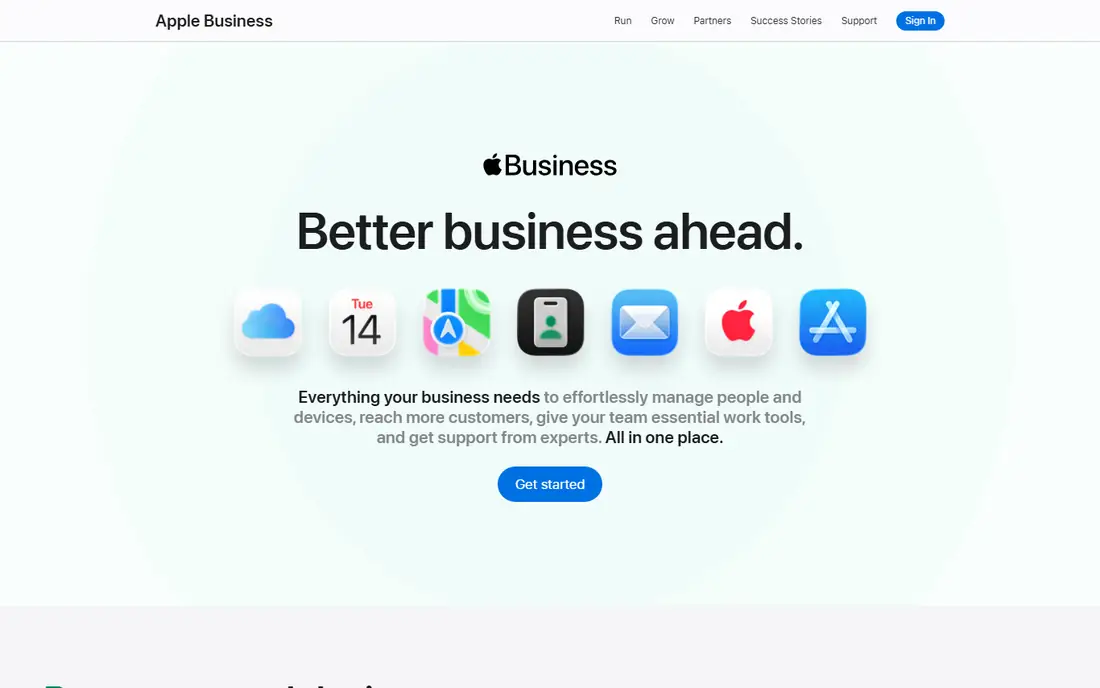
What we like- Apple Business Connect is the free tool for claiming and managing how your business appears in Apple Maps and across Apple's services: name, category, hours, photos, place cards and actions such as order or reserve links. A large share of your customers navigate with an iPhone even when they found you on Google, and Apple Maps data also feeds Siri answers. Claiming takes verification similar to Google's, showcases let you post offers and updates, and multi location businesses can manage branches in one place. Of everything in this list, this is the listing most often missing entirely.
Watch out for- The audience is Apple users only, and in markets where Android dominates the return is smaller. Verification can be slow for businesses without clear documentation. Analytics are thinner than Google's, so treat it as a correctness tool rather than a reporting one. Some features and categories roll out unevenly by country, and the showcase tools reward regular attention that small teams forget to give.
Starting priceFree
Free planYes
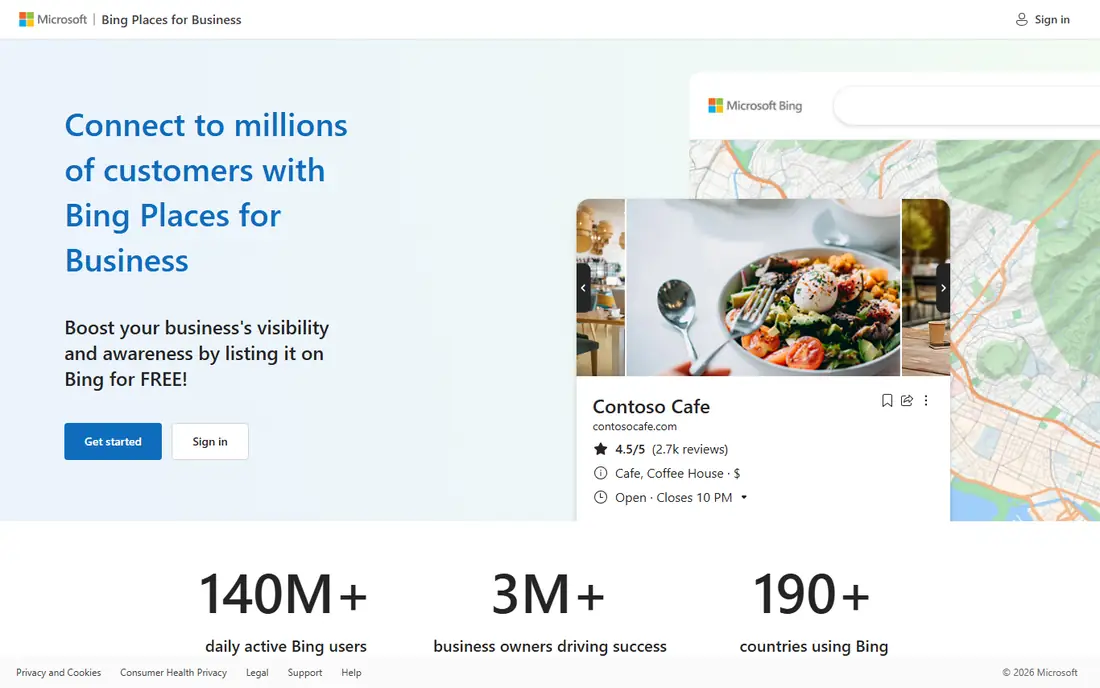
What we like- Bing Places manages your listing in Microsoft's ecosystem: Bing search and maps, and increasingly the business details served inside Copilot answers on Windows machines and Edge browsers. Claiming is free, and the import tool can pull your details from your Google profile, which makes setup a ten minute job for a single location. Default search on Windows gives Bing a quiet, steady audience that skews toward desktop and workplace searches, exactly the context for B2B and service businesses. It is the easiest visibility most companies have not bothered to collect.
Watch out for- Traffic is a fraction of Google's, so expectations should be modest. The dashboard changes rarely and offers limited insight or posting features. Category options can feel coarse next to Google's. Still, the cost benefit of a free, import assisted listing is hard to argue with, and businesses serving older or corporate audiences routinely find Bing sends a real share of their enquiries.

#3
Yelp for Business
Best for: Review driven discovery for consumer services
Visit biz.yelp.com
Starting priceFree
Free planYes
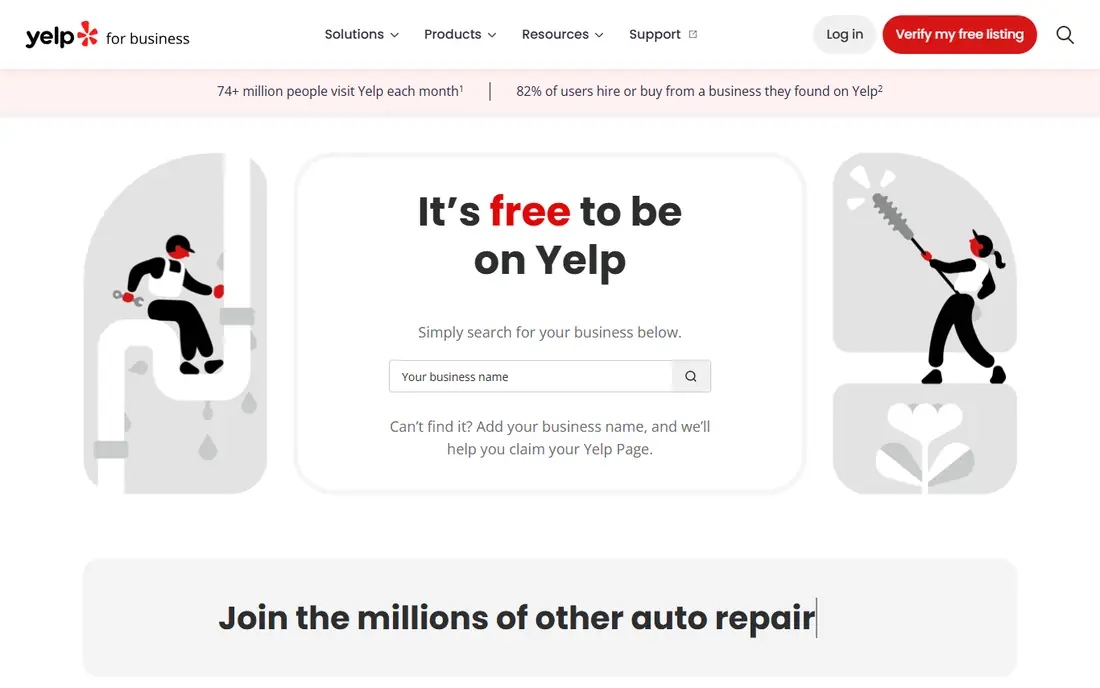
What we like- Yelp pages rank strongly in search results for restaurants, trades, salons, dentists and other consumer services, whether the owner claims them or not, which is the argument for claiming yours: correct hours and photos, responses to reviews, and the free business account tools. Yelp's audience arrives ready to choose a provider, and its review community is large in US metro areas. Claiming also stops competitors' ads from being the only call to action on your own page in some placements, and request a quote features on trades categories send real enquiries.
Watch out for- Yelp's review filter is famously strict, and legitimate reviews sometimes disappear into the not recommended pile without explanation, which frustrates owners. The advertising sales operation is persistent, and the paid products are where Yelp makes its money, so expect calls. Influence varies sharply by city and category: essential for a city restaurant, marginal for a rural manufacturer. Review responses must be handled with care, since a defensive reply lives publicly beside the complaint.
Starting priceFree
Free planYes
What we like- A Facebook Page is a listing, a messaging channel and a community noticeboard in one free package: address, hours and services kept current, Messenger for enquiries, events for openings and offers, and reviews and recommendations visible to the largest social audience of any platform here. For many trades and hospitality businesses the Page is where customers actually check whether you are open today. It also anchors local advertising when you run it, and the page details feed Meta's other surfaces including Instagram location data.
Watch out for- Organic reach for pages is small without posting effort or ads, so a neglected Page with 2023 hours is worse than none. Facebook's business tools change layout frequently, and keeping details current takes a named owner. The audience skews older than some categories want. Messenger enquiries need monitoring like an inbox, since an unread message icon is a lost customer, and spam messages add noise to that duty.
Starting priceFree
Free planYes
What we like- For hotels, restaurants, tours and attractions, TripAdvisor is the review platform travellers check across borders, and a free claimed listing lets you correct details, add photos, respond to reviews and appear properly in destination searches. Its audience is specifically travelling, which makes it the highest intent traffic in this list for hospitality. Management responses carry weight with readers deciding between two similar places, and the ranking inside a destination category is a genuine local competition worth managing.
Watch out for- Outside travel and dining, TripAdvisor has nothing to offer, and businesses in other categories should skip it. Paid products push visibility in ways that can feel pay to play, and popular destinations are fiercely competitive. Review volume expectations are high: a handful of reviews cuts little ice where leaders have thousands. The listing work pays back over seasons rather than weeks, which suits hospitality planning and frustrates anyone wanting a quick result.
Starting priceFree
Free planYes
What we like- Nextdoor puts your business inside the neighbourhood network where residents ask each other for a plumber, a dog walker or a bakery: a free claimed page collects recommendations from verified local members, which display to the households around you. For hyperlocal services this is the most targeted free presence available, because the audience is literally your catchment area. Recommendations here carry the weight of a neighbour's word, and posts from local businesses reach a feed people read for practical reasons rather than entertainment.
Watch out for- The catchment cuts both ways: Nextdoor cannot help a business whose market is regional or online. Activity varies by neighbourhood, thriving in suburbs and quiet in some urban areas. The platform's community tone means hard selling is unwelcome and can backfire publicly. Paid local deals and ads are the growth lever, and the free page alone rewards businesses in recommendation heavy categories, trades and home services above all.
Starting priceFree
Free planYes
What we like- Foursquare's consumer app is quieter than it was, but its location database became infrastructure: its venue data feeds location features in other apps and services, so a correct claimed listing propagates further than the platform itself. Claiming through Foursquare for Business is free and fixes the record at a source many directories and apps draw from. For chains and multi location brands, its tools manage listings at scale. Think of it as maintaining the upstream record: less visible than a Google profile, more connected than it looks.
Watch out for- Direct customer traffic from Foursquare itself is small, so the payoff is indirect and hard to attribute, which makes it a hard sell to an owner watching the till. The consumer brand confuses people who remember the check in app. Single location businesses may find aggregators and data partners resell the same propagation in paid listing services, making the free claim worthwhile mainly for correctness of hours and address at the source.
How we chose
We chose platforms that a local business can claim free and that put its name, address, hours and reviews in front of customers making local decisions in October 2026. The test was simple: does a real share of your customers encounter your business here, or does this listing feed systems that do? We excluded paid only listing syndication services from the main list because the free claims below cover most of their value for a single location, and we kept Google itself out of the rankings deliberately: it is not an alternative to itself, it is the first job, and these seven are the second through eighth.
How to build a local presence beyond Google
Set up one source of truth before claiming anything: the exact business name as signed, the address format, the main phone number, opening hours including holiday rules, and the category description you will reuse. Inconsistent details, a suite number here, a trading name there, are the main cause of duplicate listings and confused customers. Claim in order of audience: Google first, then Apple Business Connect and Bing Places, then the review platforms your category lives on, Yelp or TripAdvisor, then Facebook and Nextdoor, then Foursquare.
After claiming, the work shifts from setup to rhythm: respond to every review within days, thank the happy and help the unhappy without arguing, update hours before every holiday, and add fresh photos a few times a year, because listings with recent photos and responses are the ones platforms surface and customers trust. Check each listing quarterly by searching your own business name and category from a customer's position. The whole programme costs an hour a month, which is why it outperforms most local advertising at the same price: free.
Frequently asked questions
Is there a real alternative to a Google Business Profile?
No. Google's profile is free and feeds the search and maps products most customers use, so it is the foundation, not one option among equals. The tools in this article are complements: they cover Apple Maps, Microsoft search and AI answers, review platforms and neighbourhood networks, where customers also decide. Anyone selling a paid replacement for the free Google listing should be asked what audience it reaches that Google does not, and to prove it.
Which alternative should I claim first after Google?
Apple Business Connect, for most businesses: it controls what iPhone users see in Maps and Siri, it is free, and it is the most commonly unclaimed major listing. Bing Places is a close second and takes minutes using its Google import. After those two, choose by category: Yelp for consumer services in US cities, TripAdvisor for anything travellers buy, Nextdoor for neighbourhood trades, and Facebook if your customers message businesses there.
Why does my business appear on Yelp and TripAdvisor if I never signed up?
Because listing platforms build pages from public data, partner feeds and customer suggestions, and customers can review a business that has never claimed its page. That is precisely why claiming matters: the page exists and ranks either way, and claiming is how you correct its hours, add your photos and answer its reviews. An unclaimed page is your reputation being managed by strangers, for free, without asking you.
Do consistent listings really affect local rankings?
Yes, in a supporting role. Search engines cross check business details across sources; consistent name, address and phone data across Google, Apple, Bing, Yelp and the data aggregators builds confidence that the business is real and its details are right, while conflicts breed duplicates and doubt. Listings will not outrank a better reviewed, better located competitor on their own, but inconsistency can quietly hold back a business that does everything else well.
Should I pay for a listing management service instead?
For a single location, usually not yet: the claims in this article are free and take an afternoon in total. Listing services earn their fee at scale, dozens of locations, frequent hour changes, or when nobody in the business will own the quarterly checks. If you do pay, ask what they syndicate that you cannot claim free, and keep ownership of the Google and Apple accounts in your own name, never the agency's, so the assets stay yours if you part ways.
Sources we checked (0)
Is your product missing or out of date?
We review this list regularly. Vendors can request a listing, send updated pricing or ask about featured placement.

Shihab Mia · Founder, Rankite
Shihab has 5+ years in B2B and SaaS SEO. He writes Rankite's software buying guides from pricing pages, documentation and public user reviews. More about Shihab.
 Bing Places
 Facebook Pages
 TripAdvisor
 Nextdoor for Business
 Foursquare for Business