How we make this list: we compare pricing pages, product documentation and public user reviews. Ratings come from G2, Capterra or Trustpilot, with the date we checked them.
Key takeaways
- Shopify has the strongest dedicated commerce app ecosystem: one curated store where subscriptions, reviews, loyalty, shipping and marketing apps are built only for Shopify and reviewed to one standard.
- WooCommerce reaches further in raw numbers, with the official Woo marketplace's thousand plus extensions behind the 60,000 strong WordPress plugin library, but quality control is yours to do.
- BigCommerce argues the opposite case: roughly a thousand apps because it builds more features in natively, so you need fewer of them.
- Apps are a second rent. A store can easily run 100 to 500 dollars a month in app subscriptions, so count the stack, not just the platform fee.
Quick comparison
| Tool | Best for | Starting price | Free plan |
|---|
 Shopify | The deepest curated app store | $29 per month | Free trial |
 WooCommerce | The biggest extension universe | Free | Yes |
 BigCommerce | Features built in, fewer apps needed | See website | Free trial |
 Wix | Small stores, simple app market | $29 per month | Yes |
 Adobe Commerce | Enterprise extension marketplace | See website | No |
 Squarespace | Small catalogues, curated extensions | $19 per month | Free trial |
 Ecwid | Adding a store to an existing site | Free | Yes |
 Square Online | Square sellers, simple add ons | Free | Yes |
Is your product missing or out of date?
We review this list regularly. Vendors can request a listing, send updated pricing or ask about featured placement.
The best e-commerce software for app ecosystems
#1Shopify
Best for: The deepest curated app store4.4/5 on
G2 (5,144 reviews, checked Oct 2026)
Visit shopify.com
Starting price$29 per month
Free planFree trial

Shopify wins this category because the apps are the product: whatever your store needs next quarter probably exists, reviewed, rated and installable this afternoon.
The discipline is subtraction. Audit the app list twice a year, delete what the platform has since built in natively, and your stack cost falls while nothing changes for customers.
What we like- The Shopify App Store is the industry benchmark: thousands of apps, published counts varying by source from around 8,000 curated listings to over 20,000 including variants, all built only for Shopify, reviewed against one quality bar, installed in one click and billed through one invoice. Every commerce job has several competing apps: subscriptions, reviews, loyalty, bundling, shipping, accounting, marketplaces, AI merchandising. Shopify Functions and the checkout extensibility system let apps reach deeper into checkout than rivals allow. Basic starts at 29 dollars a month billed annually.
Watch out for- The stack rent is real: a typical growing store runs several paid apps and 100 to 500 dollars a month in app fees is common in comparisons. Quality varies despite review, and popular categories contain clones with aggressive upsells. Apps cannot fix the platform's boundaries
- Deep structural changes still need developers or are simply impossible. Using a third party payment gateway adds transaction fees on top of plan fees.
#2WooCommerce
Best for: The biggest extension universe4.4/5 on
G2 (1,283 reviews, checked Oct 2026)
Visit woocommerce.com
Starting priceFree
Free planYes
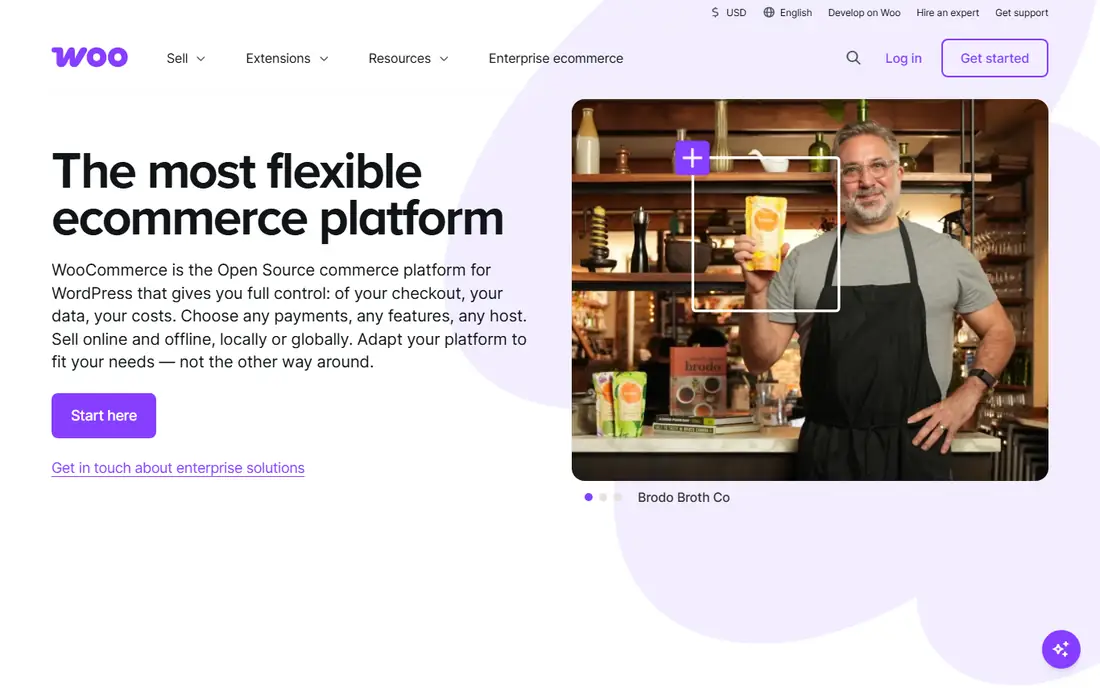
WooCommerce is the maximal ecosystem and the maximal responsibility. For stores with technical help, nothing reaches further for less money.
Its app advantage compounds with content: the world's biggest blogging and SEO plugin library sits under the store, which is why content led commerce keeps choosing it.
What we like- WooCommerce is a free plugin on WordPress, and its ecosystem is two ecosystems: the official Woo marketplace with over a thousand extensions, and the WordPress plugin directory with more than 60,000 plugins behind it. Almost anything a store can imagine exists somewhere in that universe, much of it free or sold once rather than monthly. Because the code is open, an extension that does not exist can be built, and a broken one can be fixed by any developer. Hosting is your choice, so the platform fee can stay at zero.
Watch out for- No curator stands between you and a bad plugin: conflicts, abandoned extensions and security holes in neglected plugins are the store owner's problem, and WordPress sites need active maintenance. Official extensions often carry annual licences that stack up like subscriptions anyway. Support quality varies by author. You are your own IT department, or you pay one.
#3BigCommerce
Best for: Features built in, fewer apps needed4.2/5 on
G2 (580 reviews, checked Oct 2026)
Visit bigcommerce.com
Starting priceSee website
Free planFree trial

BigCommerce is the counter argument to this whole guide: the best app ecosystem is the one you barely need. Judge it by your feature list, not by app counts.
Write down your ten must have features and check them against the native list first. Stores whose list is covered natively save the stack rent entirely.
What we like- BigCommerce's app marketplace is the smallest of the majors, around a thousand apps, and the company is open about why: it builds features natively that Shopify stores rent as apps, including advanced product options, customer segmentation, faceted search and strong B2B tools on higher tiers. No extra transaction fees on its payment rails. The apps that do exist are vetted and integration tested. For a store whose needs are mainstream, the total software bill can land lower than a Shopify store plus its stack.
Watch out for- When your need is niche, a thousand apps run out faster than ten thousand
- Some categories have one option or none. Pricing is published in tiers but varies with promotions and negotiation, so confirm on the site. The theme and app developer community is smaller, making hired help harder to find. Migrating later, if the niche need wins, is a real project.
#4Wix
Best for: Small stores, simple app market4.2/5 on
G2 (1,888 reviews, checked Oct 2026)
Visit wix.com
Starting price$29 per month
Free planYes
Wix suits the store that will stay small and pretty: a boutique, a maker, a local brand, where the app market's simplicity is a feature and its ceiling is years away.
If your five year plan is a catalogue of thousands and a wholesale arm, start on Shopify instead and skip the migration. If it is a beautiful shop front with a loyal local following, Wix's ecosystem is sized right.
What we like- Wix pairs its website builder with an app market of several hundred apps covering store extras, marketing, bookings and business tools, all installed through the same dashboard a beginner already understands. Commerce plans start at 29 dollars a month billed annually. For a small store, the essential apps, reviews, loyalty, shipping labels, email marketing, are present, decent and quick. Wix's own built in tools keep growing, shrinking the needed stack.
Watch out for- Depth is the limit: advanced commerce needs, complex subscriptions, serious B2B, multi warehouse logic, quickly exceed the app market's range. Apps vary in quality and some are lightly maintained. The platform's simplicity has edges, and stores that hit them migrate out. Transaction and payment details vary by country.
#5Adobe Commerce
Best for: Enterprise extension marketplace4.0/5 on
G2 (624 reviews, checked Oct 2026)
Visit adobe.com
Starting priceSee website
Free planNo
Adobe Commerce belongs on this list because its extension ecosystem is real and deep, and off most readers' lists because its prices are enterprise only. It is named here so the comparison is complete, not as a recommendation for a typical store.
If your organisation already runs Adobe's marketing stack and employs commerce developers, the conversation makes sense. Otherwise the hosted platforms deliver 95 percent of the outcome for 5 percent of the effort.
What we like- Adobe Commerce, the platform formerly known as Magento, carries an enterprise grade extension marketplace with thousands of modules for complex catalogues, B2B pricing, integrations with ERPs and the Adobe stack itself. Its open architecture means an enterprise can extend anything, and a global developer community builds for it. For organisations whose commerce is genuinely complicated, the ecosystem depth at the technical level exceeds every hosted rival. The open source edition remains available for teams that self host.
Watch out for- This is enterprise economics: licence by quote, implementation by agency, extensions that cost thousands, and a total cost of ownership that makes the other entries here look like pocket money. The ecosystem's power requires developers to wield it. Small and mid sized stores will drown in its complexity. Cloud and licensing arrangements have shifted under Adobe's ownership, so current terms need direct confirmation.
#6Squarespace
Best for: Small catalogues, curated extensions4.4/5 on
G2 (1,133 reviews, checked Oct 2026)
Visit squarespace.com
Starting price$19 per month
Free planFree trial
Squarespace is the boutique answer: a short extension list, everything in taste, for stores whose brand is the design and whose catalogue fits on two pages.
Choose it knowingly as a stage, or as a permanent small home. Either is fine; drifting into its ceiling by accident is the mistake.
What we like- Squarespace Extensions is a small, deliberately curated shelf: a short list of official extensions for accounting, shipping, inventory and marketing, each vetted to the platform's design standard, installed into the most beautiful storefronts in the business. Commerce starts at 19 dollars a month billed annually on its entry tier. For a small catalogue brand, the curation is the appeal: every extension works, looks right and is supported. Built in features keep expanding into what extensions used to cover.
Watch out for- Small means small: if your need is not on the shelf, there is no long tail of third party apps to save you. Advanced commerce, subscriptions complexity, marketplaces, B2B, runs past its design centre. The closed ecosystem gives no developer escape hatch comparable to WooCommerce. Growing brands treat it as a first platform, not a final one.
#7Ecwid
Best for: Adding a store to an existing site4.7/5 on
G2 (405 reviews, checked Oct 2026)
Visit ecwid.com
Starting priceFree
Free planYes
Ecwid's ecosystem is sized for its idea: small, embeddable, everywhere at once. Within that brief it is complete, and its free tier makes the experiment costless.
If the experiment works and the store outgrows the embed, the migration path leads to the top of this list, and Ecwid's export tools are decent about it.
What we like- Ecwid by Lightspeed sells one clever idea: a store you embed into an existing website, WordPress, social profiles or a link in bio, and its app market of over a hundred apps extends that store with shipping, marketing and accounting tools. A free tier sells a handful of products at no monthly cost, and paid plans stay modest. For a business that already has a site and an audience, it adds commerce without a rebuild. Point of sale through Lightspeed connects the physical shop.
Watch out for- The app market is the smallest here, so niche needs hit the wall early. The embedded model inherits your existing site's limits and design quirks. Serious catalogue scale belongs on a dedicated platform. Some app functionality duplicates the paid plan features, so read the stack before subscribing twice for the same job.
#8Square Online
Best for: Square sellers, simple add ons4.2/5 on
G2 (482 reviews, checked Oct 2026)
Visit squareup.com
Starting priceFree
Free planYes
Square Online is the ecosystem as extension cord: it carries the system your physical shop already runs into online selling, with enough apps to fill the common gaps.
Its question is not whether it beats Shopify in the abstract, but whether your business is already Square shaped. If yes, its unity beats a bigger app store you would have to integrate by hand.
What we like- Square Online builds a store on Square's payments and point of sale, free to start, with an app marketplace of integrations covering accounting, marketing, shipping and delivery services. For a shop already ringing sales on Square, the ecosystem advantage is unity: in store and online inventory, orders and customers live in one system, and the apps extend that one system. Paid tiers add custom domains and lower processing. Setup is measured in an afternoon.
Watch out for- The app marketplace is modest beside Shopify's, and advanced commerce features, subscriptions depth, complex promotions, are thinner. Design flexibility is limited. It is a strong citizen of Square's world and a poor choice outside it
- Adopting it means adopting Square payments as your centre. Growing brands may find the ceiling arrives with success.
How we chose
We ranked dedicated e-commerce platforms by the strength of their app ecosystems in 2026: number and quality of apps, curation, billing simplicity and how much of a store's future needs the ecosystem can cover. Figures come from platform pages and current comparisons as of October 2026; published Shopify app counts vary widely by counting method, which the article states openly rather than resolving falsely. Adobe Commerce and BigCommerce pricing needs the vendors' live pages, so their fields say See website. No platform was hands on tested for this guide.
How to keep an app stack under control
Count the stack quarterly. List every app, its monthly cost and the last date it earned its keep. Stores routinely find a quarter of their stack dormant, duplicated by platform updates or charging for a campaign that ended last year.
Prefer platform features to apps when both exist. Native features survive updates, are supported by one vendor and cost nothing extra. Apps win when they do something the platform does not, or does badly, and that is the only test an install should pass.
Watch the exit terms. Before installing anything that touches your data, subscriptions, reviews, loyalty points, check how you export that data when you leave. The app you cannot leave owns a piece of your store, and knowing that up front is the whole defence.
Frequently asked questions
Which e-commerce platform has the most apps?
By raw numbers, WooCommerce, because it draws on the official Woo marketplace and the 60,000 plus WordPress plugin directory. By dedicated commerce apps in one curated store, Shopify, whose app store listings are counted between roughly 8,000 and over 20,000 depending on the source and method. The practical answer: any mainstream need has several options on both, and Shopify's curation makes choosing easier, while WordPress's openness makes anything possible.
How much do store apps typically cost per month?
Individual apps commonly run from free to about 100 dollars a month, with serious tools, subscriptions platforms, loyalty, advanced shipping, priced higher. Comparison reporting puts a typical growing store's stack at 100 to 500 dollars a month on top of the platform fee. That is why this guide insists on quarterly audits: the stack grows by 20 dollar decisions and is rarely re-examined as a total.
Are free apps safe to use?
Free apps on curated stores, Shopify's and the official marketplaces, pass a review process and are generally safe, though free often means your data or an upsell is the business model, so read the permissions and the privacy terms. On open ecosystems like WordPress, prefer plugins with active maintenance, recent updates and many installs, and remove abandoned ones promptly, since neglected plugins are a real security risk.
What happens to my apps if I change platforms?
They do not move. Apps are built per platform, so a migration means re-buying your stack in the new ecosystem and migrating the data each app held, reviews, subscriptions, loyalty balances, through exports. This lock in is a real cost of the big ecosystems and another reason to export app data routinely while you are happy, not when you are leaving.
Do I need apps at all to run a good store?
A simple store needs very few: payments, shipping labels and basic email are built in or nearly free everywhere here. Apps become necessary as you add subscriptions, loyalty, reviews at scale, marketplaces or complex shipping. BigCommerce's pitch is that it builds more of that in. The honest rule is to add apps against a named problem, never against a homepage gallery of possibilities.
Sources we checked (0)
Is your product missing or out of date?
We review this list regularly. Vendors can request a listing, send updated pricing or ask about featured placement.

Shihab Mia · Founder, Rankite
Shihab has 5+ years in B2B and SaaS SEO. He writes Rankite's software buying guides from pricing pages, documentation and public user reviews. More about Shihab.