How we make this list: we compare pricing pages, product documentation and public user reviews. Ratings come from G2, Capterra or Trustpilot, with the date we checked them.
Key takeaways
- Vivino is the best all round rating app, with label scanning, crowd ratings and prices in one place.
- CellarTracker is the best for serious collectors, with deep tasting notes and cellar management.
- Wine-Searcher is the best for price and availability, though it is a price engine first and a rating app second.
- Sommo and Hello Vino suit learners and beginners who want guidance, pairings and a simpler start.
- Free tiers cover scanning and basic ratings on most apps, while premium tiers add cellar limits, price history and advanced notes.
Quick comparison
Is your product missing or out of date?
We review this list regularly. Vendors can request a listing, send updated pricing or ask about featured placement.
The best wine rating apps
Starting priceFree
Free planYes
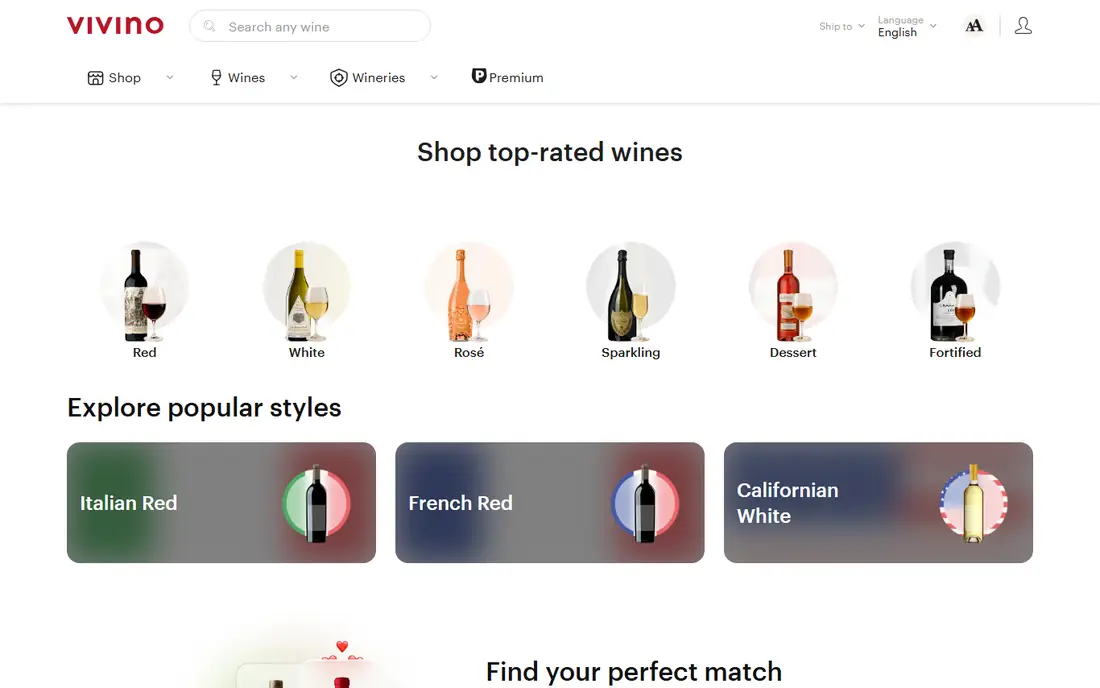
Vivino is the app most people mean when they say wine rating app. Photograph a label in a shop or restaurant, and Vivino returns a crowd rating, average price, grape and region details and similar wines, usually in seconds. Recent summaries list Vivino Premium at $29.99 per year or $4.99 per month depending on plan, with a free tier that covers core scanning and ratings.
The crowd is both strength and weakness. With millions of ratings, a Vivino score is a useful quick signal, and research cited in recent comparisons finds crowd scores broadly consistent with professional critics for many wines. Individual tastes still differ, and a high crowd score for a popular style does not mean you will love it. Use Vivino for a fast aisle check, then read a few individual notes before buying a case.
What we like- Fast label scanning
- Huge crowd rating database
- Prices and availability alongside ratings
Watch out for- Crowd scores can mask outliers
- App pushes wine sales and premium features
Starting priceFree
Free planYes
CellarTracker is the serious drinkers rating app. It combines a vast public tasting note database with detailed cellar management: bottles, locations, drinking windows, purchase history and valuations. Recent summaries list a free tier with donation prompts and paid tiers around $30 to $40 per year, which is low for the depth offered.
Casual users may find the interface cluttered and the setup heavy compared with Vivino. You get the most from CellarTracker if you already buy by the case, track vintages, or want to compare your notes with experienced tasters over years. For a quick shop rating, Vivino is faster. For a collection you plan to drink over a decade, CellarTracker is the record to keep.
What we like- Deepest community tasting note database
- Powerful cellar inventory and search
- Trusted by collectors and trade
Watch out for- Interface feels dated and desktop first
- Learning curve is steep for casual drinkers
Starting priceFree
Free planYes
Wine-Searcher answers a different question: where can I buy this bottle, and is the price fair? Search a wine and vintage, and it returns retailer prices, availability, critic scores and user ratings where available. Recent summaries list Wine-Searcher Pro at $89 per year, with a free tier that limits some results and features.
As a rating app alone, Wine-Searcher is thinner than Vivino or CellarTracker, with less social tasting and cellar depth. As a buying tool, it is unmatched, especially for older vintages, rare bottles and price sensitive purchases. Pair it with Vivino for ratings and CellarTracker for notes, and use Wine-Searcher to decide where to buy and whether the price makes sense.
What we like- Best price comparison across retailers
- Critic and user scores alongside prices
- Strong vintage search
Watch out for- Price engine first, not a social rating app
- Full Pro features need a paid plan
Starting priceFree
Free planYes
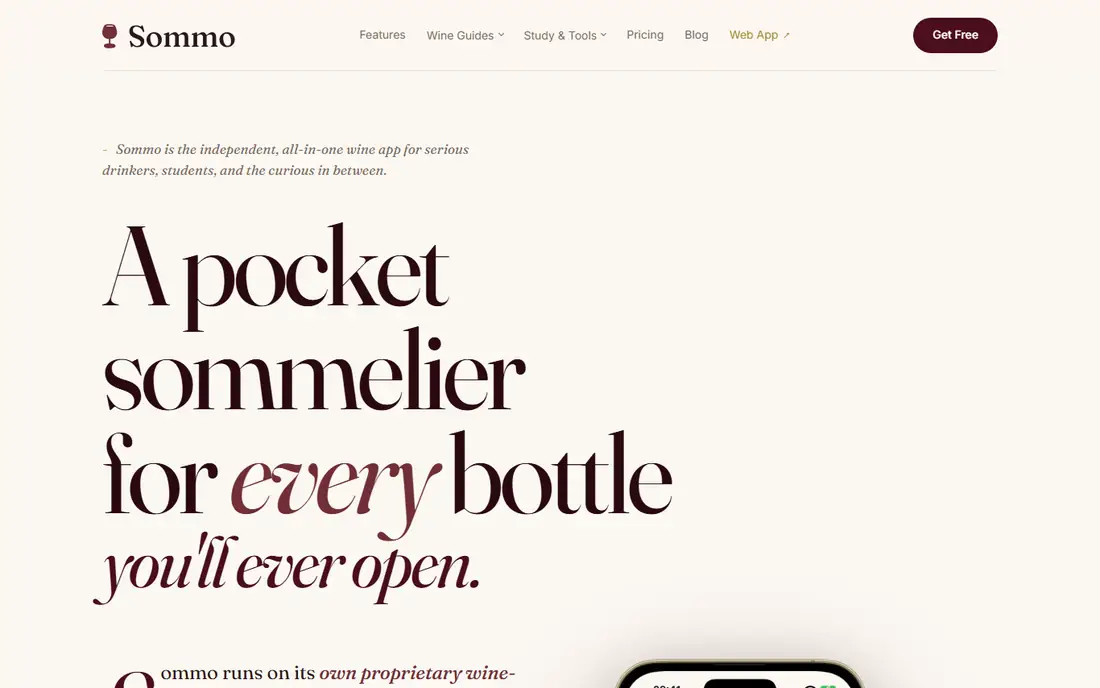
Sommo positions itself as an independent app across scanning, cellar, journal, pairings and wine knowledge, rather than a marketplace first. Recent summaries note a free start with limited lifetime scans and a journal trial, plus paid tiers for fuller use. That learning focus suits drinkers who want to understand why they liked a wine, not just its score.
The trade is scale. Sommo database and community are smaller than Vivino, so obscure labels may match less reliably. For beginners and intermediate drinkers who want structured learning, taste profiles and a clean journal, Sommo is a refreshing alternative. For the largest possible rating database in a shop aisle, Vivino still wins.
What we like- Guided learning, pairings and taste profile tools
- Scanning, cellar, journal and knowledge in one app
- Ad free approach
Watch out for- Newer and smaller database than Vivino
- Some features limited on the free tier
Starting priceFree
Free planYes
Hello Vino is the gentle entry point. It asks about taste preferences and occasions, suggests wines and pairings, and keeps the experience simple for someone who does not yet know Barolo from Beaujolais. The free app suits a casual drinker who wants a recommendation for dinner, not a database to manage.
Depth is limited. Collector tools, vintage tracking and detailed tasting note fields are thinner than CellarTracker, and the app is less frequently updated than the leaders. For a beginner, that simplicity is a benefit. For a collector, Hello Vino is best as a pairing helper alongside Vivino or CellarTracker, not as a main rating record.
What we like- Simple beginner friendly recommendations
- Food pairing help
- Easy start without a complex cellar setup
Watch out for- Less updated and less deep than Vivino or CellarTracker
- Limited collector features
Starting priceSee website
Free planYes
Tastingbook suits fine wine drinkers who value note quality over crowd volume. Its interface is clean, its metadata per bottle is rich, and features such as taste matching compare a new wine with your past ratings to predict whether you will like it. Recent summaries list premium from around 5.90 euros per month, with a free tier for basic use.
The smaller user base means fewer community notes for everyday wines, and offline use is limited. For vertical tastings, auction purchases and fine wine collections, Tastingbook elegance and depth stand out. For everyday supermarket shopping, Vivino faster scanning and larger crowd will serve you better.
What we like- Elegant tasting note interface
- Fine wine and auction focus
- Taste match against your own history
Watch out for- Premium features from around 5.90 euros per month
- Smaller community than Vivino
Starting priceFree
Free planYes
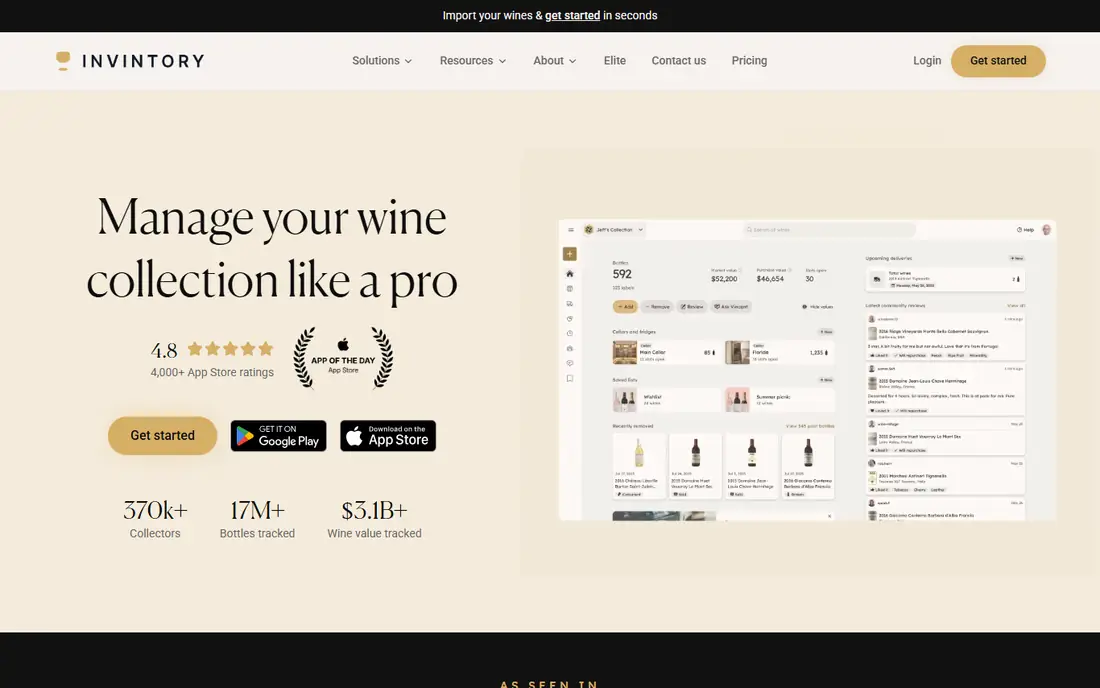
InVintory is a modern cellar app for drinkers who want Vivino ease with better inventory control. You scan labels, log bottles, track locations and drinking windows, and build a collection without CellarTracker learning curve. A free tier covers basic use, with Premium for fuller features, though exact pricing should be checked on the vendor site.
For a casual drinker who buys a bottle at a time, InVintory may feel like more app than needed. For someone building a 50 to 200 bottle collection and wanting a clean mobile record, it strikes a useful middle ground between Vivino simplicity and CellarTracker depth. Check export options before committing a large collection to any cellar app.
What we like- Modern mobile cellar interface
- Label scanning and inventory in one app
- Good for casual collectors
Watch out for- Overkill for a drinker with a few bottles
- Rating community is smaller than Vivino
Starting price$59.95 per year
Free planNo
Wine Spectator is the critic led alternative to crowd ratings. Its 100 point scores, tasting notes, vintage charts and editorial guides help buyers who trust professional palates over crowd averages, especially for fine wine and investment grade bottles. Recent summaries list digital access at $59.95 per year.
It is not a cellar app or a social rating app. You cannot manage a large inventory or follow friends tasting notes in the same way as CellarTracker or Vivino. Use Wine Spectator to calibrate a purchase, especially an expensive one, and use Vivino or CellarTracker to record what you actually thought after drinking it. That pairing gives you both a critic benchmark and your own palate history.
What we like- Trusted professional critic scores
- Editorial, vintage charts and buying guides
- Consistent scoring scale
Watch out for- No real cellar management
- Digital subscription required for full access
How we chose
We compared pricing pages, product documentation and public reviews on app stores, Trustpilot and Reddit, focusing on label recognition, rating database size, tasting note depth, cellar tools, price information, learning features and export options. We did not claim hands on testing. Prices are from vendor pages and recent summaries, and some apps have changed ownership or merged, so check current status before relying on a legacy app.
Using ratings without losing your own palate
A rating app should inform your taste, not replace it. Start by rating wines you already know, so the app learns your preferences and you learn how its scores map to your palate. A Vivino 4.0 that you rate 3.0 tells you more than any single score, and over time your own history becomes the most reliable guide.
Also check the vintage. The same wine from a different year can taste very different, and a rating for the wrong vintage is a common buying mistake. Scan the exact bottle, read two or three notes that mention food, tannin or acidity in terms you understand, and note price alongside score. A great $15 wine you love beats a good $80 wine you respect, and a rating app that helps you find the first is doing its job.
A tasting habit beats a perfect app. Pick one bottle a week that is new to you, write three lines about what you smell, taste, and feel on the finish, and record the price and where you bought it. After a month you will see patterns, such as a preference for high-acid whites or softer reds, that no single score can give you. Share notes with a friend who drinks differently from you, since a second palate catches things yours misses, and revisit your early ratings after a few months to see how your taste has changed.
Frequently asked questions
What is the best wine rating app overall?
Vivino is best overall for scanning, crowd ratings and prices. CellarTracker is best for collectors, Wine-Searcher is best for prices, and Sommo is best for learning.
Are wine rating apps free?
Most offer free scanning and basic ratings, including Vivino, CellarTracker, Wine-Searcher, Sommo and Hello Vino. Premium tiers add cellar features, price history and advanced notes, usually from around $30 to $90 per year.
Are Vivino ratings reliable?
Broadly, yes for a quick signal, especially with many ratings, and recent research finds crowd scores often align with professional critics. Read individual notes and check the vintage, since averages can hide style differences.
Which app is best for a wine cellar?
CellarTracker is best for large, serious cellars, InVintory is best for a modern mobile cellar, and Vivino covers basic cellar tracking for casual collectors. Check export options before building a large collection.
Can I use these apps on iPhone and Android?
Yes, Vivino, CellarTracker, Wine-Searcher, Sommo and most apps here offer iOS and Android apps, plus web access in many cases. Check your specific device and region before subscribing.
Sources we checked (8)
- https://www.vivino.com
- https://www.cellartracker.com
- https://www.wine-searcher.com
- https://sommo.app
- https://www.hellovino.com
- https://tastingbook.com
- https://www.invintory.com
- https://www.winespectator.com
Is your product missing or out of date?
We review this list regularly. Vendors can request a listing, send updated pricing or ask about featured placement.

Shihab Mia · Founder, Rankite
Shihab has 5+ years in B2B and SaaS SEO. He writes Rankite's software buying guides from pricing pages, documentation and public user reviews. More about Shihab.
 Vivino
 CellarTracker
 Wine-Searcher
 Sommo
 Hello Vino
 Tastingbook
 InVintory
 Wine Spectator