How we make this list: we compare pricing pages, product documentation and public user reviews. Ratings come from G2, Capterra or Trustpilot, with the date we checked them.
Key takeaways
- Shopify and BigCommerce remove server work entirely, which suits store owners who want to focus on selling rather than maintenance.
- Managed WooCommerce hosts like SiteGround, WP Engine and Cloudways give WordPress store owners more control over design and plugins.
- Introductory prices often rise sharply at renewal, so compare the second-year price before you choose a budget host.
- Checkout speed, uptime and support response time affect revenue directly, and they matter more than a small monthly saving.
- A host that handles traffic spikes well is worth paying for if you run sales, ads or seasonal promotions.
Quick comparison
| Tool | Best for | Starting price | Free plan |
|---|
 Shopify | All-in-one hosted store | $39 per month | Free trial |
 BigCommerce | Growing stores needing strong APIs | $29 per month | Free trial |
 SiteGround | Managed WooCommerce for smaller stores | $2.99 per month | No |
 Cloudways | Managed cloud WooCommerce | $14 per month | Free trial |
 Bluehost | WooCommerce beginners on a budget | $9.95 per month | No |
 Hostinger | Low-cost WooCommerce hosting | $3.59 per month | No |
 WP Engine | Premium managed WordPress stores | $25 per month | No |
 Squarespace | Simple stores with strong design tools | $16 per month | Free trial |
Is your product missing or out of date?
We review this list regularly. Vendors can request a listing, send updated pricing or ask about featured placement.
The best web hosting services for ecommerce
#1Shopify
Best for: All-in-one hosted store4.4/5 on
G2 (5,144 reviews, checked Oct 2026)
Visit shopify.com
Starting price$39 per month
Free planFree trial

Shopify is the simplest path to a hosted store. Hosting, security updates, SSL and checkout are included, so you never patch a server or chase a plugin conflict at midnight. The platform scales during sales events, and its app store covers shipping, email marketing, reviews and subscriptions. For a new store owner, that completeness is the main selling point.
The cost is the catch. The monthly plan is only part of the bill, because apps and payment fees add up as you grow. Custom design also stays inside Shopify themes and Liquid templates, which limits deep code changes. If you want a store that just works and you can afford the subscription, Shopify is hard to beat.
What we like- Hosting, checkout and payments in one place
- Large app store
- Handles traffic spikes well
Watch out for- Monthly cost plus transaction fees on some plans
- Less code control than self-hosted stores
#2BigCommerce
Best for: Growing stores needing strong APIs4.2/5 on
G2 (580 reviews, checked Oct 2026)
Visit bigcommerce.com
Starting price$29 per month
Free planFree trial
BigCommerce suits stores that outgrow basic builders but still want hosted infrastructure. It includes more built-in selling features than many rivals, such as product options, discounts and multi-channel selling, which reduces dependence on paid apps. Its API access also helps teams connect a store to an ERP, warehouse system or custom front end.
Designers sometimes find the theme catalog thinner than Shopify, and some advanced settings take time to learn. Still, for a mid-size store that sells across channels and wants predictable fees, BigCommerce offers a strong balance of control and managed hosting.
What we like- No extra transaction fees on most plans
- Strong built-in features
- Good API access
Watch out for- Theme selection is smaller than Shopify
- Learning curve for advanced setup
Starting price$2.99 per month
Free planNo
SiteGround is a popular managed host for WooCommerce stores that want WordPress freedom without managing a server alone. Its control panel includes one-click WordPress installs, staging, caching tools and daily backups on higher plans. Support is known for quick, knowledgeable replies, which matters when a checkout page breaks during a promotion.
Watch the renewal price. The low first-term rate climbs after the initial period, and entry plans limit storage and monthly visits. For a small store with steady traffic, SiteGround remains a good value. For a large catalog or heavy traffic, check the higher tiers before you commit.
What we like- Fast support
- Managed caching and security
- Easy WooCommerce setup
Watch out for- Intro price rises at renewal
- Storage limits on entry plans
#4Cloudways
Best for: Managed cloud WooCommerce4.7/5 on
G2 (1,149 reviews, checked Oct 2026)
Visit cloudways.com
Starting price$14 per month
Free planFree trial
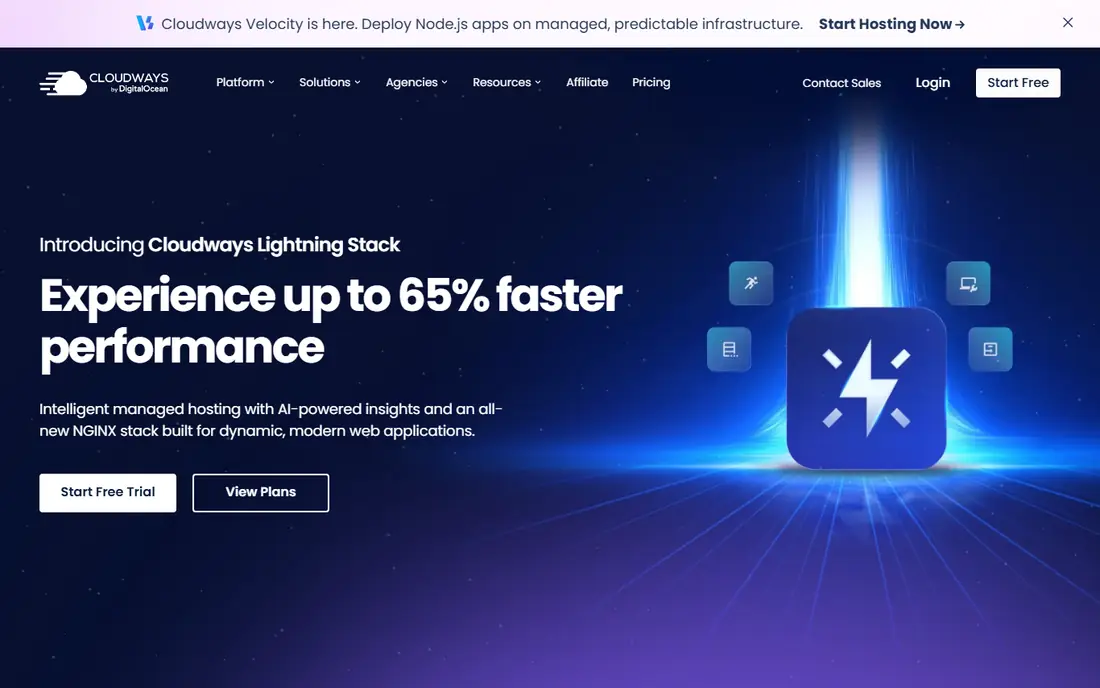
Cloudways sits between shared hosting and raw cloud servers. You pick a cloud provider such as DigitalOcean, AWS or Google Cloud, and Cloudways manages the server, caching, backups and security patches. That setup gives WooCommerce stores room to scale without hiring a system administrator. Staging sites and one-click cloning make testing plugin updates safer.
Cloudways does not sell domains or email hosting, so you will need separate providers for those. Support quality also depends on your plan tier. For a growing WooCommerce store that needs cloud performance and flexible scaling, it is a practical middle path.
What we like- Choice of cloud providers
- Pay-as-you-go scaling
- Staging and cloning tools
Watch out for- No domain registration or email hosting
- Support tiers vary
#5Bluehost
Best for: WooCommerce beginners on a budget3.4/5 on
G2 (282 reviews, checked Oct 2026)
Visit bluehost.com
Starting price$9.95 per month
Free planNo
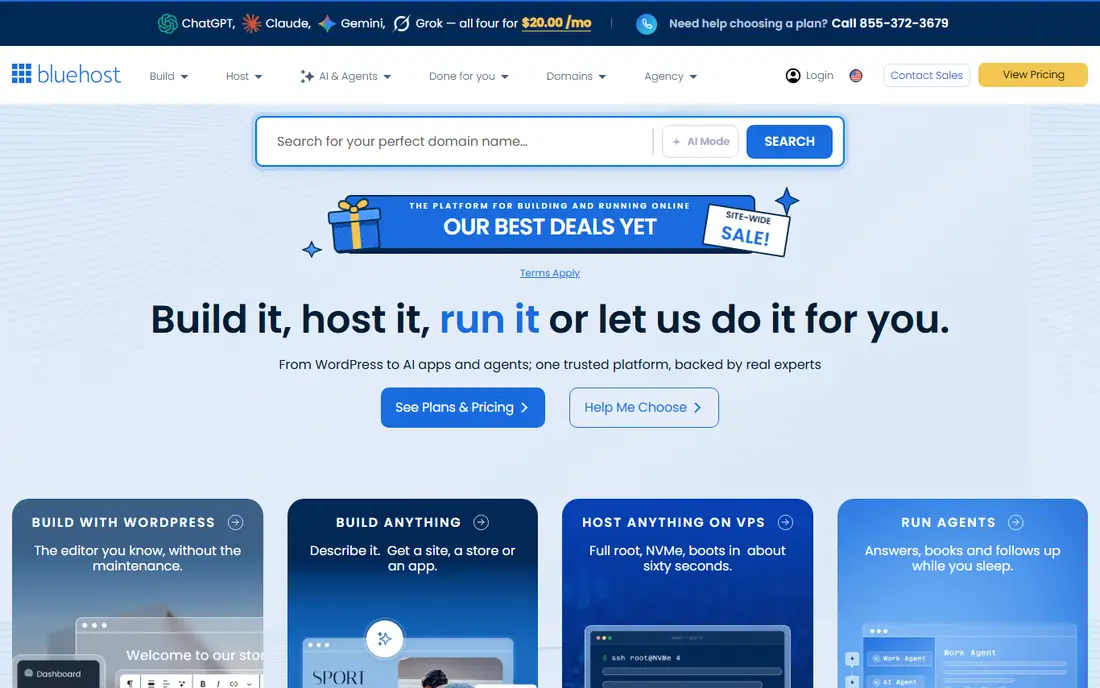
Bluehost targets beginners. Its WooCommerce plans bundle WordPress, a store setup wizard, payment setup help and a free domain for the first year on many plans. That hand-holding helps a first-time store owner get products listed quickly without technical knowledge.
Shared hosting has limits. During traffic spikes, a shared plan can slow down, and renewal rates are notably higher than intro rates. Bluehost fits a small store that is just starting and wants low upfront cost. Plan an upgrade path if sales grow.
What we like- Simple WooCommerce onboarding
- Free domain for the first year on many plans
- WordPress recommended host
Watch out for- Renewal prices are higher
- Performance can vary on shared plans
#6Hostinger
Best for: Low-cost WooCommerce hosting4.4/5 on
G2 (834 reviews, checked Oct 2026)
Visit hostinger.com
Starting price$3.59 per month
Free planNo
Hostinger appeals to budget-conscious store owners. Its plans include WordPress acceleration tools, free SSL and a clean control panel that is easier to use than older hosting dashboards. Multiple data center locations help stores serve customers in different regions with lower latency.
The trade-offs are support depth and renewal cost. Support runs mainly through chat, and the cheapest rate applies to longer terms. Hostinger is a sensible pick for a small store testing an idea. Larger stores should compare its higher tiers against managed WooCommerce specialists.
What we like- Very low entry price
- Modern control panel
- Global data centers
Watch out for- Support is chat-based
- Renewal pricing is higher
#7WP Engine
Best for: Premium managed WordPress stores4.6/5 on
G2 (362 reviews, checked Oct 2026)
Visit wpengine.com
Starting price$25 per month
Free planNo
WP Engine is a premium managed WordPress host with WooCommerce plans tuned for store performance. It includes automated backups, staging environments, a content delivery network and security monitoring. Its support team specializes in WordPress, which helps when a theme or plugin conflict affects checkout.
Some plugins are disallowed for performance or security reasons, so check compatibility before migrating. The price is also higher than shared hosting. For an established WordPress store where downtime costs real money, WP Engine offers a calmer, better-supported operation.
What we like- Strong WordPress performance
- Daily backups and staging
- Expert WordPress support
Watch out for- Plugin restrictions apply
- Higher price than shared hosting
#8Squarespace
Best for: Simple stores with strong design tools4.4/5 on
G2 (1,133 reviews, checked Oct 2026)
Visit squarespace.com
Starting price$16 per month
Free planFree trial
Squarespace suits small stores where design matters and the catalog is simple. Templates look polished out of the box, and hosting, SSL and domain management live in one account. Built-in tools cover products, discounts, shipping and basic email campaigns, so a small team can run a store without many add-ons.
Complex stores hit limits. The app ecosystem is smaller than Shopify, and advanced shipping rules, product options and integrations are thinner. If you sell a modest range and want a beautiful store quickly, Squarespace works well. If you need deep ecommerce customization, choose Shopify, BigCommerce or WooCommerce hosting instead.
What we like- Polished templates
- Built-in store tools
- Hosting and domain in one account
Watch out for- Fewer ecommerce apps than Shopify
- Less suited to complex catalogs
How we chose
We compared vendor pricing pages, plan limits, uptime claims, support options and user reviews on G2, Capterra and Reddit, with attention to checkout performance, renewal pricing, backups and scaling. We included both hosted platforms and managed WooCommerce hosts because ecommerce buyers split clearly between those two paths. Prices shown are entry-level list prices at the time of writing, and renewal rates should always be checked on the vendor pricing page before purchase.
A hosted platform suits you if you want the vendor to handle servers, security patches, scaling and checkout compliance. You trade some design freedom for reliability and speed of setup. WooCommerce suits you if you already use WordPress, want full control over plugins and code, or need a custom checkout flow that a hosted platform cannot match. That freedom brings responsibility for updates, backups and plugin compatibility.
Budget for the full second year, not just the first month. Add app fees, payment fees, domain renewal and any premium theme cost. Check the host's backup policy, staging tools and support hours, and test support response time before a sale depends on it. A short trial or money-back period is the right time to test checkout speed on a mobile connection, because most shoppers now buy on phones.
A simple checklist before you migrate
Confirm that product data, customer accounts, order history and redirects can move cleanly. Test payment methods, tax settings and shipping rules on a staging copy. Keep the old store live until the new checkout has processed real test orders. That care prevents lost sales during a move.
Planning for growth and downtime
A store that grows will outgrow its first plan, so check upgrade paths before you sign up. Ask whether you can move from shared hosting to a higher tier without migrating to a new account, and whether staging, backups and SSL remain included after an upgrade. Downtime during a move can cost sales, so a host that offers free migration help or a clear migration guide is worth noting. Also check support hours and response channels, because a checkout problem at 9 p.m. on a Saturday needs a real reply, not a ticket queue that waits until Monday morning. Read the host uptime guarantee and its remedy, and keep your own backups in a separate location even when the host promises daily backups. That habit protects you if an account issue, billing dispute or migration error ever locks you out of the host backup system.
Frequently asked questions
What is the cheapest good ecommerce hosting option?
Hostinger and SiteGround offer low introductory prices, but renewal rates matter more over two years. Shopify and Squarespace cost more monthly, yet they include hosting, security and checkout, which can offset separate hosting, plugin and maintenance costs.
Do I need separate hosting if I use Shopify?
No. Shopify includes hosting in its subscription, along with SSL, checkout and scaling. You do not buy a separate hosting plan. You may still pay for a custom domain, apps and a theme.
Is WooCommerce hosting better than Shopify?
Neither is better for every store. WooCommerce gives more control and a larger plugin ecosystem, while Shopify gives simpler management and stronger built-in reliability. Choose WooCommerce if control matters most, and Shopify if ease and uptime matter most.
How much traffic can shared ecommerce hosting handle?
Shared plans handle small stores with modest daily traffic, but they can slow during promotions or viral traffic. Managed and cloud plans handle spikes better. If you run paid ads or seasonal sales, choose a plan with clear scaling options.
What should I check about renewals?
Check the renewal price, contract length, backup limits and visit or storage caps. Many hosts advertise a first-term discount that rises sharply later. Calculate a two-year total before comparing headline monthly prices.
Sources we checked (8)
- https://www.shopify.com/pricing
- https://www.bigcommerce.com/pricing
- https://www.siteground.com/web-hosting.htm
- https://www.cloudways.com/en/pricing.php
- https://www.bluehost.com/wordpress/woocommerce-hosting
- https://www.hostinger.com/web-hosting
- https://wpengine.com/plans/
- https://www.squarespace.com/pricing
Is your product missing or out of date?
We review this list regularly. Vendors can request a listing, send updated pricing or ask about featured placement.

Shihab Mia · Founder, Rankite
Shihab has 5+ years in B2B and SaaS SEO. He writes Rankite's software buying guides from pricing pages, documentation and public user reviews. More about Shihab.