How we make this list: we compare pricing pages, product documentation and public user reviews. Ratings come from G2, Capterra or Trustpilot, with the date we checked them.
Key takeaways
- Pacer is the best all round walking app for weight loss, combining phone step counting, challenges and guided plans without needing a wearable.
- MapMyWalk suits outdoor walkers who want GPS routes, pace and calorie detail, while StepsApp suits users who want a clean, simple pedometer.
- Fitbit and Samsung Health win for wearable owners, since steps, sleep, food and weight sit in one dashboard.
- StepBet and Sweatcoin add money and rewards as motivation, but they work best as a supplement to a solid daily walking habit, not a replacement for it.
Quick comparison
| Tool | Best for | Starting price | Free plan |
|---|
 Pacer | All round walking and challenges | $9.99 per month (Premium) | Yes |
 MapMyWalk | GPS routes and outdoor tracking | See website | Yes |
 StepsApp | Clean simple pedometer | $2.50 per month (Pro, billed annually) | Yes |
 Fitbit | Wearable tracking plus health dashboard | $9.99 per month (Fitbit Premium) | Yes |
 Sweatcoin | Rewards for steps | See website | Yes |
 Samsung Health | Free all in one health tracking | Free | Yes |
 StepBet | Money stakes for step goals | See website | No |
 Walkmeter | Detailed walking statistics and routes | See website | Yes |
Is your product missing or out of date?
We review this list regularly. Vendors can request a listing, send updated pricing or ask about featured placement.
The best walking apps for weight loss
Starting price$9.99 per month (Premium)
Free planYes
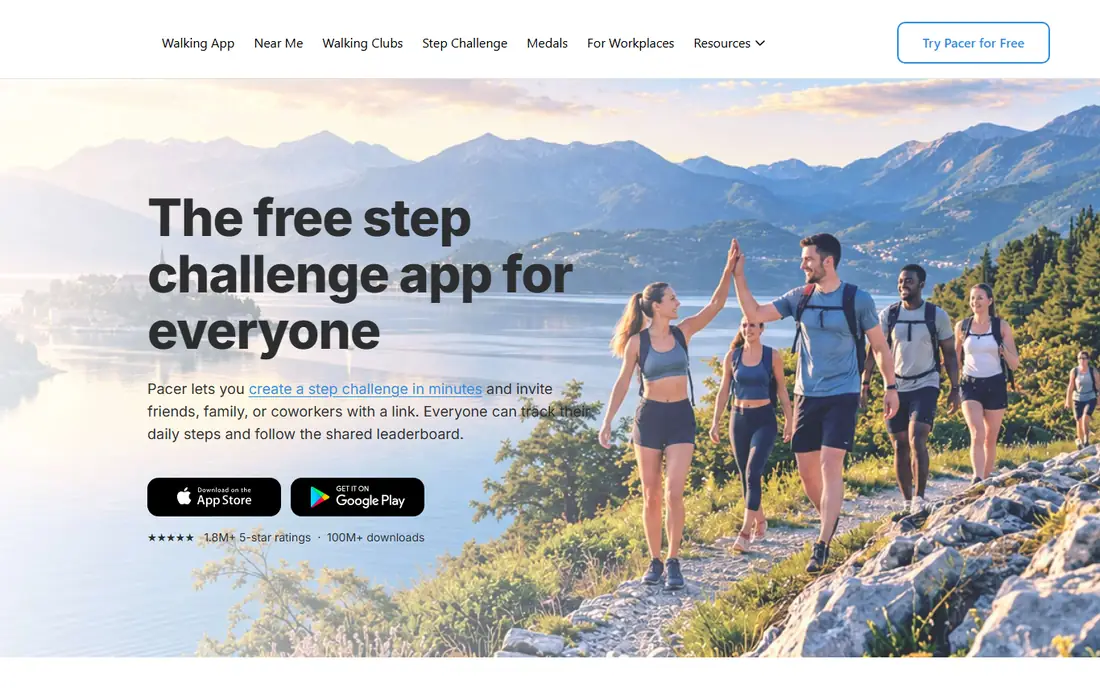
Pacer is the most complete walking app for weight loss without a wearable. The phone counts steps automatically, challenges let friends, family or coworkers compete on a shared leaderboard, and Premium adds guided fitness plans, weight goals and audio coaching. Sync with Apple Health, Fitbit, Garmin and other wearables means mixed device groups can still share one challenge.
The free tier covers daily tracking and challenges well, but some useful controls sit behind Premium, including custom step goal changes. Ads and upgrade prompts are also frequent on free. For users who need social accountability to stay consistent, Pacer motivation system outweighs those annoyances.
What we like- Phone only step counting
- Group challenges and leagues
- Guided plans and audio coaching
Watch out for- Premium paywall is prominent
- Changing a custom step goal needs Premium
- GPS use drains battery
Starting priceSee website
Free planYes
MapMyWalk, from Under Armour, is built for outdoor walkers who care about routes. GPS records distance, pace, elevation, calories and route maps, and the community shares popular walking routes in many cities. Training plans, challenges and nutrition logging sit alongside tracking for users who want walking plus food awareness in one app.
Indoor and treadmill walkers get less value, since GPS is the core strength and phone step counting is secondary. The free tier carries ads, and deeper analysis, ad free use and advanced plans need a Premium subscription. For outdoor walkers who plan routes and review pace over time, MapMyWalk is the most capable route tracker here.
What we like- Accurate GPS route, pace and elevation tracking
- Large route community
- Workout and nutrition features
Watch out for- Free tier includes ads
- Best analysis needs Premium
- GPS tracking uses more battery
Starting price$2.50 per month (Pro, billed annually)
Free planYes
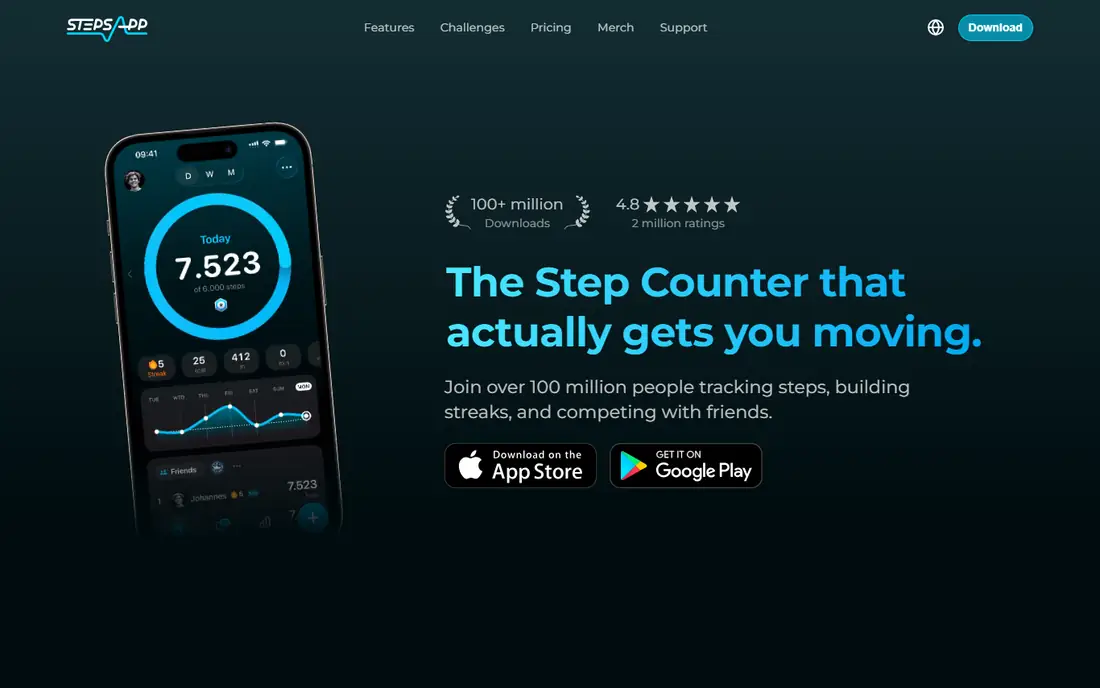
StepsApp keeps walking simple. The phone or wearable counts steps, daily goals and streaks show progress at a glance, and challenges add friendly competition without clutter. Sync covers Apple Health, Google Fit, Garmin, Fitbit, Oura and more, so existing wearable data flows in easily. Pro, at a low annual price, adds advanced trends and customization.
Users who want guided weight loss plans, audio coaching or route planning will find StepsApp thinner than Pacer or MapMyWalk. That restraint is the appeal for many walkers, though. If a clean daily step count, a streak and occasional challenges are enough to keep moving, StepsApp does the job with the least friction.
What we like- Very clean design
- Streaks and challenges
- Broad wearable sync
- Low Pro price
Watch out for- Fewer guided plans than Pacer
- Android free tier includes ads
- No GPS route community
#4Fitbit
Best for: Wearable tracking plus health dashboard4.6/5 on
Capterra (56 reviews, checked Oct 2026)
Visit fitbit.com
Starting price$9.99 per month (Fitbit Premium)
Free planYes
Fitbit, now part of Google Health, suits walkers who already wear a tracker or watch. Steps, distance, active minutes, sleep and heart rate are recorded automatically all day, without carrying a phone for every walk. The app adds food logging, weight trends, community challenges and, on Premium, deeper health insights and guided programs.
Phone only users get a weaker experience, since step accuracy and all day tracking depend on wearable hardware. Premium adds cost on top of device purchase, though the free dashboard already covers steps, sleep and basic trends well. For weight loss walkers who want steps plus sleep and food in one place, Fitbit integration is hard to beat.
What we like- Automatic 24 hour tracking from a wearable
- Sleep, heart rate and food logging
- Large community challenges
Watch out for- Best experience needs Fitbit or Pixel Watch hardware
- Premium needed for advanced insights
Starting priceSee website
Free planYes
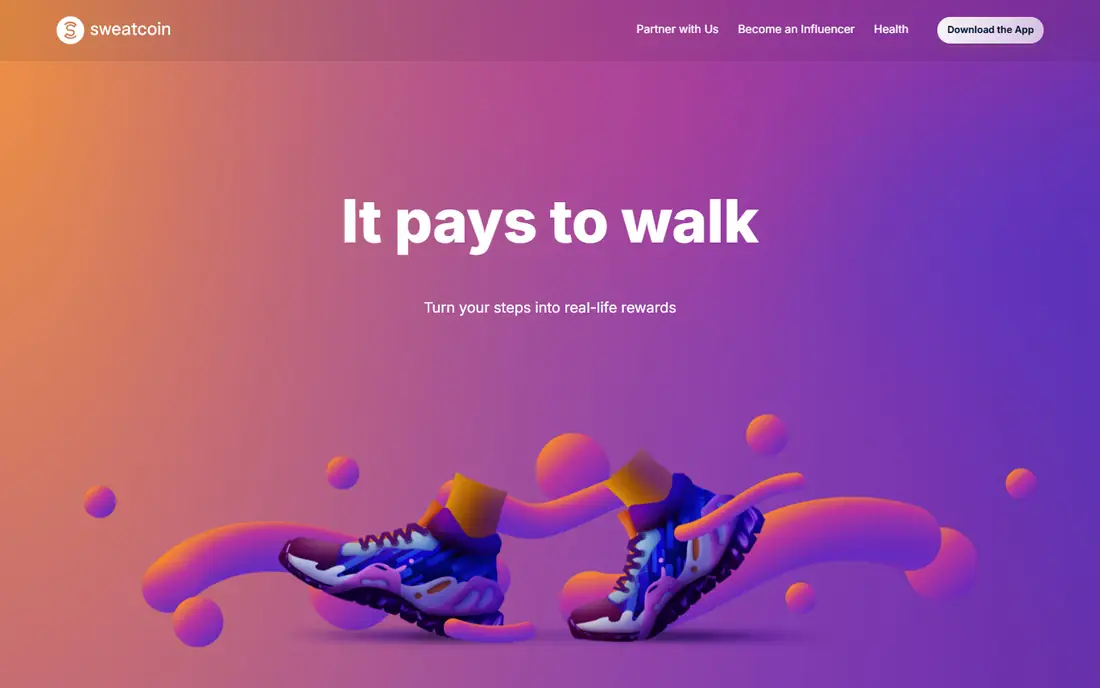
Sweatcoin turns steps into a currency that can be spent on marketplace offers, gadgets, subscriptions and charity challenges. That reward loop motivates users who respond to tangible payoffs rather than streaks alone. The company reports users walk more after joining, and it states it does not sell location data, which addresses a common concern for GPS apps.
Battery use is higher than phone pedometers, since GPS validation runs in the background, and reward values vary by offer and region. Free users also see many ads and promotions. Treat Sweatcoin as a motivator layered on top of a walking habit, not as a precise tracker or a weight loss plan on its own.
What we like- Steps earn rewards and marketplace offers
- Challenges and charity walks
- Strong privacy stance on location data
Watch out for- Heavy GPS battery use
- Rewards value varies
- Many ads and offers on free tier
Starting priceFree
Free planYes
Samsung Health is the best free all in one option, especially on Android. Steps, exercise, sleep, food, water, stress and weight can all be logged without a subscription, and challenges add social motivation. The app works on Samsung phones, other Android phones and iPhones, though some features vary by device.
Walking specific features are less focused than Pacer or MapMyWalk, and advanced vitals such as ECG or sleep apnea detection need a Galaxy Watch. Users who want one free app for overall health, with walking as one part of weight management, will find Samsung Health excellent value. Users who want walking challenges and coaching as the core should pick Pacer instead.
What we like- Completely free core features
- Steps, sleep, food, stress and exercise tracking
- Works on many Android phones and iPhones
Watch out for- Best features need Galaxy Watch or Ring
- Interface is broad rather than walking focused
Starting priceSee website
Free planNo
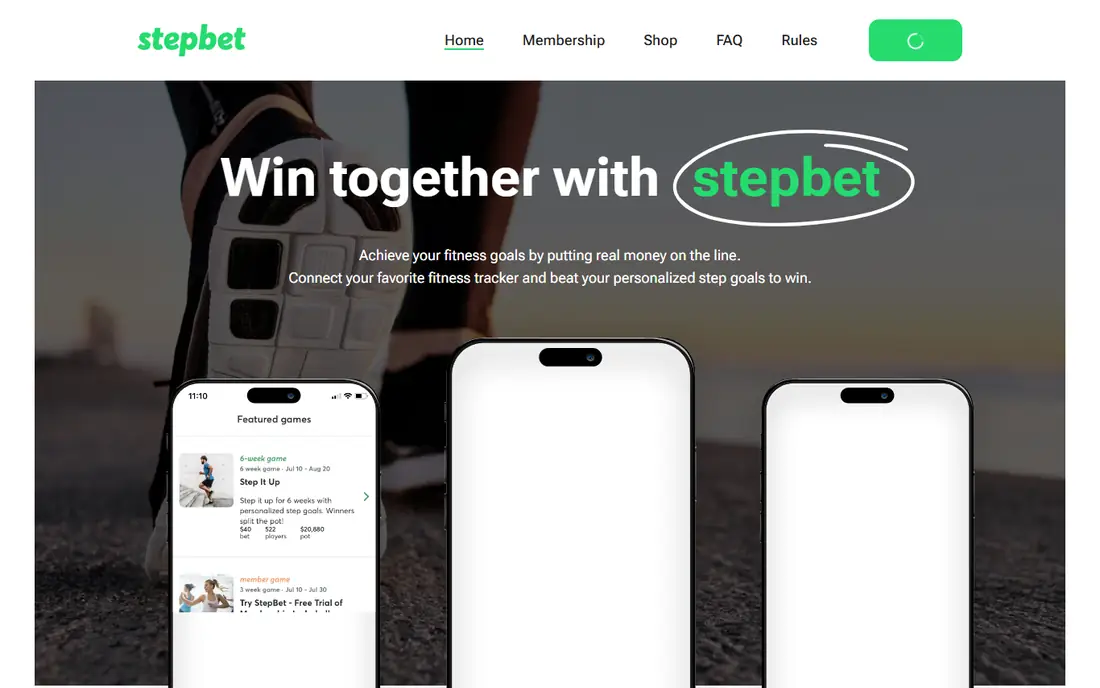
StepBet works differently from every other app here. Players join a multi week game, bet real money into a pot, and must hit personalized step goals each week to stay in. Finishers split the pot, getting their bet back plus a share of losers bets. That financial stake is a powerful motivator for users who have tried free apps and drifted away.
The risk is obvious. Missing goals means losing the bet, and games require a connected tracker such as Fitbit, Garmin, Apple Health or Health Connect. Step goals are personalized from past activity, so they should be challenging but reachable, yet illness, injury or a busy period can still cost money. Use StepBet only when the stake genuinely helps and the loss would not cause financial stress.
What we like- Real money stakes sharpen commitment
- Personalized step goals from tracker history
- Large player community
Watch out for- Requires a paid bet to play
- Losing a bet costs money
- Needs a connected tracker
Starting priceSee website
Free planYes
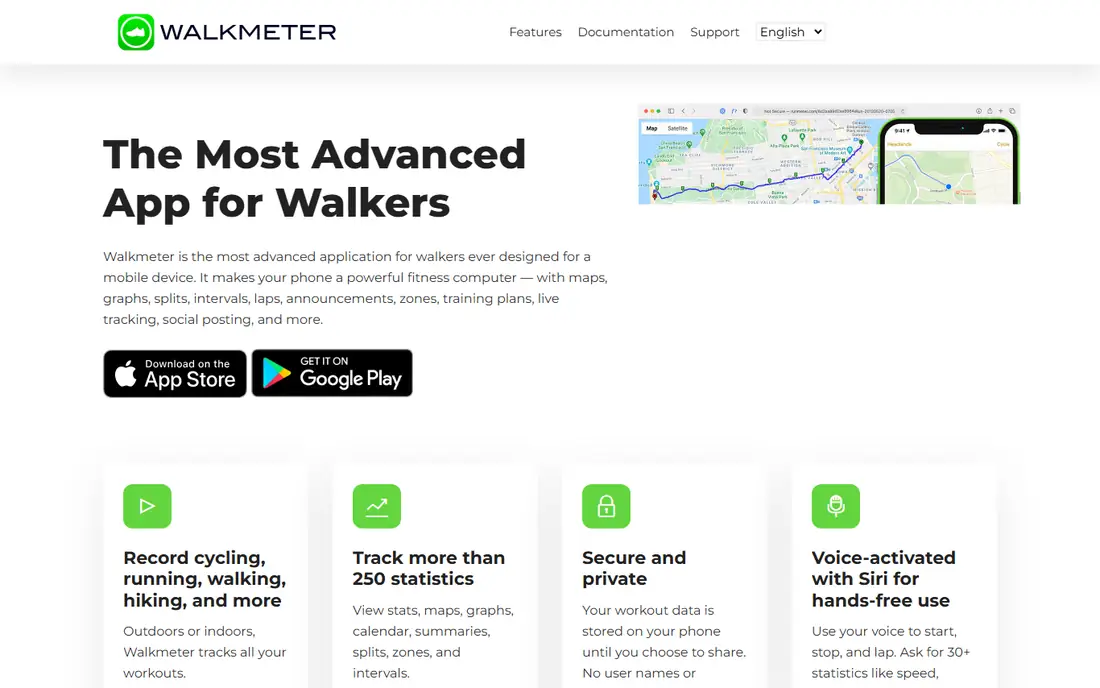
Walkmeter is the data lover walking app. It records maps, graphs, splits, intervals, laps, heart rate zones and training plans, with turn by turn route navigation and voice announcements during walks. Data stays on the phone until the user chooses to share, which suits privacy conscious walkers, and Apple Watch support lets users leave the phone at home.
Casual walkers may find the depth overwhelming, and social challenges are thinner than Pacer or Fitbit. The app also leans Apple, though an Android version exists. For walkers who want to analyze pace, distance and training progress in detail, Walkmeter offers far more statistics than any other app in this list.
What we like- More than 250 statistics
- Maps, splits, intervals and route navigation
- Data stays on the phone until shared
Watch out for- Interface feels dense for casual walkers
- Apple Watch focus
- Fewer social challenges
How we chose
We compared vendor homepages, app store listings and public reviews, focusing on step accuracy, wearable support, weight loss features such as food logging and plans, motivation tools, battery use and pricing. Every homepage listed was opened and confirmed as belonging to that app, except Strava, whose site could not be opened for verification and was replaced by Walkmeter. Prices reflect published app store and vendor rates, with unverifiable figures left as See website.
This article is general information, not medical advice. Walking supports weight management alongside diet, sleep and overall activity, but individual results vary. Talk to a clinician before starting a new exercise program, especially with existing health conditions, and treat app calorie estimates as approximations.
Making walking work for weight loss
Consistency beats intensity for most walkers. A daily step goal that can be hit on a normal day, plus one longer walk a few times a week, builds more total activity than occasional very long walks followed by sedentary days. Start from the current average, add about 1,000 steps, hold that level for two weeks, then add again. That gradual ramp avoids soreness and burnout.
Food awareness matters as much as steps. An app that logs meals, or a separate food diary used beside a step app, reveals whether extra walking is offset by extra eating. Sleep also affects appetite and energy, so wearable users should watch sleep trends alongside steps. Finally, pick the motivation style that actually works. Challenges suit social walkers, rewards suit incentive driven walkers, and money stakes suit walkers who only commit when something is on the line.
Tracking without obsession
Check steps once or twice a day rather than constantly, and judge progress weekly, not daily. Weather, illness and busy schedules cause normal variation, and a single low day does not undo a habit. If tracking starts to feel stressful, simplify to one metric, such as daily steps, and drop the rest until the habit feels stable again.
Frequently asked questions
How many steps a day help with weight loss?
There is no single magic number, but many walkers aim for 7,000 to 10,000 steps a day as a sustainable target. Start from the current average and increase gradually, since total weekly activity matters more than hitting one exact number every day.
Do I need a wearable for a walking app?
No. Pacer, StepsApp, Samsung Health and MapMyWalk all count steps from a phone alone. A wearable improves all day accuracy and adds sleep and heart rate data, but it is not required to start.
Are app calorie estimates accurate?
They are approximations. Calories depend on weight, pace, terrain, fitness and device accuracy, and phone estimates can vary by 10 to 20 percent or more. Use them for trends over time, not as exact daily totals.
Is StepBet safe for weight loss motivation?
StepBet can motivate consistent walking, but it involves real money and a risk of loss. Only join if the bet amount is affordable to lose and the step goals feel achievable, and pause during illness or injury rather than pushing through pain.
Which app is best for walking with friends?
Pacer offers the strongest group challenges and leagues for friends, family and coworkers, while Fitbit and StepsApp also support team challenges. Choose the app most of the group already uses, since participation matters more than features.
Can walking alone cause weight loss?
Walking helps, especially combined with food awareness, sleep and overall activity, but diet usually decides most of the outcome. A walking app supports the activity side, while food logging or dietary changes address the intake side.
Sources we checked (8)
- https://www.mypacer.com/
- https://mapmywalk.com/
- https://steps.app/
- https://www.fitbit.com/
- https://sweatcoin.com/
- https://www.samsung.com/us/apps/samsung-health/
- https://stepbet.com/
- https://www.walkmeter.com/
Is your product missing or out of date?
We review this list regularly. Vendors can request a listing, send updated pricing or ask about featured placement.

Shihab Mia · Founder, Rankite
Shihab has 5+ years in B2B and SaaS SEO. He writes Rankite's software buying guides from pricing pages, documentation and public user reviews. More about Shihab.