How we make this list: we compare pricing pages, product documentation and public user reviews. Ratings come from G2, Capterra or Trustpilot, with the date we checked them.
Key takeaways
- Datasite and Intralinks are the established names for large M&A and capital markets work, with the certifications and audit trails financial services compliance teams expect.
- Firmex and iDeals cover the mid market well, SecureDocs publishes a flat price where rivals quote, and Digify suits smaller firms that need control without a deal room's weight.
- For financial services the deciding features are evidentiary: granular permissions, watermarking, full audit logs and retention that satisfies SEC and FINRA record keeping expectations.
- Every serious provider sells by quote except SecureDocs, so run the same document set and user count past three vendors before believing any price comparison.
Quick comparison
| Tool | Best for | Starting price | Free plan |
|---|
 Datasite | Large M and A and capital markets deals | See website | No |
 Intralinks | Bank grade deal and syndication workflows | See website | No |
 Firmex | Mid market deals and regulated document sharing | See website | No |
 iDeals | A full featured room at mid market prices | See website | No |
 Ansarada | Deals with readiness and workflow structure | See website | No |
 Digify | Lightweight secure sharing for smaller firms | See website | No |
 SecureDocs | A simple room with published flat pricing | $250 per month | No |
Is your product missing or out of date?
We review this list regularly. Vendors can request a listing, send updated pricing or ask about featured placement.
The best virtual data room apps for financial services
#1Datasite
Best for: Large M and A and capital markets deals4.4/5 on
G2 (443 reviews, checked Oct 2026)
Visit datasite.com
Starting priceSee website
Free planNo
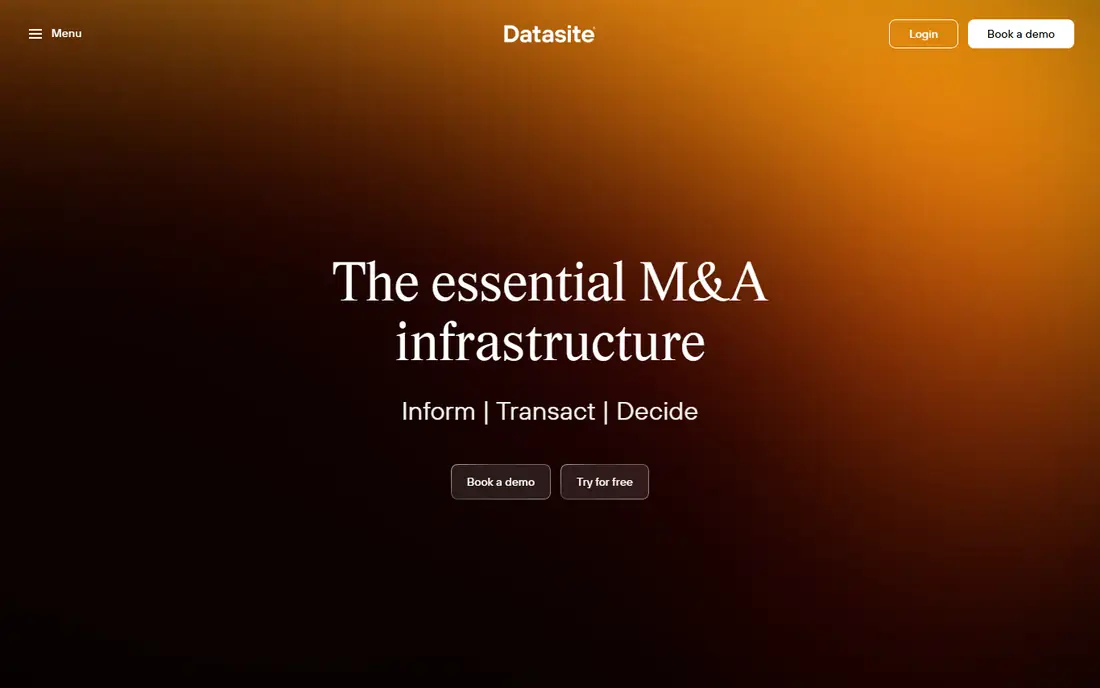
What we like- Datasite, long known as Merrill's data room business, is the default for large mergers, acquisitions and capital raises: fast bulk upload and indexing, AI assisted redaction and document organisation, granular permissions down to the document, dynamic watermarking, and audit reporting detailed enough for legal and compliance review after closing. Its support operation runs around the clock with deal experienced staff, which matters at 2 in the morning before an announcement. Banks, law firms and private equity houses standardise on it because counterparties already know it, reducing friction on the other side of the table.
Watch out for- Pricing is by quote and positioned at the premium end, scaled to deal size and duration in ways smaller firms find hard to predict. The depth of features makes setup for a simple financing room heavier than Digify or SecureDocs. Occasional users meet a learning curve. Datasite earns its price on complex, high stakes, multi party deals
- For a small firm sharing a diligence set with one lender, it is more platform than the problem.
Starting priceSee website
Free planNo
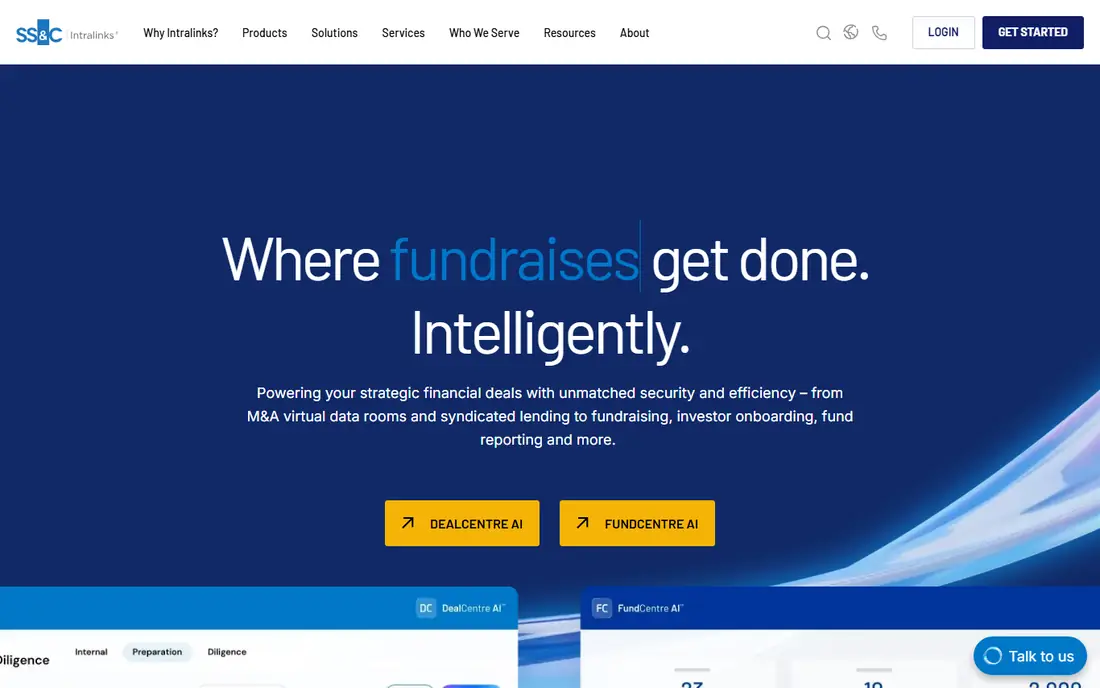
What we like- Intralinks, part of SS&C, is the other incumbent, with a history in syndicated lending and structured finance as deep as its M&A business: deal rooms, lender communication workflows, and document control with information rights management that can restrict printing, saving and forwarding and revoke access after distribution. Its security certifications and bank client list make compliance approval straightforward inside financial institutions, and its reporting covers the audit needs described above. For regulated firms whose technology choices must survive a procurement gauntlet, Intralinks is often the pre approved answer.
Watch out for- Quote pricing at the enterprise tier, with the sales cycle to match. The interface, while improved over the years, carries the weight of its enterprise heritage beside newer rivals. Smaller transactions get a powerful tool and a bill sized for larger ones. Like Datasite, it is best justified where the counterparty network and the compliance file both matter, which is real in institutional finance and rare in a ten person advisory firm.
#3Firmex
Best for: Mid market deals and regulated document sharing4.6/5 on
G2 (93 reviews, checked Oct 2026)
Visit firmex.com
Starting priceSee website
Free planNo
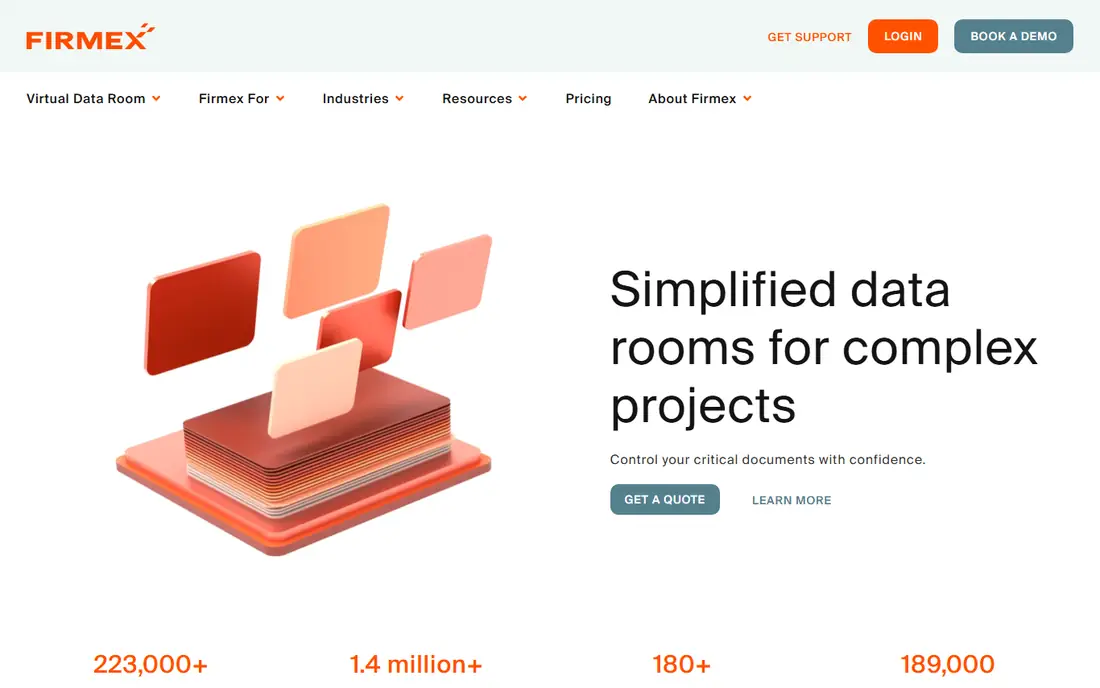
What we like- Firmex serves the mid market of investment banking, private equity, law and corporate development with a room that keeps the compliance essentials, granular permissions, watermarking, two factor access, detailed activity reporting, and drops the enterprise ceremony: setup is fast, pricing is subscription based and more predictable than the incumbents', and support is a praised strength in reviews. It also markets beyond deals, for board reporting, audits and ongoing regulated sharing, which suits financial firms whose room never really closes. Many boutiques standardise on Firmex as their house room for exactly that repeat use.
Watch out for- The AI and high volume deal machinery of Datasite is thinner here, and the largest, most complex transactions still default to the top two names for counterparty familiarity. Pricing, while structured, is still quote based, hence see website. Some advanced reporting and integration depth sits behind higher tiers. None of that troubles its core market, and a compliance officer comparing audit exports between Firmex and the incumbents will find the essentials present.
#4iDeals
Best for: A full featured room at mid market prices4.7/5 on
G2 (869 reviews, checked Oct 2026)
Visit idealsvdr.com
Starting priceSee website
Free planNo
What we like- IDeals built a strong position by offering a complete feature set, eight levels of document permissions, dynamic watermarks, a built in redaction tool, detailed audit trails and strong multilingual support, at prices mid market firms find reachable, with a trial that lets you run a real room before paying. Its interface is among the easiest to teach to outside parties, bankers, auditors and clients who will never read a manual, which quietly decides deals where the other side's diligence team must move fast. Financial services users in fundraising, audits and lending reviews form a solid part of its base.
Watch out for- Pricing is quote based and varies by storage and features, so comparisons need the same specification sent to rivals. The brand carries less automatic weight with the largest institutions than Datasite or Intralinks, which occasionally matters in counterparty negotiations. Very large rooms with heavy video or unusual file types need capacity checking during the trial. Support is well reviewed, though not the white glove deal desk operation the top two run.
#5Ansarada
Best for: Deals with readiness and workflow structure4.5/5 on
G2 (238 reviews, checked Oct 2026)
Visit ansarada.com
Starting priceSee website
Free planNo
What we like- Ansarada approaches the data room from preparation: readiness scorecards and checklists that structure what a complete diligence file looks like before the room opens, workflow for requests and questions, and AI tools that flag gaps and organise documents, wrapped around a secure room with the standard permission and audit machinery. Sellers and advisers who run repeated processes, portfolio companies preparing for exit, firms facing recurring audits, use the structure as much as the storage. Its heritage is Australian with a global financial services footprint.
Watch out for- If your process is already disciplined, the readiness layer is value you may not need on top of a room. Pricing is quote based and the platform's breadth means smaller one off uses price against simpler rivals. The centre of gravity is transaction readiness, so firms wanting a plain permanent vault for client documents may find Firmex or SecureDocs a closer fit. Counterparty familiarity is strong in its home markets and thinner elsewhere.
#6Digify
Best for: Lightweight secure sharing for smaller firms4.6/5 on
G2 (106 reviews, checked Oct 2026)
Visit digify.com
Starting priceSee website
Free planNo
What we like- Digify started as document security rather than a deal room, and it shows in the right ways: send a document with view only controls, expiry, dynamic watermarks, tracking of every open, and revocation, from an interface a small firm can run without an administrator, with data room features for grouped sharing when a deal needs one. For boutique advisers, fund managers sharing investor documents and firms whose need is controlled distribution more than a multi month diligence war room, Digify covers the compliance essentials, access control and the audit trail, at a scale and price point the incumbents do not chase.
Watch out for- It is not built for the largest diligence exercises: bulk document handling, Q and A workflows and deal specific tooling are lighter than Datasite or Intralinks. Pricing tiers and storage limits need care, and per user economics shift as teams grow. Enterprise procurement teams may ask harder questions of a smaller vendor, so have the security documentation ready. Digify is the right size for controlled sharing
- Overselling it into a mega deal would strain everyone.
#7SecureDocs
Best for: A simple room with published flat pricing4.6/5 on
G2 (50 reviews, checked Oct 2026)
Visit securedocs.com
Starting price$250 per month
Free planNo
What we like- SecureDocs does one unusual thing in this market: it publishes its price, a flat monthly rate, historically 250 dollars a month for a room with unlimited users and a stated storage allowance, with the core controls in place, two factor authentication, permissions, watermarking and audit logs. Setup is famously quick and the interface is deliberately simple, which suits the many financial firms whose room is a recurring utility, fund reporting, audit support, client onboarding files, rather than a stage for one giant deal. Predictable pricing makes budgeting and client pass through costs trivially easy.
Watch out for- Simplicity is the ceiling as well as the pitch: the largest deals, heavy AI organisation and the deepest enterprise integrations live elsewhere. Storage beyond the included allowance and long archives need a pricing conversation. The counterparty recognition of Datasite is absent. For a compliance team, the audit and permission essentials check out, and anything beyond essentials should be tested against your regulator's expectations during the trial rather than assumed.
How we chose
We compared virtual data room providers used by financial services firms in October 2026 for M&A diligence, fundraising, lending, audits and investor reporting, and required the compliance core of every entry: granular access control, watermarking, two factor authentication, encryption and a complete exportable audit trail, since a room without those is a file share wearing a suit. Certifications such as SOC 2 and ISO 27001 are noted as procurement checks rather than asserted per vendor, because firms must verify current reports with the vendor directly. Prices are quote based across this market, so see website appears wherever a vendor does not publish, with SecureDocs included specifically because it does.
How to choose a data room for financial services
Start from the record, not the demo. Write down what your compliance function must be able to prove in three years: who accessed which document, when, from where, under whose permission, and what your retention schedule does with the room after closing, including how it exports into your own archive in a form your regulator accepts. Take that list to the vendors and ask them to show each item, live, in the trial. Providers differ most exactly here, in audit depth and export quality, while their upload speeds and interfaces all demo beautifully.
Then match size to stakes. A mega deal with dozens of parties and a litigation shadow belongs on Datasite or Intralinks, where the counterparty familiarity and support depth are part of the fee. Repeat mid market work standardises well on Firmex or iDeals. Controlled distribution and smaller rooms fit Digify or SecureDocs, with SecureDocs the budgeting gift when finance asks what it costs and deserves a number. Whichever you choose, run one real matter end to end, including the closing export to your archive, before standardising the firm on it, because the exit is where data rooms reveal themselves.
Frequently asked questions
What makes a data room suitable for financial services specifically?
Evidence and control. Financial firms answer to regulators and auditors, so the room must produce a complete, exportable audit trail, enforce granular permissions and watermarking, support two factor access and retention that fits record keeping rules such as SEC 17a-4 expectations for broker dealers and FINRA books and records requirements. It should also hold current SOC 2 Type II and ISO 27001 reports your compliance team can review. A generic file sharing tool fails most of that list, which is why this product category exists at separate prices.
How much does a virtual data room cost?
Mostly, whatever the quote says: the enterprise providers price by deal size, storage, users and duration, and comparable mid market rooms commonly land from several hundred to several thousand dollars per matter or month. SecureDocs is the exception that publishes a flat rate, listed here at 250 dollars per month. The only honest comparison method is sending three vendors the same specification, document volume, external users, duration and features, and comparing the written quotes, because headline figures in this market are deliberately incomparable.
Can a data room replace our document management system?
No, and it should not try. A data room is a controlled sharing space for a defined matter and audience; your document management or records system is the archive of record where retention schedules and legal holds live. The workflow is deliberate: matter closes, room exports with its audit trail into the archive, room is shut down. Firms that let data rooms become permanent storage end up with records scattered across vendor platforms, which is exactly what record keeping rules exist to prevent. Plan the export before the first upload.
How long should we keep a data room open after a deal closes?
Long enough to complete the matter's tail: final documents, post closing adjustments, any audit or dispute window your legal team names, and the export of the complete room and audit log into your own archive. Then close it. An open room is a standing exposure of your most sensitive documents to every account ever granted access, and access lists decay as people change firms. Most firms build the closing and export into the deal checklist, with a named owner, rather than leaving rooms to fade away on a vendor's server.
Is AI redaction and organisation in these tools safe for sensitive documents?
The leading providers process documents inside their own certified environments and publish their data handling terms, which for most firms is acceptable and for some matters is not. The safe approach is categorical: define which document classes may touch AI features at all, confirm in the contract that your data is not used to train models, and keep the most sensitive categories, personal data under investigation, privileged material, on manual handling whatever the time saving. Efficiency features are welcome; a compliance incident caused by one is not a trade any firm makes twice.
Sources we checked (0)
Is your product missing or out of date?
We review this list regularly. Vendors can request a listing, send updated pricing or ask about featured placement.

Shihab Mia · Founder, Rankite
Shihab has 5+ years in B2B and SaaS SEO. He writes Rankite's software buying guides from pricing pages, documentation and public user reviews. More about Shihab.