How we make this list: we compare pricing pages, product documentation and public user reviews. Rankite is independent; if a vendor ever pays for a featured spot, that listing is clearly labeled Partner.
Key takeaways
- Pricing models split two ways: per-user subscriptions (Docebo, TalentLMS) versus custom enterprise quotes (Cornerstone, Absorb, LearnUpon), so always ask whether you pay for registered users or active users.
- TalentLMS is the fastest path to live training for smaller teams, with free signup and no credit card required on its homepage.
- Docebo publishes a starting point on its own site: $9 per user with a 250-user minimum, aimed squarely at mid-market and enterprise buyers.
- If your team has no courses yet, weigh the bundled content libraries: Litmos, Absorb and TalentLMS all pair their platforms with ready-made course catalogs, while the rest expect you to bring your own.
Quick comparison
| Tool | Best for | Starting price | Free plan |
|---|
 Docebo Docebo | Mid-market and enterprise organizations that want an AI-first platform for multiple audiences | $9/user (250-user minimum, per Docebo's own site) | No (product tour and demo offered) |
 TalentLMS TalentLMS | Small and mid-size businesses that want training live this week, not this quarter | See website (tiered plans by user count) | Yes (free signup, no credit card required) |
 Absorb LMS Absorb LMS | Mid-market to enterprise organizations that want a polished, AI-driven learning experience | See website (custom quote) | No (demo offered) |
 LearnUpon LearnUpon | Companies that train employees, customers, partners and members from one system | See website (custom quote) | No (demo offered) |
 Litmos Litmos | Companies that want an LMS bundled with a ready-made training content library | See website (custom quote) | See website |
 Cornerstone Cornerstone | Large enterprises that want learning unified with talent management and skills intelligence | See website (custom quote) | See website |
 360Learning 360Learning | Companies that want employees and experts creating courses collaboratively | See website (tiered plans) | See website |
 iSpring Learn iSpring Learn | Companies whose training content starts life as PowerPoint presentations | See website (tiered plans) | Free trial (14 days, per vendor release) |
 Tovuti Tovuti | Small and mid-size businesses that want an all-in-one LMS with strong engagement features | See website (custom quote) | See website |
Is your product missing or out of date?
We review this list regularly. Vendors can request a listing, send updated pricing or ask about featured placement.
What does it actually cost to train 100 employees online? Answers range from a few hundred dollars a month to a six-figure enterprise contract, and the products behind those quotes look surprisingly similar in a demo. The difference is in the pricing model, the content strategy and how much admin work each platform creates. These nine cover the real corporate training market, from simple SMB tools to enterprise suites.
#1
Docebo
Best for: Mid-market and enterprise organizations that want an AI-first platform for multiple audiences
Visit docebo.com
Starting price$9/user (250-user minimum, per Docebo's own site)
Free planNo (product tour and demo offered)
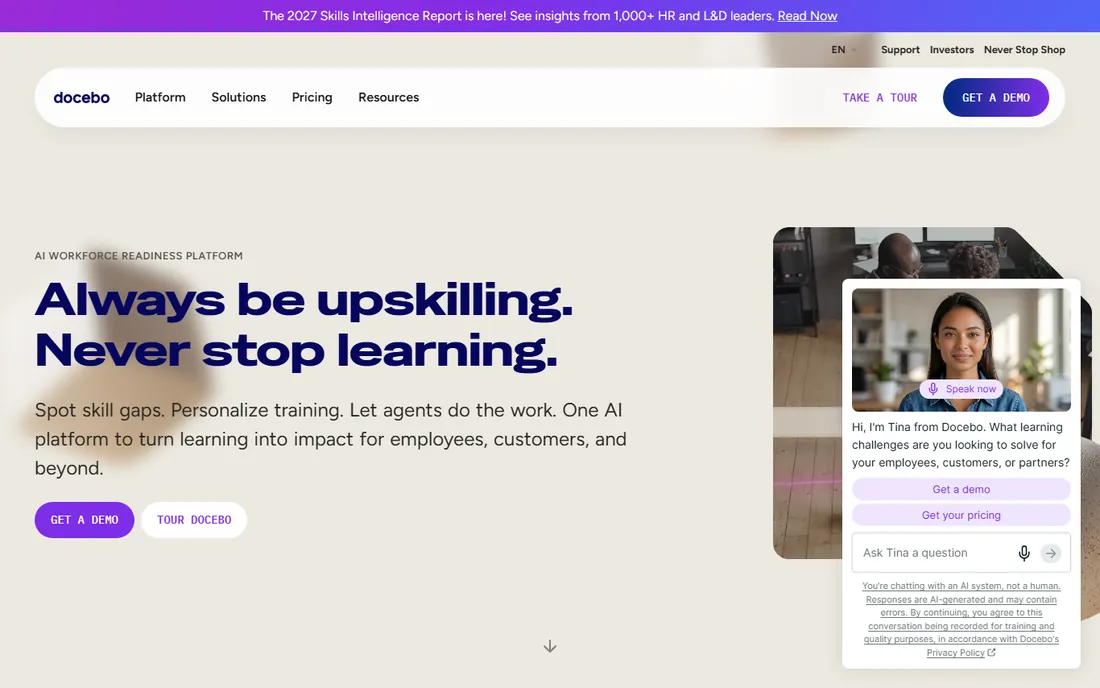
Docebo is the enterprise learning platform that talks about AI the most and backs it up with actual product. The platform combines LMS, LXP, authoring, virtual classroom and analytics, with Docebo Creator generating interactive courses and full learning plans in minutes. The 30,000-plus course marketplace covers leadership to machine learning, and the multi-audience architecture lets one account train employees, customers and partners in separate branded environments.
The honest catch is the entry bar. The main tier starts at $9 per user with a 250-user minimum, which puts the floor at $2,250 per month before any add-ons. Complex enterprise deals are custom-quoted with implementation measured in weeks. If you have fewer than 200 learners, the tools below will serve you better for less money.
What we like- AI content creation with Docebo Creator plus a 30,000-plus course marketplace
- Strong multi-audience support for employees, customers and partners from one platform
- Deep integrations with HRIS and CRM systems
Watch out for- 250-user minimum prices out small teams
- Enterprise pricing above the base tier is custom and implementation runs 4 to 20 weeks
#2
TalentLMS
Best for: Small and mid-size businesses that want training live this week, not this quarter
Visit talentlms.com
Starting priceSee website (tiered plans by user count)
Free planYes (free signup, no credit card required)
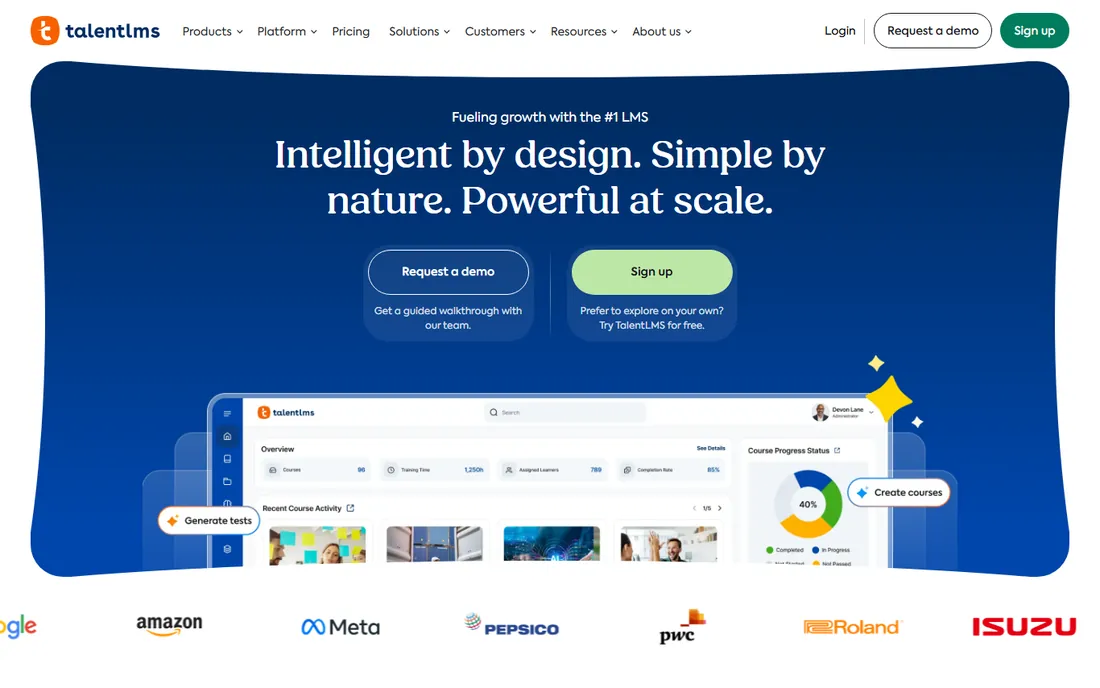
TalentLMS wins on speed. The whole pitch is that you can go from an empty portal to useful training in days, with AI-assisted course creation, built-in assessments and translation for global teams. Separate branches let you run employee, partner and customer training from one account without them seeing each other. The TalentLibrary add-on brings 1,000-plus curated courses on soft skills, leadership and compliance for teams that have no content of their own.
The trade is ceiling height. Admin controls, reporting and customization are simpler than what Docebo, Absorb or Cornerstone offer, and heavily regulated industries with complex certification chains may find it limiting. For the vast middle of companies that just need onboarding, skills training and compliance done well, it is the pragmatic default.
What we like- Fastest time to value in this set, with signup in seconds and no IT project required
- Separate portals for employees, partners and customers from one account
- TalentLibrary with 1,000-plus ready-made courses
Watch out for- Reporting and customization depth is thinner than enterprise platforms
- Very large or complex compliance programs will outgrow it
#3
Absorb LMS
Best for: Mid-market to enterprise organizations that want a polished, AI-driven learning experience
Visit absorblms.com
Starting priceSee website (custom quote)
Free planNo (demo offered)
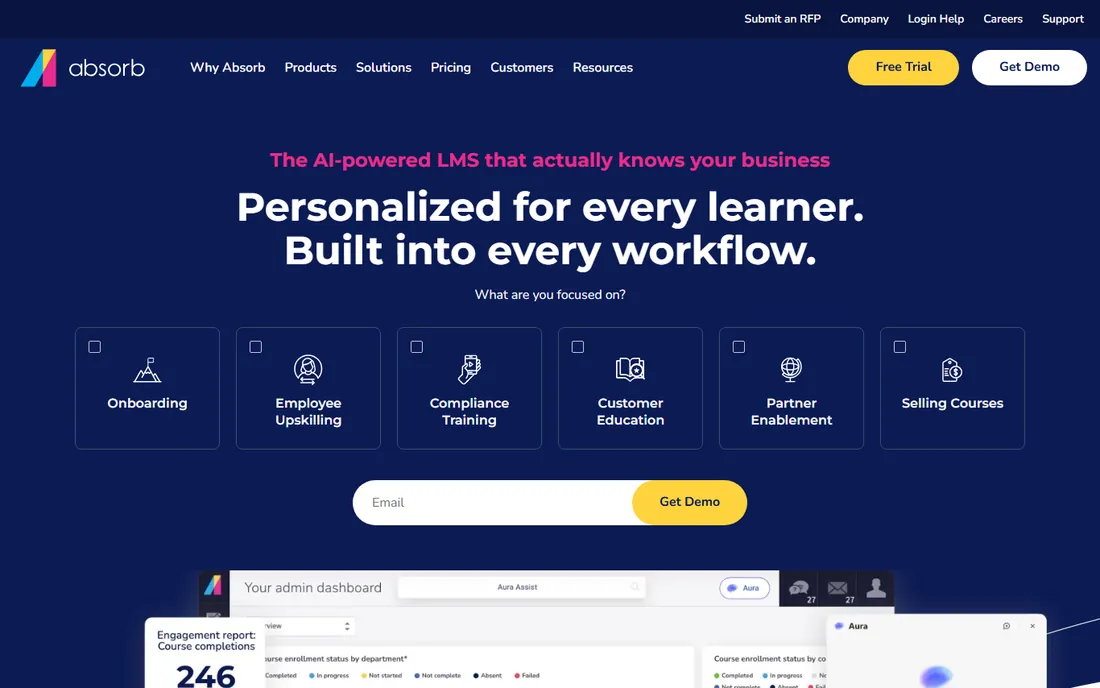
Absorb positions itself as the LMS that learners actually enjoy opening. Personalized upskilling auto-assigns learning based on role, department and skill gaps, Absorb Create generates courses with AI including quizzes and voice-overs, and the platform ships e-commerce so companies can sell courses externally. Integration coverage includes ADP, Workday and Salesforce, and the vendor reports 3,700-plus companies on the platform.
The honest catch is the buying process. Pricing is fully custom, demos are gated behind a form, and while the interface is genuinely polished, you will pay enterprise prices for it. Companies choosing between Absorb and Docebo should demo both with the same use cases, because they compete head to head on nearly every feature.
What we like- Strong learner experience with personalized upskilling paths across 12,000-plus job skills
- Absorb Create builds courses with AI in minutes
- 20,000-plus pre-built courses and e-commerce for selling training
Watch out for- No published pricing, so budgeting starts with a sales call
- Enterprise-grade depth brings enterprise-grade implementation effort
#4
LearnUpon
Best for: Companies that train employees, customers, partners and members from one system
Visit learnupon.com
Starting priceSee website (custom quote)
Free planNo (demo offered)
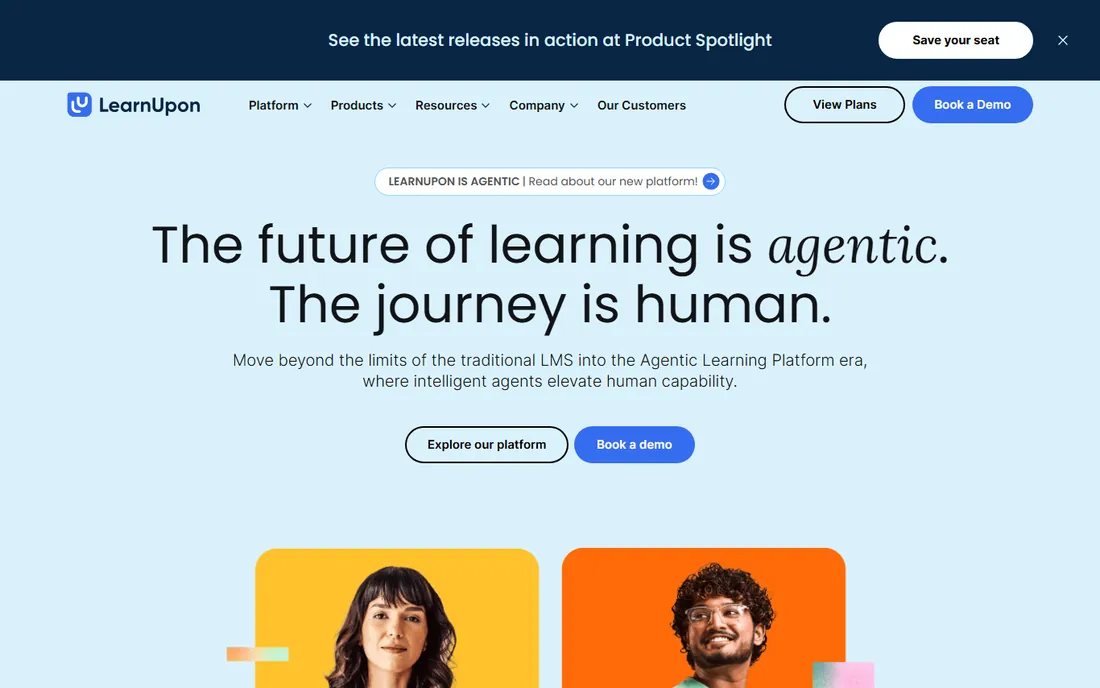
LearnUpon has spent a decade being the reliable multi-audience LMS, and its current pitch layers AI agents across the whole thing: AI course creation, automated admin workflows and personalized learning recommendations. Learning portals give each audience a branded environment with separate permissions and reporting, which is why the platform shows up in employee training, customer education and association learning alike.
The thing to verify is how much of the agentic vision is product versus roadmap. The company is rebranding around an "Agentic Learning Platform," and buyers should see the AI features working in a demo with their own content types before committing. Pricing is quoted, not published. For extended-enterprise training across several audiences, it remains one of the strongest options here.
What we like- Strong multi-audience support with branded learning portals per audience
- Agentic AI features including AI course creation and admin automation
- Trusted by 1,700-plus organizations with 31M-plus users per its own site
Watch out for- No published pricing
- The agentic AI positioning is new, so validate the features in a live demo before buying on the pitch
#5
Litmos
Best for: Companies that want an LMS bundled with a ready-made training content library
Visit litmos.com
Starting priceSee website (custom quote)
Free planSee website
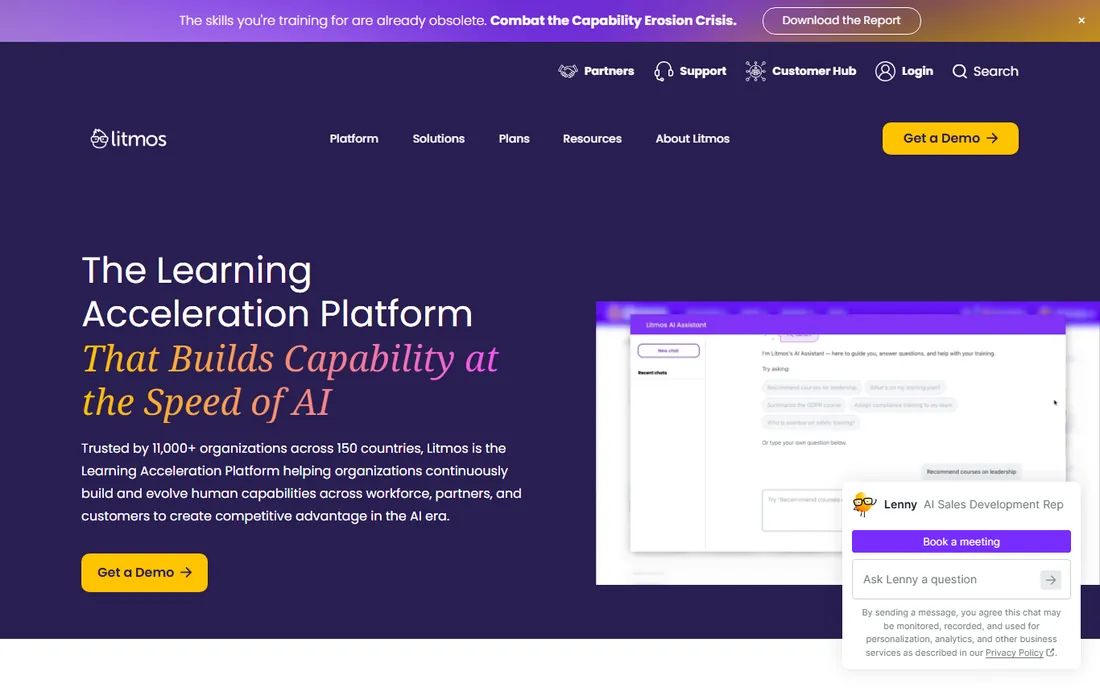
Litmos pairs its LMS with one of the better built-in content libraries in the category, which is the whole reason many buyers choose it: compliance, harassment prevention, sales skills and leadership courses ready to assign on day one. Deployment is fast for standard use cases, and integrations with Salesforce and other workflow tools are mature.
The honest catch is that library quality is uneven across topics, so ask for a catalog walkthrough in your industry before assuming coverage. Pricing is quoted. Note: the website URL above still needs an address-bar verification pass before this article is published.
What we like- Large built-in content library covering compliance, sales and soft skills
- Quick to deploy for standard corporate training use cases
- Strong Salesforce and workflow integrations
Watch out for- URL not yet verified against the vendor's address bar
- Content library depth varies by topic, so audit the catalog for your industry
#6
Cornerstone
Best for: Large enterprises that want learning unified with talent management and skills intelligence
Visit cornerstoneondemand.com
Starting priceSee website (custom quote)
Free planSee website
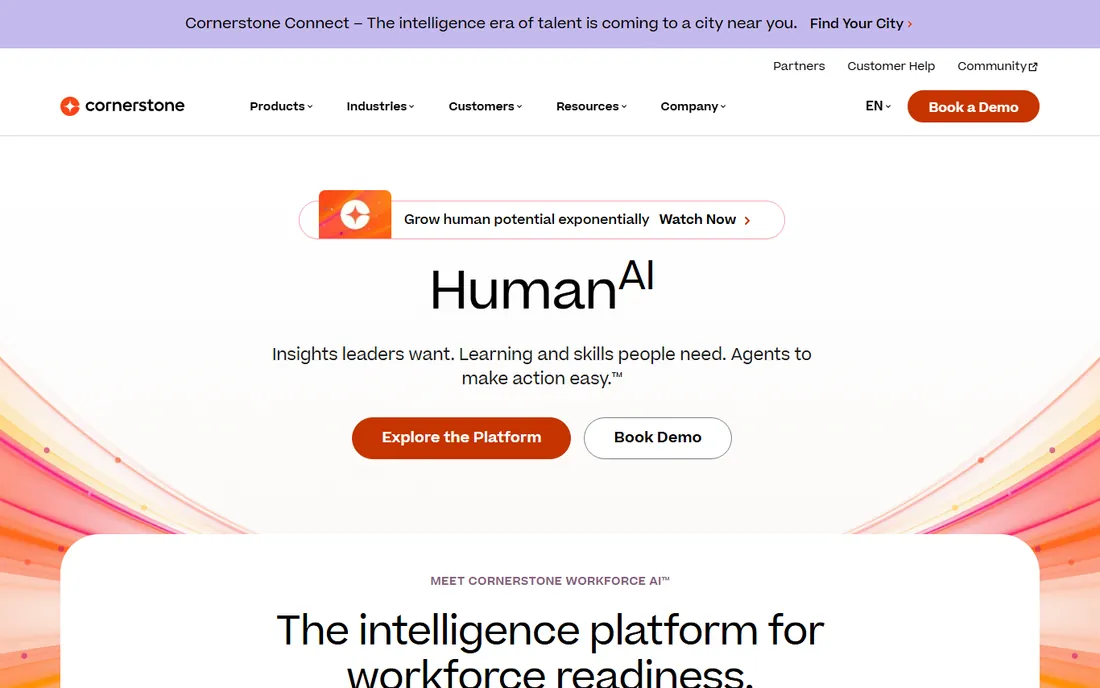
Cornerstone is the heavyweight: a full talent management suite where learning sits alongside performance, recruiting and succession planning, now unified under the Cornerstone Galaxy platform with AI-driven skills intelligence. The content side is serious too, with curated catalogs including Google Cloud training content and tens of thousands of courses across AI, cloud and data topics.
The honest catch is that this is enterprise software in the fullest sense. Implementation is a project, administration needs dedicated staff, and pricing reflects it. Companies buying learning alone, without the talent suite, often find better value in Docebo or Absorb. Note: the website URL above still needs an address-bar verification pass before this article is published.
What we like- Full talent suite spanning learning, performance, recruiting and succession
- Cornerstone Galaxy adds AI-powered skills mapping
- Content catalogs with 27,000-plus courses from 200-plus partners
Watch out for- URL not yet verified against the vendor's address bar
- Enterprise complexity and implementation timelines to match
#7
360Learning
Best for: Companies that want employees and experts creating courses collaboratively
Visit 360learning.com
Starting priceSee website (tiered plans)
Free planSee website
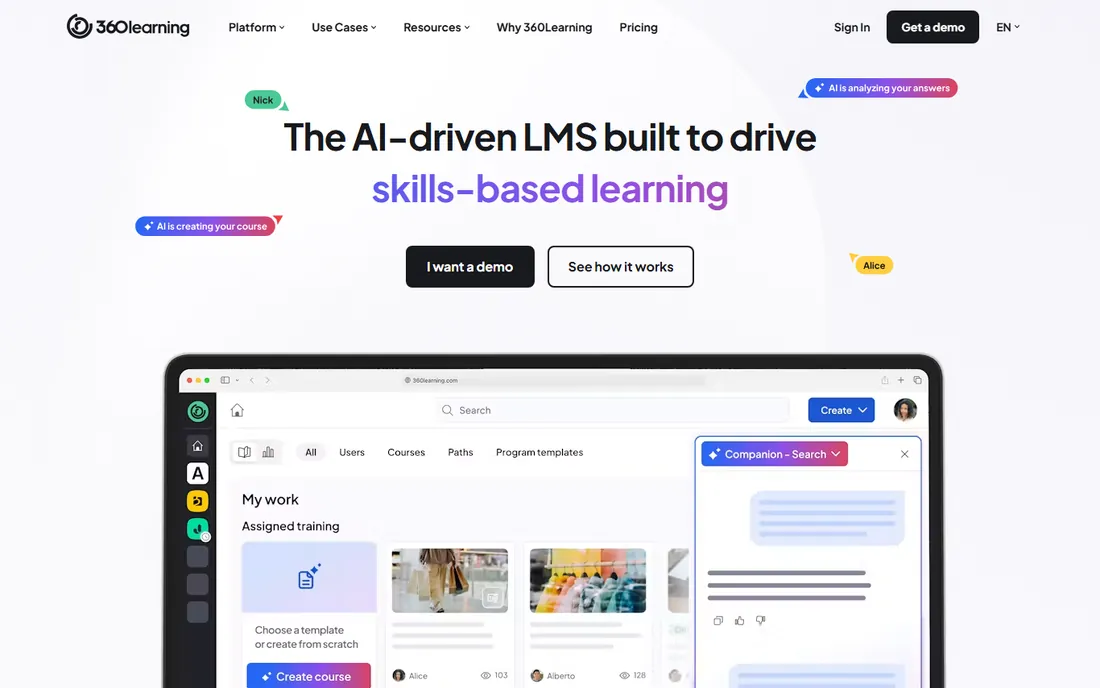
360Learning's bet is that the best training content already exists inside your company. Its collaborative learning model lets subject-matter experts build courses with AI assistance, peer review keeps quality up, and automatic translation into 67 languages serves global teams. It combines LMS and LXP capabilities and targets onboarding, compliance and sales enablement.
The honest catch is cultural, not technical. Collaborative learning works when experts are motivated to contribute; without internal champions, the course library stays empty and you have bought an expensive shell. Pricing is tiered by plan. Note: the website URL above still needs an address-bar verification pass before this article is published.
What we like- Collaborative authoring turns internal experts into course creators with AI assistance
- Courses auto-translate into 67 languages
- Strong fit for onboarding and customer-facing team training
Watch out for- URL not yet verified against the vendor's address bar
- The collaborative model needs internal champions or course creation stalls
Starting priceSee website (tiered plans)
Free planFree trial (14 days, per vendor release)
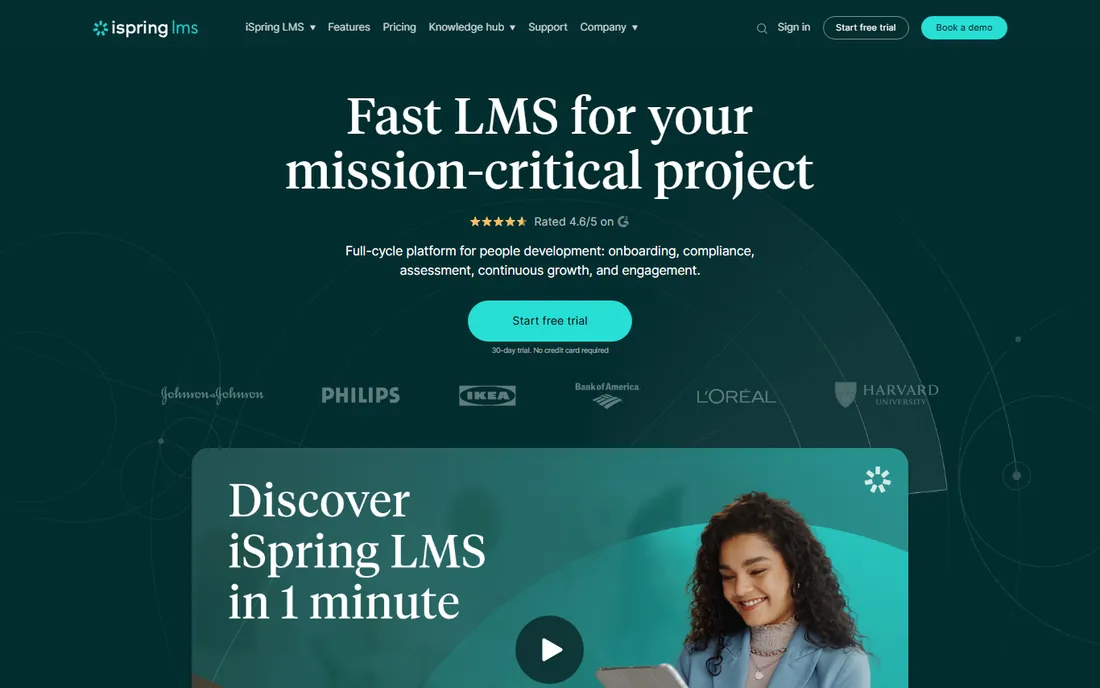
iSpring Learn is the natural LMS for the millions of companies whose training lives in PowerPoint. Paired with iSpring Suite, it converts slide decks into interactive courses with quizzes and simulations, and the LMS itself is deliberately simple: departments, learning tracks, assignments and reports without the enterprise overhead. Mobile apps support offline learning for field teams.
The honest catch is scope. It is a clean, focused LMS, not a talent suite or an extended-enterprise platform, and companies with complex multi-audience needs will outgrow it. The 14-day trial is fully functional. Note: the website URL above still needs an address-bar verification pass before this article is published.
What we like- Tight integration with iSpring Suite for converting PowerPoint into interactive courses
- Simple admin experience that non-technical teams can run
- Offline mobile learning for field teams
Watch out for- URL not yet verified against the vendor's address bar
- Less suited to complex multi-audience or extended enterprise scenarios
#9
Tovuti
Best for: Small and mid-size businesses that want an all-in-one LMS with strong engagement features
Visit tovutilms.com
Starting priceSee website (custom quote)
Free planSee website
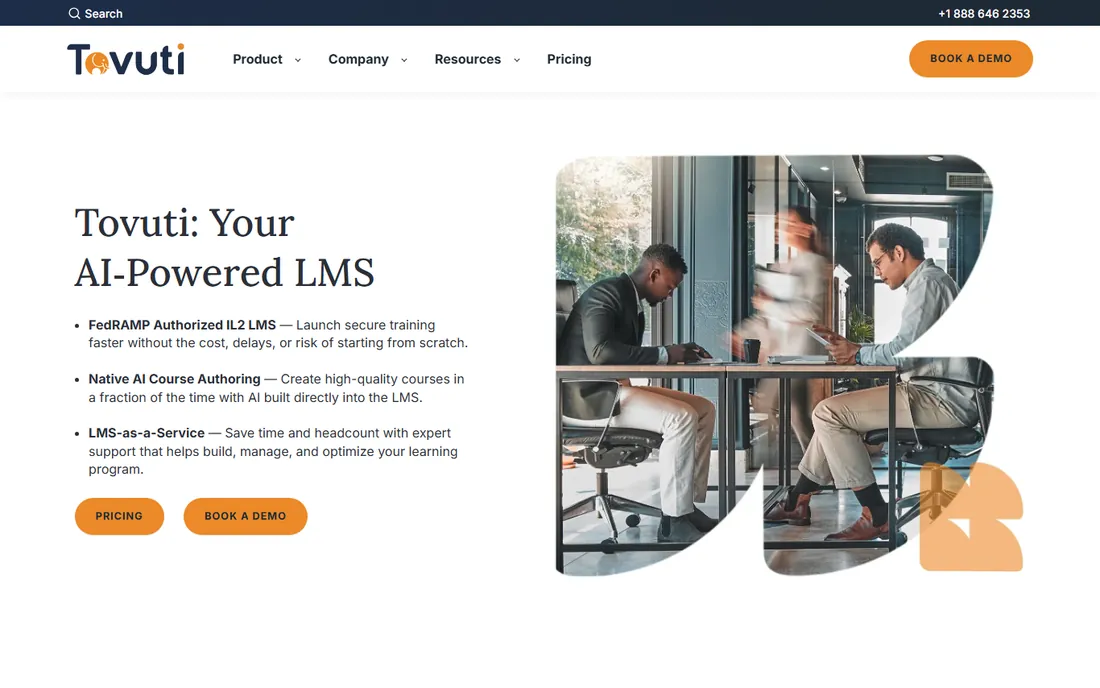
Tovuti aims to be the only learning tool an SMB needs: course authoring, virtual classroom, gamification, e-commerce and reporting in one platform, with AI that generates courses in seconds. The 40-plus gamification options go beyond badges into interactive video and games, which suits companies training younger or frontline workforces.
The honest catch is vendor scale. Tovuti is a smaller company than Docebo, Absorb or Cornerstone, with thinner third-party review coverage, so diligence matters more: ask for customer references in your industry and confirm the roadmap. Note: the website URL above still needs an address-bar verification pass before this article is published.
What we like- All-in-one platform with built-in course authoring, virtual classroom and e-commerce
- 40-plus gamification options including interactive video and memory games
- AI course generation
Watch out for- URL not yet verified against the vendor's address bar
- Smaller vendor with less third-party review coverage than the category leaders
Per-user pricing and the active-user trap
LMS pricing looks simple until you read the definition of a user. Some vendors charge for every registered learner, including the ones who never log in. Others charge for active users who actually take training in a billing period. For a 500-person company with 300 occasional learners, the difference between those two definitions can double the bill.
Ask three questions on every quote. First, registered or active users, and how each is counted. Second, what happens when you exceed the user band: automatic upgrade, overage fees, or a hard stop. Third, whether admins, managers and content creators count as paid seats or ride free. TalentLMS-style tiered plans make the math visible; custom quotes from Cornerstone, Absorb and LearnUpon make it negotiable, but only if you ask before signing.
Then check the minimums. Docebo's 250-user minimum is published on its own site, and similar floors exist in most enterprise contracts without being advertised. If you have 120 learners, a platform with a 250-seat minimum sells you 130 empty seats. Size the contract to the learners you will actually have in year one, not the headcount you hope to reach.
Built-in content libraries vs. bring-your-own courses
Half the tools on this list assume you have courses; the other half will sell them to you. Docebo's marketplace, Absorb's 20,000-plus pre-built courses, TalentLMS's TalentLibrary and Litmos's content library exist because most companies have no training content at all, and building a compliance catalog from scratch takes months.
The library changes the first-year economics completely. A company buying an LMS plus a content library can launch compliance training in weeks. A company buying only the platform needs instructional design resources, whether in-house or contracted, and should budget for that work explicitly. When comparing quotes, price the platform with and without the content subscription: the library is often where the real margin sits.
There is a middle path worth knowing. 360Learning and iSpring Learn bet on your own experts creating content, with AI doing the heavy lifting. If your training is company-specific anyway, like product knowledge or internal processes, no bought library will cover it, and the authoring experience matters more than the catalog. Match the content strategy to the tool: bought library for compliance and soft skills, authoring power for everything proprietary.
How we chose
We started with the categories buyers search: training platform for employees, corporate LMS, employee training software and learning management system. For each candidate we opened the vendor's own homepage and pricing page where one existed, checked claims against public reviews on G2 and Capterra and practitioner discussion on Reddit and L&D forums, and compared course authoring, content libraries, multi-audience support, reporting depth, integrations and company-size fit. Where a vendor publishes no price we wrote "See website" rather than repeating third-party estimates.
Frequently asked questions
How much does an employee training platform cost?
For SMBs, expect roughly $100 to $1,000-plus per month depending on learner count. Docebo publishes a starting point of $9 per user with a 250-user minimum. Enterprise platforms like Cornerstone, Absorb and LearnUpon are custom-quoted and typically run into five or six figures annually. Always clarify whether pricing is per registered or per active user.
What is the difference between an LMS and a training platform?
The terms overlap heavily. An LMS (learning management system) is the traditional term for software that delivers, tracks and reports on training. "Training platform" is the broader marketing term that can include content libraries, authoring tools and AI features. In this article they refer to the same category of products.
Do I need a content library, or should we build our own courses?
Buy the library for compliance, safety and soft skills, where off-the-shelf content is good enough and building your own wastes months. Build your own for anything proprietary: product training, internal processes, company-specific procedures. Most companies end up doing both, which is why authoring quality matters even when you buy a library.
How long does it take to launch an LMS?
Simple platforms like TalentLMS can go live in days. Mid-market platforms typically take 4 to 8 weeks including content migration. Enterprise implementations at Docebo, Absorb or Cornerstone run 4 to 20 weeks depending on integrations, data migration and customization. Content readiness is usually the bottleneck, not the software.
Can one platform train employees, customers and partners?
Yes, and it is a common requirement. Docebo, LearnUpon, TalentLMS and Absorb all support multiple audiences with separate branded portals, permissions and reporting from one account. If you only train employees, you do not need this feature, but do not pay extra for it either.
What should we check about AI features before buying?
See them work with your content in a live demo, not a slide deck. Ask which AI features are included versus paid add-ons, where your training data goes, and whether AI-generated content meets your compliance review requirements. Several vendors on this list rebranded around AI recently, so validate the product behind the positioning.
Sources we checked (11)
- https://docebo.com
- https://talentlms.com
- https://www.absorblms.com
- https://learnupon.com
- https://litmos.com
- https://cornerstoneondemand.com
- https://360learning.com
- https://www.ispringsolutions.com/ispring-learn
- https://tovutilms.com
- https://www.g2.com/categories/learning-management-systems
- https://www.capterra.com/learning-management-system-software/
Is your product missing or out of date?
We review this list regularly. Vendors can request a listing, send updated pricing or ask about featured placement.

Shihab Mia · Founder, Rankite
Shihab has spent more than a decade helping SaaS and e-commerce brands grow through search. He writes Rankite's software buying guides from pricing pages, documentation and public user reviews. More about Shihab.