How we make this list: we compare pricing pages, product documentation and public user reviews. Rankite is independent; if a vendor ever pays for a featured spot, that listing is clearly labeled Partner.
Key takeaways
- Trade promotion is usually a CPG brand's second-biggest cost after manufacturing: TPM software exists to plan promotions, track trade spend and settle deductions in one system instead of spreadsheets.
- The market has consolidated: Exceedra, AFS Technologies and Blacksmith Applications are all part of TELUS Agriculture & Consumer Goods now, so evaluate TELUS once instead of three times.
- SMB and mid-market CPG brands should shortlist Vividly (built for growing brands, fast implementation) and Promomash (TPM plus managed deduction services); enterprises look at UpClear, Salesforce and Vistex.
- Every tool on this list is quote-priced: none publish prices, so budget for an enterprise sales cycle and get implementation timelines in writing.
Quick comparison
| Tool | Best for | Starting price | Free plan |
|---|
 UpClear UpClear | CPG and FMCG brands wanting full revenue growth management, not just TPM | See website (quote-based) | No |
 TELUS Agriculture & Consumer Goods TELUS Agriculture & Consumer Goods | Enterprises wanting one vendor across TPM, retail execution and supply chain | See website (quote-based) | No |
 Salesforce Consumer Goods Cloud Salesforce Consumer Goods Cloud | Consumer goods companies already running Salesforce | See website (quote-based) | No |
 Promomash Promomash | Mid-market CPG brands that want software plus a managed deduction service | See website (quote-based) | No |
 Visualfabriq Visualfabriq | CPG teams that want AI-driven promotion planning and optimization | See website (quote-based) | No |
 Vividly Vividly | Growing CPG brands leaving spreadsheets for their first real TPM | See website (quote-based) | No |
 Vistex Vistex | Enterprises managing pricing, trade promotions, rebates and royalties together | See website (quote-based) | No |
 Enable Enable | Distributors, retailers and manufacturers managing rebates and trading agreements | See website (quote-based) | No |
Is your product missing or out of date?
We review this list regularly. Vendors can request a listing, send updated pricing or ask about featured placement.
Where the trade dollars actually go
For most consumer goods brands, trade promotion is the second-largest line item on the P&L, and for years it has been managed in spreadsheets that nobody fully trusts. Trade promotion management software replaces that with one system: plan the promotional calendar, accrue the trade spend, track what each promotion actually earned, and settle the deductions retailers claim. These eight platforms are the real TPM market in 2026, from CPG specialists to enterprise suites, with the consolidation mapped out so you do not evaluate the same company twice.
#1
UpClear
Best for: CPG and FMCG brands wanting full revenue growth management, not just TPM
Visit upclear.com
Starting priceSee website (quote-based)
Free planNo
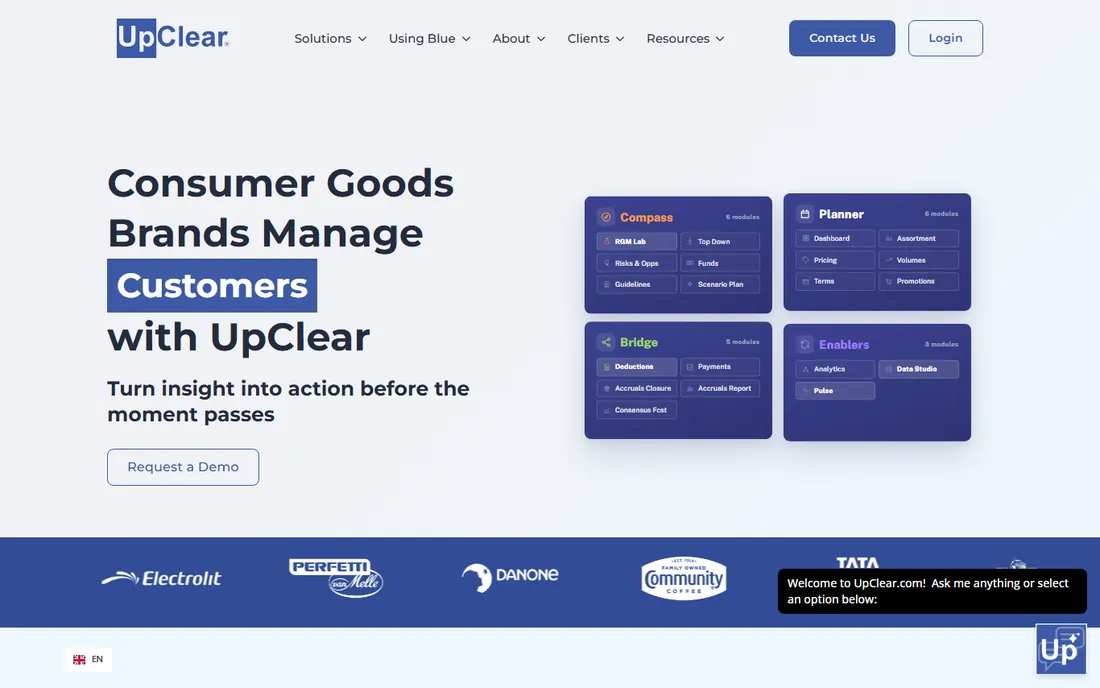
UpClear positions its Blue platform as the operating system for CPG revenue management rather than a point TPM tool. Trade promotion planning sits alongside promotion optimization, integrated business planning and revenue growth management, sharing one data model so the promotion calendar, the forecast and the accruals never disagree. Client logos on the site include Twinings, Hovis, Perfetti and Inspired Pet Nutrition, and the company reports over $340B in trade spend managed.
The honest read: this is a platform buy, not a quick tool purchase. UpClear is privately owned, has run CPG implementations since 2008, and holds ISAE 3402/SOC 1 certification with hosting on Microsoft Azure. Mid-market and enterprise brands with multi-channel, multi-country trade operations are the fit. A 20-person emerging brand will find Vividly or Promomash faster to deploy.
What we like- BluePlanner covers TPM, TPO, IBP and RGM in one connected platform
- Vendor reports $340B+ in trade spend managed on the platform
- Configurable SaaS with CPG implementations running since 2008
Watch out for- No published pricing
- Enterprise-oriented sales and implementation cycle
- Breadth can be more than a small brand needs
#2
TELUS Agriculture & Consumer Goods
Best for: Enterprises wanting one vendor across TPM, retail execution and supply chain
Visit telus.com
Starting priceSee website (quote-based)
Free planNo
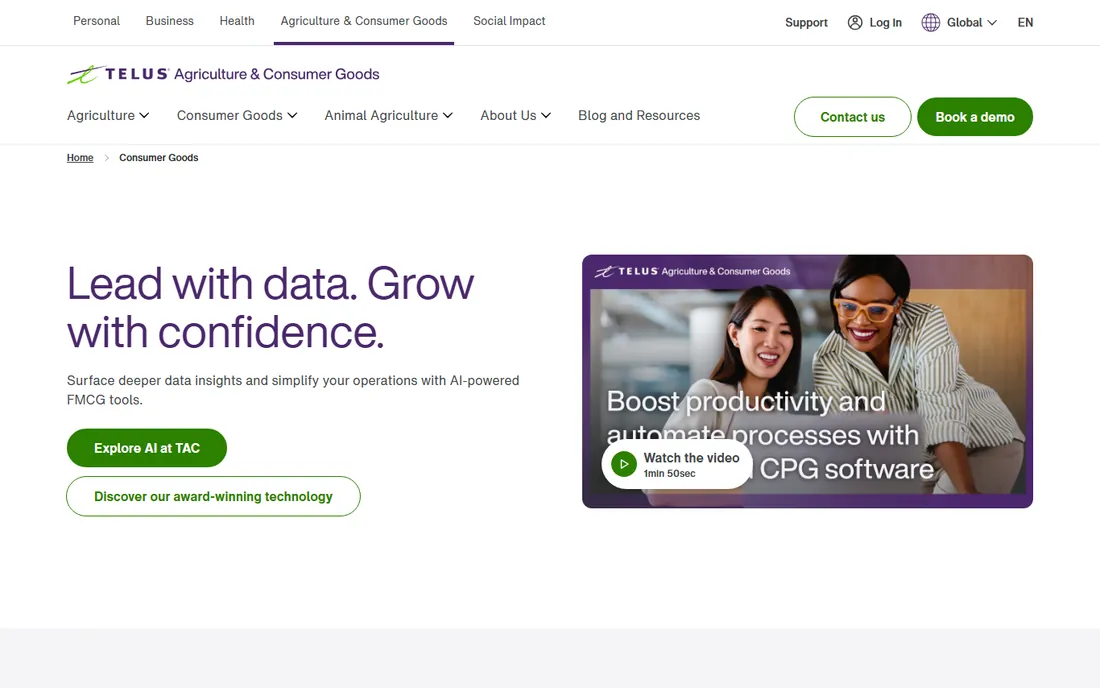
This entry needs a map, because the TPM market consolidated here. Exceedra (formerly AFS Technologies, acquired by TELUS in September 2020) now sits in TELUS's Consumer Goods business unit, and both exceedra.com and blacksmithapplications.com now redirect to TELUS's agriculture and consumer goods pages. The combined portfolio covers trade promotion management and optimization, revenue management, retail execution, customer business planning, demand planning and analytics.
Evaluate TELUS once, not three times: if your shortlist still lists Exceedra, AFS or Blacksmith separately, merge them. The breadth is the pitch: one vendor from farm data through trade promotion to retail execution. The risk is the usual post-merger one: confirm which specific product line you are buying and what the roadmap for it looks like before signing.
What we like- Combines the former Exceedra, AFS Technologies and Blacksmith Applications product lines under one roof
- Covers TPM/TPO, revenue management, retail execution and demand planning
- Global enterprise delivery
Watch out for- No published pricing
- Post-acquisition product lines can mean overlapping modules to untangle
- Enterprise sales cycle
#3
Salesforce Consumer Goods Cloud
Best for: Consumer goods companies already running Salesforce
Visit salesforce.com
Starting priceSee website (quote-based)
Free planNo
Salesforce Consumer Goods Cloud is the TPM option for companies that have already standardized on Salesforce. Trade promotion management, retail execution, order management and analytics run on the same platform as the CRM, which means account plans, promotion calendars and field data share one data model and one login. For IT departments with a "Salesforce first" policy, this usually wins the architecture review by default.
The tradeoff is the ecosystem lock-in that comes with every Salesforce product: licensing, implementation partners and ongoing admin all run through Salesforce economics. Standalone TPM specialists like UpClear or Vividly can be cheaper and faster for companies without a Salesforce footprint. If Salesforce is already your system of record, start here; if it is not, do not adopt Salesforce just for TPM.
What we like- Native to the Salesforce platform, so trade data lives with the CRM
- Retail execution and TPM in one mobile-friendly suite
- The safest choice for Salesforce-standardized IT departments
Watch out for- No published pricing
- Value concentrates inside the Salesforce ecosystem
- Implementation typically needs a Salesforce partner
#4
Promomash
Best for: Mid-market CPG brands that want software plus a managed deduction service
Visit promomash.com
Starting priceSee website (quote-based)
Free planNo
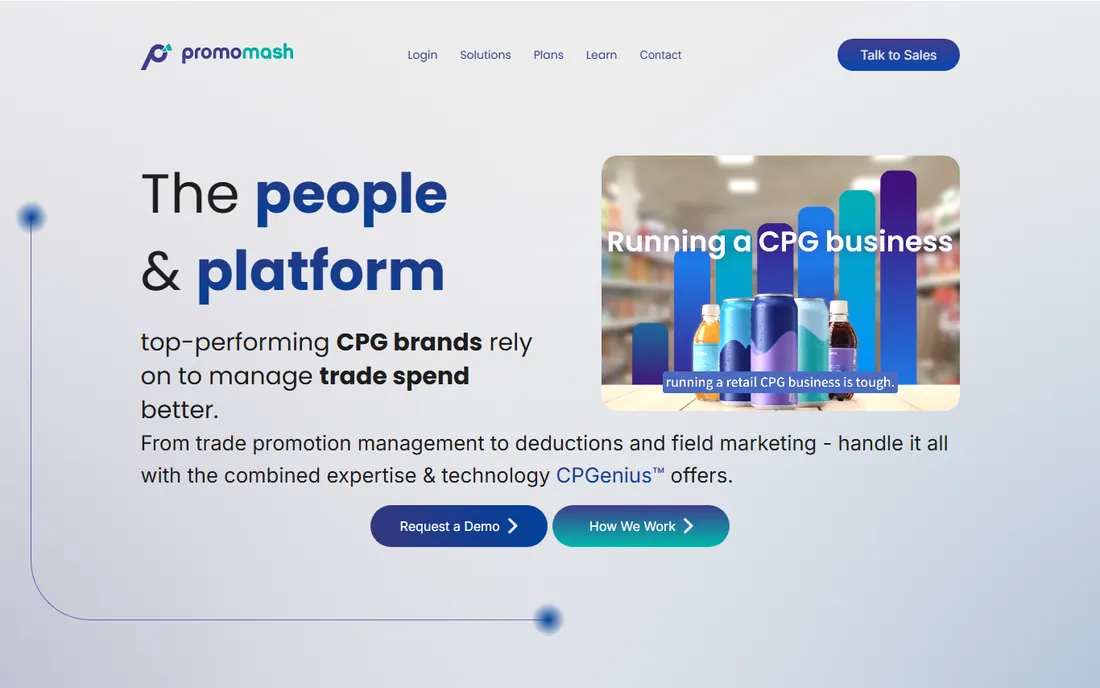
Promomash's pitch is that software alone does not fix trade spend: its CPGenius platform comes with a team of deduction and trade specialists who do the coding, validation, dispute and recovery work alongside you. The platform covers trade promotion planning, promotion calendars, plan-versus-actual tracking, deduction management and in-store demo and field marketing management. Client reviews on the site (Rummo Pasta, Poppi, Saffron Road, Chef Bobo) consistently cite the people as much as the product.
This is the most SMB-friendly entry on the enterprise half of the list. Brands moving off spreadsheets get both the system and the expertise to run it, which is why implementation stories emphasize speed. The flip side: you are buying a managed service relationship, so evaluate the service SLAs as carefully as the software features.
What we like- CPGenius bundles TPM, deduction management and field marketing with a human expert team included
- Purpose-built for emerging and mid-size brands moving off Excel
- Client reviews cite fast implementation and strong support
Watch out for- No published pricing
- Services-heavy model means ongoing relationship, not just software
- Less suited to global enterprise complexity
#5
Visualfabriq
Best for: CPG teams that want AI-driven promotion planning and optimization
Visit visualfabriq.com
Starting priceSee website (quote-based)
Free planNo
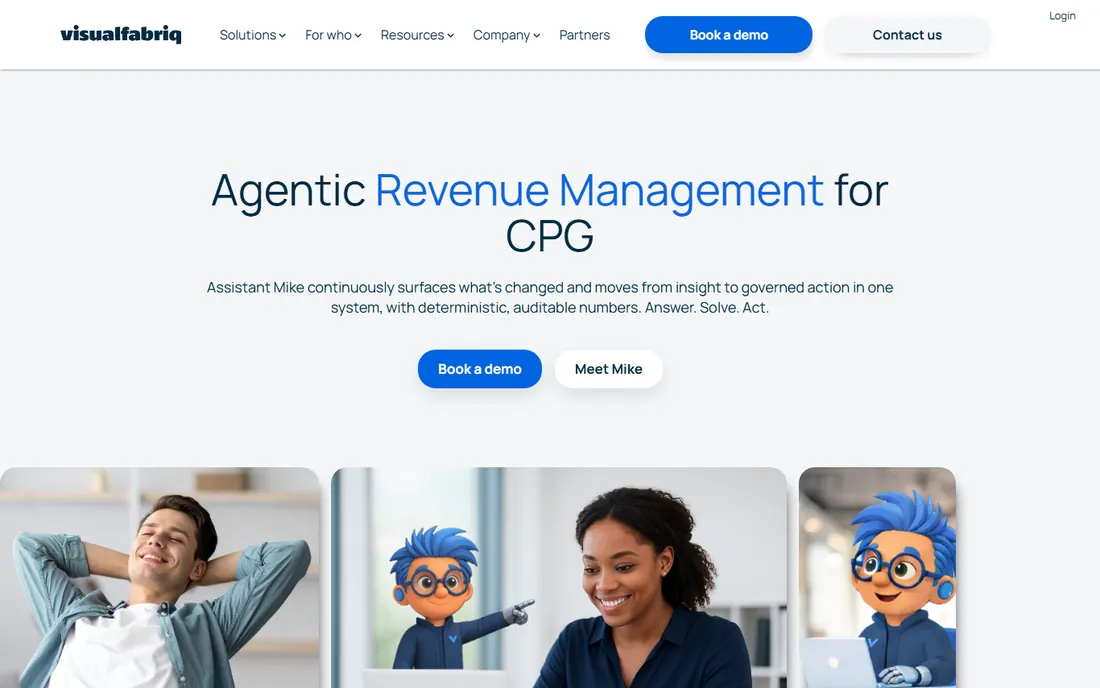
Visualfabriq rebuilt its positioning around agentic AI: an assistant ("Mike") that monitors RGM, TPM and TPO signals across the platform and proposes actions, from margin-breach fixes to promotion re-plans. Underneath, the platform covers the standard ground: promotion planning and optimization, demand forecasting, budget control, accrual automation and claims resolution. The company emphasizes true SaaS: configure, do not customize, with every improvement reaching every customer.
For data-mature CPG teams, the AI angle is genuinely differentiated: most TPM tools bolt analytics onto planning workflows, while Visualfabriq puts the agent across the whole cycle. The caveat is vendor scale: it is smaller than UpClear, TELUS or Salesforce, so enterprise buyers should diligence the roadmap and support footprint. Innovation buyers in mid-market CPG should take the demo.
What we like- Agentic AI ("Assistant Mike") spans RGM, IBP, TPM and TPO in one platform
- True SaaS with configuration rather than customization
- G2 rating 4.5/5 shown on the vendor site
Watch out for- No published pricing
- AI positioning is newer than competitors' track records
- Smaller vendor than TELUS or Salesforce
#6
Vividly
Best for: Growing CPG brands leaving spreadsheets for their first real TPM
Visit govividly.com
Starting priceSee website (quote-based)
Free planNo
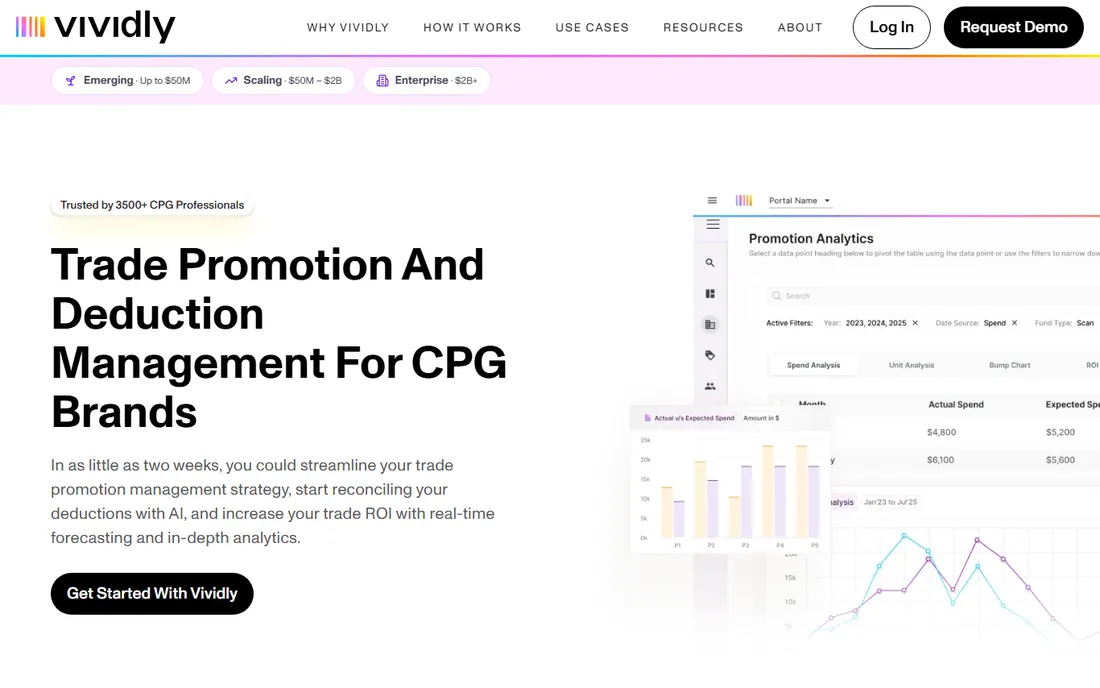
Vividly is the modern TPM built for brands, not conglomerates. Trade promotion planning, real-time forecasting, trade spend analytics, end-to-end deduction management and an AI promotion optimizer come in one platform, with the vendor claiming implementation in as little as two weeks versus the 6-plus months typical of legacy tools. It also claims SOC 1 Type II and SOC 2 Type II audits, which matters when finance needs to trust the accruals.
The vendor's marketing makes big claims (up to 20% savings in unexpected trade dollars, 90% reduction in deduction processing labor, 5-10% of trade spend recovered): treat those as marketing until a reference customer in your category confirms them. What is verifiable is the positioning: this is the fastest path from Excel to a real TPM for a growing brand. If you run a 50-person CPG company, start your shortlist here and at Promomash.
What we like- Built for emerging brands with implementation claimed in as little as two weeks
- AI deduction reconciliation and promotion optimizer
- SOC 1 Type II and SOC 2 Type II audited
Watch out for- No published pricing
- Depth is shallower than enterprise platforms for complex global operations
- Younger vendor than UpClear or TELUS
#7
Vistex
Best for: Enterprises managing pricing, trade promotions, rebates and royalties together
Visit vistex.com
Starting priceSee website (quote-based)
Free planNo
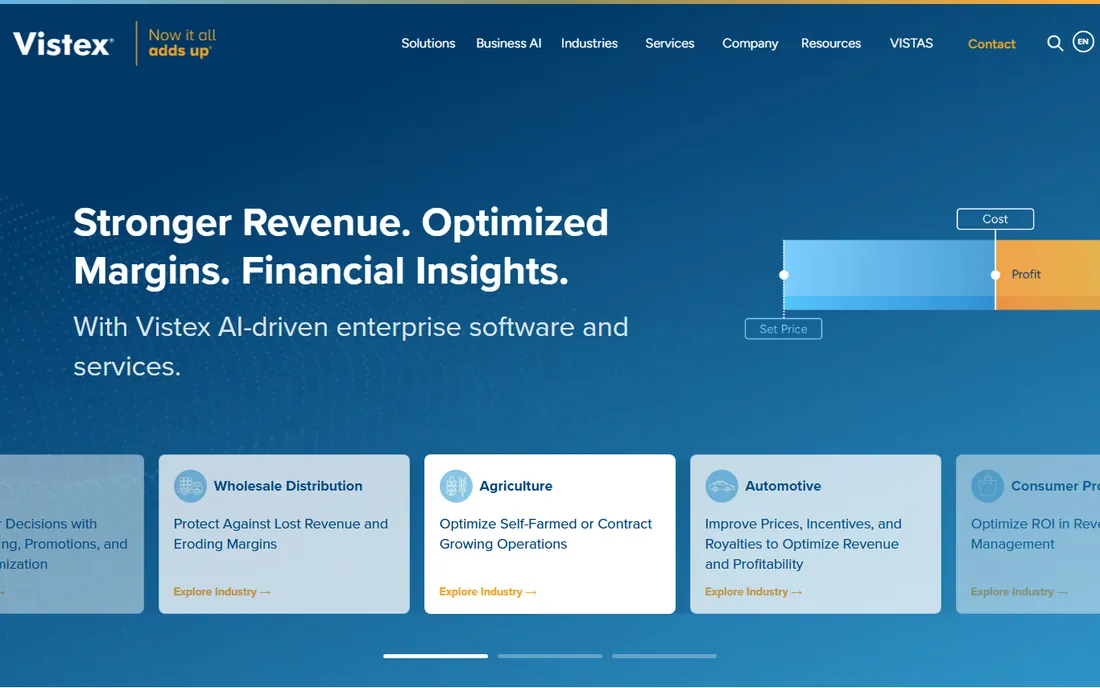
Vistex is the broadest revenue-management vendor here: where most TPM tools stop at promotions and deductions, Vistex also handles pricing, rebates, incentives, royalties and channel programs across industries from CPG to manufacturing to media. The SAP partnership runs deep (the site cites a 2026 SAP Partner Award for Innovative Solution), which makes Vistex the natural fit for SAP-centric enterprises that want trade and pricing in the ERP orbit.
Scope is both the strength and the warning. A company that needs TPM plus rebates plus royalties gets one platform; a company that needs only TPM gets an enterprise implementation for a point problem. Price and timeline accordingly, and confirm which modules you are actually licensing: Vistex sells a suite, and suite pricing without discipline buys shelfware.
What we like- Covers the full revenue-management spectrum: pricing, trade, rebates, incentives and royalties
- Deep SAP partnership (2026 SAP Partner Award cited on site)
- Buy-side and sell-side margin analytics
Watch out for- No published pricing
- Broadest scope on this list, which means the longest implementations
- Overkill for straightforward TPM-only needs
#8
Enable
Best for: Distributors, retailers and manufacturers managing rebates and trading agreements
Visit enable.com
Starting priceSee website (quote-based)
Free planNo
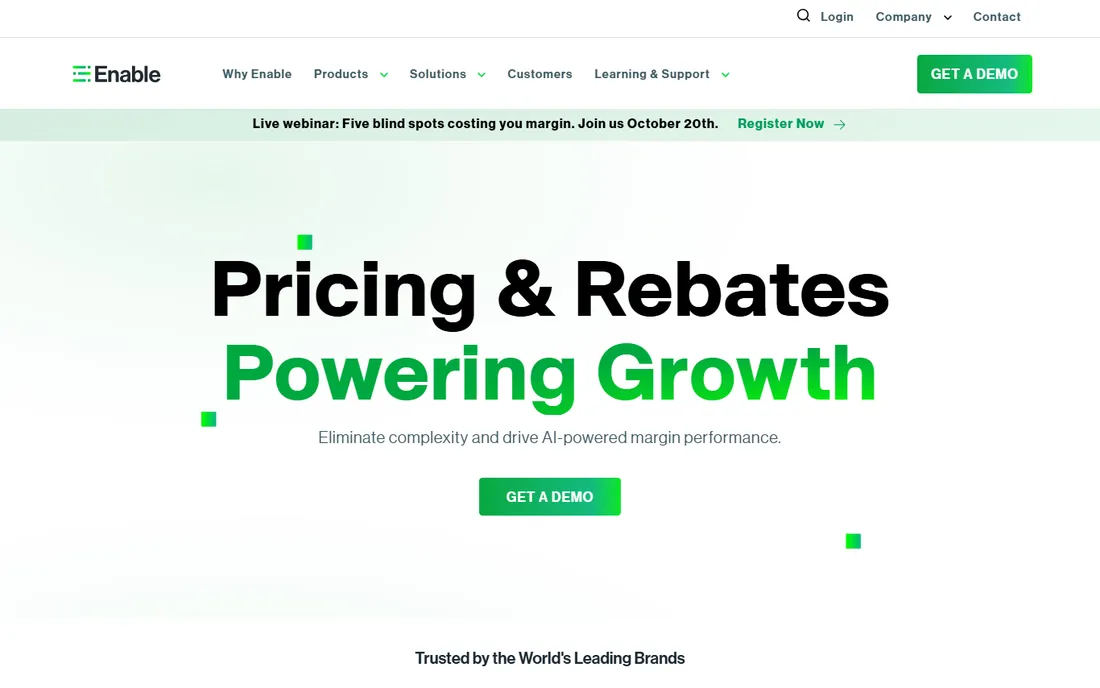
Enable (which acquired Flintfox, whose intelligent pricing platform now appears as "Flintfox by Enable" in customer stories) manages the rebate side of trade: trading agreements, rebate accruals, pricing and supplier collaboration for distributors, retailers and manufacturers. Customer stories on the site include Henderson Foodservice, AAH Pharmaceuticals, The Very Group and Wesco, which tells you the audience: companies where supplier funding and rebates are the commercial engine.
Note the category boundary: Enable is rebate and pricing management first, classic brand-side trade promotion planning second. A distributor managing hundreds of supplier agreements should evaluate Enable; a CPG brand planning its retail promotion calendar should start with UpClear, Vividly or Promomash. Where the two overlap, run both demos and compare the deduction workflows directly.
What we like- Purpose-built rebate and trading-agreement management with AI pricing tools
- Flintfox's intelligent pricing platform now part of Enable
- Strong fit for distribution and retail trading relationships
Watch out for- No published pricing
- Rebate-centric rather than full TPM, so CPG promotion planning is thinner
- Verify fit if you need classic brand-side TPM
TPM vs. TPO vs. RGM: what you are actually buying
Vendors use three labels, and they mean different scopes. TPM (trade promotion management) is the core: plan promotions, accrue trade spend, settle deductions. TPO (trade promotion optimization) adds the analytics layer: which promotions earned their spend, what to repeat, what to kill. RGM (revenue growth management) is the umbrella: pricing, promotions, assortment and trade investment managed together for margin.
Most SMBs need TPM with basic analytics. TPO matters once you run enough promotions to have a real dataset, usually mid-market and up. RGM suites (UpClear, Visualfabriq, Vistex) make sense when pricing, promotions and assortment are managed by different teams that currently disagree. Buying RGM when you need TPM buys complexity; buying TPM when you need RGM buys another spreadsheet to reconcile the pricing team. Match the label to your org chart.
The implementation question nobody asks early enough
TPM demos all look good; TPM implementations are where projects die. Legacy enterprise TPM routinely takes 6 to 18 months, and the failure mode is always the same: dirty trade data, no owner for the deduction process, and a sales team that keeps its real plan in Excel. Before signing anything, ask three questions. First, what is the typical implementation timeline for a company our size: Vividly claims two weeks, Promomash emphasizes speed, enterprise suites will say months. Second, who cleans the historical trade data: you, the vendor, or nobody. Third, what happens to deductions during the transition: they do not pause while you implement.
Also budget for the ongoing cost, not just the license. TPM needs an administrator, a deduction process owner, and a sales team trained to plan in the system. Promomash's managed-service model exists precisely because many mid-market brands cannot staff all three. If you cannot name the internal owner, fix that before the vendor selection, not after.
How we chose
We started with the searches buyers run: trade promotion management software, TPM software, CPG trade promotion software and retail trade promotion tools. For each candidate we opened the vendor homepage to confirm the current URL and product status. Two findings reshaped the list: Exceedra, AFS Technologies and Blacksmith Applications have all consolidated under TELUS, and Flintfox is now part of Enable, so we list the current entities and mention the old names once each. TPM is an enterprise category with no published pricing, so we wrote "See website" throughout rather than repeating third-party estimates. We favored vendors with live TPM products, verifiable customer evidence and clear CPG focus.
Frequently asked questions
What is trade promotion management software?
Software that helps consumer goods brands plan promotions with retailers, track trade spend against those promotions, accrue the expected costs, and settle deductions (retailers' claims for promotional funding). It replaces the spreadsheets most brands use to manage what is usually their second-biggest cost after manufacturing.
How much does TPM software cost?
No vendor on this list publishes prices: all eight are quote-based enterprise sales. Expect implementation services on top of the license, and timelines from two weeks (Vividly's claim for growing brands) to many months for enterprise suites. Get the full first-year cost, including data migration and training, in writing.
What is the difference between TPM and TPO?
TPM (management) plans promotions and tracks spend; TPO (optimization) analyzes which promotions worked and recommends better ones. Most platforms now bundle both, but the optimization is only as good as your historical data: a brand with two years of clean promotion data gets far more from TPO than one starting from spreadsheets.
We are a small CPG brand on spreadsheets. Where do we start?
Vividly and Promomash are built for exactly this move: faster implementations, SMB-friendly packaging, and (in Promomash's case) a managed deduction service. UpClear and the enterprise suites are the next step once trade complexity outgrows them.
Do we need TPM if we already use Salesforce?
Salesforce Consumer Goods Cloud adds TPM and retail execution inside the Salesforce platform, which is the path of least resistance for Salesforce shops. If Salesforce is not your system of record, a standalone TPM specialist is usually cheaper and faster to deploy.
How long does TPM implementation take?
It varies more than any other factor in this category. Vividly claims as little as two weeks for growing brands; Promomash emphasizes fast implementation with its service team; enterprise suites (UpClear, TELUS, Vistex, Salesforce) typically run several months to over a year depending on data cleanliness and scope. Ask for a reference customer your size and call them.
Sources we checked (10)
- https://upclear.com/
- https://www.telus.com/agcg/food-beverage-consumer-goods
- https://www.salesforce.com/
- https://www.promomash.com/
- https://visualfabriq.com/
- https://www.enable.com/
- https://vistex.com/
- https://www.govividly.com/
- https://www.g2.com/categories/trade-promotion-management
- https://www.capterra.com/trade-promotion-management-software/
Is your product missing or out of date?
We review this list regularly. Vendors can request a listing, send updated pricing or ask about featured placement.

Shihab Mia · Founder, Rankite
Shihab has spent more than a decade helping SaaS and e-commerce brands grow through search. He writes Rankite's software buying guides from pricing pages, documentation and public user reviews. More about Shihab.