How we make this list: we compare pricing pages, product documentation and public user reviews. Ratings come from G2, Capterra or Trustpilot, with the date we checked them.
Key takeaways
- Keyword Insights is the best dedicated topical map tool, clustering keywords by live SERP overlap and turning each cluster into a brief and draft.
- Surfer SEO suits teams that want the map to flow straight into writing, with a Topical Map plus Content Editor in one tool and no export step.
- Semrush suits SEO teams that want topical mapping alongside a full keyword and competitor research suite.
- LowFruits suits smaller sites that want low-competition clusters, flagging weak spots in live SERPs.
- Floyi suits teams that want mapping, briefs, drafts, and authority measurement in one dedicated platform, at a higher price.
Quick comparison
| Tool | Best for | Starting price | Free plan |
|---|
 Keyword Insights | Dedicated clustering and briefs | $58/mo | No |
 Surfer SEO | Map to writing workflow | $49/mo | No |
 Semrush | All-in-one SEO suite | $139/mo | Limited free |
 MarketMuse | Content gap analysis | See website | Yes |
 LowFruits | Low-competition clusters | $29.90/mo | No |
 Keyword Cupid | Visual maps | $9.99/mo | No |
 KeyClusters | Pay-as-you-go clustering | $9 per 1,000 keywords | 100 free credits |
 Floyi | Mapping plus measurement | $99/mo | Pay-as-you-go tier |
Is your product missing or out of date?
We review this list regularly. Vendors can request a listing, send updated pricing or ask about featured placement.
Starting price$58/mo
Free planNo
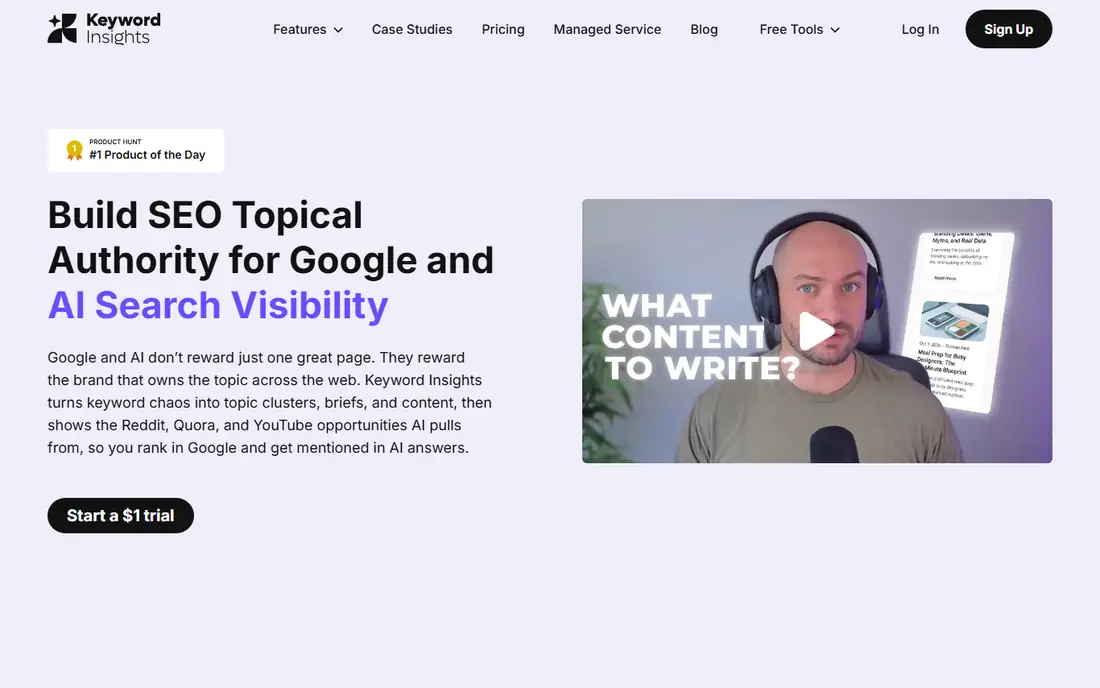
Keyword Insights is the best dedicated topical map tool, turning a keyword list into a page plan. It groups keywords by live SERP overlap and search intent, so clusters reflect what Google actually ranks together, then carries each cluster through to a content brief and draft. Basic costs $58 per month for 10,000 credits, with one credit per clustered keyword and 100 credits per brief, while Professional costs $99 per month for 20,000 credits.
Credits run out fast on big lists, and the tool is not a full keyword database like Semrush or Ahrefs, so pair it with a research source. For a team whose main job is building topical authority from a keyword list, Keyword Insights is the most direct tool here.
What we like- SERP-similarity clustering
- Intent labels
- Briefs and drafts
- Topical authority workflow
Watch out for- Credits consumed fast on big lists
- No full keyword database
- Trial is paid $1 for 7 days
#2Surfer SEO
Best for: Map to writing workflow4.8/5 on
G2 (546 reviews, checked Oct 2026)
Visit surferseo.com
Starting price$49/mo
Free planNo
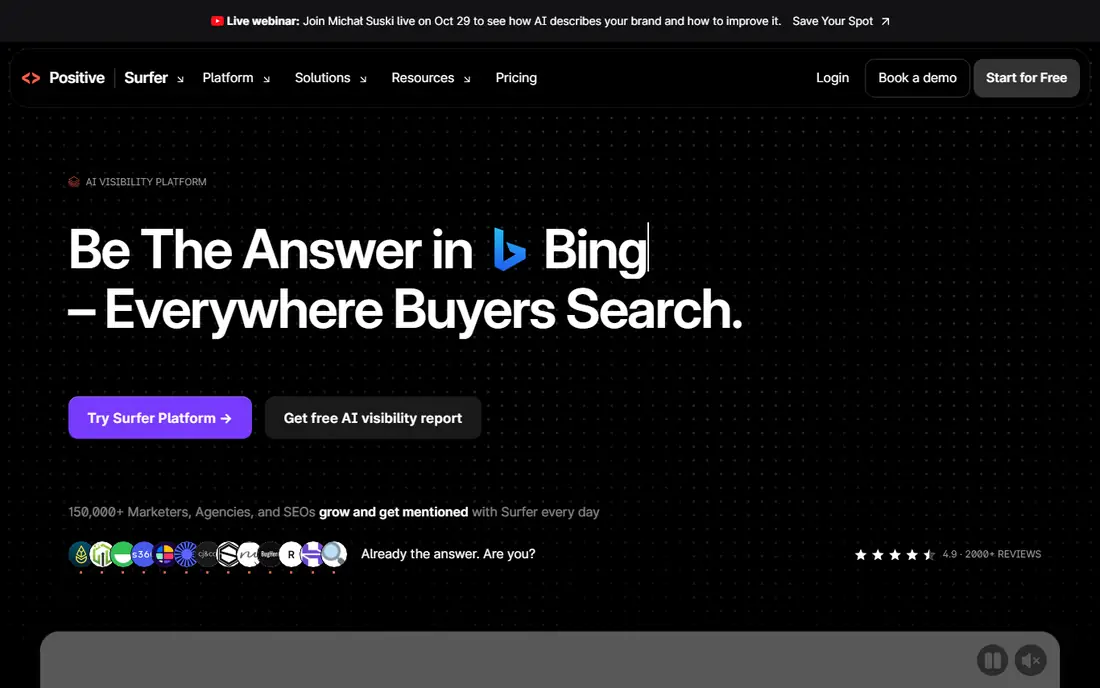
Surfer SEO suits teams that want the map to flow straight into writing, with a Topical Map feature plus a Content Editor in one tool. Discovery starts at $49 per month billed annually, Standard at $99, and Pro at $182, with annual credits that reset yearly. Research flows from clusters into outlines and drafts without exporting between tools.
Surfer is not a full keyword database like Semrush or Ahrefs, so keyword discovery still needs another source for large sites. For a content team that writes from the map every week, Surfer shortens the path from plan to published article.
What we like- Topical Map feature
- Content Editor
- Research flows straight into writing
- Free Chrome extension
Watch out for- Not a full keyword database
- Annual credits reset yearly
- Higher tiers cost more
#3Semrush
Best for: All-in-one SEO suite4.4/5 on
G2 (4,035 reviews, checked Oct 2026)
Visit semrush.com
Starting price$139/mo
Free planLimited free
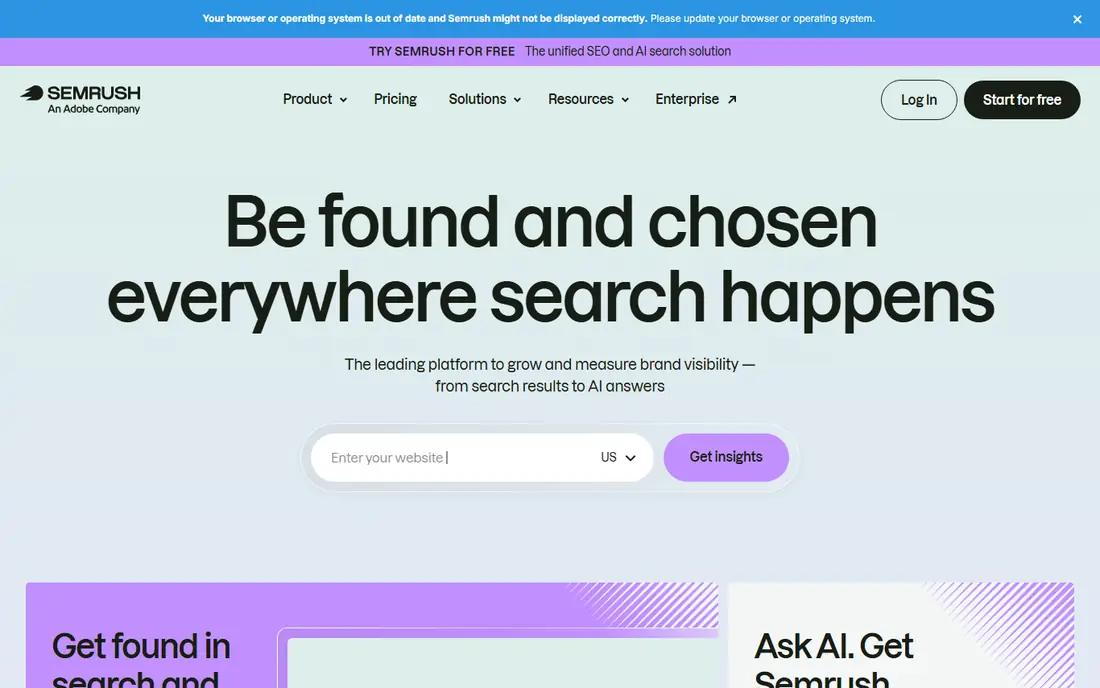
Semrush suits SEO teams that want topical mapping alongside a full keyword and competitor research suite. Its Keyword Strategy Builder turns seed topics into clustered content plans, with keyword, intent, search-volume, and competitor data to validate opportunities, and the map connects directly to the wider Semrush workflow.
The price runs highest here, starting around $139 per month, and mapping is one feature among many rather than a dedicated focus. For a team already paying for Semrush, the Strategy Builder covers topical mapping without another subscription.
What we like- Keyword Strategy Builder
- Huge database
- Competitor data
- Intent and volume data
Watch out for- Highest price here
- Mapping is one feature among many
- Learning curve for new users
Starting priceSee website
Free planYes
MarketMuse suits teams that want content gap analysis and topic modeling, with a genuine free plan of 10 queries per month. Optimize costs $149 per month by guides, though some guides report list prices withdrawn in August 2026 and paid tiers quoted via sales, so confirm current pricing before budgeting.
The free tier suits small sites, while larger teams need a paid tier for serious volume. For a team that wants to find coverage gaps before building a map, MarketMuse adds analysis that pure clustering tools lack.
What we like- Genuine free plan with 10 queries per month
- Content gap analysis
- Topic modeling
Watch out for- Paid tiers quoted via sales by some guides
- List prices withdrawn Aug 2026 per guides
- Narrower than suites
Starting price$29.90/mo
Free planNo
LowFruits suits smaller sites that want low-competition clusters, analyzing live SERPs to flag weak spots such as forums, low-authority sites, and intent mismatches. Standard costs $29.90 per month, or $20.75 per month billed annually with 3,000 credits, while Premium costs $79.90 per month with 10,000 credits, and pay-as-you-go starts at $25 for 2,000 credits.
The toolset is narrower than full suites, with no traditional volume-sorted database, and subscription credits do not roll over. For a small site building authority without high domain authority, LowFruits finds clusters you can actually rank for.
What we like- Flags weak spots in live SERPs
- Low-competition long tails
- Cheap credits
- Pay-as-you-go option
Watch out for- Narrower toolset than full suites
- No traditional volume-sorted database
- Subscription credits do not roll over
Starting price$9.99/mo
Free planNo
Keyword Cupid suits teams that want visual maps, turning an uploaded keyword list into interactive mind maps and topical silos using live SERP data and machine learning. Starter costs $9.99 per month for 500 keyword credits, Freelancer $49.99, Agency $149.99, and Enterprise $499.99, with extra credits from $0.02 per keyword.
It clusters only, with no writing or briefs, so pair it with a writing tool for production. For a strategist who thinks in maps and needs a visual plan to share with clients or writers, Keyword Cupid is the clearest visual tool here.
What we like- Interactive mind maps
- Topical silos
- Live SERP data
- Machine learning clustering
Watch out for- Clustering only, no writing or briefs
- Extra credits cost $0.02 per keyword
- Small team focus
Starting price$9 per 1,000 keywords
Free plan100 free credits
KeyClusters suits teams that cluster occasionally and dislike subscriptions, with pay-as-you-go pricing from $9 for 1,000 keywords and credits that do not expire. Larger packs run about $4.97 per 1,000 keywords, and signup includes 100 free credits. It groups huge CSV exports by top-10 SERP overlap and returns a clean, color-coded spreadsheet.
Output is a spreadsheet, not briefs or drafts, so planning still needs manual work. For a freelancer or agency that clusters in bursts, KeyClusters is the cheapest way to get SERP-based clusters without a monthly bill.
What we like- No subscription needed
- Credits do not expire
- Color-coded spreadsheet output
- Handles huge lists
Watch out for- No briefs or writing
- Spreadsheet output needs manual planning
- No keyword database
Starting price$99/mo
Free planPay-as-you-go tier
Floyi suits teams that want mapping, production, and measurement in one dedicated system. It runs from brand definition through topical maps to briefs, drafts, and an authority score that tracks both Google rankings and AI engines such as AI Overviews, ChatGPT Search, and Gemini, which most mapping tools still ignore.
Pro costs $99 per month, Scale $299, with a $0 pay-as-you-go tier with starting credits and a 14-day Pro trial for $7. For a team building topical authority as a measured program rather than a one-off map, Floyi covers the full workflow.
What we like- Brand definition to briefs and drafts
- Authority score for Google and AI engines
- Strategy-complete platform
Watch out for- Highest dedicated price
- 14-day Pro trial costs $7
- More platform than small sites need
How we chose
We compared topical map tools on clustering method, SERP data use, intent handling, brief and writing integration, authority measurement, and price, using vendor pages and October 2026 SEO guides. We favored tools that cluster by live SERP overlap over tools that group by word similarity alone, since SERP overlap reflects what Google actually ranks together.
How to build a topical map
Start with seed topics, then expand into keywords, cluster by SERP overlap, and assign each cluster a page type. A map that exports into briefs or a writing queue gets executed, while a map that exports into a PDF gets admired, so pick a tool whose output feeds your production workflow directly.
Validate clusters against real SERPs
AI and clustering tools group keywords fast, but human review keeps the map accurate. Cross-check keyword overlap, review the SERPs for each cluster, and merge or split clusters where nuance demands it, since two keywords that look similar can serve different intents. Refresh the map every 3 to 6 months so it tracks new entities and shifting intent.
Assign intent and format to each cluster
Label each cluster informational, transactional, or navigational, and assign a recommended content format such as guide, comparison, product page, or FAQ. Intent labels prevent a map full of guides where buyers need product pages, and format assignments turn the map into a publishing schedule rather than a diagram.
Link clusters together before you publish
Internal links turn a set of pages into a topical authority asset. Link each cluster page to its parent topic page and to sibling pages where relevant, using descriptive anchor text that matches the target topic. A map without internal links is a pile of pages, while a map with deliberate links shows both readers and search engines how topics connect.
Frequently asked questions
What is a topical map in SEO?
A topical map is a structured plan of a topic and its subtopics, grouping related keywords into clusters that each become a page. The map shows coverage gaps, internal linking paths, and publishing order, helping a site build topical authority rather than publishing disconnected articles that never reinforce each other.
Which tool is best for topical maps?
Keyword Insights, for dedicated clustering by live SERP overlap with briefs included. Surfer suits teams that write from the map, Semrush suits teams already paying for a suite, and LowFruits suits small sites chasing low-competition clusters they can actually rank for.
Can I build a topical map for free?
Yes, in part. MarketMuse offers 10 free queries per month, KeyClusters gives 100 free credits, and Floyi has a $0 pay-as-you-go tier. Free tiers suit small sites, while larger sites need a paid tier for serious volume and for clustering lists of thousands of keywords.
How often should I refresh a topical map?
Every 3 to 6 months, so the map tracks new entities, shifting intent, and new competitors. Refresh sooner after a major product launch, a core update, or a change in what your audience searches for, since stale maps send writers to topics nobody wants.
Do topical maps help with AI search?
Yes, indirectly. A well-structured map builds entity coverage and internal linking that help both Google rankings and AI engines, and Floyi tracks authority across Google and AI engines directly, including AI Overviews and ChatGPT Search. No tool guarantees AI citations, so treat AI visibility as a measured outcome, not a promised feature, and track it over months rather than weeks.
Sources we checked (8)
- https://keywordinsights.ai
- https://surferseo.com
- https://www.semrush.com
- https://www.marketmuse.com
- https://lowfruits.io
- https://keywordcupid.com
- https://keyclusters.com
- https://floyi.com
Is your product missing or out of date?
We review this list regularly. Vendors can request a listing, send updated pricing or ask about featured placement.

Shihab Mia · Founder, Rankite
Shihab has 5+ years in B2B and SaaS SEO. He writes Rankite's software buying guides from pricing pages, documentation and public user reviews. More about Shihab.