How we make this list: we compare pricing pages, product documentation and public user reviews. Ratings come from G2, Capterra or Trustpilot, with the date we checked them.
Key takeaways
- Tai Chi Walking is the most focused pick, built entirely around guided indoor walking sessions.
- ZenFit gives a broader program that pairs tai chi with qigong and strength work, while Tai Chi for Seniors & Beginners focuses on gentle guided sessions.
- Lasta and MadMuscles suit users who want personalized plans with reminders and progress tracking.
- Session length matters most for consistency, so pick an app whose shortest session fits a real day.
Quick comparison
| Tool | Best for | Starting price | Free plan |
|---|
 Tai Chi Walking | Dedicated tai chi walking practice | Free | Yes |
 ZenFit | Tai chi, qigong, and gentle fitness | Free | Yes |
 Tai Chi for Seniors & Beginners | Guided tai chi for seniors and beginners | See website | Free download with paid subscription options |
 Lasta | Personalized gentle movement plans | See website | Yes |
 MadMuscles | Personalized plans including tai chi walking | See website | Yes |
 Tai Chi for Health | Classical tai chi teaching | See website | Yes |
 FitOn | Free classes including tai chi | Free | Yes |
Is your product missing or out of date?
We review this list regularly. Vendors can request a listing, send updated pricing or ask about featured placement.
The best tai chi walking apps
Starting priceFree
Free planYes
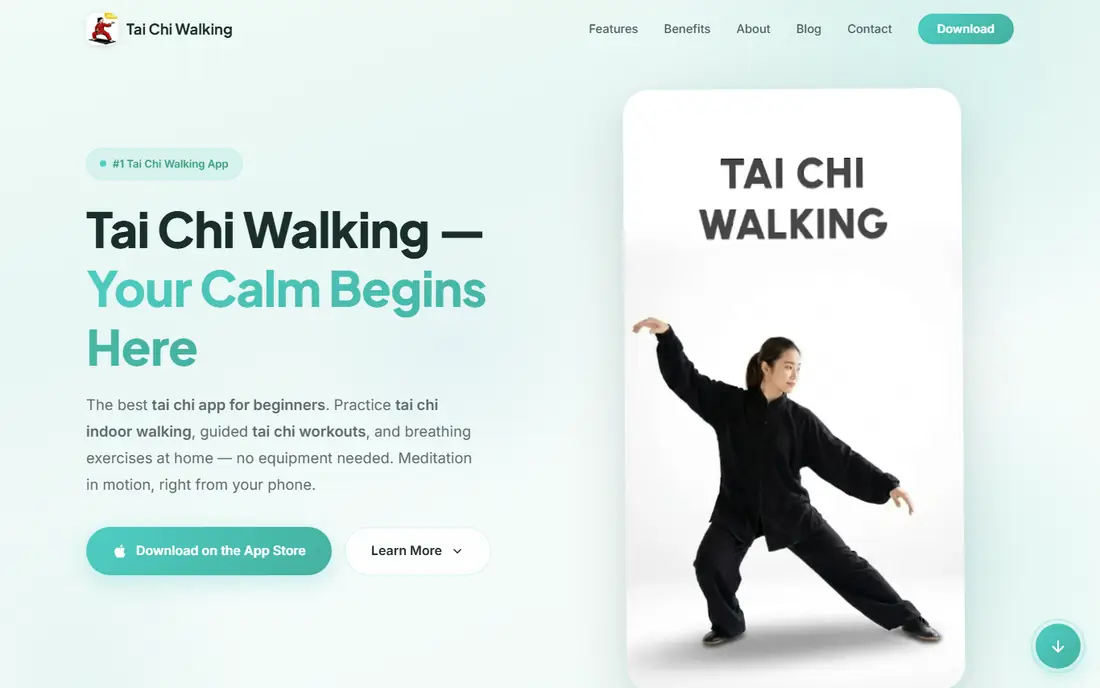
Tai Chi Walking is the only app here built entirely around its name, and that focus shows. Guided walking videos pair slow steps with breathing cues, a 28-day plan gives beginners a clear path, and chair-based sessions cover limited mobility. Sessions run from five to twenty minutes, which fits a lunch break or a quiet morning.
The focus is also the limit. A user who wants strength work, qigong, or nutrition guidance will need a second app. Some plan features sit behind a subscription, though basic sessions are free to start. For a beginner who wants tai chi walking and nothing else, this is the clearest pick.
What we like- Guided indoor walking sessions with video
- 28-day structured plan
- Chair-based sessions for limited mobility
Watch out for- Content is narrower than broader wellness apps
- Full plan features need a subscription
Starting priceFree
Free planYes

ZenFit pairs tai chi walking with qigong and Baduanjin in one app, aimed at adults who want gentle, low-impact movement. Programs target balance, joint stiffness, and mobility, with sessions from five minutes up. That breadth helps a user who wants to move from walking into a fuller tai chi practice over time.
Breadth can also dilute focus, since walking sessions sit among many other programs. Some content needs a subscription, and the app's wellness framing needs a careful reading for anyone with a medical condition. For a user who wants tai chi walking inside a wider gentle fitness habit, ZenFit is a strong choice.
What we like- Tai chi walking plus qigong and Baduanjin
- Programs for balance, stiffness, and mobility
- Short sessions from five minutes
Watch out for- Broader content can distract from walking practice
- Some programs need a subscription
Starting priceSee website
Free planFree download with paid subscription options

Tai Chi for Seniors & Beginners is a guided tai chi app built for older beginners, with over 200 exercises, a personalized plan, and progress tracking. Sessions are gentle and structured, which suits a user who wants clear guidance rather than a large library to browse. The app holds strong store ratings, at 4.8 on the App Store and 4.7 on Google Play, with more than 10,000 five-star ratings reported on its homepage.
The free download covers the basics, while full access needs a subscription, and pricing tiers are not shown on the homepage, so check the store listing before paying. For a senior or beginner who wants guided tai chi with a plan to follow, it is a practical pick.
What we like- Over 200 guided exercises
- Personalized plan with progress tracking
- High store ratings on iOS and Android
Watch out for- Full access needs a subscription
- Pricing tiers are not shown on the homepage
Starting priceSee website
Free planYes

Lasta builds a personalized plan from a short assessment, then serves slow, low-impact movement flows that include tai chi walking elements. Streaks and reminders help a routine survive busy weeks, and sessions need no equipment. That structure suits a user who wants guidance without choosing each session alone.
Tai chi walking is one thread in a wider fitness app, and its weight-focused framing may not suit a user who only wants calm movement. A subscription gives access to the full plan. For a user who likes a plan that adapts and a daily nudge, Lasta is worth trying.
What we like- Personalized plans from a short assessment
- Slow, low-impact movement flows
- Streaks and reminders for consistency
Watch out for- Tai chi walking is part of a wider fitness app
- Weight-focused framing will not suit every user
Starting priceSee website
Free planYes

MadMuscles personalizes a program from a short quiz and includes chair tai chi, tai chi walking, and basic senior workouts among its options. That range helps a user with limited mobility or a need for seated practice, since the plan adapts to the answers given. Sessions stay short and equipment-free.
It is a broad fitness app, so tai chi depth is thinner than a dedicated app, and full programs need a subscription. A user who wants only tai chi should start with Tai Chi Walking or ZenFit. For a user who wants tai chi walking inside a personalized general plan, MadMuscles fits well.
What we like- Personalized programs from a short quiz
- Chair tai chi and tai chi walking options
- Adaptive plans for limited mobility
Watch out for- Broad fitness focus with less tai chi depth
- Subscription needed for full programs
Starting priceSee website
Free planYes

Tai Chi for Health comes from an established teaching institute, and its programs treat stepping and walking as part of form training rather than a separate trend. That grounding appeals to a learner who wants classical teaching and a path toward in-person classes. The institute's instructor network adds a real-world next step.
Its app presence is thinner than the app-first products here, and program details vary by instructor. A user who wants a polished daily app experience may prefer Tai Chi Walking. For a learner who values teaching lineage and a route to classes, it is a respected choice.
What we like- Programs from the Tai Chi for Health Institute
- Stepping and walking practice in form training
- Instructor-led teaching tradition
Watch out for- App presence is thinner than app-first rivals
- Programs vary by instructor and format
#7FitOn
Best for: Free classes including tai chi4.1/5 on
G2 (15 reviews, checked Oct 2026)
Visit fitonapp.com
Starting priceFree
Free planYes
FitOn is a free fitness app with classes across many styles, including tai chi sessions that a beginner can try at no cost. That makes it a useful way to sample tai chi movement before paying for a dedicated app. Sessions are short, home-friendly, and tracked without a subscription.
Tai chi walking specifically is limited here, since FitOn covers many styles rather than one practice in depth. Class quality also varies by instructor. As a free sampler, or as a second app for variety days, FitOn is a sensible addition to the shortlist.
What we like- Free workout classes including tai chi
- Short sessions for home practice
- Progress tracking without a subscription
Watch out for- Tai chi walking content is limited
- Class quality varies by instructor
How we chose
We compared each app on its public pricing page, its feature documentation, and public reviews on G2, Capterra, Reddit, and the app stores. We checked what the free version actually includes, what sits behind a subscription, and where the app falls short for its stated audience. We did not run hands-on trials, so this guide weighs published facts and reported user experience rather than personal testing. Apps that were hard to verify, had no clear official home, or did not fit the category were left out.
We also read the complaints, not just the praise. Repeated reports about a paywall, a thin local pool, or a feature that stopped working weighed against an app, even when its marketing looked strong. That balance is why some well-known names sit lower in a list than a smaller app with fewer complaints and a clearer price.
Starting tai chi walking at home
Before paying for anything, list the three features that would actually change daily use. If an app cannot name those three clearly on its pricing or features page, it is probably selling a feeling rather than a function. A short trial with a calendar reminder at the renewal date keeps that test honest, and a note about what was used each day makes the renewal decision easy.
One more check helps before committing: read the app's help pages for the feature that matters most, and confirm it works on the device that will actually be used. A feature listed on a desktop page sometimes behaves differently on a phone, and that gap only shows up after paying. A few minutes on the help pages prevents most subscription regrets.
Price alone rarely decides a good pick. An app that costs nothing but goes unused is worse value than a modest subscription that becomes part of a routine. Judge the choice after two weeks of real use, not after the first evening, and be ready to switch when a better fit appears. The lists above are a starting point, and the right answer is the app that still gets opened when the novelty fades.
Begin with five minutes, not twenty. A short session done daily builds balance and habit faster than a long session done once a week. Clear a small space, wear flat shoes or socks with grip, and keep a chair nearby for support.
Learn the weight shift first
Tai chi walking is mostly about shifting weight slowly from one foot to the other while breathing steadily. Practice that shift in place before walking across a room, and let the arms stay relaxed rather than forced into a shape.
Use support without shame
A chair, a wall, or a countertop makes practice safer for anyone with balance worries. Support does not reduce the value of the session, and it often improves form by removing the fear of falling.
Build a daily slot
Attach practice to an existing habit, like after breakfast or before an evening walk. A fixed slot beats willpower, and a phone reminder from the app helps until the habit holds on its own.
Frequently asked questions
What is tai chi walking?
Tai chi walking combines slow, deliberate steps with the weight shifts, posture, and breathing of tai chi. It is often described as meditation in motion, and it suits beginners who want gentle balance and mobility practice.
Is tai chi walking good for seniors?
It is often chosen by older adults because it is low-impact and can be done seated or with chair support. Anyone with a balance condition or recent injury should check with a clinician before starting.
How long should a tai chi walking session last?
Most apps use sessions of five to twenty minutes. Beginners should start at five minutes daily and build up slowly rather than starting with a long session.
Do I need equipment for tai chi walking?
No. Practice needs only a small clear space, comfortable shoes or grip socks, and optionally a chair for support. No gym membership or special gear is required.
Which tai chi walking app is best for a complete beginner?
Tai Chi Walking is the best dedicated beginner pick for its guided walking videos and 28-day plan. ZenFit is a good alternative when qigong and broader gentle fitness also appeal.
Sources we checked (7)
- https://www.taichiwalking.app
- https://www.zenfit.health
- https://tai-chi-for-beginners.com/en
- https://lasta.app
- https://madmuscles.com
- https://taichiforhealthinstitute.org
- https://fitonapp.com
Is your product missing or out of date?
We review this list regularly. Vendors can request a listing, send updated pricing or ask about featured placement.

Shihab Mia · Founder, Rankite
Shihab has 5+ years in B2B and SaaS SEO. He writes Rankite's software buying guides from pricing pages, documentation and public user reviews. More about Shihab.