How we make this list: we compare pricing pages, product documentation and public user reviews. Ratings come from G2, Capterra or Trustpilot, with the date we checked them.
Key takeaways
- Apple, Microsoft, Alphabet, Amazon, and Meta form the core group of large US tech companies, with strength across devices, cloud, search, commerce, and social platforms.
- NVIDIA and TSMC matter most for chips and AI hardware, while Samsung spans devices, displays, and chip manufacturing.
- Oracle and IBM suit enterprise buyers focused on databases, cloud infrastructure, and consulting, rather than consumer products.
- The best company depends on your need: a device, a cloud platform, a software suite, or an employer, not on size alone.
Quick comparison
| Tool | Best for | Starting price | Free plan |
|---|
 Apple | Consumer devices and services ecosystem | See website | No |
 Microsoft | Productivity software and cloud for business | See website | No |
 Alphabet | Search, Android, and cloud services | See website | No |
 Amazon | E-commerce and cloud infrastructure | See website | No |
 Meta | Social platforms and virtual reality | See website | No |
 NVIDIA | AI chips and graphics hardware | See website | No |
 TSMC | Chip manufacturing for other companies | See website | No |
 Samsung | Devices, displays, and chip production | See website | No |
 Oracle | Enterprise databases and cloud | See website | No |
 IBM | Enterprise software and consulting | See website | No |
Is your product missing or out of date?
We review this list regularly. Vendors can request a listing, send updated pricing or ask about featured placement.
The best tech companies
Starting priceSee website
Free planNo
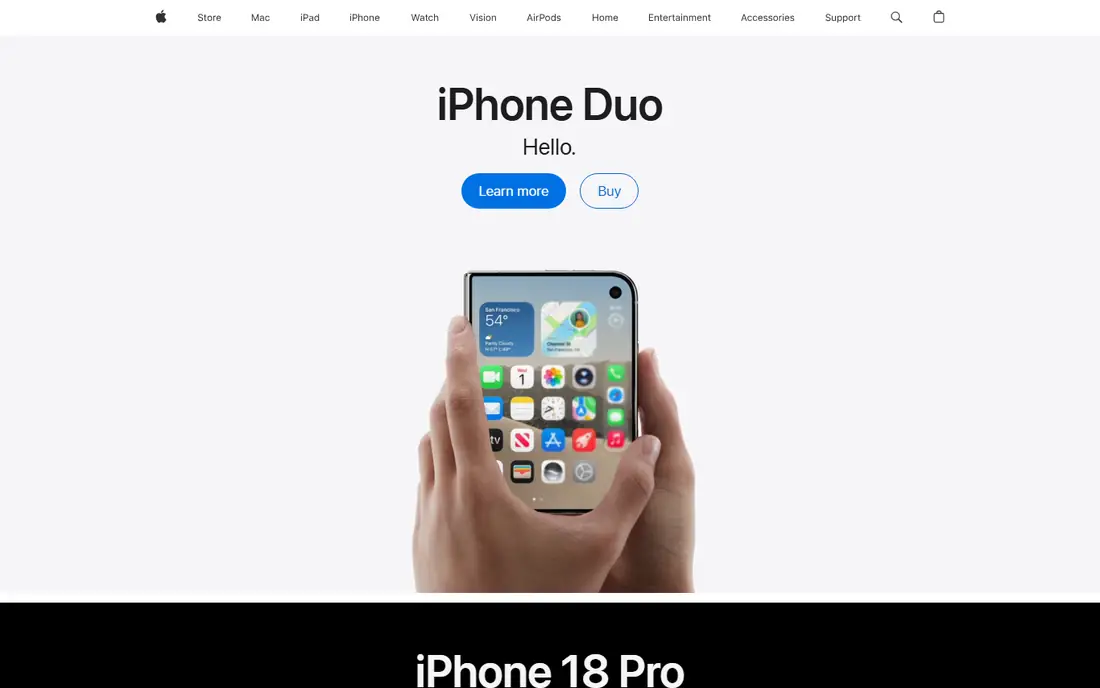
Apple leads for buyers who want devices that work together without setup friction. An iPhone, Mac, iPad, and Apple Watch share messages, photos, files, and passwords, and services such as Apple Music, Apple TV, and Apple Pay extend that ecosystem. Software support for older devices also tends to last longer than on many rival platforms, which helps total cost over time.
Premium pricing is the main drawback, and the ecosystem that makes Apple convenient also makes leaving harder. Accessories, apps, and services bought inside Apple's system do not always transfer cleanly to another platform. For buyers who value simplicity, design, and long device life, Apple remains the strongest consumer choice.
What we like- Tight integration across iPhone, Mac, iPad, and Watch
- Strong services range, including music, TV, and payments
- Long software support for devices
Watch out for- Premium pricing
- Ecosystem lock-in makes switching harder
- Customization is more limited than on open platforms
#2Microsoft
Best for: Productivity software and cloud for business4.6/5 on
G2 (11 reviews, checked Oct 2026)
Visit microsoft.com
Starting priceSee website
Free planNo
Microsoft suits business buyers more than any other company on this list. Office apps, Teams, and Microsoft 365 form the daily workflow for many companies, while Azure provides cloud infrastructure that competes directly with Amazon Web Services and Google Cloud. LinkedIn, GitHub, and Xbox add professional networking, developer tools, and gaming to the same group.
Licensing complexity is the catch. Microsoft 365, Azure, and enterprise agreements each have their own tiers, and comparing total cost requires a clear count of users and services. Consumer buyers who want a single device may find Apple simpler. For workplaces that need productivity software, cloud, and device management together, Microsoft is the most complete provider.
What we like- Office and Microsoft 365 are standard in many workplaces
- Azure is a major cloud platform
- Windows, Xbox, and LinkedIn broaden the business
Watch out for- Product range is broad, so licensing can be complex
- Consumer hardware is a smaller focus than software and cloud
#3
Alphabet
Best for: Search, Android, and cloud services
Visit abc.xyz
Starting priceSee website
Free planNo
Alphabet, the parent company of Google, covers search, video, mobile, and cloud in one group. Google Search and YouTube remain central to how people find information and video, Android powers a large share of smartphones worldwide, and Google Cloud serves enterprises alongside Microsoft and Amazon. DeepMind adds research strength in artificial intelligence that feeds products across the group.
Advertising funds much of Alphabet, which raises privacy and competition questions that regulators continue to examine. Product changes can also affect users of smaller Google services, which sometimes close or merge into larger products. For users and businesses that rely on search, Android, or cloud, Alphabet's scale and research depth are difficult to match.
What we like- Google Search, YouTube, and Android reach a huge audience
- Google Cloud is a major enterprise platform
- DeepMind leads AI research
Watch out for- Advertising dependence raises privacy questions for some users
- Product changes can disrupt smaller services
Starting priceSee website
Free planNo
Amazon operates two very different leaders under one company: an e-commerce marketplace and a cloud infrastructure business. Shoppers value fast delivery, a wide product range, and Prime benefits, while businesses rely on Amazon Web Services for computing, storage, and databases. That combination gives Amazon reach in both consumer spending and enterprise technology.
Sellers face a more complex picture, with marketplace fees, advertising costs, and competition from Amazon's own products to consider. Cloud pricing also requires care, because usage-based billing can rise quickly without monitoring. For shoppers, Amazon offers convenience and range. For businesses, AWS offers scale, but cost management is essential.
What we like- Largest e-commerce marketplace in the US
- Amazon Web Services leads cloud infrastructure
- Prime bundles shopping, video, and delivery
Watch out for- Marketplace complexity for sellers
- Cloud pricing can be hard to predict
- Labor and competition scrutiny continues
Starting priceSee website
Free planNo

Meta owns the social platforms where much of daily online life happens. Facebook, Instagram, and WhatsApp connect people, creators, and small businesses, and Meta's advertising tools let a local shop reach customers without a large marketing budget. Reality Labs, with Quest headsets, also gives Meta a lead in consumer virtual reality hardware.
Privacy, content moderation, and competition scrutiny are ongoing challenges, and VR investment has taken years to mature. Users who distrust Meta's data practices may prefer rival platforms, even if those rivals reach fewer people. For creators, advertisers, and VR users, Meta's audience scale and hardware remain strong reasons to stay.
What we like- Facebook, Instagram, and WhatsApp reach a very large audience
- Advertising tools for small businesses
- Reality Labs leads consumer VR hardware
Watch out for- Privacy and content moderation remain major concerns
- VR investment is long term and costly
Starting priceSee website
Free planNo
NVIDIA moved from gaming graphics to the center of AI hardware, and its chips now power many data centers that train and run AI models. The CUDA software platform gives developers tools that work closely with NVIDIA hardware, which helps explain why many AI teams standardize on it. Gaming graphics remain a major business, but data center sales now drive much of the company's growth.
High prices are the main drawback for buyers, whether they are gamers buying a graphics card or companies buying data center accelerators. Supply constraints and rising competition from other chip makers can also shift the market quickly. For AI developers and data center buyers, NVIDIA's hardware and software combination remains the reference point.
What we like- Leading graphics and AI accelerator chips
- CUDA software ecosystem for developers
- Strong data center growth
Watch out for- Chip prices are high for consumers and data centers
- Supply and competition can shift demand quickly
#7
TSMC
Best for: Chip manufacturing for other companies
Visit tsmc.com
Starting priceSee website
Free planNo
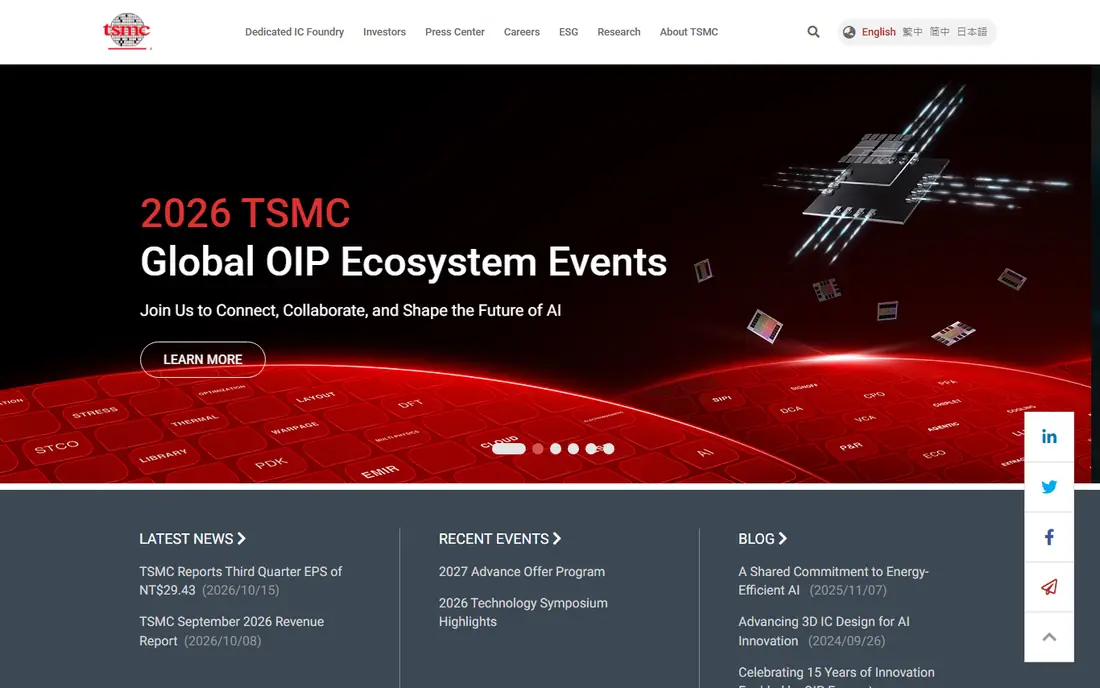
TSMC, or Taiwan Semiconductor Manufacturing Company, is the most important tech company most consumers never buy from directly. It manufactures advanced chips designed by Apple, NVIDIA, AMD, and many other firms, using process technology that few rivals can match at scale. That role makes TSMC central to smartphones, computers, AI hardware, and cars.
Because TSMC sells to other companies, consumers interact with it only through the products it helps build. Geographic concentration in Taiwan also raises supply chain questions, which is why TSMC has expanded manufacturing in other regions. For anyone trying to understand why a phone or AI chip performs as it does, TSMC's manufacturing strength is a key part of the answer.
What we like- Leading advanced chip manufacturing
- Makes chips for Apple, NVIDIA, and many others
- Strong process technology
Watch out for- Not a consumer brand, so buyers interact through other companies
- Geographic concentration raises supply chain questions
Starting priceSee website
Free planNo
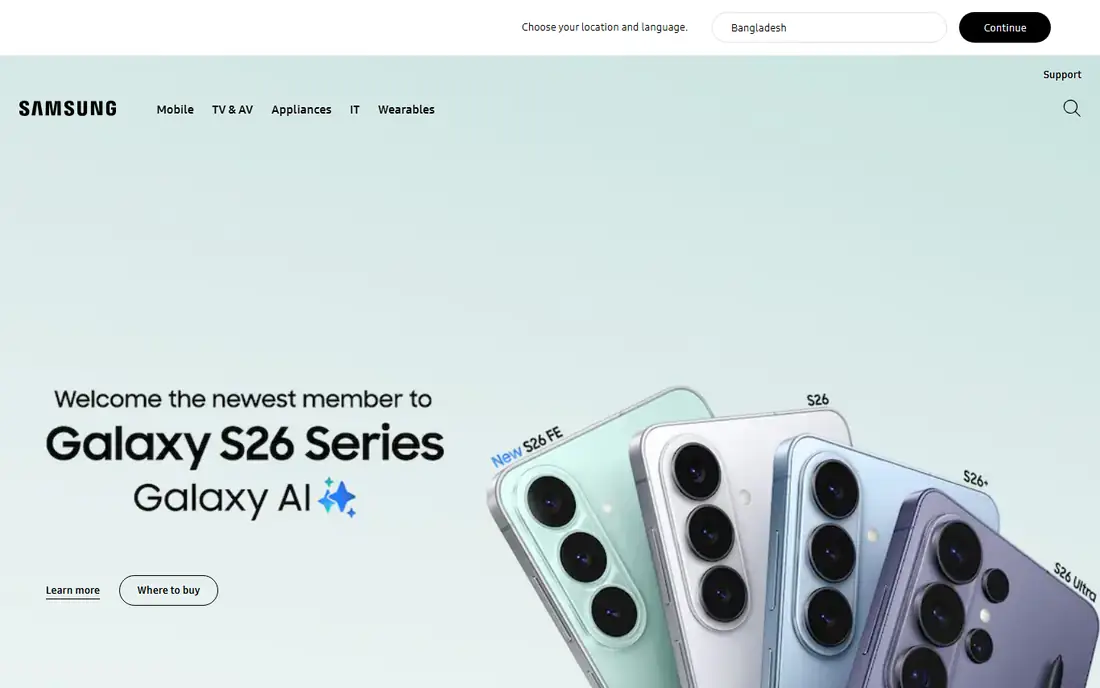
Samsung spans more of the tech industry than most rivals, from Galaxy phones and tablets to TVs, appliances, displays, and memory chips. Its flagship phones compete directly with Apple on cameras, screens, and performance, while its display and chip businesses supply other manufacturers as well. That breadth gives Samsung resilience when one product category slows.
Software is the mixed area. Samsung's Android experience, update timing, and preinstalled apps vary by device and region, which can frustrate buyers who expect a uniform experience. The sheer product range also makes choosing a model harder than choosing between a few Apple devices. For buyers who want Android choice, strong displays, and a wide price range, Samsung offers the broadest catalog.
What we like- Wide device range from phones to appliances
- Leading display and memory chip production
- Android flagship phones with strong cameras
Watch out for- Software experience varies by device and region
- Product range can make comparisons confusing
Starting priceSee website
Free planNo
Oracle serves enterprise buyers who run critical databases and business applications. Its database software has powered banks, telecoms, and governments for decades, and Oracle Cloud Infrastructure now hosts those workloads alongside newer cloud services. Business applications for finance, human resources, and supply chain extend Oracle beyond databases into daily enterprise operations.
Licensing is the main challenge, because Oracle's database and application licenses, support terms, and cloud pricing require careful review. Oracle has little consumer presence, so everyday users will encounter it only through the companies that use its software. For enterprises with large, mission-critical databases, Oracle's depth and support remain a major reason to stay.
What we like- Long-standing enterprise database strength
- Oracle Cloud Infrastructure for business workloads
- Applications for finance, HR, and supply chain
Watch out for- Licensing complexity
- Less consumer presence than rivals
- Cloud growth depends on enterprise migration
#10
IBM
Best for: Enterprise software and consulting
Visit ibm.com
Starting priceSee website
Free planNo
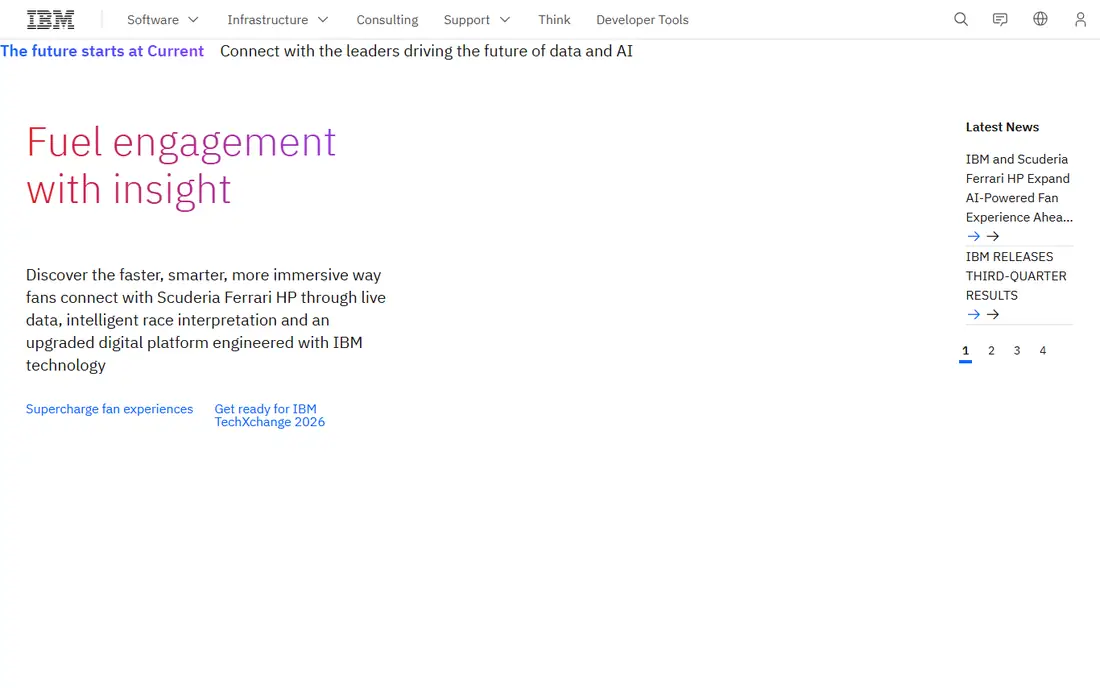
IBM focuses on large organizations that need software, hybrid cloud, and consulting together. Its acquisition of Red Hat strengthened its open-source and hybrid cloud position, letting clients run workloads across their own data centers and public clouds. IBM also serves regulated industries such as banking and healthcare, where compliance and consulting matter as much as software features.
Consumer buyers will find little to buy directly from IBM, and growth has been slower than at cloud-first rivals. The product portfolio is broad, which can make it hard for a new buyer to identify the right IBM offering. For enterprises that need a provider to modernize legacy systems, manage hybrid cloud, and meet regulatory requirements, IBM's consulting and software combination remains relevant.
What we like- Enterprise software, hybrid cloud, and consulting for large organizations
- Red Hat adds open-source strength
- Long history with regulated industries
Watch out for- Consumer presence is minimal
- Growth is slower than cloud-first rivals
- Product portfolio is complex
How we chose
We compared companies that shape the technology industry today, using company sites, product documentation, and public reporting on market position. We favored companies with a leading product, platform, or manufacturing role, and we included both consumer and enterprise leaders so the list covers devices, software, cloud, chips, and services. We did not rank by a single financial metric, because market value changes daily and does not by itself show which company suits a particular buyer.
How to use this list as a buyer, worker, or investor
Start with your role, because the best company for a shopper is rarely the best company for a cloud buyer. A shopper should compare devices, services, and total cost, including accessories and subscriptions. A business buyer should compare cloud pricing, integration with existing systems, support terms, and exit costs. A job seeker should compare teams, locations, and work types, not only company size.
Devices and services
Apple and Samsung dominate device choice, with Apple offering a tighter ecosystem and Samsung offering wider Android choice and price range. Alphabet's Android and Google services, plus Meta's social platforms, shape much of daily phone use regardless of device brand. Compare the full cost of a device, including storage, accessories, and services, before deciding on brand alone.
Cloud, chips, and enterprise software
Amazon Web Services, Microsoft Azure, and Google Cloud lead enterprise cloud, while Oracle and IBM suit organizations with large legacy databases or hybrid cloud needs. NVIDIA and TSMC drive chip performance, even though most buyers purchase their technology through other brands. For enterprise decisions, run a pilot, compare total cost for your actual workload, and confirm support and migration help before committing.
Careers and long-term fit
Large tech companies offer different career paths, from consumer product teams at Apple and Meta to cloud teams at Amazon and Microsoft, and chip teams at NVIDIA, TSMC, and Samsung. A company's size does not guarantee a good fit for a particular role, so research the specific team, manager, and product area. For long-term use, consider how easily you can export data, switch platforms, or move a workload, because lock-in costs grow over time.
Frequently asked questions
What is the best tech company overall?
There is no single best company, because the answer depends on your need. Apple leads consumer devices, Microsoft leads business productivity and cloud for many workplaces, Alphabet leads search and Android, Amazon leads e-commerce and cloud infrastructure, and NVIDIA leads AI chips.
Which tech company is best for software engineering careers?
Microsoft, Alphabet, Amazon, Meta, Apple, and NVIDIA all hire large software engineering teams, but the best fit depends on the team and product area. Candidates should compare the specific role, tech stack, location, and team, rather than choosing by company name alone. The other keywords in this topic, such as top software engineering companies, reflect that job-seeker interest.
Is TSMC a consumer company?
No. TSMC manufactures chips designed by other companies, including Apple and NVIDIA, rather than selling phones or computers directly to consumers. Its products appear inside devices and data centers made by its customers.
Which company leads in cloud computing?
Amazon Web Services, Microsoft Azure, and Google Cloud are the three largest cloud platforms, with different strengths in infrastructure, business software integration, and data services. Oracle Cloud Infrastructure and IBM hybrid cloud also serve enterprise workloads, especially for clients with legacy systems.
Are Apple and Samsung the only major phone makers?
No, but they are the largest in the US market. Other Android makers, including Google with its Pixel phones, also compete, and Chinese makers serve large markets outside the US. Apple and Samsung lead US sales, while Google Pixel appeals to buyers who want Google's software and camera processing.
How should I compare tech companies as an investor?
Compare revenue sources, growth areas, profit margins, and risks, not only market value or headlines. A company with diverse revenue, such as Microsoft or Alphabet, faces different risks from a company concentrated in one area, such as TSMC in chip manufacturing. This list is general information, not investment advice, and investment decisions should rest on current financial reports and professional advice where needed.
Sources we checked (10)
- https://www.apple.com
- https://www.microsoft.com
- https://abc.xyz
- https://www.amazon.com
- https://www.meta.com
- https://www.nvidia.com
- https://www.tsmc.com
- https://www.samsung.com
- https://www.oracle.com
- https://www.ibm.com
Is your product missing or out of date?
We review this list regularly. Vendors can request a listing, send updated pricing or ask about featured placement.

Shihab Mia · Founder, Rankite
Shihab has 5+ years in B2B and SaaS SEO. He writes Rankite's software buying guides from pricing pages, documentation and public user reviews. More about Shihab.