How we make this list: we compare pricing pages, product documentation and public user reviews. Ratings come from G2, Capterra or Trustpilot, with the date we checked them.
Key takeaways
- Card Ladder and Market Movers suit collectors who want sales history, price charts, and portfolio tracking.
- 130point suits collectors who want free, detailed eBay sold listings, including best-offer prices.
- eBay sold listings remain the raw source most pricing tools draw on, so check them directly for unusual cards.
- Card prices move fast with player performance, injuries, and grading populations, so treat any price as a snapshot, not a guarantee.
Quick comparison
| Tool | Best for | Starting price | Free plan |
|---|
 Card Ladder | Sales history and portfolio | See website | Yes |
 Market Movers | Price charts and tracking | See website | Yes |
 130point | Free eBay sold data | Free | Yes |
 eBay | Raw sold listings | Free | Yes |
 CollX | Scan and price collections | See website | Yes |
 Ludex | Scan and value cards | See website | Yes |
 Cardbase | Collection and price tracking | See website | Yes |
 Sports Cards Pro | Price guide and tracking | See website | Yes |
Is your product missing or out of date?
We review this list regularly. Vendors can request a listing, send updated pricing or ask about featured placement.
The best sports card apps for pricing
Starting priceSee website
Free planYes
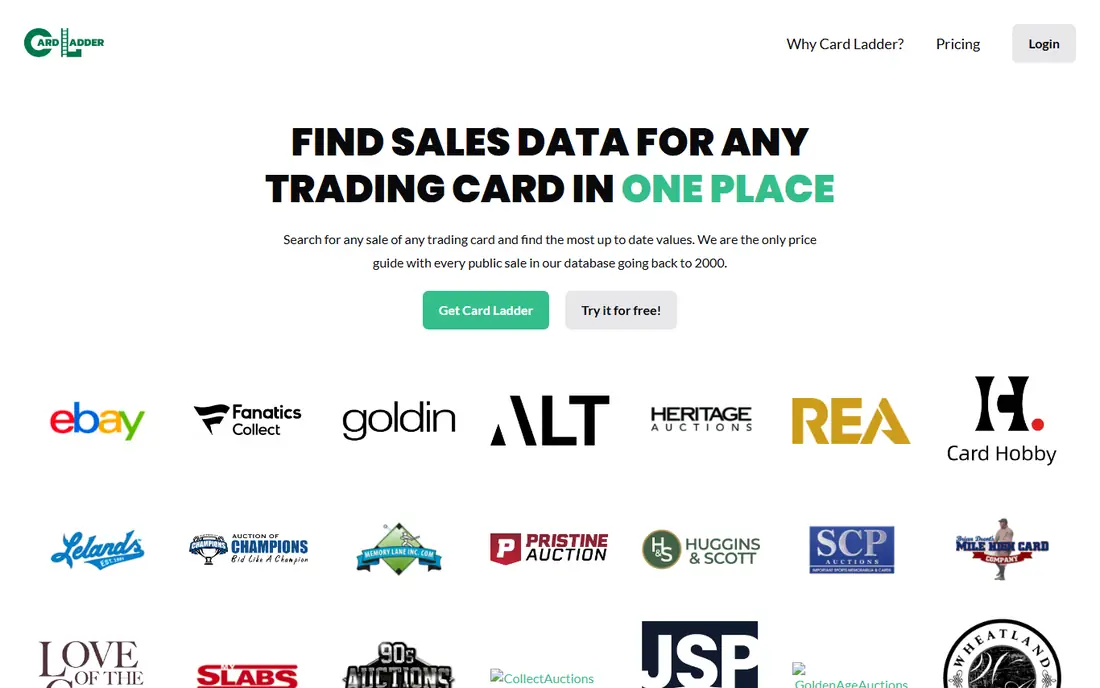
Card Ladder tracks sports card sales history with price charts, population data, and portfolio tools that show collection value over time. Collectors use it to research purchases, time sales, and monitor holdings, with data drawn from major marketplaces. Its charts reveal trends that single sold listings hide, such as gradual declines or sudden spikes after big games.
Premium features need paid tiers, and data depth varies: popular cards have rich histories, while obscure cards have thin data. Card Ladder also offers alerts that notify collectors when tracked cards hit target prices. Its mobile app also supports barcode scanning for sealed products. Barcode scanning also speeds sealed wax cataloging for dealers. Card Ladder fits serious collectors who want sales history and portfolio tracking in one tool.
What we like- Deep sales history
- Price charts
- Portfolio tracking
Watch out for- Premium features need paid tiers
- Data depth varies by card
Starting priceSee website
Free planYes
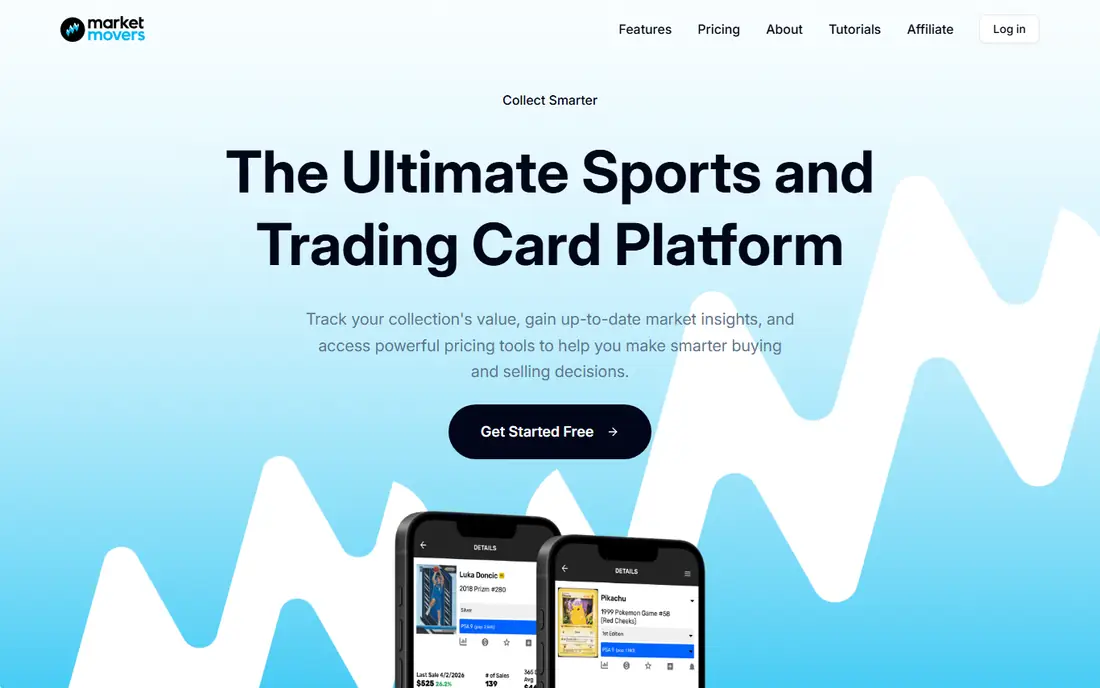
Market Movers, from Sports Card Investor, offers price charts, market movers lists showing cards rising or falling, and collection tracking for sports cards. Its movers lists help collectors spot trends early, while charts show price history across grades and parallels. The app-first experience suits collectors checking prices on phones at shows and shops.
Full data needs premium tiers, and desktop features trail the app. Market Movers also offers portfolio alerts that track collection value changes over time. Market Movers fits collectors who want trend spotting and price charts on mobile, especially at card shows.
What we like- Price charts
- Market movers lists
- Collection tracking
Watch out for- Premium tiers for full data
- App-first experience
Starting priceFree
Free planYes
130point shows eBay sold listings with a key advantage: it reveals actual best-offer accepted prices that eBay itself hides, giving collectors true sale prices rather than listed prices. Its search covers sports cards by player, set, and grade, with filters for auction versus best offer. Collectors use it free to verify prices before buying or selling.
It covers eBay only, offers no portfolio tools, and its interface is basic. 130point also lets users filter by auction, best offer, and graded versus raw sales. 130point fits every collector as a free verification tool, especially for checking true best-offer prices before a deal.
What we like- Free
- Shows best-offer prices
- Detailed sold listings
Watch out for- EBay only
- No portfolio tools
- Interface basic
Starting priceFree
Free planYes
eBay itself remains the raw source for card pricing: its sold listings filter shows completed sales across the largest card marketplace, with real transaction data for nearly every card. Collectors check sold listings directly to verify tool prices, especially for unusual cards where tools have thin data. Its scale makes it the baseline every pricing tool compares against.
Best-offer accepted prices are hidden on eBay itself, and raw listings need interpretation for condition, grading, and outliers. eBay also offers authentication for high-value cards, which reduces counterfeit risk on expensive purchases. eBay fits all collectors as the primary price source, used alongside tools that add charts and best-offer transparency.
What we like- Largest marketplace
- Sold listings filter
- Real transaction data
Watch out for- Best-offer prices hidden
- Raw data needs interpretation
Starting priceSee website
Free planYes
CollX lets collectors scan cards with a phone camera and receive instant estimated values, plus collection management and marketplace features. Its scanning speeds cataloging large collections, since manual entry for thousands of cards takes hours. New collectors use it to learn what their childhood collections might be worth.
Scan accuracy varies by card condition, lighting, and set, and values are estimates that need verification against sold listings. CollX also offers a marketplace where collectors can buy and sell scanned cards directly. CollX fits collectors cataloging collections quickly, especially beginners who want fast estimates before deeper research.
What we like- Scan cards with camera
- Instant values
- Collection management
Watch out for- Scan accuracy varies
- Values are estimates
Starting priceSee website
Free planYes
Ludex scans sports cards with a phone camera, returning values, comps, and marketplace options, plus collection management tools. Its scanning is fast and its values draw on marketplace data, helping collectors price cards at shows and shops in seconds. Dealers use it for quick buy prices, while collectors use it for collection values.
Values are estimates that need verification for high-value cards, and full features need premium tiers. Ludex also offers price history charts that show how scanned cards have moved over time. Ludex fits collectors and dealers who want fast scan-and-value at shows, with marketplace options attached.
What we like- Fast scanning
- Values plus marketplace
- Collection tools
Watch out for- Estimates need verification
- Premium tiers for full features
Starting priceSee website
Free planYes
Cardbase combines collection tracking with price data and community features, letting collectors catalog cards, watch prices, and connect with other collectors. Its database covers major sports and sets, with price histories for tracked cards and portfolio views for whole collections. Community features add trading and discussion around collections.
Its database is smaller than Card Ladder's, and price depth needs premium tiers. Cardbase also offers want lists that alert collectors when desired cards appear for sale. Cardbase fits collectors who want collection tracking plus community in one app, at accessible pricing.
What we like- Collection tracking
- Price data
- Community features
Watch out for- Smaller database than Card Ladder
- Premium tiers for depth
Starting priceSee website
Free planYes
Sports Cards Pro offers a price guide with collection tracking, covering major sports cards with values and histories for tracked items. Its free core features suit casual collectors who want a simple price reference without subscriptions, while paid tiers add deeper data. The site and app cover the basics well for everyday collecting.
Data depth is thinner than Card Ladder or Market Movers, and its interface is basic. Sports Cards Pro also covers graded card populations that help collectors judge scarcity. Sports Cards Pro fits casual collectors who want a free price guide and simple tracking, without premium tool costs.
What we like- Price guide
- Collection tracking
- Free core features
Watch out for- Data depth thinner than leaders
- Interface basic
How we chose
We compared app listings, product documentation, and public user reviews for sports card pricing tools that are actively available in 2026. We favored tools with real sales data, current availability, and clear pricing models. We checked data claims carefully, since estimates differ from actual sales, and we left out tools that no longer offer a current pricing product. Card prices change constantly, so verify values against recent sold listings before buying or selling.
Sold listings beat price guides every time
Price guides and app estimates lag the market, sometimes by weeks, while sold listings show what buyers actually paid yesterday. Before any significant purchase or sale, check recent sold listings on eBay and 130point for the exact card, grade, and parallel, ignoring outliers from shill bidding or mislabeled listings. A tool price without sold-listing support is a guess, however polished its chart looks.
Grade and parallel change everything
The same card in different grades or parallels can differ in price by orders of magnitude: a PSA 10 versus a PSA 9, or a base card versus a numbered parallel, are different markets. Always price the exact grade, parallel, and variation, not the card name alone, and confirm grading population data, since rising populations depress prices for common grades.
Watch for pump-and-dump patterns
Card markets attract hype cycles where influencers promote cards, prices spike, and early promoters sell into the surge. Treat sudden spikes with skepticism, check whether sales volume supports the price, and avoid buying at peaks driven by social media rather than player performance or scarcity. Patient collectors who buy after hype fades usually pay less.
Check condition and grading before trusting a price
Two cards with the same name can differ hugely in value by condition, centering, and grading company. Inspect corners, edges, and surface under good light, and confirm the grading label matches the listing before paying a graded price for a raw card. Condition surprises are the most common cause of buyer regret in card deals.
Track your collection for insurance and taxes
Collection values matter beyond trading: insurance claims need documented values, and sales may create tax obligations depending on jurisdiction and profit. Track purchase prices, sale prices, and current values in a tool like Card Ladder or Cardbase, keep receipts, and consult a tax professional about collectibles treatment before large sales.
Frequently asked questions
What is the most accurate sports card pricing app?
Card Ladder for deep sales history and portfolio tracking, verified against 130point and eBay sold listings for exact cards. No single app is perfectly accurate, so cross-check high-value cards across sources before dealing.
Is 130point really free?
Yes, 130point offers free eBay sold listings including best-offer prices. It covers eBay only and lacks portfolio tools, but as a free verification source it is unmatched for true sale prices.
Should I trust scan-and-value apps like CollX?
As estimates, yes, but verify high-value cards against sold listings before buying or selling. Scan accuracy varies by condition and lighting, and estimates lag fast-moving markets. For cards over a hundred dollars, always confirm with recent sold listings for the exact grade.
Why do the same cards show different prices across apps?
Apps draw on different data sources, time windows, and grade or parallel groupings, and some show asking prices while others show sold prices. Compare the exact card, grade, and parallel across apps, and trust recent sold listings most. When apps disagree sharply, the most recent sold listings for that exact variation usually settle the question.
Do I need a paid pricing tool as a casual collector?
Usually not. Free tools like 130point, eBay sold listings, and free tiers from Card Ladder and Market Movers cover casual pricing well. Paid tiers suit serious collectors tracking portfolios or trading frequently. Start free and upgrade only when tracking volume justifies the cost.
Sources we checked (8)
- https://www.cardladder.com
- https://www.marketmoversapp.com
- https://130point.com
- https://www.ebay.com
- https://www.collx.com
- https://www.ludex.com
- https://www.cardbase.com
- https://www.sportscardspro.com
Is your product missing or out of date?
We review this list regularly. Vendors can request a listing, send updated pricing or ask about featured placement.

Shihab Mia · Founder, Rankite
Shihab has 5+ years in B2B and SaaS SEO. He writes Rankite's software buying guides from pricing pages, documentation and public user reviews. More about Shihab.