How we make this list: we compare pricing pages, product documentation and public user reviews. Rankite is independent; if a vendor ever pays for a featured spot, that listing is clearly labeled Partner.
Key takeaways
- Most wholesale distributors outgrow QuickBooks or spreadsheets when multi-warehouse inventory, lot tracking and EDI orders collide. That is the moment an ERP or a serious inventory platform pays for itself.
- NetSuite, Acumatica, Epicor, Infor and Microsoft Dynamics 365 are the enterprise ERP answers, all quote-based, all implemented with partners, all overkill under roughly $10 million in revenue.
- SYSPRO and Blue Link ERP target the mid-market directly: distribution-focused ERP without the enterprise sales machine.
- Cin7 (from $349/month) and Fishbowl are the practical step up for smaller distributors that need multi-channel inventory and warehouse control now, not after a nine-month project.
- Nobody in this category publishes full pricing except Cin7. Budget implementation separately: it often matches or exceeds year-one license cost.
Quick comparison
| Tool | Best for | Starting price | Free plan |
|---|
 NetSuite NetSuite | Growing distributors standardizing on Oracle cloud ERP | See website (custom quote) | No |
 Acumatica Acumatica | Mid-market distributors that hate per-user pricing | See website (consumption-based, custom quote) | No |
 Epicor Epicor | Distributors and manufacturers with deep industry needs | See website (custom quote) | No |
 Infor Infor | Large distributors in manufacturing-adjacent verticals | See website (custom quote) | No |
 Microsoft Dynamics 365 Microsoft Dynamics 365 | Distributors already invested in Microsoft 365 and Azure | See website (custom quote) | No |
 SYSPRO SYSPRO | Mid-sized manufacturers and distributors wanting focused ERP | See website (custom quote) | No |
 Cin7 Cin7 | Multichannel sellers that need inventory control immediately | $349/month (per vendor FAQ) | Free trial |
 Fishbowl Fishbowl | QuickBooks and Xero users that have outgrown spreadsheets | See website (custom quote) | No |
 Blue Link ERP Blue Link ERP | Small to mid-size North American wholesale distributors | See website (custom quote) | No |
Is your product missing or out of date?
We review this list regularly. Vendors can request a listing, send updated pricing or ask about featured placement.
The best software for wholesale distribution
Here is the blunt version: most wholesale distributors buy too much software. A 30-person distributor does not need the same ERP as a national foodservice company, and the vendors will happily sell it to you anyway. The right system is the smallest one that handles your actual complexity: multiple warehouses, lot or serial tracking, EDI orders from big customers, and purchasing that does not run on someone's memory.
These nine tools span the real market. Five are full ERP suites for companies with real scale. Two are mid-market ERP built for distribution specifically. Two are inventory platforms for smaller operations that need control this quarter, not next year. Match the tool to your revenue and your warehouse count, not to the vendor's logo slide.
#1
NetSuite
Best for: Growing distributors standardizing on Oracle cloud ERP
Visit netsuite.com
Starting priceSee website (custom quote)
Free planNo
NetSuite is the default answer when a distributor outgrows entry-level systems and wants one cloud platform for financials, inventory, order management, warehousing and CRM. The distribution-specific depth is real: advanced inventory, lot and serial tracking, multi-location fulfillment, demand planning and EDI support for trading with large retailers. Because it is the market leader, finding implementation partners and experienced hires is easier than with any alternative here.
The cost is opacity and scale. NetSuite does not publish prices, implementations run through partners over several months, and the per-user model means a 50-person operation pays for 50 licenses. It is the right system for distributors doing tens of millions in revenue with multi-warehouse complexity. Below that, it is a lot of software for the problem.
What we like- The most widely adopted cloud ERP for distribution, with WMS, demand planning and CRM in one system
- Scales from mid-market to enterprise without replatforming
- Huge partner ecosystem for implementation and add-ons
Watch out for- Quote-only pricing with implementation projects measured in months
- Per-user licensing gets expensive as headcount grows
Starting priceSee website (consumption-based, custom quote)
Free planNo
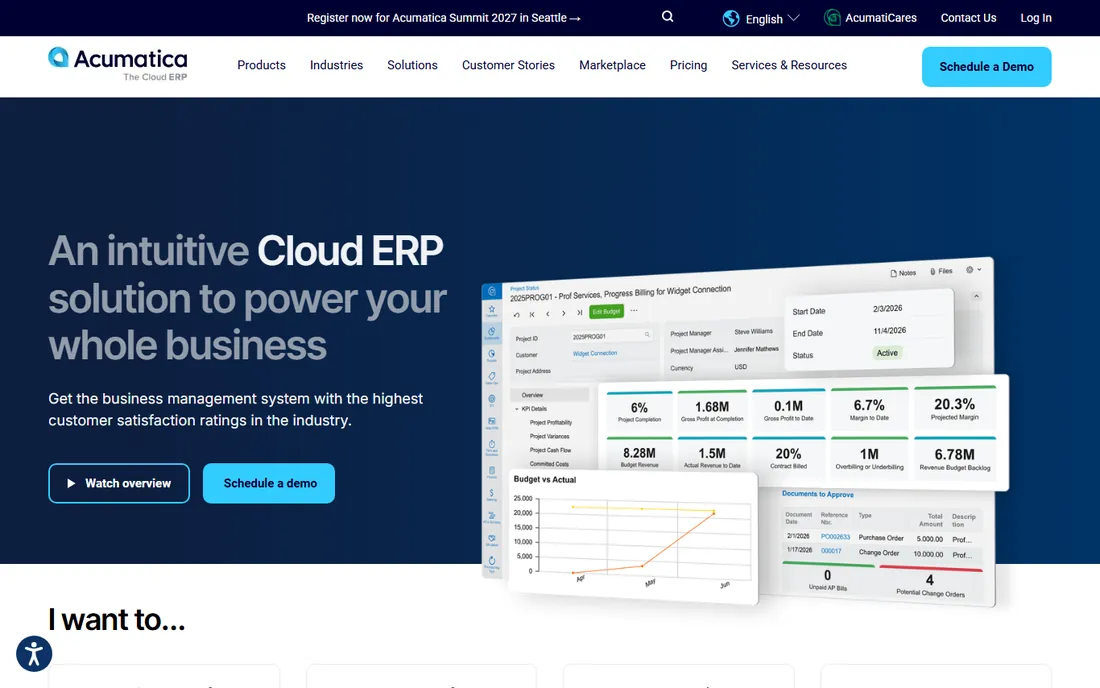
Acumatica's pitch is aimed directly at NetSuite's weak spot: you pay for computing resources consumed, not per user, so the whole warehouse can log in without a license discussion. The distribution edition covers inventory management, sales orders, purchase orders, replenishment and multi-warehouse fulfillment, and the platform is genuinely cloud-native rather than cloud-hosted.
The tradeoff is ecosystem size. Fewer partners and fewer third-party add-ons than NetSuite, and the consumption pricing model takes effort to forecast. For mid-market distributors who expect to add users steadily, the unlimited-user model is often the deciding factor. Get the consumption estimate modeled against your transaction volume before signing.
What we like- Unlimited users included, so adding warehouse staff costs nothing extra
- True cloud ERP with a distribution edition covering inventory, orders and purchasing
- Generally faster and cheaper to implement than NetSuite
Watch out for- Pricing is consumption-based and still requires a quote
- Smaller partner ecosystem than NetSuite or Microsoft
#3
Epicor
Best for: Distributors and manufacturers with deep industry needs
Visit epicor.com
Starting priceSee website (custom quote)
Free planNo
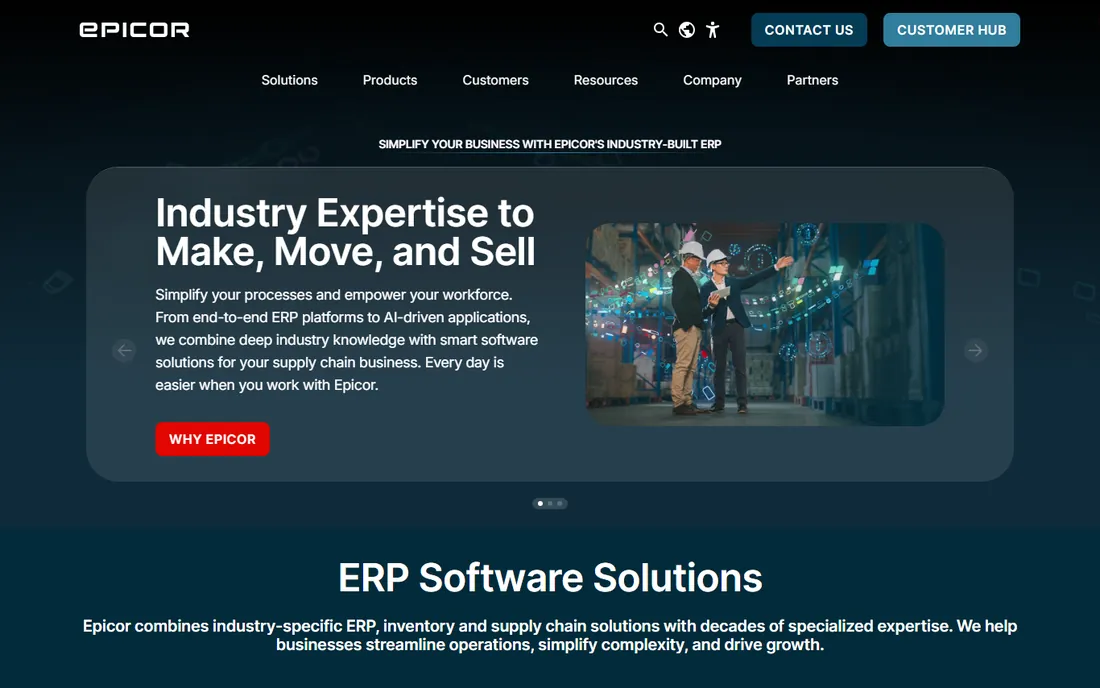
Epicor has spent decades building ERP for companies that make, move and sell physical goods, and it shows in the industry editions. Distributors get Prophet 21 lineage: pricing matrices, rebates, lot tracking, warehouse management and the kind of order workflows that generic ERPs need months of customization to replicate. The company reports over 23,000 customers and 150-plus countries.
The product family is wide enough to confuse buyers, so expect a guided sales process to land on the right edition. Implementation is an enterprise project with partner involvement. Choose Epicor when your distribution business has industry-specific workflows, like HVAC, electrical or industrial supply, that horizontal ERPs handle poorly.
What we like- Industry-specific editions (including Prophet 21 for distribution) with workflows built for the trade
- Strong inventory, warehouse and supply chain depth from decades in the sector
- 23,000-plus customers and 2.3 million daily users
Watch out for- Product line is broad and the right edition takes guidance to identify
- Enterprise sales and implementation process
#4
Infor
Best for: Large distributors in manufacturing-adjacent verticals
Visit infor.com
Starting priceSee website (custom quote)
Free planNo
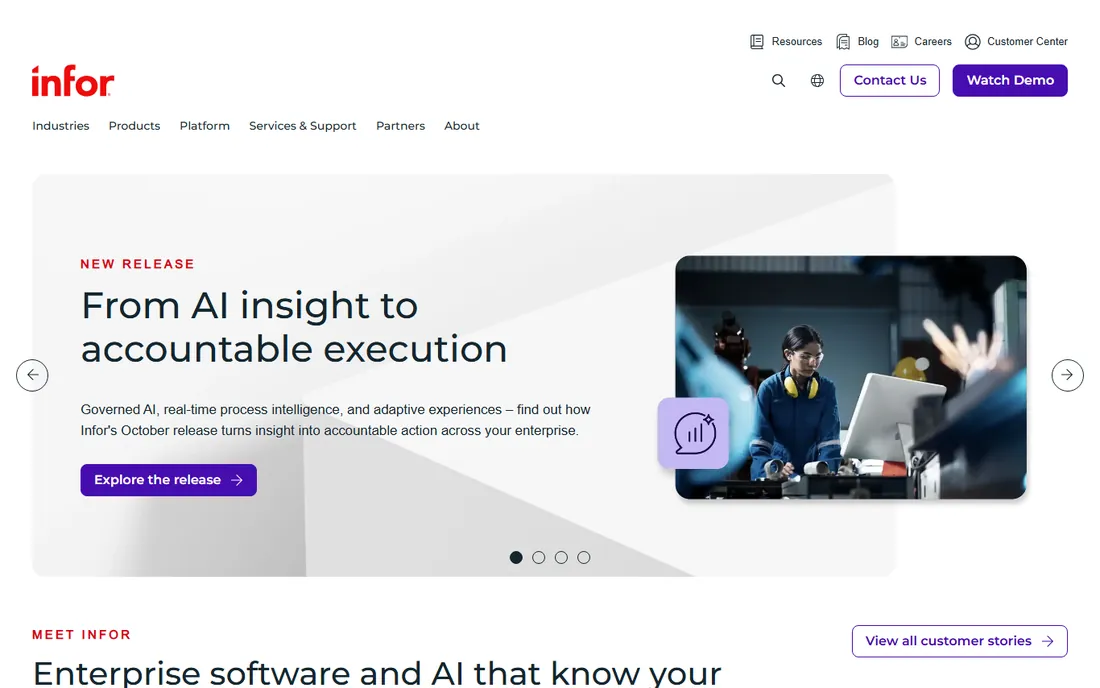
Infor's strategy is vertical depth: CloudSuites purpose-built for industries including distribution-heavy sectors like food and beverage, fashion and industrial manufacturing. Each arrives with micro-vertical configurations, which means less customization to match how your trade actually operates. Warehouse management, supply chain planning and financials run on one platform.
This is enterprise software in pricing and process. Smaller distributors will find the sales cycle and implementation scope disproportionate. But a large distributor in one of Infor's core verticals gets a system that understands its business out of the box, which is worth real money against a generic ERP plus a year of customization.
What we like- Industry CloudSuites with 60-plus micro-vertical configurations, so the software arrives pre-shaped for your trade
- Deep supply chain and warehouse management
- AI agents being embedded across the suite
Watch out for- Enterprise-only in practice, with long sales cycles
- Best value is inside a full Infor CloudSuite commitment
Starting priceSee website (custom quote)
Free planNo
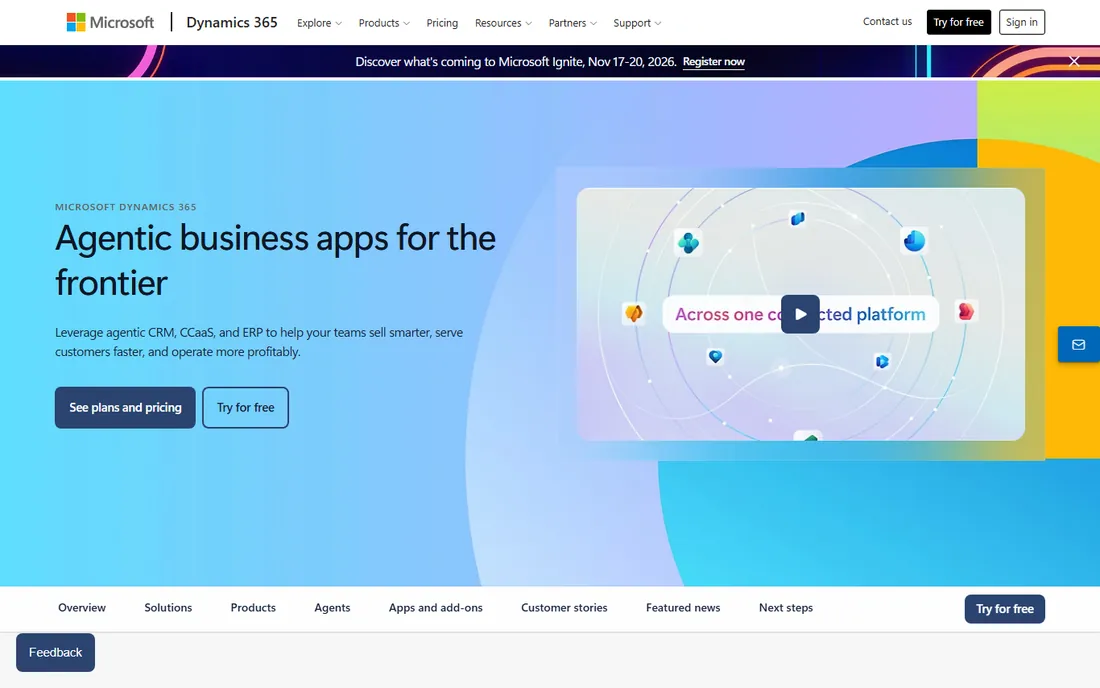
Dynamics 365's advantage is the ecosystem most distributors already own. Supply Chain Management handles inventory, warehousing, procurement and logistics; Finance covers the books; and everything connects to the Microsoft 365, Teams and Power BI stack your team already uses. Business Central offers a cheaper entry point for smaller distributors before graduating to the full Finance and Supply Chain apps.
The licensing is the complaint you will hear everywhere: per-app, per-user pricing that stacks quickly, with the real value spread across multiple modules. IT teams like the familiar administration. Finance teams should model the full module stack cost, not the headline per-user price of one app, before comparing against NetSuite or Acumatica.
What we like- Supply Chain Management and Finance modules with native Microsoft 365, Teams and Power BI integration
- Business Central as a lower-cost on-ramp for smaller companies
- Massive partner network and familiar tooling for IT teams
Watch out for- Licensing across modules gets complicated and expensive
- The full value needs several Dynamics apps, not one
#6
SYSPRO
Best for: Mid-sized manufacturers and distributors wanting focused ERP
Visit syspro.com
Starting priceSee website (custom quote)
Free planNo
SYSPRO has done one thing for almost 50 years: ERP for manufacturers and distributors. That focus shows in inventory control, lot traceability, purchasing and shop-floor-adjacent workflows that feel designed rather than configured. The pitch is tier-one capability sized for the mid-market, without the consulting-heavy implementation culture of the giants.
The honest limitation is ecosystem. Fewer partners, fewer integrations and less community knowledge than NetSuite or Dynamics, which matters when you need a specialist quickly. For a mid-sized distributor or light manufacturer that wants distribution ERP without an enterprise project, SYSPRO deserves a demo slot alongside Acumatica and Blue Link.
What we like- Built specifically for manufacturing and distribution, not adapted from generic ERP
- Tier-one-grade functionality without enterprise bloat, per the vendor's positioning
- Nearly 50 years focused on this exact customer
Watch out for- Smaller market presence in North America than the big suites
- Partner and add-on ecosystem is thinner
#7
Cin7
Best for: Multichannel sellers that need inventory control immediately
Visit cin7.com
Starting price$349/month (per vendor FAQ)
Free planFree trial
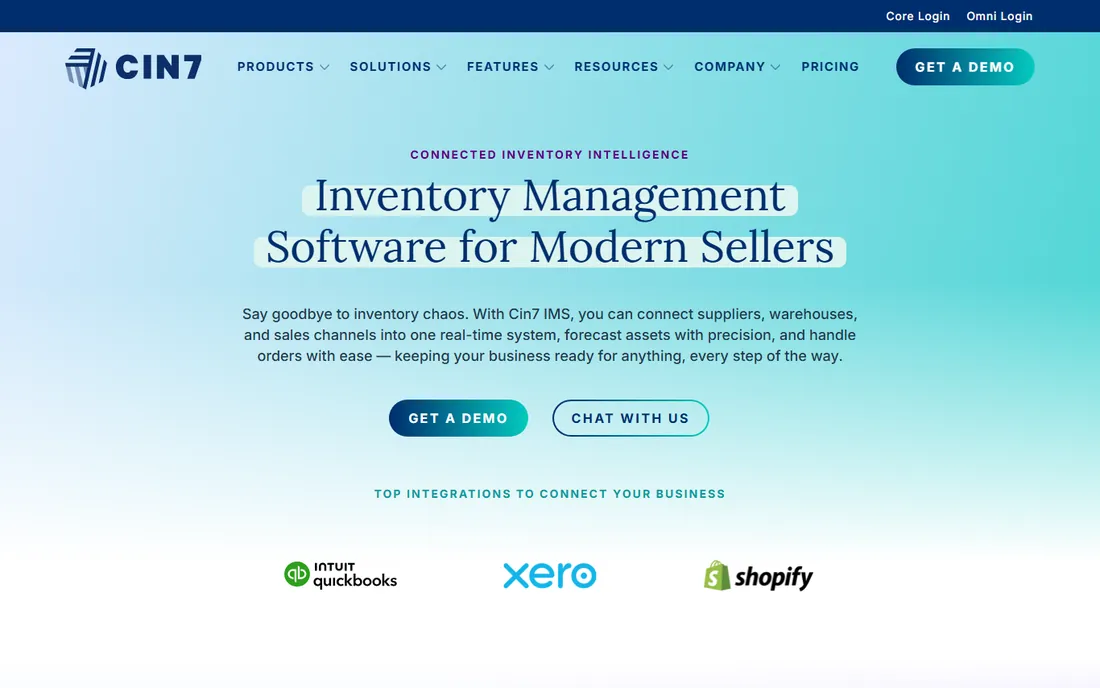
Cin7 is the practical answer for distributors and wholesalers selling across channels who cannot wait for an ERP project. It centralizes inventory, orders, purchasing and warehouse operations with real-time stock visibility, and the vendor publishes its starting price: $349 per month. Integrations cover the accounting and ecommerce tools smaller distributors actually use.
Know what it is not: a general ledger. Financials stay in QuickBooks or Xero, which is fine for most companies at this size and exactly the architecture Cin7 is designed around. If you need manufacturing depth or multi-entity financials, you need an ERP. If you need to stop overselling and know your margins by channel, Cin7 is the fastest path.
What we like- Published starting price of $349 per month, rare transparency in this category
- Real-time inventory across warehouses, retail, wholesale and ecommerce channels
- Native integrations with QuickBooks, Xero, Shopify, Amazon and 3PLs
Watch out for- It is inventory and order management, not full ERP, so financials stay in your accounting system
- Advanced tiers climb quickly for complex operations
Starting priceSee website (custom quote)
Free planNo
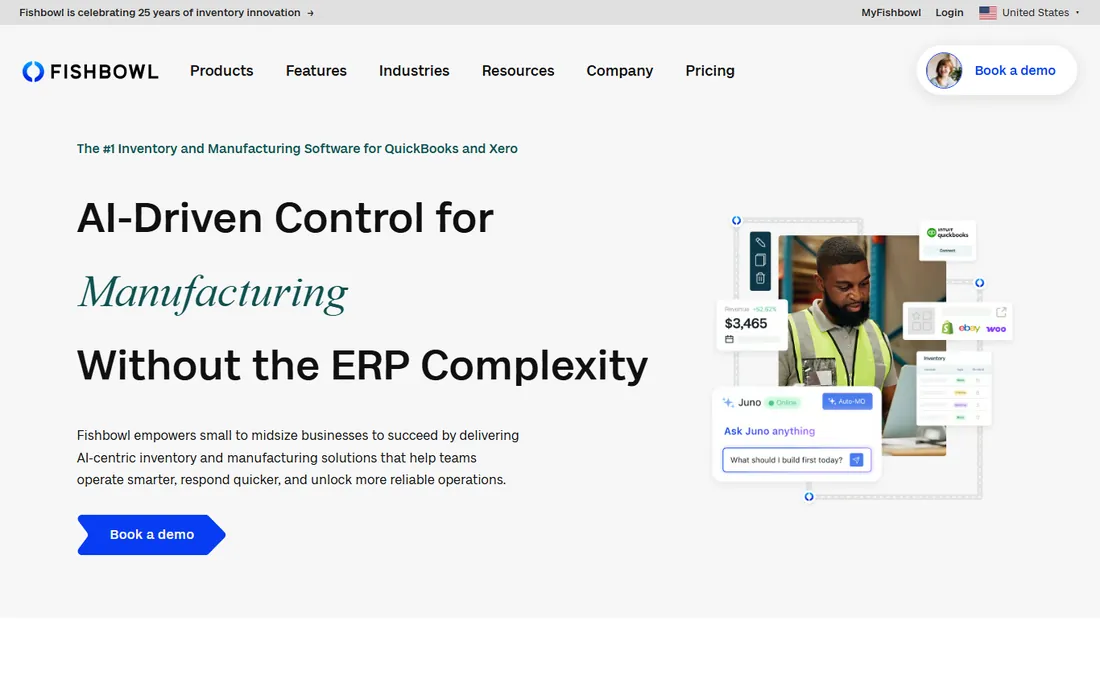
Fishbowl exists for one situation: your accounting is fine in QuickBooks or Xero, but inventory lives in spreadsheets and it is breaking. Fishbowl adds the missing layer: multi-warehouse inventory, purchase orders, sales orders, manufacturing, barcode scanning and lot tracking, all syncing with your accounting system. It is the most established product in this niche.
Pricing is quote-based, which is the main friction for a product aimed at smaller companies. And like Cin7, it is not an ERP: multi-entity financials and advanced planning stay out of scope. For a distributor doing a few million in revenue on QuickBooks, Fishbowl is the conventional upgrade path, with Cin7 as the cloud-native alternative to price against it.
What we like- The deepest QuickBooks and Xero inventory integration in this set, purpose-built as the warehouse layer those systems lack
- Multi-location inventory, manufacturing and barcode scanning
- US-based support with guided onboarding
Watch out for- No published pricing, so you still talk to sales
- Accounting stays in QuickBooks or Xero, which limits financial consolidation
Starting priceSee website (custom quote)
Free planNo
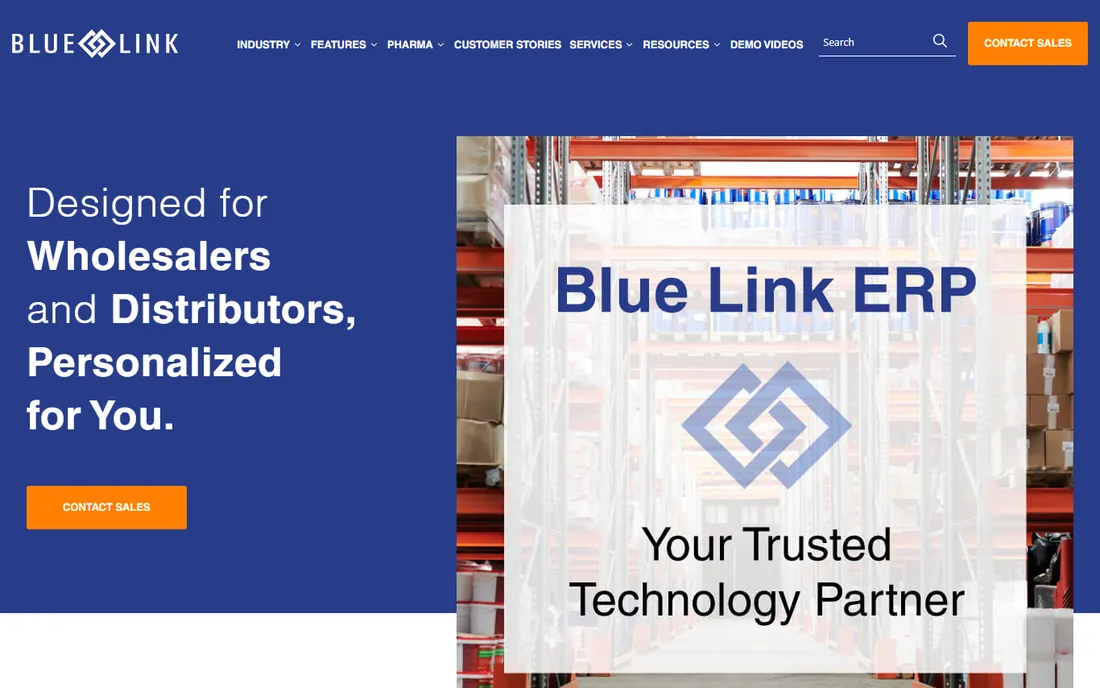
Blue Link is the specialist most buyers have never heard of: an all-in-one ERP built only for small and mid-size wholesalers and distributors, sold and implemented by its own in-house team. Inventory, accounting, order processing, warehouse management and CRM come as one system, sized and priced for companies the big suites ignore.
The tradeoffs are scale and ecosystem. It is North America-focused, the integration marketplace is narrower than the platforms above, and very large distributors will outgrow it. But a 20-person wholesale distributor gets a real ERP with people who understand the trade implementing it, instead of a scaled-down enterprise sale. If that describes your company, put Blue Link on the shortlist next to SYSPRO.
What we like- Built exclusively for wholesale and distribution SMBs, with inventory, accounting, order entry and warehouse management in one system
- North America-focused with in-house implementation
- Genuinely sized for smaller teams
Watch out for- Geographic focus means less fit outside North America
- Smaller vendor with a narrower integration marketplace
How we chose
We started with the searches buyers run: best software for wholesale distribution, distribution ERP software, wholesale inventory management software and ERP for distributors. For each candidate we opened the vendor's own site to confirm the product is current and distribution-focused, checked public reviews on G2 and Capterra and practitioner discussion on Reddit, and compared inventory depth, warehouse management, order workflows, ERP scope and company-size fit. Cin7's $349 per month starting price comes from the vendor's own FAQ; where no vendor-published price exists we wrote "See website."
The implementation question nobody asks early enough
Software selection gets the attention, but implementation decides the outcome. Before signing anything, get three numbers in writing: the license cost, the implementation services cost, and the annual support cost, each with its own increase caps. For the enterprise suites on this list, services commonly equal or exceed year-one licenses. Ask who staffs the project on the vendor side, how many similar distributors they have taken live, and what happens to your timeline when your data is messy, because it will be.
Data migration is where wholesale ERP projects stall. Item masters with duplicate SKUs, inconsistent units of measure, customer records with three spellings of the same company: clean this before the consultants arrive, or pay them to do it at consulting rates. Run the vendor's demo against your messiest real orders, not their script. And negotiate the exit before the entrance: how you get your data out, in what format, and what it costs.
What to buy at your size
Under $5 million in revenue with one or two warehouses, you almost certainly need Cin7 or Fishbowl, not an ERP. The problem is inventory accuracy and order flow, and an inventory platform solves it in weeks. Between $5 and $50 million with multiple locations, EDI customers or lot traceability requirements, the mid-market ERP tier fits: Acumatica, SYSPRO and Blue Link ERP are built for exactly this buyer. Above $50 million, or with multi-entity financials and complex planning, the enterprise suites earn their keep: NetSuite, Epicor, Infor and Dynamics 365.
The common mistake is buying one tier above your actual complexity because the demo was impressive. A distributor doing $8 million does not need multi-entity consolidation or AI demand planning; it needs accurate stock, fast order entry and purchasing that keeps shelves full. Buy the system that solves this year's problems with room for three years of growth. You can always move up; you cannot get back the year a too-big ERP consumes.
Frequently asked questions
What is the best software for a small wholesale distributor?
Cin7 (from $349/month) or Fishbowl, paired with QuickBooks or Xero for accounting. Both add multi-warehouse inventory, order management and purchasing without an ERP implementation project. Step up to Acumatica, SYSPRO or Blue Link ERP when you need full financials, multi-location planning or EDI at scale.
How much does wholesale distribution software cost?
Inventory platforms start around $349 per month (Cin7, published). Mid-market ERP is quote-based but typically lands in the low five figures annually. Enterprise ERP (NetSuite, Epicor, Infor, Dynamics 365) runs from tens of thousands to hundreds of thousands per year including implementation, which often matches year-one license cost. Always get license, services and support quoted as separate lines.
Do I need full ERP or just inventory management software?
If your accounting system works and the pain is stock accuracy, order flow and warehouse control, inventory software like Cin7 or Fishbowl is enough. Buy full ERP when you need multi-entity financials, advanced purchasing and planning, lot traceability for compliance, or EDI integration with large retail customers.
How long does distribution ERP implementation take?
Inventory platforms go live in weeks. Mid-market ERP typically takes two to four months. Enterprise suites take six to twelve months depending on module count, integrations and data quality. The biggest schedule risk is dirty item and customer master data, so start cleanup before implementation begins.
Which ERP is best for wholesale distributors already on QuickBooks?
Fishbowl is built as the inventory layer for QuickBooks, with the deepest integration of the options here. Cin7 also integrates with QuickBooks and adds stronger multichannel ecommerce support. Both let you keep QuickBooks for financials while fixing inventory, which is the right architecture until you genuinely outgrow QuickBooks itself.
What is EDI and do I need it?
EDI (electronic data interchange) is how large retailers and distributors exchange purchase orders, invoices and shipping notices electronically. If you sell to big-box retailers, grocery chains or industrial customers, they will require it. NetSuite, Epicor, Acumatica and Infor all support EDI; confirm the specific transaction sets your customers require during the demo.
Sources we checked (11)
- https://netsuite.com/
- https://acumatica.com/
- https://epicor.com/
- https://www.infor.com
- https://dynamics.microsoft.com/
- https://www.syspro.com
- https://cin7.com/
- https://www.fishbowlinventory.com
- https://bluelinkerp.com/
- https://www.g2.com/categories/erp-systems
- https://www.capterra.com/enterprise-resource-planning-software/
Is your product missing or out of date?
We review this list regularly. Vendors can request a listing, send updated pricing or ask about featured placement.

Shihab Mia · Founder, Rankite
Shihab has spent more than a decade helping SaaS and e-commerce brands grow through search. He writes Rankite's software buying guides from pricing pages, documentation and public user reviews. More about Shihab.