How we make this list: we compare pricing pages, product documentation and public user reviews. Ratings come from G2, Capterra or Trustpilot, with the date we checked them.
Key takeaways
- This guide treats visibility as online visibility: how easily buyers find your brand in search, maps, and mentions.
- Semrush and Ahrefs give the broadest SEO visibility data, while BrightEdge and Conductor suit enterprises.
- Brandwatch and Mention track brand mentions and sentiment beyond search rankings.
- Google Search Console is free and should be set up before you pay for any other tool.
Quick comparison
| Tool | Best for | Starting price | Free plan |
|---|
 Semrush | All-round SEO visibility | See website | Yes |
 Ahrefs | Backlink and keyword visibility | See website | Yes |
 Moz Pro | Accessible SEO tracking | See website | Yes |
 BrightEdge | Enterprise search visibility | See website | No |
 Conductor | Enterprise content visibility | See website | No |
 Brandwatch | Brand mentions and sentiment | See website | No |
 Mention | Affordable mention tracking | See website | Yes |
 Google Search Console | Free search performance data | Free | Yes |
Is your product missing or out of date?
We review this list regularly. Vendors can request a listing, send updated pricing or ask about featured placement.
The best software for visibility
#1Semrush
Best for: All-round SEO visibility4.4/5 on
G2 (4,035 reviews, checked Oct 2026)
Visit semrush.com
Starting priceSee website
Free planYes
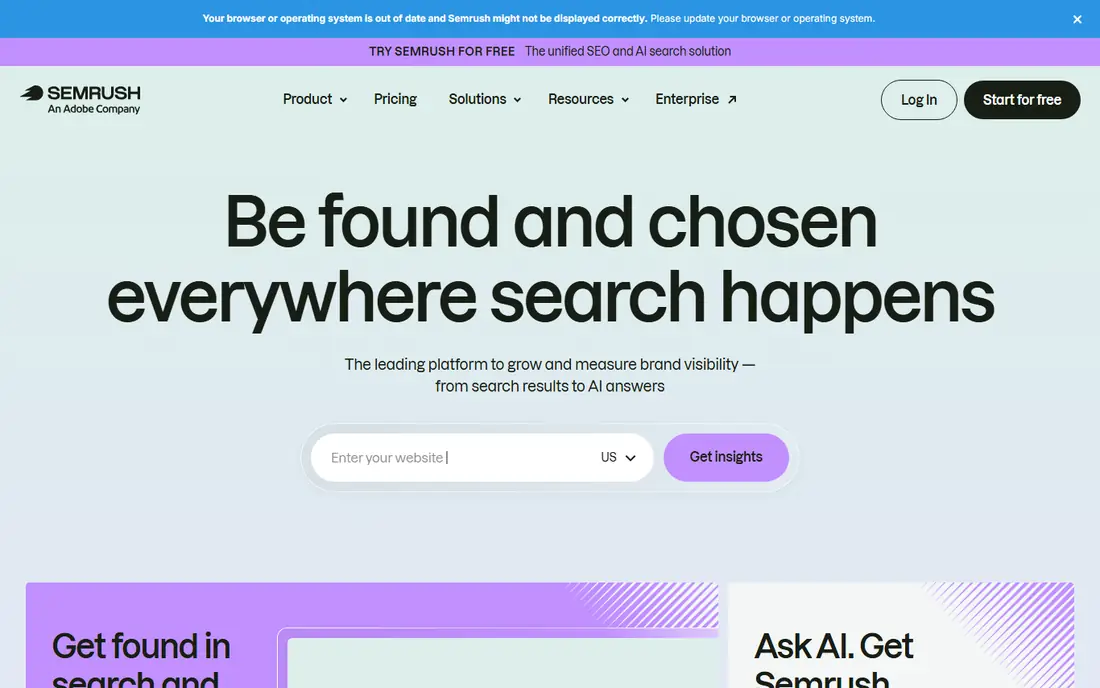
Semrush is the broadest visibility tool on this list. It tracks keyword rankings, estimates organic traffic, and shows visibility trends over time, so a team can see whether its search presence is growing or shrinking. Competitor analysis reveals which keywords rivals win and which pages drive their traffic, which turns vague visibility goals into specific targets.
The platform is large, and beginners can feel lost among dozens of reports. Pricing is tiered and published on the vendor site, with the most useful visibility features spread across plans. For a marketing team that wants one tool for search visibility, Semrush is the default choice, and its free tier gives a useful first look. Start with a small keyword set that mirrors real buyer searches, then expand as reports prove useful, rather than tracking thousands of terms nobody acts on.
What we like- Huge keyword and domain database
- Visibility trend reports
- Strong competitor analysis
Watch out for- Platform can feel large
- Full features need higher tiers
#2Ahrefs
Best for: Backlink and keyword visibility4.5/5 on
G2 (717 reviews, checked Oct 2026)
Visit ahrefs.com
Starting priceSee website
Free planYes
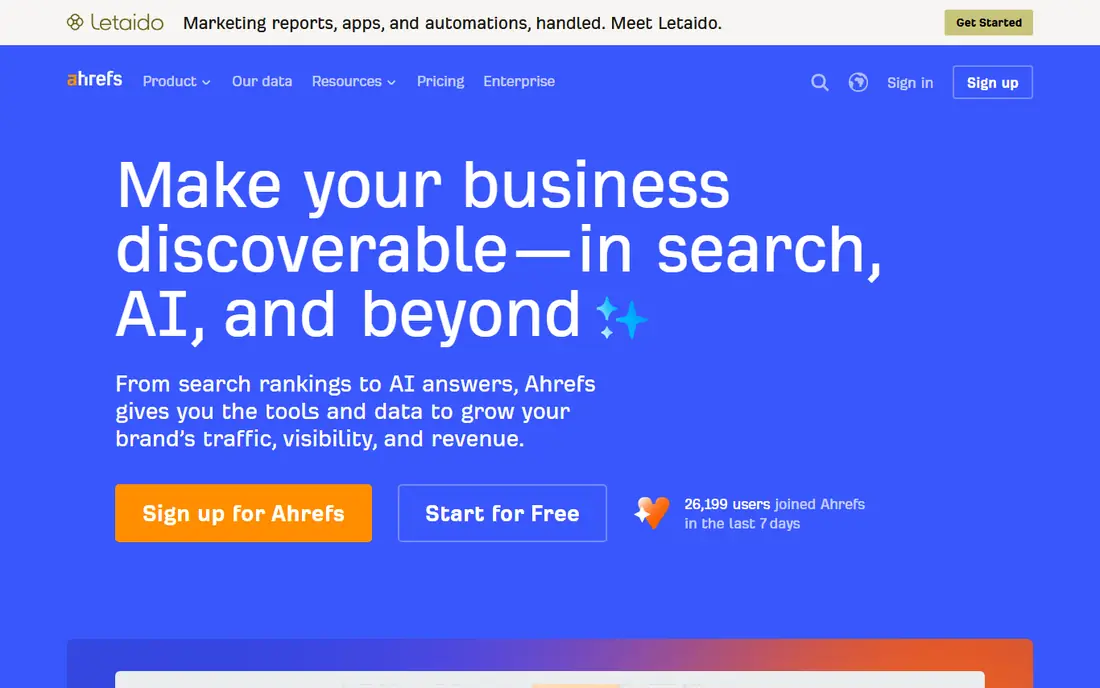
Ahrefs earns its place on backlink data. Its crawler maps who links to you and to your competitors, which matters because links remain a major visibility signal in search. Rank tracking and keyword research are strong too, and the interface is cleaner than many rivals, so reports are easy to read and share.
Pricing is tiered, and advanced features sit on higher plans, so small teams should check which tier covers their needs. There is a limited free tier for basic tools. If backlinks and competitor link profiles drive your visibility strategy, Ahrefs gives the most trusted data on this list. Its alerts also flag new and lost links quickly, which helps teams spot negative SEO or a broken partnership before rankings slip.
What we like- Excellent backlink data
- Reliable rank tracking
- Clean interface
Watch out for- Higher tiers gate advanced features
- No free full plan
#3Moz Pro
Best for: Accessible SEO tracking4.3/5 on
G2 (608 reviews, checked Oct 2026)
Visit moz.com
Starting priceSee website
Free planYes
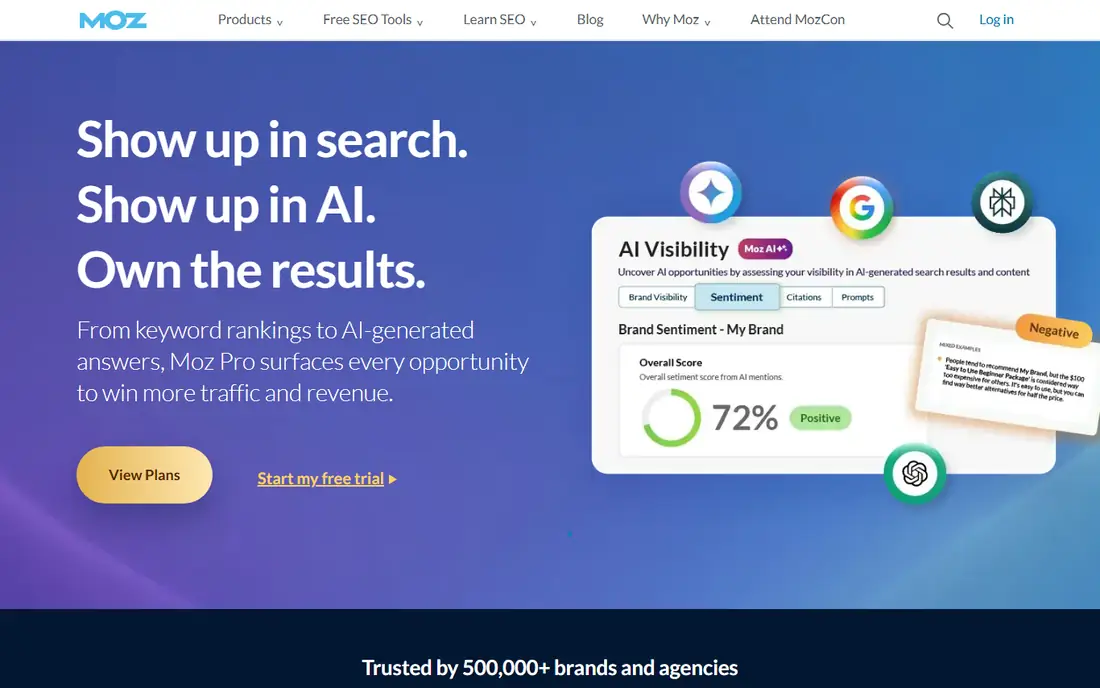
Moz Pro suits teams that want solid SEO visibility data without a steep learning curve. Its interface is approachable, its learning resources help beginners, and its domain authority metric gives a quick shorthand for site strength that many marketers still use in reports. Rank tracking, site audits, and keyword research cover the core visibility job.
The database is smaller than Semrush or Ahrefs, and some data updates lag behind rivals, so very large or fast-moving sites may notice gaps. Pricing is tiered and published on the vendor site, with a free trial. For small and mid-size teams that value clarity over raw data depth, Moz Pro is a good fit. Its site crawl and on-page guidance also help teams fix basic issues, such as missing titles and duplicate content, that quietly limit visibility.
What we like- Approachable interface
- Domain authority metrics
- Helpful learning resources
Watch out for- Database smaller than Semrush or Ahrefs
- Some data updates lag rivals
#4BrightEdge
Best for: Enterprise search visibility4.4/5 on
G2 (904 reviews, checked Oct 2026)
Visit brightedge.com
Starting priceSee website
Free planNo
BrightEdge is built for large companies managing thousands of pages and many markets. It tracks search visibility at scale, forecasts performance, and adds AI search features for teams watching AI answers alongside classic rankings. Reporting suits enterprise stakeholders who need rollups across regions, brands, and product lines.
Pricing is enterprise-level and quote-based, and onboarding takes time, so BrightEdge is not a small-team tool. For a large organization where search visibility is a board-level metric, BrightEdge gives the depth and scale that smaller tools cannot match.
What we like- Enterprise-grade visibility and forecasting
- AI search features
- Strong reporting for large sites
Watch out for- Enterprise pricing
- Onboarding takes time
#5Conductor
Best for: Enterprise content visibility4.5/5 on
G2 (826 reviews, checked Oct 2026)
Visit conductor.com
Starting priceSee website
Free planNo
Conductor pairs search visibility with content tools, helping enterprise teams see which content earns visibility and what to write next. Workflow features route tasks to writers and editors, and reporting connects content work to visibility outcomes, which helps justify content budgets to leadership.
Like BrightEdge, Conductor is priced for enterprises and takes onboarding effort. A small site will find it heavy and expensive. For a large content team that must prove content drives visibility, Conductor connects the two sides of that job in one platform.
What we like- Content and search visibility in one platform
- Strong workflow tools
- Enterprise reporting
Watch out for- Enterprise pricing
- More platform than a small site needs
#6Brandwatch
Best for: Brand mentions and sentiment4.4/5 on
G2 (730 reviews, checked Oct 2026)
Visit brandwatch.com
Starting priceSee website
Free planNo
Brandwatch tracks visibility beyond search, by monitoring brand mentions across social media, news, blogs, and forums, with sentiment analysis that shows whether mentions are positive, negative, or neutral. That view matters when reputation, launches, or crises shape visibility more than rankings do. Dashboards suit communications teams that report to leadership.
Pricing is enterprise-level, and building good queries takes skill, since a broad brand name returns noisy results without careful filters. For a company where public conversation drives visibility, Brandwatch gives the widest and most reliable mention coverage on this list.
What we like- Broad social and web mention coverage
- Sentiment analysis
- Strong dashboards
Watch out for- Enterprise pricing
- Setup and query building need skill
#7Mention
Best for: Affordable mention tracking4.3/5 on
G2 (442 reviews, checked Oct 2026)
Visit mention.com
Starting priceSee website
Free planYes
Mention is the accessible alternative to Brandwatch. It sends alerts when your brand appears online, covers web and social sources, and costs far less at entry level. Small businesses and startups can watch their name, products, and competitors without an enterprise contract, and the free tier gives a useful trial.
Depth trails Brandwatch on source coverage and analysis, and sentiment accuracy varies, so treat sentiment scores as a signal rather than a verdict. For a small team that wants to know when people talk about them, Mention is the practical choice.
What we like- Simple mention alerts
- Lower entry cost
- Covers web and social sources
Watch out for- Depth trails Brandwatch
- Sentiment accuracy varies
#8Google Search Console
Best for: Free search performance data4.7/5 on
G2 (513 reviews, checked Oct 2026)
Visit search.google.com
Starting priceFree
Free planYes
Google Search Console is free, direct from Google, and should be set up before you pay for any other visibility tool. It shows which queries bring clicks, which pages rank, and which indexing or mobile issues hurt visibility. That data comes from Google itself, so it is the most reliable record of your own search performance.
The limits are scope. Search Console covers only your own sites, with no competitor data and no mention tracking, so it complements rather than replaces paid tools. But no visibility stack is complete without it, and its price, free, makes it the easiest win on this list. Connect it with your analytics tool as well, so you can tie search clicks to real conversions instead of treating traffic as an end in itself.
What we like- Free
- Direct data from Google
- Shows queries, clicks, and indexing issues
Watch out for- No competitor data
- Limited to your own sites
How we chose
We compared vendor pricing pages, product documentation, and public user reviews, and we judged each tool on data coverage, accuracy, reporting, ease of use, and price. We interpreted visibility as online visibility, covering search rankings, traffic estimates, and brand mentions, and we stated that interpretation plainly because the topic alone is broad. We did not claim hands-on testing. Where pricing was tiered or quote-based, we wrote See website rather than publish a figure that could mislead. We also favored tools with a free tier or trial, since a visibility tool should prove its data on your own brand before you pay for a year.
What to check before you pick
Start with the visibility that matters to your business. A local shop needs maps and review visibility, a publisher needs search rankings and traffic, and a consumer brand needs mention and sentiment coverage. Picking a tool before defining that question leads to dashboards nobody reads.
Also check whether the tool tracks local visibility if you serve local customers, since national rankings hide the map results and local pack placements that drive foot traffic. Check review monitoring too, because ratings and recent reviews shape local visibility as much as rankings do. Also check data sources and limits. Rank trackers differ in keyword databases and update frequency, mention tools differ in source coverage, and free tiers limit tracked keywords or mentions. Check whether reports make sense to the people who act on them, and run a trial on your own brand and competitors before committing to an annual plan.
Frequently asked questions
What does visibility software actually measure?
It measures how easily buyers find your brand online, through search rankings, estimated organic traffic, local listings, and brand mentions. Different tools cover different slices, so match the tool to the slice that drives your revenue. A retailer lives or dies on local search and maps, a software company on comparison keywords, and a consumer brand on mentions and sentiment, so the right tool follows the revenue, not the feature list.
Is Google Search Console enough on its own?
For a small site, it may be enough to start, since it gives reliable data on your own search performance for free. Larger sites and competitive markets usually need a paid tool for competitor data, keyword research, and trend reporting.
How is AI search changing visibility tools?
AI answers now shape many purchase decisions before a click, so visibility tools are adding AI Overview and chatbot tracking. Teams should watch both classic rankings and AI visibility, since a brand can rank well in search yet be absent from AI answers.
How often should visibility be checked?
Weekly checks suit most teams, with monthly trend reports for leadership. Set alerts for sharp drops, such as a sudden ranking fall or a spike in negative mentions, so you can investigate the same day rather than discovering the problem in a monthly report. A visibility tool earns its price when it warns you early, not when it confirms what you already knew. Daily checks help during launches or crises, but daily ranking noise can mislead, so judge trends over weeks rather than single days.
Can one tool cover search and mentions?
No single tool on this list covers both search and mentions deeply. Most teams pair a search tool such as Semrush or Ahrefs with a mention tool such as Mention or Brandwatch, plus free Google Search Console for direct search data.
Sources we checked (8)
- https://www.semrush.com
- https://www.ahrefs.com
- https://www.moz.com
- https://www.brightedge.com
- https://www.conductor.com
- https://www.brandwatch.com
- https://www.mention.com
- https://search.google.com
Is your product missing or out of date?
We review this list regularly. Vendors can request a listing, send updated pricing or ask about featured placement.

Shihab Mia · Founder, Rankite
Shihab has 5+ years in B2B and SaaS SEO. He writes Rankite's software buying guides from pricing pages, documentation and public user reviews. More about Shihab.