How we make this list: we compare pricing pages, product documentation and public user reviews. Ratings come from G2, Capterra or Trustpilot, with the date we checked them.
Key takeaways
- USPS usually wins for light parcels under a few pounds, especially to residential and rural addresses.
- UPS and FedEx usually win for heavier, time definite, and business parcels, with stronger tracking and guarantees.
- DHL Express usually wins for international express delivery, especially to Europe and Asia.
- Regional carriers such as OnTrac and GLS can beat national rates in their coverage zones, but coverage is limited.
- Dimensional weight, residential surcharges, and delivery area fees often matter more than the base rate.
Quick comparison
| Tool | Best for | Starting price | Free plan |
|---|
 UPS | Business, heavy, and time definite parcels | See website | No |
 FedEx | Express, healthcare, and long distance parcels | See website | No |
 USPS | Light, residential, and rural parcels | See website | No |
 DHL Express | International express parcels | See website | No |
 OnTrac | Regional one to two day delivery | See website | No |
 GLS US | West Coast and regional parcels | See website | No |
 Amazon Shipping | Light parcels in major metro areas | See website | No |
 Sendle | Small businesses shipping light parcels | See website | No |
Is your product missing or out of date?
We review this list regularly. Vendors can request a listing, send updated pricing or ask about featured placement.
The best shipping companies for packages
#1
UPS
Best for: Business, heavy, and time definite parcels
Visit ups.com
Starting priceSee website
Free planNo
UPS is the workhorse for business shipping in the US. Its ground network covers the country, its air services offer next day and second day options, and its access point network gives recipients pickup alternatives when home delivery fails. For parcels in the 3 to 50 pound range, especially business to business shipments, UPS often combines reliability, tracking detail, and negotiated account discounts better than any single rival.
The cost catches are surcharges. Residential delivery, additional handling for oversize or awkward parcels, and delivery area fees can raise the final price well above the base quote, so shippers should model those fees for their actual parcel mix. Large, light parcels also suffer under dimensional weight pricing. If you ship mostly business parcels and value time definite delivery, UPS is a strong default carrier.
What we like- Dense nationwide network
- Strong B2B delivery
- Access points and pickup options
Watch out for- Residential and additional handling surcharges add up
- Dimensional weight rules are strict for large light parcels
#2
FedEx
Best for: Express, healthcare, and long distance parcels
Visit fedex.com
Starting priceSee website
Free planNo
FedEx excels when speed and distance matter. Its express network handles overnight and two day delivery across the country, and its ground service covers residential and business delivery in one to five days depending on zone. Healthcare, high value, and time sensitive shippers often choose FedEx for its tracking, signature options, and delivery reliability on long routes, where air capacity gives it an edge.
Pricing follows the same pattern as UPS: base rates are only part of the bill, and delivery area, residential, and oversize surcharges matter. FedEx has also expanded delivery area surcharges in recent rate changes, so rural deliveries need a specific quote. For express and long distance parcels, and for shippers who need strong air reliability, FedEx is a top choice.
What we like- Strong air network for express delivery
- Good for long distance zones
- Reliable tracking and delivery options
Watch out for- Delivery area surcharges have expanded
- Oversize and additional handling fees apply to many parcels
Starting priceSee website
Free planNo
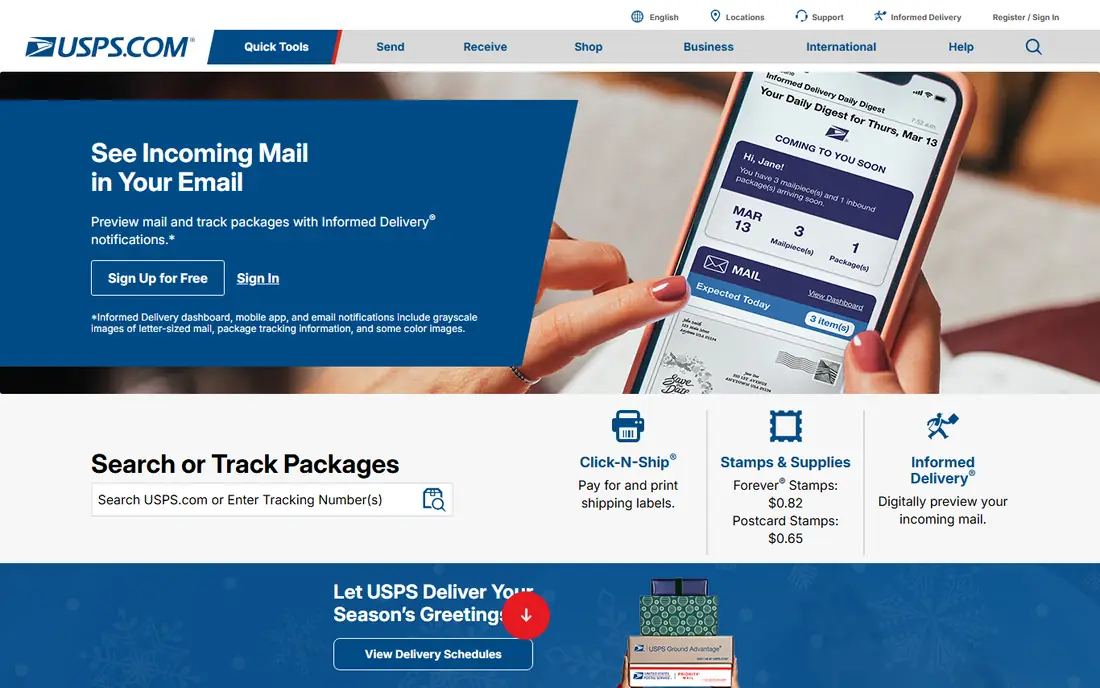
USPS remains the cheapest option for many light parcels, especially under a few pounds, to residential addresses, PO Boxes, and rural areas that private carriers serve at a surcharge or not at all. Ground Advantage and Priority Mail cover most domestic needs, and Saturday delivery is included in many services without an extra fee. For small businesses shipping books, apparel, accessories, and other light goods, USPS often wins on cost alone.
The limits are tracking detail and consistency. USPS tracking can have scan gaps, and service quality varies by region and facility, so high value or time critical parcels may need a private carrier. Weight also matters: once a parcel grows heavy, private carrier rates can become competitive. For light, residential, and rural parcels, USPS is the carrier to beat.
What we like- Complete national coverage including PO Boxes and rural areas
- Saturday delivery
- Low cost for light parcels
Watch out for- Tracking is less detailed than private carriers
- Service can vary by region
- Steep surcharges above certain weights
#4
DHL Express
Best for: International express parcels
Visit dhl.com
Starting priceSee website
Free planNo
DHL Express is the international specialist in this list. Its global network, customs clearance expertise, and express transit times make it the default for urgent international parcels, especially to Europe, Asia, Africa, and the Middle East, where other carriers may take longer or hand off to a local partner. Tracking is detailed, and delivery to major international cities is often one to three business days.
Domestically, DHL is less complete. Its US domestic parcel presence is smaller than UPS, FedEx, or USPS, and its eCommerce service often hands the final mile to USPS, which adds days. For a US business shipping internationally, DHL Express should be quoted for every urgent route. For domestic parcels, use it only where its network and pricing fit.
What we like- Global network covering 220 countries
- Fast international transit, often one to three days
- Strong customs expertise
Watch out for- Domestic US parcel service is limited compared with UPS and FedEx
- International rates are higher than economy options
Starting priceSee website
Free planNo
OnTrac, now combined with LaserShip, offers regional delivery that can beat national carriers on speed and price inside its coverage area. In dense East, Midwest, and West Coast zones, one to three day delivery is common, and dimensional rules are often more forgiving than national carriers for compact parcels. High volume direct to consumer shippers use OnTrac as a second carrier to cut costs on regional orders.
Coverage is the limit. OnTrac does not cover the whole country, so a shipper still needs a national carrier for orders outside its zones. Service quality also varies by local facility, so test it with your actual parcel mix before shifting volume. For regional, high volume, direct to consumer shipping, OnTrac is a valuable addition to a multi carrier mix.
What we like- Fast delivery in coverage zones
- Rates often 10 to 25 percent below national carriers
- Modern tracking API
Watch out for- Coverage limited to about 31 states and 75 percent of US households
- Not a national solution alone
Starting priceSee website
Free planNo
GLS US, formerly GSO, focuses on the West Coast and a growing Midwest footprint, with dense local routing in California. Parcels in the 2 to 30 pound range, especially fragile or mid value goods, benefit from predictable one to two day delivery in California and two to four days in wider coverage. Surcharges are generally lower than national carriers, and tracking and API tools are solid for a regional carrier.
The obvious limit is geography. A shipper with national orders cannot rely on GLS alone, and East Coast deliveries need another carrier. For a West Coast business, or a national business that can split shipments by region, GLS offers a cost and speed advantage that national carriers struggle to match in its home territory.
What we like- Strong California and West Coast routing
- One to two day delivery in core zones
- Lower surcharges than national carriers
Watch out for- Coverage is regional and growing, not national
- Less suited to East Coast or rural national shipping
Starting priceSee website
Free planNo
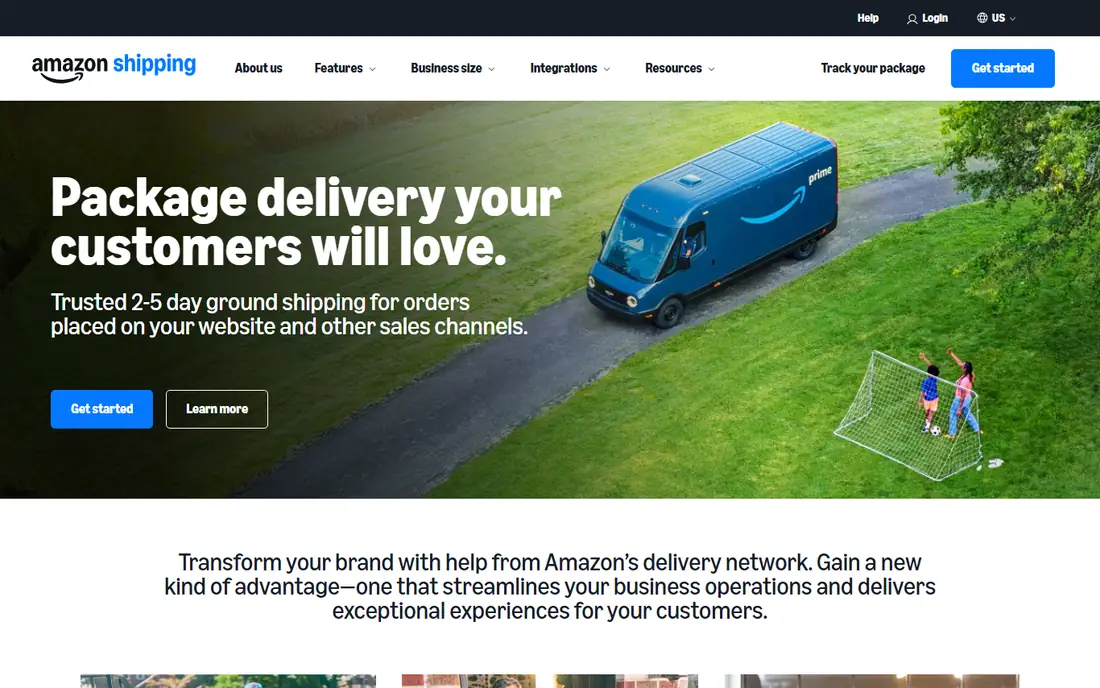
Amazon Shipping has grown from a delivery network for Amazon orders into a shipping option for outside sellers in major metro areas. For light parcels in zones two to five, in dense urban areas, its flat rate card can beat national carrier list rates, and same day or next day delivery is possible where its micro fulfillment network is dense. Sellers already using Amazon fulfillment may find integration straightforward.
Access and terms are still evolving, and geography is limited compared with national carriers. Rural, heavy, and oversize parcels are not its strength, and terms can change as the program expands. For a seller with light, urban, metro focused volume, Amazon Shipping is worth a quote. For national, heavy, or rural shipping, keep a national carrier as your main option.
What we like- Competitive rates for light parcels in major metros
- Same day and next day options in dense areas
- Familiar delivery network
Watch out for- Limited geography and evolving terms
- Not a full national replacement for UPS or FedEx
Starting priceSee website
Free planNo

Sendle suits small businesses that ship light parcels and want simple, flat rate pricing without negotiating a carrier account. Pricing is based on parcel size bands, which makes it easy to quote a customer at checkout, and there are no minimum volume requirements. The service uses partner networks for pickup and delivery, which keeps costs down for low volume sellers.
Delivery speed and coverage are the trade offs. Sendle is not an express service, and its US network is narrower than UPS, FedEx, or USPS, so urgent, heavy, or rural parcels need another carrier. For a small shop shipping a few light parcels a week and valuing predictable pricing, Sendle is a useful, low friction option.
What we like- Flat rate pricing by size, not weight alone
- No account minimums for small sellers
- Carbon neutral delivery positioning
Watch out for- US coverage and service options are narrower than national carriers
- Delivery times are longer than express services
How we chose
We compared carrier service pages, rate guides, coverage maps, tracking and API tools, and public reviews from shippers, alongside 2026 general rate increase reporting. We favored carriers with a clear strength for a stated parcel type, a national or strong regional network, and a published service range, and we marked pricing as See website because parcel rates depend on weight, dimensions, zone, and account discounts.
How to choose a carrier for your parcels
Start with your parcel profile, not a carrier ranking. List your top five shipment types by weight, dimensions, destination zone, and required speed, then get live quotes from at least three carriers for each type. A carrier that wins for a two pound residential parcel may lose for a 30 pound business parcel, and the difference often comes from surcharges, not base rates.
Next, check the total landed cost. Add residential fees, delivery area fees, additional handling, dimensional weight, insurance, and signature costs to the base rate, because those items decide the real winner. Finally, test service before you commit volume: ship a small batch, track delivery times, check tracking accuracy, and measure damage and customer contacts. A carrier that looks cheap on paper but generates support tickets is not cheap.
Questions to ask every carrier
- What is the total cost for my exact parcel, including all surcharges.
- What is the dimensional divisor, and how does it affect my parcel sizes.
- What delivery guarantee applies, and what happens if it is missed.
- How detailed is tracking, and what API or webhook options exist.
- What insurance, signature, and pickup options are available, and at what cost.
Frequently asked questions
What is the cheapest way to ship a small package in the US?
For light parcels, USPS Ground Advantage is often cheapest, especially to residential and rural addresses. For a small business with regular volume, a discount service or a negotiated account rate with UPS or FedEx can beat retail USPS prices, so compare retail and account rates for your volume.
Which carrier is fastest for domestic packages?
FedEx and UPS express services offer overnight and two day delivery nationally, while Amazon Shipping offers same day or next day in dense metro areas. USPS Priority Mail Express also offers overnight to many addresses, but guaranteed express services from UPS and FedEx are usually more predictable for business parcels.
Can I ship to a PO Box with UPS or FedEx?
Generally no, because UPS and FedEx require a street address for most services. USPS delivers to PO Boxes, and hybrid services that hand the final mile to USPS can also reach a PO Box, so use USPS for PO Box destinations.
What is dimensional weight?
Dimensional weight is a pricing method that charges based on parcel size as well as actual weight, using a divisor set by the carrier. A large, light parcel, such as a pillow in a big box, can be billed at a higher dimensional weight than its scale weight, so use the smallest suitable box.
Should I use one carrier or several?
Most growing shippers use several carriers, assigning each shipment type to the carrier that wins on cost and speed for that type. A multi carrier approach also protects you when one carrier has delays, rate increases, or coverage gaps in a region.
How do I get discounted shipping rates?
Open a business account, link it to a shipping platform, and ask for negotiated rates once your volume grows. Small sellers can also use discount services and commercial USPS rates through platforms, which often beat retail counter prices without a volume commitment.
Sources we checked (9)
- https://www.ups.com
- https://www.fedex.com
- https://www.usps.com
- https://www.dhl.com
- https://www.ontrac.com
- https://gls-us.com
- https://shipping.amazon.com
- https://www.sendle.com
- https://shopappy.com/logistics/shipping-fulfillment/carriers-2026
Is your product missing or out of date?
We review this list regularly. Vendors can request a listing, send updated pricing or ask about featured placement.

Shihab Mia · Founder, Rankite
Shihab has 5+ years in B2B and SaaS SEO. He writes Rankite's software buying guides from pricing pages, documentation and public user reviews. More about Shihab.