How we make this list: we compare pricing pages, product documentation and public user reviews. Rankite is independent; if a vendor ever pays for a featured spot, that listing is clearly labeled Partner.
Key takeaways
- Seismic and Showpad are the enterprise defaults, but both now come with merger baggage worth asking about on a demo.
- Allego and Mindtickle lead on training and coaching; pick them when rep readiness is the actual problem.
- Pitcher is the field-sales specialist for regulated industries that need offline, compliant selling.
- Enablix, ClientPoint and Paperflite give smaller teams modern enablement without enterprise contracts.
- Almost nobody publishes pricing, so budget for a sales cycle just to get a quote.
Quick comparison
| Tool | Best for | Starting price | Free plan |
|---|
 Seismic Seismic | Enterprise content governance at scale | See website | No (demo available) |
 Showpad Showpad | Field sales teams that sell in person | See website | No (demo available) |
 Allego Allego | Video-based training and AI coaching | See website | No (demo available) |
 Mindtickle Mindtickle | Data-driven rep readiness programs | See website | No (demo available) |
 Mediafly Mediafly | Revenue teams wanting content plus value selling | See website | No (demo available) |
 Pitcher Pitcher | Regulated field sales with offline needs | See website | No (demo available) |
 Enablix Enablix | Usage-based enablement without seat caps | See website | No (demo available) |
 ClientPoint ClientPoint | Digital sales rooms with proposal automation | See website | Yes (free plan) |
 Paperflite Paperflite | AI-native content and coaching for modern sellers | See website | No (demo available) |
Is your product missing or out of date?
We review this list regularly. Vendors can request a listing, send updated pricing or ask about featured placement.
The best sales enablement software
Starting priceSee website
Free planNo (demo available)
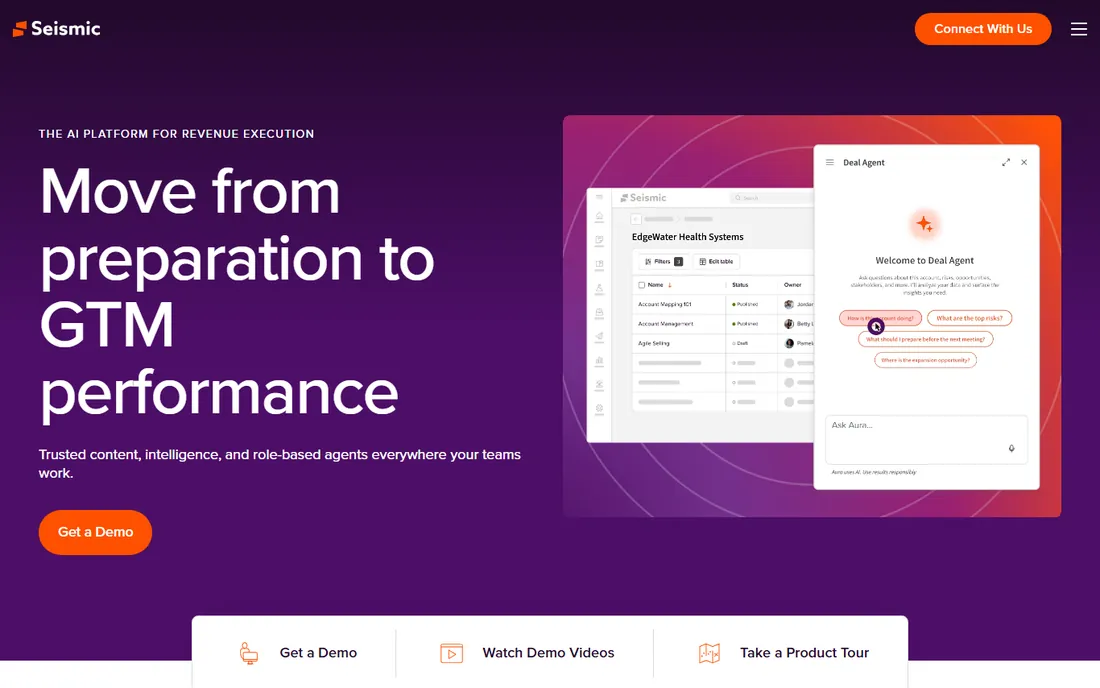
Seismic is the platform large enterprises buy when marketing has thousands of assets and no idea which ones sales actually uses. Its content intelligence tracks what buyers engage with, feeds that back to reps as deal signal, and automates personalized content assembly. The compliance tooling is the reason banks and insurers pick it: approvals, audit trails and expiring content are handled properly. Seismic now also owns Highspot, after the two came together, which makes it the biggest vendor in the category by a distance.
The honest catch is everything around the software. Pricing is custom enterprise, with third-party estimates in the tens of thousands per year and up, and implementations routinely need a partner and a content migration project. The Salesforce connector is priced separately. If you have 500 reps and a dedicated enablement team, Seismic is built for you. If you have 30 reps, the platform will feel like buying a cruise ship to cross a river.
What we like- Deepest content management and personalization in the category
- 150+ integrations
- Strong compliance controls for regulated industries
Watch out for- Enterprise pricing and long implementations
- Now also absorbs Highspot, so ask what the combined roadmap means for you
Starting priceSee website
Free planNo (demo available)
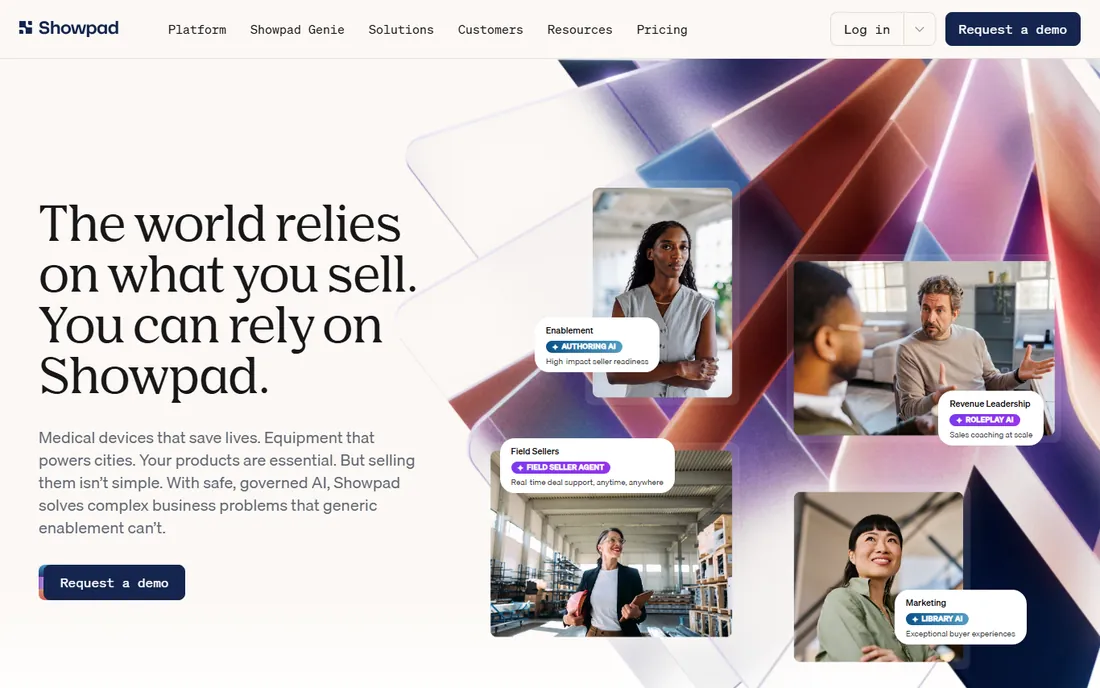
Showpad built its name on the rep standing in front of a customer. The mobile app works offline, the content is easy to find in the moment, and shared spaces let buyers and sellers collaborate on deals with mutual action plans. Coaching covers video practice and micro-learning, and the analytics show which content actually moves deals. Manufacturing, medical and industrial companies with large field teams are its heartland.
Pricing is quote-based enterprise. The wrinkle is the Bigtincan combination: the two companies now operate together, which means the roadmap you are shown today may look different in a year. Ask directly which platform your contract puts you on and what happens to the other. For field-first selling motions, Showpad remains the most natural fit, but go in with eyes open about the merger.
What we like- Best-in-class mobile experience for in-person selling
- Buyer engagement rooms with mutual action plans
- Strong coaching and micro-learning
Watch out for- Training depth trails dedicated readiness tools
- Now combined with Bigtincan, so the product roadmap is in transition
Starting priceSee website
Free planNo (demo available)
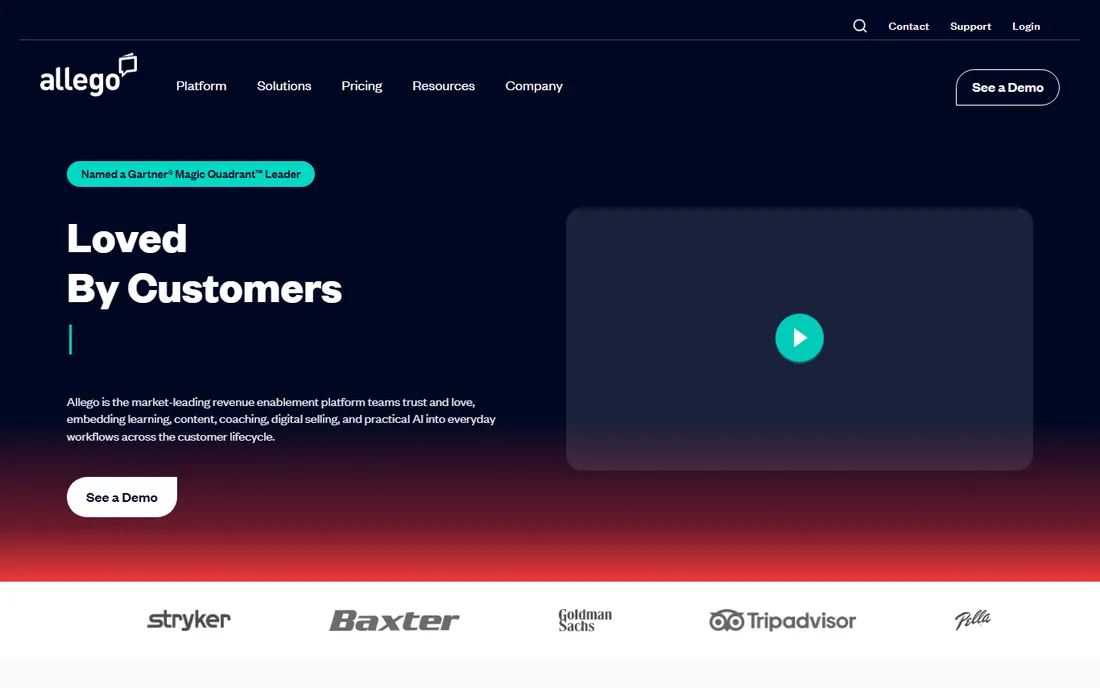
Allego comes at enablement from the training side. Reps record pitches on video, get AI-scored feedback on pacing, keywords and confidence, and practice until they are ready. Managers see who is improving and who is coasting. The platform also handles content delivery and digital selling, but coaching is the reason teams buy it. The company claims go-live in six weeks, which is fast for this category, and customer success services are included rather than billed extra.
The tradeoff is breadth. If your main problem is content chaos across thousands of assets, Seismic or Showpad manage libraries better. If your main problem is reps who cannot run a discovery call, Allego fixes that faster. Pricing is custom, with third-party estimates suggesting entry points well below the big two, which makes it worth a look for mid-market teams that need coaching more than they need a content warehouse.
What we like- Video-first learning reps actually complete
- AI coaching with practice and feedback
- Go-live in as little as six weeks
Watch out for- Content management is thinner than Seismic or Showpad
- Pricing is quote-only
Starting priceSee website
Free planNo (demo available)
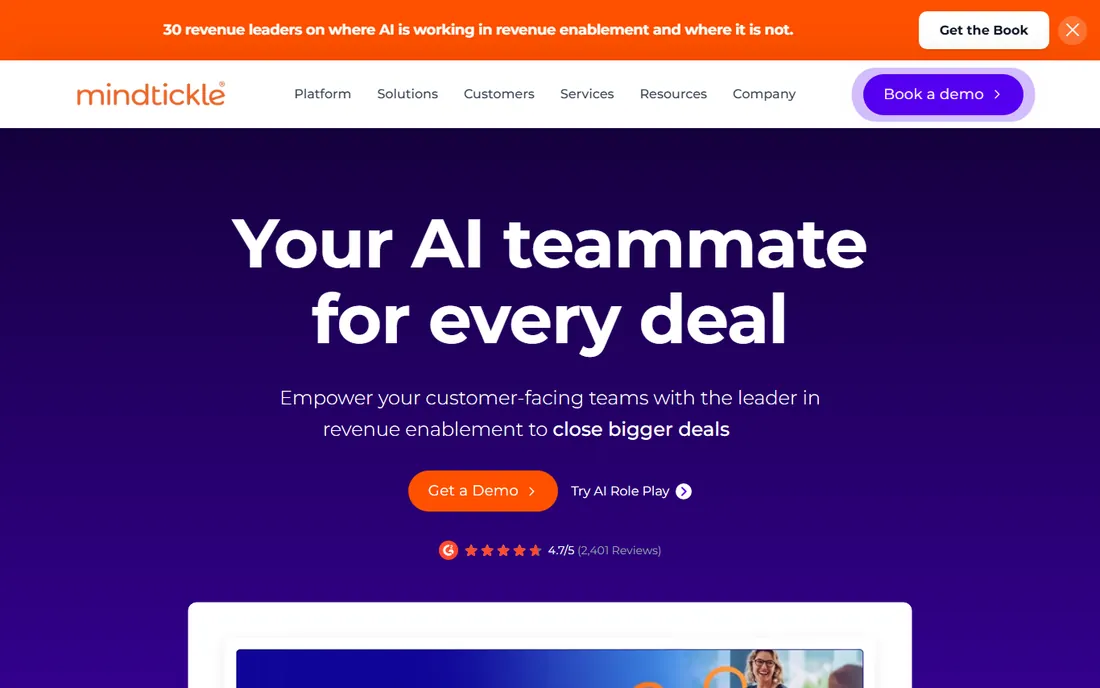
Mindtickle treats sales readiness as a measurable discipline. Its Ideal Rep Profile defines what good looks like, then scores every rep against it using training results, call data and deal outcomes. Onboarding programs, certifications and AI roleplays run in one place, and managers get a clear view of who is ready to carry quota. Companies with large, growing sales teams use it to make ramp predictable instead of hopeful.
The honest criticism is that it sometimes feels more like corporate training software than a seller's daily tool. Reps do not live in Mindtickle the way they live in Showpad; they visit it for learning. That is fine if readiness is the goal, but do not buy it expecting a content management replacement. Pricing is custom enterprise, and you should expect a proper procurement cycle.
What we like- Ideal Rep Profile analytics tie readiness to outcomes
- Strong onboarding and certification workflows
- AI coaching at scale
Watch out for- Enterprise sales process
- Can feel like an LMS wearing an enablement costume
Starting priceSee website
Free planNo (demo available)
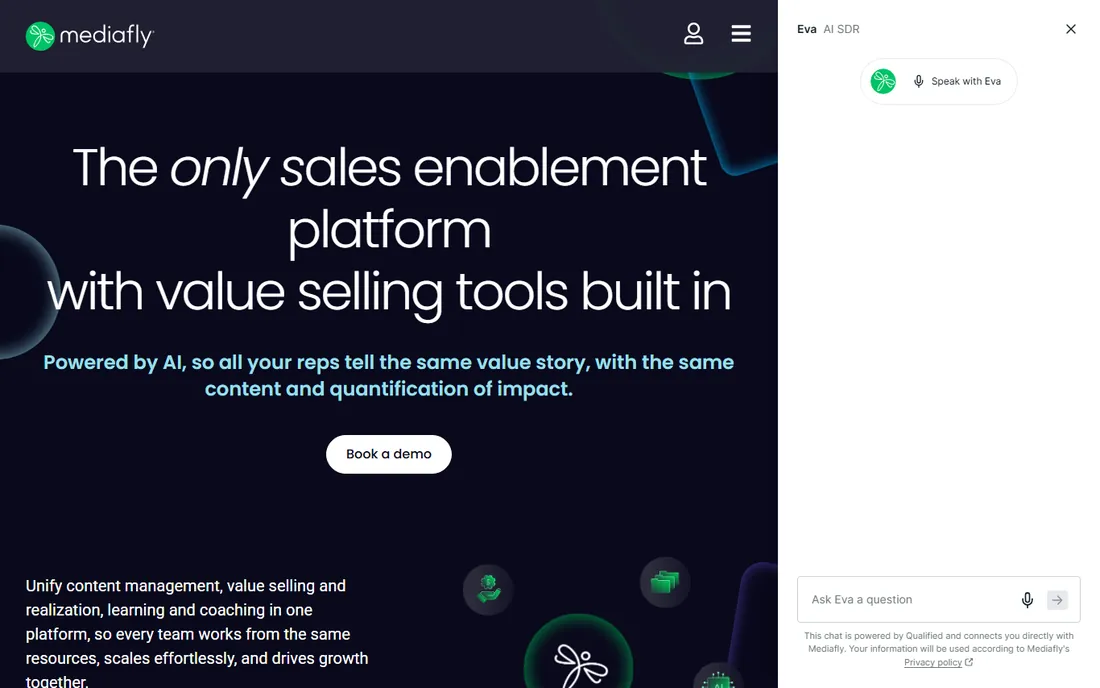
Mediafly sells end-to-end revenue enablement: the content, the training, the buyer engagement and the value tools that help reps build business cases. Its Command Center is the AI layer that automates routine work and surfaces insights. What sets it apart operationally is services: Mediafly runs in-house creative and implementation teams that build custom workspaces and branded content for you, which matters if your marketing team cannot.
The weakness is simply scale of presence. It does not have the analyst footprint or the customer community of Seismic or Showpad, so reference calls take more effort to arrange. Pricing is custom. For teams that want one vendor to handle both the platform and the content work, Mediafly's services-heavy model is appealing. For teams that want the safest enterprise bet, the bigger names win.
What we like- Combines content management with value-selling tools
- In-house creative and implementation services
- Enterprise-grade governance
Watch out for- Smaller market footprint than the leaders
- Pricing is quote-only
Starting priceSee website
Free planNo (demo available)
Pitcher is the field execution layer for industries where selling happens far from Wi-Fi and under strict rules. Pharma, CPG and medical device reps get guided selling, order and sample capture, and consent workflows that work offline and sync back to the CRM. Its AI copilot answers questions and suggests next actions during the call, not just before it. Compliance certifications include SOC 2 Type II, ISO 27001 and GDPR, which regulated buyers require.
This is a specialist, not a generalist. If your team sells software over Zoom, Pitcher is the wrong shape. If your reps visit clinics, stores or factories and everything must be captured compliantly, it is one of few platforms built exactly for that. Pricing is quote-based and the sales motion is enterprise, so expect a proper evaluation, not a self-serve signup.
What we like- Offline-first field execution with CRM sync
- Strong compliance for pharma and CPG
- AI copilot guides reps during the call
Watch out for- Narrower content management than generalist platforms
- Enterprise sales motion
Starting priceSee website
Free planNo (demo available)
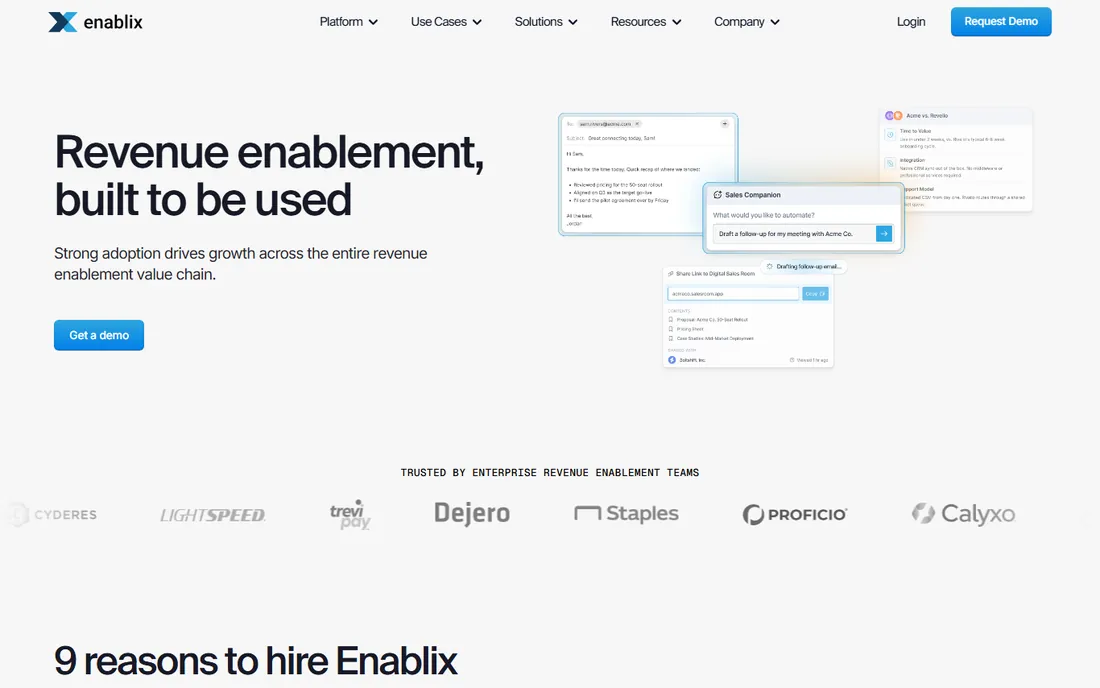
Enablix takes a different commercial approach: usage-based pricing with unlimited users, so the whole company can use governed content without seat-license math. The platform covers the full revenue enablement chain, from new-logo sales to customer success to partners, on one content and context strategy. Its AI answers are traceable back to the source content, which matters when reps need to trust what the system tells them, and your data is never used to train models.
The tradeoff is vendor maturity. Enablix does not have the decade-long track record or the reference customer list of the incumbents, so diligence takes more work. Pricing details are not public beyond the usage-based, unlimited-user model. For teams that hate per-seat pricing and want one enablement layer across every go-to-market team, it is a genuinely fresh option.
What we like- Usage-based pricing with unlimited users
- One platform for sales, CS and partners
- AI answers traceable to source content
Watch out for- Younger vendor with a smaller customer base
- No public pricing details
Starting priceSee website
Free planYes (free plan)
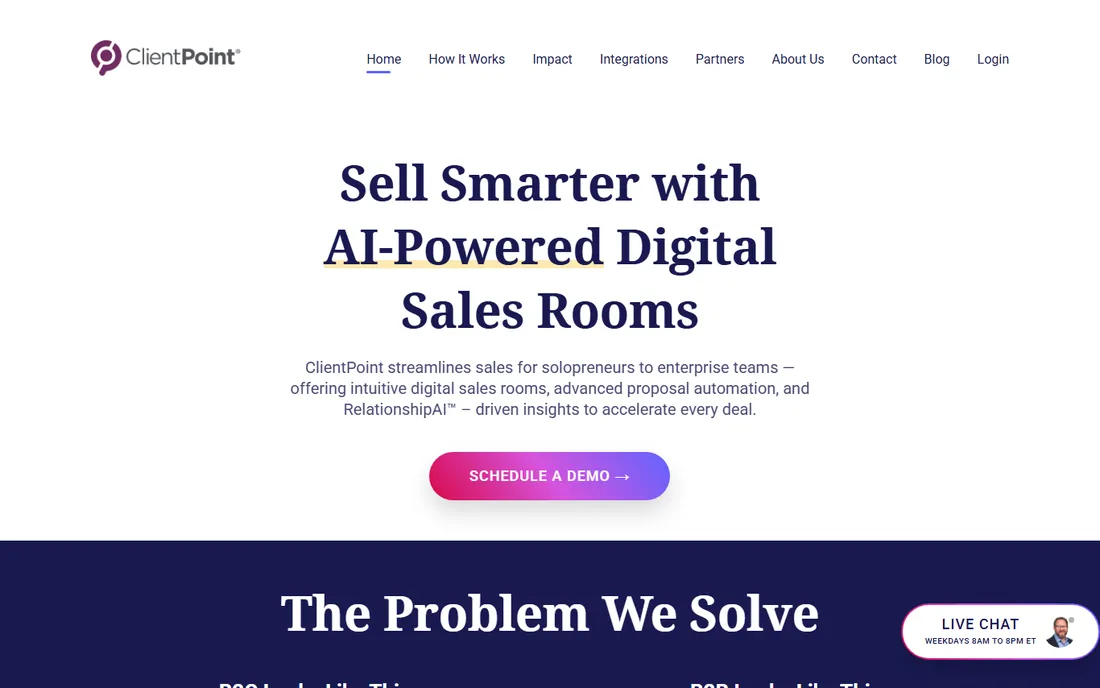
ClientPoint replaces the chaos of B2B selling, scattered decks, long email threads, lost attachments, with a single persistent digital sales room. Proposals, meetings, files and follow-ups live in one branded link the buyer can revisit any time. Proposal automation with e-signature cuts proposal time dramatically, and RelationshipAI adds engagement alerts and next-best-action guidance. It integrates with Salesforce, HubSpot, Pipedrive and the usual stack.
The honest limit is scope. ClientPoint is excellent at the buyer-facing deal experience and weaker at the rep development side; there is no serious coaching or training module. Pricing is not published on the vendor site, though third-party profiles list tiers starting around $83 per month and a free plan for solopreneurs. For teams whose problem is messy deal execution rather than rep skill, it fits well.
What we like- Persistent digital sales rooms buyers revisit
- Proposal automation with e-signature
- Free plan for trying the basics
Watch out for- Less depth in training and coaching
- Pricing tiers are not published on the site
Starting priceSee website
Free planNo (demo available)
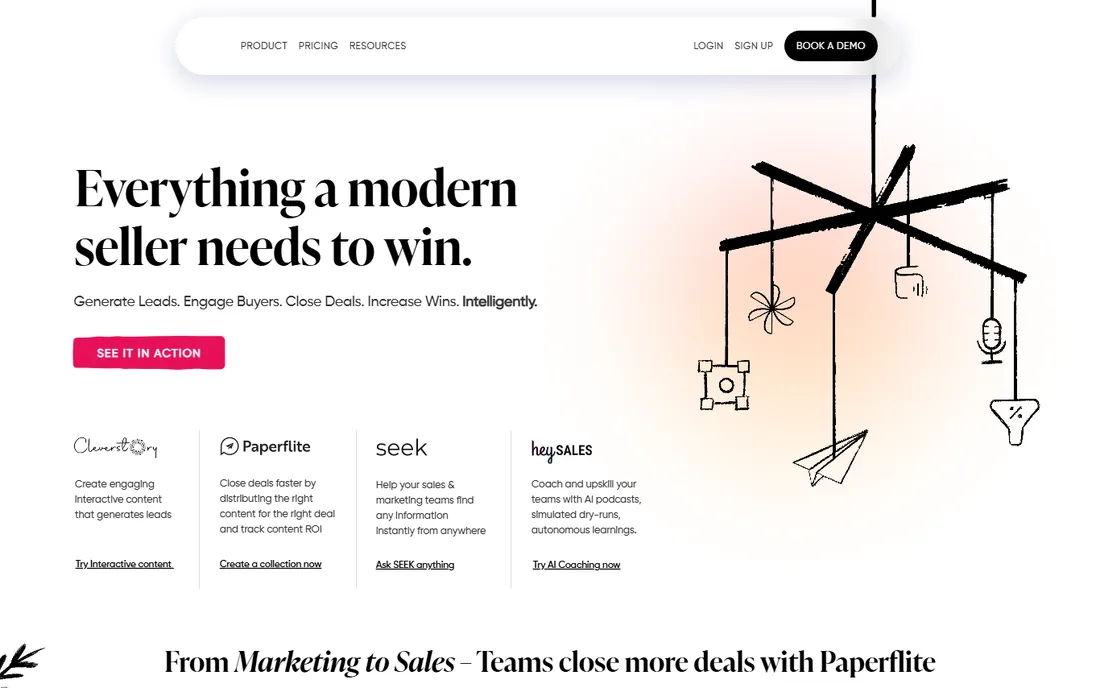
Paperflite positions itself as the AI-native alternative to legacy enablement. Reps find content through natural-language search instead of folder digging, deal rooms engage buyers with interactive content, and AI analyzes deal patterns to flag at-risk opportunities and recommend what worked in similar deals. Coaching uses hyper-realistic AI buyer simulations, angry prospects, skeptical CFOs, with scored feedback. It is an ambitious, modern feature set.
The catch is proof. Paperflite is newer and smaller than the established players, so enterprise buyers will find fewer long-term references and less analyst coverage. Pricing is quote-based. For a modern sales team that wants AI woven through the whole workflow rather than bolted on, it is worth evaluating alongside the incumbents, with the usual young-vendor diligence.
What we like- AI-native search and content recommendations
- Interactive content experiences for buyers
- AI coaching with realistic buyer simulations
Watch out for- Newer platform with less enterprise proof
- Quote-only pricing
Why most sales enablement rollouts fail
The software is rarely the problem. Rollouts fail because nobody owns the content: marketing uploads everything, sales trusts nothing, and the platform becomes a second SharePoint that reps avoid. Before you buy anything, assign a content owner with real authority to approve, expire and organize. Without that person, the fanciest AI recommendations will serve stale decks.
The second failure mode is buying for the wrong job. Teams with a content problem buy a coaching tool, then wonder why reps still cannot find the right deck. Teams with a coaching problem buy a content library, then wonder why win rates do not move. Name your one biggest pain in a sentence before you take a single demo, and disqualify every vendor that does not solve that sentence.
The third is underestimating adoption. Reps will not open a new tab voluntarily. The vendors that succeed build into the CRM and the daily workflow; the ones that fail become a destination nobody visits. Ask every vendor to show you, in the demo, exactly where the rep encounters the platform during a normal selling day.
How we chose
We compared sales enablement platforms that are sold and supported today, checking each vendor's site for current product status, which uncovered two major mergers in progress. We reviewed feature sets across content management, training and coaching, and buyer engagement, and checked public reviews on G2 and Capterra plus practitioner discussion on Reddit. No hands-on testing was performed. We replaced merged or acquired products with independent alternatives to keep every recommendation buyable today.
How to pick without a six-month bake-off
Start from your selling motion
Field teams that sell in person need Showpad or Pitcher. Inside sales teams need strong content delivery and digital sales rooms, which points to Seismic, ClientPoint or Paperflite. Teams whose reps cannot execute need Allego or Mindtickle. The selling motion decides the shortlist more than any feature matrix.
Demand the merger answer
Two of the biggest names changed shape recently: Highspot joined Seismic, and Bigtincan combined with Showpad. On every enterprise demo, ask which product your contract covers, what happens to the other product's roadmap, and whether your data migrates. Get the answer in writing before you sign.
Price the whole project, not the license
The quote is the smallest number you will see. Add implementation services, content migration, integrations and the internal hours your enablement team will spend. Then ask for two customer references in your industry and ask them what the first year really cost. The vendors with nothing to hide will connect you.
Frequently asked questions
How much does sales enablement software cost?
Almost every vendor prices by quote, but third-party estimates put enterprise platforms at roughly $30 to $80 per user per month, with annual contracts in the tens of thousands. Implementation, migration and training add significantly to year-one cost. Smaller tools like ClientPoint list lower tiers, and Enablix prices on usage with unlimited users.
What is the difference between sales enablement and sales engagement?
Enablement gives reps the content, training and tools to sell well. Engagement is the outreach layer: sequences, calls and emails that contact prospects. Some vendors blur the line, but if a tool's main job is sending emails, it is engagement, not enablement.
How long does implementation take?
Allego claims go-live in six weeks, which is the fast end. Enterprise platforms like Seismic typically take two to four months including content migration and integrations. The biggest variable is your content: migrating and organizing thousands of assets takes longer than any software installation.
Do we need a dedicated admin for these tools?
For enterprise platforms, yes. Someone has to govern content, manage users and keep integrations healthy. Smaller tools like ClientPoint and Enablix need less administration, but every platform needs a content owner or it decays into a file dump.
Can small teams use enterprise sales enablement software?
Technically yes, practically it is painful. Enterprise platforms assume hundreds of users and a dedicated enablement team, and their pricing reflects that. Teams under 50 reps usually get more value from ClientPoint, Enablix or Paperflite, which are built for lighter operations.
Sources we checked (4)
- https://www.highspot.com
- https://www.bigtincan.com/
- https://gomodus.com/
- https://www.getapp.com/sales-software/a/clientpoint/
Is your product missing or out of date?
We review this list regularly. Vendors can request a listing, send updated pricing or ask about featured placement.

Shihab Mia · Founder, Rankite
Shihab has spent more than a decade helping SaaS and e-commerce brands grow through search. He writes Rankite's software buying guides from pricing pages, documentation and public user reviews. More about Shihab.