How we make this list: we compare pricing pages, product documentation and public user reviews. Ratings come from G2, Capterra or Trustpilot, with the date we checked them.
Key takeaways
- Nike Run Club is the best free running app, with no premium tier at all and full coaching included.
- Strava suits social runners who want segments, leaderboards, and a community feed.
- Runkeeper is best for simple tracking with optional paid plans for personalized coaching.
- MapMyRun suits route enthusiasts who want detailed route logging and a large route library.
- adidas Running suits multi-sport users who run, bike, and hike in one app.
- Garmin Connect is excellent and free, but it is built around owning a Garmin watch.
- Couch to 5K is best for absolute beginners who want a gradual plan to their first 5K.
- Pacer suits walkers and new runners who want a simple free tracker with step counting.
- Start gradually and stop if you feel pain. Running apps track workouts, but they do not replace medical advice, and new runners with health conditions should check with a clinician before starting a training plan.
Quick comparison
Is your product missing or out of date?
We review this list regularly. Vendors can request a listing, send updated pricing or ask about featured placement.
The best free running apps
#1
Nike Run Club
Best for: Fully free coaching and plans
Visit nike.com
Starting priceFree
Free planYes
Nike Run Club is the only big running app in 2026 with no premium tier at all, which makes it the best free running app by a comfortable margin. GPS tracking covers distance, pace, splits, and elevation, with full run history, audio guidance during runs, challenges, and a library of Guided Runs led by real coaches. Training plans cover 5K through marathon distances.
The catch is not money but branding and analysis. You need a Nike account, which ties your running to Nike marketing, and the app is light on deep analysis such as power curves and training load charts. Training plans are also limited to nine countries. For a beginner who wants coaching without thinking about a subscription, Nike Run Club is hard to beat.
What we like- No premium tier
- Guided runs with real coaches
- Training plans from 5K to marathon
Watch out for- Needs a Nike account
- Light on deep analysis
- Training plans limited to nine countries
Starting priceFree
Free planYes
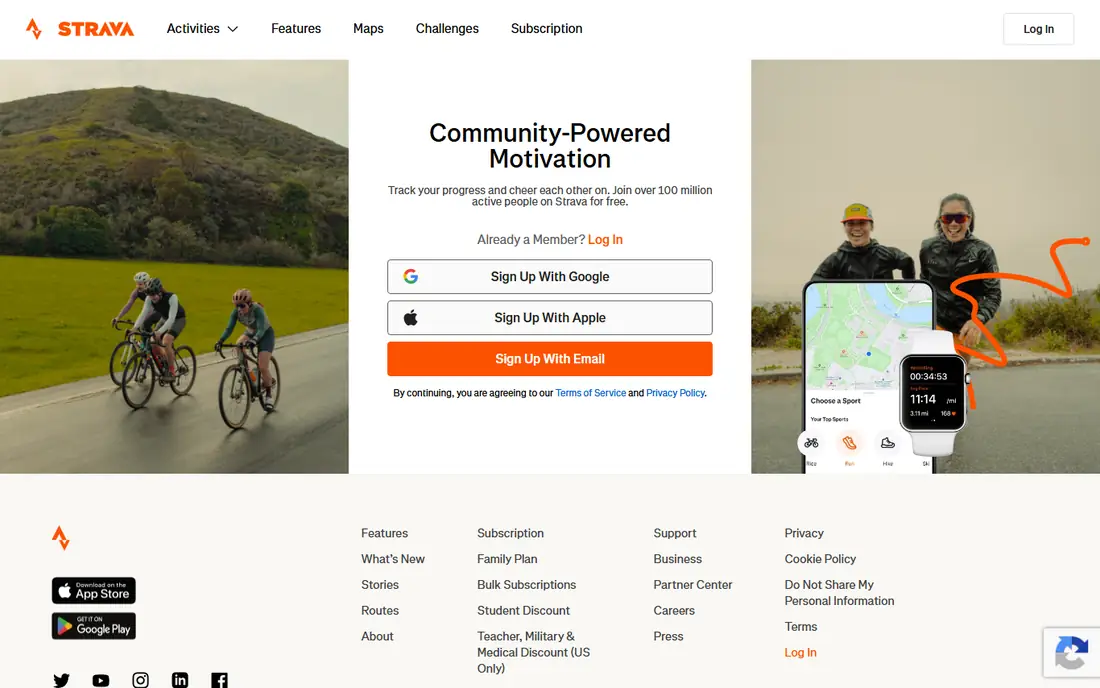
Strava is where runners go to see what other runners are doing, compete on segments, and collect kudos from friends. The free tier covers GPS tracking, the activity feed, kudos, basic stats, and top-ten segment rankings, which is enough for casual runners who mainly want to log runs and stay connected.
The limits are analysis depth. Full segment leaderboards, the training log, suggested routes, and safety features such as Beacon sit behind a subscription at $11.99 per month or $79.99 per year. For competitive runners and social runners, Strava is still the community standard, and many runners sync a second tracking app to Strava for the social side.
What we like- Strong community feed
- Segment leaderboards
- Excellent route discovery
Watch out for- Full segment leaderboards and training log behind $79.99 per year
- No safety alerts on free tier
- Heatmaps locked
Starting priceFree
Free planYes
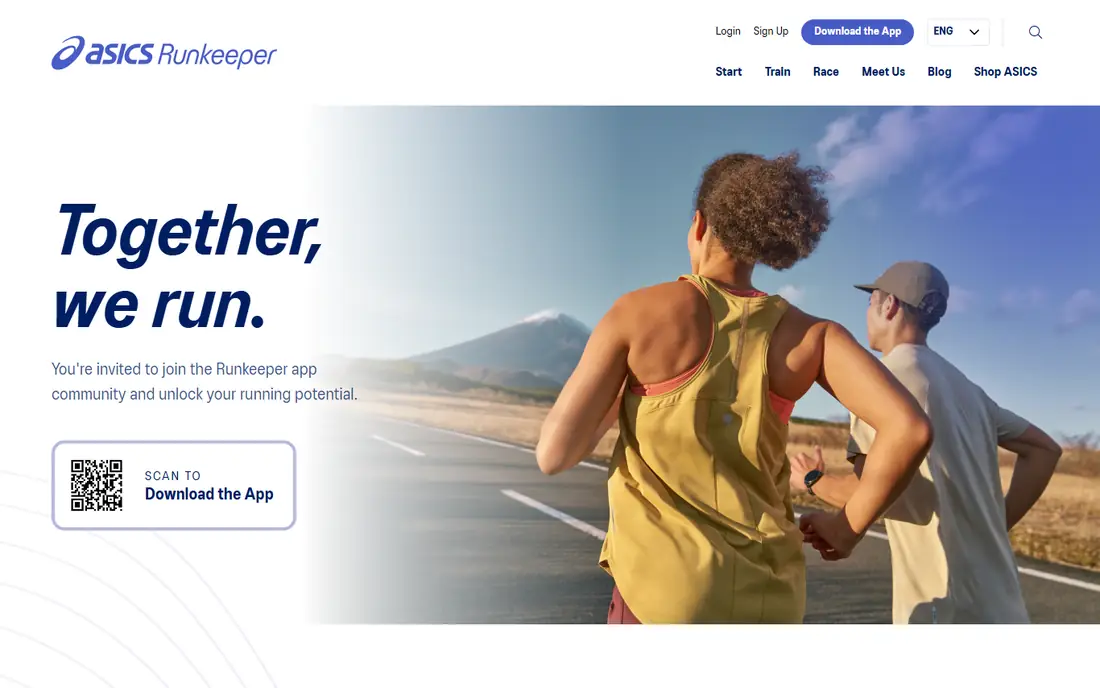
Runkeeper sits in the middle: reliable free GPS tracking with audio cues, basic stats, and full history, plus an optional paid tier for personalized plans. It suits runners who want simple tracking without social pressure, and it works with Apple Watch and other wearables.
The trade off is depth and polish. Personalized training plans need Runkeeper Go at $9.99 per month or $39.99 per year, the interface feels dated next to Nike and Strava, and social features are thinner. For runners who want simple, dependable tracking, Runkeeper is a solid free choice.
What we like- Reliable free GPS tracking
- Audio cues during runs
- Full run history
Watch out for- Personalized plans need Runkeeper Go at $9.99 per month
- Interface feels dated
- Fewer social features
Starting priceFree
Free planYes
MapMyRun, part of the Under Armour ecosystem, offers detailed route logging, a large library of user-shared routes, and audio coaching during runs. It works well for runners who plan routes in advance or discover new routes from other users, and it syncs with wearables and Apple Health.
The limits are ads and updates. The free version shows ads, premium costs about $7.99 per month, and updates run slower than rivals. For route enthusiasts who want a big route library for free, MapMyRun is a good pick.
What we like- Detailed route logging
- Large route library
- Audio coaching
Watch out for- Ads in the free version
- Premium costs about $7.99 per month
- Slower updates than rivals
Starting priceFree
Free planYes
adidas Running, formerly Runtastic, tracks running plus cycling, hiking, and other sports in one app, with GPS tracking, basic stats, and personalized voice coaching. It suits active users who run, bike, and hike and want one log for everything, with weekly and monthly stats and community challenges.
The trade off is ads and premium access. The free version shows ads, and the premium tier can only be bought inside the app, which makes price comparison harder. The interface can feel busy for runners who want only running. For multi-sport users, adidas Running is the best free all-round tracker.
What we like- Multi-sport logging
- GPS tracking
- Personalized voice coaching
Watch out for- Premium purchasable in-app only
- Ads in free version
- Interface can feel busy
Starting priceFree
Free planYes
Garmin Connect is genuinely excellent and free, with activity history, live stats, route mapping, sleep, and heart rate data. It suits runners who already own a Garmin watch, since the watch feeds the app with accurate GPS, heart rate, and training metrics that a phone alone cannot match.
The limits are hardware dependence. Garmin Connect is built around the watch, so phone-only use is limited, and the Connect+ subscription at $6.99 per month or $69.99 per year adds deeper insights. For Garmin owners, it is the best free companion app available.
What we like- Excellent free activity history
- Live stats
- Route mapping
- Sleep and heart rate data
Watch out for- Built around owning a Garmin watch
- Connect+ costs $6.99 per month
- Phone-only use is limited
Starting priceFree
Free planYes
Couch to 5K is the best app for absolute beginners. Its gradual plan alternates walking and running over about nine weeks, building to a full 5K, with audio coaching that tells you when to walk and when to run. The structure is widely trusted and has helped millions of new runners finish their first race.
The limits are scope. Couch to 5K only targets new runners aiming for 5K, tracking is basic, and premium features cost about $4.99 per month. Once you finish the plan, you will likely move to Nike Run Club or Strava for longer distances. For a first 5K, no app beats it.
What we like- Gradual beginner plan
- Audio coaching
- Widely trusted structure
Watch out for- Narrow scope, only for new runners aiming for 5K
- Premium costs about $4.99 per month
- Basic tracking
Starting priceFree
Free planYes
Pacer suits walkers and new runners who want a simple free tracker. It counts steps all day, logs GPS runs, and offers challenges and groups for motivation, without the complexity of a full training platform. For users building a daily movement habit, Pacer covers the basics well.
The trade off is coaching depth. Advanced training plans sit behind a subscription, and social features are lighter than Strava. For a simple, free tracker that covers walking and running together, Pacer is a good starting point.
What we like- Simple step and run tracking
- GPS routes
- Challenges and groups
Watch out for- Advanced plans behind a subscription
- Less coaching depth
- Social features are lighter than Strava
How we chose
We compared free-tier generosity, GPS accuracy, coaching depth, social features, and wearable support. Apps that are free in name but hold basic tracking behind a paywall scored lower than apps with genuinely useful free tiers. We favored apps with no premium tier or with free tracking that covers real use, and noted where coaching, analysis, or safety features need payment. We did not test any app hands-on, and prices here reflect published list prices that vendors change often.
Buying guide: what to check before you pay
Start with your goal. Beginners need a gradual plan such as Couch to 5K or Nike Run Club, while competitive runners need Strava segments and analysis. Next, check what free actually includes. A free tier that covers tracking but locks training plans, safety alerts, or route tools may cost more than expected. Ask about wearable support too, since Garmin Connect needs a Garmin watch while most apps work with a phone alone. Check privacy settings as well, since running apps record your location and routes, and public profiles can reveal your home address through regular start points. Finally, start gradually. Increase weekly distance slowly, stop if you feel sharp pain, stay hydrated in heat, and check with a clinician if you have a heart condition, joint problems, or another health concern before starting a training plan.
Frequently asked questions
What is the best completely free running app?
Nike Run Club is the best completely free running app. It has no premium tier, and includes guided runs, training plans from 5K to marathon, and full GPS tracking at no cost.
Is Strava worth paying for?
Strava at $11.99 per month or $79.99 per year is worth it if you want full segment leaderboards, training plans, advanced analytics, and safety features. Casual runners who mainly log runs and connect with friends can use the free version.
Do I need a smartwatch to use running apps?
No. Most running apps work with a phone using built-in GPS. A dedicated watch such as Garmin gives more accurate tracking, heart rate data, and better battery life on long runs, but it is not required.
Which running app has the best GPS accuracy?
Phone GPS accuracy varies by device and route, while dedicated watches such as Garmin generally track more accurately, especially on trails and in cities with tall buildings. For most road runs, phone GPS is good enough.
How do I start running as a beginner?
Start with a gradual plan such as Couch to 5K, which alternates walking and running over about nine weeks. Run slowly enough to hold a conversation, rest between sessions, and stop if you feel sharp pain.
Sources we checked (0)
Is your product missing or out of date?
We review this list regularly. Vendors can request a listing, send updated pricing or ask about featured placement.

Shihab Mia · Founder, Rankite
Shihab has 5+ years in B2B and SaaS SEO. He writes Rankite's software buying guides from pricing pages, documentation and public user reviews. More about Shihab.
 Strava
 Runkeeper
 MapMyRun
 adidas Running
 Garmin Connect
 Couch to 5K
 Pacer