How we make this list: we compare pricing pages, product documentation and public user reviews. Ratings come from G2, Capterra or Trustpilot, with the date we checked them.
Key takeaways
- R1 RCM suits large health systems that want to outsource the whole revenue cycle, not just buy software.
- Waystar suits providers of any size that want cloud claims processing and denial prevention at scale.
- athenahealth suits ambulatory practices that want EHR, practice management, and billing from one vendor.
- Experian Health suits providers that want data-driven patient access, eligibility, and contract tools.
- FinThrive suits mid-to-large hospital networks focused on denial prevention and underpayment recovery.
- Nobody in this category publishes simple pricing: every vendor quotes on provider count, claim volume, and scope.
Quick comparison
| Tool | Best for | Starting price | Free plan |
|---|
 R1 RCM | Full outsourcing at scale | See website | No |
 Waystar | Cloud claims at scale | See website | No |
 athenahealth | Ambulatory all-in-one | See website | No |
 Experian Health | Patient access and contracts | See website | No |
 FinThrive | Denial prevention | See website | No |
 Optum | Large-system AI plus advisory | See website | No |
 Availity | Payer connectivity | See website | Yes |
 AGS Health | Tech-enabled RCM services | See website | No |
Is your product missing or out of date?
We review this list regularly. Vendors can request a listing, send updated pricing or ask about featured placement.
The best revenue cycle companies
Starting priceSee website
Free planNo
R1 RCM takes over the full revenue cycle for hospitals and health systems, from patient access and coding through claims, denials, and collections, using its own staff and technology inside the client operation. That operating partnership model differs from pure software: R1 runs the work, not just the tool. Published comparisons cite an average clean-claim rate near 97.5 percent, and the company operates at very large scale across health systems.
The trade-offs are scope and fit. Pricing is custom and quote-only, implementation is a major project, and small practices will find the enterprise model heavy. R1 fits large health systems that want to hand the revenue cycle to an operator with scale and accountability, rather than staffing and tuning it themselves.
What we like- End-to-end outsourcing for hospitals
- Very large scale
- Reported 97.5 percent average clean-claim rate
Watch out for- Quote-only pricing
- Enterprise focus, less fit for small practices
- Long implementation
#2Waystar
Best for: Cloud claims at scale4.4/5 on
G2 (119 reviews, checked Oct 2026)
Visit waystar.com
Starting priceSee website
Free planNo

Waystar runs a cloud platform for claims processing, eligibility, denial prevention, and patient payments, used by providers of many sizes. Its AltitudeAI predictive analytics flag claims likely to deny before submission, which cuts rework, and published comparisons cite a first-pass clean-claim rate above 98.5 percent. The platform integrates with major EHR systems including Epic and Cerner, so providers keep their clinical system while upgrading the financial side.
Pricing is custom and quote-only, based on volume and scope, and the breadth of modules can overwhelm small billing teams that need a narrower tool. Waystar fits providers that want one cloud platform across the revenue cycle with AI-driven denial prevention, from mid-size groups to large systems.
What we like- Cloud claims platform
- Predictive denial analytics
- Reported 98.5 percent first-pass rate
Watch out for- Quote-only pricing
- Breadth can overwhelm small teams
- Implementation varies by system
Starting priceSee website
Free planNo
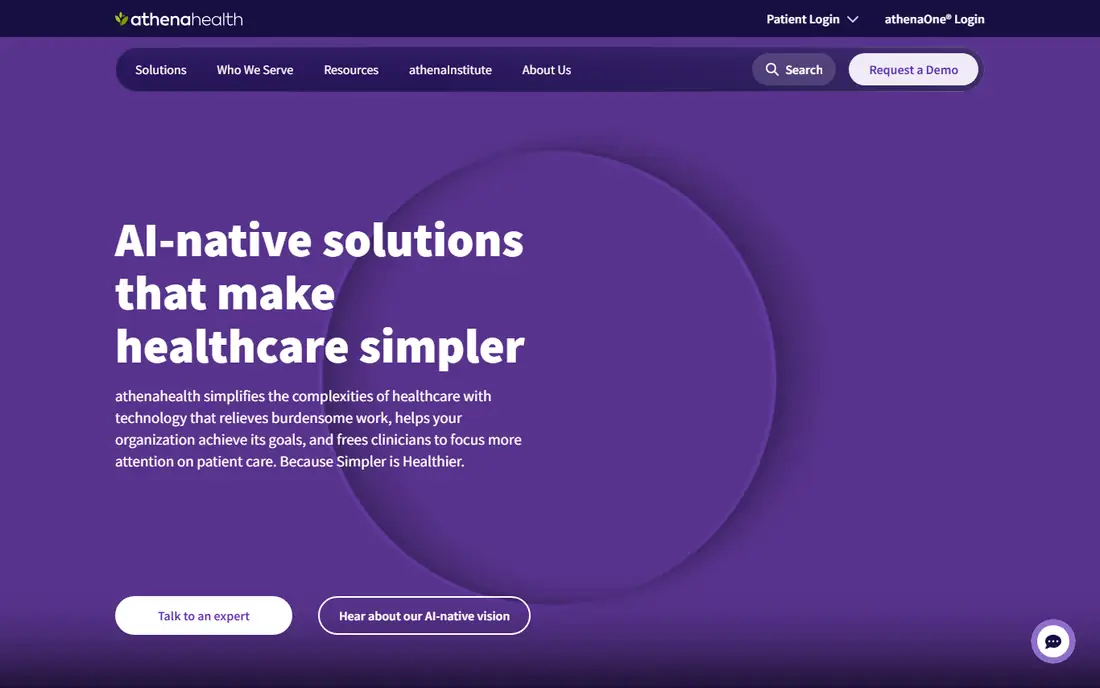
athenahealth bundles EHR, practice management, and revenue cycle services in one cloud platform, which suits ambulatory practices and physician groups that want a single vendor. Its network model updates billing rules across clients, and published comparisons cite a clean-claim submission rate near 99.3 percent. The company also publishes performance data through its network, giving practices benchmarks against peers.
The central caveat is lock-in: adopting athenahealth usually means adopting its EHR, which is a major project for practices already on another system. Large inpatient hospitals will find the ambulatory focus limiting. athenahealth fits independent and group practices that want one cloud vendor for clinical and financial work with strong claims performance.
What we like- EHR plus billing in one cloud system
- Reported 99.3 percent clean-claim submission rate
- Strong ambulatory fit
Watch out for- Quote-only pricing
- Less suited to large inpatient systems
- Switching EHRs is a major project
Starting priceSee website
Free planNo
Experian Health provides patient access, identity verification, eligibility, claims, and contract management tools that sit beside a provider's core billing system. Its data strengths show in front-end work: verifying coverage and identity before the visit prevents denials downstream, while contract tools compare payer payments against contracted rates to catch underpayments. Published guides rate its denial and financial clearance tools highly for hospitals with complex payer contracts.
Experian Health is best understood as a powerful complement rather than a full replacement for a billing system, and module breadth means scoping matters during purchase. Pricing is custom and quote-only. It fits hospitals and practices that want data-driven front-end and contract tools layered onto their existing stack.
What we like- Eligibility and identity tools
- Contract management
- Denial analytics
Watch out for- Quote-only pricing
- Module breadth needs scoping
- Best as a complement to core billing
Starting priceSee website
Free planNo
FinThrive, formed from the combination of revenue cycle vendors, offers modular RCM technology for mid-to-large hospital networks, with a focus on denial prevention, claims management, and underpayment recovery. Its tools layer onto existing EHR and billing stacks, which suits systems that want to fix specific revenue leaks without replacing their core platform. The company positions its analytics around finding revenue lost to denials and contract shortfalls.
The hospital-network focus means small practices will find less tailored fit, and pricing is custom and quote-only. FinThrive fits health systems that have a working billing core but lose revenue to denials and underpayments and want targeted technology to recover it.
What we like- Denial prevention focus
- Underpayment recovery
- Modular tools for existing stacks
Watch out for- Quote-only pricing
- Hospital-network focus
- Smaller ambulatory footprint
Starting priceSee website
Free planNo
Optum, part of UnitedHealth Group, offers one of the widest revenue cycle ranges in healthcare, from technology and coding intelligence to advisory services and full outsourcing. Its clinical language processing helps with mid-cycle coding, and its claims data depth supports analytics and payer strategy for large systems. The combination of technology plus advisory suits systems that want both tools and expert guidance.
Scale is the caveat: Optum's enterprise breadth brings complexity, and scoping the right modules takes care. Pricing is custom and quote-only. Optum fits large hospitals and integrated delivery networks that want AI-driven RCM plus advisory depth from a single large vendor.
What we like- Wide service range
- Deep claims data
- AI coding intelligence
- Advisory services
Watch out for- Quote-only pricing
- Enterprise scale and complexity
- Product breadth needs careful scoping
Starting priceSee website
Free planYes
Availity runs a payer-provider data exchange and clearinghouse that connects providers with health plans for eligibility, claims, remittances, and authorizations. Its Essentials portal is free for providers, which makes it the only entry in this list with a genuine free tier, though the free tier covers portal access rather than a full RCM suite. Scale across payers is its main strength, since connectivity breadth decides how much manual payer work remains.
Availity does not replace a billing system or an outsourcing partner, and enterprise features are quote-only. It fits providers and billing teams that need reliable payer connectivity and claims flow, especially as a complement to a core RCM platform.
What we like- Payer-provider data exchange
- Clearinghouse scale
- Essentials portal free for providers
Watch out for- Not a full RCM suite
- Free tier limited to Essentials portal
- Enterprise features quote-only
Starting priceSee website
Free planNo
AGS Health provides tech-enabled revenue cycle services, with strengths in medical coding, accounts receivable follow-up, and denial work that scale quickly for health systems and large groups. Its model blends people and technology, which suits organizations that need capacity fast, such as after a system change or during AR backlogs. Published guides list it among the larger RCM service firms for health systems.
The services model needs careful scoping, since the division of work between AGS staff and client staff decides outcomes, and pricing is custom and quote-only. AGS fits health systems and large practices that want scalable coding and AR capacity without building it in-house.
What we like- Coding and accounts receivable support that scales
- Tech-enabled services
- Health-system focus
Watch out for- Quote-only pricing
- Services model needs scoping
- Less software-only depth
How we chose
We ranked companies on clean-claim performance where published, scope across the revenue cycle, EHR integration breadth, provider-size fit, and 2026 guide consensus. Full outsourcing scored separately from software, since the buying decision differs: outsourcing buyers judge operating results, while software buyers judge tools and integration. Pricing is quote-only across nearly the whole category, so we flagged that rather than inventing figures. Every company here runs a live RCM business in 2026 with a public site. Buyers should also ask how the vendor handles payer rule changes, since new edits arrive very often indeed.
How to pick a revenue cycle company
Start with your size and your bottleneck. Small practices usually need turnkey billing help or an all-in-one vendor like athenahealth, while health systems need denial analytics and contract management at scale from Waystar, FinThrive, or Experian Health. Systems that want to stop running billing internally should compare R1, Optum, and AGS Health on operating results, not feature lists, and ask for client references at similar scale.
Next, demand performance data in writing: clean-claim rate, days in accounts receivable, denial rate, and underpayment recovery, measured on clients like you. Check EHR integration carefully, since a tool that cannot exchange data cleanly with your EHR will create manual work that erases its gains. Finally, negotiate scope precisely, including which tasks the vendor owns, which stay in-house, and how fees change with claim volume. Revenue cycle contracts run for years, so the scoping work done before signing matters more than the demo.
Frequently asked questions
What does a revenue cycle company do?
A revenue cycle company manages the financial side of healthcare, from patient registration and eligibility through coding, claims, denials, and collections. Some sell software for in-house teams, while others outsource the whole cycle with their own staff.
Why is pricing quote-only for revenue cycle vendors?
Pricing depends on provider count, claim volume, payer mix, and scope, so vendors quote per client rather than publishing a flat rate. Expect a sales process with discovery, and ask for the fee formula in writing before signing.
What is a clean-claim rate?
The clean-claim rate is the share of claims accepted on first submission without errors. Published figures here run from about 97.5 percent for R1 to about 99.3 percent for athenahealth, though measurement methods differ by vendor.
Should a small practice outsource billing or buy software?
Small practices usually benefit from turnkey billing help or an all-in-one vendor, since a dedicated billing hire costs more than a service. Larger groups with in-house teams benefit more from software like Waystar or Experian Health layered onto their stack.
How long does revenue cycle implementation take?
Timelines vary from weeks for a payer portal like Availity to many months for full outsourcing or an EHR-linked rollout. Ask for a written timeline with milestones and data-migration responsibilities before signing.
Sources we checked (0)
Is your product missing or out of date?
We review this list regularly. Vendors can request a listing, send updated pricing or ask about featured placement.

Shihab Mia · Founder, Rankite
Shihab has 5+ years in B2B and SaaS SEO. He writes Rankite's software buying guides from pricing pages, documentation and public user reviews. More about Shihab.