How we make this list: we compare pricing pages, product documentation and public user reviews. Rankite is independent; if a vendor ever pays for a featured spot, that listing is clearly labeled Partner.
Key takeaways
- Shopmonkey and Tekmetric are the modern cloud leaders: polished, full-featured, and popular with independent shops.
- Mitchell 1 and RO Writer bring decades of industry depth, including repair information and estimating data.
- Shop-Ware and AutoFluent suit shops that want strong digital inspections and customer communication.
- ARI and Torque360 are the value picks for smaller shops and mobile mechanics watching costs.
- GaragePlug covers the basics for shops that need simple, affordable management without the enterprise extras.
Quick comparison
| Tool | Best for | Starting price | Free plan |
|---|
 Shopmonkey Shopmonkey | Modern all-in-one shop management | See website | No |
 Tekmetric Tekmetric | Cloud-native shop operations | See website | No |
 Mitchell 1 Mitchell 1 | Repair data plus management | See website | No |
 RO Writer RO Writer | Deep industry feature set | See website | No |
 Shop-Ware Shop-Ware | Digital inspections and workflow | See website | No |
 AutoFluent AutoFluent | Communication-focused shops | See website | No |
 ARI ARI | Affordable mobile-friendly management | See website | No |
 Torque360 Torque360 | Budget shop management | See website | No |
 GaragePlug GaragePlug | Simple affordable operations | See website | No |
Is your product missing or out of date?
We review this list regularly. Vendors can request a listing, send updated pricing or ask about featured placement.
The best repair shop software
Starting priceSee website
Free planNo
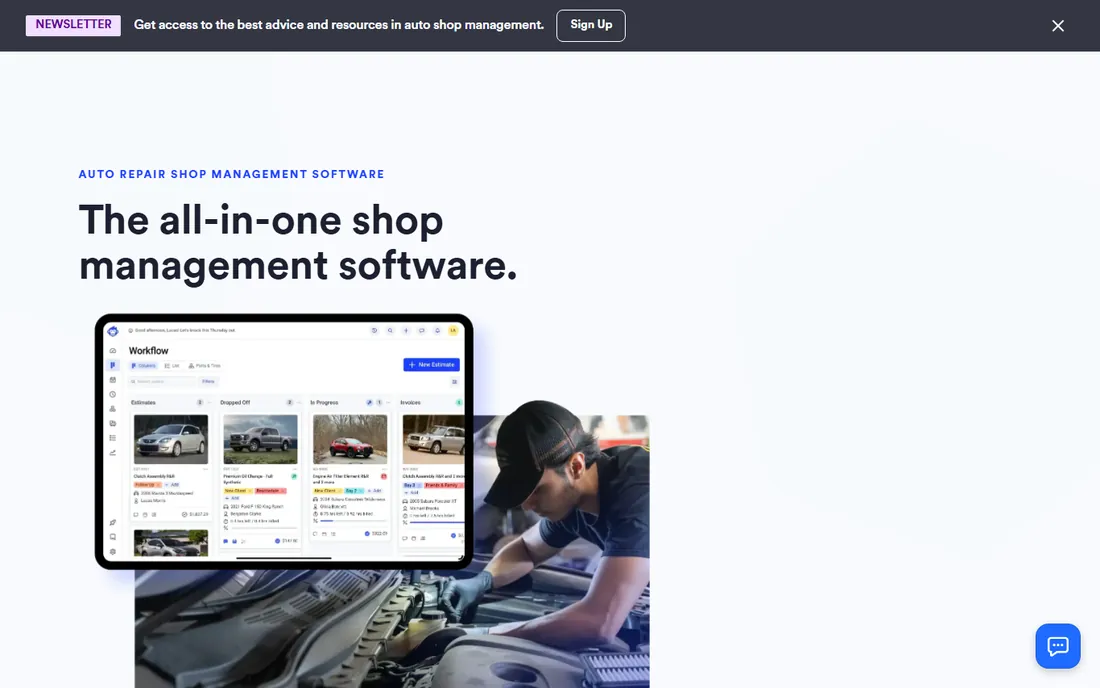
Shopmonkey has become the reference point for modern shop management software. The cloud platform covers the full workflow: online scheduling, digital inspections, estimates, repair orders, inventory, payments, and customer messaging. Integrations with parts suppliers, QuickBooks, and Shopmonkey Payments keep the business side connected. Independent shops praise how quickly staff learn it.
Pricing is modular, so the base plan plus add-ons can climb. Implementation needs proper attention: importing customer and vehicle data, setting up labor rates, and training techs. But for shops that want a contemporary system without legacy baggage, Shopmonkey is the most recommended name in the industry.
What we like- Clean modern interface
- Strong integrations
- Popular with independents
Watch out for- Pricing adds up with add-ons
- Implementation takes attention
Starting priceSee website
Free planNo
Tekmetric was designed as a cloud-native platform, and it shows in the details: real-time dashboards, strong reporting on technician efficiency and profitability, and customer communication tools (text updates, digital inspections, online payments) that modern drivers expect. Multi-shop operations manage locations from one account.
It sits at the premium end of pricing, and some capabilities are only available on higher tiers. Smaller shops should weigh the cost against simpler alternatives. But for growing operations that run on data, Tekmetric's reporting and cloud architecture make a strong case.
What we like- Built for the cloud from day one
- Strong reporting
- Good customer communication
Watch out for- Premium pricing
- Some features need higher tiers
Starting priceSee website
Free planNo
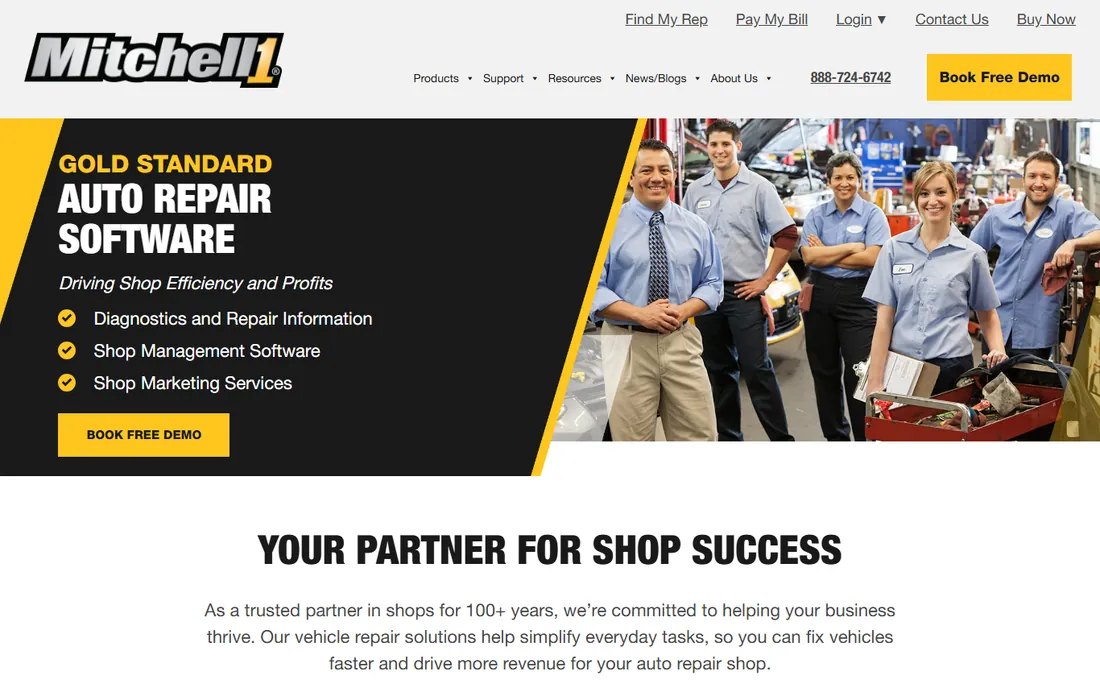
Mitchell 1's advantage is information. Decades of OEM repair data, wiring diagrams, and labor estimating live alongside the Manager SE shop management system, so technicians diagnose and estimate from the same platform that runs the business. Few competitors match the depth of the repair library.
The software reflects its long history; the interface is not winning design awards. Pricing follows enterprise patterns with modules and tiers. But for shops where accurate repair information and labor times directly affect profitability, Mitchell 1's data moat is the reason to choose it.
What we like- Unmatched repair information library
- Manager SE is proven
- Estimating integration
Watch out for- Interface reflects its age
- Pricing is enterprise-style
Starting priceSee website
Free planNo
RO Writer packs in one of the deepest feature sets in the category: repair orders, scheduling, inventory, customer history, marketing, and reporting with granular control. Shops with complex operations (multiple profit centers, varied services) use depth that simpler tools lack. The product has served the industry for years.
That depth comes with a learning curve and a dense interface. New users need training to use it well. But for established shops with complicated workflows, RO Writer's comprehensiveness beats the simpler modern tools. It is the power user's choice.
What we like- Very deep feature set
- Handles complex operations
- Long industry presence
Watch out for- Learning curve
- Interface is dense
Starting priceSee website
Free planNo
Shop-Ware built its reputation on digital vehicle inspections done right: technicians document findings with photos and videos, service advisors present them clearly, and customers approve work from their phones. The cloud platform covers the standard management features with a workflow-first design that shops find intuitive.
Pricing is premium, and the integration ecosystem is smaller than Shopmonkey's or Tekmetric's. But shops that sell work through inspections (which is most profitable shops) find Shop-Ware's presentation tools directly affect approval rates. When the inspection sells the job, the software pays for itself.
What we like- Excellent digital vehicle inspections
- Cloud-based
- Good workflow design
Watch out for- Premium pricing
- Smaller ecosystem than leaders
Starting priceSee website
Free planNo
AutoFluent covers the full shop management checklist with particular attention to customer communication: automated reminders, follow-ups, and messaging that keep bays full. Repair orders, inventory, scheduling, and accounting round out a complete package. It has served independent shops for years.
The interface and marketing are quieter than the cloud-native leaders, which means fewer peer reviews to consult. But the feature set is complete and the communication tools address the exact problem (empty bays, forgotten follow-ups) that costs shops money. Value-conscious shops should include it in evaluations.
What we like- Strong customer communication
- Complete shop features
- Established product
Watch out for- Less modern interface
- Marketing is quieter
#7
ARI
Best for: Affordable mobile-friendly management
Visit ari.app
Starting priceSee website
Free planNo
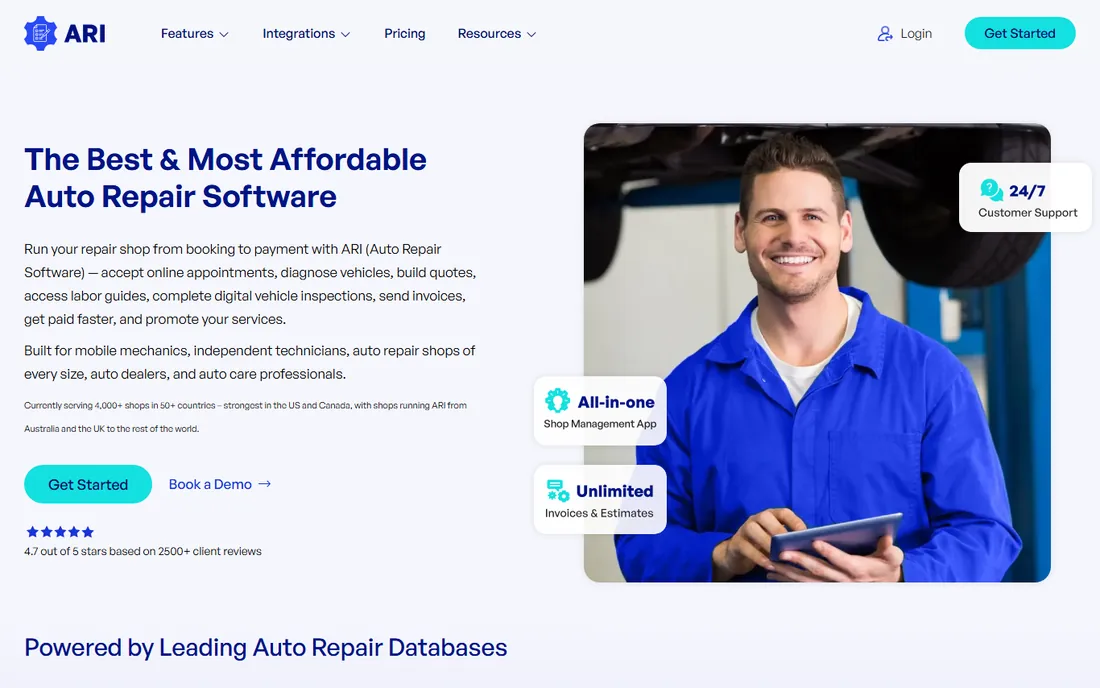
ARI is the value disruptor: cloud-based shop management with estimates, invoices, inspections, inventory, and payments at a fraction of the leaders' prices. The mobile app lets owners and techs run the shop from their phones, which suits mobile mechanics especially well. Thousands of shops use it across dozens of countries.
As a newer company, ARI's reporting depth and polish trail the established players. Some users note quirks in multi-device use. But the price-to-feature ratio is exceptional. For small shops and mobile mechanics who need real management software without the enterprise bill, ARI is the first place to look.
What we like- Very affordable
- Runs well on mobile
- Generous limits
Watch out for- Newer company
- Reports could be deeper
Starting priceSee website
Free planNo
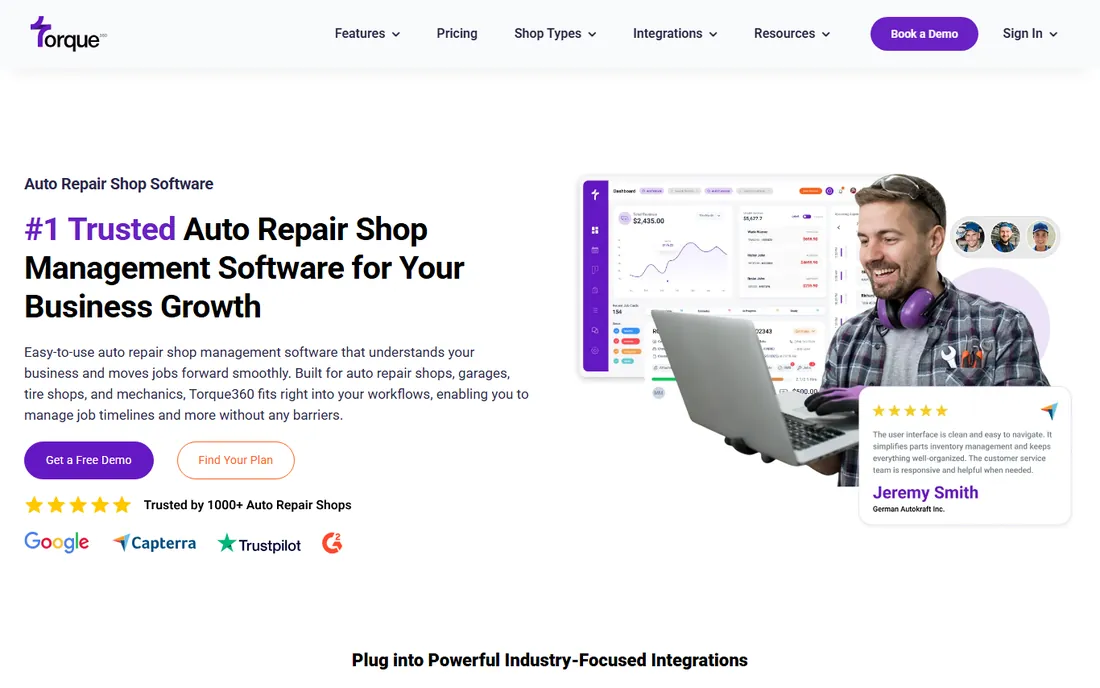
Torque360 targets the budget end with straightforward shop management: repair orders, invoicing, customer and vehicle records, and basic inventory at accessible prices. Small shops get the essential digital workflow without paying for features they will not use. Setup is simple enough to self-serve.
Advanced features (deep reporting, sophisticated marketing, complex integrations) are thinner than the leaders. Support resources are smaller. But not every shop needs the full enterprise stack. For a small operation moving off paper or spreadsheets, Torque360's simplicity and price make the jump painless.
What we like- Affordable
- Covers core workflows
- Simple to start
Watch out for- Fewer advanced features
- Smaller support resources
Starting priceSee website
Free planNo
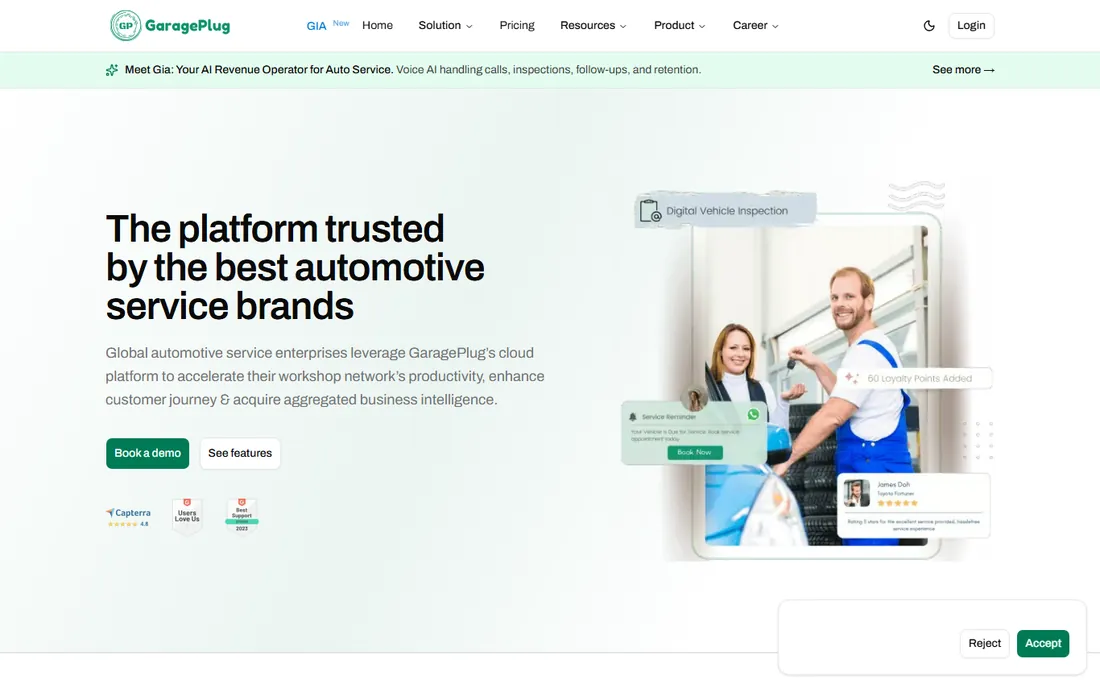
GaragePlug keeps shop management simple: job cards, estimates, invoices, inventory basics, and customer records in an interface staff learn quickly. The pricing suits small garages, and the feature set covers daily operations without overwhelming anyone. It is popular with independent garages that want digital operations without complexity.
Multi-shop chains and data-driven operators will outgrow it; advanced reporting and integrations are limited. But simplicity is a feature when your techs need to adopt the system this week. For single-location garages, GaragePlug does the job at a fair price.
What we like- Easy to learn
- Affordable
- Covers the basics well
Watch out for- Limited advanced features
- Less for multi-shop operations
What actually drives shop profitability
The software matters less than what you do with it, and the numbers are consistent across the industry. Digital vehicle inspections with photos increase approval rates on recommended work; every tool here offers them, but only shops that use them consistently see the benefit. Automated service reminders fill bays during slow weeks. Texting customers (status updates, pickup notifications) reduces phone tag and improves satisfaction scores. Accurate labor times and parts pricing protect margins on every ticket. When evaluating software, ask not just what features exist but how easily your team will actually use them daily. The best shop software is the one your techs and advisors adopt completely, because partial adoption of a great system loses to full adoption of a good one.
What to check before you buy
Data migration reality
Your customer, vehicle, and history data lives in the old system (or spreadsheets, or paper). Ask each vendor exactly how migration works, what it costs, and how long it takes. A smooth migration decides whether the first month is productive or painful. Get references from shops that migrated from your current setup.
Parts and labor integrations
Profitability depends on accurate parts pricing and labor times. Check integrations with your parts suppliers (PartsTech, Nexpart) and labor guides (MOTOR, Mitchell). Manual parts lookup and guessed labor times leak money on every ticket. The best software makes the right data automatic.
Technician adoption
Techs who hate the system will work around it, and workarounds kill data quality. Involve your lead tech in the evaluation. Mobile-friendliness matters because inspections happen at the car, not at a desk. A system techs actually like using beats a more powerful one they resist.
Total cost including payments
Many vendors now offer integrated payment processing, which is convenient but carries processing fees. Compare the software subscription plus payment processing costs against your current setup. Some shops save money overall; others pay more for convenience. Do the math with your actual ticket volume.
How we chose
We focused on shop management software for auto repair businesses in 2026, covering the full workflow from scheduling to payment. We evaluated vendor documentation, feature depth, industry reputation, and fit for different shop sizes. We excluded generic invoicing tools and pure marketing platforms. No vendor paid for placement, and we did not run test repair orders.
Frequently asked questions
How much does auto repair shop software cost?
Pricing varies widely by vendor and shop size, from budget options at tens of dollars monthly to premium platforms costing several hundred. Most charge per location or per user with tiered features. Always get a quote based on your actual bay count and user needs rather than comparing headline prices.
Can shop software integrate with QuickBooks?
Yes, most platforms on this list integrate with QuickBooks Online for accounting sync. The depth varies: some sync invoices and payments automatically, others need configuration. Confirm the specific sync behavior with each vendor before assuming it meets your accountant's needs.
Do I need digital vehicle inspections?
If you want to sell recommended work effectively, yes. Photo and video inspections shown to customers on their phones dramatically increase approval rates compared with verbal recommendations. Every modern platform includes DVI; the question is how good the presentation and approval workflow is. Test it from the customer's phone during trials.
How long does implementation take?
For a small shop, one to two weeks including data migration and training. Larger or multi-shop operations should plan a month. The data migration and staff training take longer than the software setup itself. Schedule implementation during a slower period, never during your busiest season.
Should mobile mechanics use the same software as shops?
Largely yes, with emphasis on the mobile app quality. ARI and the cloud platforms work well for mobile mechanics because the whole system runs on a phone or tablet. Prioritize offline capability (for areas with poor signal) and simple invoicing with mobile payment acceptance.
Sources we checked (10)
- https://www.shopmonkey.io
- https://www.tekmetric.com
- https://mitchell1.com
- https://info.rowriter.com/
- https://shop-ware.com
- https://autorepairsoftware.com/
- https://ari.app
- https://www.torque360.co
- https://www.garageplug.com
- https://rigorousthemes.com/blog/best-auto-repair-software-for-small-business/
Is your product missing or out of date?
We review this list regularly. Vendors can request a listing, send updated pricing or ask about featured placement.

Shihab Mia · Founder, Rankite
Shihab has spent more than a decade helping SaaS and e-commerce brands grow through search. He writes Rankite's software buying guides from pricing pages, documentation and public user reviews. More about Shihab.