How we make this list: we compare pricing pages, product documentation and public user reviews. Ratings come from G2, Capterra or Trustpilot, with the date we checked them.
Key takeaways
- NextEra Energy is the world largest generator of renewable energy from wind and sun, with a $170.8 billion market cap and a 2.97 percent dividend yield.
- Brookfield Renewable and Clearway Energy offer higher yields, at 5.28 percent and 5.90 percent, for income-focused investors.
- Iberdrola and Orsted lead on global wind development, with large offshore and onshore portfolios across Europe and the Americas.
- First Solar and Vestas lead on equipment, supplying solar modules and wind turbines that other developers depend on.
- Constellation Energy combines nuclear and renewable generation at scale, with a $90.4 billion market cap.
- This article is general information only, not financial advice. Stock figures change daily, and investment decisions should be based on your own research and professional advice where relevant.
Quick comparison
| Tool | Best for | Starting price | Free plan |
|---|
 NextEra Energy | Largest wind and solar generator | See website | Not applicable |
 Brookfield Renewable | Diversified renewables income | See website | Not applicable |
 Iberdrola | Global wind development | See website | Not applicable |
 Orsted | Offshore wind leadership | See website | Not applicable |
 First Solar | Solar module manufacturing | See website | Not applicable |
 Vestas | Wind turbine manufacturing | See website | Not applicable |
 Clearway Energy | High-yield renewables income | See website | Not applicable |
 Constellation Energy | Nuclear plus renewables scale | See website | Not applicable |
Is your product missing or out of date?
We review this list regularly. Vendors can request a listing, send updated pricing or ask about featured placement.
The best renewable energy companies
Starting priceSee website
Free planNot applicable
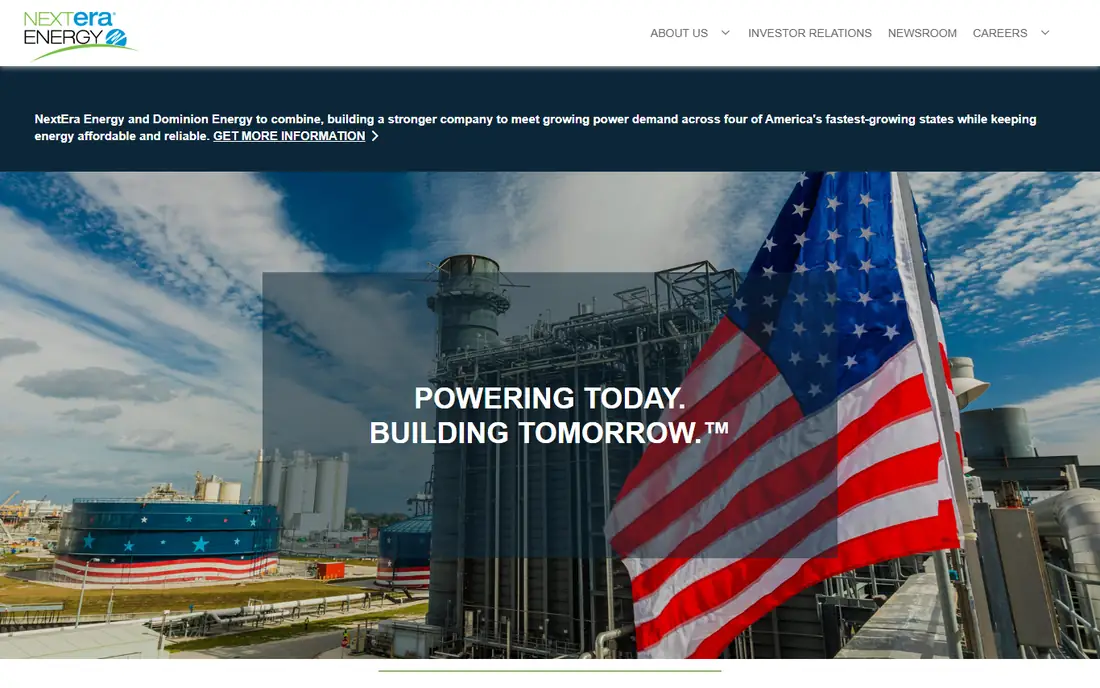
NextEra Energy is a leading electric utility and clean power infrastructure developer, whose renewables segment describes itself as the world largest generator of renewable energy from wind and sun, and a leader in battery storage capacity. It generates predictable earnings from government-regulated rate structures and long-term, fixed-rate contracts, with a market cap of $170.8 billion and a dividend yield of 2.97 percent as of October 2026.
Its Florida utility, FPL, plans to get 35 percent of its power from solar by 2034, up from 9 percent in 2024, and NextEra is building significant renewable capacity for third-party customers, including Google, plus data centre campuses with associated power. The company expects adjusted earnings per share growth above 8 percent annually through 2035, supporting dividend growth around 6 percent in 2027 and 2028. Utilities can be sensitive to interest rates, and large capex plans require consistent execution.
What we like- World largest generator from wind and sun
- Leader in battery storage
- Predictable regulated earnings
- Dividend growth
Watch out for- Utility sensitivity to interest rates
- Large capex plans need execution
- Florida concentration through FPL
Starting priceSee website
Free planNot applicable
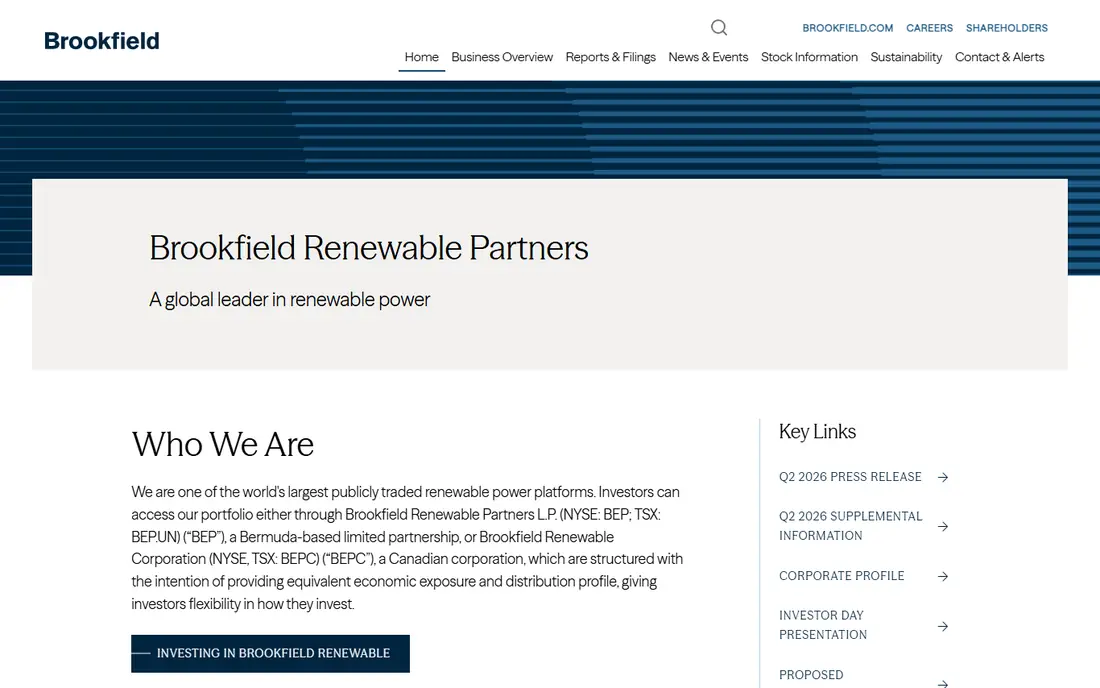
Brookfield Renewable is a global owner and operator of wind, solar and storage assets, with a market cap of $5.5 billion for its BEPC share class and a dividend yield of 5.28 percent as of October 2026. Its diversified portfolio across technologies and geographies suits income-focused investors who want renewable exposure without single-technology risk.
Its corporate structure, with BEP partnership units and BEPC corporation shares, confuses some investors, and distributions depend on operating performance. For income plus growth in renewables, Brookfield Renewable is a leading diversified choice.
What we like- Diversified wind, solar and storage portfolio
- 5.28 percent dividend yield
- Global owner and operator scale
Watch out for- Complex corporate structure with BEP and BEPC shares
- Yield depends on distributions
- Interest-rate sensitivity
Starting priceSee website
Free planNot applicable
Iberdrola is a Spanish utility and one of the world largest wind developers, with large onshore and offshore portfolios across Europe, the Americas and beyond. Its regulated utility businesses provide stability, while its renewables development arm builds new wind and solar capacity at scale.
European regulatory exposure and currency risk affect US investors, and large capex plans need execution. For global wind development exposure with utility stability, Iberdrola is a leading company.
What we like- Global wind leader
- Large onshore and offshore portfolio
- Regulated utility stability
- Spanish and international scale
Watch out for- European regulatory exposure
- Currency risk for US investors
- Large capex needs
Starting priceSee website
Free planNot applicable
Orsted is a Danish energy company and a pioneer in offshore wind, with a large portfolio of offshore wind farms across Europe, the US and Asia. It transformed from a fossil-fuel utility into a renewable leader, and its offshore expertise is hard to replicate.
Offshore projects face high costs, construction delays and policy dependence, and interest rates affect project economics. For pure offshore wind leadership, Orsted remains the benchmark company.
What we like- Offshore wind pioneer
- Large offshore portfolio
- Danish leadership in green energy transition
Watch out for- Offshore project costs and delays
- Subsidy and policy dependence
- Interest-rate sensitivity
Starting priceSee website
Free planNot applicable
First Solar is a leading US solar module manufacturer, using thin-film technology that differs from most crystalline silicon rivals, with a market cap of $18.4 billion and no dividend yield as of October 2026, reflecting a growth focus. Its US manufacturing base suits buyers who prioritise domestic supply chains and tariff resilience.
Module pricing pressure and policy changes affect margins, and the lack of a dividend suits growth investors over income investors. For solar equipment exposure, First Solar is the leading US manufacturer.
What we like- Leading US solar module maker
- Thin-film technology
- $18.4 billion market cap
- No dividend, growth focus
Watch out for- No dividend yield
- Module pricing pressure
- Policy and tariff exposure
Starting priceSee website
Free planNot applicable
Vestas is the world largest wind turbine manufacturer, supplying turbines and services to wind farms globally, with a scale that supports research, manufacturing and a global service network. Its equipment leadership means most large wind developers depend on Vestas or a small set of rivals for turbines.
Turbine pricing pressure, supply chain costs and order timing volatility affect earnings. For wind equipment exposure, Vestas is the leading manufacturer, complementing developers such as NextEra, Iberdrola and Orsted.
What we like- World largest wind turbine maker
- Global service network
- Turbine and services revenue
Watch out for- Turbine pricing pressure
- Supply chain costs
- Order timing volatility
Starting priceSee website
Free planNot applicable
Clearway Energy is a US owner and operator of wind, solar and storage assets, with a market cap of $3.8 billion and a dividend yield of 5.90 percent as of October 2026, the highest in this list. Its income and growth combination, with a growing dividend supported by long-term contracts, suits income-focused investors.
Its smaller scale and US focus mean less diversification than Brookfield or Iberdrola. For high-yield renewable income, Clearway Energy is the leading choice.
What we like- Highest yield here at 5.90 percent
- Wind, solar and storage owner and operator
- Growing dividend
Watch out for- Smaller market cap at $3.8 billion
- Yield depends on distributions
- US-focused portfolio
Starting priceSee website
Free planNot applicable
Constellation Energy is a large US clean energy generator, combining nuclear power, the largest source of carbon-free electricity in the US, with growing renewable generation, at a market cap of $90.4 billion and a dividend yield of 0.65 percent as of October 2026. Its scale and reliability suit investors who want clean energy exposure beyond wind and solar alone.
Nuclear regulatory exposure and power price volatility affect earnings, and the low yield suits growth investors over income investors. For clean generation at scale, Constellation Energy is a leading company.
What we like- Large clean generation portfolio
- $90.4 billion market cap
- Nuclear reliability plus renewables growth
Watch out for- Low dividend yield at 0.65 percent
- Nuclear regulatory exposure
- Power price volatility
How we chose
We compared companies on generation scale, technology mix, geographic reach, market cap and dividend yield, using market data as of October 2026. NextEra leads on scale, Brookfield and Clearway lead on yield, Iberdrola and Orsted lead on wind development, and First Solar and Vestas lead on equipment. Figures change daily with share prices, so we reported the October 2026 snapshot and wrote See website for current prices. This article is general information only, not financial advice, and we did not claim hands-on investment experience.
Investing in renewable energy
Renewable energy is a broad sector covering solar, wind, geothermal, hydroelectric, biofuels and green hydrogen, and decarbonising the global economy will require trillions of dollars in investment each year. Developers such as NextEra, Brookfield, Iberdrola and Orsted own and operate generation assets, while equipment leaders such as First Solar and Vestas supply the hardware those developers need. Storage is the bridge between the two, since batteries turn variable wind and solar output into dispatchable power.
Investors should distinguish developers from equipment makers, since their risks differ: developers face project execution, power prices and interest rates, while equipment makers face pricing pressure, supply chains and order timing. Dividend yield suits income investors, while growth investors may prefer companies reinvesting profits, such as First Solar. Diversification across technologies and geographies reduces single-project risk, and policy support, such as tax credits and renewable targets, remains a key driver that can change with elections. Check each company investor relations page before buying, since capacity figures, project pipelines and guidance change with quarterly results.
Frequently asked questions
What is the best renewable energy company?
NextEra Energy is best for scale, Brookfield Renewable and Clearway Energy are best for income, Iberdrola and Orsted are best for wind development, and First Solar and Vestas are best for equipment. Constellation Energy suits clean generation at scale including nuclear. Match the company to your goal, income or growth, before comparing yields.
What is the highest-yielding renewable energy stock here?
Clearway Energy yields 5.90 percent, followed by Brookfield Renewable at 5.28 percent and NextEra Energy at 2.97 percent, as of October 2026. Yields change with share prices, so check current figures before investing. Compare yields against distribution coverage, since an uncovered payout can be cut.
Should I invest in developers or equipment makers?
Developers offer contracted cash flows and dividends, while equipment makers offer growth tied to industry expansion but face pricing pressure. Many investors hold both, since developers buy equipment from makers, linking their fortunes. Check each company balance sheet before deciding, since debt levels differ widely across the sector.
Is renewable energy a good long-term investment?
Renewable energy will play a crucial role in the energy transition, with trillions in annual investment needed to decarbonise the global economy. Long-term prospects are strong, but individual companies face policy, interest-rate and execution risks, so diversification matters. A broad index fund may suit investors who want sector exposure without picking single winners.
What risks do renewable energy stocks face?
Interest-rate sensitivity, policy and subsidy changes, project delays, power price volatility, supply chain costs and technology shifts all affect renewable stocks. Utilities with regulated earnings are steadier than pure equipment makers. A single bad quarter rarely breaks a long-term thesis, but repeated project delays or dividend cuts deserve a fresh look at the investment case.
Do renewable energy companies pay dividends?
Many do: NextEra yields about 2.97 percent, Brookfield about 5.28 percent, and Clearway about 5.90 percent as of October 2026. First Solar pays no dividend, focusing on growth, while Constellation yields about 0.65 percent. A high yield alone is not a buy signal, since it can reflect a falling share price rather than rising payouts, so check distribution coverage and payout history.
Sources we checked (10)
- https://www.nexteraenergy.com
- https://bep.brookfield.com
- https://www.iberdrola.com
- https://orsted.com
- https://www.firstsolar.com
- https://www.vestas.com
- https://www.clearwayenergy.com
- https://www.constellationenergy.com
- https://www.fool.com/investing/stock-market/market-sectors/energy/renewable-energy-stocks/
- https://www.ultimamarkets.com/academy/best-renewable-energy-stocks-to-watch/
Is your product missing or out of date?
We review this list regularly. Vendors can request a listing, send updated pricing or ask about featured placement.

Shihab Mia · Founder, Rankite
Shihab has 5+ years in B2B and SaaS SEO. He writes Rankite's software buying guides from pricing pages, documentation and public user reviews. More about Shihab.